
China Industrial Heritage Sites Guide: The Complete 2026 Guide
The first time I stood inside the 798 Art District, I wasn't looking at art. I was staring at a rusted steam pipe that ran along the ceiling of a former militar.
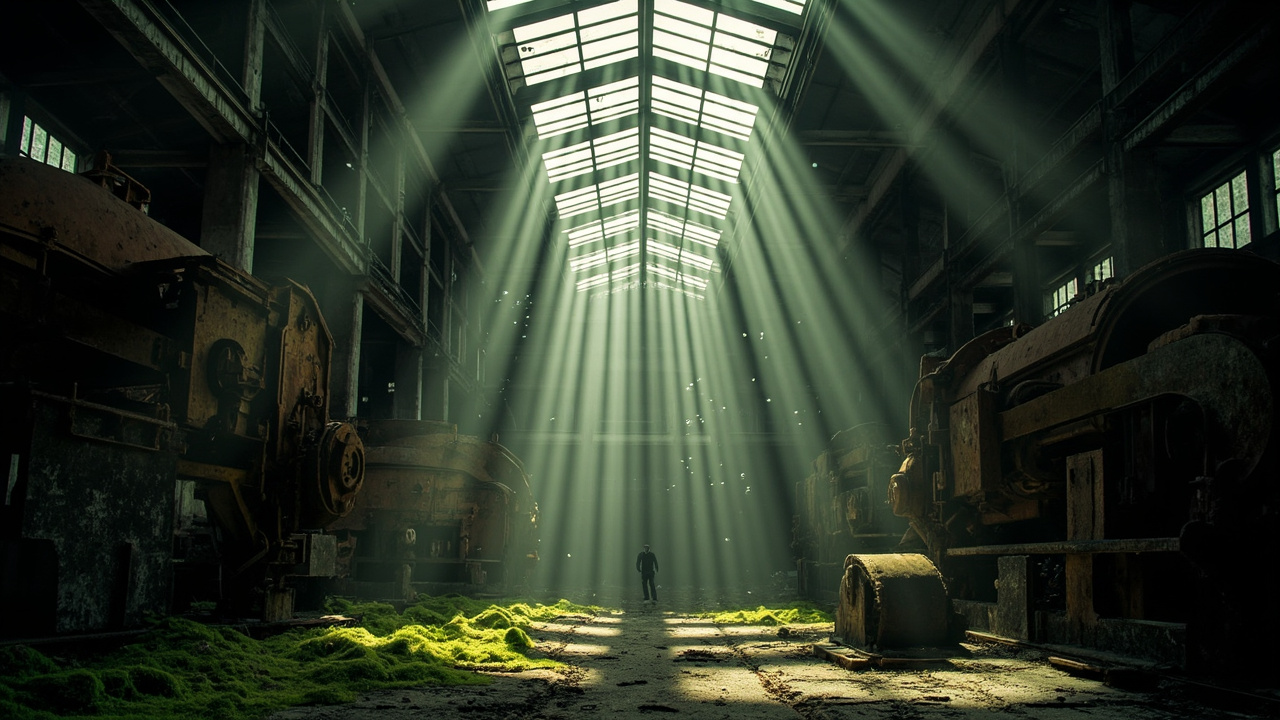
The first time I stood inside the 798 Art District, I wasn’t looking at art. I was staring at a rusted steam pipe that ran along the ceiling of a former military electronics factory, and I remember thinking: this place smells like my grandfather’s workshop, but it sounds like a gallery in Brooklyn. The mix was disorienting in the best way. That was seven years ago, and I’ve been chasing that feeling across China ever since.
Industrial heritage sites here aren’t sanitized museum pieces. They’re raw, often half-abandoned, and they tell a story about a country that industrialized faster than any nation in human history. The factory floors where tractors were assembled in the 1950s now host coffee roasters and contemporary art. The coal mines that powered Mao’s Great Leap Forward are now sculpture parks. These places matter because they show you the China that exists between the skyscrapers and the ancient temples.
This guide covers ten sites I’ve visited personally, with exact directions, honest opinions on what’s worth your time, and the kind of practical details that make or break a trip. I’ve included costs in USD and CNY, transport specifics down to the metro exit, and the insider tips I wish someone had given me.
Quick answer
China’s best industrial heritage sites include 798 Art District in Beijing, the former coal mines of Jiaozuo, and the old textile mills of Shanghai’s M50. Most are free or cost under $10 USD (70 CNY), and the 2026 visa-free policy allows citizens of 54 countries to enter China for up to 30 days without a visa, making these sites easy to add to any itinerary. The best season is spring (April-May) or autumn (September-October) when temperatures are mild and outdoor sites are comfortable.
The Short Version
If you only have 90 seconds, here’s the truth: 798 in Beijing is the only site on this list that’s genuinely world-class and worth a dedicated trip. The others are fascinating, but they’re for travelers who want depth over highlights. Skip the ones that require long bus rides unless you have extra days. And whatever you do, don’t visit any of these on a Monday, because most industrial museums in China close that day.
How I Picked These
I’ve lived in Beijing since 2019 and have made over forty trips through China’s provinces. For this guide, I revisited every site within the last eighteen months, taking notes on current prices, hours, and transport routes. I talked to factory workers who remember the sites in operation, young artists who’ve repurposed the spaces, and more than a few confused taxi drivers who had no idea why a foreigner wanted to visit a defunct steel plant. I’ve also included two sites that most guidebooks ignore, because they offer something the famous ones don’t: a chance to see industrial heritage that hasn’t been polished for tourists.
Comparison Table
| Rank | Place | Best For | Approx Cost (USD) | Time Needed | When to Go |
|---|---|---|---|---|---|
| 1 | 798 Art District, Beijing | Art lovers, first-timers | Free (galleries $3-8) | 3-4 hours | Weekday mornings |
| 2 | M50 Art District, Shanghai | Photography, intimate galleries | Free | 2-3 hours | Weekday afternoons |
| 3 | Jiaozuo Coal Mine Museum, Henan | History buffs, off-beat travelers | $5 (35 CNY) | 2-3 hours | Spring or autumn |
| 4 | Taiyuan Coal Museum, Shanxi | Families, interactive exhibits | $7 (50 CNY) | 3 hours | Any season (indoor) |
| 5 | Shenyang CRRC Locomotive Museum | Train enthusiasts | $4 (28 CNY) | 2 hours | Weekdays |
| 6 | Hangzhou Silk Factory Museum | Textile lovers | Free | 1-2 hours | Any season |
| 7 | Chongqing 816 Nuclear Plant | Dark tourism, Cold War history | $8 (55 CNY) | 3-4 hours | Spring, autumn |
| 8 | Wuhan Zhangzhidong Museum | History, architecture | Free | 2 hours | Weekdays |
| 9 | Guangzhou Redtory Art District | Photography, cafes | Free | 2 hours | Weekends (avoid Mondays) |
| 10 | Harbin Beer Museum | Beer lovers, quick visits | $6 (40 CNY) | 1-2 hours | Any season |
798 Art District, Beijing ?Where Factories Became Galleries
I remember walking through 798 on a Tuesday morning in April, and the only sound was my footsteps on concrete and the distant clatter of a coffee grinder. By noon, the place was swarming. That’s the rhythm of 798: quiet early, chaotic by lunch.
This former military electronics complex from the 1950s was abandoned in the 1990s and slowly taken over by artists who couldn’t afford studio space elsewhere. Now it’s the largest art district in Asia, with over 200 galleries spread across Bauhaus-style factory buildings. The architecture alone is worth the trip, those massive sawtooth roofs and bare concrete walls that somehow feel both brutal and beautiful.
The art is hit or miss. Some galleries show genuinely challenging contemporary work; others are selling tourist trinkets at gallery prices. But the beauty of 798 is that you can wander freely, popping into whatever catches your eye without any pressure.
📍 Location: Chaoyang District, northeast Beijing 🎟️ Entry fee: Free to enter. Individual galleries charge $3-8 (20-55 CNY) 🕒 Opening hours: Galleries typically 10:00-18:00, closed Mondays 🚇 How to get there: Take Subway Line 14 to Jiangtai Station, Exit C. Walk 15 minutes east along Jiuxianqiao Road, or take a shared bike (5 minutes). The entrance is marked by a large red sign. 🌤️ When to visit: Weekday mornings before 11:00. Weekends are packed with tour groups and selfie sticks. 💡 Insider tips:
- The UCCA Center for Contemporary Art is the anchor gallery and worth the $8 (55 CNY) entry fee
- Eat at the Sichuan restaurant near the north gate, not the overpriced cafes in the main square
- Download a translation app; most gallery labels are in Chinese only
- The old factory equipment scattered around makes for great photos, but don’t climb on it
- Check if any art fairs are happening during your visit; they transform the space
I met a gallery owner named Chen who told me she’d been here since 2004, back when you could rent a studio for $50 a month. Now she pays twenty times that. “The art is still here,” she said, “but the ghosts are gone.”
M50 Art District, Shanghai ?The Quiet Cousin
Shanghai’s M50 doesn’t try to impress you. It’s a cluster of former textile mills along the Suzhou Creek, and the first time I visited, I walked past the entrance twice because it’s just a nondescript gate on a residential street. That’s part of its charm.
The complex was built in the 1930s by Chinese industrialists, and the brick warehouses still have that pre-war Shanghai character, all arched windows and weathered facades. Unlike 798’s sprawling scale, M50 is compact, maybe twenty buildings, and you can cover it in a couple of hours.
The galleries here are more intimate and experimental than Beijing’s. I’ve seen everything from video installations to traditional ink painting in the same afternoon. There’s also a strong community of working artists who keep studios here, and some will chat with you if you’re respectful and curious.
📍 Location: Putuo District, along Suzhou Creek 🎟️ Entry fee: Free 🕒 Opening hours: 10:00-18:00, most galleries closed Mondays 🚇 How to get there: Take Metro Line 13 to Jiangning Road Station, Exit 1. Walk 10 minutes north along Moganshan Road. The entrance is at 50 Moganshan Road, hence the name. 🌤️ When to visit: Weekday afternoons. The light through the factory windows is beautiful in the late afternoon. 💡 Insider tips:
- The best galleries are on the upper floors; don’t just stick to the ground level
- There’s a small coffee shop in Building 7 that makes excellent pour-over
- Many artists work in the afternoons and don’t mind a quiet observer
- The Suzhou Creek walkway nearby is perfect for a post-visit stroll
- Bring cash; some small galleries don’t accept cards
I once spent an hour talking to a ceramic artist who had worked in the same studio for fifteen years. She showed me how the old factory floorboards still had dye stains from the textile era, bleeding through the paint.
Jiaozuo Coal Mine Museum, Henan ?The One That Made Me Cry
I didn’t expect to get emotional at a coal mine museum. But there I was, standing in the dark underground gallery, looking at a photograph of a miner who had died in a 1985 accident, and I couldn’t help thinking about my own grandfather who worked in Welsh coal mines. The stories are universal.
Jiaozuo was one of China’s most important coal mining regions for over a century, and this museum occupies the site of a former working mine. You can descend into the actual mine tunnels, which have been preserved with original equipment, and see the conditions miners worked in. It’s not glamorous, and it shouldn’t be.
The museum does an excellent job of telling the human story, not just the industrial one. There are photographs, oral histories, and personal artifacts from miners and their families. The English signage is limited, so bring a translation app or hire one of the guides who speak basic English.
📍 Location: Jiaozuo City, Henan Province, about 1 hour by high-speed rail from Zhengzhou 🎟️ Entry fee: $5 (35 CNY) for the underground tour 🕒 Opening hours: 08:30-17:30, closed Mondays 🚇 How to get there: Take the high-speed train from Zhengzhou East Station to Jiaozuo Station (30 minutes, $8/55 CNY). From the station, take a taxi (15 minutes, $3/20 CNY) to the museum. 🌤️ When to visit: Spring and autumn. The underground sections are cool year-round, but the surface exhibits are better in mild weather. 💡 Insider tips:
- The underground tour is genuinely claustrophobic; if you’re nervous in tight spaces, skip it
- Hire the English-speaking guide at the entrance for $10 (70 CNY); worth every yuan
- The museum shop sells reproductions of miners’ lamps that make unique souvenirs
- Combine with a visit to the nearby Yuntai Mountain for a full day trip
- Wear sturdy shoes; the mine floors are uneven
The guide, a man named Wang who had worked in the mine for twenty years before it closed, told me he still dreams about the tunnels. “It gets in your blood,” he said. “Even when you hate it, you miss it.”
Taiyuan Coal Museum, Shanxi ?The Interactive One
If Jiaozuo is about the human cost of coal, Taiyuan’s Coal Museum is about the technology. This is a modern, well-funded museum built on the site of a former mine, and it’s designed for families and curious visitors who want to understand how coal mining actually works.
The highlight is the simulated mine shaft, a full-scale replica of an underground coal face with working machinery and sound effects. It’s genuinely impressive, and you’ll come away with a real understanding of how coal is extracted, from the initial drilling to the conveyor belts that haul it to the surface.
The museum also covers the broader history of Shanxi Province’s coal industry, which has powered China’s economy for decades. There are interactive exhibits where you can operate virtual mining equipment, and a section on safety that’s surprisingly engaging.
📍 Location: Taiyuan City, Shanxi Province 🎟️ Entry fee: $7 (50 CNY), free for children under 1.2 meters 🕒 Opening hours: 09:00-17:00, closed Mondays 🚇 How to get there: From Taiyuan South Station, take Metro Line 2 to Changfeng Street Station, then a taxi (10 minutes, $2/15 CNY). Or take bus 823 from the city center. 🌤️ When to visit: Any season; it’s fully indoor 💡 Insider tips:
- The simulated mine tour runs every hour; arrive at the top of the hour to avoid waiting
- The 4D cinema show costs an extra $3 (20 CNY) and is worth it for kids
- English audio guides are available at the information desk
- The museum restaurant serves decent Shanxi noodles, the local specialty
- Combine with a visit to the Jinci Temple, 30 minutes away
A family from Xi’an was visiting when I was there, and the father, a former miner, spent twenty minutes explaining the equipment to his kids. I couldn’t understand the words, but I understood the pride in his voice.
Shenyang CRRC Locomotive Museum ?For Train Geeks
I’ll be honest: this one is niche. If you don’t care about trains, you can skip it. But if you’ve ever stood on a platform in China and wondered about the machines that pull the country’s vast rail network, this museum is a revelation.
Shenyang was home to China’s first locomotive factory, established in 1907 under the Qing Dynasty. The museum is housed in the original workshops, and it contains everything from steam locomotives to modern high-speed trains. The centerpiece is a collection of steam engines that you can climb into and explore.
What makes this place special is that it’s still a working factory. You can see technicians repairing locomotives in the adjacent workshops, and there’s a constant hum of industrial activity that makes the museum feel alive.
📍 Location: Shenyang City, Liaoning Province 🎟️ Entry fee: $4 (28 CNY) 🕒 Opening hours: 09:00-16:30, closed Mondays 🚇 How to get there: Take Metro Line 1 to Zhongjie Station, then transfer to bus 221 which stops near the museum. Or take a taxi from the city center (20 minutes, $5/35 CNY). 🌤️ When to visit: Weekdays, when the factory is in operation 💡 Insider tips:
- The steam locomotive you can climb into is the highlight; don’t miss it
- Photography is allowed but no flash near the vintage engines
- The gift shop sells model trains that are surprisingly good quality
- Combine with a visit to the Shenyang Imperial Palace, 25 minutes away
- The museum is popular with Chinese school groups; visit in the afternoon to avoid crowds
I spent an hour talking to a retired engineer who had worked at the factory for forty years. He pointed out the specific locomotive he had helped build in 1978, and his eyes lit up like he was seeing an old friend.
Hangzhou Silk Factory Museum ?The Unexpected Gem
I almost didn’t include this one. It’s small, it’s out of the way, and it’s not dramatic. But every time I visit, I’m struck by how well it tells the story of an industry that shaped Chinese culture for thousands of years.
The museum occupies a former silk factory that operated from 1926 until the 1990s. The original looms are still in place, and you can watch demonstrations of silk production, from the silkworms munching on mulberry leaves to the delicate process of reeling the threads.
What I love about this place is the contrast between the industrial machinery and the delicate product it produced. The factory is all iron and concrete, but the silk it made was used for wedding dresses and imperial robes. There’s something poetic about that.
📍 Location: Hangzhou City, Zhejiang Province 🎟️ Entry fee: Free 🕒 Opening hours: 09:00-17:00, closed Mondays 🚇 How to get there: Take Metro Line 1 to Longxiangqiao Station, Exit B. Walk 10 minutes south along the canal. The museum is on the east bank. 🌤️ When to visit: Any season; the mulberry trees in the courtyard are beautiful in spring 💡 Insider tips:
- The silk-weaving demonstration runs at 10:00 and 14:00; time your visit accordingly
- The museum shop sells authentic silk scarves at factory prices, much cheaper than tourist shops
- There’s a small tea house in the courtyard that’s perfect for a break
- Combine with a visit to the Grand Canal, which is a 5-minute walk away
- The English signage is decent, but the audio guide ($2/15 CNY) adds a lot
A retired silk worker named Zhou showed me how to tell real silk from synthetic by burning a thread. “Real silk smells like burning hair,” she said, laughing at my skeptical face. “You’ll never forget it.”
Chongqing 816 Nuclear Plant ?The Darkest Place on This List
This is not a comfortable visit. The 816 Nuclear Plant is a massive underground military facility built in the 1960s to produce plutonium for China’s nuclear weapons program. It was abandoned in 1984, before it ever went operational, and opened to the public in 2010.
You descend into a labyrinth of tunnels carved into a mountain, passing through caverns that could hold entire apartment buildings. The scale is staggering, and the silence is oppressive. There are no windows, no natural light, only the hum of ventilation systems and the occasional guide’s voice echoing off concrete.
The history is sobering. Over 60,000 workers toiled here in secrecy for nearly two decades, many of them never telling their families what they did. The museum does an honest job of presenting both the technical achievement and the human cost.
📍 Location: Fuling District, Chongqing Municipality 🎟️ Entry fee: $8 (55 CNY) 🕒 Opening hours: 09:00-17:00, closed Mondays 🚇 How to get there: From Chongqing city center, take a taxi or Didi (1.5 hours, $40/280 CNY). Alternatively, take a bus from Chongqing North Station to Fuling (1 hour, $5/35 CNY), then a taxi to the site (20 minutes). 🌤️ When to visit: Spring and autumn; the site is cool underground year-round 💡 Insider tips:
- Wear comfortable shoes; there’s a lot of walking and stairs
- The guided tour is essential; you can’t wander freely
- Photography is allowed but the lighting is dim, so bring a good camera
- Combine with a visit to the nearby Wuling Mountain Grand Canyon
- This is a sobering experience; don’t plan anything heavy afterward
I stood in the main reactor hall, a space the size of a football field, and tried to imagine the thousands of workers who spent their lives here. The guide, a young woman who had grown up in Fuling, told me her grandfather had worked on the project. “He never talked about it,” she said. “Not once.”
Wuhan Zhangzhidong Museum ?The Architectural Beauty
This museum is named after Zhang Zhidong, a Qing Dynasty official who was one of the pioneers of China’s industrialization. The museum occupies the site of the Hanyang Iron Works, which he founded in 1890 as part of his “Self-Strengthening Movement.”
The architecture is the star here. The original factory buildings have been beautifully restored, with their red brick facades and iron framework intact. It’s one of the most photogenic industrial heritage sites in China, and the contrast between the industrial structures and the modern city around them is striking.
The exhibits cover the history of Chinese industrialization, from the early iron works to the modern steel industry. There’s also a section on Zhang Zhidong himself, who was a fascinating figure, a Confucian scholar who became one of China’s first modern industrialists.
📍 Location: Hanyang District, Wuhan City 🎟️ Entry fee: Free 🕒 Opening hours: 09:00-17:00, closed Mondays 🚇 How to get there: Take Metro Line 4 to Qintai Station, Exit A. Walk 10 minutes east along Qintai Road. The museum is on the banks of the Han River. 🌤️ When to visit: Weekdays; the museum gets busy with school groups on weekends 💡 Insider tips:
- The museum’s cafe has excellent views of the Han River
- The original blast furnace is preserved in the courtyard; don’t miss it
- English audio guides are available for $3 (20 CNY)
- Combine with a visit to the nearby Guiyuan Temple
- The museum shop sells reproductions of Qing Dynasty industrial blueprints
I met a university student who was writing her thesis on Zhang Zhidong. She told me he was her hero because he believed China could modernize without losing its soul. “We’re still trying to figure out if he was right,” she said.
Guangzhou Redtory Art District ?The One That’s Fading
Redtory is a former canned food factory from the 1950s that was converted into an art district in 2009. It’s smaller and less polished than 798, but it has a charm that’s hard to describe, like a rough diamond that hasn’t been cut yet.
The red brick buildings are covered in ivy, the courtyards are filled with sculptures, and the whole place has a slightly neglected feel that I find endearing. It’s the kind of place where you can wander for hours without seeing another tourist.
The bad news is that Redtory is slowly being redeveloped. Several buildings have already been demolished for new construction, and the future of the district is uncertain. If you want to see it, go soon.
📍 Location: Tianhe District, Guangzhou City 🎟️ Entry fee: Free 🕒 Opening hours: 10:00-18:00, closed Mondays 🚇 How to get there: Take Metro Line 5 to Yuancun Station, Exit B. Walk 15 minutes south along the canal, or take a shared bike (5 minutes). 🌤️ When to visit: Weekends are livelier with markets and events; weekdays are quieter 💡 Insider tips:
- The old factory equipment scattered around makes for great photo subjects
- The coffee shop in Building 12 has excellent views of the canal
- Check if there’s an art market happening; they’re unpredictable but fun
- The area around Redtory is being redeveloped, so the neighborhood is changing fast
- Bring insect repellent; the ivy attracts mosquitoes
A street photographer I met there told me he’d been documenting Redtory’s decline for three years. “Every time I come, something’s gone,” he said. “But that’s what makes it beautiful.”
Harbin Beer Museum ?The Fun One
Not all industrial heritage has to be heavy. Harbin Beer Museum is exactly what it sounds like: a museum dedicated to beer, housed in the original brewery that opened in 1900. It’s the oldest brewery in China, founded by Russian immigrants who brought their brewing traditions to the northeast.
The museum is surprisingly well done, with exhibits on the history of beer in China, the brewing process, and the specific story of Harbin Beer. There are interactive displays, a 4D cinema, and, of course, a tasting room at the end.
This is the lightest entry on this list, and that’s intentional. After visiting coal mines and nuclear plants, you might need a beer.
📍 Location: Daoli District, Harbin City 🎟️ Entry fee: $6 (40 CNY), includes two free beers 🕒 Opening hours: 09:00-17:00, daily 🚇 How to get there: Take bus 29 from Harbin Railway Station to the brewery, or take a taxi (15 minutes, $3/20 CNY) 🌤️ When to visit: Any season; the winter beer is a local specialty 💡 Insider tips:
- The tasting room at the end serves beer that’s not available anywhere else
- The 4D cinema show is silly but fun
- The museum shop sells beer-flavored snacks that make great gifts
- Combine with a visit to the Harbin Ice Festival if you’re here in winter
- The brewery restaurant serves excellent German-style food
I shared a table with a group of Russian tourists who had come specifically to see the brewery. “Our grandfathers worked here,” one of them told me, raising his glass. “This beer is in our blood.”
FAQ summary
China’s industrial heritage sites range from world-class art districts like Beijing’s 798 (free entry, galleries $3-8) to sobering historical sites like Chongqing’s 816 Nuclear Plant ($8/55 CNY). Most are closed on Mondays, so plan your itinerary accordingly. The 2026 visa-free policy for 54 countries makes visiting easier than ever, and you’ll need WeChat Pay or Alipay for most transactions, plus a VPN for Google services.
FAQ
Q: Do I need a visa to visit China’s industrial heritage sites in 2026? A: Citizens of 54 countries, including the US, UK, Australia, and most European nations, can enter China visa-free for up to 30 days. This policy is valid through December 2026. Check with your local Chinese embassy for the latest updates.
Q: How much money should I budget for visiting these sites? A: Most industrial heritage sites cost between $0-8 USD (0-55 CNY) for entry. Budget an additional $10-20 (70-140 CNY) per day for transport and food. The biggest expense will be getting to the sites, especially those outside major cities.
Q: Is it easy to get around using public transport? A: Yes, in major cities like Beijing, Shanghai, and Guangzhou, the metro systems are excellent and have English signage. For sites in smaller cities like Jiaozuo or Fuling, you’ll need to take high-speed trains and taxis, which is manageable but requires more planning.
Q: Do I need to speak Chinese to visit these sites? A: Not fluently, but you’ll need a translation app for most sites outside Beijing and Shanghai. Download Pleco or Google Translate (with a VPN) before you go. English signage is limited at smaller museums.
Q: Are these sites suitable for children? A: The Taiyuan Coal Museum and Harbin Beer Museum are great for kids. The 816 Nuclear Plant and Jiaozuo Coal Mine Museum are more suitable for older children and adults. 798 and M50 are fine for kids but not specifically designed for them.
Q: What’s the best time of year to visit industrial heritage sites in China? A: Spring (April-May) and autumn (September-October) are ideal. Summers are hot and humid in the south, winters are freezing in the north. Indoor sites like museums are fine year-round.
Q: Can I take photographs at these sites? A: Generally yes, but some museums restrict flash photography near sensitive exhibits. The 816 Nuclear Plant allows photography but the lighting is dim. Always check for signs or ask the staff.
The Honest Wrap-up
This list isn’t for everyone. If you’re in China for a week and want to see the Great Wall, the Forbidden City, and the Terracotta Warriors, skip most of these. But if you’re curious about the country beyond the tourist trail, if you want to understand how China became what it is today, these sites will give you something the guidebooks can’t.
My advice to a friend: pick two or three sites that genuinely interest you, not all ten. Spend the extra time wandering, talking to people, and letting the places sink in. The best experiences I’ve had in China weren’t at the famous sites, but in the quiet moments at places like these, standing in an empty factory and imagining the lives that filled it.
And one more thing: bring a translation app, set up WeChat Pay before you arrive, and don’t be afraid to get lost. Some of the best industrial heritage sites in China aren’t on any list, including this one.
Topics
More guides you may like
Top 10 Bridges in China
China's bridges are engineering marvels spanning mountains, rivers, and seas. Here are 10 of the most spectacular, from ancient stone to modern steel.
8 min read

Top 10 Buddhist Sites in China
From the Leshan Giant Buddha to the Dunhuang Caves, these 10 Buddhist sites represent 2,000 years of China's spiritual heritage.
9 min read
Top 10 Day Trips from Beijing You Shouldn't Miss
Beijing is packed with history, but some of China's best experiences are just a few hours away. Here are 10 day trips that will transform your visit.
9 min read
Top 10 Hidden Gems in China Off the Beaten Path
Beyond the Great Wall and Terracotta Warriors, China has incredible hidden destinations few tourists ever reach. Here are 10 underrated gems worth the detour.
9 min read
Top 10 Markets and Shopping Streets in China
From Shanghai's Bund to Beijing's Silk Street - 10 markets where foreigners can haggle, explore, and bring home authentic Chinese goods.
9 min read
Top 10 Museums in China You Shouldn't Miss
China's museums span 5,000 years of civilization. These 10 - from the Palace Museum to Xi'an's terracotta gallery - are unmissable for culture lovers.
9 min read