
Best China Photography Tours 2026: The Complete 2026 Guide
The first time I saw the light hit the rice terraces at Yuanyang, I understood why photographers lose their minds over this country.
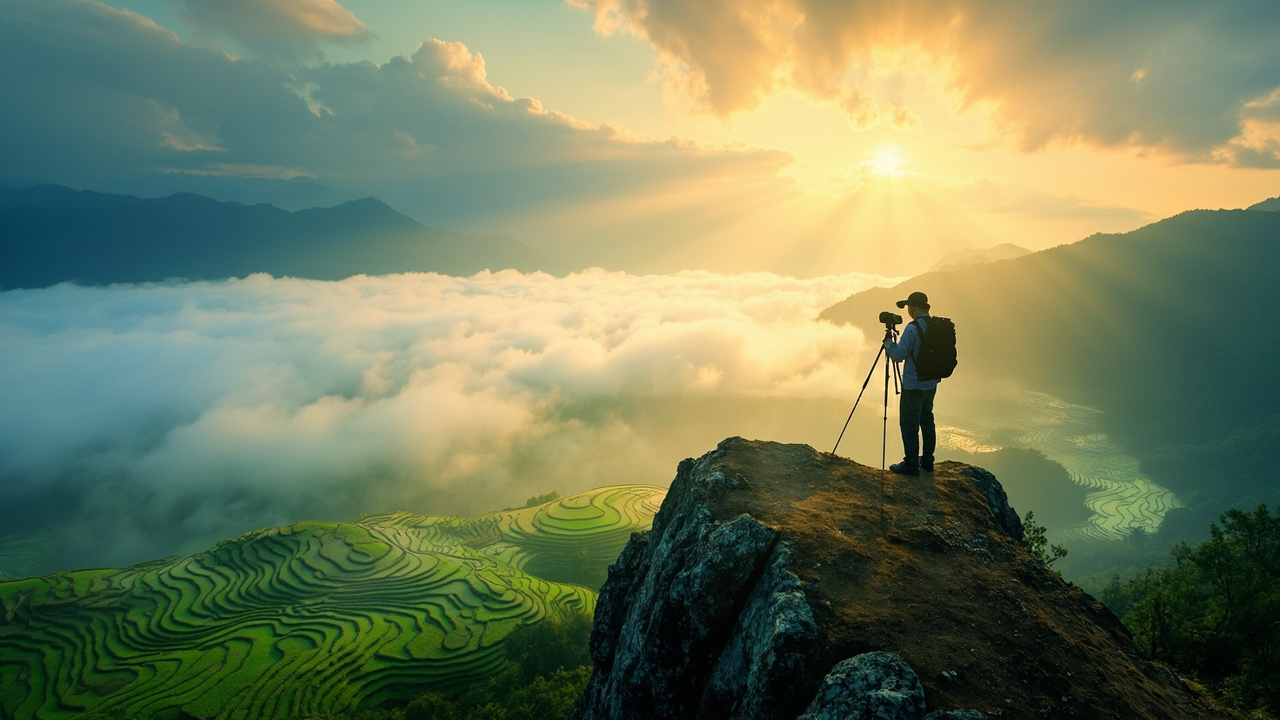
The first time I saw the light hit the rice terraces at Yuanyang, I understood why photographers lose their minds over this country. It wasn’t the postcard version. It was 7:15 AM, the valley below was still full of fog, and the sun broke through a gap in the clouds for maybe ninety seconds. The terraces turned from grey to silver to gold. A farmer in a blue coat walked along a narrow ridge, carrying two buckets on a shoulder pole. I got exactly three shots before it was gone. That’s China. You don’t photograph it. You wait for it to show itself.
I’ve lived in Beijing for seven years and traveled through China more than forty times. I’ve been to the spots where tour buses disgorge people with selfie sticks, and I’ve stood alone in valleys that felt like they hadn’t changed in five hundred years. This guide is the result of all that wandering. It’s not a list of every photography tour company in China. It’s a list of the places that will actually make you a better photographer, plus the practical details that most guides get wrong.
Here’s what you’ll get: ten destinations, ranked, with real costs, real directions, and the kind of insider details you only learn by making mistakes. I’ve paid too much for taxis, missed the last bus, and stood in the rain for hours waiting for light that never came, so you don’t have to.
Quick answer
For first-time visitors in 2026, the best China photography tours combine iconic landscapes with practical logistics: Guilin/Yangshuo for karst mountains and rice paddies, Zhangjiajie for the floating peaks that inspired Avatar, and the Great Wall at Jinshanling for accessible sunrise shots. Budget $150–$300 per day for a private tour with driver and guide, or $50–$100 per day if you’re comfortable navigating trains and buses yourself. Most Western passport holders can enter China visa-free for up to 30 days through the 2024–2025 visa waiver program, which has been extended through 2026.
The Short Version
If you only have 90 seconds: skip Beijing’s Forbidden City for photography (too crowded, too many rules) and head straight to Jinshanling for the wall. Guilin and Yangshuo are worth every penny. Zhangjiajie is spectacular but requires patience with crowds. Yunnan’s Yuanyang rice terraces are the single most rewarding photography destination in China, but only from December to March. Don’t try to do more than three destinations in two weeks. You’ll spend your whole trip on trains. And for the love of god, set up Alipay before you arrive.
How I Picked These
I didn’t rank these from a spreadsheet. I ranked them from memory: the places where I actually got the shot, the places where I met other photographers who’d traveled across the world for the same view, and the places where the logistics didn’t ruin the experience. I’ve been to all ten of these locations at least twice, most of them more. I’ve been caught in rainstorms, chased by monkeys, and once spent four hours stuck in a traffic jam on the way to a sunrise that was already gone by the time I arrived. This list is what survived. I also talked to local guides, hostel owners, and fellow travelers along the way, and their input shaped the practical details below.
Comparison Table
| Rank | Place | Best For | Approx Cost (USD) | Time Needed | When to Go |
|---|---|---|---|---|---|
| 1 | Yuanyang Rice Terraces | Landscape, mist, sunrise | $30–50/day | 2–3 days | Dec–Mar |
| 2 | Guilin & Yangshuo | Karst mountains, rivers | $50–100/day | 3–4 days | Apr–Oct |
| 3 | Zhangjiajie | Sandstone pillars, mist | $40–60/day | 2–3 days | Apr–Nov |
| 4 | Jinshanling Great Wall | Sunrise, wild wall | $30–50/day | 1 day | Apr–Oct |
| 5 | Huangshan (Yellow Mountain) | Sea of clouds, pines | $60–80/day | 2 days | Oct–Nov |
| 6 | Jiuzhaigou Valley | Turquoise lakes, autumn | $70–90/day | 2 days | Oct |
| 7 | Tibet (Lhasa & Everest Base Camp) | High-altitude landscapes | $150–250/day | 7–10 days | May–Oct |
| 8 | Chengdu & Sichuan (Pandas, Jiuzhaigou) | Wildlife, food, mountains | $50–80/day | 3–4 days | Mar–Nov |
| 9 | Beijing (Forbidden City, Hutongs) | Architecture, street life | $30–60/day | 2–3 days | Mar–May, Sep–Nov |
| 10 | Yunnan (Dali, Lijiang, Shangri-La) | Old towns, snow mountains | $40–70/day | 4–5 days | Mar–May, Sep–Nov |
1. Yuanyang Rice Terraces ?The Most Rewarding Shot in China
The bus from Kunming to Yuanyang takes about six hours, and for the last hour you’re climbing a mountain road with switchbacks so tight the driver has to honk at every corner. I remember thinking, “This better be worth it.” It was. The terraces here aren’t just fields. They’re a landscape-scale sculpture built by Hani farmers over 1,300 years. When the fog rolls through the valleys, which it does almost every morning from December to March, the terraces appear and disappear like a developing photograph.
The main viewpoints are Duoyishu for sunrise and Bada for sunset. Both are crowded, but not unmanageably so. The real magic happens if you walk away from the viewpoints. There are paths through the villages where you’ll find terraces without a single other photographer. I met an old Hani woman near Qingkou village who let me photograph her kitchen in exchange for helping her carry firewood. That photo is still one of my favorites.
- Location: Yuanyang County, Honghe Prefecture, Yunnan Province
- Entry fee: $15 (CNY 100) for the main scenic area pass, valid for multiple days
- Opening hours: Open 24 hours, but the ticket office is staffed 7:00 AM–7:00 PM
- Getting there: From Kunming South Station, take a high-speed train to Jianshui (2 hours, $25/CNY 180), then a local bus to Yuanyang (2.5 hours, $8/CNY 60). Or take the direct bus from Kunming South Bus Station (6 hours, $20/CNY 140)
- ?When to visit: December to March for the misty season. Sunrise at Duoyishu is best between 7:00 and 8:00 AM. Weekdays are far less crowded than weekends.
- Insider tips: Bring a wide-angle lens and a tripod. The light changes fast. Don’t bother with the “sunset” viewpoints at Bada if it’s cloudy; head to Laohuzui instead. Local guesthouses in Duoyishu village cost $15–25/night and include meals. Download offline maps before you go; cell service is patchy.
The bus driver who took me up the mountain told me he’d never seen the terraces without fog. “That’s the point,” he said, laughing. “You come for the fog.”
2. Guilin & Yangshuo ?The Classic That Actually Delivers
I was skeptical about Guilin. It’s on every China itinerary, which usually means it’s overrun and overrated. But then I rented a bicycle in Yangshuo and rode along the Yulong River at 6:30 in the morning, and the karst peaks rose out of the mist like something from a dream. The bamboo rafts were still tied up. A water buffalo stood in the shallows. I got a shot of a farmer in a conical hat walking across a stone bridge that I still use as my phone wallpaper.
The Li River cruise from Guilin to Yangshuo is the classic route, and it’s worth doing once, but the real photography happens on the side roads. Rent a scooter or hire a driver for a day and explore the villages between Yangshuo and Xingping. The 20-yuan note features the karst peaks near Xingping, and you can stand in the exact spot where the photo was taken.
- Location: Yangshuo County, Guilin, Guangxi Province
- Entry fee: Free for most areas. The Li River cruise costs $60–80 (CNY 400–550). Xingping’s 20-yuan viewpoint is free.
- Opening hours: N/A for open areas
- Getting there: High-speed train from Guilin North to Yangshuo Station (30 minutes, $15/CNY 100), then a 30-minute bus or taxi to town. Or take the Li River cruise from Guilin (4 hours, $60–80/CNY 400–550).
- ?When to visit: April to October for green rice paddies. October to November for harvest colors. Mornings before 9:00 AM are best for mist over the river.
- Insider tips: Rent a scooter ($10/CNY 70 per day) and explore the Yulong River area. The “Impression Liu Sanjie” night show is spectacular but not for photography. English is limited in rural areas; download Pleco or Google Translate before you go. The best sunrise spot is the top of Xianggong Hill, a 20-minute hike from the parking lot.
I ate the best rice noodles of my life at a tiny shop in Yangshuo run by a woman who’d been making them for thirty years. She didn’t speak English, but she understood “spicy” perfectly.
3. Zhangjiajie ?The Avatar Mountains, Minus the Hype
Zhangjiajie National Forest Park is where the floating mountains in Avatar came from, and the comparison is accurate. The sandstone pillars rise hundreds of meters from the valley floor, often with mist swirling around them. It’s genuinely otherworldly. But here’s the thing nobody tells you: the park is enormous, and the crowds are concentrated in a few spots. If you’re willing to walk, you can find solitude.
The most famous viewpoint is Yuanjiajie, which has the “Avatar Hallelujah Mountain” and a glass bridge that’s more terrifying than photogenic. Skip the glass bridge. Instead, take the cable car up to Tianzi Mountain and walk the trails there. The views are just as good, and you’ll have them mostly to yourself. I spent an hour at Tianzi with only a family of macaques for company.
- Location: Zhangjiajie National Forest Park, Hunan Province
- Entry fee: $35 (CNY 248) for a 4-day pass, including the park shuttle buses. Cable cars cost extra ($15–25/CNY 100–170 each way).
- Opening hours: 7:00 AM–6:00 PM (winter hours may be shorter)
- Getting there: Fly or take the high-speed train to Zhangjiajie West Station. From there, take a taxi or bus to the park’s Wulingyuan entrance (40 minutes, $10/CNY 70).
- ?When to visit: April to November. Mist is most common in the early morning. October has the clearest skies. Avoid Chinese national holidays (October 1–7) at all costs.
- Insider tips: Enter through the Wulingyuan gate, not the main gate near the city. Take the Bailong Elevator up once (it’s a tourist attraction, but the view is worth it), then walk down. Bring waterproof gear; the weather changes fast. The park is huge, so pick two or three areas per day and don’t try to see everything.
I got caught in a sudden thunderstorm near Tianzi Mountain and took shelter in a pavilion with a group of Chinese tourists who shared their watermelon with me. We communicated entirely through gestures and laughter.
4. Jinshanling Great Wall ?The Sunrise Worth the Early Alarm
The Great Wall at Badaling is a tourist trap. The Great Wall at Mutianyu is better but still crowded. The Great Wall at Jinshanling is where you go to actually photograph the wall. It’s about 2.5 hours from Beijing, it’s partially restored and partially wild, and if you get there before sunrise, you’ll have the wall almost to yourself.
I woke up at 4:00 AM to catch a shared van from Beijing, and by 6:30 I was standing on a watchtower watching the sun rise over the mountains. The wall snaked away into the mist in both directions. A few other photographers were scattered along the ramparts. Nobody spoke. We were all just watching.
- Location: Jinshanling, Luanping County, Hebei Province
- Entry fee: $15 (CNY 100) for the park. Cable car costs an extra $10 (CNY 70) each way.
- Opening hours: 8:00 AM–5:00 PM, but you can enter earlier if you stay at a local guesthouse or arrange with a driver.
- Getting there: From Beijing, take a bus from Dongzhimen Station to Miyun, then transfer to a local bus to Jinshanling. Easier: book a private driver or shared van from Beijing (2.5 hours, $50–80/CNY 350–550 per car). Or take the high-speed train to Gubeikou Station (40 minutes, $15/CNY 100), then a taxi.
- ?When to visit: April to October. Sunrise is the best time, so plan to arrive by 6:00 AM. Weekdays are much quieter than weekends.
- Insider tips: Stay overnight at a guesthouse near the wall ($20–30/night) so you can catch both sunset and sunrise. The section between Jinshanling and Simatai is the most photogenic but takes 3–4 hours to hike. Bring water and snacks; there’s nothing on the wall. The cable car saves time but you’ll miss the best views if you don’t walk at least part of the way.
A Chinese photographer I met on the wall told me he’d been coming to Jinshanling every year for a decade. “Every time, the light is different,” he said. “That’s why I keep coming back.”
5. Huangshan (Yellow Mountain) ?The Sea of Clouds Is Real
Huangshan is where Chinese landscape painting was born. The granite peaks, the twisted pines, the sea of clouds that rolls through the valleys below the summit ?it’s all here, and it’s all real. The mountain is a UNESCO World Heritage Site, and it’s been inspiring artists for over a thousand years.
The catch is that Huangshan is popular, and the summit is small. You’ll be sharing the viewpoints with a lot of other people. But the sea of clouds phenomenon happens most often in the early morning, and if you stay overnight at one of the summit hotels, you can be at the viewpoints before the day-trippers arrive. I stayed at the Beihai Hotel, which is basic but functional, and I was at the Shixin Peak viewpoint by 5:30 AM. The clouds were below me, stretching to the horizon like a white ocean. The peaks rose through them like islands.
- Location: Huangshan City, Anhui Province
- Entry fee: $25 (CNY 190) for the park. Cable cars cost $15–20 (CNY 100–140) each way.
- Opening hours: 6:00 AM–5:30 PM (winter hours may be shorter)
- Getting there: High-speed train to Huangshan North Station, then a bus to the Tangkou entrance (1 hour, $5/CNY 35). From there, take the shuttle bus to the cable car station.
- ?When to visit: October and November for the clearest skies. April and May for spring greenery. The sea of clouds is most likely in the early morning, especially after rain.
- Insider tips: Book your summit hotel months in advance; they sell out. The best viewpoints are Shixin Peak, Guangmingding, and Xihai Grand Canyon. Bring warm clothes; the summit is cold even in summer. The “Welcoming Pine” is famous but usually crowded; the pines near Xihai are just as photogenic.
I watched a group of Chinese painters set up their easels at Guangmingding and paint the same view I was photographing. They were working in ink and watercolor, and they finished before I got the shot I wanted.
6. Jiuzhaigou Valley ?Turquoise Water and Autumn Gold
Jiuzhaigou is a valley in northern Sichuan that looks like it was designed by someone who’d never seen nature. The lakes are impossibly turquoise, the waterfalls are wide and dramatic, and in autumn, the forests turn gold and red. It’s the kind of place that makes you put your camera down and just stare for a while.
The park is well-managed, with shuttle buses that take you between the main sights. The crowds are manageable if you go early. I arrived at the opening time of 7:00 AM and had the Five Flower Lake almost to myself for an hour. By 10:00, the tour groups had arrived, and I moved on to the less-visited upper reaches of the valley.
- Location: Jiuzhaigou County, Aba Prefecture, Sichuan Province
- Entry fee: $30 (CNY 210) for the park, including shuttle buses. High season (April–November) only.
- Opening hours: 7:00 AM–5:00 PM
- Getting there: Fly to Jiuzhai Huanglong Airport (from Chengdu or Xi’an), then take a bus to the park (1.5 hours, $10/CNY 70). Or take a long-distance bus from Chengdu (8–10 hours, $30/CNY 200).
- ?When to visit: October is the peak season for autumn colors. May and June have fewer crowds and green forests. Avoid weekends and Chinese holidays.
- Insider tips: The shuttle buses stop at all the main sights, but the best photography is along the boardwalks between stops. The Five Flower Lake is best in the morning before the wind picks up. Bring a polarizing filter to cut glare on the water. The altitude is around 2,000–3,000 meters, so take it easy on the first day.
I shared a shuttle bus with a group of Tibetan women who were singing traditional songs. One of them saw my camera and insisted on posing for a portrait, then showed me the photo on my screen and laughed at her own reflection.
7. Tibet ?The Roof of the World, for the Brave
Tibet is not an easy destination. The altitude will hit you hard, the permits are complicated, and the infrastructure is basic outside of Lhasa. But the photography is unlike anything else on this list. The Potala Palace at dawn, the prayer flags fluttering in the wind, the pilgrims prostrating themselves along the Barkhor Circuit ?it’s a place that demands your full attention.
I spent a week in Tibet and came back with fewer photos than from any other trip. Not because the photography was bad, but because I was so overwhelmed by the place that I often forgot to raise my camera. The light at Everest Base Camp at sunset, when the mountain turns pink and gold, is something I still think about years later.
- Location: Tibet Autonomous Region (Lhasa, Shigatse, Everest Base Camp)
- Entry fee: Potala Palace $15 (CNY 100) in winter, $30 (CNY 200) in summer. Everest Base Camp $25 (CNY 180). Permits cost $50–100 (CNY 350–700) depending on your itinerary.
- Opening hours: Potala Palace 9:00 AM–4:00 PM (closed Mondays in winter). Everest Base Camp is open 24 hours.
- Getting there: Fly to Lhasa Gonggar Airport from Beijing, Chengdu, or Xi’an. Or take the Qinghai-Tibet Railway from Xining (24 hours, $50–100/CNY 350–700 for a sleeper). You must have a Tibet Travel Permit, which requires booking through a registered tour agency.
- ?When to visit: May to October for the best weather. July and August have the most rain but also the most flowers. Winter is cold but clear, with fewer tourists.
- Insider tips: You cannot travel independently in Tibet; you must book through a tour agency that arranges your permit, driver, and guide. Budget $150–250 per day for a private tour. Acclimatize in Lhasa for at least two days before going higher. Bring a wide-angle lens for the landscapes and a telephoto for the wildlife. The light is intense at high altitude, so use a polarizing filter.
At Everest Base Camp, I met a Korean photographer who’d been waiting three days for a clear view of the summit. On the fourth day, the clouds parted for twenty minutes. He didn’t take a single photo. He just stood there and cried.
8. Chengdu & Sichuan ?Pandas, Food, and the Road to Jiuzhaigou
Chengdu is the gateway to western Sichuan, and it’s worth a stop on its own. The Giant Panda Breeding Research Base is the best place in the world to photograph pandas, and the city’s food scene is legendary. But the real photography is on the road west, where the Tibetan plateau rises and the mountains get serious.
The drive from Chengdu to Jiuzhaigou passes through some of the most dramatic scenery in China: snow-capped peaks, deep gorges, and Tibetan villages with prayer flags and white stupas. I stopped at a village called Songpan and spent an hour photographing the market, where farmers sold yak meat, mushrooms, and hand-woven carpets.
- Location: Chengdu, Sichuan Province
- Entry fee: Panda Base $8 (CNY 55). Most other sights are free or under $10.
- Opening hours: Panda Base 7:30 AM–6:00 PM (last entry 4:30 PM)
- Getting there: Fly or take the high-speed train to Chengdu East Station. The Panda Base is 30 minutes from downtown by taxi ($5/CNY 35).
- ?When to visit: March to November. Pandas are most active in the morning, so arrive at opening time. The road to Jiuzhaigou is best in autumn.
- Insider tips: The panda base is crowded by 9:00 AM, so go early. The red pandas are easier to photograph than the giant pandas. In Chengdu, use the metro (Lines 1, 2, 3, 4, 7, 10) to get around; it’s cheap and efficient. English is limited, so use a translation app. Don’t miss the hotpot, but be prepared for the spice.
I photographed a panda eating bamboo for twenty minutes while a crowd of Chinese tourists watched me with amusement. One woman asked, in broken English, “Why you take so many photos of one panda?” I didn’t have a good answer.
9. Beijing ?The Capital Beyond the Tourist Trail
Beijing is the city most visitors start with, and it’s easy to dismiss it as a collection of famous sights. But the capital has a photographic depth that rewards those who look beyond the Forbidden City. The hutongs (traditional alleyways) are full of street life, the Temple of Heaven has some of the best morning light in the city, and the Summer Palace is spectacular at sunset.
My favorite Beijing photography spot is the Jingshan Park hill, which overlooks the Forbidden City. From the top, you can see the golden roofs of the palace stretching to the horizon, with modern Beijing rising behind them. It’s the perfect metaphor for this city: ancient and modern, crowded and serene, all at once.
- Location: Beijing (Dongcheng and Xicheng districts)
- Entry fee: Forbidden City $10 (CNY 60) in winter, $15 (CNY 100) in summer. Temple of Heaven $5–10 (CNY 35–70). Jingshan Park $2 (CNY 15).
- Opening hours: Most sights open 8:00 AM–5:00 PM. The Forbidden City is closed Mondays (except public holidays).
- Getting there: The Forbidden City is at Tiananmen East Station (Line 1), Exit A. The Temple of Heaven is at Tiantandongmen Station (Line 5), Exit A. Jingshan Park is at Nanluoguxiang Station (Line 6), Exit A, then walk 10 minutes south.
- ?When to visit: March to May and September to November for the best weather. The Forbidden City is best at opening time or late afternoon. The hutongs are photogenic all day, but mornings have the best light.
- Insider tips: Book Forbidden City tickets online in advance; they sell out days ahead. The hutongs around Nanluoguxiang are touristy; the ones around Dashilan and Qianmen are more authentic. The Great Wall at Jinshanling (Entry #4) is a day trip from Beijing. Set up Alipay and WeChat Pay before you arrive; Beijing is almost cashless.
I photographed a man playing traditional Chinese music on a street corner in the hutongs, and he waved me over to show me the photos on my camera. He didn’t speak English, but he gave me a thumbs up and a pack of cigarettes as a thank you.
10. Yunnan ?Dali, Lijiang, and the Road to Shangri-La
Yunnan is the most diverse province in China, and it’s a photographer’s paradise. The old towns of Dali and Lijiang are beautiful, but they’re also crowded and commercialized. The real magic is in the countryside: the rice paddies near Dali, the snow mountains near Shangri-La, and the Tibetan villages along the way.
I spent a week in Yunnan and barely scratched the surface. The highlight was the drive from Lijiang to Shangri-La, which passes through the Tiger Leaping Gorge. The gorge is one of the deepest in the world, and the hiking trail along its rim is spectacular. I met a farmer who offered to guide me to a viewpoint that wasn’t on any map. It was a two-hour climb, but the view of the Jinsha River roaring through the gorge was worth every step.
- Location: Dali, Lijiang, and Shangri-La, Yunnan Province
- Entry fee: Dali Old Town free. Lijiang Old Town $10 (CNY 50) maintenance fee. Tiger Leaping Gorge $10 (CNY 65). Shangri-La’s Songzanlin Monastery $15 (CNY 100).
- Opening hours: Most sights open 8:00 AM–6:00 PM
- Getting there: Fly to Lijiang or Dali, or take the high-speed train from Kunming (2–3 hours, $20–30/CNY 140–210). Buses connect Dali, Lijiang, and Shangri-La ($10–15/CNY 70–100).
- ?When to visit: March to May for spring flowers. September to November for clear skies and autumn colors. Avoid Chinese holidays.
- Insider tips: The old towns are best photographed early in the morning before the crowds arrive. The Erhai Lake near Dali is better than the old town itself. The drive from Lijiang to Shangri-La is the most scenic stretch; hire a driver for the day ($60–80/CNY 420–560). The altitude in Shangri-La is 3,300 meters, so take it easy.
I met a young Tibetan monk at Songzanlin Monastery who asked to see my photos. He laughed at a picture of a yak and then took a selfie with me on his phone. “You come back,” he said. “I teach you to meditate.”
FAQ summary
For first-time visitors to China in 2026, the most important takeaways are: most Western passport holders can enter visa-free for up to 30 days (extended through 2026), so you don’t need to apply for a visa in advance; set up Alipay and WeChat Pay before you arrive, as China is almost cashless; and budget $150–$300 per day for a private photography tour with driver and guide, or $50–$100 per day if you’re comfortable navigating trains and buses yourself. The best photography destinations for first-timers are Guilin/Yangshuo, Zhangjiajie, and Jinshanling Great Wall, all of which are accessible by high-speed rail from major cities.
FAQ
Q: Do I need a visa to visit China for photography in 2026? A: Most Western passport holders (including US, UK, EU, Australian, and Canadian citizens) can enter China visa-free for up to 30 days under the visa waiver program, which has been extended through 2026. Check with the Chinese embassy in your country before booking, as policies can change.
Q: How much does a China photography tour cost per day? A: A private tour with a driver and guide costs $150–$300 per day, depending on the destination and level of comfort. If you’re comfortable navigating trains and buses yourself, you can do it for $50–$100 per day, including accommodation and food.
Q: What’s the best season for photography in China? A: It depends on the destination. Guilin and Yangshuo are best from April to October. Zhangjiajie is best from April to November. Yuanyang’s rice terraces are best from December to March. Autumn (October–November) is the most reliable season for clear skies across most of China.
Q: Do I need to speak Chinese to travel in China? A: No, but it helps to have a translation app. English is limited outside major cities and tourist areas. Download Google Translate or Pleco, and set up offline translation packs before you go. Alipay has a built-in translation feature that works well.
Q: Do I need a VPN for internet access in China? A: Yes. Google, Facebook, Instagram, and WhatsApp are blocked in China. You’ll need a VPN installed before you arrive. Some hotels have VPNs built into their Wi-Fi, but it’s safer to bring your own. A local SIM card with data costs about $10–15 (CNY 70–100) for 10–20 GB.
Q: How do I pay for things in China? A: China is almost cashless. You’ll need Alipay or WeChat Pay, which you can set up with a foreign credit card before you arrive. Cash is accepted in some places, but many small vendors and even some restaurants won’t take it. Set up both apps before you leave home.
Q: Is it safe to travel in China as a solo photographer? A: Yes, China is one of the safest countries I’ve traveled in. Violent crime is rare, and the police are helpful. The main risks are getting lost, getting scammed by taxi drivers (use Didi, the Chinese Uber), and altitude sickness in Tibet or Shangri-La.
The Honest Wrap-up
This list is for photographers who want to see the real China, not just the postcard version. It’s for people who are willing to wake up at 4:00 AM for sunrise, who don’t mind a few uncomfortable bus rides, and who understand that the best shots come from patience, not luck. It’s not for people who want to check off famous sights in a week. If that’s you, stick to Beijing, Xi’an, and Shanghai, and you’ll have a great time.
My final advice: don’t try to do too much. Pick two or three destinations and spend a week at each. The best photography in China happens when you slow down, when you get to know a place, when you return to the same viewpoint three times because the light was wrong the first two. And when you’re standing on a mountain at sunrise, watching the mist roll through the valleys, you’ll understand why I keep coming back.
Topics
More guides you may like
Top 10 Bridges in China
China's bridges are engineering marvels spanning mountains, rivers, and seas. Here are 10 of the most spectacular, from ancient stone to modern steel.
8 min read

Top 10 Buddhist Sites in China
From the Leshan Giant Buddha to the Dunhuang Caves, these 10 Buddhist sites represent 2,000 years of China's spiritual heritage.
9 min read
Top 10 Day Trips from Beijing You Shouldn't Miss
Beijing is packed with history, but some of China's best experiences are just a few hours away. Here are 10 day trips that will transform your visit.
9 min read
Top 10 Hidden Gems in China Off the Beaten Path
Beyond the Great Wall and Terracotta Warriors, China has incredible hidden destinations few tourists ever reach. Here are 10 underrated gems worth the detour.
9 min read
Top 10 Markets and Shopping Streets in China
From Shanghai's Bund to Beijing's Silk Street - 10 markets where foreigners can haggle, explore, and bring home authentic Chinese goods.
9 min read
Top 10 Museums in China You Shouldn't Miss
China's museums span 5,000 years of civilization. These 10 - from the Palace Museum to Xi'an's terracotta gallery - are unmissable for culture lovers.
9 min read