
China Baijiu Chinese Liquor Tourist Guide: The Complete 2026 Guide
The first time I really tasted baijiu, I was at a wedding banquet in Chengdu, and a man named Uncle Chen, who had the kind of face that looked like it had been.
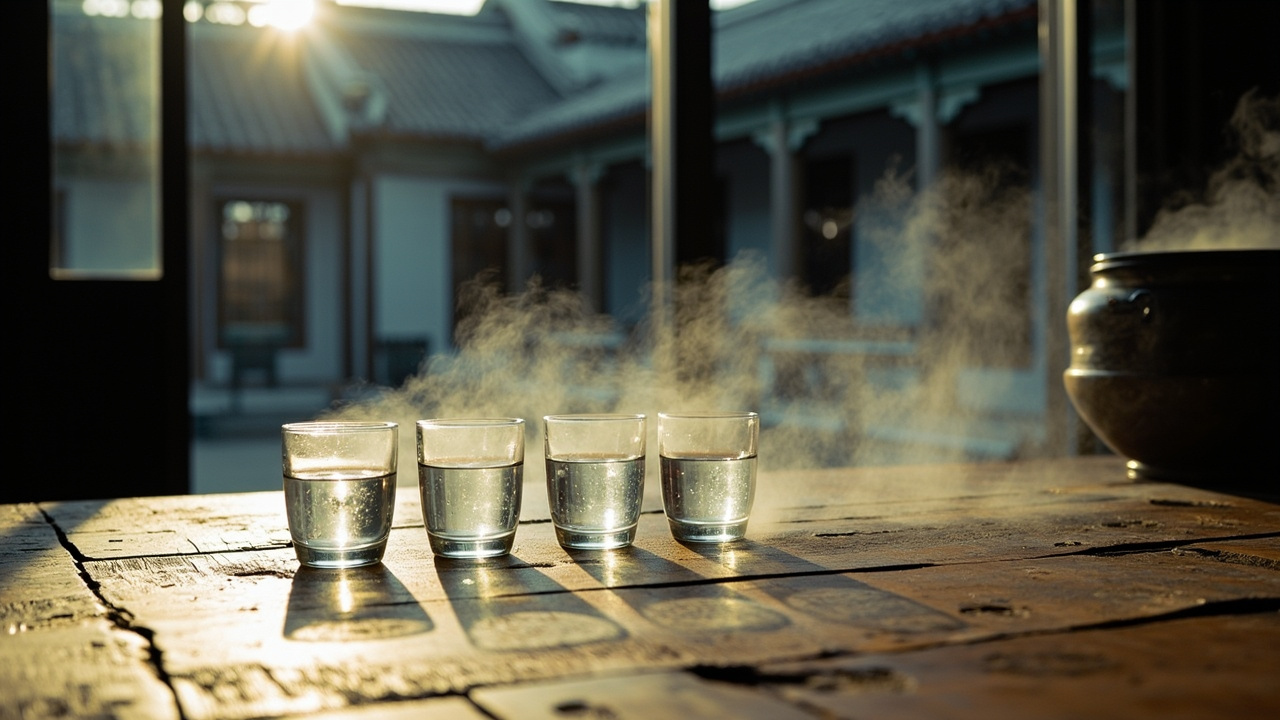
The first time I really tasted baijiu, I was at a wedding banquet in Chengdu, and a man named Uncle Chen, who had the kind of face that looked like it had been carved from walnut wood, insisted I do a ganbei with him. The glass was tiny, the liquid clear, and the smell hit me like a flaming nail gun. It burned going down in a way that felt less like drinking and more like a test of character. The table erupted in applause. I coughed, my eyes watered, and Uncle Chen slapped me on the back so hard I nearly fell off my chair. That was seven years ago. Since then, I’ve traveled to every major liquor-producing region in China, visited distilleries that range from industrial mega-factories to family-run workshops hidden in mountain valleys, and learned to appreciate the sheer, chaotic complexity of a spirit that most Westerners either fear or dismiss.
This guide is for the first-time visitor to China who wants to understand baijiu without getting lost in the weeds. It’s not a masterclass in distillation. It’s a practical, boots-on-the-ground look at where to taste it, how to order it, and how to survive the experience without ending up face-down on a banquet table. I’ll cover the best cities for a liquor-focused trip, the specific distilleries you can actually visit, how to navigate the etiquette, and the honest truth about what it costs and where the tourist traps are.
Quick answer
For a first-time tourist, the best way to experience baijiu is to visit one of the major “liquor capitals” like Moutai Town in Guizhou or the distilleries around Luzhou and Yibin in Sichuan. A day trip to a distillery costs roughly $30–$60 (CNY 200–400) including transport and a tasting, and the best season is spring (April–May) or autumn (September–October) when the weather is mild. If you’re on a standard 10-day tour, you can easily add a baijiu stop to a Chengdu or Guizhou itinerary without significant detours.
The Short Version
If you only have 90 seconds, here’s the deal: Baijiu is China’s national spirit, and it’s not for the faint of heart. It’s usually 40–60% alcohol, and the flavor ranges from fruity and floral to funky and savory. The most famous styles are sauce-aroma (from Guizhou) and strong-aroma (from Sichuan). You can’t visit China and skip it entirely, but you also don’t need to become an expert. Just know how to say ganbei (cheers), hold your glass properly, and sip slowly. Skip the cheap bottles at the supermarket; go for a mid-range Moutai or Wuliangye if you want to understand the hype.
How I Picked These
I didn’t pick these places from a brochure. I picked them by getting lost. Over the past seven years, I’ve taken overnight trains to Guizhou, hired a driver in Luzhou who spoke no English and drove me through foggy hills to a distillery that wasn’t on any map, and sat in smoky tasting rooms in Beijing where the owner poured me samples from unlabeled jars. I’ve made mistakes, like ordering a bottle of “Maotai” at a tourist restaurant in Shanghai that was definitely not Maotai. I’ve also had moments of genuine revelation, like tasting a 30-year-old vintage in a dusty warehouse in Yibin that made me understand why people pay thousands of dollars for this stuff. These are the places that survived my skepticism and made me a reluctant convert.
Comparison Table
| Rank | Place | Best For | Approx Cost (USD) | Time Needed | When to Go |
|---|---|---|---|---|---|
| 1 | Moutai Town, Guizhou | The pilgrimage, sauce-aroma | $50–$100 (CNY 350–700) | Full day | Spring or autumn |
| 2 | Luzhou Laojiao, Sichuan | History, strong-aroma | $20–$40 (CNY 140–280) | Half day | Year-round |
| 3 | Yibin Wuliangye, Sichuan | Scale, premium tasting | $30–$60 (CNY 210–420) | Half day | Year-round |
| 4 | Beijing Baijiu Museum | Quick intro, no travel | $10–$15 (CNY 70–100) | 2 hours | Any time |
| 5 | Chengdu Qionglai | Boutique, craft baijiu | $15–$30 (CNY 100–210) | Half day | Spring |
| 6 | Shanxi Xinghuacun | The original Fenjiu | $20–$40 (CNY 140–280) | Half day | Spring/autumn |
| 7 | Guizhou Xijiu | Less crowded alternative | $30–$50 (CNY 210–350) | Full day | Spring/autumn |
| 8 | Shanghai Baijiu Bars | Urban tasting, no travel | $20–$50 (CNY 140–350) | Evening | Any time |
| 9 | Xi’an Liquor Street | Street-side tasting | $10–$20 (CNY 70–140) | 1–2 hours | Evening |
| 10 | Hong Kong Baijiu Club | English-friendly scene | $30–$60 (CNY 210–420) | Evening | Any time |
Moutai Town, Guizhou — The Pilgrimage
I arrived in Moutai Town on a grey morning, and the air smelled like a bakery that had caught fire. The whole valley reeks of fermenting grain, a sweet-sour funk that sticks to your clothes. This is the Vatican of baijiu, home to the most famous and expensive spirit in China. The town itself is a strange mix of gleaming new buildings and old alleyways where workers still shovel grain by hand.
Why it’s special: This is where sauce-aroma baijiu was perfected. The local microclimate, with its humid air and unique microbes, is considered essential to the flavor. You can visit the Moutai Distillery, but the real experience is walking through the town and seeing the hundreds of smaller distilleries that line the Chishui River.
📍 Location: Moutai Town, Renhuai, Guizhou Province. About 2 hours by car from Zunyi.
🎫 Entry fee: The Moutai Distillery tour is free, but you need to book in advance through a local agency or your hotel. Tasting sessions cost $20–$50 (CNY 140–350) depending on the vintage.
🕒 Opening hours: The distillery is open 9:00 AM–5:00 PM, but it’s closed for the Chinese New Year holiday (late January to mid-February).
🚕 How to get there: Take a high-speed train from Guiyang to Zunyi (about 1 hour, $20/CNY 140), then hire a car or taxi for the remaining 2-hour drive. There’s also a direct bus from Zunyi’s bus station, but it’s slow and crowded.
📅 When to visit: Spring (April–May) is ideal. The weather is mild, and the river is full. Avoid summer, when the humidity is brutal.
💡 Insider tips: Don’t buy “Moutai” from street vendors. It’s almost certainly fake. If you want to buy a bottle, go to the official Moutai store in town and bring your passport. Also, the local restaurants serve a house baijiu that’s often better than the big brands and costs a fraction of the price. Ask for sanhua (scattered flower), a local style that’s smoother than the mass-market stuff.
I met a retired distillery worker named Mr. Zhou who spent 40 years at Moutai. He told me he’s never bought a bottle of his own product because it’s too expensive. He drinks the local stuff, which he says is “just as good, but without the name.”
Luzhou Laojiao, Sichuan — The Oldest Living Distillery
Luzhou Laojiao is the kind of place that makes you feel like you’ve stepped into a time machine. The distillery has been operating continuously for over 400 years, and the oldest fermentation pits date back to the Ming Dynasty. Walking through the ancient cellars, you can see the actual pits where the grains have been fermenting for centuries, a living museum of microbial history.
Why it’s special: This is the birthplace of strong-aroma baijiu, the most popular style in China. The flavor is bold, fruity, and slightly sweet, with a distinct note of pineapple and banana. The distillery is also a UNESCO World Heritage candidate, and the old town around it is charming.
📍 Location: Luzhou, Sichuan Province. About 2.5 hours by high-speed train from Chengdu.
🎫 Entry fee: $15 (CNY 100) for the guided tour, which includes a tasting of three different vintages.
🕒 Opening hours: 8:30 AM–5:30 PM, daily. Closed during Chinese New Year.
🚕 How to get there: Take the high-speed train from Chengdu East Station to Luzhou (about 1.5 hours, $25/CNY 175). From the station, it’s a 15-minute taxi ride to the distillery.
📅 When to visit: Any time of year, but the spring is best for the surrounding countryside, which is full of rapeseed flowers in March and April.
💡 Insider tips: The guided tour is in Chinese, but you can ask for an English audio guide at the ticket office. Don’t skip the tasting room at the end; they pour a 20-year-old vintage that’s worth the trip alone. Also, try the local snack Luzhou lajiao (spicy chicken) at a restaurant near the distillery. It pairs surprisingly well with the baijiu.
I made the mistake of trying to drink a full glass of the 20-year-old vintage like it was water. The distillery guide, a young woman named Xiao Li, laughed and told me to sip it slowly. “This is not beer,” she said. “This is history.”
Yibin Wuliangye, Sichuan — The Big Industrial Show
Wuliangye is the second most famous baijiu brand in China, and its distillery in Yibin is a massive industrial complex that looks more like a tech campus than a liquor factory. The scale is overwhelming: thousands of workers, endless rows of fermentation pits, and a bottling line that moves faster than you can blink.
Why it’s special: Wuliangye is known for its “five-grain” recipe, which uses sorghum, rice, glutinous rice, wheat, and corn. The result is a complex, slightly floral spirit that’s smoother than Moutai. The distillery tour is a fascinating look at how baijiu is made at an industrial scale.
📍 Location: Yibin, Sichuan Province. About 1.5 hours by high-speed train from Chengdu.
🎫 Entry fee: $20 (CNY 140) for the standard tour, $40 (CNY 280) for the premium tour that includes a tasting of the top-shelf vintages.
🕒 Opening hours: 9:00 AM–5:00 PM, daily. Closed during Chinese New Year.
🚕 How to get there: Take the high-speed train from Chengdu East Station to Yibin West Station (about 1 hour, $20/CNY 140). From there, it’s a 20-minute taxi ride to the distillery.
📅 When to visit: Weekdays are better, as the weekend crowds can be overwhelming. The distillery is busiest during the October Golden Week holiday, so avoid that.
💡 Insider tips: The premium tour is worth the extra money. You get to taste a 30-year-old Wuliangye that retails for over $1,000 (CNY 7,000) a bottle. Also, the gift shop sells smaller bottles (50ml) that are perfect for bringing home. Don’t buy the giant bottles; they’re heavy and you’ll regret it at the airport.
I met a tour guide named Mr. Wang who had worked at Wuliangye for 25 years. He told me he drinks a small glass of baijiu every night before dinner. “It’s not about getting drunk,” he said. “It’s about warming the stomach and the heart.”
Beijing Baijiu Museum — The Quick Intro
If you’re in Beijing and don’t have time to travel to a distillery, the Baijiu Museum in the Chaoyang district is a solid introduction. It’s small, manageable, and surprisingly well-curated, with exhibits on the history of baijiu, the different aroma types, and the cultural significance of the spirit.
Why it’s special: It’s the only museum in Beijing dedicated to baijiu, and it’s a great way to get your bearings before you start tasting. The museum also has a tasting room where you can sample a variety of styles side by side, which is invaluable for understanding the differences.
📍 Location: Chaoyang District, Beijing. Near the 798 Art District.
🎫 Entry fee: $10 (CNY 70) for the museum, $15 (CNY 100) for the museum plus tasting.
🕒 Opening hours: 10:00 AM–6:00 PM, Tuesday to Sunday. Closed on Mondays.
🚕 How to get there: Take Subway Line 14 to Jiangtai Station, Exit B, then walk 10 minutes east. The museum is on Jiuxianqiao Road, near the 798 Art District.
📅 When to visit: Any time, but weekday afternoons are the quietest. The museum is popular with school groups, so avoid mornings.
💡 Insider tips: The tasting room is where you should spend your money. They offer a flight of five different baijiu styles, from light-aroma to sauce-aroma, which will teach you more than any book. Also, the museum’s gift shop sells mini bottles of baijiu that are perfect for souvenirs.
I tried a rice-aroma baijiu from Guangxi at the tasting bar, and it was completely different from anything I’d had before. It was floral and slightly sweet, almost like a sake. The bartender, a young guy named Li Wei, told me that most foreigners don’t know about it. “They only know Moutai,” he said. “But China has many, many flavors.”
Chengdu Qionglai — The Craft Baijiu Scene
Chengdu is the food capital of China, and it’s also becoming a hub for craft baijiu. The Qionglai area, about an hour southwest of the city, is home to a new generation of distillers who are experimenting with traditional techniques and modern flavors. These are small-batch operations, often run by young entrepreneurs who are trying to make baijiu accessible to a new generation.
Why it’s special: This is where you’ll find baijiu that doesn’t taste like the big brands. Craft distillers are playing with aging, blending, and even barrel-finishing, resulting in spirits that are smoother and more approachable. It’s a glimpse into the future of baijiu.
📍 Location: Qionglai, Sichuan Province. About 1 hour by car from Chengdu.
🎫 Entry fee: Distillery visits are usually free, but tastings cost $10–$20 (CNY 70–140).
🕒 Opening hours: Varies by distillery. Most are open 10:00 AM–6:00 PM, but it’s best to call ahead or book through a local tour operator.
🚕 How to get there: Take a taxi or Didi from Chengdu city center. The drive takes about 1 hour and costs $20–$30 (CNY 140–210). Alternatively, take the high-speed train from Chengdu West Station to Qionglai Station (about 30 minutes, $10/CNY 70), then a taxi to the distillery.
📅 When to visit: Spring (March–May) is the best time, as the surrounding countryside is lush and green. The distilleries are also less crowded than the big names.
💡 Insider tips: Look for distilleries that offer “blind tastings,” where they pour you samples without telling you the brand or price. It’s a fun way to test your palate. Also, many craft distillers sell their baijiu in small, beautifully designed bottles that make great gifts.
I visited a distillery run by a couple in their 30s who had left corporate jobs in Beijing to start a baijiu brand. They poured me a sample that had been aged in a used whiskey barrel, and it was unlike anything I’d tasted before. “We’re not trying to replace Moutai,” the husband said. “We’re trying to make baijiu that people actually enjoy.”
Shanxi Xinghuacun — The Original Fenjiu
Fenjiu is the oldest baijiu in China, with a history that stretches back over 1,500 years. The Xinghuacun distillery in Shanxi Province is the birthplace of light-aroma baijiu, a style that’s clean, crisp, and surprisingly easy to drink. It’s a completely different experience from the heavy, funky sauce-aroma of Moutai.
Why it’s special: If you want to understand the full spectrum of baijiu, you need to try Fenjiu. It’s the “gin” of Chinese spirits, with a clear, botanical character that’s refreshing and approachable. The distillery is also located in a beautiful valley, surrounded by mountains and ancient temples.
📍 Location: Fenyang, Shanxi Province. About 1.5 hours by car from Taiyuan.
🎫 Entry fee: $15 (CNY 100) for the tour and tasting.
🕒 Opening hours: 8:30 AM–5:30 PM, daily. Closed during Chinese New Year.
🚕 How to get there: Take a high-speed train from Beijing West Station to Taiyuan South Station (about 2.5 hours, $50/CNY 350). From there, hire a car or taxi for the 1.5-hour drive to the distillery.
📅 When to visit: Spring and autumn are the best times, as the summer can be hot and dusty.
💡 Insider tips: The distillery has a restaurant that serves a traditional Shanxi meal, and they pair each course with a different Fenjiu vintage. It’s a fantastic way to understand how baijiu works with food. Also, try the zhuyeqing (bamboo leaf green) liqueur, which is made by infusing Fenjiu with bamboo leaves and other herbs. It’s sweet, herbal, and completely unique.
I sat next to a retired schoolteacher from Taiyuan who was visiting the distillery for the fifth time. “Fenjiu is like a good friend,” he told me. “It never surprises you, but it always makes you feel better.”
Guizhou Xijiu — The Underrated Alternative
Moutai gets all the attention, but Xijiu is the secret favorite of many baijiu drinkers. Located in the same region as Moutai, Xijiu produces a sauce-aroma baijiu that’s similar in style but often considered smoother and more balanced. It’s also significantly cheaper, making it a great option for tourists who want the experience without the Moutai price tag.
Why it’s special: Xijiu is a “hidden gem” in the baijiu world. It’s not as famous as Moutai, but it’s respected by connoisseurs for its quality and consistency. The distillery is also located in a beautiful valley, with a river running through it and mountains on all sides.
📍 Location: Xishui County, Guizhou Province. About 3 hours by car from Zunyi.
🎫 Entry fee: $20 (CNY 140) for the tour and tasting.
🕒 Opening hours: 9:00 AM–5:00 PM, daily. Closed during Chinese New Year.
🚕 How to get there: Take a high-speed train from Guiyang to Zunyi, then hire a car for the 3-hour drive. The road is winding and mountainous, so be prepared for a slow journey.
📅 When to visit: Spring and autumn are the best times. The summer is hot and humid, and the winter can be cold and foggy.
💡 Insider tips: The distillery’s tasting room offers a “vertical tasting” of Xijiu vintages from different years. It’s a fascinating way to see how the spirit evolves with age. Also, the distillery has a small hotel on site, which is a great option if you want to stay overnight and explore the surrounding countryside.
I had a conversation with a local farmer who was delivering grain to the distillery. He told me he’s been growing sorghum for Xijiu for 20 years. “The best sorghum comes from this valley,” he said. “The soil, the water, the air. It’s all here.”
Shanghai Baijiu Bars — The Urban Tasting Experience
If you’re not up for a long journey, Shanghai has a growing number of bars that specialize in baijiu. These are not your typical Chinese banquet halls; they’re sleek, modern cocktail bars where bartenders are experimenting with baijiu in ways that would make a traditionalist’s head spin.
Why it’s special: This is where you can taste baijiu without the pressure of a formal banquet. The bartenders are knowledgeable, the atmosphere is relaxed, and you can sample a wide range of styles and cocktails. It’s the perfect introduction for a first-time drinker.
📍 Location: Various neighborhoods, but the best concentration is in the Former French Concession (Xuhui District) and Jing’an District.
🎫 Entry fee: Cocktails range from $10–$20 (CNY 70–140). Tasting flights are $20–$30 (CNY 140–210).
🕒 Opening hours: Most bars open at 6:00 PM and close around 2:00 AM.
🚕 How to get there: Take the Shanghai Metro to Changshu Road Station (Line 1 or 7) and walk to the Former French Concession. The bars are spread out, so it’s best to pick one or two and plan your route.
📅 When to visit: Any time, but Friday and Saturday nights are the liveliest. If you want a quieter experience, go on a Tuesday or Wednesday.
💡 Insider tips: Ask the bartender for a “baijiu flight,” which usually includes three or four different styles. It’s the best way to find what you like. Also, try a baijiu-based cocktail, like a “Moutai Sour” or a “Baijiu Negroni.” They’re surprisingly good.
I sat at a bar in the Former French Concession and watched the bartender make a cocktail with a 10-year-old Moutai. He treated it with the same reverence as a fine whiskey, and the result was a drink that was both familiar and completely new.
Xi’an Liquor Street — The Street-Side Tasting
Xi’an is famous for its Muslim Quarter, but just a few blocks away is a street that’s dedicated to local baijiu. It’s not glamorous, but it’s authentic. The shops are small, the owners are gruff, and the baijiu is poured straight from unlabeled jars.
Why it’s special: This is the real deal. No tasting rooms, no guided tours, just locals drinking baijiu at small tables on the street. It’s a glimpse into how baijiu is actually consumed in China, away from the tourist trail.
📍 Location: Dongxin Street, Xi’an. About 15 minutes by taxi from the Bell Tower.
🎫 Entry fee: A glass of baijiu costs $1–$3 (CNY 7–20). A small bottle is $5–$10 (CNY 35–70).
🕒 Opening hours: The street is busiest in the evening, from 6:00 PM to midnight.
🚕 How to get there: Take the Xi’an Metro to Zhonglou Station (Line 2), Exit C, and walk east for 15 minutes. The street is on the north side of Dongxin Street.
📅 When to visit: Evening, after the sun goes down. The street comes alive with the smell of grilled meat and the sound of glasses clinking.
💡 Insider tips: Don’t be afraid to ask for a taste before you buy. The shop owners are happy to pour you a small sample. Also, pair your baijiu with some grilled lamb skewers from the nearby Muslim Quarter. The combination is a local tradition.
I made the mistake of trying to haggle over the price of a bottle. The shop owner, a woman in her 60s, looked at me like I was insane. “This is not a tourist shop,” she said. “The price is the price.” I bought the bottle.
Hong Kong Baijiu Club — The English-Friendly Scene
Hong Kong is a different world from mainland China, but it has a small but passionate baijiu scene. The Hong Kong Baijiu Club hosts regular tasting events and workshops, all conducted in English. It’s the perfect place for a first-timer to learn about baijiu without the language barrier.
Why it’s special: The club is run by a group of expats and locals who are obsessed with baijiu. They organize tastings, distillery tours, and even baijiu-pairing dinners. It’s a welcoming, non-intimidating environment.
📍 Location: Various venues across Hong Kong, but most events are held in Central or Sheung Wan.
🎫 Entry fee: Tasting events range from $30–$60 (CNY 210–420), depending on the lineup.
🕒 Opening hours: Events are usually held on weekends, from 3:00 PM to 6:00 PM.
🚕 How to get there: Take the MTR to Central Station (Island Line) and follow the event details. Most venues are within walking distance of the station.
📅 When to visit: Check the club’s website or social media for upcoming events. They usually have one or two events per month.
💡 Insider tips: The club’s founders are incredibly knowledgeable and happy to answer questions. Don’t be shy about asking for recommendations. Also, the events often feature rare and vintage baijiu that you won’t find anywhere else.
I attended a tasting where we tried a baijiu from the 1980s that had been stored in a clay jar. It was smooth, complex, and unlike anything I’d ever tasted. The founder, a British guy named Mark, told me that baijiu is “the last great undiscovered spirit in the world.”
FAQ summary
For a first-time tourist, the most practical way to experience baijiu is to visit a distillery in Sichuan or Guizhou, where you can take a guided tour and taste different styles for $15–$50 (CNY 100–350). Moutai Town in Guizhou is the most famous destination, but Luzhou and Yibin in Sichuan offer easier access from Chengdu and are less crowded. If you’re short on time, the Beijing Baijiu Museum and baijiu bars in Shanghai offer a quick, English-friendly introduction. Always carry your passport for ticket purchases, and be prepared to pay with WeChat Pay or Alipay, as cash is rarely accepted. The best time to visit distilleries is spring (April–May) or autumn (September–October), when the weather is mild and the crowds are thinner.
FAQ
Q: Is baijiu safe to drink for a first-timer? A: Yes, but it’s strong (usually 40–60% alcohol), so pace yourself. Start with small sips and drink plenty of water. The key is to sip it slowly, not shoot it like a tequila.
Q: How do I order baijiu at a restaurant? A: You can ask for a small bottle or a glass by saying “yi ping” (one bottle) or “yi bei” (one glass). If you’re unsure, ask the waiter for a recommendation. Most restaurants have a few options, ranging from cheap to premium.
Q: Can I bring baijiu back to my home country? A: Yes, but check your country’s customs regulations. Most countries allow up to 1 liter of alcohol duty-free. If you’re buying a large bottle, keep the receipt to show at customs.
Q: Do I need to know Chinese to visit a distillery? A: No, but it helps. Most distilleries offer English audio guides or have staff who speak basic English. If you’re visiting a smaller distillery, bring a translation app like Google Translate or Pleco.
Q: What’s the difference between Moutai and other baijiu? A: Moutai is the most famous sauce-aroma baijiu, known for its complex, savory, and slightly funky flavor. Other styles, like strong-aroma (Luzhou Laojiao) and light-aroma (Fenjiu), are different in flavor and aroma. It’s worth trying all three to find your preference.
Q: Is it rude to refuse a drink of baijiu? A: It’s not rude, but it can be seen as impolite in formal settings. If you don’t want to drink, you can say “wo bu hui he jiu” (I can’t drink alcohol) or “wo dui jiu guo min” (I’m allergic to alcohol). Most people will understand.
Q: How much does a good bottle of baijiu cost? A: A decent bottle of baijiu costs $20–$50 (CNY 140–350). Premium bottles, like Moutai, can cost $200–$500 (CNY 1,400–3,500) or more. For a first-timer, a mid-range bottle from a local distillery is a good choice.
The Honest Wrap-up
This guide is for the curious traveler who wants to understand China through its most iconic spirit. It’s not for the person who wants to get drunk cheaply, or the person who’s looking for a “gentle” introduction to Chinese culture. Baijiu is a challenge, but it’s a rewarding one. If you’re willing to step outside your comfort zone, you’ll discover a world of flavor that most foreigners never get to experience. My final advice: don’t overthink it. Order a glass, raise it to your new friends, and say ganbei. The worst that can happen is you’ll cough a little. The best that can happen is you’ll understand why this spirit has been at the heart of Chinese life for centuries.
Topics
More guides you may like
Top 10 Bridges in China
China's bridges are engineering marvels spanning mountains, rivers, and seas. Here are 10 of the most spectacular, from ancient stone to modern steel.
8 min read

Top 10 Buddhist Sites in China
From the Leshan Giant Buddha to the Dunhuang Caves, these 10 Buddhist sites represent 2,000 years of China's spiritual heritage.
9 min read
Top 10 Day Trips from Beijing You Shouldn't Miss
Beijing is packed with history, but some of China's best experiences are just a few hours away. Here are 10 day trips that will transform your visit.
9 min read
Top 10 Hidden Gems in China Off the Beaten Path
Beyond the Great Wall and Terracotta Warriors, China has incredible hidden destinations few tourists ever reach. Here are 10 underrated gems worth the detour.
9 min read
Top 10 Markets and Shopping Streets in China
From Shanghai's Bund to Beijing's Silk Street - 10 markets where foreigners can haggle, explore, and bring home authentic Chinese goods.
9 min read
Top 10 Museums in China You Shouldn't Miss
China's museums span 5,000 years of civilization. These 10 - from the Palace Museum to Xi'an's terracotta gallery - are unmissable for culture lovers.
9 min read