
China Buddhist Pilgrimage Route 2026: The Complete 2026 Guide
The rain was coming down sideways off the mountains, the kind of cold drizzle that seeps into your bones no matter how many layers you're wearing.
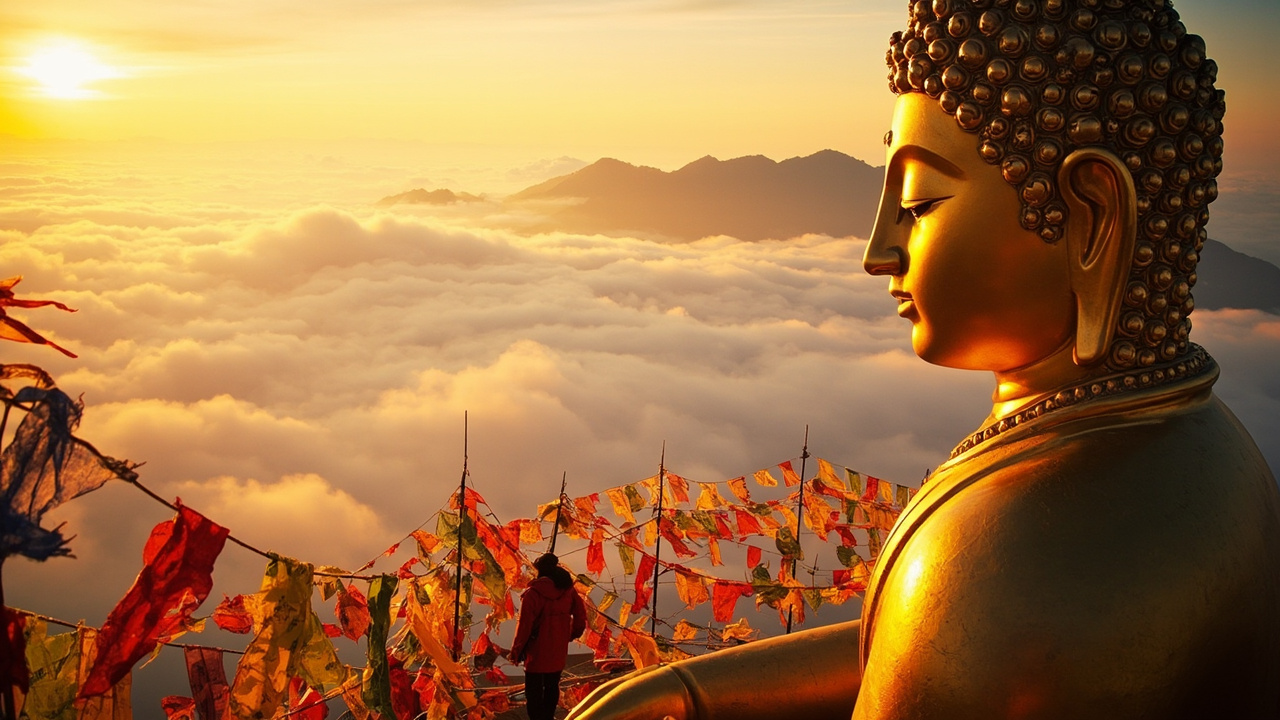
The rain was coming down sideways off the mountains, the kind of cold drizzle that seeps into your bones no matter how many layers you’re wearing. I was standing in a courtyard in Wutaishan, shivering, watching an elderly monk in a faded grey robe methodically wipe down a stone stele with a wet cloth. He didn’t look up. He just kept wiping, the same motion over and over, like he had all the time in the world. Which, I suppose, he did. I’d been living in Beijing for four years at that point, and I’d seen the temples in the city, the ones packed with tour groups and selfie sticks. This was different. This was the China that doesn’t make it onto the postcards.
That trip started me on a long, slow loop through the country’s Buddhist heartland. I’ve since made the journey four more times, always tweaking the route, always finding something I missed. This guide is the result of those trips. It’s not a list of every temple in China, because that would be a book the size of a phone book. It’s the route I’d send my own mother on, or my best friend who’s never been east of Greece. It’s practical, it’s opinionated, and it’s built for people who want the real thing without needing a PhD in Chinese history.
By the end of this, you’ll know exactly where to go, how to get there without losing your mind, what it’ll cost, and the small things nobody tells you, like which gate to use at Wutai to avoid the tour bus swarm.
Quick answer
For a first-time visitor, the classic China Buddhist pilgrimage route runs from Beijing to Xi’an, then south to Chengdu and Mount Emei, with an optional extension to Tibet. Plan for 10-14 days and budget $1,500-$2,500 (CNY 10,800-18,000) per person including domestic flights, hotels, and entry fees. Most nationalities get 10-day visa-free entry through 2026, so check if you qualify before paying for a visa. The best season is April-May or September-October, when the weather is mild and the crowds are thinner.
The Short Version
If you have 90 seconds, here’s the deal. Don’t try to see everything. Pick four or five places and go deep. The route that works best for first-timers is Beijing (Lingguang Temple) to Xi’an (Famen Temple) to Chengdu (Wenshu Monastery) to Mount Emei. That’s it. That’s the core. Add Wutaishan if you have extra days and don’t mind cold weather. Skip Tibet on your first trip, it’s logistically complicated and the permits are a headache. Bring cash as backup, set up Alipay before you land, and download a translation app that works offline. You’ll be fine.
How I Picked These
I didn’t pick these places from a guidebook. I picked them by getting lost. I’ve taken buses that went nowhere, walked into temples that weren’t on any map, and sat in monastery kitchens drinking tea with monks who spoke no English. I’ve also made plenty of mistakes, like showing up to a temple on its weekly rest day, or paying triple the entrance fee because I didn’t have small bills. Every place on this list earned its spot because it’s genuinely worth the journey, not because it’s famous. I’ve also talked to a lot of Chinese pilgrims along the way, the ones doing the circuit with their grandmothers, and their priorities shaped mine. They care about authenticity, not Instagram angles.
Comparison Table
| Rank | Place | Best For | Approx Cost (USD) | Time Needed | When to Go |
|---|---|---|---|---|---|
| 1 | Mount Emei, Sichuan | The full pilgrimage experience | $100-150 (CNY 720-1,080) | 2-3 days | Apr-Oct |
| 2 | Wutaishan, Shanxi | High-altitude temples, fewer crowds | $80-120 (CNY 580-870) | 2 days | May-Sep |
| 3 | Famen Temple, Xi’an | The ultimate relic site | $20-30 (CNY 145-215) | Half day | Year-round |
| 4 | Lingguang Temple, Beijing | Accessible, historic, near the city | $10-15 (CNY 70-110) | Half day | Mar-Nov |
| 5 | Wenshu Monastery, Chengdu | Urban calm, great vegetarian food | $5-10 (CNY 35-70) | 2-3 hours | Year-round |
| 6 | Putuo Mountain, Zhejiang | Island setting, Guanyin devotion | $150-200 (CNY 1,080-1,440) | 2 days | Apr-Oct |
| 7 | Longmen Grottoes, Luoyang | Cave art, Buddhist sculpture | $30-40 (CNY 215-290) | Half day | Mar-Nov |
| 8 | Dazu Rock Carvings, Chongqing | Lesser-known, incredible detail | $25-35 (CNY 180-250) | Half day | Year-round |
| 9 | Jokhang Temple, Lhasa | Tibetan Buddhism, pilgrimage hub | $85 (CNY 610) | Half day | Apr-Oct |
| 10 | Shaolin Temple, Henan | Martial arts, Zen roots | $35-45 (CNY 250-325) | Half day | Mar-Nov |
1. Mount Emei ?The Full Pilgrimage Experience
I remember standing at the Golden Summit at 6 AM, watching the clouds roll out below me like a white ocean. The temperature was just above freezing, my hands were numb, and I couldn’t feel my toes. I’ve never been happier to be miserable. The sun came up and turned the sea of clouds pink, and the giant golden statue of Samantabhadra caught the light like it was on fire. A Chinese woman next to me, who’d been walking for three days straight, started crying. I understood why.
Mount Emei is the real deal. It’s one of China’s four sacred Buddhist mountains, and it’s the only one I’d call genuinely transformative. The hike up takes two to three days if you’re doing it properly, but you can also take a bus to the top and walk down, which is what most people do. The trail passes through temperate forest, then alpine meadows, then bare rock. The temples along the way range from tiny hermitages to massive complexes. It’s exhausting, and it’s worth every step.
Location: Mount Emei Scenic Area, Emeishan City, Leshan, Sichuan Province. The base town is Baoguo Temple area.
Entry fee: $55 (CNY 400) for the scenic area. The cable car to the summit is an additional $20 (CNY 145) each way. If you’re hiking, there’s no extra charge for the trail itself.
Opening hours: The scenic area is open 6 AM to 6 PM. The cable car runs from 7 AM to 5 PM. Temples on the mountain have their own hours, usually 8 AM to 5 PM.
How to get there: From Chengdu East Station, take the high-speed train to Emeishan Station (about 1 hour, $15/CNY 110). From the station, take bus 5A to the Baoguo Temple visitor center (30 minutes, $1/CNY 7).
?When to visit: April-May or September-October. Summer is rainy and foggy. Winter is beautiful but brutally cold at the summit. Go on a weekday if you can, the weekends are packed with domestic tourists.
Insider tips: Bring your passport to the ticket office, they need it for the ticket. Rent a padded coat at the base if you’re going to the summit, it’s $3 (CNY 20) and worth every yuan. The vegetarian food at the monasteries is simple but good, and they’ll feed you if you ask. Don’t bother with the monkey warning sticks, the monkeys are more scared of you than you are of them. The sunrise at the summit is the single best moment of the entire trip.
I met a monk at the Xixiangchi Temple who’d been on the mountain for 22 years. He didn’t speak English, and I didn’t speak enough Chinese, but we sat in silence for an hour watching the fog roll through the valley. It was the most peaceful hour of my life.
2. Wutaishan ?The High-Altitude Escape
The first time I went to Wutaishan, I made the mistake of going in late October. The temperature dropped to minus 10 at night, and my hotel room had no heating. I slept in my down jacket, shivering under three blankets. The next morning, I walked outside and saw the temples dusted with fresh snow, the prayer flags snapping in the wind, and I forgot all about being cold.
Wutaishan is the highest of the four sacred mountains, and it feels like it. The air is thin, the landscape is stark, and the temples are scattered across a high plateau that feels more like Tibet than central China. It’s less polished than Emei, more raw. The main temple, Tayuan Temple, has a white stupa that you can see from miles away. The whole area is a UNESCO World Heritage Site, and it’s home to some of the oldest wooden buildings in China.
Location: Wutai County, Xinzhou, Shanxi Province. The main town is Taihuai, which is the base for exploring the temples.
Entry fee: $45 (CNY 320) for the scenic area. Individual temples are mostly free or charge a small fee of $2-5 (CNY 15-35).
Opening hours: Most temples are open 7 AM to 6 PM. Some of the smaller ones close earlier, around 4 PM.
How to get there: From Beijing, take the high-speed train to Taiyuan (2.5 hours, $35/CNY 250), then a bus to Wutaishan (3.5 hours, $10/CNY 70). There’s also a direct bus from Beijing that takes about 6 hours and costs $25 (CNY 180).
?When to visit: May-September. The rest of the year is cold, and some temples close during the winter. The best time is late May to early June, when the wildflowers are out.
Insider tips: The altitude is around 3,000 meters, so take it easy on the first day. The vegetarian food at the monasteries is some of the best in China, especially the mushroom dishes. Hire a local guide for the day, they know which temples have the best murals and which ones to skip. The bus from Taiyuan can sell out, so book in advance. If you’re there in the summer, bring a warm jacket, the temperature drops fast in the evening.
I got lost trying to find the Foyang Temple and ended up at a small monastery where a nun offered me tea and showed me a 1,000-year-old mural that wasn’t on any map. She didn’t speak a word of English, but we communicated through gestures and smiles. It was the best mistake I’ve ever made.
3. Famen Temple ?The Relic Site
The first thing you see at Famen Temple is the massive new complex, all gold and marble and tourist shops. It feels more like a theme park than a temple. I almost turned around and left. I’m glad I didn’t, because behind all the glitz is one of the most important Buddhist sites in China.
Famen Temple is famous for one thing: the finger bone relic of the Buddha, which was discovered in a hidden underground palace in 1987. The relic is kept in a giant golden pagoda that’s guarded by monks and visible through a glass case. It’s a strange experience, standing there with hundreds of other pilgrims, all of them bowing and praying, while the relic sits there in its golden shrine. Whether you believe it’s real or not, the energy in that room is undeniable.
Location: Famen Town, Fufeng County, Baoji, Shaanxi Province, about 120 km west of Xi’an.
Entry fee: $35 (CNY 250) for the main temple complex. The museum with the underground palace artifacts is included.
Opening hours: 8 AM to 6 PM daily. The relic viewing room can have long lines, especially on weekends.
How to get there: From Xi’an, take a bus from the Xi’an West Bus Station to Famen Temple (1.5 hours, $8/CNY 55). There are also daily tour buses from the Xi’an City Wall area. The drive is scenic, through farmland and small villages.
?When to visit: Year-round. The temple is indoors for the most part, so it’s fine in any season. Go early in the morning to beat the tour groups.
Insider tips: The underground palace museum is the real treasure, don’t skip it. The glass case with the relic is at the top of the pagoda, and you can’t take photos inside. The vegetarian restaurant on site is surprisingly good, try the noodles. If you’re on a budget, skip the tour bus and take the public bus, it’s a third of the price. The temple complex is huge, budget at least three hours.
I watched a group of elderly pilgrims from rural Shaanxi prostrate themselves in front of the relic, their foreheads touching the cold marble floor. They’d probably saved for years to make this trip. I felt like an intruder, but also privileged to witness it.
4. Lingguang Temple ?The Accessible Classic
If you’re in Beijing and only have a half day, Lingguang Temple is the one to see. It’s not the most famous temple in the city, and that’s exactly why I like it. It’s tucked into the hills of the Western Fragrant Hills, a 30-minute drive from the center, and it feels a world away from the chaos of the capital.
The temple itself is small, but it has a secret: it houses a tooth relic of the Buddha, which was brought to China from India in the 5th century. The relic is kept in a small pagoda at the back of the temple, and it’s surprisingly understated. No golden shrine, no dramatic lighting. Just a simple glass case with a tiny bone fragment. It’s the most humble thing I’ve ever seen in a Chinese temple, and it’s all the more powerful for it.
Location: Fragrant Hills Park, Haidian District, Beijing. The temple is inside the park, about a 20-minute walk from the main gate.
Entry fee: $10 (CNY 70) for the park, plus $5 (CNY 35) for the temple. The park fee is worth it just for the walk through the hills.
Opening hours: 6 AM to 6:30 PM daily. The temple itself is open 8 AM to 5 PM.
How to get there: Take Metro Line 10 to Bagou Station, Exit A, then transfer to bus 318 or 360 to Fragrant Hills Park. Or take a taxi from central Beijing, about $15 (CNY 110) and 40 minutes. The park entrance is obvious, look for the big gate with the red lanterns.
?When to visit: October is the best time, when the maple leaves turn red. The park gets crowded on weekends, so go on a weekday morning.
Insider tips: The tooth relic is only visible from a specific angle, so ask the monk on duty to point it out. The walk from the park gate to the temple is uphill, wear comfortable shoes. There’s a tea house near the temple that serves excellent jasmine tea, perfect for a rest. The park is huge, so don’t try to see everything, just focus on the temple and the surrounding hills.
I met a retired professor from Beijing Normal University who came to the temple every week to read sutras. He told me, in perfect English, that the tooth relic was “the only thing in Beijing that’s truly quiet.” I think about that every time I’m in the city.
5. Wenshu Monastery ?The Urban Oasis
Chengdu is a city of food, pandas, and tea houses. It’s also home to one of the most peaceful urban temples in China. Wenshu Monastery sits in the middle of the city, surrounded by a wall that blocks out the noise of the streets. Step through the gate, and you’re in another world.
The monastery is a working temple, which means you’ll see monks going about their daily routines, not just performing for tourists. The gardens are immaculate, with bonsai trees and koi ponds. The main hall has a giant golden statue of Wenshu, the bodhisattva of wisdom, and the air smells of incense and old wood. It’s the kind of place where you could sit for hours and not get bored.
Location: Wenshu Monastery Street, Qingyang District, Chengdu, Sichuan Province.
Entry fee: Free. Yes, completely free. You can donate if you want, but there’s no pressure.
Opening hours: 8 AM to 5 PM daily. The vegetarian restaurant inside is open 11 AM to 2 PM.
How to get there: Take Metro Line 1 to Wenshu Monastery Station, Exit B, and walk 5 minutes east. The entrance is on the north side of the monastery, look for the big red wall.
?When to visit: Year-round. The monastery is at its best in the spring, when the magnolias are in bloom. Go early in the morning to see the monks doing their morning prayers.
Insider tips: The vegetarian restaurant inside the monastery is famous, try the mapo tofu (it’s made with mushrooms, not meat). The tea house in the back garden is a great place to rest, they serve excellent local tea for $1 (CNY 7). The souvenir shop sells handmade prayer beads that are actually blessed by the monks. If you’re lucky, you’ll catch a chanting ceremony, they happen most mornings around 9 AM.
I sat in the tea house for an hour, watching a group of elderly locals play mahjong while a monk read a sutra in the background. It was the most Chengdu moment I’ve ever experienced.
6. Putuo Mountain ?The Island of Guanyin
Putuo Mountain is the only one of the four sacred mountains that’s an island, and it feels like it. The ferry ride from the mainland takes about an hour, and as you approach, you see the temples climbing up the hillside, white pagodas against green slopes. It’s the most beautiful approach to any pilgrimage site I’ve ever done.
The island is dedicated to Guanyin, the bodhisattva of compassion, and it’s packed with pilgrims from all over East Asia. The main temple, Puji Temple, is a sprawling complex with a giant bronze statue of Guanyin. There’s also a 33-meter-tall statue of Guanyin on the southern tip of the island, facing the sea. It’s a place of deep devotion, and you can feel it in the air.
Location: Putuo Mountain, Putuo District, Zhoushan, Zhejiang Province. The island is accessible by ferry from Ningbo or Shanghai.
Entry fee: $45 (CNY 320) for the island entrance fee. The ferry from Ningbo costs $15 (CNY 110) one way.
Opening hours: The island is open 24 hours, but the temples are open 8 AM to 5 PM. The ferries run from 6 AM to 6 PM.
How to get there: From Ningbo, take a bus to Zhujiajian Pier (1.5 hours, $10/CNY 70), then the ferry to Putuo Mountain (30 minutes, $15/CNY 110). From Shanghai, it’s a longer trip, about 4 hours total, but there are direct ferries from Wusongkou Pier.
?When to visit: April-October. The weather is best in May and September. Avoid Chinese national holidays, the island gets packed.
Insider tips: The island is walkable, but there are shuttle buses if you’re tired. Bring cash, some of the smaller temples don’t accept mobile payments. The seafood on the island is excellent, try the grilled squid. If you’re staying overnight, book your hotel in advance, they fill up fast. The sunrise at the Guanyin statue is worth the early wake-up.
I watched a group of Japanese pilgrims, all dressed in white, walking in a procession to the main temple. They sang in unison, their voices echoing off the hills. It was a reminder that this place matters to people far beyond China’s borders.
7. Longmen Grottoes ?The Cave Art Marvel
The Longmen Grottoes aren’t a temple, but they’re one of the most important Buddhist sites in China. Carved into limestone cliffs along the Yi River, these caves contain over 100,000 Buddhist statues, some dating back to the 5th century. The most famous is the Vairocana Buddha, a 17-meter-tall figure that’s so well-preserved it looks like it was carved yesterday.
I went there on a hot July day, and the humidity was brutal. But as I climbed the stairs to the main cave and saw the Buddha’s face, serene and massive, I forgot about the sweat. It’s one of those moments where you understand why people spend their lives making art.
Location: Longmen Grottoes, Luolong District, Luoyang, Henan Province, about 12 km south of the city center.
Entry fee: $30 (CNY 215) for the main site. The night tour, when the caves are illuminated, costs an extra $15 (CNY 110).
Opening hours: 8 AM to 6 PM daily. The night tour runs from 7 PM to 10 PM, but only in the summer months.
How to get there: From Luoyang Longmen Station, take bus 67 or 71 to the Longmen Grottoes stop (30 minutes, $1/CNY 7). Or take a taxi from the city center, about $8 (CNY 55) and 20 minutes.
?When to visit: March-May or September-October. Summer is hot and crowded. The night tour is magical, the caves are lit up and the crowds are gone.
Insider tips: The west side of the river has the main caves, but the east side has a great view of the whole site. Take the walkway along the river, it’s less crowded and has the best photo spots. The stairs are steep, wear sturdy shoes. There’s a small museum at the entrance that’s worth a quick look.
I stood next to a Chinese art student who was sketching the Vairocana Buddha. She’d been there for three hours, she said, and she still hadn’t gotten the proportions right. “It’s too perfect,” she said, in English. “It’s impossible to capture.”
8. Dazu Rock Carvings ?The Hidden Gem
If you want to see Buddhist art without the crowds, go to Dazu. These rock carvings, carved between the 9th and 13th centuries, are some of the most detailed and expressive Buddhist sculptures in the world. They’re also relatively unknown to international tourists, which means you’ll have the place almost to yourself.
The carvings are spread across several sites, but the main one is Baodingshan, a cliff face covered in over 10,000 figures. They tell the story of Buddhism in a way that’s both educational and emotional. There’s a carving of the Wheel of Rebirth that’s so intricate you could stare at it for hours. And there’s a carving of a mother and child that’s so tender it made me tear up.
Location: Dazu District, Chongqing Municipality, about 70 km west of Chongqing city center.
Entry fee: $25 (CNY 180) for Baodingshan. The other sites are cheaper, around $10-15 (CNY 70-110).
Opening hours: 9 AM to 5 PM daily. The sites are spread out, so budget a full day.
How to get there: From Chongqing, take a bus from the Chenjiaping Long-Distance Bus Station to Dazu (2 hours, $10/CNY 70). From Dazu town, take a taxi to Baodingshan (20 minutes, $5/CNY 35).
?When to visit: Year-round. The carvings are sheltered, so they’re fine in any weather. Avoid weekends, when local tourists come in droves.
Insider tips: The audio guide is worth the $5 (CNY 35), it explains the stories behind the carvings. The other sites, Beishan and Shimenshan, are less impressive but much quieter. The local specialty is Dazu rock fish, a spicy dish that’s worth trying. Bring water, there’s not much shade on the site.
I met a retired teacher from Chongqing who was visiting for the fifth time. She told me she comes back every year because “the carvings teach me something new about myself each time.” I understood what she meant.
9. Jokhang Temple ?The Tibetan Heart
Lhasa is a different world, and Jokhang Temple is its beating heart. This is the most sacred temple in Tibetan Buddhism, and it’s where pilgrims from all over Tibet come to prostrate themselves in front of the Jowo Buddha, a statue that’s said to be the most important in the country.
The first time I went, I was overwhelmed. The square in front of the temple is filled with pilgrims doing full-body prostrations, their hands wrapped in wooden boards that clack against the stone. The smell of butter lamps and incense is thick in the air. Inside, the temple is dark and crowded, with monks chanting and pilgrims pressing their foreheads against the golden statues.
Location: Barkhor Square, Chengguan District, Lhasa, Tibet Autonomous Region.
Entry fee: $85 (CNY 610) for foreigners. Yes, it’s expensive, but it’s the price of admission to one of the most important religious sites in the world.
Opening hours: 8 AM to 5 PM daily. The temple is busiest in the morning, when the pilgrims come to pray.
How to get there: From Lhasa Airport, take a taxi to the Barkhor area (1 hour, $20/CNY 145). The temple is in the center of the old town, and you can walk from most hotels.
?When to visit: April-October. Winter is cold and many pilgrims stay home. The best time is during the Saga Dawa festival in May, when the city is full of pilgrims.
Insider tips: You need a Tibet Travel Permit to enter Lhasa, which you have to arrange through a tour agency in advance. The permit costs about $50 (CNY 360) and takes a few days to process. Dress conservatively, cover your shoulders and knees. Don’t take photos inside the temple, it’s strictly forbidden. The Barkhor circuit around the temple is a great place to buy souvenirs, but bargain hard.
I watched a young Tibetan monk, maybe 15 years old, prostrate himself in front of the temple for an hour straight. His forehead was raw and bleeding. When he finished, he smiled at me, and I felt like I’d witnessed something sacred.
10. Shaolin Temple ?The Martial Arts Root
Shaolin Temple is the birthplace of Zen Buddhism and kung fu, and it’s one of the most famous temples in China. It’s also one of the most touristy, which is why I almost didn’t include it. But there’s a reason it’s famous, and if you can look past the crowds, there’s real substance here.
The temple itself is beautiful, with ancient cypress trees and a pagoda forest that’s over 1,000 years old. The martial arts performances are genuinely impressive, with monks doing flips and breaking bricks with their heads. But the real magic is in the quiet moments, like watching a young monk practice his forms in a secluded courtyard, or standing in the meditation hall where Bodhidharma is said to have stared at a wall for nine years.
Location: Dengfeng, Henan Province, about 80 km southwest of Zhengzhou.
Entry fee: $35 (CNY 250) for the temple and the martial arts school. The pagoda forest is included.
Opening hours: 8 AM to 6 PM daily. The martial arts performances are at 10 AM and 3 PM.
How to get there: From Zhengzhou, take a bus from the Zhengzhou Long-Distance Bus Station to Dengfeng (1.5 hours, $8/CNY 55), then a taxi to the temple (20 minutes, $5/CNY 35).
?When to visit: March-November. The best time is April-May, when the weather is mild and the peonies are in bloom.
Insider tips: The martial arts performances are worth seeing, but get there early to get a good seat. The pagoda forest is the most peaceful part of the site, spend some time there. The vegetarian restaurant near the temple serves excellent Buddhist cuisine. If you’re interested in kung fu, you can take a class at the martial arts school, but book in advance.
I watched a group of young monks, maybe 10 years old, practicing their forms in the courtyard. Their discipline was incredible, but what struck me was the joy on their faces. They were having fun. It reminded me that Buddhism isn’t all about suffering and discipline, it’s also about play.
FAQ summary
For first-time visitors, the most important things to know are: most nationalities get 10-day visa-free entry to China through 2026, so check your eligibility before paying for a visa. The best route for a first trip is Beijing, Xi’an, Chengdu, and Mount Emei, which can be done in 10-14 days for $1,500-$2,500 (CNY 10,800-18,000). Set up Alipay before you arrive, bring cash as backup, and download an offline translation app. The best season is April-May or September-October, when the weather is mild and the crowds are thinner.
FAQ
Q: Do I need a visa to visit China for a Buddhist pilgrimage in 2026? A: Most nationalities, including Americans, Europeans, and Southeast Asians, get 10-day visa-free entry through 2026. Check with your local Chinese embassy to confirm your eligibility. If you’re staying longer than 10 days, you’ll need to apply for a tourist visa (L visa), which costs about $140 (CNY 1,000) and takes 4-5 business days.
Q: How much does a Buddhist pilgrimage in China cost? A: A 10-14 day trip will cost $1,500-$2,500 (CNY 10,800-18,000) per person, including flights, hotels, food, and entry fees. Budget for $100-150 (CNY 720-1,080) per day for mid-range travel. Domestic flights between cities cost $50-100 (CNY 360-720) each way.
Q: Do I need to speak Chinese to visit these temples? A: No, but it helps. English is limited outside major cities, so download a translation app like Google Translate or Pleco that works offline. Most temples have English signage, and younger monks and staff often speak basic English. Learning a few phrases like “ni hao” (hello) and “xie xie” (thank you) goes a long way.
Q: Is it safe to travel to these places as a solo traveler? A: Yes, China is one of the safest countries I’ve ever traveled in. Violent crime is rare, and the biggest risks are pickpocketing in crowded areas and getting lost. As long as you have your hotel’s address written in Chinese, you’ll be fine.
Q: Do I need a VPN for internet access in China? A: Yes, if you want to use Google, Facebook, Instagram, or WhatsApp, you’ll need a VPN. Set it up before you arrive, because the apps are blocked once you’re in China. Astrill and ExpressVPN are the most reliable options. You’ll also need a SIM card, which you can buy at the airport for about $20 (CNY 145) with data included.
Q: What should I wear when visiting temples? A: Dress conservatively, covering your shoulders and knees. Comfortable walking shoes are essential, as many temples are on hills or have steep stairs. In the summer, bring a hat and sunscreen. In the winter, bring layers, especially for high-altitude sites like Wutaishan and Mount Emei.
Q: Can I take photos inside the temples? A: It depends on the temple. Most allow photos in the courtyards and gardens, but many prohibit photos inside the main halls and near relics. Look for signs or ask a monk. When in doubt, don’t take photos. It’s better to be respectful than to get kicked out.
The Honest Wrap-up
This route isn’t for everyone. If you want luxury hotels and guided tours, you can find that, but it’ll cost you. If you want to see every temple in China, you’ll need months, not weeks. This list is for the traveler who wants to feel something, who’s willing to get cold and tired and a little lost in exchange for a moment of genuine connection. I’ve done this route four times, and I’d do it again tomorrow.
The one piece of advice I’d give a friend is this: don’t rush. Pick three or four places and spend real time there. Sit in the tea houses, watch the monks, get lost in the back streets. The temples are the destination, but the journey is the point. And when you’re standing on Mount Emei at sunrise, watching the clouds roll out below you, you’ll understand why I keep coming back.
Topics
More guides you may like

Top 10 Bridges in China
China's bridges are engineering marvels spanning mountains, rivers, and seas. Here are 10 of the most spectacular, from ancient stone to modern steel.
8 min read

Top 10 Buddhist Sites in China
From the Leshan Giant Buddha to the Dunhuang Caves, these 10 Buddhist sites represent 2,000 years of China's spiritual heritage.
9 min read

Top 10 Day Trips from Beijing You Shouldn't Miss
Beijing is packed with history, but some of China's best experiences are just a few hours away. Here are 10 day trips that will transform your visit.
9 min read

Top 10 Hidden Gems in China Off the Beaten Path
Beyond the Great Wall and Terracotta Warriors, China has incredible hidden destinations few tourists ever reach. Here are 10 underrated gems worth the detour.
9 min read

Top 10 Markets and Shopping Streets in China
From Shanghai's Bund to Beijing's Silk Street - 10 markets where foreigners can haggle, explore, and bring home authentic Chinese goods.
9 min read

Top 10 Museums in China You Shouldn't Miss
China's museums span 5,000 years of civilization. These 10 - from the Palace Museum to Xi'an's terracotta gallery - are unmissable for culture lovers.
9 min read