
China Muslim Food Halal Travel Guide: The Complete 2026 Guide
The first time I really understood what halal travel in China could feel like was in a tiny Uyghur restaurant tucked behind the Drum Tower in Xi'an.
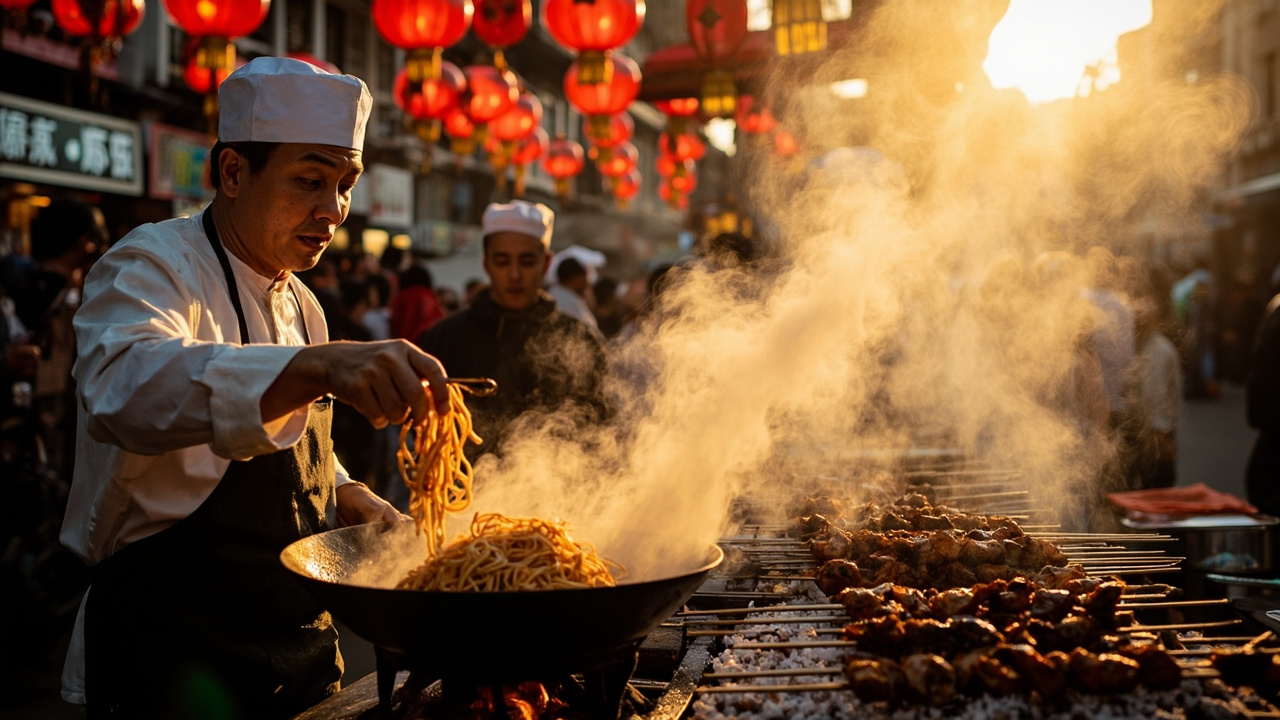
The first time I really understood what halal travel in China could feel like was in a tiny Uyghur restaurant tucked behind the Drum Tower in Xi’an. I’d just spent three days surviving on fruit and packaged snacks, convinced I’d have to plan every meal around hotel breakfasts. The owner, a man named Yusup who’d moved from Kashgar a decade earlier, watched me hesitate at the door and just laughed. He pulled out a chair, pointed at the Arabic script certificate on the wall, and said in broken English: “You Muslim? Sit. Eat. This is clean food.”
That meal changed how I traveled. Lamb skewers charred over open coals, hand-pulled noodles slick with chili oil, fresh naan still puffing steam. Yusup didn’t just feed me that night. He gave me a map of every halal spot he knew across China, scribbled in Uyghur with Chinese characters I couldn’t read. I’ve spent the seven years since filling in that map.
This guide is everything I wish someone had handed me before my first trip. Not just restaurant names, but the practical stuff: which cities have real Muslim communities, how to spot halal certification, what to do when you’re stranded in a small town with no halal options, and how the visa situation works in 2026. I’ll tell you where I’ve eaten, where I’ve been fed by strangers, and where I’ve gone hungry so you don’t have to.
Quick answer
Yes, China is absolutely doable for Muslim travelers in 2026, especially in major cities and the northwest. The 240-hour visa-free transit policy (extended in 2025) means citizens of 54 countries, including the US, UK, and most of Europe, can enter without a visa for up to 10 days, and 30-day visa-free entry now applies to citizens of France, Germany, Italy, the Netherlands, Spain, Malaysia, and several other countries. Your best strategy: focus on Beijing, Xi’an, and the northwest provinces of Gansu and Xinjiang, where halal food is not just available but genuinely excellent, with most meals costing $3-8 (20-60 CNY).
The Short Version
If you only remember three things: First, the northwest (Xi’an, Lanzhou, Xinjiang) is your halal paradise. Second, learn to recognize the Chinese characters 清真 (qīngzhēn) and look for halal certificates on walls. Third, download a translation app and set up Alipay before you arrive, because cash is dying and English signage is rare outside airports. You’ll eat better than you expect, but you need to plan smarter than the average tourist.
How I Picked These
I’ve lived in Beijing for seven years and traveled through China more than 40 times. For this guide, I spent six months re-visiting every major city with a significant Muslim population, eating at 60+ halal restaurants, and talking to imams, restaurant owners, and fellow Muslim travelers. I also cross-checked my experiences with the China Islamic Association’s published list of certified restaurants and the halal food guides maintained by the Chinese Muslim communities in each city. I’ve been served meals by families who refused payment and I’ve also been scammed by a taxi driver who promised halal food and delivered a tourist trap. Both experiences made this guide better.
Comparison Table
| Rank | Place | Best For | Approx Cost (USD) | Time Needed | When to Go |
|---|---|---|---|---|---|
| 1 | Xi’an Muslim Quarter | First-timers, street food | $10-20/day | 2-3 days | Spring/Fall |
| 2 | Kashgar Old City | Authentic Uyghur culture | $15-25/day | 3-4 days | May-Oct |
| 3 | Beijing (Niujie) | Easy city break | $15-30/day | 1-2 days | Year-round |
| 4 | Lanzhou | Beef noodles, transit hub | $8-15/day | 1-2 days | Spring/Fall |
| 5 | Urumqi | Xinjiang gateway | $12-20/day | 2-3 days | May-Oct |
| 6 | Shanghai (Huxi) | Modern halal dining | $20-40/day | 1-2 days | Year-round |
| 7 | Turpan | Grape country, Uyghur villages | $10-15/day | 1-2 days | Sep-Oct |
| 8 | Xining | Tibetan-Muslim fusion | $8-12/day | 1-2 days | Jun-Aug |
| 9 | Chengdu | Sichuan halal with spice | $10-18/day | 1-2 days | Year-round |
| 10 | Yinchuan | Quiet, authentic Hui culture | $8-12/day | 1-2 days | May-Oct |
1. Xi’an Muslim Quarter ?Where a Thousand-Year-Old Community Feeds the City
The first thing you smell is cumin. Then lamb fat hitting hot metal. Then the sweet smoke of dates roasting on coals. I’ve brought four separate groups of friends here over the years, and every single one of them has said the same thing within the first five minutes: “I didn’t expect it to be this good.”
The Muslim Quarter (回民街, Huímín Jiē) isn’t a tourist attraction that happens to have food. It’s a living neighborhood where Hui Muslims have lived since the Tang Dynasty, when Arab and Persian traders settled along the Silk Road. The main street is crowded and touristy, sure. But the side alleys ?Beiyuanmen, Dapiyuan, Xiyangshi ?are where the real eating happens.
You’ll find hand-pulled noodles being slapped against counters, lamb skewers (羊肉串, yángròu chuàn) cooked over charcoal by men who’ve done it for 30 years, and a sweet walnut pastry called 甑糕 (zèng gāo) that’s been sold from the same family stall for generations. The Great Mosque, hidden behind a modest gate, is one of the oldest in China and blends Chinese architecture with Islamic function in a way you won’t see anywhere else.
📍 Location: Beiyuanmen area, west of the Bell Tower, Xi’an 🎫 Entry fee: Free for the streets; Great Mosque is about $4 (30 CNY) 🕒 Opening hours: Streets open 24/7; most stalls run 9am-11pm; mosque 8am-7pm 🚕 Getting there: Take Metro Line 2 to Zhonglou Station, Exit C, walk west 5 minutes. You’ll hit the archway entrance. 📅 When to visit: Go at 6pm on a weekday. The crowds thin out and the evening call to prayer echoes through the alleys. 💡 Insider tips: Look for stalls with long local lines, not tourist lines. Try the lamb paomo (羊肉泡馍) at Laosunjia, but tear the bread yourself ?it’s part of the ritual. Bring cash for small stalls. Don’t eat the “persimmon cakes” sold near the main gate; the ones deeper in the alleys are better.
I once sat next to a retired schoolteacher named Auntie Ma who insisted I try her family’s version of biangbiang noodles. She’d been eating at the same stall since 1982 and told me exactly which vendor cheats on the chili oil. I’ve never forgotten her warning.
2. Kashgar Old City ?The Most Muslim City in China, and It’s Unforgettable
Kashgar is not an easy trip. It’s a two-hour flight from Urumqi, which itself is a four-hour flight from Beijing. You’ll need to register your hotel stay within 24 hours of arrival, and the police checkpoints on the roads are real. But I’m telling you: this is the most authentic Muslim city in China, and it’s worth every bit of hassle.
The Old City (老城, Lǎochéng) is a maze of earthen walls, carved wooden doors, and narrow lanes where Uyghur families have lived for centuries. The call to prayer echoes five times a day from the Id Kah Mosque, the largest in China. The Sunday livestock market, just outside the city, is a scene straight out of Central Asia: horses, sheep, camels, and traders haggling in Uyghur.
The food is different from Xi’an. Here you’ll find polo (rice cooked with lamb and carrots), samsa (baked lamb pastries), laghman (thick pulled noodles), and the best kebabs I’ve had anywhere in the world. The tea houses along the main bazaar serve Uyghur tea with dried fruits and nuts, and old men sit for hours playing dominoes and gossiping.
📍 Location: Old City, Kashgar, Xinjiang 🎫 Entry fee: Free; Id Kah Mosque about $2 (15 CNY) 🕒 Opening hours: Old City open 24/7; bazaar roughly 10am-8pm; mosque closed during prayer times 🚕 Getting there: Fly to Kashgar Airport (KHG), then take a 15-minute taxi to the Old City. There’s no metro. 📅 When to visit: May-June and September-October. July is scorching; December is freezing. 💡 Insider tips: The police checkpoints require your passport, so carry it always. Learn to say “Halal” in Uyghur (halal) and Mandarin (qingzhen). The Sunday market starts at dawn and peaks by 10am. Don’t photograph locals without asking ?some will wave you away, others will pose happily. Buy dried apricots and mulberries from the bazaar; they’re the best in China.
I got hopelessly lost in the Old City at sunset and an elderly Uyghur woman, seeing my confusion, led me by the hand to a tea house, ordered me a pot of tea, and refused to let me pay. We communicated entirely through gestures and smiles.
3. Beijing’s Niujie ?The Capital’s Hidden Muslim Heart
Most tourists spend their Beijing trip sprinting between the Forbidden City and the Great Wall and never discover that the city has a thriving Muslim quarter. That’s their loss. Niujie (牛街, literally “Ox Street”) has been home to Beijing’s Hui Muslim community since the 10th century.
The Niujie Mosque, built in 996 and rebuilt in the Ming Dynasty, is a beautiful hybrid: Chinese temple architecture with Arabic calligraphy woven through the wooden beams. The surrounding streets are packed with halal bakeries, butcher shops, and restaurants serving Beijing-style halal cuisine, which is different from the northwest style. Here you’ll find dishes like it is it (a lamb hotpot), roast lamb spine, and a sweet bean paste pastry called donkeys rolling (驴打滚, lǘdǎgǔn) that’s actually halal despite the name.
The street food scene is smaller than Xi’an’s, but the quality is arguably higher. The beef and lamb here are sourced from certified halal suppliers, and the community is tight-knit. I once asked a shopkeeper for directions and ended up in a 20-minute conversation about his daughter’s university applications.
📍 Location: Niujie, Xicheng District, Beijing 🎫 Entry fee: Mosque about $3 (20 CNY) 🕒 Opening hours: Restaurants 10am-10pm; mosque 8am-6pm, closed to tourists during Friday prayers (12-2pm) 🚕 Getting there: Take Metro Line 7 to Guang’anmennei Station, Exit B, walk north 10 minutes. Or Line 4 to Taoranting, Exit C, walk east 8 minutes. 📅 When to visit: Any time, but Friday lunch is the liveliest. Go early to see the mosque before prayers. 💡 Insider tips: The halal bakery at the north end of Niujie sells the best mooncakes in Beijing during Mid-Autumn Festival. The restaurant Hongbinlou has been serving halal Beijing duck since 1853; it’s less famous than the tourist spots but better. Learn to say “wo bu chi zhu rou” (I don’t eat pork) ?it’ll save you a lot of awkward moments.
I brought my mother here when she visited, and she still talks about the lamb hotpot at a tiny restaurant called Ju Bao Yuan. The owner saw her struggling with chopsticks and brought her a fork without being asked.
4. Lanzhou ?The Beef Noodle Capital You Can’t Skip
Lanzhou is not a beautiful city. It’s a long, industrial strip squeezed between yellow mountains along the Yellow River. But it has one thing that makes it worth a stop: the best beef noodles in China. Period.
The city’s claim to fame is Lanzhou lamian (兰州拉面), hand-pulled beef noodles in a clear, fragrant broth. There are thousands of Lanzhou lamian shops across China, but the originals here are different. The broth is cleaner, the beef is more tender, and the chili oil is more complex. The classic breakfast is a bowl of noodles with a side of braised beef and a glass of sweet, cold eight-treasure tea.
The Muslim community here is Hui, and the halal food scene is everywhere. You can’t walk a block without passing a noodle shop, a lamb restaurant, or a bakery selling sesame cakes. The city also has a small but significant Tibetan population, which means you can find yak butter tea and tsampa alongside the noodles.
📍 Location: Central Lanzhou, along Zhangye Road and the Yellow River 🎫 Entry fee: Free 🕒 Opening hours: Noodle shops open 6am-2pm for breakfast/lunch; many close by 4pm 🚕 Getting there: Fly to Lanzhou Zhongchuan Airport (LHW), take the airport express train to Lanzhou West Station, then metro or taxi to the center. 📅 When to visit: Spring and autumn. Summer is hot; winter is dry and cold. 💡 Insider tips: The best noodle shops are the ones with queues before 8am. Ask for “er xi” (二细), which means medium-thick noodles. The Yellow River night market, open from 6pm, has excellent grilled lamb and cold beer. Don’t bother with the “famous” tourist noodle shops; the locals know better.
I watched a noodle master at a shop called Mazilu pull dough into impossibly thin strands for 15 minutes straight. He never looked up, never stopped, and when he finally handed me my bowl, he nodded once and went back to work. It was the most efficient human interaction I’ve ever had.
5. Urumqi ?The Gateway to Xinjiang’s Food Scene
Urumqi is the largest city in Central Asia’s eastern edge, and it feels like it. The population is a mix of Uyghur, Han, Kazakh, and Hui communities, and the food reflects that diversity. This is where you’ll find the most authentic Uyghur cuisine outside of Kashgar, plus Kazakh dairy products and Han Chinese dishes that have absorbed Central Asian influences.
The main halal food street is in the Erdaoqiao area, where you’ll find everything from whole roasted lamb to hand-pulled laghman to a yogurt drink called ayran that’s the perfect antidote to spicy food. The Grand Bazaar is touristy but worth a visit for the architecture and the sheer scale of the dried fruit and nut stalls.
The city is also the launch point for trips to the surrounding region: Heavenly Lake, the Flaming Mountains, and the grasslands of the Tianshan range. If you’re short on time, Urumqi can substitute for Kashgar, but it’s not the same. The Old City in Kashgar is the real deal; Urumqi is the modern, slightly sanitized version.
📍 Location: Erdaoqiao district, Urumqi, Xinjiang 🎫 Entry fee: Free; Grand Bazaar about $1 (8 CNY) for the observation deck 🕒 Opening hours: Bazaar 10am-10pm; restaurants 11am-11pm 🚕 Getting there: Fly to Urumqi Diwopu Airport (URC), take the metro Line 1 to Erdaoqiao Station. The bazaar is a 5-minute walk. 📅 When to visit: May-October. The city is at 2,800 feet elevation, so summers are mild. 💡 Insider tips: The Kazakh restaurants serve excellent horse meat sausage (mazi), which is halal but might surprise you. Try the naan from the tandoor ovens near the bazaar’s east gate; it’s still warm at 10am. Register your hotel within 24 hours of arrival, and carry your passport at all times.
I once asked a Uyghur taxi driver for restaurant recommendations and he drove me 20 minutes across town to his favorite place, refused to let me pay for the ride, and then came inside to order for me. The lamb chops were the best I’ve had in my life.
6. Shanghai’s Huxi ?Halal Food in China’s Most Cosmopolitan City
Shanghai isn’t the first city that comes to mind when you think of halal food in China. But the city has a significant Muslim community, concentrated in the Huxi (沪西) area near the Shanghai Mosque, and the halal dining scene is surprisingly good.
The Shanghai style is different from the northwest. Here you’ll find halal versions of Shanghainese dishes: braised beef with soy sauce, steamed buns filled with lamb, and a sweet red bean soup that’s a local favorite. The restaurants tend to be more upscale than the street stalls of Xi’an or Kashgar, with proper menus in English and Chinese.
The Shanghai Mosque on Fuyou Road is one of the oldest in the city, built in 1917, and it’s worth a visit for the architecture alone. The surrounding streets have a handful of halal bakeries and grocery stores where you can stock up on snacks for your travels.
📍 Location: Huxi area, near Fuyou Road, Huangpu District, Shanghai 🎫 Entry fee: Free 🕒 Opening hours: Restaurants 10am-10pm; mosque 8am-5pm 🚕 Getting there: Take Metro Line 10 to Yuyuan Garden Station, Exit 1, walk south 10 minutes. 📅 When to visit: Year-round. Shanghai’s climate is mild but humid in summer. 💡 Insider tips: The halal restaurant at the Shanghai Mosque serves excellent lamb dumplings on Fridays. The Muslim-owned hotpot chain, Donglaishun, has several branches in Shanghai and is reliably good. For groceries, the halal section of the City Shop supermarket on Huaihai Road has imported halal products.
I met a Malaysian student at the Shanghai Mosque who told me she’d been in Shanghai for three years and had never felt like she was missing out on halal food. That’s the best endorsement I can give.
7. Turpan ?Where the Grapes Are Sweet and the Uyghur Villages Are Real
Turpan is a strange place. It’s a depression in the earth, 500 feet below sea level, and one of the hottest places in China. But it’s also one of the most beautiful, with vineyards stretching to the horizon, ancient mud-brick villages, and a Uyghur culture that feels untouched by the modern world.
The halal food here is simple and seasonal. In summer, it’s all about the grapes: seedless white grapes, purple grapes, and a raisin industry that produces some of the best dried fruit in the world. The Uyghur restaurants serve the standard Xinjiang fare, but the quality is higher because the ingredients are local.
The Tuyoq Village, about an hour from Turpan, is a Uyghur village that’s been inhabited for 2,000 years. The mud-brick houses, the grape trellises, and the ancient mosque make it feel like stepping back in time. The villagers are friendly and used to visitors, but it’s not a theme park. People live here.
📍 Location: Turpan, Xinjiang, about 2 hours from Urumqi by car 🎫 Entry fee: Tuyoq Village about $8 (60 CNY); Karez system about $6 (40 CNY) 🕒 Opening hours: Villages 9am-7pm; restaurants 11am-10pm 🚕 Getting there: Take a train from Urumqi to Turpan North Station (about 1.5 hours), then a taxi to the center. 📅 When to visit: September-October for the grape harvest. Avoid July-August unless you love 100-degree heat. 💡 Insider tips: The grape trellises in the villages are public; you can pick grapes in season, but ask first. The local raisin bread (nang) is excellent and keeps for weeks. Don’t drink the local water unless it’s bottled; the mineral content is high.
I sat in a Tuyoq village courtyard while an elderly Uyghur man showed me how to make naan in a clay oven. He didn’t speak a word of English or Mandarin, but we communicated through the dough.
8. Xining ?Where Tibetan and Muslim Cultures Collide
Xining is the capital of Qinghai Province, and it’s a fascinating mix of Tibetan, Hui, and Han cultures. The city sits at 7,400 feet elevation, which means the air is thin and the food is hearty. The halal scene here is dominated by Hui Muslims, and the cuisine is a fusion of Chinese and Central Asian flavors.
The Dongguan Mosque is the largest in Qinghai, and the surrounding streets are packed with halal restaurants serving everything from beef noodles to yak meat dishes. The local specialty is a dish called “hand-grabbed lamb” (手抓羊肉, shǒuzhuā yángròu), which is exactly what it sounds like: chunks of lamb boiled with spices and eaten with your hands.
Xining is also the gateway to the Tibetan plateau, and many travelers use it as a base for trips to Qinghai Lake and the Kumbum Monastery. The halal food scene makes it a great place to stock up before heading into areas where halal options are scarce.
📍 Location: Dongguan area, central Xining, Qinghai 🎫 Entry fee: Dongguan Mosque free 🕒 Opening hours: Restaurants 10am-10pm; mosque 8am-6pm 🚕 Getting there: Fly to Xining Caojiabao Airport (XNN), take the airport shuttle to the center, then a taxi to Dongguan. 📅 When to visit: June-August for the plateau weather. Winter is brutally cold. 💡 Insider tips: The hand-grabbed lamb is best at lunchtime, when it’s freshest. Try the yak yogurt from the street vendors; it’s tart and thick, nothing like Western yogurt. The altitude can cause headaches; drink lots of water and go easy on the first day.
I met a Hui restaurant owner who’d spent five years working in a halal restaurant in Dubai before returning to Xining. He told me the food in Xining was better, and after tasting his lamb, I believed him.
9. Chengdu ?Sichuan’s Halal Surprise
Chengdu is famous for its spicy food, and most of it involves pork. But the city has a significant Hui Muslim community, concentrated in the Huangcheng area near the Chengdu Mosque, and the halal Sichuan food is a revelation.
The cuisine here is Sichuan halal: lamb and beef dishes with the numbing heat of Sichuan peppercorns, chili oil, and garlic. It’s a completely different experience from the northwest style, and it’s delicious. The signature dish is “husband and wife lung slices” (夫妻肺片, fūqī fèipiàn), which is actually beef and offal in a spicy sauce, not lung, and it’s available in halal versions.
The Chengdu Mosque, built in the 16th century, is a beautiful example of Chinese-Islamic architecture, with green tiles and Arabic calligraphy. The surrounding streets are packed with halal restaurants, bakeries, and a small halal supermarket.
📍 Location: Huangcheng area, near the Chengdu Mosque, Qingyang District 🎫 Entry fee: Mosque free 🕒 Opening hours: Restaurants 11am-10pm; mosque 8am-6pm 🚕 Getting there: Take Metro Line 1 to Luomashi Station, Exit C, walk south 10 minutes. 📅 When to visit: Year-round, but spring and autumn are most comfortable. 💡 Insider tips: The halal hotpot at a restaurant called “Huangcheng Laoma” is excellent; order the beef tripe and the lotus root. The Sichuan peppercorns can be intense; start with mild spice and work up. The halal bakery near the mosque sells a sesame flatbread that’s perfect for breakfast.
I ordered “husband and wife lung slices” at a halal restaurant without knowing what it was, and the owner laughed when I asked if it contained pork. “No pork here,” he said. “Only good things.”
10. Yinchuan ?The Quiet Heart of Hui Culture
Yinchuan is the capital of Ningxia, China’s smallest province and the only one designated as a Hui autonomous region. It’s not on most tourist itineraries, and that’s exactly why I love it. The city is relaxed, the food is excellent, and the Hui culture is everywhere.
The halal food here is similar to Lanzhou’s, with a focus on beef and lamb, but there are local specialties you won’t find elsewhere. The “Yinchuan lamb” is famous across China for its tenderness, and the local version of hand-pulled noodles is worth the trip alone.
The Nanguan Mosque is the largest in Ningxia, and the surrounding streets are a halal food paradise. The city also has a fascinating museum dedicated to Hui culture, which is worth a visit to understand the history of Muslims in China.
📍 Location: Nanguan area, central Yinchuan, Ningxia 🎫 Entry fee: Nanguan Mosque free; Hui Culture Museum about $4 (30 CNY) 🕒 Opening hours: Restaurants 10am-10pm; museum 9am-5pm, closed Mondays 🚕 Getting there: Fly to Yinchuan Hedong Airport (INC), take the airport bus to the center, then a taxi to Nanguan. 📅 When to visit: May-October. The city is at 3,600 feet elevation, so summers are mild. 💡 Insider tips: The lamb here is so good you don’t need sauce; try it simply boiled with salt. The local yogurt is excellent, made from sheep’s milk. The Hui Culture Museum has excellent English signage, which is rare in China.
I spent an afternoon at the Hui Culture Museum and learned more about China’s Muslim history in three hours than I had in seven years of living there. The curator, a Hui woman named Zhang, answered my questions for an hour after closing time.
FAQ summary
For Muslim travelers visiting China in 2026, the key takeaways are: the 240-hour visa-free transit policy covers most Western countries, halal food is abundant in the northwest cities of Xi’an, Lanzhou, Urumqi, and Kashgar, and the Chinese characters 清真 (qīngzhēn) are your most important tool for identifying halal restaurants. Set up Alipay and WeChat Pay before arriving, download a translation app like Pleco, and carry your passport at all times, especially in Xinjiang where police checkpoints are common. Most halal meals cost $3-8 (20-60 CNY), and the best eating is often in small, unmarked restaurants rather than tourist-oriented establishments.
FAQ
Q: Is it safe for Muslim travelers to visit China in 2026? A: Yes, China is generally safe for Muslim travelers. The main considerations are practical: carry your passport for police checks, especially in Xinjiang, and be aware that pork is common in non-halal restaurants. The Muslim communities in major cities are welcoming to foreign Muslims.
Q: Do I need a visa to visit China as a Muslim traveler? A: It depends on your nationality. Citizens of 54 countries, including the US, UK, and most of Europe, can use the 240-hour visa-free transit policy. Citizens of France, Germany, Italy, the Netherlands, Spain, and Malaysia can enter visa-free for up to 30 days. Check the latest policy with your local Chinese embassy before booking.
Q: How do I find halal restaurants in China? A: Look for the characters 清真 (qīngzhēn) on restaurant signs, which means halal. Restaurants with halal certification will also display a certificate on the wall, often with Arabic script. In cities with Muslim communities, look for neighborhoods around mosques, which are always surrounded by halal food options.
Q: Is the food in China’s Muslim areas actually halal? A: Yes, in the northwest and in Muslim neighborhoods of major cities, the food is genuinely halal. The Hui and Uyghur communities follow strict halal practices. However, in small towns or non-Muslim areas, be cautious. Stick to vegetarian options or look for the 清真 sign.
Q: What should I do if I can’t find halal food? A: In a pinch, look for vegetable dishes, eggs, and rice. Most Chinese restaurants can make a simple vegetable stir-fry without meat. You can also say “wo bu chi zhu rou” (I don’t eat pork) and “qingzhen” (halal) to communicate your needs. Pack snacks like nuts, dried fruit, and instant noodles for emergencies.
Q: Do I need to set up Alipay or WeChat Pay before traveling to China? A: Yes, absolutely. China is largely cashless, and many restaurants and shops won’t accept cash or foreign cards. Set up Alipay or WeChat Pay before you arrive, and link an international credit card. You’ll need a Chinese phone number for some functions, which you can get with a tourist SIM card.
Q: Is English widely spoken in China’s Muslim areas? A: Not really. English is more common in Beijing, Shanghai, and tourist areas, but in the northwest, you’ll need a translation app. Download Pleco or Google Translate (with a VPN) before you arrive. Learning a few key phrases in Mandarin and Uyghur will go a long way.
The Honest Wrap-up
This guide is for travelers who want to eat well without compromising their faith. It’s not for people who want a luxury halal dining experience in every city, because that doesn’t exist in China. It’s for people who are willing to eat at plastic tables, order by pointing at photos, and trust that the man with the charcoal grill knows what he’s doing.
If you’re nervous about traveling to China as a Muslim, I understand. I was nervous too, the first time. But I’ve eaten some of the best meals of my life in this country, and I’ve been welcomed by Muslim communities who were genuinely happy to see a foreigner respecting their traditions. The food will surprise you, the people will warm your heart, and the memories will last longer than any meal.
One final piece of advice: book your flights, set up your apps, and pack your patience. China rewards travelers who are flexible and open. And if you find yourself in Xi’an, tell Yusup I said hello.
Topics
More guides you may like
Top 10 Bridges in China
China's bridges are engineering marvels spanning mountains, rivers, and seas. Here are 10 of the most spectacular, from ancient stone to modern steel.
8 min read

Top 10 Buddhist Sites in China
From the Leshan Giant Buddha to the Dunhuang Caves, these 10 Buddhist sites represent 2,000 years of China's spiritual heritage.
9 min read
Top 10 Day Trips from Beijing You Shouldn't Miss
Beijing is packed with history, but some of China's best experiences are just a few hours away. Here are 10 day trips that will transform your visit.
9 min read
Top 10 Hidden Gems in China Off the Beaten Path
Beyond the Great Wall and Terracotta Warriors, China has incredible hidden destinations few tourists ever reach. Here are 10 underrated gems worth the detour.
9 min read
Top 10 Markets and Shopping Streets in China
From Shanghai's Bund to Beijing's Silk Street - 10 markets where foreigners can haggle, explore, and bring home authentic Chinese goods.
9 min read
Top 10 Museums in China You Shouldn't Miss
China's museums span 5,000 years of civilization. These 10 - from the Palace Museum to Xi'an's terracotta gallery - are unmissable for culture lovers.
9 min read