
China Transit Visa 24 72 144 Hour Rules: The Complete 2026 Guide
The first time I dealt with China's transit visa rules, I was standing in a Beijing airport at 2 AM with a dead phone and a printed itinerary that made no sense.
The first time I dealt with China’s transit visa rules, I was standing in a Beijing airport at 2 AM with a dead phone and a printed itinerary that made no sense. A woman from Guangzhou was trying to explain the difference between the 24-hour and 144-hour policies to a group of confused Australians. She kept saying “It’s easy, it’s easy” while holding up three fingers, then four, then making a slicing motion across her throat. That image stuck with me. The rules aren’t complicated once you understand the logic, but the logic is buried under layers of official language and outdated blog posts.
Here’s the thing: China’s transit visa-free policy is one of the best deals in world travel right now, and almost nobody outside Asia knows about it. You can spend up to six days in Beijing or Shanghai without applying for a tourist visa in advance. That’s a free city break that most Americans and Europeans simply don’t realize exists. This guide covers all three tiers of the policy, the exact cities where it works, the traps that get people denied, and how to actually use it without stress.
Quick answer
China’s transit visa-free policy lets you stay 24, 72, or 144 hours without a visa, but only if you’re transiting to a third country (not returning home) and you stay within the designated city or region. The 144-hour (6-day) version is the most useful, covering Beijing, Shanghai, and 18 other cities, and it costs nothing. You need a confirmed onward ticket to a third country, a passport with at least 6 months validity, and you must enter and exit through approved ports. The whole process takes about 20 minutes at the airport.
The Short Version
If you’re flying from the US or Europe to Japan, Korea, or Southeast Asia, book a stopover in Beijing or Shanghai and use the 144-hour visa-free transit. It’s free, you don’t need any paperwork in advance, and you get nearly a week in China. The catch: you can’t go home from China, you must have an onward ticket to a third country, and you’re limited to specific cities. Don’t try to bend the rules. Border officers in China are efficient and they’ve seen every trick. Follow the rules exactly and you’ll be through in 20 minutes.
How I Picked These
I’ve used this policy six times in the past three years, including a 144-hour stopover in Beijing, a 72-hour one in Xi’an, and a 24-hour sprint through Guangzhou. I’ve also watched friends get denied entry because they tried to use the 144-hour policy to visit two different provinces, which isn’t allowed under some regional rules. I’ve talked to border officers in Beijing Capital Airport, Shanghai Pudong, and Guangzhou Baiyun, plus a dozen travelers who’ve used the system. The information below reflects what actually happens at the counter, not what the official brochures say.
Comparison Table
| Rank | City | Best For | Approx Cost (USD) | Time Needed | When to Go |
|---|---|---|---|---|---|
| 1 | Beijing | First-timers, history, Great Wall | $0 visa + $50-100/day | 4-6 days | Apr-May, Sep-Oct |
| 2 | Shanghai | Modern China, food, easy transit | $0 visa + $60-120/day | 3-5 days | Mar-May, Oct-Nov |
| 3 | Xi’an | Terracotta Warriors, ancient history | $0 visa + $40-80/day | 3-4 days | Mar-May, Sep-Oct |
| 4 | Guangzhou | Cantonese food, silk markets, cheap flights | $0 visa + $30-60/day | 2-3 days | Oct-Dec |
| 5 | Chengdu | Pandas, Sichuan food, relaxed vibe | $0 visa + $35-70/day | 3-4 days | Mar-Jun, Sep-Nov |
| 6 | Kunming | Spring weather, Yunnan scenery | $0 visa + $30-60/day | 2-3 days | Year-round |
| 7 | Hangzhou | West Lake, tea plantations | $0 visa + $40-80/day | 2-3 days | Apr-May, Sep-Oct |
| 8 | Chongqing | River views, spicy food, unique cityscape | $0 visa + $35-70/day | 2-3 days | Mar-May, Oct-Nov |
| 9 | Guilin | Karst mountains, river cruises | $0 visa + $30-60/day | 2-3 days | Apr-Oct |
| 10 | Xiamen | Coastal charm, Gulangyu Island | $0 visa + $35-70/day | 2-3 days | Mar-May, Oct-Nov |
Beijing ?The 144-Hour Classic
The first time I walked out of Beijing Capital Airport on the 144-hour policy, it was November and the air smelled like coal smoke and roasted chestnuts. I had a backpack, a phone with no signal, and a vague plan to see the Forbidden City. The border officer stamped my passport without looking up. Took maybe 90 seconds.
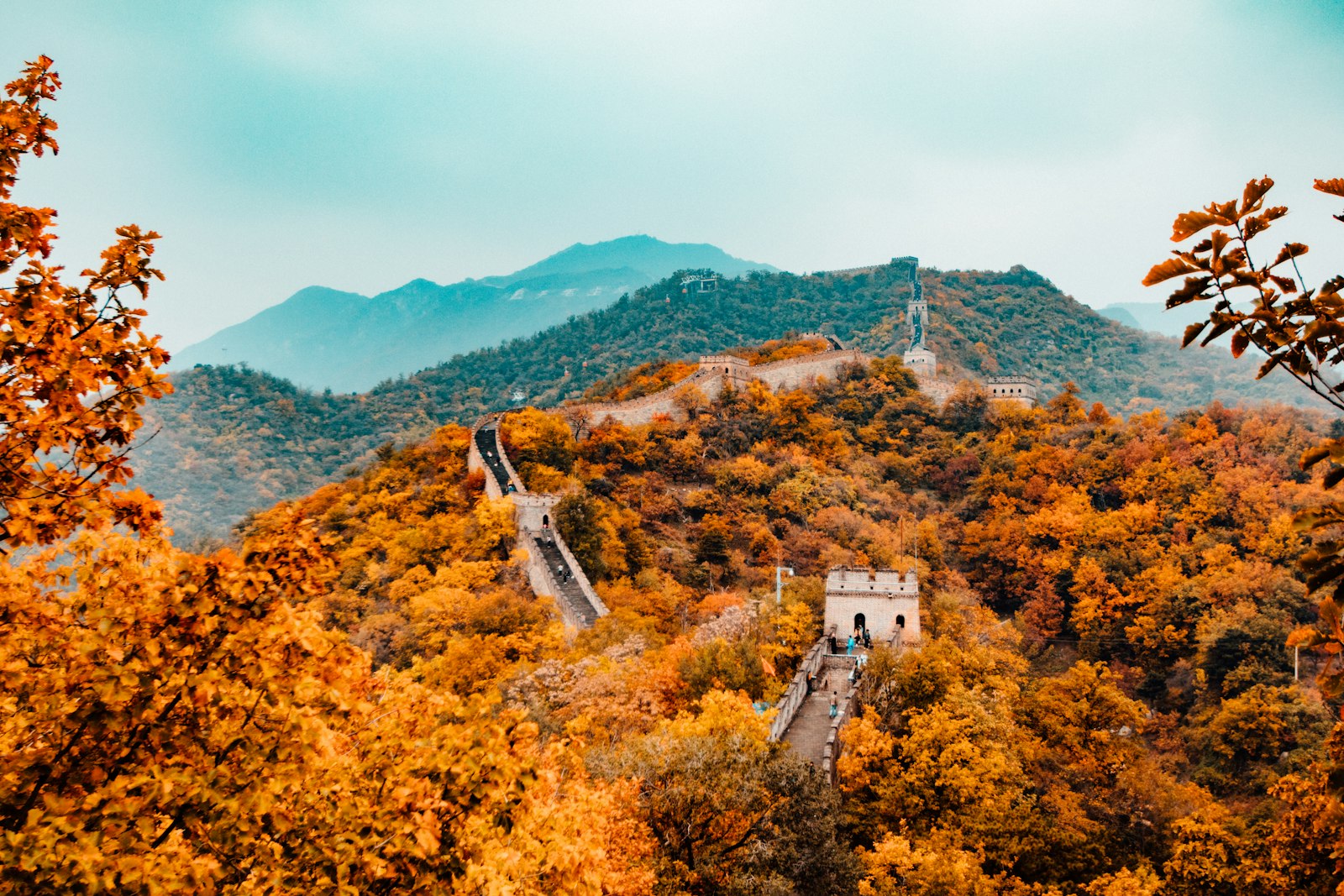
Beijing is the best entry point for this policy because the city is enormous, the sights are world-class, and the 144-hour window actually feels like enough time. You can hit the Great Wall at Mutianyu (less crowded than Badaling), spend a day in the Forbidden City, wander the hutongs around Nanluoguxiang, and still have time for a Peking duck dinner and a trip to the Temple of Heaven.
The catch: under the 144-hour policy, you’re restricted to Beijing municipality. You can’t hop over to Tianjin or Hebei province. That’s fine, because Beijing alone will fill six days.
Location: Beijing municipality (city center, Chaoyang, Dongcheng districts) Entry fee: Free (visa) + $15 (105 CNY) for Forbidden City, $8 (55 CNY) for Temple of Heaven Opening hours: Forbidden City 8:30-17:00 (closed Mondays), Great Wall 7:30-18:00 Getting there: Airport Express from Capital Airport to Dongzhimen Station, then transfer to Line 2. For the Forbidden City, take Line 1 to Tiananmen East, Exit A, walk north. ?When to visit: April-May or September-October for mild weather. Avoid Chinese national holidays (October 1-7, May 1-3) when everything is packed. Insider tips: Download the official “Amazing Beijing” app for free museum reservations. The Forbidden City requires advance booking, even for foreigners. Bring your passport to every attraction, not a photocopy. The subway is $0.40 (3 CNY) per ride, so don’t bother with taxis. Learn to say “bu yao” (don’t want) for street vendors who overcharge.
I met a retired teacher named Mr. Chen at the Temple of Heaven who insisted on showing me the exact spot where the emperor used to pray for good harvests. He spoke no English, I spoke no Mandarin, and we communicated through a translation app for 20 minutes. He refused to let me leave until I’d tried the jasmine tea he’d brought in a thermos.
Shanghai ?The Easiest Entry Point
Shanghai Pudong Airport has a dedicated transit visa counter that’s faster than most immigration lines I’ve dealt with anywhere in the world. The officers here process hundreds of these applications daily, so they’re efficient and know the rules cold. If you’re nervous about the process, fly into Shanghai first.
The city itself is a blur of neon, dumpling shops, and skyscrapers. The Bund at night is genuinely impressive, not just in a “tourist brochure” way. The French Concession has tree-lined streets and cafes that feel more Parisian than Chinese. And the food scene is the best in China for variety, from street-side soup dumplings to Michelin-starred restaurants.
The 144-hour policy in Shanghai covers the entire municipality, which includes the city center, Pudong, and the surrounding districts. You can also visit the nearby water towns like Zhujiajiao if you have time, though the official policy says you should stay within Shanghai.
Location: Shanghai municipality (Huangpu, Xuhui, Pudong districts) Entry fee: Free (visa) + $8 (55 CNY) for the Shanghai Tower observation deck, $4 (30 CNY) for Yu Garden Opening hours: The Bund is open 24/7, Yu Garden 8:45-16:45, Shanghai Museum closed Mondays Getting there: From Pudong Airport, take Maglev train to Longyang Road Station (7 minutes, $8/50 CNY), then transfer to Line 2. For the Bund, get off at East Nanjing Road Station, Exit 1, walk east 10 minutes. ?When to visit: March-May or October-November. Summer is humid and miserable. Winter is cold but the city looks dramatic in the fog. Insider tips: Set up Alipay before you arrive, it works everywhere in Shanghai, even at street stalls. The Maglev train hits 430 km/h, worth it just for the experience. Skip the Shanghai Tower observation deck, go to the bar at the top of the Jin Mao Tower instead, same view, better drinks. The metro is the fastest way around, but avoid it during rush hour (8-9 AM, 5-7 PM).
I ate soup dumplings at a place called Jia Jia Tang Bao in the old city, and the woman next to me, a local office worker named Li, showed me the correct way to eat them: bite a small hole, slurp the soup, then dip in vinegar. I burned my tongue anyway. Worth it.
Xi’an ?The 72-Hour Hidden Gem
Xi’an is where the 72-hour policy makes the most sense. The city isn’t huge, the main sights are concentrated, and three days is genuinely enough to see the Terracotta Warriors, walk the ancient city walls, and eat your weight in biang biang noodles.
The Terracotta Warriors are the obvious draw, and they’re worth the hype. I’ve been three times and I still get goosebumps walking into Pit 1 and seeing those rows of clay soldiers staring back. But the city walls are the real gem. You can rent a bike and ride the full 14 kilometers around the old city, watching the sun set over the rooftops.
The 72-hour policy in Xi’an is separate from the 144-hour one, and it’s slightly less flexible. You must enter and exit through Xi’an Xianyang International Airport, and you’re restricted to the city. But the policy is reliable and the officers at the airport are experienced.
Location: Xi’an city center (Beilin, Lianhu, Xincheng districts) Entry fee: Free (visa) + $20 (120 CNY) for Terracotta Warriors, $7 (54 CNY) for city wall bike rental Opening hours: Terracotta Warriors 8:30-17:30 (last entry 17:00), city wall 8:00-22:00 Getting there: From Xi’an Xianyang Airport, take the airport shuttle bus to the city center (about 1 hour, $3/25 CNY). For the Terracotta Warriors, take bus 306 from the Xi’an Railway Station, or hire a taxi for about $30 (200 CNY). ?When to visit: March-May or September-October. The summer heat is brutal and the warriors are in unairconditioned pits. Insider tips: The Muslim Quarter at night is a food paradise, try the lamb skewers and pomegranate juice. The Terracotta Warriors site is massive, budget at least 3 hours. Hire a guide at the entrance for about $20 (140 CNY), they’re worth it for the context. The city wall is best at sunset when the light turns golden. Don’t bother with the Tang Dynasty show, it’s touristy and overpriced.
I got lost looking for the Terracotta Warriors and ended up at a small village where an old woman selling persimmons pointed me in the right direction. She didn’t speak English, but she drew a map in the dirt with a stick. Her persimmons were the best I’ve had in China.
Guangzhou ?The 24-Hour Food Sprint
Guangzhou is the only city I’ve used the 24-hour policy in, and honestly, it’s enough time if you’re just passing through. The city is famous for its Cantonese food, and you can eat dim sum for breakfast, roast goose for lunch, and claypot rice for dinner without repeating a dish.
The 24-hour policy is the most restrictive of the three, but it’s also the simplest. You arrive, you have one day, you leave. No paperwork, no complicated rules about which cities you can visit. Just a stamp in your passport and a quiet warning to be on your next flight within 24 hours.
Guangzhou itself is underrated. The Chen Clan Ancestral Hall is a hidden gem of traditional architecture, the Pearl River night cruise is surprisingly romantic, and the food scene is the best in southern China. But if you only have 24 hours, prioritize eating over sightseeing.
Location: Guangzhou city center (Yuexiu, Tianhe, Haizhu districts) Entry fee: Free (visa) + $4 (30 CNY) for Chen Clan Ancestral Hall, $10 (70 CNY) for Canton Tower Opening hours: Dim sum restaurants open as early as 7 AM, Chen Clan Ancestral Hall 8:30-17:30 Getting there: From Guangzhou Baiyun Airport, take Metro Line 3 to Tiyu Xilu Station, then transfer. For the old city, get off at Gongyuanqian Station, Exit D. ?When to visit: October-December for the best weather. Avoid May-June when it’s rainy and humid. Insider tips: Eat at a traditional dim sum place like Dian Dou De or Guangzhou Restaurant, not a tourist spot. The metro is cheap and efficient, use it. The Canton Tower is better seen from across the river than from the top. Learn to say “mai dan” (check please) at restaurants. Bring cash for small food stalls, some don’t take mobile payments.
A taxi driver named Wu spent 15 minutes teaching me how to say “dim sum” properly in Cantonese. I still can’t do it right. He laughed every time I tried, then drove me to his favorite dumpling place and refused to let me pay.
Chengdu ?The 144-Hour Panda Stop
Chengdu is the only city where I’ve seen people cry at a panda enclosure. I’m not exaggerating. A woman from Brazil was literally sobbing when a baby panda rolled off a platform and landed in a pile of bamboo. The Chengdu Research Base of Giant Panda Breeding is that good.
The 144-hour policy in Chengdu covers the city and the surrounding Sichuan province, which means you can also visit Leshan and see the giant Buddha if you have time. But honestly, the pandas are the main event. The base is best visited in the morning when the pandas are active and the crowds are thinner.
Chengdu itself is a laid-back city with a food scene that rivals Guangzhou. The hotpot is legendary, the teahouses are perfect for afternoon people-watching, and the pace of life is slower than anywhere else in China.
Location: Chengdu city center (Jinjiang, Qingyang districts) Entry fee: Free (visa) + $7 (55 CNY) for the Panda Base, $10 (70 CNY) for the Leshan Giant Buddha Opening hours: Panda Base 7:30-18:00 (arrive by 8 AM for active pandas), Leshan Giant Buddha 8:00-18:00 Getting there: From Chengdu Shuangliu Airport, take Metro Line 10 to Taipingyuan, then transfer to Line 3. For the Panda Base, take Metro Line 3 to Panda Avenue Station, then a short taxi ride. ?When to visit: March-June or September-November. The pandas are more active in cooler weather. Insider tips: Book your Panda Base ticket online in advance, the line at the gate can be 30 minutes. Go on a weekday, weekends are chaos. The hotpot in Chengdu is spicy, order “wei la” (mild) if you’re not used to it. The teahouses in People’s Park are the best place to experience local culture. Bring a translation app, English is not widely spoken here.
I spent an hour at a teahouse in People’s Park watching a group of elderly men play mahjong. One of them, a retired factory worker named Zhang, offered me his seat and taught me the basics. I lost every game, but he bought me tea and told me stories about Chengdu in the 1980s.
Kunming ?The Spring City Short Stop
Kunming is the city I recommend to travelers who want an easy, low-stress introduction to China. The weather is mild year-round, the city is walkable, and the food is a fascinating blend of Yunnan’s ethnic minority cuisines. The 72-hour policy here is perfect for a quick stopover between Southeast Asia and the rest of China.
The Stone Forest, about 90 minutes from the city, is the main attraction. It’s a surreal landscape of limestone pillars that looks like something from another planet. But if you only have 72 hours, I’d skip it and spend your time in the city instead. Kunming’s old town, Green Lake Park, and the flower market are more authentic experiences.
The city is also a great base for exploring Yunnan province, but the 72-hour policy restricts you to Kunming itself. If you want to see Dali or Lijiang, you’ll need a proper tourist visa.
Location: Kunming city center (Wuhua, Panlong districts) Entry fee: Free (visa) + $12 (85 CNY) for Stone Forest, $2 (15 CNY) for Green Lake Park Opening hours: Stone Forest 8:00-18:00, Green Lake Park open 24/7 Getting there: From Kunming Changshui Airport, take the airport express bus to the city center (about 40 minutes). For Green Lake Park, walk from the city center. ?When to visit: Year-round, but March-April is best for flowers. Insider tips: The flower market in Dounan is the largest in Asia, worth a visit even if you don’t buy anything. Try “crossing the bridge noodles” (guoqiao mixian), it’s a local specialty. The weather changes quickly, bring a light jacket even in summer. English is limited, download a translation app before you arrive.
I bought a bouquet of roses at the Dounan flower market for about $2 (15 CNY) and the vendor, a young woman named Yang, insisted on wrapping them in newspaper and tying them with twine. She told me through a translation app that she’d been selling flowers there for 10 years. I carried those roses through three more cities before they wilted.
Hangzhou ?The 144-Hour Lake Escape
Hangzhou is the city I recommend to travelers who want to see the “other China” ?the one with willow trees, pagodas, and misty lakes instead of skyscrapers and traffic jams. West Lake is the centerpiece, and it’s genuinely as beautiful as the paintings suggest. The 144-hour policy covers Hangzhou and the surrounding Zhejiang province.
The best way to experience West Lake is to walk the causeways at sunrise, before the tour groups arrive. The light is soft, the air is cool, and you’ll have the place almost to yourself. The tea plantations in Longjing Village are a close second, especially in spring when the new leaves are being picked.
Hangzhou is also a great base for day trips. The water towns of Wuzhen and Xitang are within easy reach, and the Qiantang River tide is a natural spectacle if you time it right.
Location: Hangzhou city center (Xihu, Shangcheng districts) Entry fee: Free (visa) + $3 (20 CNY) for some West Lake attractions, $10 (70 CNY) for tea picking experiences Opening hours: West Lake is open 24/7, Lingyin Temple 7:00-17:30 Getting there: From Hangzhou Xiaoshan Airport, take the airport shuttle bus to the city center (about 1 hour). For West Lake, take Metro Line 1 to Longxiangqiao Station, Exit C, walk east. ?When to visit: April-May for the tea harvest and mild weather, September-October for autumn colors. Insider tips: Rent a bike and cycle the Su Causeway, it’s the best way to see the lake. The Longjing tea in the village is expensive but authentic, buy directly from the farmers. The “Impression West Lake” show is touristy but visually stunning, book tickets in advance. Avoid weekends when the lake is packed with domestic tourists.
I met a tea farmer named Zhou who invited me into his home for a cup of Longjing tea. He showed me the scars on his hands from years of picking leaves and explained the difference between first-pick and second-pick tea. I bought a small bag from him, and it was the best tea I’ve ever had.
Chongqing ?The 72-Hour Vertical City
Chongqing is the most disorienting city I’ve ever visited. It’s built on mountains, so the streets are stacked on top of each other, and the metro lines go through buildings. My hotel was on the 12th floor, but the entrance was on the 5th floor of the building next door. It took me three days to figure out the logic.
The 72-hour policy in Chongqing is perfect for a quick stopover, especially if you’re flying between Southeast Asia and northern China. The city is famous for its hotpot, its night views from the Yangtze River, and its surreal architecture. The Ciqikou ancient town is a tourist trap, but the Hongya Cave complex at night is genuinely impressive.
The food is the real reason to come. Chongqing hotpot is the spiciest thing I’ve eaten in China, and I’ve eaten a lot of spicy things. The mala (numbing spice) flavor is addictive once you get past the initial shock.
Location: Chongqing city center (Yuzhong, Jiangbei districts) Entry fee: Free (visa) + $5 (35 CNY) for the cable car across the Yangtze, $4 (30 CNY) for the Three Gorges Museum Opening hours: Hongya Cave open 24/7, Three Gorges Museum 9:00-17:00 (closed Mondays) Getting there: From Chongqing Jiangbei Airport, take Metro Line 3 to the city center. For Hongya Cave, get off at Xiaoshizi Station, Exit 6, walk 5 minutes. ?When to visit: March-May or October-November. Summer is brutally hot and humid. Insider tips: The metro is the only reliable way to get around, taxis get stuck in traffic. Try the hotpot with a local, they’ll know the best places. The night view from the Eling Park observation deck is better than the one from the cable car. Bring tissues, most public restrooms don’t have toilet paper. The “light rail through the building” at Liziba Station is worth a photo, but go early to avoid the crowd.
A local named Wang took me to his favorite hotpot place, a tiny hole-in-the-wall with plastic stools and a menu entirely in Chinese. He ordered for me, watched me sweat through the first pot, and laughed when I asked for water. Then he showed me the proper way to dip the beef in sesame oil. I’ve never recovered.
Guilin ?The 72-Hour Karst Wonder
Guilin is the China you see in paintings ?the conical mountains rising from misty rivers, the water buffalo in the rice paddies, the bamboo rafts drifting downstream. The 72-hour policy here is enough time for a Li River cruise and a visit to the rice terraces, which are the two experiences that define this region.
The Li River cruise from Guilin to Yangshuo is the classic experience, and it’s worth every penny. The scenery is genuinely stunning, and the river traffic is part of the charm. Yangshuo itself is a backpacker town with a great nightlife scene, but it’s gotten touristy in recent years. The rice terraces at Longji are more authentic, though they require a longer drive.
The 72-hour policy in Guilin covers the city and the surrounding region, but the main sights are spread out. Budget your time carefully.
Location: Guilin city center (Xiufeng, Qixing districts) Entry fee: Free (visa) + $20 (140 CNY) for the Li River cruise, $15 (105 CNY) for Longji Rice Terraces Opening hours: Li River cruises run 9:00-11:00, Longji Rice Terraces open 24/7 Getting there: From Guilin Liangjiang Airport, take the airport shuttle bus to the city center (about 40 minutes). For the Li River cruise, book through your hotel or a local agency. ?When to visit: April-October, but avoid the rainy season in June-July. Insider tips: The Li River cruise is more scenic in the morning when the mist is still on the water. Yangshuo is worth a night, but the hotels fill up fast on weekends. The rice terraces are best in May when the fields are flooded and reflect the sky. Bring a rain jacket, the weather changes quickly in the mountains.
I took the Li River cruise on a misty morning and sat next to a retired couple from England who were on their third trip to China. They told me they’d been coming back every year since 2015, and Guilin was still their favorite place. The woman said, “It’s the only place in China where I feel like I’m in a poem.”
Xiamen ?The 144-Hour Coastal Escape
Xiamen is the city I recommend to travelers who want a beach vibe without the crowds of Hainan. The 144-hour policy covers Xiamen and the surrounding Fujian province, which means you can also visit the Tulou (earthen buildings) if you have time. But the main draw is Gulangyu Island, a car-free island with colonial architecture and quiet lanes.
Gulangyu is a UNESCO World Heritage site, and it’s genuinely charming, though it’s gotten crowded in recent years. The best time to visit is early morning, before the day-trippers arrive. The island’s piano museum is quirky, and the views from the top of Sunlight Rock are worth the climb.
Xiamen itself is a relaxed city with a great food scene. The seafood is fresh, the streets are clean, and the pace of life is slower than in the big cities.
Location: Xiamen city center (Siming, Huli districts) Entry fee: Free (visa) + $5 (35 CNY) for Gulangyu ferry, $8 (55 CNY) for Sunlight Rock Opening hours: Gulangyu ferry runs 7:00-23:00, Sunlight Rock 7:30-18:00 Getting there: From Xiamen Gaoqi Airport, take the airport shuttle bus to the city center (about 30 minutes). For Gulangyu, take the ferry from Xiagu Wharf, which is a 10-minute walk from the city center. ?When to visit: March-May or October-November. Summer is hot and humid. Insider tips: Book your Gulangyu ferry ticket online in advance, the walk-up line can be 30 minutes. The island is car-free, so wear comfortable shoes. The Tulou in Fujian province are a 3-hour drive from Xiamen, worth it if you have time. Try the local snack “shacha noodles” (沙茶面), it’s a Xiamen specialty.
I met a street musician on Gulangyu who played the erhu, a traditional Chinese violin. He told me he’d been playing there for 15 years, and he pointed out the spots where the light was best for photos. I bought his CD, and I still listen to it when I’m feeling nostalgic for China.
FAQ summary
China’s transit visa-free policy is free, requires no advance application, and lets you stay 24, 72, or 144 hours depending on your entry point and itinerary. The 144-hour version covers major cities like Beijing, Shanghai, Chengdu, and Xiamen, and requires a confirmed onward ticket to a third country. You must enter and exit through designated ports, stay within the approved region, and have a passport valid for at least 6 months. The policy is reliable and efficient, but you must follow the rules exactly.
FAQ
Q: Do I need a visa for a layover in China? A: No, if you qualify for the transit visa-free policy. You need a confirmed onward ticket to a third country, a passport valid for at least 6 months, and you must enter and exit through designated ports. The policy covers 24, 72, and 144-hour stays, depending on your route and entry city.
Q: Can I leave the airport during a layover in China? A: Yes, if you qualify for the 72 or 144-hour transit visa-free policy. You can leave the airport and explore the city, but you must stay within the approved region and depart within the time limit. The 24-hour policy also allows you to leave the airport, but you have less time.
Q: What happens if I miss my onward flight during a transit visa-free stay? A: You need to contact the airline and border authorities immediately. Overstaying your transit visa-free period can result in fines and a ban on future entry. It’s better to book a flexible onward ticket or allow extra time between flights.
Q: Can I use the 144-hour transit visa-free policy to visit multiple cities? A: It depends on the city. Beijing and Shanghai allow visits within their respective municipalities only. Chengdu and Xiamen allow visits within their provinces. You cannot, for example, fly into Beijing and then travel to Shanghai under the 144-hour policy.
Q: Do I need to show proof of hotel booking for the transit visa-free policy? A: Not always, but it’s recommended. Border officers may ask for your accommodation details, and having a hotel booking makes the process smoother. You can book a refundable hotel if you’re not sure about your plans.
Q: Is the transit visa-free policy available for all nationalities? A: No, the policy applies to citizens of most countries, including the US, UK, EU countries, Australia, Canada, and many others. However, citizens of some countries are not eligible. Check the official Chinese immigration website for the current list.
Q: Can I use the transit visa-free policy if I’m flying from China to my home country? A: No, the policy requires you to transit to a third country. If you’re flying from China back to your home country, you need a proper tourist visa. The policy is designed for travelers passing through China on their way to another destination.
The Honest Wrap-up
This list is for travelers who want to see China without the hassle of a visa application. It’s for people who are already flying through Asia and want to add a few days in China without extra paperwork. It’s not for travelers who want to see multiple regions in one trip, or who want to spend more than six days in the country. For those cases, get a proper tourist visa.
My final advice: book your flights so you have at least 72 hours in China, not just 24. The 24-hour policy is technically enough, but you’ll spend most of it stressed about making your connection. With 72 hours, you can actually relax, see a few sights, and eat some incredible food. And if you can swing 144 hours in Beijing or Shanghai, do it. You won’t regret it.
The rules are simpler than they seem. The officers are professional. The food is worth the jet lag. Just follow the rules, keep your passport handy, and go.
Topics
More guides you may like

Top 10 Bridges in China
China's bridges are engineering marvels spanning mountains, rivers, and seas. Here are 10 of the most spectacular, from ancient stone to modern steel.
8 min read

Top 10 Buddhist Sites in China
From the Leshan Giant Buddha to the Dunhuang Caves, these 10 Buddhist sites represent 2,000 years of China's spiritual heritage.
9 min read

Top 10 Day Trips from Beijing You Shouldn't Miss
Beijing is packed with history, but some of China's best experiences are just a few hours away. Here are 10 day trips that will transform your visit.
9 min read

Top 10 Hidden Gems in China Off the Beaten Path
Beyond the Great Wall and Terracotta Warriors, China has incredible hidden destinations few tourists ever reach. Here are 10 underrated gems worth the detour.
9 min read

Top 10 Markets and Shopping Streets in China
From Shanghai's Bund to Beijing's Silk Street - 10 markets where foreigners can haggle, explore, and bring home authentic Chinese goods.
9 min read

Top 10 Museums in China You Shouldn't Miss
China's museums span 5,000 years of civilization. These 10 - from the Palace Museum to Xi'an's terracotta gallery - are unmissable for culture lovers.
9 min read