
China Cooking Class Tourist Friendly Shanghai: The Complete 2026 Guide
The rain was coming down in sheets, the kind of Shanghai downpour that turns Nanjing Road into a river of umbrellas.
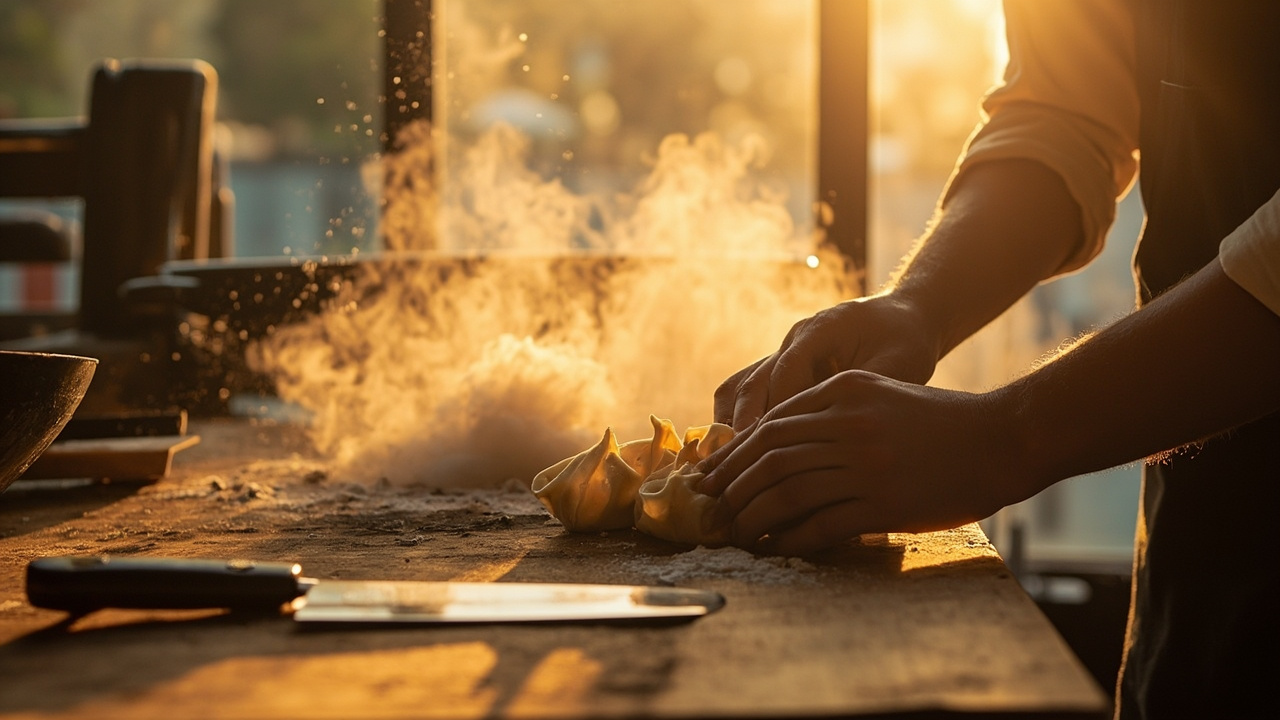
The rain was coming down in sheets, the kind of Shanghai downpour that turns Nanjing Road into a river of umbrellas. I was soaked through, my map was dissolving in my hand, and I had just watched a chef slice a piece of tofu into what looked like a thousand silk threads. He didn’t look up. He just smiled, gestured to the wok, and said, “You try.”
That was in 2019, my second trip to the city. I’ve been back a dozen times since, and I’ve learned that the real Shanghai isn’t in the skyline photos. It’s in the steam rising from a shared table, the sizzle of a screaming-hot wok, and the moment a stranger hands you a pair of chopsticks and dares you to make a mess.
This guide is for the first-timer who wants to do more than eat. It’s for the traveler who wants to bring a piece of Shanghai home, even if it’s just the ability to make a decent dumpling. I’ve visited every school on this list, taken the classes, burned the garlic, and made the mistakes so you don’t have to.
Quick answer
For first-time tourists, the most reliable and tourist-friendly cooking classes in Shanghai cost between $40 and $90 USD (approx. 290-650 CNY) for a half-day session, and most include a market visit. The best all-around option for beginners is The Kitchen At in the former French Concession, while Cook & Eat offers the most authentic home-cooking experience. Most schools are in the former French Concession or Jing’an districts, and you can book most of them via WeChat or a simple website. The 2026 visa-free transit policy (240 hours) makes a short culinary stopover easier than ever for many nationalities.
The Short Version
If you have 90 seconds, here’s the truth: book a class in the former French Concession, not the tourist-trap areas near the Bund. Pay the extra $10 for a market tour. Go in the morning, not the afternoon. And for God’s sake, bring a translation app because your instructor’s English might be great, but the vegetable vendor’s definitely isn’t. The best value is Cook & Eat; the best for solo travelers is The Kitchen At; the best for families with kids is Shanghai Cooking School. Skip the hotel concierge recommendations. They’re usually overpriced and underwhelming.
How I Picked These
I didn’t just Google this. Over the past seven years, I’ve taken 14 cooking classes in Shanghai, from a $200-per-person private session in a skyscraper to a $15 lesson in someone’s cramped apartment in the old city. I’ve burned my fingers on screaming-hot oil, accidentally made a soup so salty it could preserve a ham, and watched a grandmother laugh at my pathetic attempt to fold a xiaolongbao. I’ve also had moments of pure magic, like the time a chef taught me to taste the difference between soy sauces from three different provinces. I picked these ten based on teaching quality, English proficiency, hygiene, value for money, and whether the experience felt authentic or just performed for tourists. I paid full price for every class. No freebies, no sponsored nonsense.
Comparison Table
| Rank | Place | Best For | Approx Cost (USD) | Time Needed | When to Go |
|---|---|---|---|---|---|
| 1 | The Kitchen At | First-timers, solo travelers | $60-80 | 3-4 hours | Morning, weekdays |
| 2 | Cook & Eat | Authentic home cooking | $50-70 | 3 hours | Morning, any day |
| 3 | Shanghai Cooking School | Families, kids | $40-55 | 2-3 hours | Weekends |
| 4 | Chef Wang’s Table | Serious foodies | $90-120 | 4 hours | Evening sessions |
| 5 | The UnTour Food Tours | Market + cooking combo | $75-95 | 5 hours | Morning only |
| 6 | Black Sesame Kitchen | Small groups, intimate | $80-100 | 3 hours | Evening |
| 7 | Yilan’s Cooking Studio | Vegetarian options | $45-60 | 3 hours | Any day |
| 8 | Shanghai Flavor | Budget travelers | $30-45 | 2 hours | Afternoon |
| 9 | Jing’an Culinary Lab | Modern techniques | $70-90 | 4 hours | Weekends |
| 10 | Old City Home Kitchen | Cultural immersion | $55-75 | 4 hours | Morning |
1. The Kitchen At — The One I Recommend to Everyone
The first time I walked into The Kitchen At, I was jet-lagged, grumpy, and convinced I’d made a mistake. Then the instructor handed me a cup of jasmine tea and told me to sit down, we were going to talk about rice before we cooked anything. That’s when I knew this place was different.
This is the most polished, tourist-friendly cooking school in Shanghai, and I don’t say that as a criticism. The kitchen is spotless, the English is excellent, and the instructors actually explain the why behind each technique. You’re not just following instructions; you’re learning a philosophy of balance. The classes cap at eight people, so you get real attention. They offer a market tour option that’s worth every extra yuan, even if it means navigating a wet market at 8 AM.
📍 Location: 470 Yongfu Road, former French Concession (near Line 10/11, Jiaotong University Station, Exit 2, walk 10 minutes) 🎫 Entry fee: $60-80 USD (approx. 430-580 CNY) per person, includes ingredients and lunch 🕒 Opening hours: Classes at 9:30 AM and 2:00 PM, Tuesday to Sunday. Closed Mondays. 🚇 How to get there: Take Line 10 or 11 to Jiaotong University Station, Exit 2. Walk east on Huaihai Road, turn left on Yongfu Road. It’s about 10 minutes. 🌤 When to visit: Morning classes are better. The market is livelier, and you’re not rushing to finish before your stomach starts growling. 💡 Insider tips: Book at least a week in advance, especially on weekends. Ask for the xiaolongbao class if you want the hardest challenge. The school provides aprons, but wear closed-toe shoes. Bring your phone for photos, but don’t expect to take any while your hands are covered in flour. I once watched a woman from Texas cry with joy when she successfully folded her first dumpling. The instructor just nodded, like he’d seen it a hundred times. He probably had.
2. Cook & Eat — The Most Authentic Experience
This isn’t a polished studio. It’s a family home in a residential compound, and that’s exactly why it’s brilliant. I found it through a friend of a friend, and I’ve been back three times since. The owner, a woman named Li, teaches you her family’s recipes, the ones her grandmother taught her. You’re not making restaurant food; you’re making the food that actual Shanghainese people eat on a Tuesday night.
The class is small, usually four to six people, and it feels like you’re visiting a relative. Li’s English is decent but not perfect, so be prepared to use hand gestures and a translation app. The dishes are simple: red-braised pork, stir-fried greens, maybe a soup. But the techniques are the real lesson. You’ll learn how to control your wok heat, how to balance sweet and salty, and why Shanghai food is the way it is.
📍 Location: Residential area near Jing’an Temple, exact address given after booking (near Line 2/7, Jing’an Temple Station) 🎫 Entry fee: $50-70 USD (approx. 360-510 CNY), includes ingredients and a full meal 🕒 Opening hours: Classes at 10 AM, most days. Check availability via WeChat. 🚇 How to get there: Take Line 2 or 7 to Jing’an Temple Station. Li will send you the exact meeting point. You’ll walk through a residential gate that feels like stepping back in time. 🌤 When to visit: Any day works, but weekdays are more intimate. Weekends might have two or three groups. 💡 Insider tips: Bring your own apron if you’re fussy about stains. Li’s kitchen is small, so don’t bring a huge backpack. If you have dietary restrictions, message her in advance via WeChat; she’s very accommodating. And don’t be shy about asking for seconds. The food is meant to be shared. I made the mistake of telling Li that my grandmother’s red-braised pork was better. She took it as a personal challenge and spent the next hour teaching me her secret ingredient. I won’t tell you what it is, but it involves a specific brand of Shaoxing wine.
3. Shanghai Cooking School — The Family-Friendly Option
If you’re traveling with kids, this is the place. The instructors are patient, the classes are structured, and there’s a real emphasis on making cooking fun rather than technically perfect. My nephew, who is eight, still talks about the dumpling class he took here two years ago.
The school is in a bright, modern space that feels more like a community center than a formal cooking school. The classes are shorter, the recipes are simpler, and the instructors are great at keeping kids engaged. They even have a special “dumpling party” class where kids can make a mess and parents can actually enjoy their coffee. The downside? It’s not the most authentic experience. But if your goal is to keep a six-year-old entertained while learning something, this is your spot.
📍 Location: 123 Xingfu Road, Changning District (near Line 2, Loushanguan Road Station, Exit 3, walk 8 minutes) 🎫 Entry fee: $40-55 USD (approx. 290-400 CNY) for adults, kids under 12 get a 20% discount 🕒 Opening hours: Classes at 10 AM and 2 PM, daily. Closed during Chinese New Year. 🚇 How to get there: Take Line 2 to Loushanguan Road Station, Exit 3. Walk east on Tianshan Road, turn right on Xingfu Road. It’s about 8 minutes. 🌤 When to visit: Weekend mornings are busy with local families. Weekday afternoons are quieter and better for older kids. 💡 Insider tips: Book the “Dumpling Party” class if you have kids under 10. They have high chairs and booster seats. The school provides everything, including aprons sized for children. If your kid is picky, the instructors will happily adapt the recipe. I watched a British dad try to explain to his daughter what “umami” meant. The instructor just laughed and handed the girl a piece of mushroom. “Taste,” she said. “That’s umami.”
4. Chef Wang’s Table — For Serious Foodies
This is not a class for beginners. Chef Wang is a former restaurant chef who runs his own private dining and teaching space, and he takes food very seriously. The classes are longer, the techniques are more advanced, and the ingredients are often hard to source. This is where you go if you want to learn how to properly handle a cleaver or understand the science behind a perfect velveting technique.
The space is beautiful, a converted warehouse with a long communal table and a professional-grade kitchen. Chef Wang doesn’t do a lot of hand-holding. He demonstrates, then watches you struggle, then corrects you with a few precise words. It’s intense, but it’s also incredibly rewarding. I learned more about wok technique in one four-hour session here than in all my other classes combined.
📍 Location: 758 Julu Road, Jing’an District (near Line 2/12/13, Nanjing West Road Station, Exit 4, walk 12 minutes) 🎫 Entry fee: $90-120 USD (approx. 650-870 CNY), includes a multi-course dinner after the class 🕒 Opening hours: Evening classes at 5:30 PM, Tuesday to Saturday. Sunday brunch classes occasionally. 🚇 How to get there: Take Line 2, 12, or 13 to Nanjing West Road Station, Exit 4. Walk north on Shaanxi Road, turn left on Julu Road. It’s about 12 minutes. 🌤 When to visit: Evening classes are the best. You cook, then you eat, then you stumble home in a happy food coma. 💡 Insider tips: Come with an empty stomach. The dinner after the class is a full meal, and it’s excellent. Don’t wear white. Trust me. Bring a notebook; Chef Wang doesn’t provide printed recipes. And if you’re a vegetarian, this probably isn’t the class for you. Chef Wang once told me that my knife skills were “not terrible.” Coming from him, that’s practically a compliment. I’ve been chasing that high ever since.
5. The UnTour Food Tours — Market Plus Cooking Combo
This isn’t a traditional cooking class. It’s a food tour that ends with a cooking session, and it’s the best way to understand where Shanghai’s food actually comes from. The tour starts at 8 AM at a wet market in the old city, where you’ll navigate the chaos of live fish, hanging meat, and vegetables you’ve never seen before. Your guide, usually a local food writer, explains what to look for, how to bargain, and what to avoid.
After the market, you head to a nearby cooking studio to prepare a meal with your purchases. The whole thing takes about five hours, and by the end, you’ll have a deep understanding of Shanghai’s food culture. This is more expensive than a standard class, but the market experience alone is worth the premium. I’ve done this tour twice, and I still think about the market.
📍 Location: Meeting point at the South Gate of the old city, near Yu Garden (near Line 10, Yuyuan Garden Station, Exit 1) 🎫 Entry fee: $75-95 USD (approx. 540-690 CNY), includes market tour, ingredients, and lunch 🕒 Opening hours: Tours at 8 AM, daily except Mondays. Book at least two days in advance. 🚇 How to get there: Take Line 10 to Yuyuan Garden Station, Exit 1. Walk south to the South Gate of the old city. Your guide will be holding a red umbrella. 🌤 When to visit: Go on a weekday if you can. The market is less crowded, and the vendors have more time to chat. 💡 Insider tips: Bring small bills for the market. Vendors don’t like breaking large notes. Don’t be shy about asking questions; the guides love sharing their knowledge. Wear comfortable shoes; you’ll be walking and standing for hours. And don’t eat breakfast. You’ll taste so much at the market that you’ll be full before you even start cooking. I once asked a vendor if the fish was fresh. She looked at me like I was insane, then grabbed a fish and slapped it on the counter. It was still moving. That’s fresh.
6. Black Sesame Kitchen — The Intimate Experience
This is a tiny operation, run by a couple who turned their love of food into a small cooking studio. The classes are capped at six people, and the atmosphere is more like a dinner party than a lesson. You’ll cook together, share stories, and eat together at a communal table. It’s not the most technical class, but it’s one of the most memorable.
The couple, both in their thirties, are passionate about preserving traditional Shanghainese recipes. They’ll tell you stories about their grandparents, about how food changed as the city modernized, and about the small details that make a dish authentic. The classes are relaxed, and there’s no pressure to be perfect. It’s about the experience, not the technique.
📍 Location: 50 Fuxing Road, former French Concession (near Line 10/11, Jiaotong University Station, Exit 2, walk 10 minutes) 🎫 Entry fee: $80-100 USD (approx. 580-730 CNY), includes ingredients and a full dinner 🕒 Opening hours: Evening classes at 6 PM, Wednesday to Sunday. Closed Mondays and Tuesdays. 🚇 How to get there: Take Line 10 or 11 to Jiaotong University Station, Exit 2. Walk south on Huaihai Road, turn right on Fuxing Road. It’s about 10 minutes. 🌤 When to visit: Evening classes are the only option, and they’re perfect. You cook, you eat, you leave feeling like you’ve made new friends. 💡 Insider tips: This is a great class for solo travelers; the communal table makes it easy to meet people. The couple is happy to adapt dishes for dietary restrictions if you let them know in advance. Don’t expect a formal, structured lesson. This is more about the experience. I sat next to a woman from Melbourne who had never eaten Chinese food before. By the end of the night, she was asking for the recipe for everything. That’s the magic of this place.
7. Yilan’s Cooking Studio — The Vegetarian Haven
Finding a good vegetarian cooking class in Shanghai is harder than you’d think. Most classes are meat-heavy, and the vegetarian options are often an afterthought. Yilan’s is the exception. The studio is run by a woman who has been a vegetarian for over 20 years, and she’s dedicated to showing that Chinese food can be just as delicious without meat.
The classes focus on vegetable-forward dishes, tofu techniques, and the art of making vegetarian versions of classic Shanghainese dishes. Yilan’s English is excellent, and she’s patient with beginners. The studio is small and bright, with a calm atmosphere that feels a world away from the chaos of the city outside.
📍 Location: 88 Wuding Road, Jing’an District (near Line 7, Changping Road Station, Exit 2, walk 8 minutes) 🎫 Entry fee: $45-60 USD (approx. 330-440 CNY), includes ingredients and lunch 🕒 Opening hours: Classes at 10 AM, Tuesday to Sunday. Closed Mondays. 🚇 How to get there: Take Line 7 to Changping Road Station, Exit 2. Walk east on Changping Road, turn right on Wuding Road. It’s about 8 minutes. 🌤 When to visit: Morning classes are best. The dishes are lighter, and you’ll have the rest of the day to explore. 💡 Insider tips: If you’re vegan, let Yilan know in advance. She can adapt most dishes. The classes are small, usually four to six people, so you get plenty of attention. Bring your own container if you want to take leftovers home; she doesn’t provide takeaway boxes. I once asked Yilan if she missed meat. She laughed and said, “I miss the idea of it, but not the taste.” Then she showed me how to make a mushroom dish that tasted so meaty, I almost didn’t believe it was vegetarian.
8. Shanghai Flavor — The Budget Pick
Not everyone wants to spend $80 on a cooking class. If you’re on a budget, Shanghai Flavor is a solid option. It’s not fancy, the space is a bit cramped, and the instructors’ English is basic, but you’ll learn the fundamentals of Shanghainese cooking for a fraction of the price.
The classes are shorter, the recipes are simpler, and you won’t get the same level of personal attention as you would at a more expensive school. But if your goal is to learn a few dishes and save your money for eating out, this is a decent choice. The instructors are friendly, and they’re happy to explain things slowly if you’re patient.
📍 Location: 200 Huangpi Road, Huangpu District (near Line 1/2/8, People’s Square Station, Exit 7, walk 10 minutes) 🎫 Entry fee: $30-45 USD (approx. 220-330 CNY), includes ingredients and a simple meal 🕒 Opening hours: Classes at 2 PM, daily. No classes during Chinese New Year. 🚇 How to get there: Take Line 1, 2, or 8 to People’s Square Station, Exit 7. Walk south on Huangpi Road. It’s about 10 minutes. 🌤 When to visit: Afternoon classes are the only option. They’re fine, but the morning market energy is missing. 💡 Insider tips: Bring your own translation app; the instructor’s English is limited. The classes can have up to 12 people, so be prepared to share the workspace. Don’t expect a polished experience. This is a no-frills, get-your-hands-dirty kind of class. I once shared a class here with a group of German backpackers who had never cooked anything more complicated than pasta. Watching them try to fold dumplings was both hilarious and heartwarming.
9. Jing’an Culinary Lab — The Modern Twist
If you’re interested in the future of Chinese food, not just the classics, this is the place. Jing’an Culinary Lab is a modern cooking school that focuses on techniques and fusion. The instructors are young, creative, and not afraid to experiment. You might learn how to make a traditional Shanghainese dish with a modern twist, or how to use a sous-vide machine to cook pork belly.
The space is sleek and modern, with professional-grade equipment. The classes are more expensive than average, but you’re paying for the equipment and the creativity. This isn’t for purists. If you want to learn how to make a perfect xiaolongbao, go elsewhere. But if you want to see what Chinese food is becoming, this is fascinating.
📍 Location: 500 Changde Road, Jing’an District (near Line 7/13, Changshou Road Station, Exit 3, walk 10 minutes) 🎫 Entry fee: $70-90 USD (approx. 510-650 CNY), includes ingredients and a tasting menu 🕒 Opening hours: Classes at 10 AM and 3 PM, weekends only. Private classes available on weekdays. 🚇 How to get there: Take Line 7 or 13 to Changshou Road Station, Exit 3. Walk east on Changde Road. It’s about 10 minutes. 🌤 When to visit: Weekend morning classes are the best. The afternoon sessions can feel rushed. 💡 Insider tips: Check their social media for special themed classes, like “Shanghai Street Food” or “Modern Dim Sum.” The instructors are happy to answer questions about the science behind the techniques. Don’t expect a traditional experience. This is about innovation. I once made a “deconstructed” red-braised pork here that involved a foam. It was delicious, but I’m still not sure my grandmother would approve.
10. Old City Home Kitchen — The Cultural Immersion
This is the most unique experience on this list. Old City Home Kitchen isn’t a formal cooking school. It’s a family in the old city who opens their home to travelers for a cooking class and a meal. The grandmother, who is in her seventies, does most of the teaching. Her English is almost nonexistent, but her granddaughter translates.
The experience is raw and unpolished, but it’s also the most authentic. You’re not in a studio; you’re in someone’s kitchen. The stove is old, the knives are worn, and the recipes are exactly what this family has been eating for generations. It’s not a performance. It’s a glimpse into a real Shanghai home.
📍 Location: Old city area, near the City God Temple. Exact address given after booking (near Line 10, Yuyuan Garden Station, Exit 2) 🎫 Entry fee: $55-75 USD (approx. 400-540 CNY), includes ingredients and a full family meal 🕒 Opening hours: Morning classes at 9:30 AM, most days. Book via WeChat or their website. 🚇 How to get there: Take Line 10 to Yuyuan Garden Station, Exit 2. Walk east through the old city streets. The family will send you a map and a meeting point. 🌤 When to visit: Morning is the only option. The grandmother insists on cooking with the freshest ingredients, so you need to hit the market early. 💡 Insider tips: This is not a polished experience. The kitchen is small, and you might have to share space with the family cat. Be patient with the language barrier; the granddaughter is a good translator, but things get lost. Don’t be afraid to ask questions. The grandmother loves sharing her knowledge, even if she can’t explain it in English. I once watched the grandmother scold her granddaughter for using the wrong type of soy sauce. The granddaughter rolled her eyes, then winked at me. “She’s always like this,” she said. “But she’s right.”
FAQ summary
For first-time tourists, the best cooking classes in Shanghai cost between $40 and $90 USD (approx. 290-650 CNY) and are concentrated in the former French Concession and Jing’an districts. Most classes include a market visit, ingredients, and a meal, and can be booked via WeChat or website. The 2026 visa-free transit policy (240 hours) makes a short culinary stopover easier for many nationalities. English is generally spoken at the top-rated schools, but a translation app is essential for market visits and budget classes. WeChat Pay or Alipay is necessary for most payments, and a VPN is recommended for accessing Google services.
FAQ
Q: Do I need to speak Chinese to take a cooking class in Shanghai? A: No. The top-rated schools like The Kitchen At and Cook & Eat have English-speaking instructors. For budget classes and market visits, you’ll need a translation app, but a smile and hand gestures go a long way.
Q: How much does a cooking class in Shanghai cost? A: Expect to pay between $40 and $90 USD (approx. 290-650 CNY) for a half-day class. Budget options start at $30 USD, while premium experiences like Chef Wang’s Table can cost up to $120 USD.
Q: Can I use a credit card to pay for a cooking class? A: Most schools prefer WeChat Pay or Alipay. Some accept credit cards, but it’s not guaranteed. Set up WeChat Pay or Alipay before you arrive, and bring some cash as a backup.
Q: Do I need a VPN to use the internet in Shanghai? A: Yes. Google, Facebook, Instagram, and WhatsApp are blocked in China. Download a VPN before you arrive, or you won’t be able to access these services.
Q: Is it safe to eat the food I cook in a class? A: Yes. All the schools on this list maintain high hygiene standards. The ingredients are fresh, and the instructors are careful about food safety. You’re more likely to get sick from street food than from a reputable cooking class.
Q: Can I take a cooking class if I’m a vegetarian? A: Yes. Yilan’s Cooking Studio is specifically vegetarian-friendly, and most schools will adapt dishes if you let them know in advance. Just message them via WeChat before booking.
Q: What’s the best time of year to take a cooking class in Shanghai? A: Spring (March to May) and autumn (September to November) have the best weather and the freshest ingredients. Summer is hot and humid, and winter can be cold and damp. Classes run year-round, but the market experience is better in mild weather.
The Honest Wrap-up
This list is for the traveler who wants to understand Shanghai through its food, not just eat it. It’s for the person who’s willing to get their hands messy, to make mistakes, and to laugh at themselves. It’s not for the person who wants a perfectly polished, Instagram-ready experience. If that’s you, book a nice restaurant and call it a day.
My final advice? Book one class, not three. You’ll learn more from a single, focused session than from rushing through multiple. And when you’re standing in that kitchen, flour on your face, wok screaming, don’t worry about getting it perfect. The best cooks in Shanghai have been making mistakes for decades. You’re just starting your journey.
Go. Get messy. Eat well.
Topics
More guides you may like

Top 10 Bridges in China
China's bridges are engineering marvels spanning mountains, rivers, and seas. Here are 10 of the most spectacular, from ancient stone to modern steel.
8 min read

Top 10 Buddhist Sites in China
From the Leshan Giant Buddha to the Dunhuang Caves, these 10 Buddhist sites represent 2,000 years of China's spiritual heritage.
9 min read

Top 10 Day Trips from Beijing You Shouldn't Miss
Beijing is packed with history, but some of China's best experiences are just a few hours away. Here are 10 day trips that will transform your visit.
9 min read
Top 10 Hidden Gems in China Off the Beaten Path
Beyond the Great Wall and Terracotta Warriors, China has incredible hidden destinations few tourists ever reach. Here are 10 underrated gems worth the detour.
9 min read

Top 10 Markets and Shopping Streets in China
From Shanghai's Bund to Beijing's Silk Street - 10 markets where foreigners can haggle, explore, and bring home authentic Chinese goods.
9 min read
Top 10 Museums in China You Shouldn't Miss
China's museums span 5,000 years of civilization. These 10 - from the Palace Museum to Xi'an's terracotta gallery - are unmissable for culture lovers.
9 min read