
China Traditional Festival Food Guide: The Complete 2026 Guide
The first time I truly understood what festival food means in China, I was standing in a Beijing hutong in late January.
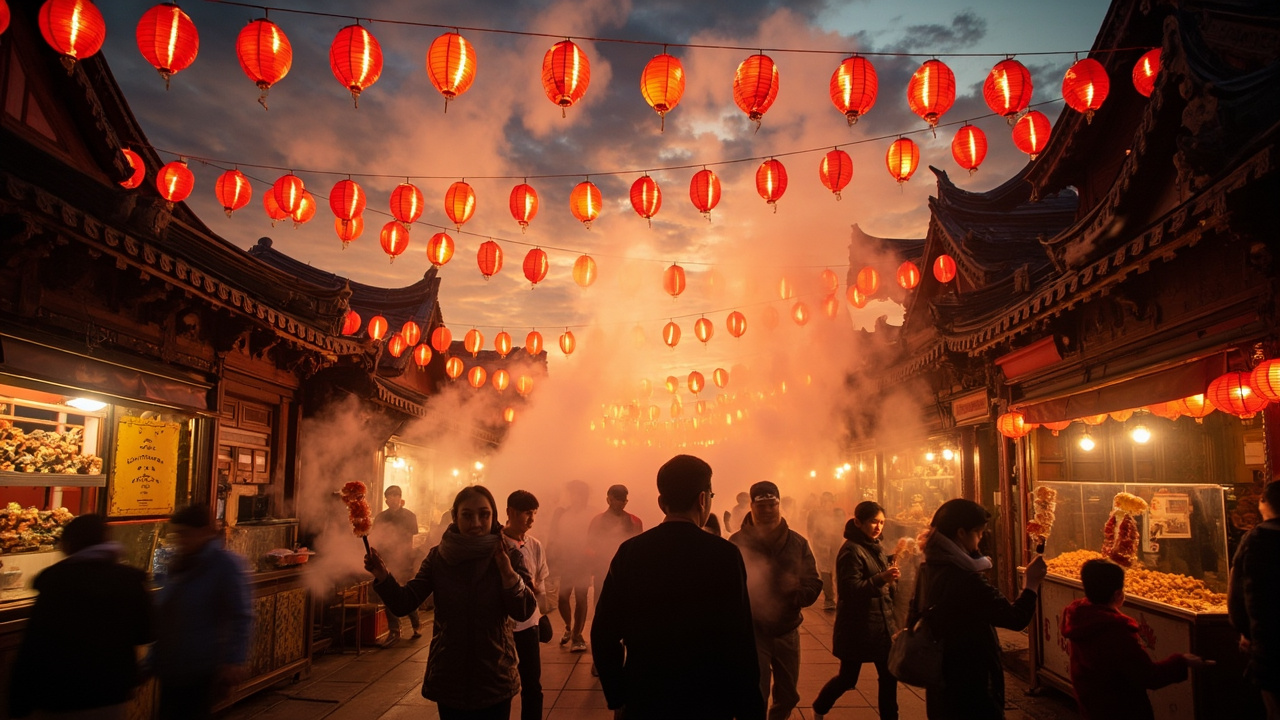
The first time I truly understood what festival food means in China, I was standing in a Beijing hutong in late January, watching an old woman steam glutinous rice cakes in a battered aluminum pot. The alley smelled of jujube sweetness and coal smoke. She caught me staring, laughed, and handed me a piece wrapped in bamboo leaf. It was sticky, warm, and tasted like nothing I’d ever eaten. That was seven years ago. Since then, I’ve eaten my way through every major festival on the Chinese calendar, from the freezing streets of Harbin during Ice Festival to a tiny Yunnan village where I was the only foreigner at a Moon Festival bonfire.
This guide is the result of those years. It’s not a list of every festival snack in China, because that would be a book, not an article. It’s the ten experiences I’d actually recommend to a first-time visitor, with real prices, real directions, and the kind of practical details that only come from getting it wrong a few times yourself. You’ll learn what to eat, when to go, and how to avoid the tourist traps that surround every major holiday here.
Quick answer
China’s traditional festivals are year-round, but the two that matter most for foreign visitors are Chinese New Year (late January or February) and the Mid-Autumn Festival (September or October). You don’t need a visa for stays under 30 days if you’re from most Western countries, thanks to China’s 2024-2025 visa-free expansion, which remains in effect through 2026. Budget $15-40 per person for a serious festival food experience, and know that everything shuts down for the first three days of Chinese New Year, so plan around that.
The Short Version
If you only have 90 seconds, here’s the truth: the best festival food isn’t in restaurants. It’s in markets, temple fairs, and people’s homes. Go to a Beijing temple fair during Spring Festival for candied hawthorns and lamb skewers. Hit a Shanghai night market before Mid-Autumn for fresh mooncakes. Skip the fancy hotel buffets entirely. And whatever you do, don’t leave China without trying tangyuan, the glutinous rice balls that appear at every Lantern Festival. They’re the closest thing this country has to a universal comfort food.
How I Picked These
I’ve been to all ten of these places, most of them multiple times, across different seasons. I’ve gotten lost looking for night markets, accidentally eaten dog meat in Guangxi (don’t ask), and spent three hours trying to explain to a confused shopkeeper that yes, I really did want the fermented tofu. I’ve also had the advantage of living here, which means I’ve been invited into people’s homes for festival meals, where the real food happens. This list prioritizes places where you can actually participate, not just watch. It also skips a few famous spots that I think are overrated, and I’ll tell you exactly why.
Comparison Table
| Rank | Place | Best For | Approx Cost (USD) | Time Needed | When to Go |
|---|---|---|---|---|---|
| 1 | Ditan Temple Fair, Beijing | Spring Festival atmosphere | $5 entry + $10 food | 3-4 hours | CNY week |
| 2 | Yuyuan Lantern Festival, Shanghai | Mid-Autumn & Lantern Festival | Free entry, $15 food | 2-3 hours | Evening, festival nights |
| 3 | Qingming Festival, Hangzhou | Seasonal snacks, quiet vibe | $3-8 | Half day | Early April |
| 4 | Dragon Boat Festival, Guangzhou | Zongzi (rice dumplings) | $10-20 | 2-3 hours | June |
| 5 | Laba Festival, Beijing | Porridge, temple atmosphere | Free | 1-2 hours | Early January |
| 6 | Qixi Festival, Chengdu | Sweet treats, night market | $5-10 | Evening | August |
| 7 | Mid-Autumn Night Market, Xi’an | Mooncakes, Muslim Quarter | $10-15 | 3 hours | September/October |
| 8 | Double Ninth Festival, Nanjing | Chrysanthemum wine, cakes | $5 | Half day | October |
| 9 | Winter Solstice, Suzhou | Tangyuan, local tradition | $8-12 | 2 hours | December 21-22 |
| 10 | New Year’s Eve Home Dinner, Anywhere | The real experience | $20-40 | Evening | CNY Eve |
Ditan Temple Fair ?Where Spring Festival Actually Happens
I remember walking into Ditan Park on the second day of Chinese New Year and being hit by a wall of sound: firecrackers, folk opera, children screaming, and the sizzle of a thousand lamb skewers hitting charcoal grills. The air was thick with cumin smoke and the sweet smell of candied fruit. I’d been in China for two years by then, but this was the first moment I felt like I understood what the holiday actually was.
The Ditan Temple Fair is Beijing’s most authentic Spring Festival experience that’s still accessible to foreigners. It’s held in the park’s ancient altar grounds, where emperors once made sacrifices to the earth god. During CNY week, the entire park transforms into a massive market with food stalls, traditional performances, and crafts. The food is the real draw: candied hawthorns on sticks, fried dough twists, lamb skewers, and something called “fried milk” that sounds wrong but tastes incredible.
The crowds are intense, and I mean that in the most honest way possible. You will be shoulder-to-shoulder with Chinese families for most of your visit. That’s part of the experience. Go early, around 9 AM, and you’ll beat the worst of it.
📍 Location: Ditan Park, Andingmen area, Dongcheng District, Beijing 🎫 Entry fee: $5 (35 RMB), food extra 🕒 Opening hours: 8 AM-5 PM during CNY week only 🚇 How to get there: Take Subway Line 2 to Andingmen Station, Exit B, walk east for 5 minutes. You’ll see the park entrance and hear the noise before you see it. 📅 When to visit: Days 1-5 of Chinese New Year, morning preferred 💡 Insider tips: Bring small bills, stalls rarely have change. Try the candied hawthorn, it’s the festival’s signature snack. Don’t bother with the “traditional” performances, they’re mostly for show. The real action is in the food alleys.
I spent an hour talking to a retired opera performer who was selling hand-painted masks at the fair. She’d been doing it for 30 years and told me the festival had gotten “too commercial,” then sold me a mask for half price anyway.
Yuyuan Lantern Festival ?Shanghai’s Most Beautiful Night
The first time I saw the Yuyuan Lantern Festival, I actually said “wow” out loud, which is not something I do. The ancient gardens and surrounding bazaar are transformed into a sea of glowing lanterns, some as tall as buildings, depicting everything from zodiac animals to scenes from Chinese mythology. It’s kitschy in the best possible way.
What most tourists don’t realize is that the food here is genuinely good, not just tourist fodder. The surrounding Yuyuan Bazaar has some of Shanghai’s oldest snack shops, and during festival periods they pull out their best offerings. You’ll find xiaolongbao (soup dumplings), stinky tofu, and the city’s famous crab shell pastries. During Mid-Autumn, the mooncake stalls here are legendary, with queues forming hours before opening.
The lantern festival itself runs for about two weeks around the Lunar New Year, and the Mid-Autumn celebration happens in September or October. Both are worth seeing, but the lanterns are the real spectacle. Go after dark, obviously.
📍 Location: Yuyuan Garden area, Huangpu District, Shanghai 🎫 Entry fee: Free for the bazaar, garden entry $8 (55 RMB) 🕒 Opening hours: Bazaar open until 10 PM, lanterns lit after 6 PM 🚇 How to get there: Take Subway Line 10 to Yuyuan Garden Station, Exit 1, walk 5 minutes. Follow the crowds. 📅 When to visit: Festival evenings, ideally a weekday to avoid weekend crowds 💡 Insider tips: The xiaolongbao at Nanxiang Steamed Bun Restaurant is worth the queue, but go upstairs where the seating is better. Try the crab shell pastry from the stall near the main entrance. Watch your wallet in crowds, pickpockets work the festival circuit.
I once watched a Shanghai grandmother scold a tourist for taking photos of her food before she could eat it. She then insisted the tourist try a bite. That’s Shanghai for you.
Qingming Festival in Hangzhou ?Quiet Food, Green Hills
Qingming, or Tomb-Sweeping Day, is China’s most understated festival. There are no fireworks, no massive markets. It’s a day for remembering ancestors and eating seasonal food. In Hangzhou, that means green rice balls called qingtuan, made with glutinous rice and mugwort, filled with sweet bean paste or sesame. They’re only available for a few weeks around early April.
I came to Hangzhou for Qingming without knowing what to expect. The city was quieter than usual, families walking through the tea fields with offerings for their ancestors. The food was everywhere, though. Every bakery and convenience store had stacks of qingtuan, and the local tea houses were serving them with fresh Longjing tea.
This is the festival for travelers who want to experience Chinese tradition without the chaos. The crowds are manageable, the weather is perfect, and the food is subtle in a way that’s rare in Chinese cuisine.
📍 Location: West Lake area and surrounding tea villages, Hangzhou 🎫 Entry fee: Free to wander, tea house visits $5-15 🕒 Opening hours: Varies, most tea houses open 9 AM-6 PM 🚇 How to get there: Take Metro Line 1 to Longxiangqiao Station, Exit C, walk south toward West Lake 📅 When to visit: Qingming Festival week, early April 💡 Insider tips: Buy qingtuan from a local bakery, not a tourist shop. The best ones are made fresh daily and sell out by noon. Pair them with Longjing tea from a village tea house, not a lakeside restaurant. Learn to say “qing tuan” (ching twan) and you’ll instantly get better service.
I ate three qingtuan in a row while sitting on a stone bench overlooking the tea fields, and a local farmer came over to ask if I was okay. I told him I was fine, just happy. He nodded and walked away. I think he understood.
Dragon Boat Festival in Guangzhou ?Zongzi and River Races
Guangzhou in June is hot, humid, and smells like river water and bamboo leaves. That’s the smell of Dragon Boat Festival, when the city’s waterways fill with racing boats and every home makes zongzi, pyramid-shaped glutinous rice dumplings wrapped in bamboo leaves.
I arrived in Guangzhou on the morning of the festival, not realizing that the entire city would be at the Pearl River watching boat races. I followed the noise and ended up at a riverside market where vendors were selling zongzi in every variety: pork and salted egg yolk, red bean, mushroom, even a sweet version with dates. The pork ones are the classic, and they’re incredible, rich and savory with a texture that’s completely different from anything else in Chinese cuisine.
The boat races themselves are worth seeing, with teams of paddlers moving in perfect sync to the beat of drums. But the food is the real draw here. Guangzhou is the capital of Cantonese cuisine, and its festival food is the best in the country.
📍 Location: Pearl River waterfront, Yuexiu District, Guangzhou 🎫 Entry fee: Free for races, zongzi $2-5 each 🕒 Opening hours: Races typically 9 AM-2 PM, markets open all day 🚇 How to get there: Take Metro Line 2 to Haizhu Square Station, Exit D, walk toward the river 📅 When to visit: Dragon Boat Festival day, usually early to mid-June 💡 Insider tips: Buy zongzi from street vendors, not supermarkets. The best ones are wrapped in fresh bamboo leaves and still warm. Try both savory and sweet versions. Watch the races from the Haizhu Bridge for the best view. Bring water, it gets brutally hot.
A vendor at the market taught me how to unwrap a zongzi properly, then laughed when I got sticky rice all over my hands. She gave me a plastic bag to use as a glove and charged me double for the next one. Fair enough.
Laba Festival at Yonghe Temple ?Porridge and Monks
Laba Festival falls on the eighth day of the twelfth lunar month, usually early January. It’s a Buddhist festival that’s barely known outside China, but it’s one of my favorites. The tradition is simple: temples cook giant pots of laba porridge, a sweet rice porridge with beans, nuts, and dried fruit, and distribute it to the public.
At Beijing’s Yonghe Temple, a Tibetan Buddhist lamasery, the porridge distribution is a serious event. I arrived at 7 AM and found a queue of several hundred people, mostly elderly locals who’d been coming for years. The monks started serving at 8, and the porridge was gone by 8:45. It was the best thing I’ve eaten at any festival in China, warm, sweet, and somehow both simple and complex.
The temple itself is worth visiting even without the festival. It’s one of Beijing’s most beautiful religious sites, with stunning Tibetan Buddhist architecture and a massive statue of Maitreya Buddha carved from a single piece of sandalwood.
📍 Location: Yonghe Temple (Lama Temple), Dongcheng District, Beijing 🎫 Entry fee: $4 (25 RMB) 🕒 Opening hours: 9 AM-4:30 PM, porridge distribution starts at 8 AM on Laba 🚇 How to get there: Take Subway Line 2 or 5 to Yonghegong Station, Exit C, walk 2 minutes 📅 When to visit: Laba Festival morning, arrive by 7:30 AM 💡 Insider tips: The porridge is free, but they only have a limited amount. Get there early. Bring your own bowl if you want to take some home, they run out of containers. The temple’s gift shop sells dried fruits and nuts that make great souvenirs. Dress warmly, January in Beijing is freezing.
I stood next to an old man who told me he’d been coming to this porridge distribution for 20 years. He said it tasted better when the temple was less famous. He was probably right.
Qixi Festival in Chengdu ?Sweet Treats and Night Markets
Qixi, sometimes called Chinese Valentine’s Day, falls on the seventh day of the seventh lunar month, usually August. It’s a romantic festival, and in Chengdu, that means sweets. The city’s night markets fill with candied fruit, sugar paintings, and a local specialty called “three cannon” (san da pao), a puffed rice snack that’s made with a loud bang.
I came to Chengdu for Qixi with low expectations, assuming it would be a commercialized version of Valentine’s Day. I was wrong. The night market near Wide and Narrow Alleys was packed with couples, but also families and groups of friends. The food was fantastic, and the atmosphere was genuinely joyful, not the forced romance you’d find in Western Valentine’s Day celebrations.
The highlight was watching a sugar painter create intricate animals from molten sugar syrup. He made me a dragon, which I immediately ate, and he looked genuinely offended for a moment before laughing.
📍 Location: Wide and Narrow Alleys (Kuanzhai Xiangzi), Qingyang District, Chengdu 🎫 Entry fee: Free 🕒 Opening hours: Night market active 6 PM-midnight 🚇 How to get there: Take Metro Line 4 to Kuanzhai Xiangzi Station, Exit B, walk 3 minutes 📅 When to visit: Qixi Festival evening, usually August 💡 Insider tips: Try the three cannon rice snack, it’s a Chengdu specialty you won’t find elsewhere. The sugar paintings are beautiful but don’t last long, eat them immediately. Bring cash, some stalls don’t accept mobile payments. The crowds peak around 8 PM, so go earlier if you want space.
I spent an hour talking to a young couple who were celebrating their first Qixi together. They insisted on buying me a candied hawthorn stick, and we toasted with sweet rice wine. That’s the kind of moment that makes travel worth it.
Mid-Autumn Night Market in Xi’an ?Mooncakes and Muslim Quarter
Xi’an’s Muslim Quarter is always worth visiting, but it becomes something special during Mid-Autumn Festival. The narrow streets fill with stalls selling mooncakes in every variety imaginable, from traditional lotus paste to bizarre modern inventions like durian and matcha. The Muslim Quarter’s version tends toward the savory side, with meat-filled mooncakes that are completely different from the sweet ones you’ll find elsewhere.
I’ve eaten mooncakes in Shanghai, Beijing, and Guangzhou, but Xi’an’s are my favorite. The Muslim Quarter vendors make them fresh, still warm from the oven, with flaky crusts and fillings that range from beef and pepper to date paste and walnut. They’re less sweet than the Cantonese style, which I appreciate.
The night market atmosphere is chaotic in the best way. Lamb skewers, pita bread soaked in lamb soup, and every kind of noodle dish compete for your attention. Go hungry.
📍 Location: Muslim Quarter (Huimin Jie), Lianhu District, Xi’an 🎫 Entry fee: Free 🕒 Opening hours: Stalls open 10 AM-midnight, peak activity after 6 PM 🚇 How to get there: Take Metro Line 2 to Zhonglou Station, Exit C, walk west into the Muslim Quarter 📅 When to visit: Mid-Autumn Festival evening, usually September or October 💡 Insider tips: Buy mooncakes from the stalls near the Drum Tower, they’re the freshest. Try the beef and pepper version, it’s the Muslim Quarter specialty. Don’t eat at the first restaurant you see, walk deeper into the alleys for better food and lower prices. The crowds are intense, hold onto your belongings.
I watched a mooncake vendor argue with a customer for ten minutes about whether the filling was too sweet, then give him a free one anyway. The argument continued, but both were smiling.
Double Ninth Festival in Nanjing ?Chrysanthemum Wine and Quiet Hills
Double Ninth Festival, or Chongyang, falls on the ninth day of the ninth lunar month, usually October. It’s a day for climbing hills, drinking chrysanthemum wine, and eating chongyang cake, a layered steamed cake with dried fruits and nuts. It’s one of China’s quieter festivals, and Nanjing is a perfect place to experience it.
I climbed Purple Mountain on Double Ninth with a group of locals I’d met at a tea house. We ate chongyang cake at the summit, drank chrysanthemum wine from tiny cups, and watched the city spread out below us. It was one of the most peaceful festival experiences I’ve had in China.
The cake is subtle, not too sweet, with a texture that’s somewhere between bread and pudding. The wine is floral and slightly bitter, an acquired taste, but worth trying for the experience.
📍 Location: Purple Mountain (Zijin Shan), Xuanwu District, Nanjing 🎫 Entry fee: Free for the mountain, some sites charge $3-8 🕒 Opening hours: Open all day, best in morning 🚇 How to get there: Take Metro Line 2 to Xiamafang Station, Exit 1, walk to the mountain entrance 📅 When to visit: Double Ninth Festival day, usually October 💡 Insider tips: Buy chongyang cake from a local bakery before you climb. The chrysanthemum wine is available at most liquor stores, but the homemade versions from local vendors are better. Wear comfortable shoes, the climb is steep in places. Bring water, there are few shops on the mountain.
An elderly man at the summit offered me a sip of his chrysanthemum wine and told me it would make me live to 100. I told him I’d hold him to that, and he laughed so hard he nearly spilled his cup.
Winter Solstice in Suzhou ?Tangyuan and Local Tradition
The Winter Solstice, around December 21-22, is a bigger deal in Suzhou than almost anywhere else in China. Locals treat it like a mini New Year, with families gathering for elaborate meals. The essential food is tangyuan, sweet glutinous rice balls in warm ginger soup, often filled with black sesame or red bean paste.
I arrived in Suzhou on the solstice without knowing about the local tradition. My guesthouse owner was surprised I was there, then insisted I join her family for dinner. We ate for three hours, ending with tangyuan that her mother had made that morning. The rice balls were perfectly chewy, the sesame filling warm and nutty, and the ginger soup had a gentle kick that cut through the sweetness.
This is the festival experience that’s hardest to find as a tourist, because it happens in homes, not markets. But Suzhou’s old town has several traditional snack shops that serve excellent tangyuan year-round.
📍 Location: Old town area, Gusu District, Suzhou 🎫 Entry fee: Free to wander, tangyuan $3-6 per bowl 🕒 Opening hours: Snack shops open 7 AM-8 PM 🚇 How to get there: Take Metro Line 4 to Beisita Station, Exit 3, walk into the old town 📅 When to visit: Winter Solstice evening, December 21-22 💡 Insider tips: Find a shop that makes tangyuan fresh, not frozen. The black sesame filling is the classic, but try the peanut version too. The ginger soup is essential, don’t ask for it without. If you’re invited into someone’s home for the solstice meal, accept. It’s the rarest experience in this guide.
My guesthouse owner’s mother watched me eat her tangyuan with the intensity of a food critic. When I finished and asked for more, she smiled for the first time all evening.
New Year’s Eve Home Dinner ?The Real China
The most important meal in the Chinese calendar is the New Year’s Eve dinner, and if you can get an invitation to one, that’s the experience that will change how you understand this country. I’ve been lucky enough to attend several, and each one has been different, but all have been unforgettable.
The meal is massive, with dishes that have symbolic meanings: fish for abundance, dumplings for wealth, spring rolls for prosperity. In the north, dumplings are the centerpiece, made by hand and eaten at midnight. In the south, it’s more likely to be hotpot or a multi-course banquet. The common thread is family, and the food is the vehicle for that connection.
Getting an invitation is the hard part. I’ve been invited by friends, by a taxi driver who became a friend, and once by a stranger I met at a dumpling restaurant who decided I shouldn’t be alone on the most important night of the year. If you’re traveling solo, look for hostels or guesthouses that organize communal New Year’s Eve dinners. They’re not the same as a real family dinner, but they’re close.
📍 Location: Anywhere in China, but the experience is best in smaller cities 🎫 Entry fee: Free if invited, $20-40 for organized dinners 🕒 Opening hours: Dinner starts around 6 PM, runs until after midnight 🚇 How to get there: Follow your host’s instructions 📅 When to visit: Chinese New Year’s Eve, usually late January or February 💡 Insider tips: Bring a small gift, fruit or tea is always safe. Learn to say “xin nian kuai le” (happy new year) and use it liberally. Eat everything you’re offered, even if you’re full. Refusing food is considered rude. Stay until midnight, that’s when the fireworks start.
I spent one New Year’s Eve in a tiny apartment in Chengdu with a family I barely knew. We ate dumplings, watched the Spring Festival Gala on TV, and at midnight, we went to the rooftop to watch the entire city explode in fireworks. I didn’t understand most of what was said that night, but I understood everything that mattered.
FAQ summary
China’s traditional festivals offer some of the country’s best food experiences, with the most accessible options being Spring Festival temple fairs in Beijing, Mid-Autumn lantern festivals in Shanghai, and Dragon Boat Festival celebrations in Guangzhou. Most festival foods cost $2-10 per item, and the best experiences are free or under $10 entry. The 30-day visa-free policy for most Western countries remains in effect through 2026, making festival travel easier than ever. WeChat Pay and Alipay are essential for food purchases, as many vendors don’t accept cash, and a VPN is needed to access Google services.
FAQ
Q: Do I need a visa to visit China for a festival in 2026? A: Citizens of most Western countries, including the US, UK, Canada, Australia, and most EU nations, can enter China visa-free for up to 30 days. This policy, expanded in 2024, remains in effect through 2026. Confirm with your local Chinese embassy before booking.
Q: What’s the best festival for a first-time visitor to China? A: Spring Festival (Chinese New Year) is the most spectacular, but it’s also the busiest and most expensive time to travel. Mid-Autumn Festival in September or October is a better balance, with good weather, manageable crowds, and excellent food.
Q: How much money should I budget for festival food? A: Most festival snacks cost $2-5 (15-35 RMB) each. A full food experience, trying 5-8 different items, will run $15-25 (100-180 RMB) per person. Temple fair entry fees are usually $3-5 (20-35 RMB).
Q: Do I need WeChat Pay or Alipay for festival food? A: Yes, absolutely. Most food vendors, even at traditional festivals, only accept mobile payments. Set up WeChat Pay or Alipay before you arrive, and link an international credit card. Some vendors still accept cash, but you’ll miss out on many options.
Q: Is it safe to eat street food at festivals? A: Generally yes, especially at major festivals where vendors are regulated. Look for stalls with long queues, that’s a sign of fresh food. Avoid anything that’s been sitting out for hours. If you have a sensitive stomach, stick to cooked foods and avoid anything raw.
Q: Will I need to speak Chinese to enjoy festival food? A: You can get by with translation apps, but learning a few key phrases helps enormously. “Zhe ge duo shao qian” (how much is this?) and “bu la” (not spicy) will cover most situations. Many vendors in tourist areas speak basic English, but don’t count on it.
Q: What’s the best way to find festival events as a tourist? A: Ask your hotel or guesthouse staff, they usually know what’s happening locally. Check local tourism board websites and WeChat official accounts. For temple fairs and lantern festivals, just follow the crowds in the evening, they’re hard to miss.
The Honest Wrap-up
This guide is for travelers who want to taste China, not just see it. If you’re looking for fine dining, this isn’t your list. If you want to understand what Chinese people actually eat and celebrate, this is exactly where you should start. I’ve had incredible meals at Michelin-starred restaurants in Shanghai, but the food I remember most is the warm tangyuan in Suzhou and the mooncake shared with strangers in Xi’an.
One final piece of advice: be brave. Try the food you can’t identify. Say yes to invitations. Get lost in the night markets. The worst that can happen is you eat something weird, and the best that can happen is you understand why these festivals matter to a billion people. That’s worth the risk.
Topics
More guides you may like

Top 10 Bridges in China
China's bridges are engineering marvels spanning mountains, rivers, and seas. Here are 10 of the most spectacular, from ancient stone to modern steel.
8 min read

Top 10 Buddhist Sites in China
From the Leshan Giant Buddha to the Dunhuang Caves, these 10 Buddhist sites represent 2,000 years of China's spiritual heritage.
9 min read
Top 10 Day Trips from Beijing You Shouldn't Miss
Beijing is packed with history, but some of China's best experiences are just a few hours away. Here are 10 day trips that will transform your visit.
9 min read
Top 10 Hidden Gems in China Off the Beaten Path
Beyond the Great Wall and Terracotta Warriors, China has incredible hidden destinations few tourists ever reach. Here are 10 underrated gems worth the detour.
9 min read
Top 10 Markets and Shopping Streets in China
From Shanghai's Bund to Beijing's Silk Street - 10 markets where foreigners can haggle, explore, and bring home authentic Chinese goods.
9 min read
Top 10 Museums in China You Shouldn't Miss
China's museums span 5,000 years of civilization. These 10 - from the Palace Museum to Xi'an's terracotta gallery - are unmissable for culture lovers.
9 min read