
Kashgar Old Town Guide
TODO: Extract from article (100-160 chars)
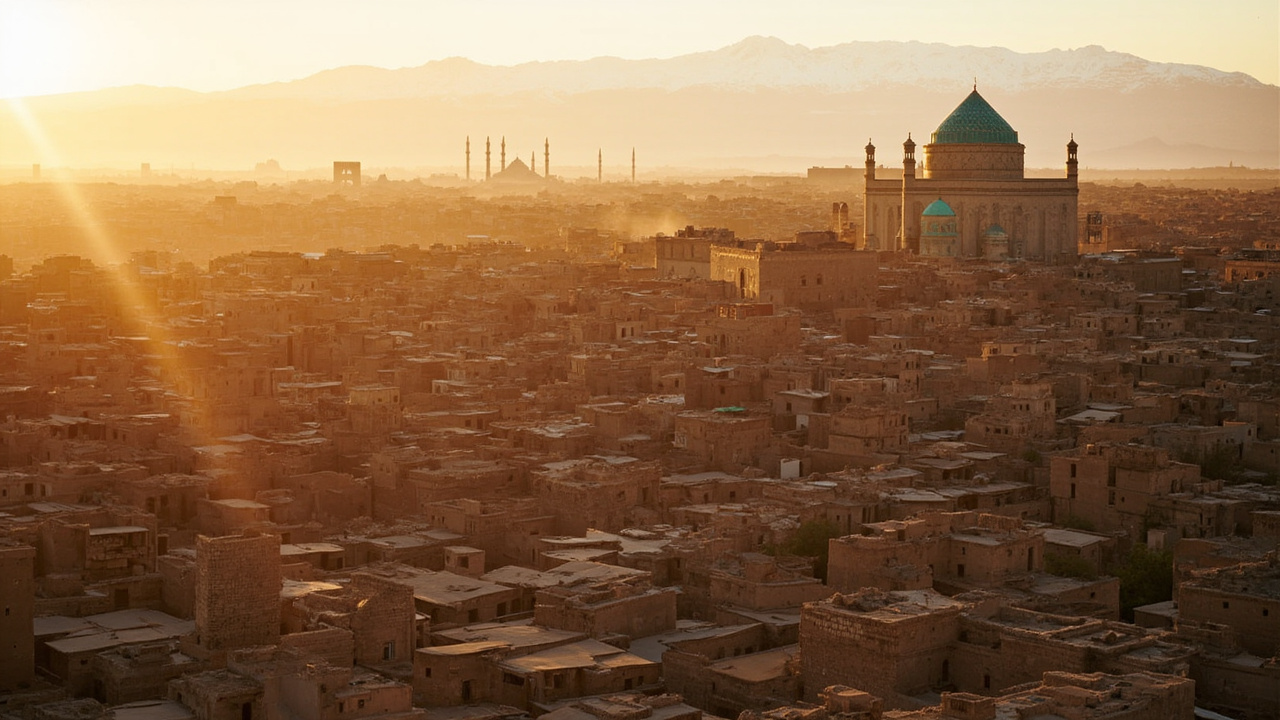
The cab driver in Urumqi looked at me like I was slightly unhinged when I told him I was catching the overnight train to Kashgar. “That’s eighteen hours,” he said, in the tone you’d use to explain fire is hot. I nodded, paid the fare, and hauled my bag into the station anyway. Eighteen hours on a hard sleeper through the Taklamakan Desert gives you a lot of time to wonder if you’ve made a terrible mistake. Then the train pulled in at dawn, and the first thing I saw was the thousand-year-old earthen walls of the old city glowing amber in the flat morning light. I forgot about the stiff neck and the instant noodles immediately.
Kashgar is not a convenient destination. It’s a 3,000-mile flight from Shanghai, a five-hour time difference from Beijing, and culturally closer to Samarkand than to Shenzhen. That’s precisely the point. This is the last real Silk Road city in China, where Uyghur is the language on the street, the call to prayer drifts over the rooftops five times a day, and the old town has been rebuilt so carefully that it still feels like walking through a medieval maze. This guide covers the ten places you actually need to see, how to get around, what things cost in 2026, and the mistakes I made so you don’t have to repeat them.
Quick answer
Kashgar Old Town is a walled Uyghur quarter in southwestern Xinjiang, roughly 2 square kilometers of winding alleys, mud-brick homes, and bustling bazaars. It is free to enter, open 24 hours, and best visited between April and October, with the famous Sunday livestock market running every week. US, UK, Canadian, and most European passport holders can visit Xinjiang visa-free for up to 30 days under China’s 2026 visa-free transit policy, but you must register your hotel with the local police within 24 hours of arrival.
The Short Version
If you only have 90 seconds, here’s the truth: Kashgar is the most foreign-feeling city in China, and the Old Town is its beating heart. You need three days minimum, one of which must be a Sunday for the livestock market. The old town itself is free, walkable, and best explored without a map. The food alone justifies the journey. Skip the touristy “folk customs” performances, eat everything from street carts, and don’t try to see it all in one day because you’ll burn out by 3 PM.
How I Picked These
I’ve been to Kashgar four times since 2019, most recently in October 2025. I walked every alley in the old town, got lost at least a dozen times, and made friends with a tea house owner named Abdu who eventually stopped charging me for refills. I’ve stayed in Uyghur guesthouses, eaten breakfast with families who invited me in off the street, and sat through three separate sandstorms waiting for the sky to clear. The places below are the ones I kept coming back to, the ones I’d send my own mother to, and the ones that survived the test of multiple visits rather than just looking good in photographs.
Comparison Table
| Rank | Place | Best For | Approx Cost (USD) | Time Needed | When to Go |
|---|---|---|---|---|---|
| 1 | Id Kah Mosque | Architecture & atmosphere | Free (donation suggested) | 1 hour | Morning, avoid Friday prayers |
| 2 | Sunday Livestock Market | Raw cultural experience | Free entry, food extra | 2-3 hours | Sunday 8 AM - 1 PM |
| 3 | Old Town Alleys | Getting lost | Free | Half day | Late afternoon light |
| 4 | Handicraft Street | Souvenirs & people-watching | Free, items $2-$50 | 1-2 hours | Any day |
| 5 | Apak Hoja Mausoleum | History & gardens | $3 (20 CNY) | 1-2 hours | Morning |
| 6 | Grand Bazaar | Shopping | Free entry | 2 hours | Morning, weekdays less crowded |
| 7 | Tea Houses | Rest & conversation | $1-$3 per pot | 1 hour | Afternoon |
| 8 | Old City Wall | Views & photos | Free | 30 minutes | Sunset |
| 9 | Uyghur Cooking Class | Hands-on food | $25-$35 (180-250 CNY) | 3 hours | Morning sessions |
| 10 | People’s Park | Local life | Free | 1 hour | Evening, especially summer |
1. Id Kah Mosque — The Heart of the Old Town
The first time I walked into the courtyard of Id Kah Mosque, a group of elderly Uyghur men were sitting in the shade of a centuries-old poplar tree, drinking tea and arguing about something with great enthusiasm. None of them looked up. That’s when I knew this wasn’t a tourist attraction pretending to be a place of worship. It’s the real thing, and it’s been the religious and social center of Kashgar for over 500 years.
The mosque itself is surprisingly modest compared to the great Ottoman structures of Turkey or the Mughal monuments of India. The prayer hall is supported by 140 carved wooden columns, each one slightly different from the last, and the courtyard can hold thousands of worshippers during Eid. What makes it special is the rhythm of daily life around it. Merchants set up their stalls against the outer walls every morning, children play soccer in the square, and the call to prayer echoes across the old town five times daily.
📍 Location: Central square of the Old Town, at the end of Jiefang North Road 🎟️ Entry fee: Free, though a small donation of $1-2 (7-15 CNY) is appreciated 🕒 Opening hours: Daily 10 AM - 8 PM, closed to tourists during Friday prayers (approximately 1-3 PM) 🚕 Getting there: Walk from anywhere in the Old Town. If coming from the new city, take a taxi to “Id Kah” (about $1.50 / 10 CNY from People’s Square) ⏰ When to visit: Go early morning before 10 AM to see the square at its quietest, or late afternoon when the light hits the yellow walls beautifully 💡 Insider tips: Dress conservatively with shoulders and knees covered. Women may be asked to enter through a separate entrance. Don’t photograph worshippers without asking. The square outside is fantastic for people-watching at sunset.
I once sat in the square for an hour watching a man sell balloons shaped like cartoon characters while the call to prayer sounded behind him. It was the most surreal cultural collision I’ve experienced anywhere in China.
2. Sunday Livestock Market — Chaos You’ll Never Forget
The taxi driver dropped me at what appeared to be an empty dirt lot on the edge of town and pointed vaguely toward a cloud of dust in the distance. “Walk that way,” he said. I walked for fifteen minutes through the haze, following the sounds of bleating sheep and the smell of diesel, until I emerged into a scene that felt 500 years old. Thousands of sheep, goats, cows, and horses were being traded by men in traditional Uyghur skullcaps, and the negotiation process involves grabbing animals by the jaw, shouting prices, and occasionally slapping each other’s hands in agreement.
This is not a tourist show. This is where actual farmers from the surrounding villages come to buy and sell livestock, and it’s been happening on this spot for centuries. The Sunday market is also where you’ll find the best street food in Kashgar, because hungry farmers need breakfast. The grilled lamb skewers here are the best I’ve had anywhere in China, and the freshly baked naan bread comes straight from clay ovens.
📍 Location: About 3 km east of the Old Town, near the intersection of Aimin Road and the Ring Road 🎟️ Entry fee: Free. Bring cash for food and any impulse purchases 🕒 Opening hours: Sundays only, roughly 8 AM to 1 PM. Go early; it winds down by noon 🚕 Getting there: Taxi from the Old Town costs about $2 (15 CNY). Tell the driver “Dongba zhen” (livestock market). Alternatively, take bus 20 from Id Kah Square and ask to be let off at the market stop ⏰ When to visit: Arrive by 9 AM for the full experience. By 11 AM, half the animals are gone and the energy drops 💡 Insider tips: Wear closed-toe shoes. The ground is dusty and there’s livestock manure everywhere. Don’t stand too close to the sheep pens unless you want to be headbutted. The food stalls near the entrance are cheaper and better than the ones deeper in. Bring small bills for bargaining.
I watched a farmer negotiate for twenty minutes over a single goat, then seal the deal by shaking hands and spitting on the ground. No paperwork, no contracts. Just a handshake and a spit.
3. Old Town Alleys — Getting Deliberately Lost
The first time I entered the Old Town’s residential alleys, I had a map on my phone, a compass app, and a plan. All three failed me within ten minutes. The alleys are narrow, twisting, and deliberately confusing, which was the original design. In the old days, the maze-like layout was meant to confuse invaders. In my case, it confused a tourist with a master’s degree in navigation.
This is the best part of Kashgar, and you should absolutely not have a plan. The alleys are lined with mud-brick homes that have been carefully restored, with wooden doors painted in shades of blue, green, and ochre. Grapevines form natural canopies overhead, and children will wave at you from doorways while their mothers hang laundry on rooftop lines. The key is to simply walk until you’re lost, then keep walking until you find your way out. Every alley eventually leads somewhere.
📍 Location: The entire Old Town area, bounded by Jiefang North Road to the west and the city wall remnants to the east 🎟️ Entry fee: Free 🕒 Opening hours: Always open, but go between 10 AM and 7 PM when homes are open and craftsmen are working 🚕 Getting there: Enter through any of the main gates. The most scenic entrance is the East Gate on Jiefang North Road, near the old city wall ⏰ When to visit: Late afternoon when the light is golden and the heat has faded. Weekdays are quieter than weekends 💡 Insider tips: Look up, not just forward. Many homes have intricate rooftop terraces and decorative chimneys. If you see an open door, it’s often an invitation to look inside. Don’t be shy about saying “hello” — most residents are used to visitors and will smile or wave. The alleys near the Handicraft Street are more touristy; go deeper into the residential areas for the real experience.
I got so lost one afternoon that I ended up in someone’s courtyard, where an elderly woman insisted I sit down and drink tea with her family. We communicated entirely through gestures and Google Translate, and it remains one of my best memories in China.
4. Handicraft Street — Where Everything Is Made
The sound hits you before the smell does. Copper being hammered, wood being carved, and the rhythmic clack of looms all mix together in a symphony of manual labor. Handicraft Street is technically one street, but it spills into several adjacent lanes, each one dedicated to a different craft. There’s a copper lane, a woodworking lane, a textile lane, and a lane where they make the traditional Uyghur hats called doppa.
This is where you should buy your souvenirs, not from the tourist shops near Id Kah Mosque. The prices are better, the quality is higher, and you can watch the items being made. A hand-hammered copper teapot will set you back $20-40 (150-300 CNY), a silk scarf $10-25 (70-180 CNY), and a handmade doppa hat $5-10 (35-70 CNY). Bargaining is expected, but don’t be aggressive about it. These are craftsmen, not market stall hawkers.
📍 Location: East of the Old Town, running roughly parallel to Jiefang North Road 🎟️ Entry fee: Free 🕒 Opening hours: Daily, roughly 10 AM to 8 PM. Some workshops close for Friday prayers 🚕 Getting there: Walk from Id Kah Mosque east for about 10 minutes. Look for the sign that says “Handicraft Street” in both Chinese and English ⏰ When to visit: Mornings are best when the craftsmen are fresh and less busy. Avoid Friday afternoons when many workshops close early 💡 Insider tips: Ask if you can watch the craftsmen work before you buy. Most are happy to demonstrate. If you buy a copper item, make sure it’s properly tinned on the inside or it will react with acidic food. The doppa hats come in different patterns for different regions — the Kashgar style has four distinct sections representing the four seasons.
A copper worker named Tursun let me try hammering a small bowl, which I immediately dented beyond repair. He laughed, took the hammer back, and fixed it in under a minute while explaining (through gestures) that it takes ten years to learn properly.
5. Apak Hoja Mausoleum — The “Fragrant Concubine” and Other Stories
Most visitors to Kashgar skip the Apak Hoja Mausoleum because it’s outside the Old Town, about 5 kilometers northeast. That’s a mistake. This is the most important Islamic monument in Xinjiang, a complex of tombs and mosques built in the 17th century that houses the remains of the Apak Hoja family, rulers of the Yarkent Khanate. The main tomb is covered in glazed blue and white tiles that have survived remarkably well, and the setting is genuinely peaceful.
The site is most famous for its association with Iparhan, the “Fragrant Concubine” who supposedly smelled of roses and was sent to the Qing emperor’s harem in Beijing. The legends about her are romantic and probably mostly fictional, but they’ve made this site famous throughout Central Asia. The gardens are lovely, with ancient cypress trees and a reflecting pool, and there’s a small mosque on the grounds that’s still used by the local community.
📍 Location: 5 km northeast of the Old Town, on Heshan Road 🎟️ Entry fee: $3 (20 CNY) 🕒 Opening hours: Daily 9:30 AM to 8 PM (closes earlier in winter, around 6 PM) 🚕 Getting there: Taxi from the Old Town costs about $2.50 (18 CNY). Bus 20 also runs here from Id Kah Square ⏰ When to visit: Morning light is best for photography. The site is less crowded than the Old Town, so you’ll have space to explore 💡 Insider tips: The mausoleum is a functioning religious site, so dress modestly and remove your shoes if you enter the prayer hall. The small museum on site has English captions. Combine this visit with the Sunday livestock market since they’re in the same part of town.
The caretaker, an elderly Uyghur man named Yusuf, told me the story of the Fragrant Concubine in broken Mandarin, and when I couldn’t understand a key detail, he simply acted it out, miming a woman smelling flowers and then being carried off in a palanquin.
6. Grand Bazaar — Everything, Everywhere, All at Once
The Grand Bazaar in Kashgar is technically a modern covered market, but it occupies the site of an ancient trading post that’s been active for over 2,000 years. This was the meeting point of the Silk Road, where goods from China, Persia, India, and Europe changed hands. Today, it’s a two-story maze of stalls selling everything from spices and dried fruits to electronics and knockoff sneakers.
The bazaar is overwhelming in the best possible way. The spice section alone is worth the visit, with mountains of saffron, cumin, dried chili, and the region’s famous black pepper. The dried fruit stalls are equally impressive, with huge piles of raisins, apricots, figs, and walnuts. Prices are generally fair, but you should still bargain, especially for textiles and handicrafts. The food court upstairs serves excellent laghman noodles and samosas.
📍 Location: North of the Old Town, on the other side of Jiefang North Road 🎟️ Entry fee: Free 🕒 Opening hours: Daily 10 AM to 9 PM, though many stalls close for Friday prayers 🚕 Getting there: Walk from Id Kah Mosque north for about 10 minutes. The main entrance is on Jiefang North Road ⏰ When to visit: Weekday mornings are the least crowded. Friday afternoons are dead. Weekend evenings are busy but lively 💡 Insider tips: The upstairs food court is where the stall holders eat, which is always a good sign. If you buy dried fruit, ask for the “mixed” option — you’ll get a better price than buying individual types. Don’t buy the “saffron” from the tourist stalls near the entrance; it’s often dyed safflower. Go deeper into the market for the real thing.
I bought a kilogram of dried apricots from a woman who insisted on giving me a bag of her personal stash instead, claiming the ones for sale weren’t good enough for a guest. They were, in fact, the best apricots I’ve ever eaten.
7. Tea Houses — The Art of Doing Nothing
There’s a Uyghur saying that translates roughly to “a day without tea is a day without life.” The tea houses of Kashgar’s Old Town are where this philosophy plays out daily. These are not fancy cafes with latte art. They’re simple rooms with low tables, floor cushions, and large samovars bubbling in the corner. You order a pot of tea, which costs about $1-2 (7-15 CNY), and it comes with a bowl of rock sugar and sometimes a plate of nuts or dried fruit.
The most famous is the century-old tea house near Id Kah Mosque, which has become something of a tourist attraction in recent years. It’s worth visiting once, but the real experience is in the smaller, less polished tea houses scattered through the residential alleys. These are where local men gather to discuss politics, play chess, and conduct business. As a foreigner, you’ll be welcomed, but you should be prepared to be the center of attention.
📍 Location: The main tea house is at the corner of Id Kah Square. Smaller ones are scattered throughout the Old Town 🎟️ Entry fee: $1-3 (7-20 CNY) per pot of tea 🕒 Opening hours: Most open by 10 AM and close late, around 10 PM 🚕 Getting there: Walk. The main tea house is impossible to miss on Id Kah Square ⏰ When to visit: Afternoon is the traditional tea time. Go between 3 PM and 6 PM for the liveliest atmosphere 💡 Insider tips: The tea is served strong and black. Add rock sugar to taste. Don’t be surprised if someone invites you to join their table — this is normal and considered polite. If you’re invited to share a meal, accept. It’s an honor. The musicians who sometimes play in the main tea house expect tips of $1-2 (7-15 CNY).
Abdu, the tea house owner I mentioned earlier, taught me to play a traditional Uyghur board game that’s similar to backgammon. I lost seventeen games in a row over three days. He never once let me win, which I respected enormously.
8. Old City Wall — The Best View in Kashgar
Most visitors never find the old city wall, which is a shame because it offers the best panoramic view of the Old Town. The wall dates back to the 16th century, when Kashgar was a major stop on the Silk Road and needed serious fortifications. Much of it has been restored, but there are sections that are genuinely ancient, with mud bricks that have been weathered by centuries of wind and sand.
The wall runs along the eastern edge of the Old Town, and the best viewing point is near the East Gate. From the top, you can see the entire Old Town spread out below you, a sea of flat rooftops punctuated by the minarets of Id Kah Mosque and the domes of smaller shrines. At sunset, the light turns everything golden, and you can watch the smoke from cooking fires rise from a thousand chimneys.
📍 Location: Eastern edge of the Old Town, near the East Gate on Jiefang North Road 🎟️ Entry fee: Free 🕒 Opening hours: Always accessible, but go at sunset for the best light 🚕 Getting there: Walk to the East Gate of the Old Town and look for the stairs leading up to the wall ⏰ When to visit: Sunset, about 30 minutes before the sun goes down. The light on the rooftops is spectacular 💡 Insider tips: Bring a wide-angle lens if you have one. The view from the wall is also excellent for night photography after the Old Town lights come on. The wall section near the East Gate is the most restored; if you walk further south, you’ll find more authentic, crumbling sections.
I sat on the wall one evening watching a family fly kites from their rooftop below. The father was clearly an expert, making the kite dive and swoop with practiced skill, while his young son watched with his mouth open in wonder.
9. Uyghur Cooking Class — Learn to Make Laghman
If you’re going to eat Uyghur food for a week, you might as well learn to make it. Several cooking schools in the Old Town offer half-day classes where you’ll learn to make the region’s signature dishes: laghman (hand-pulled noodles), polo (rice pilaf with lamb), and samsa (baked dumplings). The classes are small, usually capped at six people, and are taught in a mix of English, Mandarin, and enthusiastic gesturing.
The best part is the hand-pulling of the noodles. It looks impossibly difficult when the instructor does it, and hilariously difficult when you try. My noodles came out looking like deformed worms, but they tasted fine once they were in the sauce. The classes typically end with you eating everything you’ve made, which is the most satisfying meal you’ll have in Kashgar.
📍 Location: Several schools in the Old Town. The most established is near Handicraft Street 🎟️ Entry fee: $25-35 (180-250 CNY) per person, including ingredients and the meal 🕒 Opening hours: Classes usually run in the morning, 10 AM to 1 PM 🚕 Getting there: Your hotel can book the class and arrange transport. Otherwise, ask for directions to “cooking school” near Handicraft Street ⏰ When to visit: Morning classes are best, as you’ll be eating lunch right after 💡 Insider tips: Book at least a day in advance, especially during peak season. Wear clothes you don’t mind getting flour on. The classes are hands-on, so don’t expect to just watch. If you have dietary restrictions, let them know in advance — most classes can accommodate vegetarian options.
My instructor, a woman named Gulnara, laughed so hard at my noodle-pulling attempts that she had to sit down. Then she took my hands in hers and guided me through the motion until I produced a noodle that was almost, almost, acceptable.
10. People’s Park — Where Kashgar Comes to Relax
After the intensity of the Old Town, the livestock market, and the bazaar, you’ll need a break. People’s Park, in the new city about 15 minutes’ walk from Id Kah Mosque, is where local families come to relax on weekends and summer evenings. It’s not a tourist attraction, which is exactly why you should go.
The park has wide tree-lined paths, a small lake with paddle boats, and plenty of benches where you can sit and watch life unfold. In the evenings, especially during summer, the park fills with families having picnics, couples strolling, and elderly men playing chess or flying kites. There’s a small amusement area for children and a handful of food stalls selling ice cream, grilled corn, and the local specialty, iced yogurt drinks.
📍 Location: New city, on Renmin East Road, about 15 minutes’ walk from Id Kah Mosque 🎟️ Entry fee: Free 🕒 Opening hours: Daily, roughly 7 AM to 10 PM 🚕 Getting there: Walk east from Id Kah Mosque along Jiefang North Road, then turn right onto Renmin East Road. The park entrance is on your left ⏰ When to visit: Summer evenings, around 7-9 PM, when the heat has faded and the park is at its liveliest 💡 Insider tips: The iced yogurt drink, called “suzma,” is a local specialty and much better than it sounds. The chess players near the east entrance are very skilled and happy to explain the rules if you show interest. The paddle boats are $2 (15 CNY) for 30 minutes.
I sat on a bench eating grilled corn and watching a group of Uyghur grandmothers do synchronized exercise routines to music from a portable speaker. When one of them caught me watching, she waved me over and tried to get me to join. I did, badly, and they all applauded my efforts.
FAQ summary
Kashgar Old Town is free to enter, open year-round, and best visited from April to October, with the Sunday livestock market as the weekly highlight. US, UK, Canadian, and most European passport holders can visit under China’s 2026 visa-free transit policy for up to 30 days, but must register with local police within 24 hours of arrival. The Old Town is walkable, but taxis are cheap ($1-3 / 7-20 CNY) for longer trips, and most locals speak limited English, so a translation app is essential. Payment is primarily via WeChat Pay or Alipay, though cash is still useful for street vendors and the livestock market.
FAQ
Q: Do I need a special permit to visit Kashgar as a foreigner in 2026?
A: No, not anymore. The old restrictions on foreign travel to Xinjiang were lifted in 2024, and as of 2026, US, UK, Canadian, and most European passport holders can visit freely under China’s visa-free transit policy for up to 30 days. You must register your hotel within 24 hours of arrival, which your hotel will handle automatically.
Q: How many days should I spend in Kashgar?
A: Three days is the minimum, and four is comfortable. Day one for the Old Town, day two for the livestock market (Sunday) and Apak Hoja Mausoleum, and day three for the bazaar and surrounding areas. If you want to visit Karakul Lake or the Karakoram Highway, add two more days.
Q: Is Kashgar safe for tourists?
A: Yes. Kashgar has a visible police presence, but it’s for security monitoring, not because there’s a threat to tourists. I’ve walked the Old Town alleys at night, taken taxis alone, and never felt unsafe. The main risks are the same as anywhere: pickpocketing in crowded markets and getting lost.
Q: Do people in Kashgar speak English?
A: Limited English is spoken, mostly by younger people and those in the tourism industry. Older residents, especially in the Old Town, speak only Uyghur and some Mandarin. Download a translation app before you arrive, and learn a few basic Uyghur phrases like “salam” (hello) and “rahmat” (thank you).
Q: What’s the food like in Kashgar?
A: It’s Central Asian cuisine, not Chinese food as you know it. Expect lots of lamb, hand-pulled noodles, naan bread, and yogurt. The grilled lamb skewers are the best in China, and you should try polo (rice pilaf), samsa (baked dumplings), and laghman (noodle soup). Vegetarians will struggle but can survive on naan, vegetables, and eggs.
Q: What’s the best time of year to visit Kashgar?
A: April to October is the window. May and September are ideal, with mild temperatures and clear skies. July and August are hot but manageable, and the Sunday market is at its most lively. Winter (November to March) is cold and dusty, but you’ll have the Old Town nearly to yourself.
Q: How do I get to Kashgar from the rest of China?
A: Fly into Kashgar Airport (KHG) from Urumqi, Beijing, Shanghai, or Chengdu. The flight from Urumqi takes about 2 hours and costs $100-200 (700-1400 CNY). Alternatively, take the overnight train from Urumqi, which takes 18-22 hours and costs $30-80 (200-550 CNY) depending on the class. The train is an experience in itself, but the flight is much more practical.
The Honest Wrap-up
Kashgar is not for everyone. If you want a relaxing beach vacation or a polished museum-hopping trip, this isn’t it. The city is dusty, the infrastructure is rougher than the east coast, and you’ll need patience for the language barrier. But if you want to see a side of China that feels like another country entirely, if you want to eat food you’ve never tasted, hear languages you’ve never heard, and walk through streets that haven’t changed in centuries, this is the place.
My final advice: go on a Sunday. The livestock market alone is worth the journey, and the energy of the city on market day is something you’ll never forget. Book your flights, pack light, and bring an open mind. Kashgar will do the rest.
More guides you may like
Top 10 Bridges in China
China's bridges are engineering marvels spanning mountains, rivers, and seas. Here are 10 of the most spectacular, from ancient stone to modern steel.
8 min read

Top 10 Buddhist Sites in China
From the Leshan Giant Buddha to the Dunhuang Caves, these 10 Buddhist sites represent 2,000 years of China's spiritual heritage.
9 min read

Top 10 Day Trips from Beijing You Shouldn't Miss
Beijing is packed with history, but some of China's best experiences are just a few hours away. Here are 10 day trips that will transform your visit.
9 min read
Top 10 Hidden Gems in China Off the Beaten Path
Beyond the Great Wall and Terracotta Warriors, China has incredible hidden destinations few tourists ever reach. Here are 10 underrated gems worth the detour.
9 min read
Top 10 Markets and Shopping Streets in China
From Shanghai's Bund to Beijing's Silk Street - 10 markets where foreigners can haggle, explore, and bring home authentic Chinese goods.
9 min read
Top 10 Museums in China You Shouldn't Miss
China's museums span 5,000 years of civilization. These 10 - from the Palace Museum to Xi'an's terracotta gallery - are unmissable for culture lovers.
9 min read