
Mount Wutai Pilgrimage
TODO: Extract from article (100-160 chars)
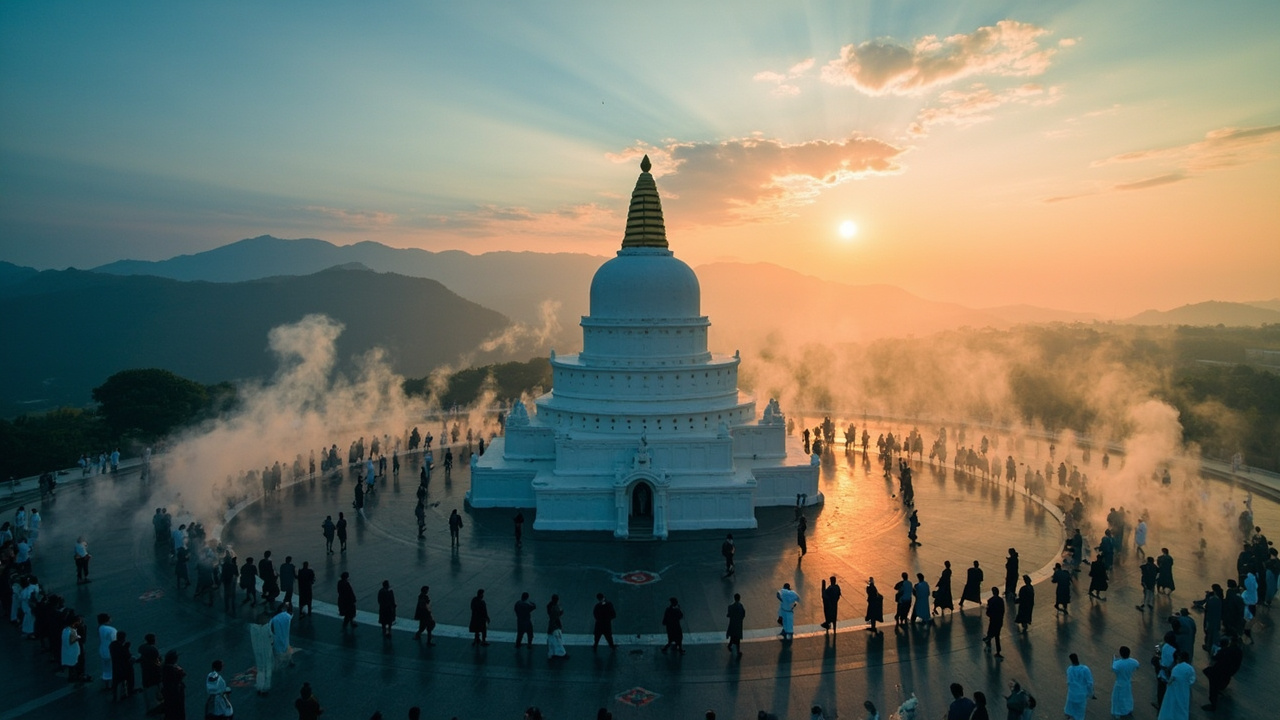
The cab dropped me at the entrance to Taihuai Town, and the first thing I heard wasn’t chanting or temple bells. It was the clatter of wooden staffs on stone. Pilgrims, dozens of them, were walking the kora around the central stupa, their faces weathered, their lips moving in silent mantra. A woman in her sixties, wearing a faded blue jacket and a backpack held together with rope, nodded at me as she passed. I’d been in China for years by then, but I’d never seen anything quite like this place.
Mount Wutai isn’t another stop on the tourist circuit. It’s one of the four sacred Buddhist mountains in China, the earthly home of the Bodhisattva Manjushri, and it’s been a pilgrimage destination for over a thousand years. The air smells of incense and pine. The mornings come cold even in July. And the temples, scattered across a high plateau and up into the surrounding peaks, hold some of the oldest wooden architecture in the country.
This guide covers the practical side of a Mount Wutai pilgrimage, plus the experiences that actually matter. I’ve walked the kora, stayed in a monastery guesthouse, eaten the vegetarian food, and gotten hopelessly lost on the mountain paths. Here’s what I learned.
Quick answer
Mount Wutai is a 2.5-hour drive from Taiyuan and requires a 135 CNY ($19) scenic area entrance fee, plus a 50 CNY ($7) temple circuit ticket. The best time for a first visit is May through September, when the high-altitude weather is manageable. Most international visitors combine it with a broader Shanxi itinerary, and if you’re entering China under the 240-hour visa-free transit policy, you have enough time to include it.
The Short Version
If you only have 90 seconds, here’s the deal. Mount Wutai is not a single temple. It’s a region, centered on Taihuai Town, with over a hundred temples, of which maybe a dozen matter for a first visit. The essential experience is the evening kora around the Tayuan Temple white stupa, the climb to the 1080-step Dailuoding for the view, and at least one early morning in a temple courtyard before the tour groups arrive. Skip the cable car to the top of the main peak unless you’re short on time. The walk is better.
How I Picked These
I’ve been to Mount Wutai four times over the past six years, in spring, summer, and winter. The first trip was a disaster of bad planning. The second was a revelation. I’ve stayed in the monastery guesthouse at Pusa Ding, eaten in the vegetarian canteens, and argued with a taxi driver about whether the cable car was worth it. (It isn’t.) I’ve also spent hours talking to monks, nuns, and the lay pilgrims who come from all over China. The list below reflects what I’d tell a friend who had three days here, not what a guidebook would recommend.
Comparison Table
| Rank | Place | Best For | Approx Cost (USD) | Time Needed | When to Go |
|---|---|---|---|---|---|
| 1 | Tayuan Temple | The iconic white stupa and kora | $7 (50 CNY) | 1-2 hours | Early morning or dusk |
| 2 | Xiantong Temple | Oldest and largest temple complex | Included in circuit ticket | 1-2 hours | Weekday mornings |
| 3 | Pusa Ding | Hilltop views and monastery stay | $7 (50 CNY) | 2-3 hours | Late afternoon |
| 4 | Dailuoding | 1080-step pilgrimage climb | $7 (50 CNY) | 2-3 hours | Early morning |
| 5 | Shuxiang Temple | Manjushri’s home temple | Free | 1 hour | Any time |
| 6 | Foguang Temple | Ancient wooden architecture | $15 (100 CNY) | Half day | Midday for light |
| 7 | Nanchan Temple | Oldest wooden building in China | $15 (100 CNY) | 1-2 hours | Midday |
| 8 | Bishan Temple | Quiet, uncrowded meditation halls | Free | 1 hour | Late afternoon |
| 9 | Yanshan Temple | Cliffside hermitage feel | Free | 1-2 hours | Morning |
| 10 | The Five Peaks | The actual “Five Terraces” hike | Free (guide needed) | 2-4 days | June-September |
Tayuan Temple — the heart of the pilgrimage
The first time I saw the white stupa at Tayuan Temple, I understood why people cry when they arrive. It’s not the architecture, though the stupa is genuinely beautiful, a solid white cylinder with a golden spire that catches the late afternoon light. It’s the accumulation of intention. Everyone here, from the monks in their grey robes to the grandmothers with prayer beads, is walking in the same direction, circling the stupa clockwise, murmuring the same mantras.
The kora around the stupa is the essential Mount Wutai experience. Join it at dusk, when the light goes soft and the crowds thin out. You don’t need to be Buddhist to walk the circuit. Just follow the flow, keep your hands free, and don’t stop in the middle of the path. The full circuit takes about 15 minutes if you walk at a steady pace.
📍 Location: Center of Taihuai Town, directly behind the main square. 🎫 Entry fee: 50 CNY (~$7), included in the temple circuit ticket. 🕒 Opening hours: 7:00 AM to 6:00 PM daily. 🚕 Getting there: Walk. It’s in the center of town, impossible to miss. 🌤 When to visit: Dusk for the kora, or 6:30 AM to watch the monks open the temple. 💡 Insider tips: Buy a string of prayer beads from the vendors outside, even if you don’t use them for prayer. It’s a good conversation starter with the pilgrims. The stupa is under renovation periodically, so check before you go. Don’t climb the stupa platform unless you’re participating in the kora. And if someone offers to “bless” your beads for a fee, decline politely.
I watched a young monk, maybe 19 years old, complete the kora seven times in a row. He never looked up from his phone once.
Xiantong Temple — the grand old complex
Xiantong Temple is the oldest and largest temple in Wutai, and it shows. The complex sprawls across multiple courtyards, each one housing a different hall, a different set of statues, a different era of construction. The main hall, the Mahavira Hall, is vast, with a bronze Buddha that dates back to the Ming dynasty. It’s the kind of place where you need to pace yourself. There’s too much to see in one pass.
The temple’s history is tangled up with the whole story of Chinese Buddhism. It was first built during the Eastern Han dynasty, around 68 AD, which makes it one of the oldest Buddhist temples in China. The current structures are mostly Ming and Qing, but the site itself has been sacred for nearly two millennia. That weight of history is palpable, especially in the quieter side courtyards where the tour groups don’t go.
📍 Location: Eastern edge of Taihuai Town, about a 10-minute walk from the square. 🎫 Entry fee: Included in the 50 CNY (~$7) circuit ticket. 🕒 Opening hours: 7:30 AM to 6:00 PM. 🚕 Getting there: Walk east from Tayuan Temple for 10 minutes. You’ll see the entrance on your left. 🌤 When to visit: Weekday mornings before 10 AM, before the group tours arrive. 💡 Insider tips: The bronze bell in the bell tower is worth ringing if you’re there at opening time. The side courtyard behind the main hall is almost always empty. Look for the small stone tablets with calligraphy, some of which are imperial inscriptions. The vegetarian restaurant next door is decent but touristy. Go to the monastery canteen at Pusa Ding instead.
I misread the circuit ticket system on my first visit and paid twice. The ticket is valid for multiple temples on the same day. Don’t be like me.
Pusa Ding — the hilltop monastery
Pusa Ding sits on a small hill at the northern edge of Taihuai Town, and it’s worth the climb for the view alone. The temple complex is built in tiers up the slope, with the main hall at the top offering a panoramic view of the town below, the white stupa rising above the rooftops, and the mountains beyond. On a clear day, you can see the five peaks that give Wutai its name.
The temple also has a guesthouse, which is where I stayed on my second visit. It’s basic, with shared bathrooms and thin blankets, but the experience is unmatched. You wake up to the sound of chanting at 4:30 AM. You eat vegetarian meals in the canteen with the monks. You’re not a tourist anymore. You’re a guest.
📍 Location: Northern edge of Taihuai Town, a 15-minute walk uphill from the square.
🎫 Entry fee: 50 CNY ($7), included in the circuit ticket.
🕒 Opening hours: 7:00 AM to 6:00 PM. Guesthouse check-in is separate.
🚕 Getting there: Walk north from the square, following the signs. The path is steep but short.
🌤 When to visit: Late afternoon for the light, or stay overnight for the morning chanting.
💡 Insider tips: The guesthouse requires a passport and a willingness to follow monastery rules. No meat, no alcohol, no noise after 9 PM. The canteen meals are simple but good, and they cost about 10 CNY ($1.50). Bring earplugs if you’re a light sleeper. The chanting starts early.
I shared a room with a pilgrim from Inner Mongolia who was making her third visit. She taught me how to do the full prostration, the kind where you lie flat on the ground. My knees hurt for days.
Dailuoding — the 1080 steps
Dailuoding is the temple at the top of a long, steep staircase. 1080 steps, to be exact, a number that carries deep symbolic weight in Buddhism. The steps represent the 108 afflictions that you shed as you climb. By the time you reach the top, the theory goes, you’ve left your worldly worries behind. I can’t vouch for the spiritual transformation, but I can vouch for the thigh burn.
The climb takes about 30 to 45 minutes at a steady pace, longer if you stop to catch your breath, which you will. The view from the top is worth it. You look down over the whole of Taihuai Town, the white stupa gleaming in the middle, the temple roofs spreading out like a fan. On a clear day, the mountains stretch to the horizon in every direction.
📍 Location: Northeast edge of Taihuai Town, about a 20-minute walk from the square. 🎫 Entry fee: 50 CNY (~$7), included in the circuit ticket. 🕒 Opening hours: 6:30 AM to 6:00 PM. 🚕 Getting there: Walk northeast from the square, past the bus station. The staircase is unmissable. 🌤 When to visit: Early morning, before the tour groups arrive. The steps get crowded by 10 AM. 💡 Insider tips: There’s a cable car that runs from the base to the top, but it costs extra and it misses the point. The steps are the pilgrimage. Take your time. Bring water. There are rest stops along the way, and vendors selling snacks and cold drinks at the top. If you’re not fit, start slow. The last third is the steepest.
I counted the steps on the way up. I got to 1080 exactly, but I’m not sure I started at the right place, so the number might be wrong. The monks probably have a better count.
Shuxiang Temple — where Manjushri lives
Shuxiang Temple is dedicated to Manjushri, the Bodhisattva of Wisdom, who is said to reside on Mount Wutai. The temple’s main hall houses a massive statue of Manjushri riding a lion, and the whole complex feels more intimate than the grander temples in town. It’s quieter here, less touristed, more focused on the devotional side of the pilgrimage.
The temple was rebuilt in the Qing dynasty, but the site has been sacred for much longer. The current structure is elegant, with a single main courtyard and a few side halls. It’s not the most impressive temple in Wutai, but it’s the most important for pilgrims, because this is where they come to ask Manjushri for wisdom. You’ll see students here during exam season, praying for good grades.
📍 Location: Southern edge of Taihuai Town, about a 10-minute walk from the square. 🎫 Entry fee: Free. 🕒 Opening hours: 7:00 AM to 6:00 PM. 🚕 Getting there: Walk south from the square, past the main shopping street. The temple is on your right. 🌤 When to visit: Any time, but late afternoon is the quietest. 💡 Insider tips: The statue of Manjushri is worth a close look. The lion is said to be carved from a single block of stone. The temple is small, so you can see everything in under an hour. If you’re visiting during exam season, expect crowds of students and their parents.
I watched a father and his teenage daughter light incense and bow three times in front of the Manjushri statue. She had a physics textbook in her backpack.
Foguang Temple — the ancient survivor
Foguang Temple is not in Taihuai Town. It’s about 30 kilometers away, in a valley to the west, and it requires a separate trip. But it’s worth the detour, because the main hall here, the East Hall, is one of the oldest wooden buildings in China, dating back to 857 AD. That’s over 1,100 years old, and it’s still standing, still holding services, still sheltering a set of Tang dynasty statues that are older than most countries.
The hall was rediscovered in 1937 by a team of Chinese architects who were searching for Tang dynasty wooden structures. They found it largely intact, hidden in the mountains, untouched by the centuries of warfare and rebuilding that had destroyed so much else. Walking into the East Hall is like stepping back a thousand years. The proportions are perfect. The wooden beams are dark with age. The statues are weathered but powerful.
📍 Location: Foguang Village, about 30 km west of Taihuai Town. 🎫 Entry fee: 100 CNY (~$15). 🕒 Opening hours: 8:00 AM to 5:00 PM. 🚕 Getting there: Hire a car or taxi from Taihuai Town. The drive takes about 45 minutes. There’s no public transport. 🌤 When to visit: Midday, when the light comes through the hall’s windows and illuminates the statues. 💡 Insider tips: The temple is small, so you can see everything in an hour. But give yourself more time. Sit in the courtyard and absorb the silence. The East Hall is the main attraction, but the Ming dynasty halls in the back are worth a look too. Bring cash, because the ticket office doesn’t always take cards. And make sure your driver waits for you, because there’s no way to get back otherwise.
I stood in the East Hall for 20 minutes, just looking at the beams. A monk came in, lit a stick of incense, and left without saying a word.
Nanchan Temple — the oldest of them all
Nanchan Temple is even older than Foguang, and even harder to reach. The main hall here dates back to 782 AD, making it the oldest wooden building in China. It’s a small, unassuming structure, easy to miss if you’re not looking for it. But it’s a survivor. It’s been standing for over 1,200 years, through dynasties, wars, revolutions, and earthquakes.
The temple is about 20 kilometers south of Taihuai Town, in a small village that doesn’t see many visitors. The hall is plain, almost austere, with none of the elaborate decoration of the later temples. But that’s the point. It’s a glimpse of what Chinese Buddhist architecture looked like before the grand complexes, before the ornamentation, before the tourists.
📍 Location: Nanchan Village, about 20 km south of Taihuai Town. 🎫 Entry fee: 100 CNY (~$15). 🕒 Opening hours: 8:00 AM to 5:00 PM. 🚕 Getting there: Hire a car or taxi from Taihuai Town. The drive takes about 30 minutes. 🌤 When to visit: Midday, for the best light on the hall’s interior. 💡 Insider tips: Combine this with Foguang Temple in a single half-day trip, since they’re in the same direction. The village around the temple is quiet and worth a short walk. The caretaker is a local woman who’s been looking after the temple for decades. She doesn’t speak English, but she’ll show you around if you smile and nod.
I tried to take a photo of the hall’s interior, but the light was too dim. The caretaker laughed and gestured for me to come back at noon.
Bishan Temple — the quiet one
Bishan Temple is not on most tourist itineraries, which is exactly why I like it. It’s a small temple complex on the western edge of Taihuai Town, tucked away from the main streets, and it gets a fraction of the visitors that Tayuan or Xiantong receive. The halls are modest, the courtyards are peaceful, and the atmosphere is more monastic than touristic.
The temple was originally built in the Ming dynasty and has been renovated several times since. It’s not architecturally remarkable, but that’s not the point. The point is the quiet. You can sit in the courtyard, listen to the wind in the trees, and watch the monks go about their daily routines. It’s a reminder that this place is still a living monastery, not just a museum.
📍 Location: Western edge of Taihuai Town, about a 15-minute walk from the square. 🎫 Entry fee: Free. 🕒 Opening hours: 7:00 AM to 6:00 PM. 🚕 Getting there: Walk west from the square, past the small shops and guesthouses. The temple is at the end of the road. 🌤 When to visit: Late afternoon, when the tour groups have left and the monks are doing their evening prayers. 💡 Insider tips: The temple has a small vegetarian restaurant that serves simple, cheap meals. The monks eat there too. If you’re lucky, you might catch a monk doing calligraphy in the side courtyard. Don’t take photos of the monks without asking. And if you want to sit in the courtyard and meditate, nobody will bother you.
I sat in the courtyard for an hour, watching a monk sweep the same patch of ground three times. He wasn’t cleaning. He was practicing.
Yanshan Temple — the cliffside hermitage
Yanshan Temple is a small temple complex built into the cliffs on the eastern edge of the Wutai area. It’s not easy to reach, and it’s not on most itineraries, but it offers a glimpse of the hermit tradition that has been part of Mount Wutai for centuries. The temple consists of several small halls and caves, some of which are still used by monks and nuns who have chosen a life of solitude.
The setting is dramatic. The temple clings to the rock face, with narrow paths connecting the different levels. The views over the valley below are spectacular, and the silence is profound. This is not a place for a quick visit. It’s a place to slow down, to breathe, to appreciate the sheer determination it took to build a temple on a cliff.
📍 Location: About 15 km east of Taihuai Town, in the hills above the main valley. 🎫 Entry fee: Free, but donations are welcome. 🕒 Opening hours: Daylight hours. 🚕 Getting there: Hire a car or taxi from Taihuai Town. The road is rough, and the last section is a walk. 🌤 When to visit: Morning, before the heat of the day. 💡 Insider tips: The path to the temple is steep and uneven. Wear proper shoes. Some of the caves are occupied by monks and nuns who value their solitude. Don’t intrude. If you want to leave a donation, there’s a box at the main hall. And bring water, because there’s nowhere to buy it.
I met a nun who had been living in one of the caves for 12 years. She smiled at me, gestured to the valley below, and said one word in Chinese: “Peaceful.”
The Five Peaks — the real pilgrimage
The five peaks that give Mount Wutai its name are the true destination for serious pilgrims. Each peak has a temple at its summit, and the traditional pilgrimage involves visiting all five, a journey that takes several days on foot or can be done by car in a single long day. The peaks are high, over 3,000 meters at the highest point, and the weather is unpredictable even in summer.
I’ve only done the full circuit once, and it was one of the hardest and most rewarding things I’ve done in China. The landscape is stark and beautiful, with alpine meadows, rocky summits, and views that stretch for hundreds of kilometers on a clear day. The temples at the peaks are simple, but they feel more sacred than the grand complexes in town, perhaps because of the effort required to reach them.
📍 Location: The five peaks surround Taihuai Town, each about 10-20 km from the center. 🎫 Entry fee: Included in the main scenic area ticket. 🕒 Opening hours: The peaks are accessible year-round, but the temples may close in bad weather. 🚕 Getting there: Hire a car for the day, or join a minibus tour from Taihuai Town. Walking the full circuit takes 2-4 days. 🌤 When to visit: June to September, when the weather is most stable. Check the forecast before you go. 💡 Insider tips: The highest peak, Yedou Peak, is over 3,000 meters. Bring warm clothes even in summer. The minibus tours are efficient but rushed. If you want to walk, hire a local guide. The paths are not well marked. And be prepared for the altitude. If you’re not acclimatized, take it slow.
I stood on the summit of Yedou Peak and watched a cloud roll through the valley below me. For a moment, I understood why people call this place sacred.
FAQ summary
Mount Wutai requires a 135 CNY ($19) scenic area entrance fee and a separate 50 CNY ($7) temple circuit ticket for the main temples in Taihuai Town. The best time to visit is May through September, with July and August being the warmest but also the busiest. The area is accessible from Taiyuan by car or bus, and most international visitors should plan for at least two full days to see the main temples and one of the outlying ancient sites.
FAQ
Q: How do I get to Mount Wutai from Beijing?
A: Take the high-speed train from Beijing West to Taiyuan, which takes about 3 hours and costs around 200 CNY ($28). From Taiyuan, you can take a direct bus to Mount Wutai, which takes about 3 hours and costs around 80 CNY ($11). Alternatively, you can hire a car for the full journey, which takes about 5-6 hours from Beijing.
Q: Is Mount Wutai worth visiting if I’m not Buddhist? A: Yes. The temples are architecturally and historically significant, and the atmosphere is unique. You don’t need to be religious to appreciate the beauty of the white stupa, the ancient wooden halls, or the mountain landscapes. Just be respectful of the pilgrims who are there for devotional reasons.
Q: How many days should I spend at Mount Wutai? A: Two full days is the minimum for a first visit. This gives you time to see the main temples in Taihuai Town, do the kora around the white stupa, and take a half-day trip to one of the outlying ancient temples like Foguang or Nanchan. If you want to hike the five peaks, add 2-4 more days.
Q: Do I need to book accommodation in advance? A: Yes, especially during the summer months and around Chinese holidays. The monastery guesthouses fill up quickly, and the hotels in Taihuai Town are basic but can also book out. Book at least a week in advance during peak season.
Q: Is English spoken at Mount Wutai? A: Very little. The monks and temple staff speak only Chinese, and the signage is mostly in Chinese. You’ll need a translation app like Google Translate or Pleco. Download the offline packs before you go, because cell service can be spotty in the mountains.
Q: What should I wear for a Mount Wutai pilgrimage? A: Dress modestly, with shoulders and knees covered. Comfortable walking shoes are essential. Even in summer, bring a warm layer, because the altitude makes the evenings cool. In winter, temperatures can drop well below freezing, so pack accordingly.
Q: Do I need to bring cash or are cards accepted? A: Cash is safer. Many of the smaller temples and vendors only accept cash or WeChat Pay. If you’re using WeChat Pay or Alipay, make sure they’re set up before you arrive. Cards are accepted at larger hotels and some restaurants, but don’t rely on them.
The Honest Wrap-up
Mount Wutai is not for everyone. If you’re looking for polished museums, English-speaking guides, and seamless logistics, you might find it frustrating. The infrastructure is basic, the crowds can be heavy, and the experience requires a willingness to embrace the chaos. But if you’re willing to put in the effort, this is one of the most rewarding places in China. The temples are real. The devotion is real. And the sense of stepping into a world that has been sacred for over a thousand years is something you won’t find anywhere else.
If you’re planning a trip, I’d tell you this: give yourself time. Don’t rush. Stay in the monastery guesthouse if you can. Wake up early. Walk the kora. And when you’re standing on a mountain peak, watching the clouds roll through the valley below, you’ll understand why people have been making this journey for centuries.
More guides you may like
Top 10 Bridges in China
China's bridges are engineering marvels spanning mountains, rivers, and seas. Here are 10 of the most spectacular, from ancient stone to modern steel.
8 min read

Top 10 Buddhist Sites in China
From the Leshan Giant Buddha to the Dunhuang Caves, these 10 Buddhist sites represent 2,000 years of China's spiritual heritage.
9 min read
Top 10 Day Trips from Beijing You Shouldn't Miss
Beijing is packed with history, but some of China's best experiences are just a few hours away. Here are 10 day trips that will transform your visit.
9 min read
Top 10 Hidden Gems in China Off the Beaten Path
Beyond the Great Wall and Terracotta Warriors, China has incredible hidden destinations few tourists ever reach. Here are 10 underrated gems worth the detour.
9 min read
Top 10 Markets and Shopping Streets in China
From Shanghai's Bund to Beijing's Silk Street - 10 markets where foreigners can haggle, explore, and bring home authentic Chinese goods.
9 min read
Top 10 Museums in China You Shouldn't Miss
China's museums span 5,000 years of civilization. These 10 - from the Palace Museum to Xi'an's terracotta gallery - are unmissable for culture lovers.
9 min read