
China Honeymoon 10 Days
The cab driver in Beijing looked at me in the rearview mirror, saw my wife next to me, and grinned. "Miyue?" he asked, using the Chinese word for honeymoon.
The cab driver in Beijing looked at me in the rearview mirror, saw my wife next to me, and grinned. “Miyue?” he asked, using the Chinese word for honeymoon. I nodded. He laughed, slapped the steering wheel, and spent the next twenty minutes explaining, in broken English and enthusiastic hand gestures, exactly which cities we had to visit and in what order. He was adamant about one thing: don’t spend the whole trip in Beijing. “Shanghai different. Chengdu different. All different!” He wasn’t wrong.
Ten days in China is enough to give you whiplash. You can start in the imperial silence of Beijing’s hutongs, ride the high-speed rail through farmland that turns to karst mountains, and end up in a teahouse in Chengdu watching old men play cards while giant pandas nap nearby. It’s a lot. But it’s the good kind of a lot. This guide is built around a route I’ve done myself, refined over seven years of living here and more than forty trips around the country. It’s designed for first-timers who want the iconic experiences without feeling like they’re on a conveyor belt.
You’ll get a day-by-day plan, honest opinions on what’s worth your money, and the specific details that make the difference between a good trip and a great one. The train platform numbers. The exit letters. The order in which you visit the Great Wall so you don’t share it with three thousand other tourists.
Quick answer
Yes, a 10-day China honeymoon is realistic and works best as a three-city arc: Beijing (3 days), Xi’an (2 days), and either Shanghai or Chengdu (3 days), with travel days between. Budget $150–$250 per person per day for a comfortable mid-range trip including hotels, trains, food, and entry fees. Most US, UK, Canadian, Australian, and many European passport holders can enter visa-free for up to 30 days through 2026, but always verify current policy before booking.
The Short Version
If you only have 90 seconds, here’s the plan. Fly into Beijing, spend three days on the Forbidden City, the Great Wall at Mutianyu, and the hutongs. Take the bullet train to Xi’an, two days for the Terracotta Warriors and the old city wall. Fly to Chengdu, three days for pandas, teahouses, and the best food in China. Skip Shanghai unless you really love skyscrapers. Book the high-speed rail tickets as soon as they open (14 days out). Download Alipay before you leave home. Pack for weather extremes. And whatever you do, don’t try to see all of China in ten days. You’ll just see train stations.
How I Picked These
I’ve lived in Beijing since 2019 and have made more than forty trips around the country, most of them with visiting friends and family who wanted the “greatest hits” experience. I’ve done this exact route at least a dozen times. I’ve also made every mistake you can make: missed the last train back from the Great Wall, paid tourist prices in Xi’an, eaten at the wrong hotpot place in Chengdu. The itinerary below reflects what actually works, not what looks good on a map. I’ve also asked every couple I’ve hosted what they wished they’d known. Their answers shaped the insider tips.
Comparison Table
| Rank | Place | Best For | Approx Cost (USD) | Time Needed | When to Go |
|---|---|---|---|---|---|
| 1 | Great Wall at Mutianyu | Iconic views without crowds | $50–70 per person | Full day | Apr–May, Sep–Oct |
| 2 | Forbidden City, Beijing | Imperial history | $10 entry + guide | Half day | Weekday mornings |
| 3 | Terracotta Warriors, Xi’an | Ancient history | $30 entry + transport | Half day | Arrive at 8am |
| 4 | Chengdu Panda Base | Giant pandas up close | $8 entry | 3–4 hours | 7:30am opening |
| 5 | Beijing Hutongs | Local life | Free | 2–3 hours | Late afternoon |
| 6 | Xi’an City Wall | Cycling above the city | $7 entry + bike rental | 2–3 hours | Sunset |
| 7 | West Lake, Hangzhou | Classic scenery | Free | 1–2 days | Spring or autumn |
| 8 | Yu Garden, Shanghai | Classical gardens | $6 entry | 2 hours | Weekday mornings |
| 9 | Leshan Giant Buddha | Massive scale | $12 entry | Half day | Morning |
| 10 | Chengdu Teahouses | Slow living | $5 for tea | 1–2 hours | Afternoon |
Beijing: Imperial Grandeur and Hutong Life
1. The Great Wall at Mutianyu — The One That Won’t Ruin Your Relationship
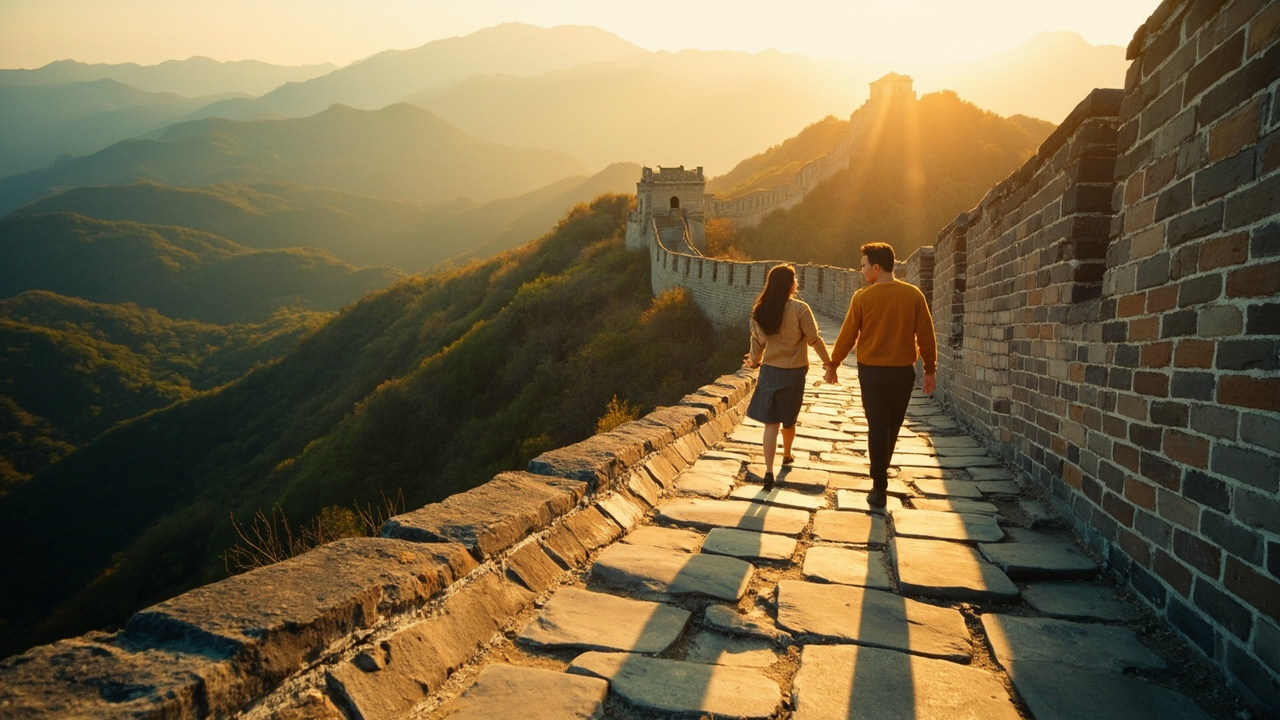
I’ve taken nine sets of visitors to Mutianyu, and not one of them has complained about the crowds. That’s not something I can say about Badaling, the most famous section, which on a busy day feels less like a wonder of the world and more like a shopping mall escalator. Mutianyu is about 90 minutes from central Beijing, has been restored but not Disneyfied, and offers the same “I’m standing on the Great Wall” moment without the shoulder-to-shoulder shuffle.
The Wall here snakes along forested ridges with watchtowers every few hundred meters. You can hike east or west, take a cable car up and a toboggan down (yes, a toboggan, and yes, it’s as fun as it sounds), or just walk the section between towers 14 and 20 and call it a day. The views are spectacular in any direction, but the western section is quieter and more photogenic.
📍 Location: Huairou District, about 70km northeast of central Beijing 🎫 Entry fee: $6 (¥45) for the Wall, plus $15 (¥100) round-trip shuttle bus from the parking lot. Cable car or chairlift is another $15 (¥100) each way. Budget $50–70 per person total. 🕒 Opening hours: 7:30am–6:00pm (summer), 8:00am–5:00pm (winter) 🚕 How to get there: Your hotel can arrange a private driver for $80–100 (¥600–700) round trip, which is worth it for a honeymoon. Or take bus 916 from Dongzhimen to Huairou, then a taxi. The private driver is the move. 📅 When to visit: Go on a weekday, arrive by 8:30am, and you’ll have the Wall nearly to yourself for the first hour. April–May and September–October have the best weather. 💡 Insider tips: Take the chairlift up and the toboggan down. Bring cash for the shuttle bus. The food at the base is mediocre, so eat a proper breakfast first. Don’t bother with the “Great Wall Certificate” they try to sell you at the exit. I once watched a French couple get into a genuine argument at the cable car station about whether to hike or ride. They took the cable car. They’re still married, as far as I know.
2. The Forbidden City — Go Early, Go Left, Go Deep
The first time I walked through the Meridian Gate into the Forbidden City, I understood why emperors built it. The scale is designed to make you feel small. Nine hundred ninety-nine and a half buildings, 72 hectares, and a history that includes 24 emperors, court intrigue, and the last dynasty ending in 1912. It’s overwhelming in the best way.
But here’s the thing: most visitors follow the central axis, which means you’ll be shuffling behind a sea of selfie sticks through the Hall of Supreme Harmony. The magic is in the side courtyards. The eastern and western wings have smaller halls, gardens, and exhibitions that are nearly empty even at peak times. The Imperial Garden at the north end is lovely, but the real gem is the smaller gardens tucked behind the main halls.
📍 Location: North side of Tiananmen Square, central Beijing 🎫 Entry fee: $10 (¥60) April–October, $6 (¥40) November–March. Book online at least a week ahead in peak season. 🕒 Opening hours: 8:30am–5:00pm (last entry 4:10pm), closed Mondays 🚕 How to get there: Take Subway Line 1 to Tiananmen East Station, Exit A, walk north through the security check. Or Line 8 to Shichahai Station and walk south from the north entrance. 📅 When to visit: Weekday mornings, right at 8:30am. Go straight to the western wing first, then work your way back to the center. 💡 Insider tips: Book tickets on the official WeChat mini-program or through your hotel. Bring your passport for the security check. Rent an audio guide ($6/¥40) or download a self-guided tour app. The Palace Museum has a great collection of ceramics in the eastern wing that most people walk right past. I got lost in the eastern courtyards for an hour once and stumbled onto a restoration workshop where artisans were repairing ancient paintings. A guard politely but firmly escorted me back to the tourist areas.
3. Beijing’s Hutongs — Where the City Still Breathes
The hutongs of Beijing are the old residential lanes that survived the wrecking ball of modernization. They’re not a single destination but a network of narrow alleys in the center of the city, where you’ll find courtyard homes, tiny shops, and old men playing Chinese chess on stools. They’re also where you’ll get the closest thing to local life in a city of 21 million people.
The most famous area is around Nanluoguxiang, which has become a tourist strip full of overpriced bubble tea and souvenir shops. Skip it. Instead, walk a few blocks north to the quieter lanes around Baochao Hutong and Fangjia Hutong. These feel more real. You’ll see residents hanging laundry, cooking dinner in shared kitchens, and occasionally inviting you in for tea if you’re lucky.
📍 Location: Dongcheng District, between the Second Ring Road and the Forbidden City 🎫 Entry fee: Free 🕒 Opening hours: Anytime, but late afternoon is best 🚕 How to get there: Take Subway Line 5 to Beixinqiao Station, Exit A, and walk west into the hutong network. Or Line 2 to Guloudajie Station and walk south. 📅 When to visit: Late afternoon, when the light is golden and residents are returning home. Avoid midday in summer. 💡 Insider tips: Rent a bicycle from your hotel and explore the lanes on two wheels. Look for the drum and bell towers at the north end of the area. Try jianbing (savory crepes) from a street cart for breakfast. Don’t photograph residents without asking, especially elderly people. A shopkeeper in Fangjia Hutong once refused to let me pay for a ceramic teapot I’d admired, insisting it was a gift for my then-girlfriend. We’ve been married for six years. That teapot sits on our shelf in Beijing.
Xi’an: Ancient Capital, Modern Vibe
4. The Terracotta Warriors — Worth Every Bit of the Hype
I’ll be honest: I was skeptical the first time. A museum built around an archaeological dig? It sounded like something that would be more impressive in photos than in person. I was wrong. Standing in Pit 1, looking at six thousand life-sized soldiers arranged in battle formation, each with a unique face, is one of those moments that makes you understand why people travel.
The warriors were buried around 210 BC with the first Emperor of China, Qin Shi Huang, to protect him in the afterlife. They were discovered in 1974 by farmers digging a well. The scale is staggering. Pit 1 is the largest, but Pit 2 has the famous kneeling archer, and Pit 3 is the command center. The bronze chariots in the main museum building are worth the extra walk.
📍 Location: Lintong District, about 40km east of Xi’an 🎫 Entry fee: $30 (¥120) includes all pits and the museum 🕒 Opening hours: 8:30am–5:00pm (last entry 4:30pm) 🚕 How to get there: Take Metro Line 9 to Terracotta Warriors Station, then a 10-minute walk. Or take a taxi from central Xi’an, about $20 (¥150) each way. A private driver for the day is $60–80 (¥450–600). 📅 When to visit: Arrive at 8:30am when the gates open. The tour groups start flooding in around 10am. March–May and September–November have the best weather. 💡 Insider tips: Hire an official guide at the entrance for $30 (¥200) for two hours. They’re licensed and worth it for context. Skip the “authentic” Terracotta Warrior souvenirs sold outside. The farmers who discovered the warriors still live nearby and sometimes sign books at the museum shop. I watched a tour guide tell a group that the warriors were “the eighth wonder of the world.” The farmer who found them, Yang Zhifa, once told me in Chinese that he just thought he’d hit a very strange well.
5. Xi’an City Wall — The Best Sunset in China
Xi’an’s city wall is the most complete surviving city wall in China, and it’s the most underrated attraction in the country. Built in the 14th century during the Ming Dynasty, it stretches 13.7 kilometers around the old city. You can walk it, take a golf-cart shuttle, or rent a bicycle and ride the entire circuit in about 90 minutes. The bike ride is the move.
From the top of the wall, you get a perfect view of the contrast that defines modern China: ancient rooftops and pagodas on one side, glittering skyscrapers on the other. At sunset, the light turns the old city golden, and the call to prayer from the nearby Great Mosque drifts across the rooftops. It’s a moment that will stick with you.
📍 Location: The wall encircles Xi’an’s old city center 🎫 Entry fee: $7 (¥54) plus $6 (¥45) for a bicycle rental 🕒 Opening hours: 8:00am–10:00pm (summer), 8:00am–9:00pm (winter) 🚕 How to get there: The South Gate (Yongningmen) is the main entrance, accessible from Metro Line 2’s Yongningmen Station, Exit D. Walk 5 minutes east to the gate. 📅 When to visit: Late afternoon, around 4–5pm, so you can catch the sunset from the wall. Weekdays are quieter. 💡 Insider tips: Rent a tandem bike if you want to be that couple. The wall is illuminated at night, which is also beautiful. Bring water, as there are few shops on the wall. The South Gate area has a light show at 8pm in summer. I once rode the full circuit with a friend from London who kept stopping to photograph the same view from different angles. “It’s different every time,” he said. He wasn’t wrong.
Chengdu: Pandas, Teahouses, and the Best Food in China
6. Chengdu Panda Base — Go at Opening Time or Don’t Bother
The giant panda breeding base in Chengdu is the one place in China where I’ve seen grown adults cry tears of joy. And it’s not just the tourists. I’ve seen Chinese visitors, who grew up with pandas as a national symbol, get genuinely emotional watching a panda cub tumble off a platform. There’s something about these animals that bypasses all cultural differences and goes straight to the heart.
The base is a research facility that also functions as a park, with bamboo groves and enclosures designed to mimic the pandas’ natural habitat. The pandas are most active in the morning, when they’re fed and playing. By noon, most of them are asleep, and you’ll be looking at furry lumps. The cub nursery is the highlight, but the red pandas (which are actually more like raccoons) are also worth seeking out.
📍 Location: Chenghua District, about 10km north of central Chengdu 🎫 Entry fee: $8 (¥55) 🕒 Opening hours: 7:30am–6:00pm (last entry 5:00pm) 🚕 How to get there: Take Metro Line 3 to Panda Avenue Station, Exit B, then a 10-minute walk or a short taxi ride. Or take a taxi from central Chengdu, about $8 (¥60). 📅 When to visit: Arrive at 7:30am when the gates open. The pandas are most active between 8–10am. Avoid weekends and Chinese holidays. 💡 Insider tips: Take the electric shuttle ($2/¥10) to the top of the hill first, then walk down. The cub nursery is at the top. Bring your own snacks; the food options inside are limited. The panda-shaped ice cream is overpriced but makes a good photo. I watched a German woman in her sixties tear up watching a panda cub try to climb a tree and fail three times. “I’ve waited my whole life to see this,” she said.
7. Chengdu Teahouses — The Art of Doing Nothing
Chengdu is famous for its teahouses, and the city takes the concept of sitting around doing nothing to an art form. The most famous is Heming Teahouse in People’s Park, which has been operating since 1923. It’s a sprawling outdoor space under bamboo trees, with bamboo tables and chairs scattered across a courtyard. Old men play cards, families share snacks, and the tea servers walk around with brass kettles with meter-long spouts, refilling your cup without ever touching it.
The tea is jasmine or green tea, served in glass cups with a saucer and lid. You pay for the tea, and you can sit for as long as you want. There’s no pressure to leave. It’s the opposite of a Western coffee shop. The ritual of it, the slowness of it, is the point.
📍 Location: People’s Park, central Chengdu 🎫 Entry fee: Free to enter the park. Tea costs $3–5 (¥20–35) per person. 🕒 Opening hours: The teahouse is open roughly 8:00am–6:00pm, but it’s busiest in the afternoon 🚕 How to get there: Take Metro Line 2 to People’s Park Station, Exit A, and walk 5 minutes into the park. The teahouse is on the east side, near the lake. 📅 When to visit: Mid-afternoon, when the light filters through the bamboo and the card players are in full swing. 💡 Insider tips: Order the “gaiwan” tea (covered cup) and learn the lid position signals: lid on the cup means “keep pouring,” lid off means “I’m done.” Don’t be shy about sitting at a table with strangers; it’s normal to share. The ear-cleaning service, where a man with a set of metal tools cleans your ears, is a Chengdu tradition and costs about $5 (¥30). It’s weirdly relaxing. I once spent an entire afternoon at Heming Teahouse with a retired Sichuan opera singer who told me his life story between sips of jasmine tea. He insisted I try the ear-cleaning service. I did. I still don’t fully understand what happened, but my ears have never felt cleaner.
8. Sichuan Hotpot — The Meal You’ll Never Forget
Chengdu’s food scene is legendary, and the centerpiece is hotpot: a bubbling pot of spicy broth in the middle of the table, surrounded by raw ingredients you cook yourself. The Sichuan version is numbing-spicy, thanks to the Sichuan peppercorn, which creates a tingling sensation that’s completely different from regular heat. It’s addictive, and it’s a social experience that brings people together in a way that few meals do.
The best hotpot places are chaotic, loud, and packed with locals. The wait can be an hour or more at the famous spots, but it’s worth it. You’ll be handed a menu with dozens of options: thinly sliced beef, tripe, mushrooms, vegetables, tofu, and the essential dipping sauce of sesame oil, garlic, and cilantro. The broth is the star, and the good places make their own.
📍 Location: Hotpot restaurants are everywhere in Chengdu. The best clusters are around Kuanzhai Alley and the Yulin neighborhood. 🎫 Entry fee: $20–40 (¥150–300) per person, depending on how much you order 🕒 Opening hours: Most places open for dinner from 5:00pm to midnight. Lunch hotpot is less common. 🚕 How to get there: Take a taxi to Kuanzhai Alley or ask your hotel for a recommendation. The famous chains like Xiao Long Kan and Shu Da Xia have multiple locations. 📅 When to visit: Go for dinner, and be prepared to wait. The later you go (after 8pm), the shorter the wait. 💡 Insider tips: Order the “yuan yang” pot (half spicy, half mild) if you’re not used to Sichuan heat. The dipping sauce is sesame oil, not soy sauce. Don’t drink cold beer with spicy food; it makes the heat worse. Order the “maodu” (tripe) and cook it for exactly 10 seconds, no more. I brought my parents to a hotpot place in Chengdu, and my mother, who had never eaten anything spicier than black pepper, ended up loving it. She now asks me to bring back Sichuan peppercorns every time I visit.
Shanghai and Hangzhou: Modern Glamour and Classical Beauty
9. West Lake, Hangzhou — The Most Romantic Place in China
West Lake in Hangzhou has been inspiring poets and painters for over a thousand years, and it’s easy to see why. The lake is surrounded by willow trees, pagodas, and misty hills, and the causeways that cross it are lined with bridges that have names like “Broken Bridge” and “Lotus in the Breeze.” It’s the kind of place where you instinctively slow down and start speaking in a lower voice.
The lake is free to walk around, and the best way to experience it is on foot or by bicycle. The Su Causeway, built in the 11th century, is the most scenic route. The Leifeng Pagoda on the south shore offers panoramic views, and the nearby Lingyin Temple, one of China’s most important Buddhist temples, is worth a visit. Hangzhou is a two-hour high-speed rail ride from Shanghai, making it an easy day trip or overnight stop.
📍 Location: Central Hangzhou, about 2 hours from Shanghai by high-speed rail 🎫 Entry fee: Free to walk around the lake. Leifeng Pagoda is $6 (¥40), Lingyin Temple is $10 (¥75). 🕒 Opening hours: The lake is always open. The pagoda is open 8:00am–5:30pm. 🚕 How to get there: Take the high-speed train from Shanghai Hongqiao Station to Hangzhou East Station ($20/¥150, about 1 hour), then take Metro Line 1 to Longxiangqiao Station and walk 10 minutes to the lake. 📅 When to visit: Spring (March–May) and autumn (September–November) have the best weather. Early morning is magical, when the mist is still on the water. 💡 Insider tips: Rent a boat for a private tour of the lake, about $15 (¥100) per hour. The “Impression West Lake” evening show, directed by Zhang Yimou, is spectacular but book ahead. The Longjing tea fields on the west side of the lake are worth a visit for the scenery alone. I proposed to my wife on the Su Causeway at sunset. She said yes. The lake has been special to us ever since.
10. The Bund, Shanghai — Modern China’s Dazzling Skyline
Shanghai’s Bund is the one place in China where the future feels visible. The waterfront promenade along the Huangpu River offers an unobstructed view of the Pudong skyline, with its futuristic towers including the Shanghai Tower, the second-tallest building in the world. On the opposite side, the colonial-era buildings of the Bund itself are a reminder of Shanghai’s complicated history as a treaty port.
The best time to visit is at night, when the skyline lights up and the river reflects the neon. It’s free, it’s accessible, and it’s genuinely impressive. The Bund is also a great starting point for exploring the former French Concession, with its tree-lined streets and art deco buildings, or the Yu Garden, a classical Ming Dynasty garden that feels like a secret oasis in the middle of the city.
📍 Location: The Bund runs along the Huangpu River in central Shanghai 🎫 Entry fee: Free to walk the promenade. Yu Garden is $6 (¥40). 🕒 Opening hours: The Bund is always open. Yu Garden is open 8:45am–5:00pm, closed Mondays. 🚕 How to get there: Take Metro Line 2 or 10 to East Nanjing Road Station, Exit 1, and walk east for 10 minutes to the river. 📅 When to visit: Nighttime for the skyline. Weekday evenings are less crowded than weekends. 💡 Insider tips: The “Bund Sightseeing Tunnel” is a tourist trap; skip it. For a great view without the cost of the Shanghai Tower, go to the bar at the top of the Peace Hotel. The Yu Garden is best visited on weekday mornings before the tour groups arrive. I once brought a group of friends to the Bund, and one of them, who had been skeptical about China, stood silently for five minutes looking at the skyline. “Okay,” he finally said. “I get it now.”
FAQ summary
For a 10-day China honeymoon, the practical essentials are: most Western passport holders can enter visa-free for up to 30 days through 2026, but always check current regulations. Budget $150–$250 per person per day for a comfortable trip. Download Alipay and link your international card before arriving, as China is largely cashless. Book high-speed rail tickets 14 days in advance on the official 12306 app or through a travel agent. The best route for first-timers is Beijing (3 days), Xi’an (2 days), and Chengdu (3 days), connected by high-speed rail and short domestic flights.
FAQ
Q: Do I need a visa for China in 2026? A: Most US, UK, Canadian, Australian, and European Union passport holders can enter China visa-free for up to 30 days for tourism through 2026. This policy has been extended multiple times, so check the latest regulations with your local Chinese embassy or consulate before booking.
Q: How much does a 10-day China honeymoon cost? A: Budget $150–$250 per person per day for a comfortable trip, including mid-range hotels ($80–150/night), high-speed rail tickets ($50–100 per leg), meals ($20–40 per day), and entry fees ($10–30 per day). A couple should plan for $3,000–$5,000 total, excluding international flights.
Q: Is it safe to travel in China as a couple? A: Yes, China is one of the safest countries for tourists. Violent crime is rare, and petty theft is uncommon in tourist areas. The main risks are getting lost, language barriers, and food that’s spicier than expected. Take normal precautions with your belongings and you’ll be fine.
Q: Do I need to speak Chinese to travel in China? A: No, but it helps to have a translation app. English is not widely spoken outside of major hotels and tourist attractions. Download Google Translate or a similar app with offline Chinese language packs before you arrive, and use it for menus, signs, and conversations.
Q: Can I use my credit card and phone in China? A: China is largely cashless, and many places don’t accept international credit cards. Set up Alipay and link your international card before you arrive. You’ll also need a VPN to access Google, Facebook, Instagram, and WhatsApp, as these are blocked in China. Consider buying a local SIM card or eSIM for data.
Q: What’s the best way to get between cities in China? A: High-speed rail is the best option for routes under 1,000km (like Beijing to Xi’an, about 4.5 hours). For longer routes (like Xi’an to Chengdu), flights are faster and often similar in price. Book train tickets through the official 12306 app or a travel agent like Trip.com.
Q: What should I pack for a China honeymoon in 2026? A: Pack for the season and bring comfortable walking shoes, as you’ll be on your feet a lot. In summer, it’s hot and humid in most of China. In winter, Beijing and Xi’an are cold and dry, while Chengdu is damp. Bring a reusable water bottle, sunscreen, and a small daypack for daily excursions.
The Honest Wrap-up
This itinerary is for couples who want the iconic China experience without feeling like they’re on a package tour. It’s not for people who want to relax on a beach or who need luxury at every turn. It’s for travelers who are curious, who don’t mind a little chaos, and who understand that the best moments often happen between the famous sights. My final advice: don’t overplan. Leave an afternoon free to wander, to sit in a teahouse, to get lost in a hutong and find something unexpected. That’s where the magic happens. And when you get home, you’ll find yourself planning the next trip before you’ve even unpacked.
Topics
More guides you may like

Top 10 Bridges in China
China's bridges are engineering marvels spanning mountains, rivers, and seas. Here are 10 of the most spectacular, from ancient stone to modern steel.
8 min read

Top 10 Buddhist Sites in China
From the Leshan Giant Buddha to the Dunhuang Caves, these 10 Buddhist sites represent 2,000 years of China's spiritual heritage.
9 min read

Top 10 Day Trips from Beijing You Shouldn't Miss
Beijing is packed with history, but some of China's best experiences are just a few hours away. Here are 10 day trips that will transform your visit.
9 min read

Top 10 Hidden Gems in China Off the Beaten Path
Beyond the Great Wall and Terracotta Warriors, China has incredible hidden destinations few tourists ever reach. Here are 10 underrated gems worth the detour.
9 min read

Top 10 Markets and Shopping Streets in China
From Shanghai's Bund to Beijing's Silk Street - 10 markets where foreigners can haggle, explore, and bring home authentic Chinese goods.
9 min read

Top 10 Museums in China You Shouldn't Miss
China's museums span 5,000 years of civilization. These 10 - from the Palace Museum to Xi'an's terracotta gallery - are unmissable for culture lovers.
9 min read