
China 3 Week Itinerary
TODO: Extract from article (100-160 chars)
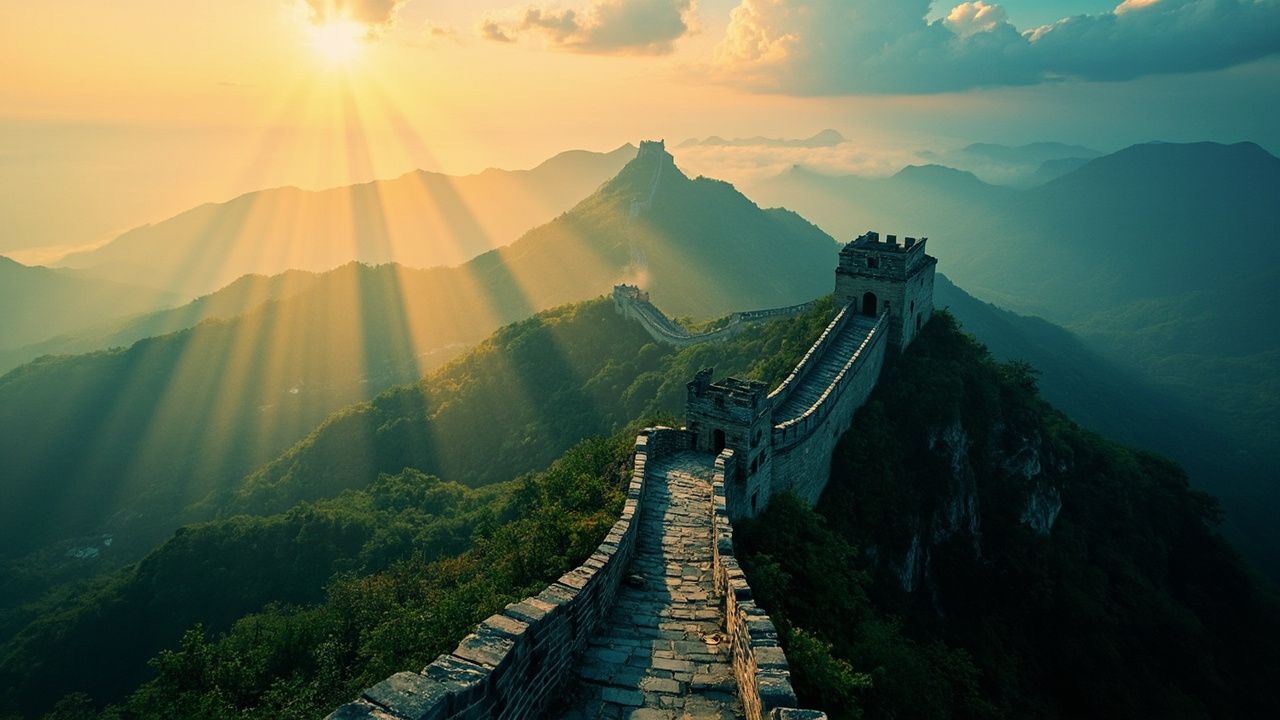
The overnight train from Xi’an pulled into Lhasa just after dawn. I pressed my face to the cold window and watched the first light hit the Jokhang Temple’s golden roof while pilgrims in sheepskin chubas walked clockwise around the Barkhor, spinning prayer wheels. I’d been in China for two weeks already, and I thought I understood the country. I didn’t. That morning in Tibet, I realized China isn’t a place you visit. It’s a place you collect, one region at a time.
Three weeks is the perfect amount of time to do that. It’s long enough to see the imperial history of Beijing, the skyline of Shanghai, the karst peaks of Yangshuo, the Terracotta Warriors, the pandas in Chengdu, and still have days left for something unexpected. It’s also short enough that you won’t burn out on temples and crowds. This guide walks you through a 21-day route I’ve refined over seven years of living in Beijing and more than 40 trips around the country. You’ll get specific train times, station exits, prices in both currencies, and the kind of advice that only comes from missing a few trains and eating at the wrong restaurants.
Quick answer
A 3-week China itinerary should cover Beijing (4 days), Xi’an (3 days), Chengdu (3 days), Guilin/Yangshuo (3 days), and Shanghai (4 days), with 2–3 days for a wildcard like Tibet, Zhangjiajie, or黄山. Most US, UK, Australian, and 50+ other nationalities can enter visa-free for up to 30 days through 2026, so you likely don’t need a visa. Budget $3,500–$5,000 per person including international flights, or about $150–$200 per day on the ground. Take the high-speed rail between cities, not planes. Book everything through Trip.com and pay with Alipay.
The Short Version
Don’t try to see everything. The classic route is Beijing → Xi’an → Chengdu → Guilin/Yangshuo → Shanghai, and it works because each city feels completely different. Spend 4 days in Beijing, 3 in Xi’an, 3 in Chengdu, 3 in Guilin, and 4 in Shanghai, then add a wildcard if you have energy left. Take trains, not flights. Download Alipay before you arrive and link your foreign card. Most of China runs on WeChat Pay and Alipay, and cash is increasingly rare. Skip the group tours. China is easier to navigate solo than most people think, and the translation apps are good enough now that you’ll rarely feel lost.
How I Picked These
I’ve lived in Beijing since 2019 and have taken more than 40 trips around China, including three full 3-week circuits with visiting friends and family. Every time someone comes to visit, I learn something new about what first-timers actually need. This route is the one I’ve settled on after those trips, plus dozens of conversations with taxi drivers, hostel owners, and fellow travelers. I’ve also made every mistake you can make, from booking the wrong train station to showing up at a temple on its weekly rest day. This guide is the version I wish I’d had before my first trip.
Comparison Table
| Rank | Place | Best For | Approx Cost (USD) | Time Needed | When to Go |
|---|---|---|---|---|---|
| 1 | Beijing | Imperial history, Great Wall, food | $60–$100/day | 4 days | Apr–May, Sep–Oct |
| 2 | Xi’an | Terracotta Warriors, Muslim Quarter | $50–$80/day | 3 days | Mar–May, Sep–Nov |
| 3 | Chengdu | Pandas, Sichuan food, teahouses | $40–$70/day | 3 days | Mar–Jun, Sep–Nov |
| 4 | Guilin & Yangshuo | Karst scenery, cycling, river cruises | $40–$70/day | 3 days | Apr–Oct |
| 5 | Shanghai | Modern China, Art Deco, nightlife | $70–$120/day | 4 days | Mar–May, Sep–Nov |
| 6 | Zhangjiajie | Avatar mountains, glass bridge | $50–$80/day | 3 days | Apr–Jun, Sep–Oct |
| 7 | Lhasa, Tibet | Tibetan Buddhism, high-altitude drama | $100–$150/day | 4–5 days | Apr–Oct |
| 8 | Huangshan (Yellow Mountain) | Granite peaks, sea of clouds | $60–$90/day | 2–3 days | Apr–Nov |
| 9 | Suzhou | Classical gardens, canals | $50–$80/day | 1–2 days | Mar–May, Sep–Nov |
| 10 | Hangzhou | West Lake, tea plantations | $60–$90/day | 2 days | Mar–May, Sep–Nov |
Beijing — The City That Rewrites Your Sense of Scale
The first time I walked through Tiananmen Square, I couldn’t stop staring at the sheer emptiness of it. It’s the largest public square in the world, and it feels like standing in a void that history keeps filling. Then I turned around and saw the Forbidden City’s moat and vermilion walls, and I understood why every emperor for 500 years chose to live behind them.
Beijing is where you start because it’s China’s political and cultural heart. The Forbidden City alone takes half a day, and the Great Wall at Mutianyu is a full-day trip that will rearrange your understanding of human labor. The city also has the best Peking duck in the country, hutong alleys that survived the wrecking ball, and a subway system that puts most of Europe to shame.
📍 Location: Central Beijing, spread across Dongcheng and Xicheng districts 🎫 Entry fee: Forbidden City $12 (¥85); Great Wall at Mutianyu $6 (¥40) + cable car $15 (¥100); Temple of Heaven $5 (¥34) 🕒 Opening hours: Forbidden City Tue–Sun 8:30–17:00 (closed Mondays); Mutianyu 7:30–18:00 🚇 How to get there: For the Forbidden City, take Line 1 to Tiananmen East Station, Exit A, and walk north through the security checkpoint. For Mutianyu, take Line 2 to Dongzhimen Station, Exit B, and catch the direct bus (916快) to Huairou, then transfer to the Mutianyu shuttle. Or just book a private driver through your hotel. 📅 When to visit: April–May and September–October for mild weather. Go to the Great Wall on a weekday and arrive by 8:00 AM to beat the tour groups. 💡 Insider tips:
- Book Forbidden City tickets on the official WeChat mini-program at least 7 days in advance. They sell out daily.
- At Mutianyu, skip the cable car up and take the chairlift instead. It’s slower, but you see the wall stretching ahead of you.
- The Lama Temple is quieter than the Forbidden City and just as impressive. Go at 9:00 AM when it opens.
- Don’t eat at the restaurants right outside the Forbidden City gates. Walk 10 minutes into the hutongs and find a place where the menu is only in Chinese. That’s where the real food is.
- Download a translation app that works offline. English signage is decent at major sites, but the moment you step into a hutong, it disappears.
I once spent an hour in a hutong teahouse with a retired opera singer named Wang who insisted on teaching me the difference between jasmine and oolong by smell alone. I failed every test, but he kept refilling my cup anyway.
Xi’an — Where the Silk Road Still Smells Like Cumin
The Muslim Quarter hit me like a wall of smoke and spice. Lamb skewers sizzled over charcoal braziers, vendors shouted prices in a mix of Mandarin and Uyghur, and the smell of cumin hung so thick I could taste it for hours afterward. This is what the Silk Road must have felt like.
Xi’an was China’s capital for over 1,000 years, and it shows. The Terracotta Warriors are the obvious draw, but the city itself has a 14th-century city wall you can bike around, a mosque that’s been standing since the 8th century, and some of the best street food in the country. It’s also the easiest place in China to feel the country’s connection to Central Asia.
📍 Location: Central Xi’an, mainly around the Bell Tower and South Gate areas 🎫 Entry fee: Terracotta Warriors $20 (¥150); City Wall $7 (¥54); Big Wild Goose Pagoda $7 (¥50) 🕒 Opening hours: Terracotta Warriors 8:30–17:30 (last entry 17:00); City Wall 8:00–22:00 🚇 How to get there: For the Terracotta Warriors, take Metro Line 9 to Huaqingchi Station, Exit C, then transfer to bus 602 or a local taxi (about $3/¥20). For the City Wall, take Line 2 to Yongningmen Station, Exit D, and you’re at the South Gate. 📅 When to visit: March–May and September–November. Go to the Terracotta Warriors at 8:30 AM when the gates open, before the tour buses arrive. 💡 Insider tips:
- Hire a licensed guide at the Terracotta Warriors entrance for about $30 (¥200). The site is impressive on its own, but the stories behind the excavation make it unforgettable.
- The Muslim Quarter is best visited at night, when the food stalls are fully fired up. Try the roujiamo (Chinese hamburger) from the shop with the longest line.
- Bike the city wall at sunset. The rental is $5 (¥30) for 2 hours, and the light turns the old city golden.
- Skip the Big Wild Goose Pagoda’s interior. The view from the outside is better than the climb.
- The subway in Xi’an is newer than Beijing’s and just as easy to navigate. English signage is everywhere.
I watched a noodle master in the Muslim Quarter pull a single piece of dough into a thousand strands of hand-pulled noodles in under a minute. He didn’t look up once, even when the crowd applauded.
Chengdu — The City That Taught Me to Slow Down
I spent my first afternoon in Chengdu sitting in a bamboo chair at a teahouse in People’s Park, drinking jasmine tea and watching an old man get his ears cleaned with tools that looked like they belonged in a dentist’s office. Nobody was in a hurry. Nobody checked their phone. I realized I’d been traveling wrong for two weeks.
Chengdu is the capital of Sichuan province, and it’s famous for two things: pandas and food. The Giant Panda Breeding Research Base is the best place in the world to see pandas up close, and the city’s cuisine is so spicy it will make you question everything you thought you knew about food. But the real appeal is the pace. Chengdu is China’s laid-back city, and it’s a welcome reset in the middle of a fast-paced trip.
📍 Location: Central Chengdu, mainly around the Jinjiang District and Wuhou District 🎫 Entry fee: Panda Base $7 (¥55); Wuhou Shrine $8 (¥60); Jinli Ancient Street free 🕒 Opening hours: Panda Base 7:30–18:00 (best before 10:00 AM); Wuhou Shrine 8:00–18:30 🚇 How to get there: For the Panda Base, take Metro Line 3 to Panda Avenue Station, Exit B, then walk 10 minutes or take the free shuttle. For Wuhou Shrine, take Line 3 to Gaoshengqiao Station, Exit C, and walk 5 minutes east. 📅 When to visit: March–June and September–November. Go to the Panda Base at 7:30 AM when it opens, because the pandas are most active in the morning before it gets hot. 💡 Insider tips:
- The hotpot in Chengdu is a religious experience. Order the “nine-grid” pot and let the staff guide you through the dipping order.
- Skip the tourist restaurants on Jinli Ancient Street. Walk 10 minutes to the residential streets and find a small shop where the menu is handwritten on a whiteboard.
- The teahouses in People’s Park are where locals actually hang out. Order a cup of jasmine tea for $1 (¥8) and just sit for an hour.
- Sichuan food is spicy, but it’s also numbing. The Sichuan peppercorn creates a tingling sensation called “ma” that’s completely different from heat.
- If you’re vegetarian, say “wo chi su” (I eat vegetarian) and most restaurants will accommodate you.
I met a university student named Li at the panda base who was doing her thesis on panda behavior. She told me the pandas are actually solitary animals and only tolerate each other during mating season. Then she pointed at two pandas wrestling in a tree and said, “Those two are sisters. They fight like humans.”
Guilin & Yangshuo — The Landscape That Made Poets Cry
The first time I saw the karst peaks from the train window, I laughed out loud. They looked like someone had painted them onto the landscape, too perfect to be real. Then the train rounded a corner and the Li River appeared, and I stopped laughing. I just stared.
Guilin and Yangshuo are the postcard version of China, the landscape that inspired centuries of ink paintings and poetry. The Li River cruise from Guilin to Yangshuo is one of the most beautiful boat rides in the world, and Yangshuo itself is a small town surrounded by limestone peaks that you can cycle through, hike up, or just stare at from a riverside cafe.
📍 Location: Guilin city center and Yangshuo county, about 1.5 hours south 🎫 Entry fee: Li River cruise $60 (¥400); Yangshuo countryside cycling free; Xianggong Hill $8 (¥60) 🕒 Opening hours: Li River cruises depart 9:00–10:00 AM daily; Xianggong Hill 6:00–18:00 🚇 How to get there: Take the high-speed train from Chengdu to Guilin North Station (about 6 hours, $80/¥550). From Guilin, the Li River cruise departs from Mopanshan Pier, about 40 minutes from the city center. For Yangshuo, take the bus from Guilin Bus Station ($3/¥20) or the high-speed train to Yangshuo Station. 📅 When to visit: April–October. Go on a weekday to avoid the domestic tour groups, and try to catch the river on a clear day after rain, when the peaks are sharpest. 💡 Insider tips:
- The Li River cruise is worth the money, but book it through your hotel or Trip.com. The official ticket office is chaotic.
- Rent an e-bike in Yangshuo for $10 (¥70) a day and ride the back roads. The main road is crowded with tour buses, but the countryside paths are empty.
- Xianggong Hill is the best viewpoint in the area, but you need to go at sunrise or sunset. The light makes the peaks look like they’re floating.
- Skip the “Impression Liu Sanjie” show. It’s a massive outdoor performance, but it’s overpriced and the story is hard to follow without Chinese.
- The beer fish (pijiu yu) in Yangshuo is a local specialty. It’s river fish cooked with beer and tomatoes, and it’s fantastic.
I got hopelessly lost cycling in the Yangshuo countryside and ended up at a small farm where an elderly woman insisted I sit down and drink tea with her family. We communicated entirely through gestures and a translation app, and she still made me eat two bowls of noodles before letting me leave.
Shanghai — The Future, With a Side of Art Deco
The first thing I noticed about Shanghai was the humidity. It hit me like a wet blanket the moment I stepped out of the airport. The second thing I noticed was the skyline. I’d seen it in photos a hundred times, but nothing prepares you for the sheer verticality of the Pudong skyline at night, when the buildings light up like a circuit board.
Shanghai is China’s most international city, and it’s the perfect way to end a trip because it’s the easiest to navigate. The Bund has the best skyline views in the country, the French Concession has tree-lined streets and Art Deco buildings, and the food scene rivals anything in Asia. It’s also the best place in China to shop, if that’s your thing.
📍 Location: Central Shanghai, mainly around the Bund, French Concession, and Pudong 🎫 Entry fee: The Bund free; Shanghai Tower observation deck $25 (¥180); Yu Garden $5 (¥40) 🕒 Opening hours: The Bund is open 24/7; Shanghai Tower 8:30–21:30; Yu Garden 8:45–16:45 🚇 How to get there: For the Bund, take Metro Line 2 to East Nanjing Road Station, Exit 1, and walk east for 10 minutes. For the French Concession, take Line 10 to Xintiandi Station and explore on foot. For Pudong, take Line 2 to Lujiazui Station, Exit 6. 📅 When to visit: March–May and September–November. Go to the Bund at sunset and watch the skyline light up. Weekdays are less crowded than weekends. 💡 Insider tips:
- The Shanghai Tower is the tallest building in China, but the observation deck is expensive. Go to the bar on the 87th floor of the Jin Mao Tower instead, where you can get a drink for the same price as the view.
- The French Concession is best explored on foot or by bike. Rent a shared bike for $1 (¥7) and wander the tree-lined streets.
- Yu Garden is beautiful, but it’s packed with tourists. Go at 8:45 AM when it opens, or skip it and visit the quieter Guyi Garden in the suburbs.
- The food scene in Shanghai is incredible, but don’t just eat at the trendy spots. The xiaolongbao (soup dumplings) at the old-school Din Tai Fung in the French Concession are still the best I’ve had.
- Shanghai is the easiest city in China for English speakers. Most young people speak at least basic English, and the metro announcements are bilingual.
I was walking along the Bund when a group of Chinese college students asked to take a photo with me. I assumed it was because I was a foreigner, but one of them said, “No, it’s because your jacket is really cool.” I’ve never felt more fashionable in my life.
Zhangjiajie — The Mountains That Inspired Avatar
I remember standing on the glass bridge at Zhangjiajie and looking down at the forest floor 300 meters below. My legs were shaking, not from fear, but from the sheer absurdity of the landscape. The sandstone pillars rose out of the mist like something from a dream, and I understood why James Cameron used them as inspiration for the floating mountains in Avatar.
Zhangjiajie National Forest Park is China’s most dramatic landscape, and it’s a worthy detour if you have the time. The park is massive, with more than 3,000 quartz-sandstone pillars, some reaching over 200 meters tall. It’s also one of the most accessible mountain parks in China, thanks to a network of cable cars, elevators, and paved trails.
📍 Location: Zhangjiajie National Forest Park, about 40 minutes from Zhangjiajie city center 🎫 Entry fee: Park entrance $30 (¥225), valid for 4 days; Bailong Elevator $10 (¥72) one-way 🕒 Opening hours: 7:00–18:00 (seasonal variations) 🚇 How to get there: Take the high-speed train from Chengdu to Zhangjiajie West Station (about 4 hours, $60/¥420). From the station, take a taxi or bus to the park entrance (about $10/¥70). 📅 When to visit: April–June and September–October. Go on a weekday and arrive at 7:00 AM to beat the crowds. The park is often foggy in the morning, which makes the pillars look even more dramatic. 💡 Insider tips:
- The Bailong Elevator is the tallest outdoor elevator in the world, but it’s a tourist trap. Skip it and take the cable car up instead. The views are better and the line is shorter.
- The park is huge. Don’t try to see it all in one day. Stay overnight in the park or in the nearby town of Wulingyuan and split your visit across two days.
- The glass bridge at Zhangjiajie Grand Canyon is a separate ticket ($25/¥180) from the national forest park. Book it in advance because it sells out.
- The “Avatar Hallelujah Mountain” is the most famous pillar in the park, but it’s also the most crowded. Go early or skip it and find your own viewpoint.
- The weather in the mountains changes fast. Bring a rain jacket even in summer.
I met a retired factory worker from Shanghai on the cable car who told me he’d been coming to Zhangjiajie every year for a decade. “The mountains are different every time,” he said. “Sometimes they’re sharp. Sometimes they’re soft. It depends on the clouds.”
Lhasa, Tibet — The Place That Changed How I Think About Travel
The first thing I noticed in Lhasa was the thin air. I’d flown in from Chengdu and felt the altitude immediately, a slight dizziness that made everything feel slightly unreal. Then I saw the Potala Palace rising above the city, and the dizziness turned into something else. I’d never seen a building that felt so much like a prayer.
Lhasa is not an easy destination. You need a special permit, you need to acclimatize to the altitude, and you need to be prepared for a culture that’s completely different from the rest of China. But it’s also the most profound place I’ve been in this country. The Jokhang Temple, the Barkhor pilgrimage circuit, and the monasteries around the city offer a glimpse into a world that feels ancient and alive at the same time.
📍 Location: Lhasa city center, mainly around the Jokhang Temple and Potala Palace 🎫 Entry fee: Potala Palace $30 (¥200) in peak season, $15 (¥100) in winter; Jokhang Temple $12 (¥85) 🕒 Opening hours: Potala Palace 9:00–16:00 (closed some days); Jokhang Temple 8:00–17:00 🚇 How to get there: Fly from Chengdu to Lhasa Gonggar Airport (about 2 hours, $150/¥1,000). The airport is 65 km from the city, so take the airport bus ($5/¥30) or a taxi ($30/¥200). 📅 When to visit: April–October. The weather is mildest in May–June and September–October. Go on a weekday to avoid the crowds at the Potala Palace. 💡 Insider tips:
- You need a Tibet Travel Permit, which you can only get through a licensed tour operator. Budget an extra $100–$200 for this.
- Acclimatize for at least 24 hours before doing anything strenuous. Drink lots of water and avoid alcohol.
- The Barkhor pilgrimage circuit around the Jokhang Temple is the heart of Lhasa. Walk it clockwise, like the pilgrims, and you’ll see a side of the city most tourists miss.
- The Potala Palace is a maze of rooms and corridors. Hire a guide or download an audio guide, or you’ll miss the stories behind the murals and statues.
- The sweet tea (cha) sold by street vendors is a local specialty. It’s like milky tea with a hint of salt, and it’s perfect for the altitude.
I sat on the roof of a guesthouse in Lhasa and watched the sun set over the Potala Palace while a group of pilgrims chanted below. I couldn’t understand the words, but I didn’t need to. The sound was enough.
Huangshan (Yellow Mountain) — The Mountain That Taught Me Patience
The first time I went to Huangshan, I saw nothing. The mountain was completely covered in clouds, and I spent four hours walking through a gray void, occasionally glimpsing a pine tree or a rock formation before it disappeared again. I was furious. Then, on the last day, the clouds parted for about 20 minutes, and I saw the sea of clouds below me, the granite peaks rising out of it like islands. I understood why people keep coming back.
Huangshan is China’s most famous mountain, and it’s known for its “four wonders”: strange pines, bizarre rocks, sea of clouds, and hot springs. It’s also one of the most crowded places in China, with millions of visitors a year. But if you can time it right, it’s worth every step.
📍 Location: Huangshan city, Anhui province, about 3 hours by train from Shanghai 🎫 Entry fee: Park entrance $30 (¥190) in peak season; cable car $15 (¥100) one-way 🕒 Opening hours: 6:00–17:30 (seasonal variations) 🚇 How to get there: Take the high-speed train from Shanghai to Huangshan North Station (about 3 hours, $60/¥400). From the station, take the bus to the Tangkou town entrance (about $3/¥20), then transfer to the park shuttle. 📅 When to visit: April–November, but go on a weekday and avoid Chinese public holidays at all costs. The mountain is most beautiful after rain, when the sea of clouds forms. 💡 Insider tips:
- Stay overnight on the mountain. The sunrise is the main event, and the only way to see it is to sleep at one of the hotels on the summit. Book months in advance.
- The West Sea Grand Canyon is the most spectacular part of the mountain, but it’s a strenuous hike. Start early and give yourself a full day.
- The cable cars close at 17:00, and the queues can be long. If you’re staying overnight, go up in the late afternoon when the crowds have thinned.
- The weather on Huangshan changes fast. Pack layers, even in summer, and bring a rain jacket.
- Don’t bother with the hot springs at the base. They’re overpriced and crowded. Save your energy for the mountain.
I met a retired couple from Guangzhou on the summit who had been coming to Huangshan every year for 20 years. “We’ve seen the sunrise three times,” the husband said. “The other 17 times, we saw clouds. But that’s why we keep coming back.”
Suzhou — The Gardens That Made Me Rethink Space
I walked into the Humble Administrator’s Garden in Suzhou and immediately felt calmer. The garden is a maze of pavilions, ponds, and rockeries, designed to make you feel like you’re in a much larger space than you actually are. It’s the opposite of the Forbidden City’s grandeur. It’s intimate, subtle, and deeply thoughtful.
Suzhou is known as the “Venice of the East” for its canals, but the real draw is its classical gardens, which are UNESCO World Heritage sites. The city is also a center for silk production and has a charming old town that’s easy to explore on foot or by boat.
📍 Location: Suzhou city center, mainly around the Gusu District 🎫 Entry fee: Humble Administrator’s Garden $10 (¥70); Master of the Nets Garden $5 (¥40); Pingjiang Road free 🕒 Opening hours: Gardens typically 7:30–17:30 (seasonal variations) 🚇 How to get there: Take the high-speed train from Shanghai to Suzhou Station (about 30 minutes, $10/¥70). From the station, take Metro Line 4 to Beisita Station, Exit 1, and walk 10 minutes to the Humble Administrator’s Garden. 📅 When to visit: March–May and September–November. Go on a weekday and arrive when the gardens open to avoid the tour groups. 💡 Insider tips:
- The Humble Administrator’s Garden is the most famous, but it’s also the most crowded. The Master of the Nets Garden is smaller but more intimate, and it’s open at night for a special evening performance.
- Pingjiang Road is the best-preserved canal street in Suzhou. Walk it at sunset, when the lanterns come on and the crowds thin out.
- The silk factories in Suzhou offer free tours, but they’re really just sales pitches. Skip them and buy silk at the local markets instead.
- Suzhou’s old town is best explored by boat. A 30-minute gondola ride costs about $10 (¥70) and gives you a different perspective on the canals.
- The food in Suzhou is sweeter than elsewhere in China. Try the squirrel-shaped mandarin fish, a local specialty that’s deep-fried and served with a sweet and sour sauce.
I got lost in the backstreets of Suzhou’s old town and ended up at a tiny noodle shop where the owner, a woman in her 60s, insisted I try her “three-color noodles.” I never found out what the three colors were, but they were the best noodles I had in China.
Hangzhou — The Lake That Inspired a Thousand Poems
I sat on a bench by West Lake in Hangzhou, watching the lotus flowers sway in the breeze, and I understood why the lake has inspired poets for over a thousand years. It’s not a dramatic landscape. It’s a gentle one, full of soft curves and subtle colors. It’s the kind of place that makes you want to write bad poetry, just to try.
Hangzhou is the capital of Zhejiang province, and it’s famous for West Lake, the Longjing tea plantations, and the Grand Canal. It’s also one of the most livable cities in China, with a relaxed pace that’s a nice contrast to Shanghai’s intensity.
📍 Location: West Lake area, central Hangzhou 🎫 Entry fee: West Lake free; Lingyin Temple $10 (¥75); Longjing tea village free 🕒 Opening hours: West Lake is open 24/7; Lingyin Temple 7:00–18:00 🚇 How to get there: Take the high-speed train from Shanghai to Hangzhou East Station (about 1 hour, $15/¥100). From the station, take Metro Line 1 to Longxiangqiao Station, Exit C, and walk 10 minutes to the lake. 📅 When to visit: March–May and September–November. Go to West Lake at sunrise or sunset, when the light is softest and the crowds are thinnest. 💡 Insider tips:
- Rent a bike and cycle the 10 km loop around West Lake. It’s flat, easy, and the best way to see the lake’s many sights.
- The Longjing tea village is a tourist trap, but the tea itself is worth trying. Go to a small tea house and ask for a cup of “pre-Qingming” Longjing, which is the highest grade.
- The “Impression West Lake” show is better than the one in Yangshuo, but it’s still expensive. Skip it and watch the sunset from the Su Causeway instead.
- The Lingyin Temple is one of the most important Buddhist temples in China, but it’s crowded. Go early and explore the grottoes behind the main hall.
- Hangzhou’s food is known for its freshwater fish and bamboo shoots. Try the West Lake vinegar fish, a local specialty that’s sweet, sour, and surprisingly delicate.
I met a young couple from Beijing at a tea house in the Longjing village who were on their first trip together. They asked me to take their photo in front of the tea fields, and the girl said, “This is where we’re going to get married next year.” I hope they did.
FAQ summary
For most travelers, a 3-week China itinerary should cover Beijing, Xi’an, Chengdu, Guilin/Yangshuo, and Shanghai, connected by high-speed rail. Most Western passport holders can enter China visa-free for up to 30 days through 2026, but you should verify your specific nationality’s eligibility before booking. Budget $150–$200 per day on the ground, set up Alipay before arrival, and download a VPN if you want access to Google, WhatsApp, and Instagram. The best seasons are spring (April–May) and autumn (September–October).
FAQ
Q: Do I need a visa for China in 2026? A: Citizens of the US, UK, Australia, Canada, and most European countries can enter China visa-free for up to 30 days through 2026. Check the latest policy for your nationality before booking, as rules can change.
Q: How much does a 3-week trip to China cost? A: Budget $3,500–$5,000 per person including international flights, or about $150–$200 per day on the ground. This covers mid-range hotels, high-speed rail between cities, meals, and entry fees.
Q: Is it safe to travel in China as a solo tourist? A: Yes. China is one of the safest countries I’ve traveled in. Violent crime is rare, and the police are helpful. The main risks are petty scams and getting lost, which are easily avoided with common sense.
Q: Do I need to speak Chinese to travel in China? A: No, but it helps to learn a few phrases. English is widely spoken in major tourist areas, but you’ll need a translation app like Google Translate (with a VPN) or Pleco for everything else.
Q: How do I pay for things in China? A: China is almost cashless. Set up Alipay or WeChat Pay before you arrive and link your foreign credit card. Most vendors, even street stalls, accept QR code payments.
Q: What’s the best way to get between cities in China? A: High-speed rail is the best option for most routes. It’s fast, comfortable, and the stations are usually in city centers. Book tickets through Trip.com or the official 12306 app.
Q: Do I need a VPN for internet access in China? A: Yes, if you want to use Google, WhatsApp, Instagram, or Facebook. Download a VPN like ExpressVPN or NordVPN before you arrive, because the app stores in China block these services.
The Honest Wrap-up
This itinerary is for first-timers who want to see the highlights without feeling like they’re on a forced march. It’s not for people who want to go deep into one region, or for travelers who hate crowds. If you have less than three weeks, cut Chengdu or Guilin, not Beijing or Xi’an. If you have more, add a wildcard like Tibet or Zhangjiajie. And my final piece of advice: don’t overplan. Leave a day or two empty in each city, just to wander. The best moments in China are the ones you don’t plan for, the ones that happen when you’re lost in a hutong or sitting in a teahouse with a stranger who insists you try their favorite dish.
More guides you may like
Top 10 Bridges in China
China's bridges are engineering marvels spanning mountains, rivers, and seas. Here are 10 of the most spectacular, from ancient stone to modern steel.
8 min read

Top 10 Buddhist Sites in China
From the Leshan Giant Buddha to the Dunhuang Caves, these 10 Buddhist sites represent 2,000 years of China's spiritual heritage.
9 min read
Top 10 Day Trips from Beijing You Shouldn't Miss
Beijing is packed with history, but some of China's best experiences are just a few hours away. Here are 10 day trips that will transform your visit.
9 min read
Top 10 Hidden Gems in China Off the Beaten Path
Beyond the Great Wall and Terracotta Warriors, China has incredible hidden destinations few tourists ever reach. Here are 10 underrated gems worth the detour.
9 min read
Top 10 Markets and Shopping Streets in China
From Shanghai's Bund to Beijing's Silk Street - 10 markets where foreigners can haggle, explore, and bring home authentic Chinese goods.
9 min read
Top 10 Museums in China You Shouldn't Miss
China's museums span 5,000 years of civilization. These 10 - from the Palace Museum to Xi'an's terracotta gallery - are unmissable for culture lovers.
9 min read