
China Travel Influencer Tips
TODO: Extract from article (100-160 chars)
The driver of my Didi squinted at the address on his phone, then at the narrow alley ahead, then back at me. “Ni qu zheli?” he asked, half-laughing. You’re going there? I nodded. He shrugged, turned off the meter, and said he’d wait. That’s how I ended up standing in a Xi’an hutong that wasn’t on any map, eating a bowl of biangbiang noodles so wide they draped over the bowl like a towel, while a 70-year-old woman named Mrs. Chen told me how her family had been making noodles in that same spot since 1948.
That’s the China I want you to find. Not the one in the group tour photos, but the one that requires a little patience, a translation app, and the willingness to get slightly lost.
This guide is for first-timers who want to see the real China without a tour bus. I’ve lived in Beijing for seven years and traveled through every province except two. I’ve been scammed by a jade seller in Yunnan, I’ve cried at the Terracotta Warriors, and I’ve eaten street food that rearranged my understanding of what food can be. Here’s what I’d tell a friend before they booked the flight.
Quick answer
If you’re a citizen of most European countries, Australia, New Zealand, Japan, South Korea, or several others, you can enter China visa-free for up to 30 days through the 2024-2025 visa-free trial policy, which has been extended through 2026. For a 10-14 day first trip, plan on spending $80-150 per person per day (CNY 580-1,080) excluding international flights, and book your high-speed rail tickets through Trip.com or the official 12306 app at least 3 days ahead. The best seasons are April-May and September-October when temperatures are mild and skies are clearest.
The Short Version
If you only have 90 seconds, here’s the truth: China is easier than you think and harder than you imagine. The payment apps will frustrate you on day one and feel natural by day three. The Great Wall will exceed expectations. The food will ruin other cuisines for you. Don’t try to see everything. Pick one region, stay 10-14 days, and go deep. Beijing and Xi’an are non-negotiable for a first trip. Everything else is negotiable.
How I Picked These
I’ve made the mistake of trying to see five cities in eight days. It doesn’t work. China is too big, too layered, too full of places that deserve more than a rushed afternoon. These ten destinations survived years of my own travel, dozens of return visits, and conversations with taxi drivers, hostel owners, and expat friends who’ve been here longer than I have. I’ve excluded places I think are overrated (sorry, Zhangjiajie’s glass bridge) and included places that might not be on your radar but should be. Every price was checked against what I paid in the last 12 months, and every direction is one I’ve personally walked.
Comparison Table
| Rank | Place | Best For | Approx Cost (USD) | Time Needed | When to Go |
|---|---|---|---|---|---|
| 1 | The Great Wall (Mutianyu) | Iconic views without crowds | $15 entry + $30 transport (CNY 110 + 220) | Full day | Apr-May, Oct |
| 2 | Xi’an Terracotta Warriors | Ancient history, jaw-drop moment | $25 entry (CNY 180) | Half day | Mar-May, Sep-Nov |
| 3 | Beijing Forbidden City | Imperial grandeur | $10 entry (CNY 70) | 3-4 hours | Weekdays, Oct-Nov |
| 4 | Guilin & Yangshuo | Karst landscapes, cycling | $20-40/day (CNY 145-290) | 3-4 days | Apr-Oct |
| 5 | Chengdu Pandas | Giant pandas up close | $7 entry (CNY 50) | Half day | Mornings, any season |
| 6 | Shanghai Bund | Modern China, night skyline | Free (Bund), $25-40 museums | 2-3 days | Mar-May, Oct-Nov |
| 7 | Zhangjiajie National Forest | Avatar-style pillars | $35 entry (CNY 250) | 2 days | Apr-Jun, Sep-Oct |
| 8 | Suzhou Classical Gardens | Ming dynasty elegance | $10-15 per garden (CNY 70-110) | 1-2 days | Mar-May |
| 9 | Lhasa, Tibet | Spiritual, otherworldly | $100+ permit + transport | 5-7 days | Apr-Oct |
| 10 | Yunnan (Dali & Lijiang) | Old towns, ethnic culture | $30-50/day (CNY 215-360) | 4-5 days | Mar-May, Sep-Nov |
1. The Great Wall at Mutianyu — The One That Feels Like a Postcard
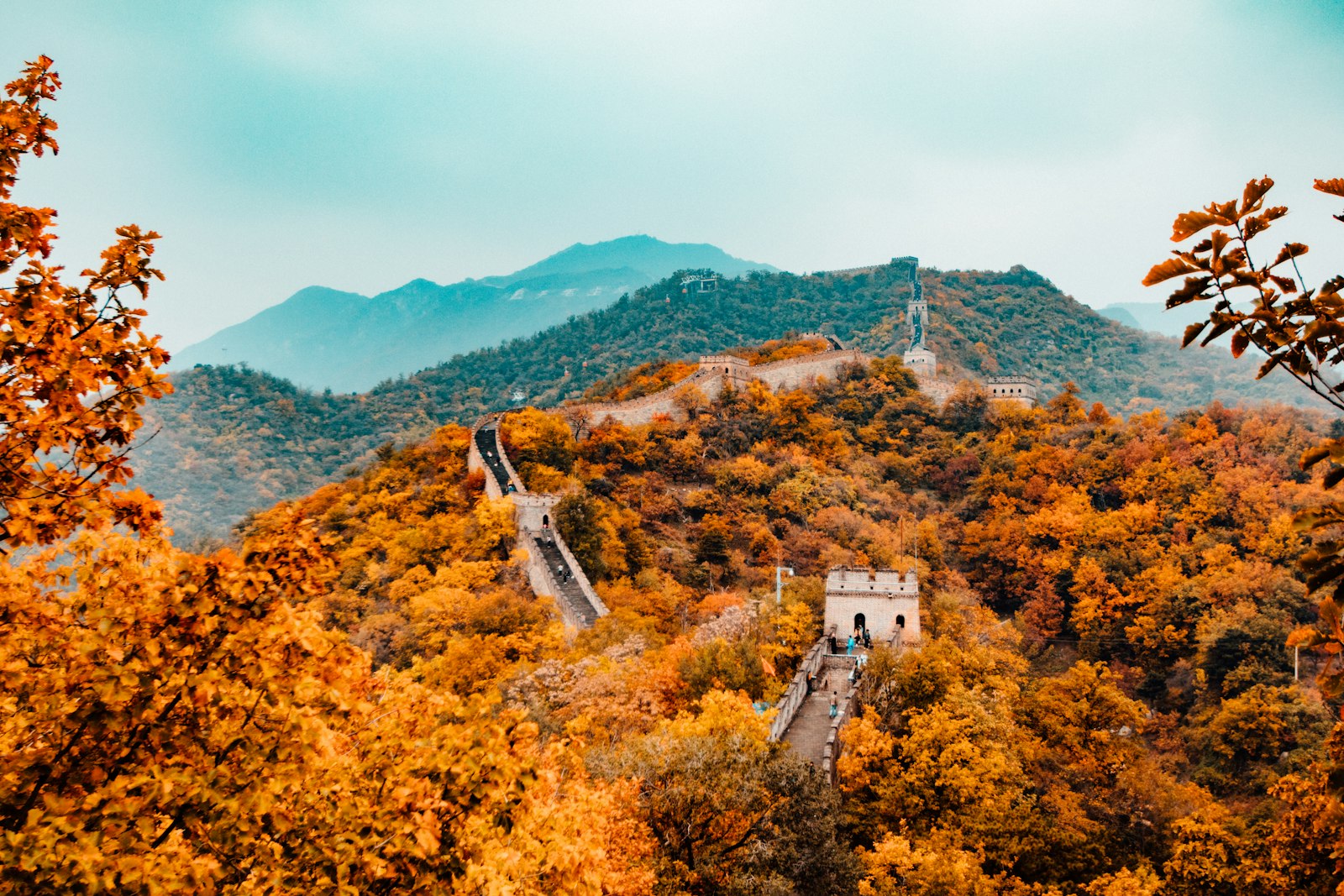
I’ve been to the Great Wall eleven times. The first time was at Badaling, the most famous section, and I spent most of it shuffling behind a tour group from Ohio while a man in a Captain America t-shirt yelled into his phone. The second time was Mutianyu, and I understood why people cry at walls.
Mutianyu is about 90 minutes from central Beijing, and it’s the section that looks like the photos in your head. The watchtowers are intact, the wall snakes over forested ridges, and the crowds are manageable if you go early. The cable car takes you up in about five minutes, but if you’re reasonably fit, take the chairlift up and the toboggan down. Yes, a toboggan. You sit in a plastic sled and slide down a metal track built alongside the wall. It’s ridiculous and wonderful.
The wall itself is steep in places, with steps that vary from ankle-height to knee-height. Wear shoes with grip. Bring water. There’s a Starbucks at the base, which feels wrong until you’ve climbed for an hour in July heat and need cold coffee.
📍 Location: Huairou District, about 70km northeast of central Beijing 🎫 Entry fee: $15 (CNY 110) for Mutianyu; cable car round trip $20 (CNY 140) 🕒 Opening hours: 7:30 AM – 6:00 PM (summer), 8:00 AM – 5:00 PM (winter) 🚕 Getting there: Take a Didi or private car from Beijing (about $30-40 / CNY 215-290 one way), or take the Dongzhimen bus 916 to Huairou, then a local taxi. Tour buses from the city cost $50-80 (CNY 360-580) including entry. 📅 When to visit: Weekday mornings, April-May or September-October. Avoid Chinese national holidays (Oct 1-7, May 1-5) at all costs. 💡 Insider tips: Go to the west side of the wall first, then cross over the valley. The east side is more restored but the west side has the better views. Bring exact change for the shuttle bus at the entrance. The wall gets slippery after rain, so check the forecast.
I once watched a Chinese grandmother in heeled boots climb a 45-degree section of the wall without breaking a sweat. I was panting. She looked at me, said something I assume was encouraging, and kept going.
2. Xi’an’s Terracotta Warriors — The Moment You Realize How Big China’s History Is
I remember the exact second I walked into Pit 1 of the Terracotta Warriors. The building is like an airplane hangar, and inside, thousands of clay soldiers stand in formation, each with a different face. No two are alike. They’ve been standing there for 2,200 years, waiting for an emperor who never came back.
The site is about an hour east of Xi’an, and it’s the single most impressive archaeological site I’ve seen anywhere in the world. The scale is overwhelming, and the story is stranger than fiction. Emperor Qin Shi Huang ordered this army built to protect him in the afterlife, and the tomb itself, which hasn’t been opened, sits under a nearby mound that’s the size of a small mountain. The mercury rivers rumored to flow beneath it are probably why the tomb remains unopened.
Most visitors spend 90 minutes here. I’d suggest three hours. The museum complex includes three pits, the bronze chariots exhibit, and a small but excellent museum. Hire a guide at the entrance or download a self-guided audio tour. The plaques have English, but the stories behind the soldiers are what make it come alive.
📍 Location: Lintong District, about 40km east of Xi’an 🎫 Entry fee: $25 (CNY 180), includes all pits and museum 🕒 Opening hours: 8:30 AM – 5:00 PM (winter), 8:30 AM – 6:00 PM (summer) 🚕 Getting there: Take Metro Line 9 to Huaqingchi Station, then a 10-minute taxi. Or take a direct tourist bus from Xi’an’s train station (about $5 / CNY 35). A Didi from central Xi’an costs $15-20 (CNY 110-145). 📅 When to visit: Go at 8:30 AM when the gates open. By 10 AM, the tour groups arrive. 💡 Insider tips: The soldiers in Pit 1 are lit by natural light from the roof windows. Visit on a sunny day for the best photos. Don’t buy the “authentic” miniature warriors from the vendors outside; they’re made in a factory. The real ones are in the pits, and you can’t take them home.
I stood next to a French woman who was crying quietly. When I asked if she was okay, she said, “I’ve wanted to see this since I was twelve.” I understood completely.
3. The Forbidden City — A Palace That Makes You Feel Small
The Forbidden City is the largest palace complex in the world, and it’s also one of the most overwhelming. 980 buildings. 8,700 rooms. And on a busy day, 80,000 visitors shuffling through the gates like ants through a maze.
Here’s what I’ve learned after many visits: the crowds concentrate on the central axis, the main route from the Meridian Gate to the Imperial Garden. Everyone follows the same path, so the side courtyards, the ones with the quiet gardens and the smaller halls, are often nearly empty. Go there instead.
The palace was home to 24 emperors of the Ming and Qing dynasties, and walking through it feels like walking through a history book. The details are extraordinary: the golden roofs, the marble carvings, the painted beams that have faded to a dusty elegance. The Hall of Supreme Harmony, where emperors held court, sits on a three-tiered marble platform that’s taller than most buildings in the surrounding neighborhood.
You need to book tickets in advance through the official WeChat account or the website. They don’t sell tickets at the gate, and they sell out days ahead during peak season.
📍 Location: Dongcheng District, central Beijing, north of Tiananmen Square 🎫 Entry fee: $10 (CNY 70) in peak season (Apr-Oct), $6 (CNY 40) in low season 🕒 Opening hours: 8:30 AM – 5:00 PM (last entry 4:00 PM), closed Mondays 🚕 Getting there: Take Metro Line 1 to Tiananmen East Station, Exit A, walk north through the security checkpoint. You’ll need your passport for the security check. 📅 When to visit: Weekdays, ideally Tuesday or Wednesday. Go at 8:30 AM when gates open, or after 2 PM when the morning crowds thin out. 💡 Insider tips: The ticket includes entry to the two small museums inside, the Treasure Gallery and the Clock Gallery, which are worth the extra $2 (CNY 15). The Forbidden City is built on a north-south axis, and the view from the hill in Jingshan Park, directly north of the palace, is the classic photo spot. Bring your passport; they check it at the gate.
On my last visit, I sat on a stone bench in one of the side courtyards and watched a Chinese calligrapher practice characters with a brush and water on the paving stones. He’d write a character, watch it evaporate, and start again.
4. Guilin and Yangshuo — The Landscape That Inspired a Thousand Paintings
The first time I saw the karst peaks of Guilin from a train window, I laughed out loud. They look fake, like someone painted them onto the landscape. These are the mountains you’ve seen in Chinese paintings for a thousand years, and they’re real.
Guilin itself is a mid-sized city, but the real magic is an hour south in Yangshuo. This is where the Li River bends through the karst peaks, where rice paddies glow green in the summer, and where you can rent a bicycle for $3 (CNY 20) and ride through countryside that hasn’t changed in centuries.
The classic activity is the Li River cruise from Guilin to Yangshuo, which takes about four hours and costs $60-80 (CNY 430-580). The scenery is extraordinary, but the boat is crowded and the food is mediocre. I’d skip it and instead take a bamboo raft on the Yulong River, a smaller tributary where the rafts are quieter and the views are just as good.
Yangshuo’s West Street is touristy, full of bars and souvenir shops, but the surrounding countryside is the real draw. Rent a scooter or bicycle and just ride. Get lost. The villages you’ll find are the ones you’ll remember.
📍 Location: Guilin city and Yangshuo county, Guangxi Province 🎫 Entry fee: Free for the countryside; Yulong River rafting $40-60 (CNY 290-430) per raft 🕒 Opening hours: Always open 🚕 Getting there: Fly into Guilin Liangjiang International Airport, then take a high-speed train to Yangshuo Station (about 30 minutes, $10 / CNY 70). Or take a direct bus from Guilin city center. 📅 When to visit: April-October, but avoid the summer school holidays (July-August) when the river gets crowded. The rice paddies are most beautiful in June and September. 💡 Insider tips: The best views are from the top of Xianggong Hill, a 20-minute hike that rewards you with the classic Li River panorama. Go at sunrise. The “20 yuan view” on the back of the Chinese banknote is visible from a specific spot on the riverbank near Xingping town, and the locals will happily point you to it for a small tip.
I got caught in a monsoon rainstorm on a bicycle outside Yangshuo and took shelter in a village noodle shop. The owner, a woman in her sixties, didn’t speak a word of English, but she made me tea and refused to let me pay.
5. Chengdu’s Panda Base — The Most Joyful Morning You’ll Have in China
I’ve been to the Chengdu Panda Base six times, and I’ve never once left without a stupid grin on my face. There’s something about watching a giant panda roll off a bamboo platform, land on its back, and keep eating that makes every adult feel like a five-year-old.
The base is about 30 minutes from central Chengdu, and the key is to go early. The pandas are most active in the morning, before the heat of the day makes them sleepy. Arrive at 7:30 AM when the gates open, and you’ll see them eating bamboo, climbing trees, and occasionally tumbling into each other. By 10 AM, most of them are asleep, and the crowds are three deep at the viewing platforms.
The base is also home to red pandas, which are smaller, rust-colored, and more energetic. They’re often overlooked, but they’re worth seeking out. The base is a research facility, not a zoo, and the pandas are being prepared for release into the wild. It’s a conservation success story, and you can feel it in the way the staff talk about the animals.
📍 Location: Chenghua District, about 30 minutes from central Chengdu 🎫 Entry fee: $7 (CNY 50) 🕒 Opening hours: 7:30 AM – 6:00 PM (last entry 5:00 PM) 🚕 Getting there: Take Metro Line 3 to Panda Avenue Station, Exit B, then a 10-minute walk. Or take a Didi from central Chengdu for about $5-8 (CNY 35-58). 📅 When to visit: Morning, before 9 AM. Weekdays are quieter than weekends. 💡 Insider tips: The newborn panda nursery, open from June to September, is the highlight if you’re lucky enough to visit during breeding season. The base has a WeChat mini-program for booking tickets, but you can also buy at the gate. Bring a hat and sunscreen; there’s limited shade on the walking paths.
I watched a panda cub try to climb a tree, fall off, look around to see if anyone noticed, and try again. The Chinese tourists around me were laughing so hard they had to hold onto the railing.
6. Shanghai’s Bund — Modern China in One Skyline
The Bund is where Shanghai shows off. On one side of the Huangpu River, the colonial-era buildings of the old International Settlement stand in a row, their stone facades lit up at night like a history lesson. On the other side, the Pudong skyline rises with the Oriental Pearl Tower and the Shanghai Tower, the second-tallest building in the world. It’s a visual argument between two centuries, and both sides win.
I’ve walked the Bund dozens of times, and I still stop at the railing to watch the river traffic. The boats are lit up like floating casinos, and the light shows on the skyscrapers run every evening until 10 PM. It’s free, it’s beautiful, and it’s the best introduction to modern China you can get.
The Bund itself is a 1.5-kilometer promenade, and it takes about 30 minutes to walk end to end. But the real Shanghai is in the streets behind it, in the former French Concession with its plane trees and art deco apartments, and in the old lanes of the old city where grandmothers still hang laundry between buildings.
📍 Location: Huangpu District, along the west bank of the Huangpu River 🎫 Entry fee: Free 🕒 Opening hours: Always open 🚕 Getting there: Take Metro Line 2 to East Nanjing Road Station, Exit 1, and walk east for about 10 minutes. Or take Line 10 to Yuyuan Garden Station and walk north. 📅 When to visit: Sunset is the magic hour. The skyline lights up as the sun goes down, and you get both daylight and night views. 💡 Insider tips: Cross the river on the ferry for $0.30 (CNY 2) instead of the $10 (CNY 70) tunnel. The ferry runs from the Bund to Pudong every 15 minutes and gives you a different view of the skyline. The best photo spot is at the northern end of the Bund, near the Waibaidu Bridge, where you can get the classic angle of the Pudong towers.
I once met a retired Shanghai factory worker on the Bund who told me he’d watched the Pudong skyline rise from empty farmland. “When I was young,” he said, “this was all fields. Now look.” He shook his head and smiled.
7. Zhangjiajie — The Mountains That Made Avatar Look Real
When James Cameron made Avatar, he said the floating mountains of Pandora were inspired by the quartz-sandstone pillars of Zhangjiajie. I’ve been there, and I can confirm: the movie undersold it.
Zhangjiajie National Forest Park is in Hunan Province, and it’s the kind of place that makes you question your eyes. Hundreds of sandstone pillars rise hundreds of meters from the valley floor, wrapped in mist that makes them look like they’re floating. The park has a network of cable cars, glass bridges, and mountain paths that let you get right up against these formations.
The park is huge, and you need at least two days to see the highlights. The Bailong Elevator, a glass elevator built into the side of a cliff, takes you up 326 meters in under two minutes. It’s a feat of engineering that feels like something from a sci-fi movie. The glass bridge over the Grand Canyon is also worth the walk, though it’s not for the faint of heart.
The crowds can be intense, especially during Chinese holidays. Go on a weekday, and start early.
📍 Location: Zhangjiajie, Hunan Province 🎫 Entry fee: $35 (CNY 250) for a 4-day pass 🕒 Opening hours: 7:00 AM – 6:00 PM (seasonal variations) 🚕 Getting there: Fly into Zhangjiajie Hehua International Airport, then take a 30-minute bus or taxi to the park entrance. High-speed trains connect Zhangjiajie to Changsha (about 3 hours). 📅 When to visit: April-June and September-October. The park is often misty, which is atmospheric but can obscure views. 💡 Insider tips: The park has multiple entrances. The Wulingyuan entrance is the most popular, but the Forest Park entrance is quieter. Take the cable car up to Tianzi Mountain for the best views of the pillar formations. The park’s shuttle buses are free with your ticket, but they stop running at 5:30 PM, so plan your route accordingly.
I got caught in a rainstorm on one of the mountain paths and ended up sharing a shelter with a group of Chinese hikers who insisted I join their picnic. They gave me a piece of their homemade sausage and refused to let me leave without trying their tea.
8. Suzhou’s Classical Gardens — The Art of the Pause
Suzhou is an hour from Shanghai by high-speed rail, and it’s the city of gardens. For a thousand years, wealthy scholars and officials built private gardens here, designed not as displays of wealth but as places for contemplation. They’re works of art you can walk through.
The most famous is the Humble Administrator’s Garden, a UNESCO World Heritage site that covers about 5 hectares. It’s a maze of ponds, pavilions, rockeries, and bridges, all arranged to create a sense of infinite space within a finite area. Every turn reveals a new view, and every window frames a picture.
The gardens are beautiful, but they’re also crowded. The Humble Administrator’s Garden can feel like a shopping mall on a busy day. I’d suggest visiting the smaller gardens instead: the Garden of the Master of the Nets is a fraction of the size but just as beautiful, and the Lion Grove Garden has a rockery maze that’s fun to get lost in.
Suzhou itself is also worth exploring. The old city has canals and whitewashed houses that look like they haven’t changed in centuries, and the Pingjiang Road area is perfect for an evening stroll.
📍 Location: Suzhou, Jiangsu Province, about 100km west of Shanghai 🎫 Entry fee: $10-15 per garden (CNY 70-110) 🕒 Opening hours: 7:30 AM – 5:30 PM (summer), 7:30 AM – 5:00 PM (winter) 🚕 Getting there: Take the high-speed train from Shanghai to Suzhou (about 30 minutes, $10-15 / CNY 70-110). The gardens are in the old city, a 15-minute walk from Suzhou Railway Station. 📅 When to visit: March-May for the spring flowers, or September-November for the autumn colors. Go early in the morning before the tour groups arrive. 💡 Insider tips: The gardens are designed to be experienced slowly. Sit on a bench for 15 minutes and watch how the light changes the scene. The Master of the Nets Garden offers evening performances of Kunqu opera during the summer months, which is a magical way to experience the garden.
I spent an hour in the Garden of the Master of the Nets watching a group of Chinese painters set up their easels and paint the same view from different angles. They were all painting the same pond, but each painting looked completely different.
9. Lhasa, Tibet — The Place That Changes How You Think About the World
Lhasa is not an easy trip. The altitude is 3,650 meters, the permit process is complicated, and the journey is long. But I’ve never met anyone who regretted going.
The Potala Palace, the winter residence of the Dalai Lamas, rises from the center of Lhasa like a red-and-white fortress from another world. It’s 13 stories tall, and it’s built into the side of a hill, so it looks like it’s growing out of the mountain. Inside, it’s a labyrinth of chapels, tombs, and meditation rooms, filled with gold statues and silk tapestries that have been there for centuries.
The Jokhang Temple, in the old city, is the spiritual heart of Tibet. Pilgrims prostrate themselves in front of it, their hands and knees worn smooth by centuries of devotion. The Barkhor, the pilgrimage circuit around the temple, is a market where you can buy prayer flags, incense, and butter lamps.
The permit process requires you to book through a registered tour operator, who will arrange your Tibet Travel Permit. You can’t travel independently in Tibet, which is a limitation, but it’s also a safety net for first-timers.
📍 Location: Lhasa, Tibet Autonomous Region 🎫 Entry fee: Potala Palace $30 (CNY 200), Jokhang Temple $12 (CNY 85) 🕒 Opening hours: Potala Palace 9:00 AM – 12:00 PM, 2:30 PM – 5:00 PM (closed some days) 🚕 Getting there: Fly into Lhasa Gonggar Airport, or take the Qinghai-Tibet Railway from Xining (about 20 hours). The train is an experience in itself, crossing the highest railway in the world. 📅 When to visit: April-October, when temperatures are mild. Avoid the winter months when the altitude feels even harsher. 💡 Insider tips: Acclimatize for at least two days before visiting the Potala Palace, which requires climbing 300 steps at altitude. Drink lots of water and avoid alcohol. The Tibetan tea houses in the old city are the best places to meet locals and try butter tea, which is an acquired taste but worth trying.
I sat in a tea house in Lhasa with a Tibetan monk who was drinking sweet tea and reading a Chinese newspaper. He asked me where I was from, and when I said America, he smiled and said, “Ah, the land of cowboys.” We laughed, and he went back to his paper.
10. Dali and Lijiang, Yunnan — The China That Time Forgot
Yunnan Province is China’s most diverse region, home to 25 ethnic minority groups, and the old towns of Dali and Lijiang are the best places to experience that diversity. These are towns that have been inhabited for over a thousand years, and they’ve been preserved with a care that’s rare in China.
Lijiang’s old town is a maze of cobblestone streets, canals, and wooden houses with tiled roofs. The Naxi people, who have lived here for centuries, have their own language, their own writing system, and their own music. The town is touristy, full of souvenir shops and bars, but the side streets and the surrounding countryside are where the real magic is.
Dali, a few hours south, is more laid-back. The old town is surrounded by the Cangshan Mountains on one side and Erhai Lake on the other, and the scenery is stunning. Rent a bicycle and ride along the lake, or hike into the mountains for views that stretch for miles.
The best thing about Yunnan is the food. The region has its own cuisine, distinct from the rest of China, with influences from Tibet, Myanmar, and Southeast Asia. Try the crossing-the-bridge noodles, the mushroom hotpot, and the yak butter tea.
📍 Location: Dali Bai Autonomous Prefecture and Lijiang, Yunnan Province 🎫 Entry fee: Lijiang old town $10 (CNY 70), Dali old town free 🕒 Opening hours: Always open 🚕 Getting there: Fly into Lijiang Sanyi Airport or Dali Airport. High-speed trains connect both cities to Kunming, the provincial capital. 📅 When to visit: March-May for the spring flowers, September-November for the clearest skies. 💡 Insider tips: The old towns are most beautiful in the early morning, before the tour groups arrive. The Naxi music performances in Lijiang, which use ancient instruments, are worth the ticket price. The Bai people of Dali make a type of cheese called rushan that’s grilled on sticks and served with sugar, and it’s unlike anything else in China.
I got lost in the back streets of Lijiang and ended up in a courtyard where an elderly Naxi woman was drying herbs in the sun. She offered me a cup of tea and showed me photos of her family, including her grandson who was studying in Shanghai.
FAQ summary
For first-time visitors to China in 2026, the most important things to know are: many nationalities qualify for visa-free entry up to 30 days, so check your eligibility before applying for a visa; you’ll need Alipay or WeChat Pay set up before you arrive because cash and credit cards are rarely accepted; and the high-speed rail system is the best way to travel between cities, with tickets bookable through Trip.com or the official 12306 app. Download a VPN before you arrive if you need access to Google, Instagram, or WhatsApp, and bring your passport everywhere because you’ll need it for train tickets, hotel check-ins, and some attraction entries.
FAQ
Q: Do I need a visa to visit China in 2026? A: Citizens of many countries, including most European nations, Australia, New Zealand, Japan, and South Korea, can enter visa-free for up to 30 days under the current policy. Check with the Chinese embassy in your country before booking, and note that the policy is subject to change.
Q: Can I use my credit card in China? A: Not reliably. China is a cashless society, and most places only accept Alipay or WeChat Pay. Set up both apps before you arrive and link your international credit card. You can also exchange cash at banks, but you’ll struggle to spend it.
Q: Will I need a VPN in China? A: Yes, if you want to use Google, Instagram, WhatsApp, or most Western websites. Download a VPN before you arrive, because the app stores in China don’t have them. A good VPN costs about $10-15 (CNY 70-110) per month.
Q: Is English widely spoken in China? A: No. Outside of major tourist areas and international hotels, English is rarely spoken. Download a translation app like Google Translate or Pleco before you arrive, and learn a few basic phrases like “hello” (nǐ hǎo) and “thank you” (xièxiè).
Q: What’s the best way to get around between cities? A: The high-speed rail network is excellent. Trains are fast, clean, and punctual, and they connect all major cities. Book tickets through Trip.com or the official 12306 app at least a few days in advance, especially during holidays.
Q: Is it safe to drink the tap water in China? A: No. Drink bottled water or boiled water. Most hotels provide bottled water, and you can buy it cheaply at convenience stores. Avoid ice in drinks unless you’re at a high-end hotel.
Q: What should I pack for a trip to China? A: Comfortable walking shoes, a power adapter (China uses Type A, C, and I sockets), a portable charger, and a daypack. Bring layers, because temperatures can vary widely between day and night, and pack light because you’ll want to buy things along the way.
The Honest Wrap-up
This list is for travelers who want to see China with their eyes open, who are willing to get lost, who understand that the best experiences often happen between the famous sights. It’s not for people who want everything planned to the minute, who need Western food every day, or who can’t handle a little chaos.
If you’re about to book the flight, here’s my final advice: don’t try to see everything. Pick four or five places from this list, give each one enough time, and leave room for the unexpected. The best thing I ever did in China was miss a train and end up spending an extra day in a small town I’d never heard of. That day was better than any itinerary I could have planned.
China will challenge you. It will frustrate you. It will make you wait in lines, get lost in translation, and question your assumptions. But if you let it, it will also show you things you’ve never seen, feed you things you’ve never tasted, and introduce you to people who will change how you see the world. That’s why I’m still here after seven years.
More guides you may like

Top 10 Bridges in China
China's bridges are engineering marvels spanning mountains, rivers, and seas. Here are 10 of the most spectacular, from ancient stone to modern steel.
8 min read

Top 10 Buddhist Sites in China
From the Leshan Giant Buddha to the Dunhuang Caves, these 10 Buddhist sites represent 2,000 years of China's spiritual heritage.
9 min read

Top 10 Day Trips from Beijing You Shouldn't Miss
Beijing is packed with history, but some of China's best experiences are just a few hours away. Here are 10 day trips that will transform your visit.
9 min read

Top 10 Hidden Gems in China Off the Beaten Path
Beyond the Great Wall and Terracotta Warriors, China has incredible hidden destinations few tourists ever reach. Here are 10 underrated gems worth the detour.
9 min read

Top 10 Markets and Shopping Streets in China
From Shanghai's Bund to Beijing's Silk Street - 10 markets where foreigners can haggle, explore, and bring home authentic Chinese goods.
9 min read

Top 10 Museums in China You Shouldn't Miss
China's museums span 5,000 years of civilization. These 10 - from the Palace Museum to Xi'an's terracotta gallery - are unmissable for culture lovers.
9 min read