
China National Day Holiday Guide
TODO: Extract from article (100-160 chars)
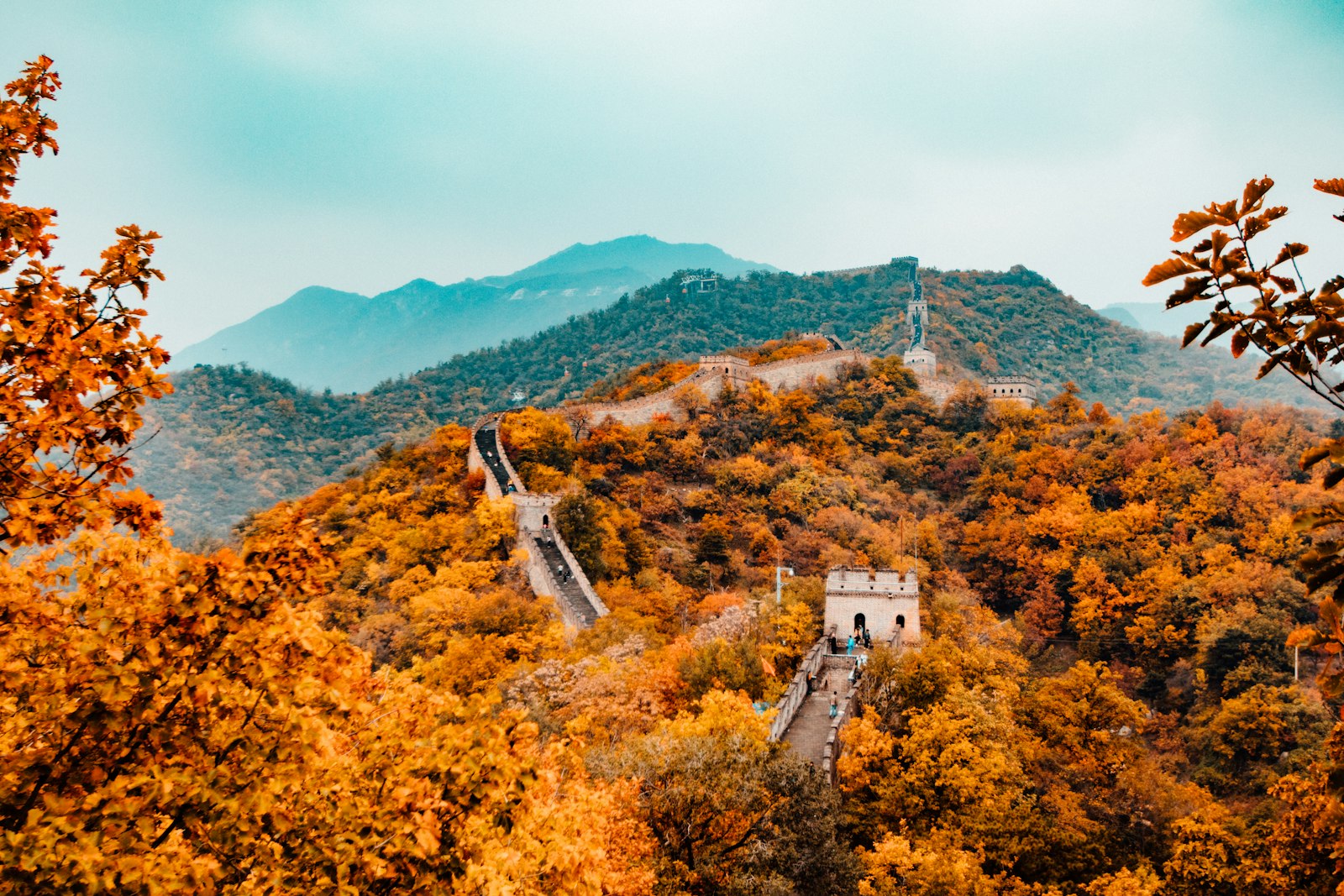
China National Day Holiday Guide
I was standing outside the Forbidden City’s Meridian Gate on October 2, 2019, watching a river of people flow past me. Not a crowd — a river. Families with matching red hats, grandparents pushing strollers, teenagers filming TikToks, all moving in one direction like water finding its level. A man next to me asked, in careful English, if I knew where the ticket office was. I didn’t. Neither did the 40,000 people ahead of us.
That’s National Day in China. October 1st marks the founding of the People’s Republic, and the week that follows — Golden Week — is when the entire country travels at once. Roughly 800 million domestic trips happen in seven days. Trains sell out in minutes. Hotel prices triple. The Great Wall becomes a slow-moving queue of humanity.
But here’s what nobody tells first-time visitors: National Day is also one of the most fascinating times to be in China, if you plan around it. The decorations are spectacular. The energy is unmatched. And if you know which places to avoid and which to embrace, you’ll have a trip that feels like you stumbled into something real rather than staged for tourists.
This guide is for people who’ve never been to China and are considering an October trip. I’ll tell you exactly where to go, where to run from, and how to survive the busiest travel week on Earth.
Quick answer
National Day Golden Week runs October 1–7, 2026, and it’s the single busiest travel period in China — expect 2–3x normal prices on trains, flights, and hotels, and crowds at every major attraction. If you’re a first-time visitor, either book everything 6–8 weeks in advance or shift your trip to late September or mid-October when prices drop 40–60%. Most nationalities (including US, UK, EU, and ASEAN citizens) can now enter China visa-free for 30 days, which makes a spontaneous October trip possible — but not cheap.
The Short Version
Come if you love spectacle and don’t mind crowds. Skip it if you want solitude or budget travel. The sweet spot: arrive September 25, leave October 3, and spend the actual holiday week in a smaller city like Quanzhou or Kaifeng where domestic tourists thin out. Book trains the moment tickets open (usually 15 days before departure). Download Alipay and WeChat Pay before you land — nobody uses cash anymore.
How I Picked These
I’ve spent seven National Day holidays in China, which is either dedication or a mild form of self-punishment. I’ve done the Great Wall shuffle, missed a train in Zhengzhou, and once paid $180 for a hotel room that normally costs $45. I’ve also had some of my best travel days during Golden Week — in places most foreigners never think to go.
Everything here comes from personal experience, plus conversations with Chinese friends who plan their own holidays around the same chaos. I asked a Chengdu taxi driver named Liu what he does during National Day. He laughed and said, “I stay home and sleep.” That’s advice worth taking seriously.
Comparison Table
| Rank | Place | Best For | Approx Cost (USD) | Time Needed | When to Go |
|---|---|---|---|---|---|
| 1 | Beijing | First-timers, history | $120–180/day | 4–5 days | Late Sept or Oct 8+ |
| 2 | Xi’an | Terracotta Warriors | $90–140/day | 3 days | Oct 8–15 |
| 3 | Chengdu | Pandas, food, chill | $80–120/day | 3–4 days | Anytime |
| 4 | Shanghai | Modern China, nightlife | $130–200/day | 3 days | Late Sept |
| 5 | Guilin/Yangshuo | Karst scenery | $70–110/day | 4 days | Oct 8–20 |
| 6 | Zhangjiajie | Avatar mountains | $85–130/day | 3 days | Oct 8–15 |
| 7 | Quanzhou | Off-the-radar history | $60–90/day | 2–3 days | During Golden Week |
| 8 | Kaifeng | Ancient capital, food | $55–85/day | 2 days | During Golden Week |
| 9 | Harbin | Russian-Chinese mix | $75–110/day | 3 days | Late Sept |
| 10 | Suzhou | Gardens, canals | $90–130/day | 2 days | Oct 8+ |
Beijing — The Capital That Swallows You Whole
The first time I did National Day in Beijing, I made the mistake of going to Tiananmen Square on October 1. I lasted twenty minutes. The security lines alone took an hour, and once inside, you couldn’t move faster than a shuffle. A woman behind me kept apologizing every time she bumped into me, which was constantly.
But Beijing during Golden Week has a strange beauty if you know where to look. The city drapes itself in red flags and flower displays. At night, the CBD lights up in coordinated patterns. And the hutongs — the old alleyway neighborhoods — stay surprisingly quiet because everyone’s at the big attractions.
Skip the Forbidden City on October 1–3. Go October 5 or later, or better yet, visit in late September before the holiday officially starts. The Palace Museum caps daily visitors at 80,000, and those tickets vanish within minutes of release at 8pm Beijing time, seven days ahead. Set an alarm.
📍 Location: Dongcheng District for the main sites; Chaoyang for modern Beijing 🎫 Entry fee: Forbidden City $8 (¥60), Temple of Heaven $5 (¥35), Summer Palace $6 (¥45) 🕒 Opening hours: Most sites 8:30am–5pm, last entry 4pm; closed Mondays at many museums 🚕 How to actually get there: Take Subway Line 1 to Tian’anmen East (Exit A) for the square; Line 8 to Olympic Sports Center for the Bird’s Nest ⏰ When to visit: Late September or October 8 onward; avoid Oct 1–3 entirely 💡 Insider tips: Buy the Beijing Transportation Card at any subway station — it works on buses too. The 72-hour visa-free transit doesn’t apply during National Day chaos; get the full visa or use the 30-day visa-free entry. Download offline maps because Google Maps doesn’t work without a VPN.
I met a college student named Wei at a jianbing cart near the Drum Tower. She was home for the holiday and told me her family had already visited three cities in four days. “We do this every year,” she said. “It’s exhausting but we can’t stop.”
Xi’an — Warriors, Walls, and Way Too Many Selfie Sticks
Xi’an during National Day is a masterclass in crowd management. The Terracotta Warriors site handles 65,000 visitors daily, and during Golden Week, that number feels low. I waited 40 minutes just to get a clear view of Pit 1. A French couple next to me gave up and left.
Here’s the thing: Xi’an is worth the hassle. The city walls are the most complete in China, and cycling the 8.5-mile loop at sunset is one of those travel moments you remember forever. The Muslim Quarter’s food street is chaotic but delicious. And the warriors themselves — even through a sea of heads — are genuinely awe-inspiring.
The trick is timing. Go to the warriors at 8am sharp when gates open. By 10am, it’s a zoo. The city walls are best around 5pm when the heat breaks and the lights come on. And the Muslim Quarter? Go hungry, go early, and don’t be afraid to eat things you can’t identify.
📍 Location: Lintong District for the warriors (40 minutes east of the city); Beilin District for the walls and Muslim Quarter 🎫 Entry fee: Terracotta Warriors $17 (¥120), City Wall $8 (¥54), Big Wild Goose Pagoda $7 (¥50) 🕒 Opening hours: Warriors 8:30am–6pm (Mar–Nov), 8:30am–5:30pm (Dec–Feb); City Wall 8am–10pm 🚕 How to actually get there: Take the high-speed train from Beijing West Station (4.5 hours, $75–110/¥515–780) to Xi’an North. From there, Metro Line 2 to Yongningmen for the wall. For the warriors, take Tourism Bus Line 5 (306) from Xi’an Railway Station. ⏰ When to visit: October 8–15 is ideal; if you must go during Golden Week, arrive at opening time 💡 Insider tips: Book warrior tickets on the official WeChat mini-program 7 days ahead. The English audio guide is worth the $4. Bring your passport everywhere — you need it for tickets, hotels, and sometimes just to enter a mall.
I made a mistake here: I tried to walk from the Muslim Quarter to the Big Wild Goose Pagoda. It’s 4 miles. Don’t do that.
Chengdu — Where Even the Pandas Look Relaxed
Chengdu is the antidote to National Day stress. The city moves slower. The food is spicier. And the pandas don’t care that it’s a holiday — they sleep through it just like any other day.
I spent October 3 at the Chengdu Research Base of Giant Panda Breeding, arriving at 7:30am. Smart move. By 9am, the queue stretched half a mile. The pandas, oblivious, munched bamboo and rolled around while thousands of phones pointed at them. A toddler next to me screamed “PANDA!” for twenty straight minutes. Honestly, same.
But Chengdu’s real magic is outside the panda base. The city has more teahouses than Starbucks, and the People’s Park teahouse is where locals go to gossip, play mahjong, and drink bottomless cups of jasmine tea for $3 (¥20). I sat there for three hours and nobody rushed me.
📍 Location: Chenghua District for the pandas; Qingyang District for People’s Park and Wide and Narrow Alleys 🎫 Entry fee: Panda Base $8 (¥55), People’s Park free, Wenshu Monastery free 🕒 Opening hours: Panda Base 7:30am–6pm; teahouses generally 9am–11pm 🚕 How to actually get there: Fly into Chengdu Tianfu International (TFU) or take the high-speed train from Xi’an (3 hours, $40–60/¥280–420). Metro Line 3 to Panda Avenue for the base, then shuttle bus. ⏰ When to visit: Pandas are most active 7:30–10am; avoid weekends if possible 💡 Insider tips: The panda base sells out during Golden Week — book on the official WeChat account 3 days ahead. Chengdu’s hotpot is numbing spicy, not just hot. Ask for wei la (微辣, mild) if you’re not sure. The city has excellent English signage on the metro.
A teahouse owner named Mr. Chen refilled my cup six times without charging extra. When I tried to tip, he looked genuinely confused.
Shanghai — The Future, With Better Coffee
Shanghai during National Day is a different beast. The Bund becomes a one-way pedestrian flow. Nanjing Road is shoulder-to-shoulder. The Oriental Pearl Tower queue wraps around itself twice.
But Shanghai handles crowds better than any Chinese city. The metro is world-class. The coffee scene rivals Melbourne. And if you escape to the Former French Concession, you can pretend the holiday isn’t happening. I spent an afternoon in a tiny café on Anfu Road, reading while rain streaked the windows, and forgot it was October 2.
The Bund at night is still worth it, even with the crowds. Go to the north end near Waibaidu Bridge — fewer people, same view. Or take the ferry across the Huangpu for $0.30 (¥2) and watch the skyline from the water.
📍 Location: Huangpu District for the Bund; Xuhui District for the French Concession 🎫 Entry fee: The Bund free, Yu Garden $6 (¥40), Shanghai Museum free (book ahead) 🕒 Opening hours: The Bund 24 hours; museums typically 9am–5pm, closed Mondays 🚕 How to actually get there: Fly into Pudong (PVG) or Hongqiao (SHA). Metro Line 2 connects both airports to the city center. For the Bund, take Line 2 or 10 to East Nanjing Road, Exit 7. ⏰ When to visit: Late September is ideal; during Golden Week, go to the Bund before 8am or after 10pm 💡 Insider tips: Shanghai has the best English support in China — most signs, menus, and metro announcements are bilingual. Alipay works everywhere, including street vendors. The Maglev train from Pudong Airport is a fun 8-minute ride at 267 mph but drops you far from the center.
I paid $9 for a latte here. Worth it? Debatable. But the barista knew my order by day three.
Guilin and Yangshuo — The Postcard That’s Actually Real
The karst mountains around Guilin look fake. Like someone painted them. I kept expecting a curtain to drop and reveal a parking lot.
National Day is peak season here, which means the Li River cruises sell out weeks ahead and Yangshuo’s West Street becomes a crush of tourists. But the countryside? Still quiet. Rent a scooter for $8 (¥55) a day and ride into the villages. I found a farmer named Huang who let me help harvest rice for an hour. He refused payment and gave me a pomelo instead.
The Li River cruise from Guilin to Yangshuo is the classic experience — 4 hours, $30–50 (¥210–350) depending on boat class. It’s touristy but genuinely spectacular. Book through your hotel, not a random street vendor.
📍 Location: Guilin city center for transport; Yangshuo County for scenery 🎫 Entry fee: Li River cruise $30–50 (¥210–350), Reed Flute Cave $13 (¥90), Xianggong Hill $9 (¥60) 🕒 Opening hours: Cruises depart 9am–11am; caves 8am–5:30pm 🚕 How to actually get there: High-speed train from Guangzhou (2.5 hours, $35–55/¥250–380) to Guilin North or Yangshuo Station. From Yangshuo Station, shuttle buses run to West Street every 20 minutes. ⏰ When to visit: October 8–20 is perfect; during Golden Week, expect 2x prices and full boats 💡 Insider tips: The best views are from Xianggong Hill at sunrise — hire a driver for $15 (¥100) round trip. Yangshuo’s electric scooters don’t require a license, but wear a helmet anyway. Bring cash for small villages; not everyone takes Alipay.
The rice farmer’s wife made me lunch. I still think about that pomelo.
Zhangjiajie — Avatar Mountains, Real Fog
Zhangjiajie’s sandstone pillars inspired the floating mountains in Avatar. The Chinese government leans into this hard — there’s an actual “Avatar Hallelujah Mountain” sign. It’s a bit much. But the scenery? Unreal.
The problem is National Day. The glass bridge caps visitors at 8,000 daily, and tickets sell out instantly. The cable cars have two-hour waits. I spent 45 minutes in line just to descend from Tianzi Mountain.
Go anyway, but go smart. Stay inside the park at a nongjiale (farmhouse guesthouse) so you can enter before the day-trippers arrive. Hike instead of taking cable cars where possible. And bring rain gear — the fog that makes the pillars look mystical also soaks you through.
📍 Location: Wulingyuan District, about 4 hours by bus from Changsha 🎫 Entry fee: Zhangjiajie National Forest Park $32 (¥228) for 4 days, Glass Bridge $20 (¥138) 🕒 Opening hours: Park 7am–6pm; Glass Bridge 8am–5pm 🚕 How to actually get there: Fly to Zhangjiajie Hehua Airport or take the high-speed train from Changsha (2.5 hours, $20–30/¥140–210). From the station, buses run to Wulingyuan every 30 minutes. ⏰ When to visit: October 8–15; if during Golden Week, arrive at 6:30am 💡 Insider tips: The park ticket includes free shuttle buses — use them. The Bailong Elevator (world’s tallest outdoor lift) has the longest queues; skip it and hike instead. English is limited here; download a translation app.
I got lost on a trail for two hours. A park ranger named Zhang found me and walked me back. He refused a tip but accepted a Snickers bar.
Quanzhou — The City China Forgot to Promote
Quanzhou might be my favorite discovery in China. It was once the world’s largest port — Marco Polo called it “the Alexandria of the East.” Now it’s a quiet city in Fujian with temples, mosques, and seafood that’ll ruin you for anything else.
During National Day, Quanzhou gets domestic tourists but almost no foreigners. The temples stay calm. The food streets stay manageable. And the city’s UNESCO World Heritage status (granted in 2021) hasn’t yet turned it into a circus.
I spent three days here eating oyster omelets ($2/¥15), wandering through Kaiyuan Temple, and drinking tea with a retired teacher who insisted I try seven different varieties. He wouldn’t let me leave until I could identify oolong by smell.
📍 Location: Licheng District for temples and old town; Fengze District for the Maritime Museum 🎫 Entry fee: Kaiyuan Temple free, Qingjing Mosque $0.50 (¥3), Maritime Museum free 🕒 Opening hours: Temples 8am–5:30pm; museums 9am–5pm, closed Mondays 🚕 How to actually get there: High-speed train from Xiamen (30 minutes, $8–12/¥55–85) or Fuzhou (1 hour, $15–20/¥100–140). From Quanzhou Station, take Bus K1 to the old town. ⏰ When to visit: Anytime — this is one of the few places that doesn’t get crushed during Golden Week 💡 Insider tips: The mianxianhu (thin noodle soup) at Shuimen Guozaidian is legendary — go before 9am. Most temples have free incense; don’t buy from street vendors. English is rare here; bring a translation app.
The retired teacher’s name was Mr. Lin. He gave me a bag of tieguanyin tea to take home.
Kaifeng — Ancient Capital, Modern Chaos
Kaifeng was China’s capital during the Song Dynasty, and it still feels like a place out of time. The night market on Gulou Square serves food that’s been made the same way for a thousand years. The Iron Pagoda has survived 900 years of floods and wars. And the whole city has a slightly faded, lived-in quality that Beijing and Shanghai lost decades ago.
National Day brings crowds, but they’re mostly domestic tourists doing the historical sites. The night market, surprisingly, stays manageable. I ate guan tang bao (soup dumplings) for $1.50 (¥10) and watched a man make dragon’s beard candy by hand, stretching sugar into 16,000 strands.
📍 Location: Gulou District for the night market; Longting District for the pagoda and dragon pavilions 🎫 Entry fee: Iron Pagoda $7 (¥50), Dragon Pavilion $9 (¥65), night market free 🕒 Opening hours: Night market 6pm–midnight; attractions 8am–6pm 🚕 How to actually get there: High-speed train from Zhengzhou (20 minutes, $5–8/¥35–55). From Kaifeng North Station, take Bus 38 to Gulou. ⏰ When to visit: Evenings for the night market; October 4–6 is less crowded than Oct 1–3 💡 Insider tips: The night market is cash-friendly but Alipay works. Try the hula tang (spicy pepper soup) — it’s a Kaifeng specialty. Most signs are Chinese-only; point at what looks good.
A vendor named Auntie Wang gave me extra dumplings because I looked hungry. I was.
Harbin — Russian Cathedrals and Ice Cream in October
Harbin is where China meets Russia. The Saint Sophia Cathedral looks like it was airlifted from Moscow. The Central Street is lined with European architecture. And the locals eat ice cream year-round, even when it’s freezing.
October is shoulder season here — too early for the famous Ice Festival (January), but the weather is pleasant and the crowds are thin. I walked along the Songhua River, ate a hongchang (red sausage) for $1 (¥7), and visited a Russian restaurant where the owner sang folk songs in three languages.
📍 Location: Daoli District for Central Street and the cathedral; Songbei District for the river 🎫 Entry fee: Saint Sophia Cathedral $3 (¥20), Sun Island free (park areas) 🕒 Opening hours: Cathedral 8:30am–6pm; Central Street 24 hours 🚕 How to actually get there: Fly into Harbin Taiping International (HRB) or take the high-speed train from Beijing (8 hours, $100–150/¥700–1,050). Metro Line 2 to Central Street. ⏰ When to visit: Late September to mid-October; winter is for the Ice Festival but brutally cold 💡 Insider tips: Harbin’s Russian food is genuinely good — try the borscht. The city is walkable; you don’t need taxis for the main sights. English is limited but hotel staff usually help.
The restaurant owner’s name was Sergei. He’d lived in Harbin for 30 years and still had a thick accent.
Suzhou — Gardens, Canals, and the Art of Doing Nothing
Suzhou is what people imagine when they think of “old China.” Classical gardens, canal-side teahouses, stone bridges. It’s also 30 minutes from Shanghai by high-speed rail, which makes it a perfect day trip or overnight escape from the National Day madness.
The Humble Administrator’s Garden is the most famous, and during Golden Week, it’s packed. But the smaller gardens — Lion Grove, the Master of the Nets — stay calmer. I spent an afternoon in the Master of the Nets Garden, sitting by a pond, watching koi. Nobody rushed me. Nobody took selfies in my face. It was the most peaceful two hours of my entire trip.
📍 Location: Gusu District for the classical gardens; Pingjiang Road for canals and teahouses 🎫 Entry fee: Humble Administrator’s Garden $11 (¥80), Master of the Nets $6 (¥40), Pingjiang Road free 🕒 Opening hours: Gardens 7:30am–5:30pm; Pingjiang Road 24 hours 🚕 How to actually get there: High-speed train from Shanghai (25 minutes, $6–10/¥40–70) to Suzhou Station. Metro Line 4 to Beisi Pagoda for the gardens. ⏰ When to visit: October 8+; during Golden Week, go to gardens at opening time 💡 Insider tips: Book garden tickets on the official WeChat account. The canal boat rides are touristy but charming — $15 (¥100) for 40 minutes. Suzhou’s songshu yu (squirrel fish) is a must-try dish.
I met a retired couple from Nanjing who’d come to Suzhou just to sit in gardens. They did this every year.
FAQ summary
National Day Golden Week (October 1–7, 2026) is the busiest travel period in China, with 2–3x price increases on transport and hotels and massive crowds at major attractions. First-time visitors should either book everything 6–8 weeks in advance or travel in late September or mid-October for better prices and smaller crowds. Most nationalities can now enter China visa-free for 30 days, and Alipay/WeChat Pay are essential — cash is rarely accepted. The best strategy is to visit major sites like Beijing and Xi’an before or after the holiday week, and spend October 1–7 in smaller cities like Quanzhou or Kaifeng where domestic tourism is lighter.
FAQ
Q: Do I need a visa to visit China during National Day 2026? A: Most nationalities — including US, UK, EU, Australian, and ASEAN citizens — can enter China visa-free for up to 30 days as of 2026. Check your specific country’s status before booking, as policies change. If you’re not eligible, apply for a tourist visa at least 4 weeks ahead, since consulates get busy before Golden Week.
Q: How far in advance should I book trains and hotels for National Day? A: Book high-speed rail tickets exactly 15 days before departure — that’s when sales open, and popular routes sell out within hours. Hotels should be booked 6–8 weeks ahead; prices triple closer to the date. For flights, 2–3 months ahead is safest.
Q: Is it worth visiting China during National Day at all? A: Yes, if you plan around the crowds. The decorations and energy are unique, and smaller cities stay manageable. But if you want a relaxed trip, come in late September or mid-October instead — prices drop 40–60% and major sites are far less crowded.
Q: What apps do I need for China in 2026? A: Alipay and WeChat Pay for payments (link your international card before you arrive), Didi for ride-hailing, Amap or Baidu Maps for navigation (Google Maps doesn’t work), and a translation app like Pleco or Google Translate with offline Chinese. A VPN is essential if you want access to Google, Instagram, or WhatsApp.
Q: How crowded is the Great Wall during Golden Week? A: Extremely. Badaling and Mutianyu sections see 80,000+ visitors daily during October 1–7. Go to Jinshanling or Jiankou instead — they’re less restored but far quieter. Or visit the Great Wall before September 28 or after October 8.
Q: Can I use cash in China during National Day? A: Technically yes, but practically no. Most vendors, taxis, and even small restaurants only accept Alipay or WeChat Pay. Set up both apps before you arrive and link a Visa or Mastercard. Keep $50–100 (¥350–700) in cash for emergencies.
Q: What’s the weather like during National Day in China? A: It varies wildly by region. Beijing is cool and clear (50–70°F/10–21°C). Shanghai is mild (60–75°F/15–24°C). Chengdu is humid (65–80°F/18–27°C). Guilin is warm (70–85°F/21–29°C). Harbin is already cold (40–55°F/4–13°C). Pack layers.
The Honest Wrap-up
This guide is for first-time visitors who want to experience China at its most intense. If you’re looking for a quiet, romantic getaway, National Day is not your week. If you’re looking for a trip that feels like stepping into a country’s collective celebration — this is it.
The advice I’d give a friend about to book: arrive before the holiday starts, leave after it ends, and spend the actual week somewhere smaller. Book everything now. Download the apps. Learn to say bu yong xie (you’re welcome) and duo shao qian (how much). And don’t try to see everything — China will still be there next year.
More guides you may like

Top 10 Bridges in China
China's bridges are engineering marvels spanning mountains, rivers, and seas. Here are 10 of the most spectacular, from ancient stone to modern steel.
8 min read

Top 10 Buddhist Sites in China
From the Leshan Giant Buddha to the Dunhuang Caves, these 10 Buddhist sites represent 2,000 years of China's spiritual heritage.
9 min read

Top 10 Day Trips from Beijing You Shouldn't Miss
Beijing is packed with history, but some of China's best experiences are just a few hours away. Here are 10 day trips that will transform your visit.
9 min read

Top 10 Hidden Gems in China Off the Beaten Path
Beyond the Great Wall and Terracotta Warriors, China has incredible hidden destinations few tourists ever reach. Here are 10 underrated gems worth the detour.
9 min read

Top 10 Markets and Shopping Streets in China
From Shanghai's Bund to Beijing's Silk Street - 10 markets where foreigners can haggle, explore, and bring home authentic Chinese goods.
9 min read

Top 10 Museums in China You Shouldn't Miss
China's museums span 5,000 years of civilization. These 10 - from the Palace Museum to Xi'an's terracotta gallery - are unmissable for culture lovers.
9 min read