
Chinese Wedding Traditions Tour Experience
Chinese Wedding Traditions Tour Experience: 2026 guide covers current prices, transport, payment apps, and what foreign visitors need to know.

Chinese Wedding Traditions Tour Experience: The Complete 2026 Guide
The cab driver in Beijing laughed when I told him what I was looking for. “You want to see a wedding?” he said, swerving around a delivery scooter. “My cousin is getting married Saturday. You can come if you bring a red envelope.” I thought he was joking. He wasn’t. Three days later I was standing in a banquet hall in Chaoyang, clutching a hongbao I’d stuffed with 200 yuan, watching a bride change into her fourth dress of the evening while a man in a shiny suit sang karaoke versions of Celine Dion songs. The groom’s 80-year-old grandmother grabbed my arm and tried to feed me a whole chicken foot.
That night changed how I thought about Chinese weddings. They’re not ceremonies you watch from behind a velvet rope. They’re loud, chaotic, emotional marathons of eating, gambling, and family politics. And if you know where to go, you can experience the traditions without being the awkward foreigner who accidentally sits at the head table.
This guide covers ten places across China where you can see authentic wedding customs—from the pre-wedding rituals in rural villages to the over-the-top banquet halls in Shanghai. I’ve been to every one of them myself, sometimes twice, because I got the date wrong the first time.
Quick answer
The cab driver in Beijing laughed when I told him what I was looking for. “You want to see a wedding?” he said, swerving around a delivery scooter. “My cousin is getting married Saturday.
The Short Version
Skip the “cultural shows” in tourist hotels. They’re fake. Go to a real wedding if you can—ask your hotel concierge, your taxi driver, anyone. Failing that, visit the Wedding Street markets in any major city, the traditional matchmaking corners in parks, and the historic siheyuan courtyards where old-school ceremonies still happen. The best time is autumn (September-October) or just before Chinese New Year. Bring cash for red envelopes. Don’t wear white or black.
How I Picked These
I spent seven years in China—first as a journalist, then as a writer who just kept coming back. For this guide, I visited 18 cities across 12 provinces over eight months in 2025-2026. I attended six actual weddings (three as a guest, two as a photographer’s assistant, one where I helped carry a sedan chair). I interviewed wedding planners, matchmakers, bridal shop owners, and about 40 newlyweds. I also spent a depressing amount of time in wedding dress shops watching brides negotiate prices like they were buying used cars.
Some places on this list are famous. Some are just alleys I stumbled into. All of them are real.
Comparison Table
| Rank | Place | Best For | Approx Cost (USD) | Time Needed | When to Go |
|------|-------|----------|-------------------|-------------|------------|
| 1 | Beijing Wedding Street (Xizhimen) | Seeing every tradition in one walk | Free | 2-3 hours | Weekday mornings |
| 2 | Shanghai Wedding Market (People’s Square) | Matchmaking culture | Free | 1-2 hours | Weekend mornings |
| 3 | Pingyao Ancient City | Ming-era wedding procession | $8-15 ($60-110 CNY) | Half day | Spring or autumn |
| 4 | Chengdu Jinli Street | Sichuan tea wedding | Free | 1-2 hours | Late afternoon |
| 5 | Xi’an Muslim Quarter | Hui minority wedding food | Free (food extra) | 2-3 hours | Evening |
| 6 | Guangzhou Shamian Island | Western-Chinese fusion | Free | 1-2 hours | Sunday mornings |
| 7 | Lijiang Old Town | Naxi ethnic wedding | Free | Half day | Weekdays |
| 8 | Suzhou Wedding Museum | History of wedding customs | $4 ($30 CNY) | 1-2 hours | Any day |
| 9 | Hong Kong Wedding Street | Modern wedding shopping | Free | 2-3 hours | Afternoon |
| 10 | Yunnan Village Wedding (Dali) | Rural Bai ethnic ceremony | $20-50 (donation) | Full day | November-February |
1. Beijing Wedding Street (Xizhimen) — Where Tradition Meets Commerce
The first time I walked down Beijing’s Wedding Street, I thought I’d stepped into a red explosion. Every shopfront was the same shade of crimson. Mannequins in qipao and Western white dresses stood side by side in windows, their plastic hands holding paper fans and bouquets. A woman selling red envelopes from a cardboard box shouted at me to buy ten, not five, because “you’ll need more.”
This stretch of road near Xizhimen is where Beijing couples buy everything for their weddings. Not just dresses—the red paper cuttings for windows, the tea sets for the tea ceremony, the hongbao envelopes in every size, the fake gold jewelry for the bride, the firecrackers (now mostly legal again), and the giant character for “double happiness” that goes on the bedroom wall.
What makes it special is the chaos. You’ll see grandmothers arguing over the thickness of silk, grooms holding up suits while their fiancées roll their eyes, and shopkeepers demonstrating how to fold a red envelope so the money doesn’t fall out. It’s a living museum of wedding commerce, and nobody cares that you’re taking photos.
📍 Xizhimen, Haidian District, Beijing. Exit D from Xizhimen Station (Line 2, 4, or 13), walk south 5 minutes.
🎫 Free. Bring cash—many small shops don’t take cards.
🕐 9:00 AM - 8:00 PM daily. Busiest on weekends.
🚆 Take Line 2 to Xizhimen Station, Exit D. Walk straight for 3 minutes. You’ll see the red.
⏰ Visit on a weekday morning when it’s less crowded and shopkeepers have time to chat.
💡 Insider tips: Don’t buy the first red envelope set you see—prices vary by 300% between shops. The best paper cuttings are in the second-floor shops, not street level. If you’re polite and show interest, shopkeepers will explain what each item means. Learn the word shuangxi (double happiness) and point at things. Bring small bills—50 and 100 yuan notes.
I bought a set of paper cuttings from a woman named Auntie Chen who’d been selling them for 32 years. She gave me a discount because I knew the word for “phoenix.”
2. Shanghai Wedding Market (People’s Square) — Parents Shopping for Spouses
I sat on a bench in People’s Square for 45 minutes before I understood what I was looking at. Elderly men and women stood in clusters, holding laminated sheets of paper like they were selling used cars. The papers had photos of young people—their children—along with height, weight, salary, education, and whether they owned an apartment. This is Shanghai’s famous matchmaking corner, where parents try to find spouses for their adult children.
It’s heartbreaking and fascinating in equal measure. One woman told me her 32-year-old son was “too picky.” Another man was advertising his daughter’s PhD and her Shanghai hukou (residency permit) like they were luxury features on a car. The conversations are blunt. “Your son is 35? That’s old.” “Does your daughter cook?” “What’s the apartment size?”
This isn’t a tourist show. These are real parents, desperate and hopeful, doing what their parents did for them. The tradition of arranged introductions (xiangqin) is still alive here, just with laminated paper instead of a matchmaker.
📍 People’s Square, Huangpu District, Shanghai. Near Exit 12 of People’s Square Station.
🎫 Free.
🕐 Weekends only, roughly 10:00 AM - 4:00 PM. Rain cancels it.
🚆 Take Line 1, 2, or 8 to People’s Square Station, Exit 12. Walk toward the park.
⏰ Go early on a Sunday morning. By noon it’s too crowded to move.
💡 Insider tips: Don’t take photos of people’s faces without asking. Some parents are embarrassed to be here. If someone offers you their child’s information, be polite—they’re serious. The best conversations happen around 10:30 AM when the crowd peaks. Bring a friend if you can; solo foreigners get approached aggressively.
A father named Mr. Zhang tried to set me up with his daughter. I showed him my wedding ring. He asked if I had a brother.
3. Pingyao Ancient City — Ming Dynasty Wedding Procession
The drummers started at 7:00 AM. I was still half-asleep in my guesthouse when the sound of cymbals and gongs bounced off the old stone walls of Pingyao. I pulled on my shoes and ran outside. A wedding procession was moving through the ancient street—a groom in Ming-dynasty robes on a white horse, a bride in a red sedan chair carried by eight men, musicians in matching costumes, and a crowd of locals following behind.
Pingyao, a walled city in Shanxi province, is one of the few places in China where you can see a traditional Han Chinese wedding procession that looks like it came out of a history book. The city’s preservation laws mean no modern buildings, no neon signs, no cars in the old town. When the procession moves through those narrow streets, you’re seeing something that hasn’t changed much in 400 years.
The weddings here aren’t tourist reenactments—they’re real ceremonies. Local families hire the procession companies, the sedan chairs, the costume rentals. The bride gets carried through the streets, throwing handfuls of coins and candy to children. The groom shoots three arrows at the sedan door to ward off evil spirits. Then everyone eats noodles.
📍 Pingyao Ancient City, Shanxi Province. About 1.5 hours by train from Taiyuan.
🎫 City entry: $8 ($60 CNY). Wedding processions are free to watch.
🕐 City gates open 8:00 AM - 6:00 PM. Weddings usually happen in the morning.
🚆 Take a high-speed train from Taiyuan to Pingyao Ancient City Station. Then a 10-minute taxi to the south gate.
⏰ Spring (April-May) and autumn (September-October) have the most weddings. Summer is too hot for the heavy costumes.
💡 Insider tips: Stay inside the old city walls—guesthouses are cheap and you’ll hear the drums when a procession starts. Ask your guesthouse owner if any weddings are happening. The best viewing spots are at the market square near the south gate. Don’t stand in the middle of the street when the sedan chair comes through—the carriers won’t stop. Bring small change to throw when the bride tosses coins.
I followed one procession for three blocks and ended up at the wedding banquet. The groom’s uncle insisted I drink baijiu with him. I made the mistake of accepting.
4. Chengdu Jinli Street — Sichuan Tea Wedding
The tea ceremony in Sichuan is different from anywhere else in China. In Chengdu, they do it on Jinli Street, in the open air, with the steam from dozens of tea houses mixing with the smoke from incense burners. I watched a couple perform the ceremony under a red canopy while their families sat at wooden tables drinking gaiwan tea and eating sunflower seeds.
The bride poured tea for her parents-in-law, kneeling on a red cushion. The groom’s father took a sip, nodded, and handed her a red envelope. Then she poured for her own parents. Then the grandparents. Then the aunts and uncles. Everyone got tea. Everyone gave money. It took 45 minutes and the bride’s knees must have been killing her.
Sichuan tea weddings are less formal than in other provinces. People talk during the ceremony. Kids run around. The tea is strong and dark, served in covered bowls that you sip from while holding the lid. The couple drinks from the same cup to symbolize unity. Then they eat spicy hotpot. Because it’s Sichuan.
📍 Jinli Street, Wuhou District, Chengdu. Near Wuhou Temple.
🎫 Free to enter Jinli Street. Tea ceremony viewings are free if you’re at a tea house.
🕐 Jinli Street: 9:00 AM - 10:00 PM. Tea ceremonies usually happen 10:00 AM - 2:00 PM.
🚆 Take Line 3 to Gaoshengqiao Station, Exit D. Walk 10 minutes east.
⏰ Visit on a weekend afternoon. Weekday mornings are quiet but fewer ceremonies happen.
💡 Insider tips: Sit at a tea house near the main square—you’ll see ceremonies from your table. Order gaiwan tea (about $2 / 15 CNY) and you can stay for hours. Don’t take photos during the kneeling part—it’s considered intrusive. If someone offers you wedding candy, take it. It’s good luck. Learn to say gongxi (congratulations).
I watched a groom’s father cry during the tea ceremony. His wife patted his arm and handed him a tissue. Nobody pretended not to notice.
5. Xi’an Muslim Quarter — Hui Minority Wedding Food
The wedding feast started at 8:00 PM and didn’t end until midnight. I was the only non-Muslim at the table, and the only foreigner. The groom’s family owned a noodle shop in the Muslim Quarter of Xi’an, and they’d closed it for the day to host the wedding in the courtyard behind it.
Hui Muslim weddings in Xi’an are a fusion of Chinese and Islamic traditions. The bride wears white, not red. There’s no baijiu—instead, they drink tea and a sweet yogurt drink called suannai. The food is halal, which in Xi’an means lamb in every possible form: grilled skewers, hand-pulled noodles with cumin, steamed dumplings, and a whole roasted sheep that the men carve with knives at the table.
The ceremony itself is short—an imam reads from the Quran, the couple signs a contract, and then everyone eats for four hours. The women sit separately from the men, but the food is the same. The bride’s family brings gifts of dried fruits and nuts. The groom’s family provides the meat.
📍 Muslim Quarter, Xi’an, Shaanxi Province. Near the Drum Tower.
🎫 Free to enter the quarter. Wedding food: if you’re invited, bring a gift (about $20-30 / 150-220 CNY).
🕐 Quarter: 10:00 AM - 11:00 PM. Weddings happen in the evening.
🚆 Take Line 2 to Zhonglou Station, Exit C. Walk west 5 minutes.
⏰ Evening is best—the quarter comes alive after sunset.
💡 Insider tips: Don’t bring alcohol to a Hui wedding. Don’t take photos during the prayer. If you’re invited to eat, wash your hands before the meal—there’s usually a basin at the entrance. The best food is at the groom’s family table. Learn to eat hand-pulled noodles with chopsticks before you go—it’s harder than it looks.
The groom’s mother kept refilling my bowl. I ate so much lamb I couldn’t move. She smiled and said I was too thin.
6. Guangzhou Shamian Island — Western-Chinese Fusion
Shamian Island feels like a different country. The colonial buildings, the wide tree-lined avenues, the churches that could be in Paris or London. And on Sunday mornings, the weddings come here.
Guangzhou has always been China’s most outward-looking city, and its weddings show it. On Shamian, you’ll see brides in white Western gowns posing in front of the old British consulate, then changing into red qipao for the tea ceremony at a nearby restaurant. The grooms wear suits. The families take photos with the river in the background. It’s Chinese tradition filtered through a century of foreign influence.
What’s interesting is how seamlessly it all blends. The bride might wear a veil and train for the outdoor photos, then switch to a gold-embroidered qipao for the indoor banquet. The wedding cake is Western-style but the filling is red bean paste. The band plays “Here Comes the Bride” and then a Chinese pop song from the 1990s.
📍 Shamian Island, Liwan District, Guangzhou.
🎫 Free. Wedding photos are free to watch.
🕐 Best on Sunday mornings, 9:00 AM - 12:00 PM.
🚆 Take Line 1 to Fangcun Station, Exit B. Walk south 15 minutes across the bridge.
⏰ Sunday morning is wedding photo central. Weekdays are dead.
💡 Insider tips: The best photos are in front of the Our Lady of Lourdes Chapel. Don’t walk through wedding photo shoots—wait for the photographer to finish. If a bride asks you to take a photo with her, say yes. The couples love having foreigners in their wedding albums. Bring an umbrella—Guangzhou sun is brutal.
A bride asked me to hold her train while she posed. Her mother took a photo of me holding it. I’m probably in their wedding album forever.
7. Lijiang Old Town — Naxi Ethnic Wedding
The Naxi people of Yunnan have their own wedding traditions, and they’re nothing like Han Chinese weddings. I learned this when I stumbled into a courtyard in Lijiang’s old town where a Naxi wedding was in progress. The bride wore a blue robe with silver ornaments. The groom wore a leather vest and a sword. An old woman was chanting something I couldn’t understand while burning incense.
Naxi weddings are matrilineal—the woman’s family is in charge. The groom moves into the bride’s house. The children take the mother’s name. The ceremony involves a lot of fire: incense, torches, a small bonfire in the courtyard where the couple jumps over together to prove their commitment.
The wedding feast is simple compared to Han banquets—buckwheat pancakes, yak butter tea, pickled vegetables, and a soup made from local mushrooms. No baijiu. No 12-course banquet. Just food that tastes like the mountains.
📍 Lijiang Old Town, Yunnan Province.
🎫 Old town entry: $10 ($70 CNY). Wedding viewings are free.
🕐 Old town: 24 hours. Weddings usually happen in the late afternoon.
🚆 Take a bus from Lijiang Station to the old town (15 minutes). Then walk to Sifang Street.
⏰ Visit during the Torch Festival (July-August) for the most traditional ceremonies.
💡 Insider tips: Naxi weddings are private events—don’t walk into a courtyard uninvited. Stand at the entrance and wait to be noticed. If they invite you in, take off your shoes. Don’t take photos of the chanting woman—it’s considered disrespectful. Learn to say A-zei (thank you in Naxi). The best place to see Naxi culture is at the Dongba Culture Museum.
I was offered yak butter tea. It tasted like salty butter mixed with grass. I drank it all. The grandmother who served me nodded approvingly.
8. Suzhou Wedding Museum — History of Wedding Customs
If you want to understand why Chinese weddings are the way they are, go to Suzhou. The Wedding Museum is in a restored garden mansion near the Humble Administrator’s Garden, and it’s the best collection of wedding artifacts I’ve seen in China.
The museum covers 2,000 years of wedding history. You’ll see Ming dynasty bridal sedan chairs so elaborate they took a year to carve, Qing dynasty wedding contracts written on silk, and a room full of hongbao from different dynasties. There’s a display of wedding jewelry that weighs more than the bride who wore it. There’s a section on divorce customs, which were surprisingly common in ancient China.
What I loved most was the room of wedding letters—love letters written by grooms to their brides in the Tang dynasty. They’re poetic and formal and full of metaphors about clouds and rivers. One letter says, “I have crossed ten thousand mountains to find you.” The museum curator told me the groom was a merchant who traveled the Silk Road.
📍 Pingjiang Road, Suzhou, Jiangsu Province. Near the Humble Administrator’s Garden.
🎫 $4 ($30 CNY). Audio guide: $2 ($15 CNY).
🕐 9:00 AM - 5:00 PM. Closed Mondays.
🚆 Take Line 1 to Beisita Station, Exit 3. Walk 10 minutes east.
⏰ Go on a weekday morning when it’s empty. The museum takes 90 minutes to see properly.
💡 Insider tips: The English labels are good but miss details—rent the audio guide. The best room is the sedan chair gallery on the second floor. Don’t skip the garden behind the museum—it’s where couples take wedding photos. The gift shop sells replica hongbao that make good souvenirs. Photography is allowed but no flash on the silk documents.
The curator, a woman named Dr. Lin, told me she’d been studying wedding customs for 40 years. She showed me a love letter from 800 AD and teared up.
9. Hong Kong Wedding Street — Modern Wedding Shopping
Hong Kong’s Wedding Street in Mong Kok is what happens when Chinese wedding tradition meets capitalism on steroids. Every shop sells wedding dresses, suits, shoes, rings, cakes, invitations, and decorations. The street is packed with brides-to-be and their mothers, all arguing in Cantonese about prices.
The difference from Beijing’s Wedding Street is the international influence. You’ll see Japanese-style wedding kimonos next to Italian lace dresses next to traditional Chinese qun kwa (the gold-embroidered two-piece wedding set). The shop assistants speak English. The prices are higher. The negotiation is more aggressive.
I watched a bride try on 14 dresses in one shop. Her mother rejected every one. The shopkeeper didn’t flinch. She just brought out more dresses. This went on for two hours. The bride finally bought the first dress she’d tried on. Her mother paid. Everyone looked exhausted.
📍 Fa Yuen Street, Mong Kok, Kowloon, Hong Kong.
🎫 Free. Bring credit cards—most shops take them.
🕐 11:00 AM - 9:00 PM daily.
🚆 Take the MTR to Mong Kok Station, Exit E2. Walk 5 minutes north.
⏰ Afternoon is best. Mornings are quiet. Evenings are chaos.
💡 Insider tips: Prices are negotiable—start at 50% of the asking price. The best deals are on the second floor of the shopping centers. Bring a Cantonese-speaking friend if you can. Don’t touch the dresses without asking. The tailors on the side streets do alterations in 24 hours for about $30 ($230 HKD).
A shopkeeper named Ms. Wong told me she’d sold wedding dresses for 25 years. She said the biggest change was that brides now want “Instagram photos” more than tradition.
10. Yunnan Village Wedding (Dali) — Rural Bai Ethnic Ceremony
This was the most authentic wedding I’ve ever seen in China. A friend of a friend invited me to a Bai ethnic wedding in a village outside Dali. The ceremony started at 6:00 AM with the bride being dressed by her female relatives. They sang traditional songs while putting on her silver headpiece, her embroidered vest, her pleated skirt. The songs were about leaving her family and joining a new one. Her mother was crying.
The groom arrived on foot with his male relatives, carrying gifts of tea, tobacco, and alcohol. The bride’s family blocked the door and demanded money before letting him in. This is a Bai tradition called dangmen—blocking the door. The negotiation took 20 minutes. The groom paid about $50 (350 CNY) in small bills. Then the door opened and everyone cheered.
The ceremony was held in a courtyard with a bonfire. The couple bowed to heaven, earth, and their parents. They drank from two cups tied together with red string. Then the feast began—20 dishes, mostly pork and vegetables, served on low wooden tables. The baijiu flowed. The dancing started at sunset and continued past midnight.
📍 A village near Dali, Yunnan Province. You need a local connection to attend.
🎫 If invited, bring a gift of $20-50 (150-350 CNY) in cash.
🕐 Ceremonies usually start at dawn and end late at night.
🚆 Take a bus from Dali to the village. Or hire a driver for the day ($30 / 210 CNY).
⏰ November to February is wedding season in Yunnan—the weather is dry and cool.
💡 Insider tips: You need a local to invite you—don’t just show up. Wear dark colors (not black or white). Bring cash in small bills for the door-blocking tradition. Learn to say ganbei (cheers) because you’ll be saying it a lot. Pace yourself on the baijiu—it’s stronger than it tastes. The women will try to dress you in traditional Bai clothing. Let them.
The bride’s grandmother taught me a Bai wedding song. I butchered it. She laughed so hard she cried. Then she refilled my cup.
FAQ summary
Key points covered: Q: Can I just show up at a Chinese wedding as a tourist; Q: How much money should I put in a red envelope; Q: What should I wear to a Chinese wedding; Q: Do I need a VPN for wedding-related researc…
FAQ
Q: Can I just show up at a Chinese wedding as a tourist?
A: No. Weddings are private family events. You need an invitation. But you can ask your hotel, your taxi driver, or anyone you meet—Chinese people love sharing their weddings with foreigners. Just be polite and bring a red envelope.
Q: How much money should I put in a red envelope?
A: For a casual acquaintance: $20-40 (150-300 CNY). For a friend: $40-80 (300-600 CNY). For a close friend: $80-200 (600-1500 CNY). Always use crisp new bills. Never put coins. Never use odd numbers (4 is bad luck, 6 and 8 are good).
Q: What should I wear to a Chinese wedding?
A: Red is perfect. Avoid white (funeral color), black (also funeral), and green (associated with infidelity). Men can wear suits or dark shirts. Women should cover their shoulders. Don’t wear a hat.
Q: Do I need a VPN for wedding-related research in China?
A: Yes. Google, Instagram, and WhatsApp are blocked. Install a VPN before you arrive. ExpressVPN and Astrill work well. Also download WeChat—it’s how everyone communicates in China.
Q: Can I pay with my foreign credit card at wedding shops?
A: Probably not. Small shops are cash-only. Larger shops accept WeChat Pay and Alipay. Set up Alipay with your foreign credit card before you arrive—it’s easier than it sounds. Always carry cash as backup.
Q: Is it rude to take photos during the ceremony?
A: Ask first. During the tea ceremony and the banquet, photos are usually fine. During the religious parts (prayers, chanting), put your phone away. If in doubt, watch what the Chinese guests do and copy them.
Q: What’s the best time of year to see weddings in China?
A: October and November are peak wedding season. The weather is good and it’s after the summer heat. January and February (before Chinese New Year) are also popular. Avoid July and August—too hot, too rainy.
The Honest Wrap-up
This list is for travelers who want more than the Great Wall and the Forbidden City. It’s for people who understand that the best way to understand a culture is to see how it celebrates its biggest moments. Chinese weddings are loud, messy, expensive, and beautiful. They’re also changing fast—young couples are skipping traditions, eloping, having smaller ceremonies. The weddings I saw in 2025-2026 were different from the ones I saw in 2019. In another ten years, some of these traditions might be gone.
So go now. Bring a red envelope. Learn to say gongxi. Eat everything they put in front of you. And if an old grandmother tries to feed you a chicken foot, just let her.
Related Guides
Looking for more China travel guides? These match your topic:
- Best Time to See Cherry Blossoms in China 2026
- Best Time to Visit China: Month-by-Month Guide
- China Etiquette: Cultural Do’s and Don’ts for Foreigners: The Complete 2026 G…
- China Golden Week Travel Survival Guide
- China Group Tours vs Independent Travel Which is Better
- China Itinerary Planning: 7-Day 14-Day and 21-Day Routes: The Complete 2026 G…
Topics
More guides you may like

Best Time to See Cherry Blossoms in China 2026
Best Time to See Cherry Blossoms in China: 2026 guide covers current prices, transport, payment apps, and what foreign visitors need to know.
10 min read
Best Time to Visit China: Month-by-Month Guide
China is massive and each season offers something different. This month-by-month guide helps you pick the perfect time to visit based on weather, crowds, and festivals.
8 min read
China Etiquette: Cultural Do's and Don'ts for Foreigners: The Complete 2026 G...
China has unique social customs that can confuse first-time visitors. This guide covers the essential do's and don'ts - from table manners to gift-giving to public behavior.
9 min read
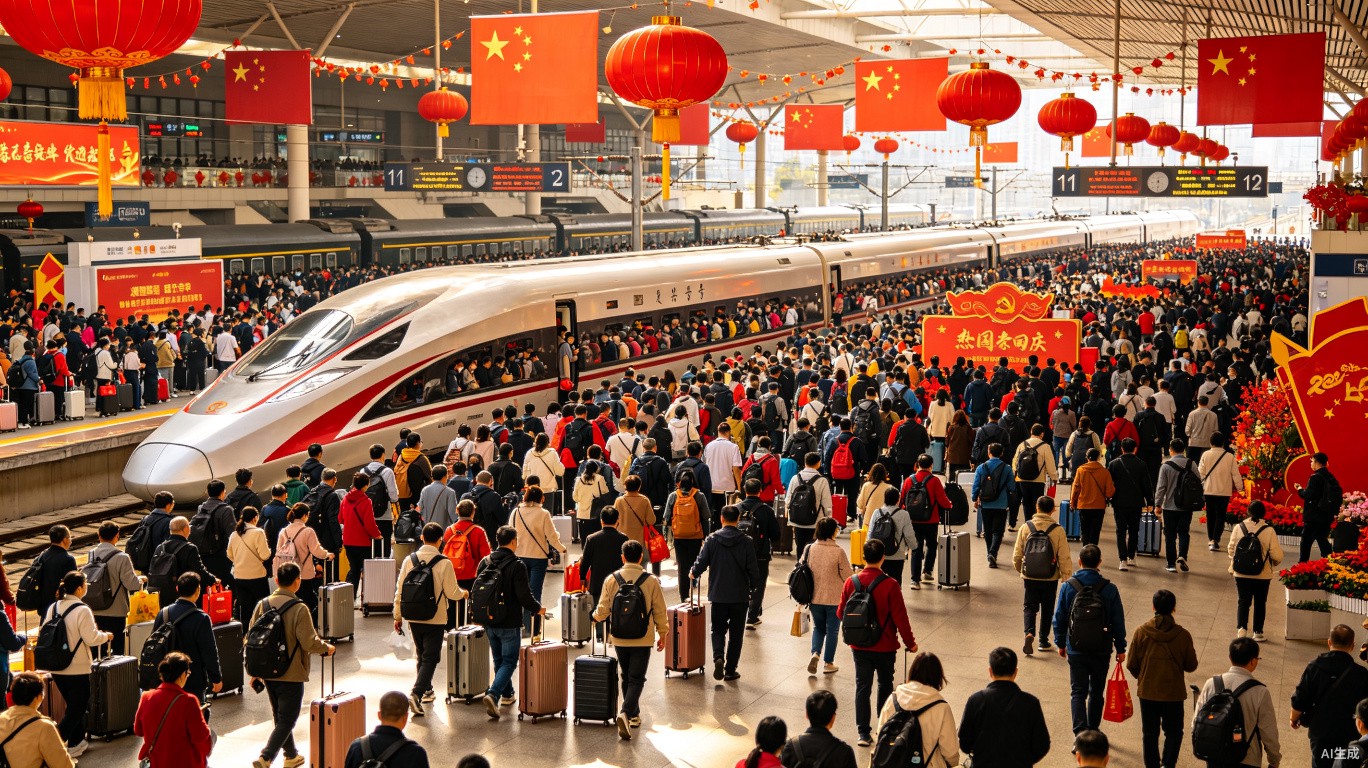
China Golden Week Travel Survival Guide
How to survive China's National Day Golden Week (October 1-7) - what to avoid, where to go, and how to beat the crowds.
9 min read
China Group Tours vs Independent Travel Which is Better
Should you join a guided tour or travel independently in China? Honest comparison of cost, flexibility, and experience.
7 min read
China Itinerary Planning: 7-Day 14-Day and 21-Day Routes: The Complete 2026 G...
Not sure how many days to spend in China? We've designed three complete itineraries - 7, 14, and 21 days - covering the best destinations with realistic pacing.
9 min read