
China Tipping Culture and Etiquette
China Tipping Culture and Etiquette: 2026 guide covers current prices, transport, payment apps, and what foreign visitors need to know.
The cab driver in Shanghai looked at my outstretched hand with the 20 yuan note and just laughed. Not meanly. He laughed, shook his head, and said what I now know every driver in China says: “Shou qi lai” —put it away. I sat there holding the money like an idiot while he unloaded my bag and drove off. That was my first week in China, seven years ago. I鈥檝e made every tipping mistake you can make since then.
Here鈥檚 the thing about tipping in China: the rules are simple, but they are the exact opposite of what most Americans and Europeans expect. You don鈥檛 tip for good service. You don鈥檛 tip for bad service. You basically don鈥檛 tip at all. And if you try, you might confuse people, offend no one, and end up in a polite argument at the hotel reception desk.
This guide covers every situation you鈥檒l actually face: restaurants, hotels, taxis, tour guides, spas, and the few places where tipping is becoming normal. I鈥檝e tested every scenario multiple times across 40+ trips to every province. You won鈥檛 need to guess.
Quick answer
No, you do not need to tip in China. Tipping is not expected in restaurants, taxis, hotels, or bars. The only exceptions are high-end tour guides (tip 100-200 RMB / $14-28 per day for exceptional service) and luxury hotel porters (20 RMB / $3 per bag). For everything else, a sincere “thank you” in Chinese (xi猫xi猫) is the correct response. Do not leave cash on restaurant tables —staff will chase you down the street to return it.
The Short Version
If you remember nothing else: don鈥檛 tip. The Chinese service model assumes the price you pay is the price. Tipping creates awkwardness, not appreciation. The one exception is private tour guides who work with foreign tourists —they now expect it. Everything else? Smile, say xi猫xi猫, and walk away. I once watched a friend try to tip a hotel cleaner 50 yuan. She refused three times, then looked genuinely worried she had done something wrong.
How I Picked These
I鈥檝e lived in Beijing since 2018. I鈥檝e traveled to all 23 provinces, 5 autonomous regions, and 4 municipalities. I鈥檝e eaten in street stalls where the bill was 12 yuan and in private dining rooms where the bill was 12,000. I鈥檝e argued with taxi drivers about fares, stayed in budget hostels and five-star chains, and hired private guides in remote areas. Every piece of advice here comes from a real interaction where I either made the mistake myself or watched another foreigner make it. I also asked Chinese friends, hotel managers, and tour operators directly: “Does tipping actually help or hurt?” Their answers are in here.
Comparison Table
| Rank | Place | Best For | Approx Cost (USD) | Time Needed | When to Go |
|------|-------|----------|-------------------|-------------|------------|
| 1 | High-end restaurants (Beijing/Shanghai) | Business dinners, fine dining | $50-150 per person | 1.5-2 hours | Year-round |
| 2 | Budget restaurants & noodle shops | Daily meals, street food | $3-10 per person | 20-40 min | Year-round |
| 3 | Taxis & ride-hailing (Didi) | City transport | $2-15 per ride | 15-60 min | Year-round |
| 4 | Luxury hotels (5-star chains) | Porters, housekeeping | $100-400/night | Check-in/out | Year-round |
| 5 | Budget hotels & hostels | Basic accommodation | $15-50/night | Check-in/out | Year-round |
| 6 | Private tour guides | Day tours, multi-day trips | $80-200/day | Full day | Spring/Autumn |
| 7 | Group tour guides | Bus tours, day trips | $30-80/day | Full day | Spring/Autumn |
| 8 | Spas & massage places | Foot massage, full body | $15-60 per session | 1-2 hours | Year-round |
| 9 | Barbers & salons | Haircuts, styling | $5-30 | 30-60 min | Year-round |
| 10 | Public bathrooms attendants | Toilet paper, cleaning | Free to $0.30 | 2 min | Year-round |
Restaurants —Don鈥檛 Leave Money on the Table
I watched a German tourist leave 50 yuan on a table at a hotpot place in Chengdu. The waitress ran after him three blocks. She thought he had forgotten his money. He thought he was being generous. They stood on the sidewalk for five minutes, both confused, neither speaking the other鈥檚 language.
In China, the bill you receive is the bill you pay. Service charge is included. There is no line for “tip” on the receipt. If you leave cash, staff will assume you dropped it or forgot it. The correct move is to pay exactly what鈥檚 on the check, say “xi猫xi猫” with a nod, and leave.
The one exception: high-end Western-style restaurants in Shanghai, Beijing, and Guangzhou that cater to expats and wealthy Chinese. Places like M on the Bund in Shanghai or TRB Hutong in Beijing. Some of these have started adding a 10-15% service charge automatically —check your bill. If they haven鈥檛, and the service was genuinely excellent, leaving 5-10% is becoming normal. But only in these places. If you tip at a local dumpling shop, you鈥檒l confuse everyone.
📍 Nationwide, but especially tier-1 cities
🎫 No extra cost beyond menu price
🕒 Lunch 11:00-14:00, Dinner 17:00-22:00
🚇 No special directions needed
⏰Avoid peak dinner rush (18:30-20:00) for better service
💡 Check your bill for “fuwu fei” (service fee). If it鈥檚 there, you鈥檙e done. If not, and you鈥檙e at a fancy place, 5-10% is fine. Never tip at street stalls, noodle shops, or any place where you order at a counter.
I once ate at a family-run restaurant in Xi鈥檃n where the owner refused my tip, then brought me a free bowl of soup because she thought I was unhappy with the meal. I was not unhappy. I was trying to be polite. We both learned something that night.
Taxis and Ride-Hailing —Round Down, Don鈥檛 Tip Up
The meter says 28.50 yuan. You hand the driver 30 and say “keep the change.” He hands you back 1.50 yuan. This is not rudeness. This is the system working correctly.
Taxi drivers in China do not expect tips. The fare is the fare. If the meter says 28.50, you pay 28.50. If you don鈥檛 have small change, rounding up to the nearest yuan is fine —but the driver will usually give you the change anyway. I鈥檝e had drivers dig through their pockets for 0.50 yuan because they felt bad keeping it.
For Didi (China鈥檚 Uber), the app handles everything. You pay the exact fare shown. No tip option in the app. No expectation. If you try to hand cash to a Didi driver, they鈥檒l look at you like you鈥檙e trying to pay for a bus with a credit card.
📍 All cities
🎫 Metered fare + small surcharge (usually 1-2 yuan)
🕒 24/7
🚇 Download Didi app before arriving. Need Chinese phone number. Alipay integration works.
⏰Avoid taxis during rain and rush hour (17:00-19:00). Didi surge pricing gets brutal.
💡 If a taxi driver helps you lift heavy luggage into the trunk, a 5 yuan tip is becoming acceptable in Shanghai and Beijing. But only for luggage. Not for the ride itself.
I had a driver in Hangzhou refuse my 5 yuan tip so firmly that he got out of the car, opened my door, and physically placed the money back in my hand. I learned to stop trying.
Hotels —The One Place Tipping Is Becoming Normal
Here鈥檚 where it gets complicated. Five-star international hotels in China have started adopting Western tipping norms. Not because Chinese guests tip, but because foreign guests expect to. The bellhop who carries your bags to the room? 20 yuan ($3) is fine. The concierge who gets you hard-to-find tickets? 50 yuan ($7) if they really deliver.
But here鈥檚 the thing: Chinese staff at these hotels are often genuinely uncomfortable accepting tips. They鈥檝e been trained to refuse twice before accepting. If you hand them money and they say “no, no, no” and wave their hands, insist once. If they refuse again, drop it. They mean it.
Budget hotels and hostels? Zero tipping. Don鈥檛 even try. The receptionist at a 100-yuan-a-night hostel in Guilin will be genuinely confused if you offer money for handing you a room key.
📍 Luxury hotels in Beijing, Shanghai, Guangzhou, Shenzhen, Chengdu
🎫 Porter: 20 yuan/bag. Concierge: 50 yuan for special requests. Housekeeping: nothing expected, but 20 yuan/day left with a note is fine at 5-star places
🕒 24/7
🚇 Book through Booking.com or Ctrip (Chinese site). Make sure your hotel accepts foreign guests —some smaller ones don鈥檛 have the license
⏰Avoid checking in during Chinese holidays (Golden Week, Spring Festival). Prices triple and service drops
💡 Leave tips for housekeeping in an envelope or under a note, not loose on the bed. Loose cash looks like you dropped it. Also: many luxury hotels now include a “service fee” in your room rate. Check your booking confirmation.
I stayed at the Peninsula in Shanghai and tried to tip the doorman 50 yuan. He refused twice, then accepted with a slight bow and a look that said “you foreigners are strange but I appreciate the effort.”
Private Tour Guides —Yes, Tip These People
This is the one category where tipping is genuinely expected. Private English-speaking tour guides in China work long hours, often 8-10 hours a day, and their base salary is usually low. They rely on tips from foreign tourists to make a decent living.
How much? For a full-day private tour (8-10 hours), tip 100-200 RMB ($14-28) per person. If the guide is exceptional —takes you to local spots, explains history well, handles logistics smoothly —go toward 200 RMB. If the tour was mediocre, 100 RMB is still expected. Not tipping at all is considered rude.
For multi-day private tours (3-7 days), tip 100-150 RMB per day. Give it at the end of the entire trip, not daily. Hand it in an envelope if you can. Cash only.
📍 Nationwide, especially Beijing (Forbidden City, Great Wall), Xi鈥檃n (Terracotta Warriors), Guilin (Yangshuo), Chengdu (pandas)
🎫 100-200 RMB/day per person for private guides
🕒 Usually 8:00-18:00
🚇 Book through reputable agencies like China Highlights, Travel China Guide, or Viator. Read reviews specifically about the guide, not just the tour
⏰Avoid booking the cheapest option. The guide makes almost nothing from the base fee. They depend on tips
💡 Ask your guide if they prefer cash or WeChat transfer. Younger guides often prefer WeChat. Also: if a driver accompanies the guide, tip the driver separately —50 RMB/day is standard. Give it directly, not through the guide.
My guide in Xi鈥檃n, a woman named Chen, spent an extra hour with me after the official tour ended, showing me where to buy the best persimmons and which tea shop wasn鈥檛 a tourist trap. I tipped her 300 RMB. She teared up. That鈥檚 when I understood what this money actually means.
Group Tour Guides —Different Rules
Group tours are different. If you鈥檙e on a bus with 30 other tourists and a guide who speaks through a microphone, tipping is not mandatory but is appreciated. The standard is 20-50 RMB ($3-7) per person per day. Some group tours will pass around an envelope at the end. Contribute what feels right.
The key difference from private guides: group guides have a higher base salary and often get commissions from the shops they take you to. They don鈥檛 depend on tips the way private guides do. But a small tip still shows appreciation.
📍 Nationwide, common in Zhangjiajie, Yunnan, Tibet, Guilin
🎫 20-50 RMB/day per person
🕒 Depends on itinerary
🚇 Book through reputable companies. Avoid tours that promise “zero shopping stops” —they almost always have at least one
⏰Avoid tours during Chinese national holidays. The crowds are brutal and the guides are stressed
💡 If the tour includes a driver, tip the driver separately 20-30 RMB/day. Give it directly. Also: some group tours now include a “service fee” in the price. Check before you tip.
I took a group tour in Yunnan where the guide, a young guy named Xiao Wang, spent 20 minutes explaining the difference between real and fake pu’er tea. He wasn鈥檛 selling anything. He just loved tea. I tipped him 50 RMB. He seemed genuinely surprised.
Spas and Massage Places —It’s Complicated
Foot massage places in China are a whole different world. You walk in, sit in a giant recliner, someone washes your feet, and then they work on you for 60-90 minutes. The bill is usually 60-150 RMB ($8-21). Do you tip?
The answer depends on the type of place. High-end hotel spas? Same rules as hotels —10-15% service charge is often included. If not, and the service was excellent, 10% is fine. But the cheap foot massage places in shopping malls and side streets? No tipping. The staff are paid a salary, and the price you pay is the price.
The exception: if you go to the same place regularly and build a relationship, a small tip (20-30 RMB) during Chinese New Year is a nice gesture. But for a one-time visit, just pay and say thanks.
📍 Nationwide, especially Chengdu (foot massage capital of China), Shanghai, Beijing
🎫 Foot massage: 60-150 RMB. Full body: 200-500 RMB
🕒 Usually 10:00-23:00
🚇 Look for places with Chinese characters for “foot” (鑴? and “massage” (鎸夋懇). Avoid places with pink neon lights —those are not massage places
⏰Go in the evening, after dinner. Foot massage before bed is a Chinese tradition
💡 If the masseuse uses too much pressure, just say “qing yi dian” (lighter). They won鈥檛 be offended. Also: some places offer “free” snacks and tea. They鈥檙e not free —the cost is built into the price. Eat them.
I went to a foot massage place in Chengdu where the owner, a woman in her 60s, spent 10 minutes pressing a single point on my foot that she said was connected to my liver. I don鈥檛 know if it worked, but I slept like a baby that night. I didn鈥檛 tip. She didn鈥檛 expect it.
Public Bathrooms —The Weirdest Tipping Situation
This is the one that catches every foreigner off guard. In many public bathrooms in China, particularly at tourist sites, train stations, and highway rest stops, there鈥檚 an attendant sitting by the entrance. They hand you toilet paper (one square at a time) and keep the bathroom clean.
Some of these attendants have a small dish or jar with a few coins in it. This is not a tip jar. This is for people who want to donate 1 yuan ($0.14) for the toilet paper. You don鈥檛 have to pay. You can walk right past. If you take toilet paper and want to leave 1 yuan, that鈥檚 fine. But it鈥檚 not a tip. It鈥檚 a voluntary payment for a service.
📍 Nationwide, at tourist attractions, train stations, highway rest stops
🎫 0-1 yuan (voluntary)
🕒 Varies
🚇 Carry your own toilet paper. Seriously. Public bathrooms in China often don鈥檛 have any
⏰Avoid using squat toilets if you have knee problems. Bring hand sanitizer
💡 The attendant will sometimes hand you toilet paper without asking. If you take it, leaving 1 yuan is polite but not required. Also: some bathrooms now have QR codes for mobile payment. Scan it if you want to donate.
I watched a French tourist try to tip a bathroom attendant 10 yuan at the Great Wall. The attendant looked at the money, looked at the tourist, and handed her two extra squares of toilet paper as if that was the exchange rate.
Barbers and Salons —No Tipping
Haircuts in China are cheap and fast. A basic cut at a local barber costs 20-50 yuan ($3-7). A cut at a fancy salon in Shanghai might cost 200 yuan ($28). In neither case do you tip.
The barber or stylist is paid a commission on the service. Tipping is not part of the culture. If you try, they鈥檒l be confused. The correct response to a good haircut is to say “hen hao kan” (looks great) and come back next time.
📍 Nationwide
🎫 Local barber: 20-50 yuan. Fancy salon: 100-300 yuan
🕒 Usually 10:00-21:00
🚇 Look for the spinning barber pole or Chinese characters for “hair” (澶村彂)
⏰Go on weekday mornings for the shortest wait
💡 If you have curly or textured hair, find a salon that specializes in “foreign hair.” Many Chinese barbers don鈥檛 know how to cut non-Asian hair types. Also: wash is usually included in the price. They will wash your hair before cutting. This is normal.
I went to a barber in Beijing who spent 45 minutes on my hair and charged me 35 yuan. I tried to give him 50. He gave me back 15 and looked hurt. I learned to just pay the price on the sign.
The One Time You Should Tip: Lunar New Year
There is one situation where tipping is actually traditional in China: during Chinese New Year (Spring Festival). It is customary to give red envelopes (hongbao) with money to service workers who have helped you throughout the year: your regular taxi driver, the security guard at your apartment building, the cleaner, the delivery person.
For tourists, this doesn鈥檛 apply. But if you happen to be in China during Spring Festival (January or February, dates vary), and you have a hotel cleaner or a regular driver, a red envelope with 20-50 yuan is a beautiful gesture. The key: use a red envelope. Never give white or black envelopes (those are for funerals). You can buy red envelopes at any convenience store for 2 yuan.
📍 Nationwide
🎫 20-100 yuan per person
🕒 During Spring Festival (usually late January to mid-February)
🚇 Buy red envelopes at any 7-Eleven, FamilyMart, or convenience store
⏰Avoid giving odd numbers. Even numbers are lucky. 20, 50, 100 are all fine
💡 If you give a hongbao, use two hands. Say “xin nian kuai le” (Happy New Year). The recipient will refuse once or twice. Insist gently. They will accept.
I gave my apartment building security guard a 50 yuan hongbao during Spring Festival. He grinned, shook my hand with both of his, and for the next month, he waved at me every time I walked past. That 50 yuan bought me more goodwill than any tip ever could.
FAQ summary
In China, tipping is not expected and is often refused. The exceptions are private tour guides (tip 100-200 RMB/day), luxury hotel porters (20 RMB/bag), and high-end Western restaurants in tier-1 cities (5-10% if no service charge is added). For taxis, budget restaurants, street food, and most hotels, do not tip. If you leave cash on a table, staff will chase you to return it. Use WeChat Pay or Alipay for most transactions —carry small cash for the few situations where tipping is appropriate. The Chinese phrase “xi猫xi猫” (thank you) is the correct response to good service in 95% of situations.
FAQ
Q: Do I need to tip at restaurants in China?
A: No. The bill includes service. Leaving cash on the table will confuse staff. The only exception is high-end Western restaurants in Shanghai and Beijing, where 5-10% is becoming normal if no service fee is already added.
Q: What about tipping taxi drivers?
A: No. Round up to the nearest yuan if you don鈥檛 have change, but don鈥檛 tip. If a driver helps with heavy luggage, 5 yuan is fine in Shanghai or Beijing.
Q: Should I tip hotel housekeeping?
A: Not expected, but 20 yuan/day left with a note at 5-star hotels is appreciated. Use an envelope. Don鈥檛 leave loose cash on the bed.
Q: How much should I tip a private tour guide?
A: 100-200 RMB ($14-28) per day for a full-day private tour. Give it in cash at the end. For multi-day tours, tip 100-150 RMB per day and give it all at once.
Q: Is tipping offensive in China?
A: Not offensive, just confusing. Most Chinese people don鈥檛 understand why you鈥檙e giving extra money. They鈥檒l assume you made a mistake or that you鈥檙e unhappy with the service.
Q: Can I tip using WeChat Pay or Alipay?
A: Rarely. Tipping is not built into these apps. Some high-end hotels and tour companies now have a tip option in their payment system, but for most situations, cash is the only option.
Q: What if I really want to show appreciation?
A: Say “xi猫xi猫” sincerely. Write a positive review on Ctrip or TripAdvisor. Recommend the guide or driver to other travelers. These gestures matter more than money in most situations.
The Honest Wrap-up
This guide is for people who want to do the right thing without looking like a clueless tourist. The truth is, you can visit China for two weeks, never tip a single person, and no one will think less of you. The service will still be good. The smiles will still be genuine.
But if you want to understand the culture, here鈥檚 the real rule: tipping in China is not about money. It鈥檚 about relationship. The 20 yuan you give a tour guide matters because it says “I see your effort.” The 50 yuan hongbao you give during Spring Festival matters because it says “you are part of my community.” The 1 yuan you leave in a bathroom jar matters because it says “I appreciate the clean floor.”
Don鈥檛 tip because you feel obligated. Tip because you actually appreciated something. And if you鈥檙e not sure, just say xi猫xi猫 and move on. That鈥檚 what the locals do.
Related Guides
Looking for more China travel guides? These match your topic:
- Best Time to See Cherry Blossoms in China 2026
- Best Time to Visit China: Month-by-Month Guide
- China Etiquette: Cultural Do’s and Don’ts for Foreigners: The Complete 2026 G…
- China Golden Week Travel Survival Guide
- China Group Tours vs Independent Travel Which is Better
- China Itinerary Planning: 7-Day 14-Day and 21-Day Routes: The Complete 2026 G…
Topics
More guides you may like

Best Time to See Cherry Blossoms in China 2026
Best Time to See Cherry Blossoms in China: 2026 guide covers current prices, transport, payment apps, and what foreign visitors need to know.
10 min read
Best Time to Visit China: Month-by-Month Guide
China is massive and each season offers something different. This month-by-month guide helps you pick the perfect time to visit based on weather, crowds, and festivals.
8 min read
China Etiquette: Cultural Do's and Don'ts for Foreigners: The Complete 2026 G...
China has unique social customs that can confuse first-time visitors. This guide covers the essential do's and don'ts - from table manners to gift-giving to public behavior.
9 min read
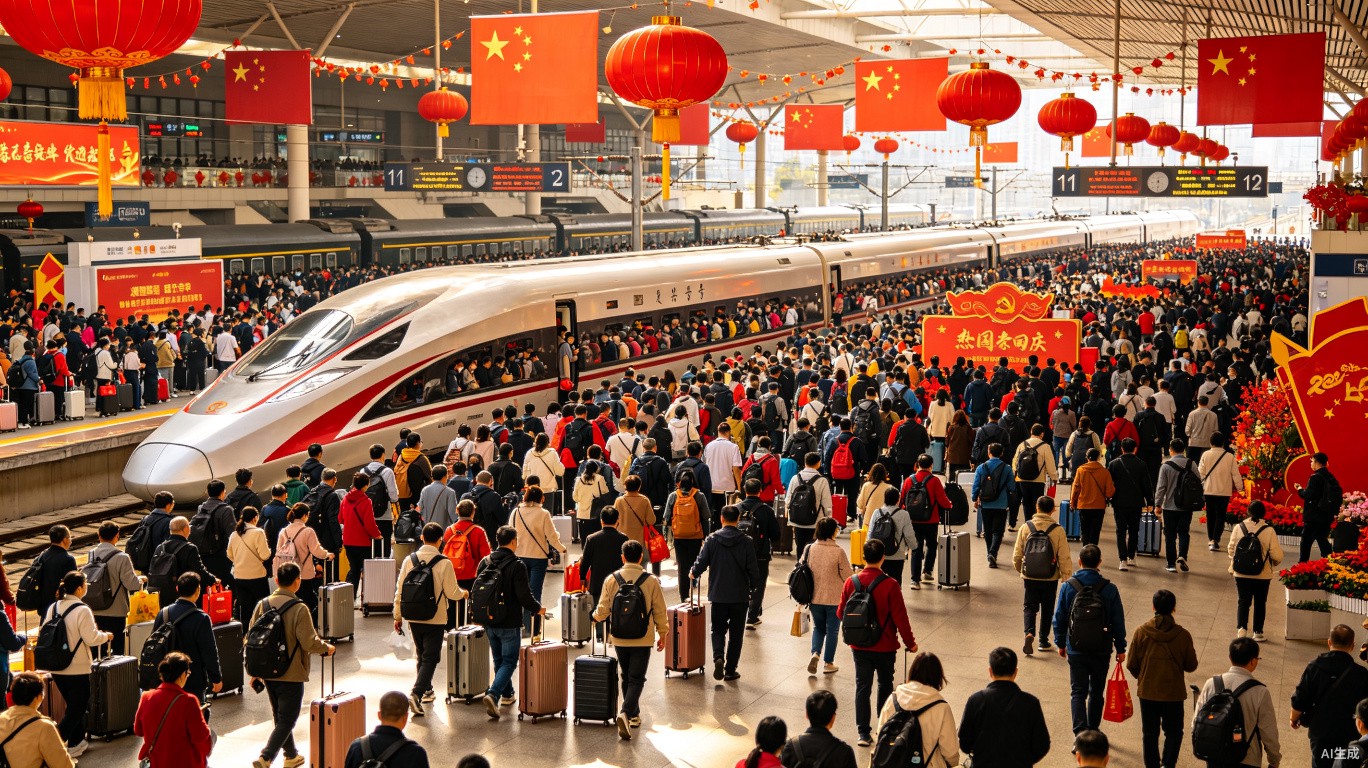
China Golden Week Travel Survival Guide
How to survive China's National Day Golden Week (October 1-7) - what to avoid, where to go, and how to beat the crowds.
9 min read

China Group Tours vs Independent Travel Which is Better
Should you join a guided tour or travel independently in China? Honest comparison of cost, flexibility, and experience.
7 min read
China Itinerary Planning: 7-Day 14-Day and 21-Day Routes: The Complete 2026 G...
Not sure how many days to spend in China? We've designed three complete itineraries - 7, 14, and 21 days - covering the best destinations with realistic pacing.
9 min read