
Dunhuang Mogao Caves Visitor Guide
Dunhuang Mogao Caves Visitor Guide: 2026 guide covers current prices, transport, payment apps, and what foreign visitors need to know.
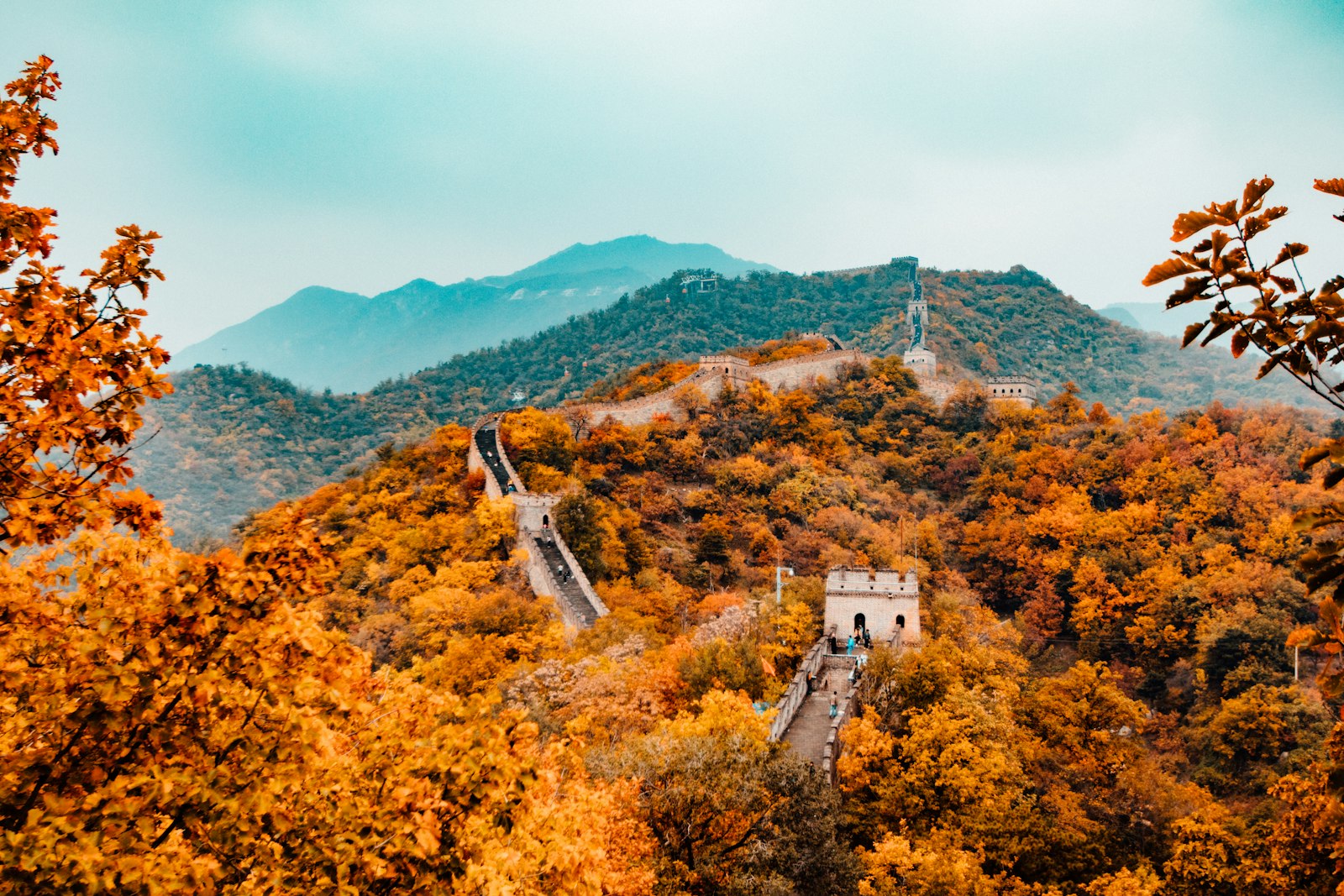
The cab driver laughed at me when I asked if he could wait while I visited the caves. “Three hours, maybe four,” I said, holding up fingers. He shook his head, pointed at the vast empty desert around us, and drove off. I stood there alone on the gravel lot, dust swirling around my ankles, the Gobi sun already hot on my neck. Behind me, the cliff face rose out of nowhere —hundreds of feet of tan sandstone pocked with dark openings, like a giant beehive carved by monks over a thousand years. A faint smell of dry earth and old wood drifted down. I had no cell signal, no ride back, and I didn’t care. I was about to walk into one of the most important collections of Buddhist art on earth.
The Mogao Caves, sometimes called the Caves of the Thousand Buddhas, are not a tourist attraction you casually add to a China itinerary. They are a pilgrimage —to human creativity, to cultural preservation, to the sheer audacity of carving 492 cave temples into a cliff in the middle of nowhere. For first-time international visitors, the logistics can be intimidating: remote location, strict tour rules, limited English resources. This guide covers exactly what you need to know —tickets, transport, which caves to prioritize, and the one mistake I made that you shouldn’t repeat.
Quick answer
The Mogao Caves are a UNESCO World Heritage site near Dunhuang in Gansu Province, requiring a full day from most itineraries. Entry costs about $30 (—20) for the standard tour, which includes 8-12 caves and a guided group. Book tickets online at least 3-7 days in advance during peak season (May-October). The nearest airport is Dunhuang Mogao International Airport, with flights from Beijing, Xi’an, and Lanzhou. No visa is needed for citizens of 54 countries under China’s 2024-2025 transit visa-free policy, but confirm your eligibility before booking.
The Short Version
If you only have 90 seconds: The Mogao Caves are worth the hassle of getting to Dunhuang. Book your cave tour ticket online at least a week ahead in summer. The standard tour is fine —you don’t need the expensive special ticket unless you’re a scholar. Bring water, a hat, and a translation app because English signage is minimal. The best caves are Cave 45 (Tang dynasty sculpture), Cave 96 (the giant Buddha), and Cave 17 (the Library Cave). Don’t skip the museum at the exit. And for god’s sake, don’t touch the murals.
How I Picked These
I’ve been to Dunhuang four times over seven years —first as a clueless tourist who showed up without a ticket (don’t do that), then with a Chinese archaeologist friend who got me into the restricted caves, and twice more just to sit in the desert and stare at the cliff. I’ve talked to the cave guardians, the museum curators, and the ladies selling apricots at the entrance. I’ve made every mistake a foreigner can make here: missed the last shuttle bus, forgot to pre-book, tried to take photos in the caves (you get yelled at). This guide is what I wish someone had handed me before my first visit.
Comparison Table: Key Dunhuang Sites
| Rank | Place | Best For | Approx Cost (USD) | Time Needed | When to Go |
|------|-------|----------|-------------------|-------------|------------|
| 1 | Mogao Caves (Standard Tour) | First-time visitors | $30 (—20) | 3-4 hours | Mar-May or Sep-Oct |
| 2 | Mogao Caves (Special Tour) | Art/archaeology enthusiasts | $90 (—50) | 4-5 hours | Same, book weeks ahead |
| 3 | Mogao Caves Museum | Context & replica caves | Free with ticket | 1-2 hours | Same as cave visit |
| 4 | Dunhuang Museum | City history & artifacts | Free | 1.5 hours | Morning, before caves |
| 5 | Echoing Sand Mountain | Desert sunset & camel rides | $20 (—40) | 2-3 hours | Late afternoon |
| 6 | Crescent Moon Spring | Iconic desert oasis photo | Included with above | 30 min | Sunset |
| 7 | Yumen Pass | Han dynasty frontier gate | $30 (—20) | 2 hours | Spring or fall |
| 8 | Shazhou Night Market | Street food & souvenirs | Free entry | 1-2 hours | Evening, 7-10pm |
| 9 | Dunhuang Ancient City | Movie set replica town | $10 (—0) | 1 hour | Skip unless you love film sets |
| 10 | Western Thousand Buddha Caves | Quieter alternative to Mogao | $20 (—40) | 1.5 hours | If Mogao is sold out |
1. Mogao Caves (Standard Tour) —The One You Actually Need
I remember standing in Cave 45, the guide’s flashlight cutting through the dark to illuminate a clay bodhisattva from the Tang dynasty. The face was serene, almost alive, the paint still holding traces of gold after 1,300 years. I forgot to breathe for a moment. That’s the thing about the standard tour —it only shows you 8 caves out of 492, but the ones they pick are the best.
The standard tour is the right choice for 90% of visitors. You get a guide (usually Chinese with basic English), a headset, and about 15 minutes per cave. The caves are dark —no natural light, no flash photography —so your eyes adjust slowly. You’ll see Cave 96 with its 35-meter Maitreya Buddha, Cave 17 where the Dunhuang manuscripts were discovered, and a handful of others that rotate based on conservation schedules. It’s enough.
📍 Location: 25 km southeast of Dunhuang city, Gansu Province. The site is in the middle of the Gobi Desert —nothing around it but sand and sky.
🎫 Entry fee: Standard tour $30 (—20). Special tour $90 (—50) for up to 12 caves plus restricted areas. Students with valid ID get half off.
🕒 Opening hours: 8:00 AM —6:00 PM (April-November), 9:00 AM —5:00 PM (December-March). Last entry is 90 minutes before close. Closed on some national holidays —check the official WeChat account.
🚇 How to get there: From Dunhuang city, take a taxi (about $8/—0, 30 minutes) or the direct shuttle bus from the Dunhuang Tourism Center (downtown, near the Silk Road Hotel). The shuttle runs every 30 minutes from 7:30 AM, costs $2 (—5), and drops you at the visitor center. From there, a free bus takes you to the cave entrance.
⏰When to visit: March-May or September-October. Summer (June-August) is brutally hot —40掳C (104掳F) —and packed with Chinese tour groups. Go on a weekday if possible. The first tour at 8:30 AM is the least crowded.
💡 Insider tips: Book your ticket on the official “莫高窟参观预约网” (Mogao Caves Reservation) website or WeChat mini-program at least a week ahead in summer. Bring a small flashlight —the guides’ lights are weak and you’ll want to see details. No photography inside, but you can take photos outside the caves. The museum at the exit has full-scale replica caves you can photograph freely. I once saw a tourist try to use flash inside Cave 96 —the guide stopped the tour and made them delete the photos. Don’t be that person.
I met an elderly cave guardian named Mr. Chen who has worked there for 22 years. He told me he still finds new details in the murals every week.
2. Mogao Caves (Special Tour) —For the Obsessed
If you’re the kind of person who reads academic papers about Buddhist iconography for fun, the special tour is worth the extra money. I did it on my third visit, and it was a completely different experience. Smaller groups (10 people max), longer time in each cave, and access to caves that are normally locked.
The special tour includes 12 caves instead of 8, plus the “protected” caves that aren’t on the standard rotation. You’ll see Cave 158 with its 16-meter reclining Buddha, Cave 61 with the massive mural of Mount Wutai, and sometimes Cave 3 with its Yuan dynasty mandalas. The guide speaks better English and can answer detailed questions. But honestly? The standard tour covers the highlights. Only upgrade if you’re genuinely fascinated by Buddhist art.
📍 Location: Same site as the standard tour. You check in at the same visitor center.
🎫 Entry fee: $90 (—50). Book 2-4 weeks ahead in peak season.
🕒 Opening hours: Same as standard tour, but specific time slots are limited. Usually 9:00 AM and 2:00 PM.
🚇 How to get there: Same as standard tour. Arrive 30 minutes early for check-in.
⏰When to visit: Weekdays in shoulder season. The special tour runs year-round but is canceled during extreme weather.
💡 Insider tips: Bring a notebook —you can take notes but not photos. Ask the guide about the conservation work —they’re usually happy to talk about it. The special tour ticket includes the standard museum entry, so don’t skip it. I made the mistake of not bringing a pen on my first special tour; I had to borrow one from a German art historian in my group.
3. Mogao Caves Museum —Don’t Skip This
Most tourists walk straight from the caves to the exit. That’s a mistake. The museum, located near the visitor center, contains three full-scale replica caves that you can photograph, touch (gently), and study without a guide rushing you along.
The replicas are painstakingly accurate —painted by the same conservation artists who work on the originals. Cave 285 replica is particularly good, with its ceiling covered in Buddhist and Hindu deities. The museum also has exhibits on the Silk Road history, the manuscript discovery, and the conservation techniques. It’s air-conditioned, which is a blessing in summer.
📍 Location: Inside the Mogao Caves complex, next to the visitor center.
🎫 Entry fee: Free with any cave tour ticket.
🕒 Opening hours: Same as the caves. Allow 1-2 hours.
🚇 How to get there: Walk from the cave exit toward the visitor center. It’s the large building on your left.
⏰When to visit: After your cave tour, before you take the shuttle back. Most people go at 11 AM or 2 PM.
💡 Insider tips: The replica caves are where you can actually take good photos. The lighting is better than the real caves. There’s a small gift shop with decent books in English. I bought a book on Dunhuang murals there for $15 (—00) —half the price of the same book on Amazon.
4. Dunhuang Museum —Free and Worth It
The city museum is small but excellent, especially for context before you visit the caves. It has a full chronology of Dunhuang from the Han dynasty through the Ming, with artifacts from the caves and the surrounding desert.
The highlight is the section on the Dunhuang manuscripts —the 50,000 documents discovered in Cave 17 that changed our understanding of medieval China. There are original fragments on display, including a 9th-century copy of the Diamond Sutra. English labels are limited, but the audio guide ($3/—0) is decent.
📍 Location: 1 Hongdang Road, downtown Dunhuang. About 10 minutes by taxi from the Silk Road Hotel area.
🎫 Entry fee: Free. Bring your passport for registration.
🕒 Opening hours: 9:00 AM —5:00 PM, closed Mondays.
🚇 How to get there: Walk from the city center (15 minutes) or take a short taxi ride ($2/—5).
⏰When to visit: Morning of the day before your cave visit. It helps you understand what you’re about to see.
💡 Insider tips: The museum has a small cafe with decent coffee —rare in Dunhuang. The gift shop sells postcards of the cave murals for $0.50 (—) each. I bought a set and mailed them from the post office next door.
5. Echoing Sand Mountain —Desert Sunset Ritual
The sand dunes right outside Dunhuang city are a surreal experience. The mountain gets its name from the sound the sand makes when the wind blows —a low hum that the locals say sounds like drums. I sat on the ridge at sunset, watching the dunes turn from gold to orange to purple, and understood why the Silk Road travelers thought this place was magical.
You can ride camels (about $15/—00 for 30 minutes), try sandboarding (fun but exhausting), or just climb the dunes. The climb is harder than it looks —you slide back half a step for every step forward. Bring water and wear closed shoes. The sand gets into everything.
📍 Location: 5 km south of Dunhuang city center. You can see the dunes from downtown.
🎫 Entry fee: $20 (—40). Camel rides and sandboarding are extra.
🕒 Opening hours: 6:00 AM —8:00 PM (summer), 7:00 AM —7:00 PM (winter).
🚇 How to get there: Taxi from city center ($3/—0, 10 minutes). Bus #3 from the main square also goes there.
⏰When to visit: Late afternoon, around 4 PM. The heat is brutal at midday. Stay for sunset.
💡 Insider tips: Bring a scarf or face mask —the sand gets in your nose and mouth. The camel handlers will try to charge you extra for photos. Negotiate beforehand. The best view is from the highest dune, about a 30-minute climb. I watched a Chinese wedding photoshoot there at sunset —the bride in red silk against the golden sand was unforgettable.
6. Crescent Moon Spring —The Oasis Photo Op
This is the iconic Dunhuang image: a crescent-shaped pool of water at the base of the sand dunes, surrounded by a small pagoda and willow trees. It’s beautiful, but it’s also a tourist trap. The spring is now artificially maintained —the water table dropped decades ago, so they pump water in to keep it from drying up.
Still, it’s worth the 10-minute walk from the Echoing Sand Mountain entrance. The contrast between the blue water and the yellow sand is striking. The best photo is from the dune above the spring, not from ground level.
📍 Location: Inside the Echoing Sand Mountain scenic area.
🎫 Entry fee: Included in the $20 (—40) mountain entry fee.
🕒 Opening hours: Same as the mountain.
🚇 How to get there: Walk from the mountain entrance, following the signs. About 10 minutes.
⏰When to visit: Sunset, for the golden light on the water.
💡 Insider tips: Don’t drink the water —it’s not natural spring water. The pagoda has a small exhibit on the history of the spring. The best photos are from the dune to the left of the spring, about 50 meters up. I learned this after taking 20 mediocre photos from ground level.
7. Yumen Pass —The Edge of the Empire
This Han dynasty frontier gate is about 90 km northwest of Dunhuang, and it feels like the end of the world. The gate itself is a crumbling adobe arch in the middle of the Gobi Desert, with nothing but gravel and sky in every direction. This was the last Chinese outpost on the Silk Road —beyond it lay the Taklamakan Desert and Central Asia.
The site is stark and powerful. There’s a small museum with artifacts from the Han dynasty, including wooden slips with writing that soldiers left behind. The wind never stops blowing. I stood at the gate and tried to imagine what it felt like for a merchant leaving China for the last time.
📍 Location: 90 km northwest of Dunhuang. About 1.5 hours by car.
🎫 Entry fee: $30 (—20). Includes the museum.
🕒 Opening hours: 8:00 AM —6:00 PM (summer), 9:00 AM —5:00 PM (winter).
🚇 How to get there: Hire a taxi for the day (about $60/—00) or join a tour from Dunhuang. There’s no public transport.
⏰When to visit: Spring or fall. Summer is unbearably hot, winter is freezing.
💡 Insider tips: Bring your own food and water —there’s nothing nearby. The road is straight and empty —the drive itself is part of the experience. I had my taxi driver stop in the middle of the road so I could take a photo of the desert stretching to the horizon.
8. Shazhou Night Market —Street Food Central
This is where Dunhuang comes alive after dark. The market runs along a pedestrian street in the old city, with stalls selling everything from grilled lamb skewers to hand-pulled noodles to dried apricots. The air smells like cumin, smoke, and sweet melon.
The food is good, but the quality varies. Stick to the stalls that are busy with locals. The grilled lamb skewers (about $0.50/— each) are excellent. The “Silk Road” mixed plate is a tourist trap —overpriced and mediocre. Try the apricot peel tea —it’s sweet, tangy, and refreshing.
📍 Location: Shazhou South Road, downtown Dunhuang. Walkable from most hotels.
🎫 Entry fee: Free. Food costs $3-10 (—0-70) per person.
🕒 Opening hours: 6:00 PM —midnight. Peak time is 8-10 PM.
🚇 How to get there: Walk from the city center. It’s the street with all the red lanterns.
⏰When to visit: Any evening. Weekends are busier but more lively.
💡 Insider tips: Bring cash —some small stalls don’t take WeChat Pay. The souvenir stalls sell the same stuff as everywhere else in China —don’t buy the “antique” Silk Road coins. The dried apricots are a good gift to bring home. I bought a kilo for $5 (—) and regretted not buying more.
9. Dunhuang Ancient City —Movie Set Replica
This is a film set built in the 1980s for Chinese historical dramas, now open to tourists. It’s a replica of a Tang dynasty city, complete with city walls, temples, and market streets. It’s kitschy and artificial, but if you’ve ever wanted to walk through a Chinese period drama, this is your chance.
The problem is that it’s not very well maintained, and the “ancient” buildings are clearly concrete painted to look old. The best part is the view from the city wall —you can see the real desert stretching away on all sides.
📍 Location: 15 km west of Dunhuang city.
🎫 Entry fee: $10 (—0).
🕒 Opening hours: 8:00 AM —6:00 PM.
🚇 How to get there: Taxi ($5/—0, 20 minutes). No public transport.
⏰When to visit: Morning, before the heat. An hour is enough.
💡 Insider tips: Skip this unless you’re a film buff or have extra time. The costumes for rent are cheap ($3/—0) and make for fun photos. I saw a group of Korean tourists doing a full photo shoot in Tang dynasty robes —they looked ridiculous and happy.
10. Western Thousand Buddha Caves —The Quiet Alternative
About 35 km west of Dunhuang, these caves are smaller and less visited than Mogao. There are only 16 caves, and the murals are less well-preserved, but you get a more intimate experience. No crowds, no timed tickets, no rushing.
The caves date from the Northern Wei to the Tang dynasties, and the murals show a different artistic style —more Central Asian influence, less Chinese. The site is run by a single guardian who lives in a small house nearby. He opened the caves for me with an old iron key and let me stay as long as I wanted.
📍 Location: 35 km west of Dunhuang, near the road to Yumen Pass.
🎫 Entry fee: $20 (—40).
🕒 Opening hours: 9:00 AM —5:00 PM. Call ahead —the guardian sometimes closes early.
🚇 How to get there: Taxi from Dunhuang ($15/—00, 40 minutes). Combine with a trip to Yumen Pass.
⏰When to visit: Any time. Weekdays are empty.
💡 Insider tips: Bring cash —no card or mobile payment. The guardian speaks no English but is very kind. I communicated with hand gestures and a translation app. The caves are not as well-lit as Mogao —bring a strong flashlight.
FAQ summary
The Mogao Caves are the primary attraction in Dunhuang, requiring advance booking (3-7 days in peak season) and a full day. The standard tour ($30/—20) covers 8 caves and is sufficient for most visitors. The best time to visit is March-May or September-October to avoid extreme heat and crowds. Dunhuang is accessible by flight from major Chinese cities, and no visa is needed for citizens of 54 countries under China’s transit visa-free policy. Bring a translation app, cash for small purchases, and a flashlight for better cave viewing.
FAQ
Q: Do I need a visa to visit Dunhuang?
A: Citizens of 54 countries, including the US, UK, Canada, Australia, and most of Europe, can enter China visa-free for up to 144 hours if transiting through certain cities. For Dunhuang, you typically need a full tourist visa (L visa) unless you’re entering through Xi’an or Chengdu under the transit policy. Check the latest rules on the Chinese embassy website before booking.
Q: How do I book tickets for the Mogao Caves?
A: Book online through the official “莫高窟参观预约网” website or WeChat mini-program. Standard tour tickets cost $30 (—20). In peak season (May-October), book at least 3-7 days ahead. In summer, tickets can sell out 2 weeks in advance. You’ll need your passport number to book.
Q: Can I take photos inside the caves?
A: No. Photography is strictly prohibited inside all caves. The flash damages the murals. You can take photos outside the caves and in the replica caves at the museum. Guards will stop you and may ask you to delete photos.
Q: Is English widely spoken at the caves?
A: Limited. The guides speak basic English, but signage is mostly in Chinese. Download a translation app (Pleco or Google Translate) before you go. The museum has some English labels. In Dunhuang city, English is rare outside hotels and the night market.
Q: What should I bring to the Mogao Caves?
A: Water (at least 1 liter), a hat, sunscreen, comfortable walking shoes, a small flashlight, and cash for the gift shop. No large bags allowed inside the caves —there are lockers at the visitor center. In summer, bring a face mask for the dust.
Q: How do I get to Dunhuang from Beijing or Xi’an?
A: Fly. Dunhuang Mogao International Airport has direct flights from Beijing (3 hours, $150-250/—000-1800), Xi’an (2 hours, $100-180/—00-1300), and Lanzhou (1.5 hours, $80-120/—00-900). There’s also a high-speed train from Lanzhou (8 hours, $60/—00), but it’s not worth the time.
Q: Do I need a VPN for my phone in Dunhuang?
A: Yes. China blocks Google, WhatsApp, Instagram, and many other sites. Install a reliable VPN (like ExpressVPN or Astrill) on your phone before you leave home. Buy a Chinese SIM card at the airport or use an eSIM (Airalo works well). WeChat Pay and Alipay are essential for payments —set them up before your trip.
The Honest Wrap-up
The Mogao Caves are not a casual stop. Getting to Dunhuang takes time and money, the desert is harsh, and the caves themselves are a logistical puzzle. But standing in that dark cave, watching a flashlight reveal a thousand-year-old Buddha with paint still clinging to its cheek, I understood why people have been making this pilgrimage for centuries. This list is for the traveler who wants more than a selfie —who wants to stand in a place where history is still alive, fragile and fading. If that sounds like you, book the flight, pre-order the ticket, and bring a good flashlight. You won’t regret it. If you just want a quick cultural checkbox, stick to the museums in Beijing. The desert doesn’t do shortcuts.
Related Guides
Looking for more China travel guides? These match your topic:
- Best Time to See Cherry Blossoms in China 2026
- Best Time to Visit China: Month-by-Month Guide
- China Etiquette: Cultural Do’s and Don’ts for Foreigners: The Complete 2026 G…
- China Golden Week Travel Survival Guide
- China Group Tours vs Independent Travel Which is Better
- China Itinerary Planning: 7-Day 14-Day and 21-Day Routes: The Complete 2026 G…
Topics
More guides you may like
Best Time to See Cherry Blossoms in China 2026
Best Time to See Cherry Blossoms in China: 2026 guide covers current prices, transport, payment apps, and what foreign visitors need to know.
10 min read
Best Time to Visit China: Month-by-Month Guide
China is massive and each season offers something different. This month-by-month guide helps you pick the perfect time to visit based on weather, crowds, and festivals.
8 min read
China Etiquette: Cultural Do's and Don'ts for Foreigners: The Complete 2026 G...
China has unique social customs that can confuse first-time visitors. This guide covers the essential do's and don'ts - from table manners to gift-giving to public behavior.
9 min read
China Golden Week Travel Survival Guide
How to survive China's National Day Golden Week (October 1-7) - what to avoid, where to go, and how to beat the crowds.
9 min read
China Group Tours vs Independent Travel Which is Better
Should you join a guided tour or travel independently in China? Honest comparison of cost, flexibility, and experience.
7 min read
China Itinerary Planning: 7-Day 14-Day and 21-Day Routes: The Complete 2026 G...
Not sure how many days to spend in China? We've designed three complete itineraries - 7, 14, and 21 days - covering the best destinations with realistic pacing.
9 min read