
China Solo Female Travel Safety Complete Guide: The Complete 2026 Guide
The first time I landed in Beijing, I was so nervous I nearly missed the baggage claim. I remember standing in the immigration line.
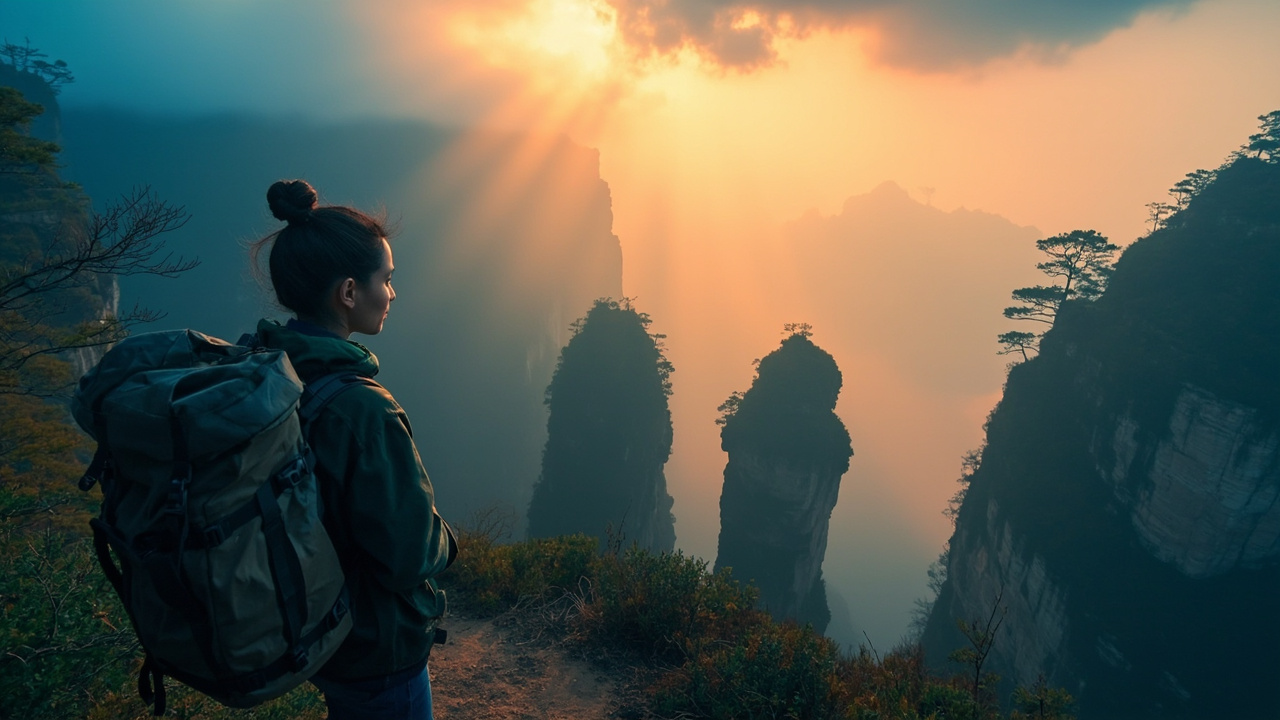
The first time I landed in Beijing, I was so nervous I nearly missed the baggage claim. I remember standing in the immigration line, clutching a printed hotel confirmation like it was a life raft, and watching a Chinese grandmother ahead of me calmly knit a scarf while waiting. That image stuck with me. Here I was, convinced this vast country would be some kind of obstacle course, and she was just… knitting. Seven years later, I’ve traveled through China more than forty times, mostly solo, and I can tell you this: the fear is the biggest obstacle you’ll face.
This guide isn’t about scaring you with worst-case scenarios. It’s the opposite. It’s about the practical, specific, and sometimes weird things I’ve learned the hard way so you don’t have to. We’re talking about which apps to download before you land, how to navigate a train station when you can’t read a single character, and why you should never, ever trust the “taxi” that approaches you inside the arrivals hall.
By the end of this, you’ll know exactly what to pack, how to pay for a street-side dumpling, and why China is arguably one of the safest places on earth for a woman traveling alone. Let’s get you ready for the trip of a lifetime.
Quick answer
Yes, China is generally very safe for solo female travelers, with violent crime rates significantly lower than in most Western countries. As of 2026, citizens of 54 countries including the US, UK, Australia, and most of Europe can enter China visa-free for up to 30 days for tourism, business, or transit. The biggest challenges aren’t safety but practicalities: you’ll need WeChat Pay or Alipay set up before you arrive, a VPN installed on your phone, and a translation app that works offline.
The Short Version
If you have 90 seconds, here’s the deal: China is safe, but it’s a different digital universe. Set up Alipay and WeChat Pay before you fly, download a VPN (Astrill or LetsVPN work best), and get a translation app like Pleco or Google Translate with offline packs. Violent crime against tourists is rare. The biggest risks are petty scams, pickpocketing in crowded tourist spots, and getting hopelessly lost because Google Maps doesn’t work. Trust your gut, dress modestly (shoulders covered, knees covered), and you’ll be fine. Also, learn to say “b霉 h菑o y矛si” (I’m sorry) and “xi猫xie” (thank you). It opens doors.
How I Picked These
I’ve spent the better part of a decade crisscrossing this country, from the neon chaos of Shenzhen to the silent monasteries of Tibet’s borderlands. I’ve been robbed (once, in Shanghai, my own fault), scammed (twice, both in Beijing), and rescued by strangers more times than I can count. This guide is built on those experiences, plus conversations with dozens of local women, hostel receptionists, and taxi drivers who’ve seen it all. I’ve also cross-checked everything with current 2026 regulations, visa policies, and transport updates, because China changes fast. What worked in 2023 might not work now.
Comparison Table
| Rank | Place | Best For | Approx Cost (USD) | Time Needed | When to Go |
|---|---|---|---|---|---|
| 1 | Beijing | First-timers, history, food | $50-80/day | 4-5 days | Apr-May, Sep-Oct |
| 2 | Shanghai | Modern China, nightlife, ease | $60-100/day | 3-4 days | Mar-May, Oct-Nov |
| 3 | Xi’an | Terracotta Warriors, history | $40-60/day | 2-3 days | Mar-May, Sep-Oct |
| 4 | Chengdu | Pandas, food, relaxed vibe | $35-55/day | 3 days | Mar-Jun, Sep-Nov |
| 5 | Guilin/Yangshuo | Scenery, outdoor activities | $30-50/day | 3-4 days | Apr-Oct |
| 6 | Zhangjiajie | Avatar mountains, hiking | $40-60/day | 3 days | Apr-Jun, Sep-Nov |
| 7 | Hangzhou | West Lake, tea, day trips | $45-70/day | 2-3 days | Mar-May, Sep-Oct |
| 8 | Yunnan (Dali/Lijiang) | Culture, mountains, slow travel | $30-50/day | 5-7 days | Mar-May, Sep-Nov |
| 9 | Hong Kong | City energy, food, shopping | $80-120/day | 3-4 days | Oct-Dec |
| 10 | Tibet (Lhasa) | Spiritual, once-in-a-lifetime | $80-120/day | 5-7 days | Apr-Oct |
1. Beijing ?The Grand Entrance
I remember standing in Tiananmen Square at 5:30 AM, watching the flag-raising ceremony with a crowd of hundreds, all of us silent in the cold dawn. A security guard noticed my shivering and motioned for me to stand closer to the heater vent. He didn’t speak English. I didn’t speak Mandarin. But we both understood.
Beijing is where you’ll get your bearings. It’s massive, sprawling, and at first overwhelming, but it’s also the most forgiving city for a first-timer. The subway is a masterclass in efficiency, with English signage everywhere. The Forbidden City is a must, but go on a weekday, arrive at opening time (8:30 AM), and head straight to the back gardens before the tour groups flood in.
Location: Central Beijing, primarily Dongcheng and Xicheng districts Entry fee: Forbidden City $8 (CNY 60), Great Wall at Mutianyu $6 (CNY 45), Temple of Heaven $5 (CNY 30). Many parks are free. Opening hours: Most attractions 8:30 AM-5:00 PM, closed Mondays (Forbidden City, National Museum). Check ahead. Getting there: Take Subway Line 1 to Tiananmen East or West Station. For the Great Wall, take Line 2 to Dongzhimen, then Bus 916 to Huairou, then a shuttle. Or book a day tour. ?When to visit: April-May or September-October for pleasant weather. Avoid Golden Week (Oct 1-7) and Chinese New Year.
Insider tips: Bring your passport everywhere; you’ll need it for some ticket purchases. The hutong alleys around Houhai are more interesting than the touristy ones near Nanluoguxiang. Try jianbing (savory crepe) from a street cart for breakfast, it’s the best $1 you’ll spend. Learn to use Didi (China’s Uber) before you arrive; it’s cheaper than taxis and you can set your destination in English.
I got hopelessly lost in the hutongs one afternoon and an elderly man walked me twenty minutes out of his way to find my hostel. He refused the tea I offered, just smiled and waved. That’s Beijing for you.
2. Shanghai ?The Glittering Gateway
The first time I saw the Pudong skyline at night, I actually laughed out loud. It’s so aggressively futuristic, so deliberately impressive, that it feels like a movie set. But Shanghai’s real charm is in the French Concession, where plane trees line narrow streets and art deco buildings hide speakeasies and tiny noodle shops.
Shanghai is the easiest city in China for a solo female traveler. English is widely spoken in tourist areas, the metro is immaculate, and the city feels safer than most European capitals at 2 AM. I’ve walked back to my hotel alone at midnight more times than I can count and never felt threatened. The Bund is gorgeous but crowded; go at sunrise instead, when the light hits the buildings just right.
Location: Central Shanghai, especially Former French Concession, Jing’an, Xuhui Entry fee: The Bund (free), Shanghai Museum (free), Yu Garden $5 (CNY 40), Shanghai Tower observation deck $25 (CNY 180) Opening hours: Most museums 9 AM-5 PM, closed Mondays. The Bund is always open. Getting there: Metro Line 2 connects Pudong Airport to the city center. For the Bund, take Line 2 or 10 to Nanjing East Road, Exit 1, walk east 10 minutes. ?When to visit: March-May or October-November. Summer is hot and humid; winter is damp and cold.
Insider tips: Download MetroMetro app for offline subway maps. The “hidden” bars in the French Concession are fun but pricey; try a local “beer garden” instead for $2 beers. Don’t bother with the tourist “acrobatics show”; go to a local comedy club or jazz bar instead. For a great view without the tourist crowds, head to the bar at the top of the Fairmont Peace Hotel, order a drink, and watch the Bund light up.
I once lost my wallet on the metro in Shanghai, and a young woman chased me down three stations to return it, completely intact. I tried to give her money. She looked almost offended and just said “b霉 k猫q矛” (you’re welcome) and walked away.
3. Xi’an ?Where History Bites Back
The Terracotta Warriors are genuinely awe-inspiring, but here’s the thing: the site is a tourist circus. You’ll be shuffled through like cattle, and the real magic is in the details, the individual faces of the soldiers, the bronze chariots, the sheer scale of it all. Go early, hire a guide at the entrance (about $20 for two hours), and ask them to show you the “unexcavated” pits where you can see the earth still covering the warriors.
Xi’an is also the food capital of China, and I will fight anyone who disagrees. The Muslim Quarter is a sensory overload of sizzling lamb skewers, hand-pulled noodles, and pomegranate juice. It’s chaotic but safe, and the vendors are used to foreigners. Just be careful of your phone in the crowds.
Location: Xi’an city center, especially around the Bell Tower and Muslim Quarter Entry fee: Terracotta Warriors $18 (CNY 120), City Wall $7 (CNY 54), Big Wild Goose Pagoda $7 (CNY 50) Opening hours: Terracotta Warriors 8:30 AM-5:30 PM (last entry 5 PM). City Wall 8 AM-10 PM. Getting there: From Xi’an North Station, take Metro Line 2 to Bell Tower Station. For Terracotta Warriors, take Metro Line 9 to Huaqing Pool, then a shuttle bus (about 20 minutes). ?When to visit: March-May or September-October. Summers are brutally hot; winters are cold and dry.
Insider tips: The Muslim Quarter is best at night, but go hungry. Try the “biang biang” noodles, they’re a local specialty. The City Wall is best at sunset; rent a bike and ride the full 14 kilometers. Skip the Tang Dynasty show; it’s touristy. Instead, find a local tea house and try the “guofeng” (national style) tea ceremony. Learn to say “b霉 l脿” (not spicy) if you can’t handle heat, because Xi’an food is seriously spicy.
I got food poisoning from a street stall in the Muslim Quarter (my own fault, I was too adventurous). The owner of the hostel I was staying at made me ginger tea and refused to let me pay for it. “You’re a guest,” she said, in broken English. “We take care of guests.”
4. Chengdu ?The Slow Lane
Chengdu is the city that taught me to slow down. The pace of life here is noticeably different, people linger over tea, play mahjong in parks, and seem genuinely unhurried. I spent an entire afternoon in a tea house in People’s Park, watching old men play chess and young couples take selfies, and it was one of the best afternoons of my life.
The pandas at the Chengdu Research Base are the main draw, and they’re worth it. Go at 8 AM when they’re most active, before they fall asleep from eating bamboo. The base is well-organized, and you can see the babies in the nursery if you’re lucky. It’s a five-hour visit max, which leaves plenty of time for the city’s real attraction: the food.
Location: Chengdu city center, especially around Chunxi Road and the Wenshu Monastery area Entry fee: Panda Base $7 (CNY 55), Wenshu Monastery (free), People’s Park (free) Opening hours: Panda Base 7:30 AM-6 PM (last entry 5 PM). Tea houses open from 9 AM to late. Getting there: From Chengdu East Station, take Metro Line 2 to Chunxi Road. For the Panda Base, take Metro Line 3 to Panda Avenue, then a free shuttle bus. ?When to visit: March-June or September-November. The pandas are most active in the morning, so go early.
Insider tips: Chengdu is the home of Sichuan hotpot, and it’s a social experience, not just a meal. Go with a local if you can, or just dive in. The “face-changing” opera performance is surprisingly good, not just a tourist trap. Try the “dan dan” noodles and “mapo tofu” at local spots, not the fancy restaurants. The tea houses in People’s Park are where you’ll see the real Chengdu, so bring a book and stay a while.
I met a woman named Li at a tea house who was on her lunch break. She insisted on teaching me how to play mahjong, and we spent two hours laughing at my terrible skills. She gave me her WeChat and we still message each other occasionally.
5. Guilin and Yangshuo ?The Postcard
I’ve seen a lot of landscapes in China, but the karst mountains of Guilin and Yangshuo still make me stop and stare. It’s the kind of scenery that looks Photoshopped, misty peaks rising from rice paddies, bamboo rafts drifting down the Li River, and water buffalo plodding along the banks.
Yangshuo is the backpacker hub, and it’s a great base for exploring. Rent a bicycle and ride through the countryside, it’s flat, easy, and the scenery is unreal. The “Impression Liu Sanjie” show is a bit pricey ($40), but it’s a genuinely spectacular outdoor performance with hundreds of performers and real mountains as the backdrop.
Location: Yangshuo town center, Guilin city, and the Li River corridor Entry fee: Li River cruise $30-50 depending on length, Yangshuo countryside (free), Silver Cave $15 (CNY 100) Opening hours: Most attractions 8 AM-6 PM. The Li River cruises run from 9 AM-2 PM. Getting there: Fly into Guilin Liangjiang International Airport, then take a high-speed train to Yangshuo (about 30 minutes). From the station, take a taxi or shuttle to town. ?When to visit: April-October. The best time is September-October when the rice paddies are golden.
Insider tips: Skip the “West Street” in Yangshuo; it’s a tourist trap. Instead, head to the quieter villages like Xingping, where you can take a bamboo raft ride for a fraction of the price. The “Yulong River” rafting is more peaceful than the Li River. Rent a scooter (about $10/day) to explore the countryside, but wear a helmet and be careful on the roads. The local beer, “Guilin Sanhua,” is surprisingly good.
I took a wrong turn on my bike and ended up in a tiny village where a grandmother invited me into her home for tea. She showed me photos of her grandchildren, and we communicated entirely through gestures and smiles. It was one of the most genuine moments of my travels.
6. Zhangjiajie ?The Avatar Mountains
Zhangjiajie is where the floating mountains from Avatar were inspired, and honestly, the movie doesn’t do it justice. The sandstone pillars rise hundreds of meters from the forest floor, often shrouded in mist, and the glass-bottomed bridge over the canyon is not for the faint of heart. I’m not ashamed to admit I crawled across a section of it.
The national park is massive, so plan at least two full days. The cable cars are a must, but they get busy, so go early or late. The “Bailong Elevator” is a glass elevator built into the cliff face, and it’s a surreal experience, but the queues can be brutal.
Location: Zhangjiajie National Forest Park, Wulingyuan District Entry fee: Park admission $30 (CNY 225), valid for 4 days. Cable cars $15-20 extra. Opening hours: 6:30 AM-6 PM (summer), 7:30 AM-5 PM (winter) Getting there: Fly into Zhangjiajie Hehua Airport, then take a shuttle bus to Wulingyuan (about 30 minutes). The park has multiple entrances; the Wulingyuan entrance is the most convenient. ?When to visit: April-June and September-November. Avoid Chinese holidays; the park gets packed.
Insider tips: The “Golden Whip Stream” trail is a flat, easy walk that avoids the crowds. The “Yuanjiajie” area is where you’ll find the Avatar Hallelujah Mountain, but go at 7 AM to beat the tour groups. The “Tianmen Mountain” cable car is the longest in the world, and the glass walkway is terrifying but worth it. Bring a rain jacket; the weather changes fast.
I got caught in a sudden downpour on the mountain and took shelter in a small pavilion with a group of Chinese tourists. We shared snacks and laughed at our soaked clothes. One of them, a young woman named Wang, insisted on taking a selfie with me. “Foreign friend!” she said, grinning.
7. Hangzhou ?The Gentle Beauty
Hangzhou is what Chinese poets have been writing about for a thousand years. West Lake is the centerpiece, a serene expanse of water surrounded by willow trees, pagodas, and causeways. It’s beautiful, but it’s also busy, so go at sunrise or on a weekday to avoid the crowds.
The real magic of Hangzhou is in the surrounding hills, where the Longjing tea plantations stretch out in neat green rows. I spent a morning walking through the tea fields, stopping at a farmhouse where a family offered me a cup of freshly brewed Longjing tea. It was the best tea I’ve ever had, and I’ve never been able to replicate it since.
Location: West Lake area, Longjing Village, and the surrounding hills Entry fee: West Lake (free), Lingyin Temple $6 (CNY 45), tea picking experiences $20-30 Opening hours: West Lake is always open. Temples typically 7 AM-5 PM. Getting there: From Hangzhou East Station, take Metro Line 1 to Longxiangqiao Station, then walk 10 minutes to the lake. For Longjing Village, take a taxi or bus 27. ?When to visit: March-May for spring blossoms, September-October for autumn colors. Avoid summer weekends.
Insider tips: Rent a boat on West Lake at sunset; it’s the best way to see the pagodas. The “Impression West Lake” show is a bit touristy but visually stunning. For a quiet escape, walk the “Su Causeway” early in the morning. The Longjing tea fields are free to walk through, but the “tea picking” experiences are a tourist trap; just buy the tea from a local farmhouse instead. Try “Dongpo pork” at a local restaurant; it’s a Hangzhou specialty.
I met an elderly man named Mr. Chen at a tea farm who had been picking tea for sixty years. He showed me his hands, calloused and stained green from decades of work. “Tea is life,” he said, through a translator app. I believed him.
8. Yunnan ?The Wild West
Yunnan is my favorite province in China, and it’s not even close. It’s a patchwork of cultures, landscapes, and climates, from the snow-capped mountains of Shangri-La to the tropical jungles of Xishuangbanna. Dali and Lijiang are the main tourist hubs, and they’re beautiful, but they can feel like theme parks. The real Yunnan is in the smaller towns and villages.
I spent a week in Dali, renting a scooter and exploring the countryside around Erhai Lake. I found a village called Xizhou, known for its traditional Bai architecture, and spent an afternoon wandering the alleys and chatting with a local woman who ran a small guesthouse. She told me about her life, her family, and her plans to open a second guesthouse. It was a reminder that behind the tourist facade, there are real people living real lives.
Location: Dali Old Town, Lijiang Old Town, Erhai Lake, Shangri-La Entry fee: Dali Old Town (free), Lijiang Old Town $6 (CNY 50), Erhai Lake (free), Tiger Leaping Gorge $7 (CNY 50) Opening hours: Most attractions 8 AM-6 PM. Lijiang Old Town is always open. Getting there: Fly into Kunming, then take a high-speed train to Dali (about 2 hours) or Lijiang (about 3 hours). From the station, take a taxi to the old town. ?When to visit: March-May and September-November. The weather is mild year-round, but summer can be rainy.
Insider tips: Lijiang is crowded and touristy; skip it if you’re short on time. Dali is more relaxed, but the “old town” is still full of souvenir shops. Head to the lakeside villages instead. The “Tiger Leaping Gorge” hike is one of the best in China, but it’s challenging; do it in two days. The “Bai” minority culture in Dali is fascinating; look for the traditional “three-course tea” ceremony. Try “crossing the bridge noodles” (guo qiao mi xian) in Kunming; it’s a local specialty.
I met a young woman named Xiao in a Dali cafe who was traveling solo from Shanghai. We ended up spending three days together, exploring the countryside and sharing stories. She told me that she’d been nervous about traveling alone in Yunnan, but that it had been the best decision she’d ever made. “You learn who you are,” she said.
9. Hong Kong ?The Electric City
Hong Kong is a different animal entirely. It’s not really “China” in the way the mainland is; it’s a former British colony with its own energy, its own rules, and its own pace. The skyline is iconic, the food is incredible, and the shopping is relentless. But it’s also expensive, crowded, and can be overwhelming.
I love Hong Kong, but I always need a break from it. The best thing to do is escape to the outlying islands, like Lamma or Cheung Chau, where you can hike, swim, and eat fresh seafood without the chaos. The “Victoria Peak” tram is a must, but go at sunset to see the city light up.
Location: Central, Tsim Sha Tsui, and the outlying islands Entry fee: Victoria Peak Tram $8 (CNY 60) one-way, Star Ferry $0.50 (CNY 4), most museums free on Wednesdays Opening hours: Most attractions 10 AM-8 PM. The Peak Tram runs until 11 PM. Getting there: Fly into Hong Kong International Airport, then take the Airport Express train to Central (about 24 minutes). The MTR metro system is excellent. ?When to visit: October-December for pleasant weather. Avoid summer (hot and humid) and Chinese New Year (crowded).
Insider tips: The “Star Ferry” across Victoria Harbour is the best value in Hong Kong; it costs less than a dollar and offers stunning views. The “Ding Ding” trams on Hong Kong Island are a fun, cheap way to see the city. For the best dim sum, go to a local “cha chaan teng” (tea restaurant) rather than a fancy place. The “Ladies Market” in Mong Kok is a tourist trap; skip it. Instead, explore the “Sham Shui Po” neighborhood for a more authentic experience.
I got lost in the “Chungking Mansions” in Tsim Sha Tsui, a notoriously chaotic building full of guesthouses and shops. A Nigerian man who ran a phone shop helped me find my way out. “First time?” he asked, laughing. “You’ll be fine. Just don’t look lost.”
10. Tibet ?The Roof of the World
Tibet is not a place you visit; it’s a place that visits you. The altitude (3,650 meters in Lhasa) hits you like a wall, and the first day is a blur of headaches and shortness of breath. But then you adjust, and you see the Potala Palace at sunrise, and you understand why people make this pilgrimage.
Tibet is the most challenging destination on this list, both logistically and emotionally. You need a special permit, which means booking through a tour agency, and you can’t travel independently. But it’s worth it. The monasteries, the prayer flags, the vast emptiness of the plateau, it’s unlike anywhere else on earth.
Location: Lhasa, Shigatse, and the surrounding highlands Entry fee: Potala Palace $12 (CNY 80), Jokhang Temple $10 (CNY 70), Sera Monastery $7 (CNY 50) Opening hours: Most monasteries 9 AM-5 PM. The Potala Palace requires a timed entry ticket. Getting there: Fly into Lhasa Gonggar Airport, or take the Qinghai-Tibet Railway from Xining (about 22 hours). You must have a permit and a guide. ?When to visit: April-October. The best time is May-June and September-October for clear skies.
Insider tips: Acclimatize in Lhasa for at least two days before doing any strenuous activity. Drink plenty of water and avoid alcohol. The “Sera Monastery” debate is a unique experience; the monks argue about Buddhist philosophy in a lively, theatrical way. The “Barkhor” circuit around the Jokhang Temple is a pilgrimage route; walk it clockwise with the locals. Don’t take photos of monks without asking; it’s considered disrespectful.
I sat in the Jokhang Temple courtyard one afternoon, watching pilgrims prostrate themselves on the worn stones. A young monk, maybe 15 years old, sat down next to me and offered me a piece of candy. We didn’t speak the same language, but we shared a moment of quiet understanding. I’ve never forgotten it.
FAQ summary
China is generally very safe for solo female travelers, with the main challenges being digital (VPN, payment apps) rather than physical safety. As of 2026, citizens of 54 countries can visit visa-free for up to 30 days. The most important preparation steps are setting up Alipay and WeChat Pay before arrival, installing a VPN, and downloading offline translation apps. Violent crime against tourists is extremely rare, but petty theft and scams exist in tourist areas. Dress modestly, trust your instincts, and you’ll have an amazing trip.
FAQ
Q: Is China safe for a woman traveling alone? A: Yes, China is one of the safest countries I’ve traveled in. Violent crime against tourists is extremely rare, and the country has a very visible police presence in tourist areas. The main risks are petty theft in crowded places and scams targeting foreigners.
Q: Do I need a visa to visit China in 2026? A: Citizens of 54 countries, including the US, UK, Australia, Canada, and most of Europe, can enter China visa-free for up to 30 days for tourism, business, or transit. This policy is currently set to run through the end of 2026. Check with your local Chinese embassy for the latest updates.
Q: How do I pay for things in China? A: Cash is increasingly rare in China. You’ll need WeChat Pay or Alipay, which you can set up before you arrive by linking your international credit card. Both apps have English interfaces. Some places, especially street vendors, only accept these apps, so don’t rely on cash.
Q: Will I be able to use Google Maps and WhatsApp in China? A: No. Google, Facebook, Instagram, and WhatsApp are blocked in China. You’ll need to install a VPN (I recommend Astrill or LetsVPN) before you arrive. For maps, use Apple Maps (which works with Chinese data) or download Amap (Gaode) with English support.
Q: Is it safe to eat street food in China? A: Generally, yes, but use your judgment. Look for stalls with high turnover, where food is cooked fresh and hot. Avoid anything that’s been sitting out for a while. I’ve had some amazing street food in China, and only one case of food poisoning (my own fault).
Q: What should I wear in China to be respectful? A: China is quite relaxed, but modest dress is appreciated, especially in rural areas and religious sites. Cover your shoulders and knees when visiting temples. In big cities like Beijing and Shanghai, you can wear whatever you’d wear in any Western city.
Q: Is it easy to get around China as a solo traveler? A: Yes, the high-speed rail network is excellent, and the metro systems in major cities are world-class with English signage. Book train tickets on Trip.com (which has an English interface) or through the official 12306 app with a translator. Taxis are cheap, but Didi (China’s Uber) is easier and less stressful.
The Honest Wrap-up
This guide is for the woman who’s been dreaming of China but has been held back by fear. It’s for the one who’s read the scary headlines and wondered if she can do it alone. You can. I did, and I’ve watched countless other women do the same. China will challenge you, surprise you, and occasionally frustrate you, but it will also show you a world you never knew existed.
My final advice? Book the flight. Don’t overthink it. Pack light, download the apps, and trust that you’re more capable than you think. The worst that can happen is you get lost, eat something weird, and have a story to tell. The best that can happen? You’ll discover a version of yourself you didn’t know was there. Safe travels, and don’t forget to look up from your phone sometimes. The real China is waiting.
Topics
More guides you may like
Top 10 Bridges in China
China's bridges are engineering marvels spanning mountains, rivers, and seas. Here are 10 of the most spectacular, from ancient stone to modern steel.
8 min read

Top 10 Buddhist Sites in China
From the Leshan Giant Buddha to the Dunhuang Caves, these 10 Buddhist sites represent 2,000 years of China's spiritual heritage.
9 min read
Top 10 Day Trips from Beijing You Shouldn't Miss
Beijing is packed with history, but some of China's best experiences are just a few hours away. Here are 10 day trips that will transform your visit.
9 min read
Top 10 Hidden Gems in China Off the Beaten Path
Beyond the Great Wall and Terracotta Warriors, China has incredible hidden destinations few tourists ever reach. Here are 10 underrated gems worth the detour.
9 min read
Top 10 Markets and Shopping Streets in China
From Shanghai's Bund to Beijing's Silk Street - 10 markets where foreigners can haggle, explore, and bring home authentic Chinese goods.
9 min read
Top 10 Museums in China You Shouldn't Miss
China's museums span 5,000 years of civilization. These 10 - from the Palace Museum to Xi'an's terracotta gallery - are unmissable for culture lovers.
9 min read