
China 1 Week Itinerary
TODO: Extract from article (100-160 chars)
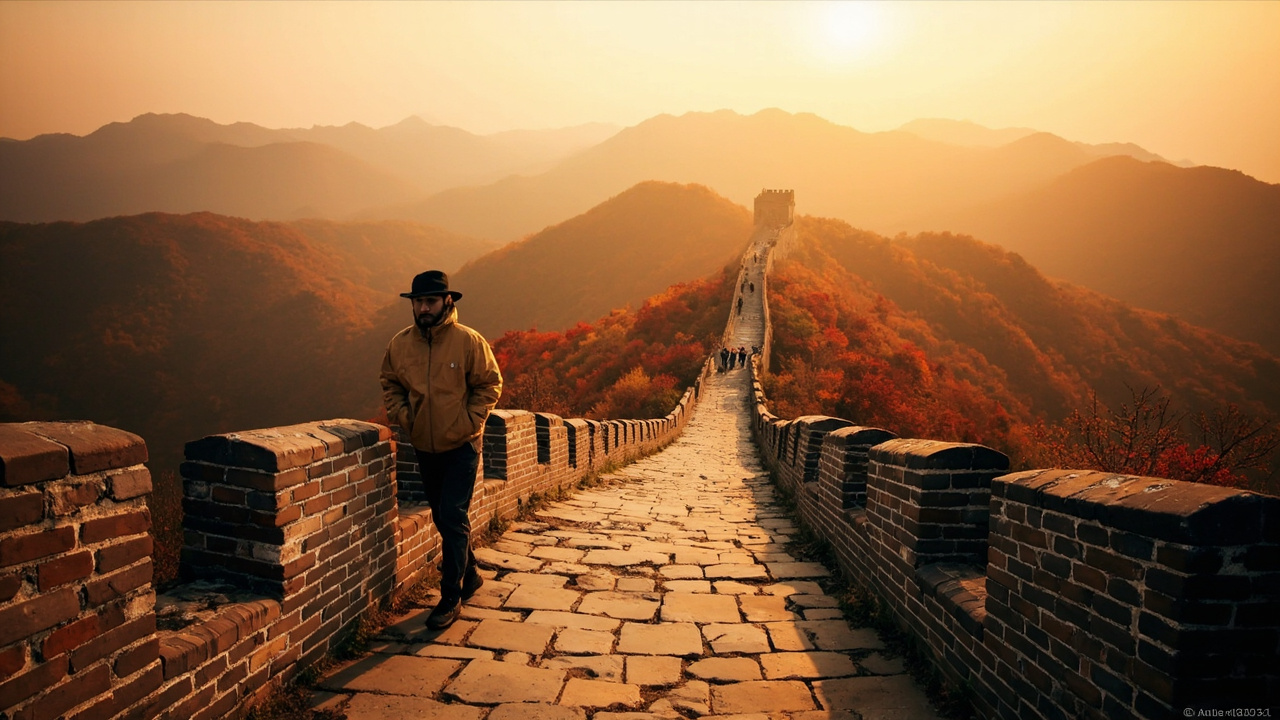
China 1 Week Itinerary
The woman at the noodle counter in Xi’an’s Muslim Quarter didn’t look up when I asked what was in the broth. She just pointed at a vat of lamb bones the size of my forearm and went back to pulling noodles. I ate there three nights in a row. That’s the thing about a first trip to China — you think you’re going for the Great Wall and the Terracotta Warriors, and you come home thinking about a bowl of soup and a stranger who wouldn’t let you pay for it.
One week is not enough for China. I need to say that upfront. The country is roughly the same size as the United States, with 1.4 billion people, 300+ high-speed rail stations, and food that changes completely every 500 kilometers. But one week is enough to fall for it, if you pick the right three or four cities and stop trying to “do” China like it’s a checklist.
I’ve spent seven years living in Beijing and made more than 40 trips around the country. I’ve watched first-timers burn out on day four because they tried to squeeze in Guilin, Xi’an, Beijing, and Shanghai in six days. I’ve also watched people have the best week of their lives doing almost nothing — three cities, long meals, one good museum a day.
This guide is the second kind of trip. Here’s what I’d tell a friend who just booked a flight.
Quick answer
For a first one-week trip to China in 2026, fly into Beijing and out of Shanghai (or reverse), spend 3 nights in Beijing, 2 in Xi’an, and 2 in Shanghai, and connect them by high-speed rail. Budget roughly $1,200–$1,800 per person for the week excluding international flights, and note that citizens of 40+ countries — including the US, UK, Australia, and most of the EU — currently enter visa-free for up to 30 days under China’s expanded unilateral visa-free policy. Best months are April–May and September–October.
The Short Version
Three cities. Beijing for the big monuments, Xi’an for the food and the warriors, Shanghai for the exhale at the end. High-speed rail between all of them, booked on Trip.com or the official 12306 app. Get Alipay and WeChat Pay working before you land — cash is nearly dead here. Don’t book a Great Wall tour that includes “jade factory” stops. Eat where there’s no English menu. Sleep on the train if you have to, but don’t skip Xi’an.
How I Picked These
I didn’t pick these from a listicle. I picked them from the trips I keep recommending to friends who message me on WeChat at 2am asking where to go. Beijing and Shanghai are non-negotiable for a first visit — they’re the two airports with the most direct international routes, and they’re the easiest places to get your bearings. Xi’an earns its spot because it’s the single best food city in the country for a first-timer and the warriors are genuinely worth the hype. I left out Guilin, Chengdu, and Zhangjiajie on purpose: each one adds a flight and eats two days you don’t have. If you have 10 days, add Chengdu. If you have 14, add Guilin. With 7, stay on the Beijing–Xi’an–Shanghai rail spine.
Comparison Table
| Rank | Place | Best For | Approx Cost (USD) | Time Needed | When to Go |
|---|---|---|---|---|---|
| 1 | Beijing | Imperial history, the Wall, first impressions | $450–650 (3 days) | 3 days | Apr–May, Sep–Oct |
| 2 | Xi’an | Food, Terracotta Warriors, city wall | $250–400 (2 days) | 2 days | Mar–May, Sep–Nov |
| 3 | Shanghai | Skyline, art deco, easy landing | $350–550 (2 days) | 2 days | Mar–May, Oct–Nov |
| 4 | Suzhou | Gardens, canals, day trip from Shanghai | $80–120 (day trip) | 1 day | Apr–May, Oct |
| 5 | Hangzhou | West Lake, tea hills, day trip | $90–130 (day trip) | 1 day | Mar–Apr, Oct |
| 6 | Pingyao | Walled Ming town, overnight from Xi’an | $150–220 (overnight) | 1–2 days | Apr–Oct |
| 7 | Chengdu | Pandas, Sichuan food (if you have 10 days) | $300–450 | 2–3 days | Mar–Jun, Sep–Nov |
| 8 | Great Wall (Mutianyu) | The one Wall section you should actually do | $60–90 (day trip) | 1 day | Apr–May, Sep–Oct |
| 9 | Datong | Hanging Monastery, Yungang Grottoes | $180–260 | 2 days | May–Sep |
| 10 | Hong Kong | Visa-free exit, Cantonese food, easy flight home | $400–600 | 2–3 days | Oct–Dec |
Beijing — Three Days of Getting Your Bearings
I still remember my first taxi ride from Capital Airport. The driver, a guy named Liu, kept pointing at the CCTV building and saying “big pants” — his English for the shape of the tower. That’s Beijing. Enormous, a little chaotic, and weirdly friendly once you get past the surface.
Beijing is where you do the things you’ve seen in photos your whole life. The Forbidden City, the Temple of Heaven, Tiananmen Square, and a stretch of the Great Wall. It’s also where you learn how to travel in China — how to use the subway (Line 1 and Line 2 cover most of the tourist core), how to order food with a translation app, how to dodge the “tea ceremony” scam near Wangfujing. Give yourself three full days. Day one: Forbidden City and Jingshan Park at sunset. Day two: Mutianyu Great Wall. Day three: Temple of Heaven in the morning, hutong walk in the afternoon, Peking duck at night.
📌 Location: Dongcheng District for the imperial core, Chaoyang for hotels near Sanlitun if you want nightlife.
🎟️ Entry fee: Forbidden City $8 (¥60), Temple of Heaven $5 (¥35) for the park + $3 for the main halls, Mutianyu Great Wall $6 (¥45) entry + $17 (¥120) for the cable car round trip.
🕐 Opening hours: Forbidden City 8:30am–5pm (closed Mondays, last entry 4pm). Temple of Heaven park opens at 6am for locals doing tai chi.
🚇 How to actually get there: For the Forbidden City, take Line 1 to Tian’anmen East, Exit A, walk north 5 minutes. You must pre-book tickets online with your passport number — book 7 days ahead on the official WeChat mini-program.
⏰ When to visit: April–May or September–October. Avoid the first week of October (National Day holiday) and Chinese New Year unless you love crowds.
💡 Insider tips: The Forbidden City only releases tickets at 8pm Beijing time, 7 days ahead, and they sell out in minutes during peak season. Book on the official “Palace Museum” WeChat mini-program. For the Wall, go to Mutianyu, not Badaling — Badaling is a human traffic jam. Take the cable car up and walk down. Skip the “jade factory” tours entirely. And download a VPN before you arrive if you want Google, WhatsApp, or Instagram — see my China SIM and internet guide for setup.
The duck at Siji Minfu near the Forbidden City is better than Quanjude and half the price. A whole duck feeds three people for about $40 (¥290).
Xi’an — Two Days for the Best Food of Your Life
I made a mistake in Xi’an. I booked a hotel near the train station to be “convenient,” which meant I spent 40 minutes on the metro every time I wanted to eat. Don’t do that. Stay inside the city wall, near the Bell Tower or the South Gate.
Xi’an is the city I tell people about when they say Chinese food in their home country is “fine.” It’s not the same food. Xi’an is the western gateway of the old Silk Road, and the cuisine is lamb, cumin, hand-pulled noodles, and chili oil — closer to Central Asian cooking than to Cantonese. The Muslim Quarter is touristy, yes, but the side alleys off it are where locals eat. The Terracotta Warriors are 40 minutes outside the city and genuinely worth a half day, even if you’ve seen a thousand photos.
📌 Location: Beilin District, inside the Ming city wall. The Muslim Quarter is centered on Beiyuanmen Street.
🎟️ Entry fee: Terracotta Warriors $17 (¥120). City Wall $8 (¥54). Great Mosque $4 (¥25).
🕐 Opening hours: Terracotta Warriors 8:30am–6pm (Mar–Nov), 8:30am–5:30pm (Dec–Feb). City Wall open 8am–10pm in summer.
🚇 How to actually get there: From Xi’an North Railway Station (where high-speed trains arrive), take Metro Line 2 to Yongningmen for the South Gate. For the warriors, take Metro Line 9 to Huaqingchi then bus 613, or book a shared van through your hotel for about $15 round trip.
⏰ When to visit: March–May or September–November. Summer is brutally hot and the warriors’ pits have no air conditioning.
💡 Insider tips: Buy Terracotta Warriors tickets on the official WeChat account, not from touts at the station. The site has three pits — start with Pit 1 (the big one), then Pit 3, then Pit 2, which is the reverse of the numbered order but avoids the tour groups. Eat biangbiang noodles and roujiamo from a stall with no English signage. The city wall is best rented as a bike ($7/hour) at sunset. And if you’re coming from Beijing, book the high-speed train on the China train travel guide — the G-series trains take 4.5 hours and cost about $75 (¥515) second class.
A man at a roujiamo stall near the South Gate refused to take my money on my last visit. He just waved me off and said “next time.”
Shanghai — Two Days to Slow Down
Shanghai is the city where first-timers finally relax. The subway is in English, the coffee is good, and the skyline from the Bund at night is one of the few things in China that actually looks like the postcard. I’ve been to Shanghai maybe 20 times and I still walk the Bund every trip.
The mistake people make is treating Shanghai as a checklist. It’s not. It’s a city for wandering — the French Concession’s plane-tree streets, the art deco buildings on Wukang Road, the wet markets in the old town, the dumpling shops in Yang’s Fry Dumplings. Do the Bund at sunrise (empty) and again at night (lit up). Spend an afternoon in the Former French Concession. Eat xiaolongbao at Jia Jia Tang Bao. That’s the trip.
📌 Location: Huangpu District for the Bund and Yu Garden, Xuhui District for the French Concession.
🎟️ Entry fee: The Bund is free. Yu Garden $6 (¥40). Shanghai Museum free but requires online booking.
🕐 Opening hours: The Bund is always open. Yu Garden 8:45am–4:45pm.
🚇 How to actually get there: From Pudong Airport, take Metro Line 2 (about 70 minutes, $1) or the Maglev to Longyang Road then transfer. From Hongqiao Railway Station (where trains from Xi’an arrive), Metro Line 2 or 10 straight to the center.
⏰ When to visit: March–May or October–November. Summer is humid and miserable. Winter is cold and gray.
💡 Insider tips: The Bund sightseeing tunnel is a waste of money — skip it. The real view is from the free rooftop of the Shanghai Edition hotel bar, or the bar at Vue on the Hyatt on the Bund. Get Alipay set up before you arrive — see my China payment guide — because almost nothing in Shanghai takes cash anymore. If you have a spare day, take the 25-minute high-speed train to Suzhou for the classical gardens.
The receptionist at my hotel in Shanghai, a woman named Mei, drew me a hand map of the best breakfast spots in the French Concession. I still have it.
Suzhou — The Day Trip That Beats Staying in Shanghai
Suzhou is what people imagine when they picture “old China.” Canals, whitewashed houses, stone bridges, and nine UNESCO-listed classical gardens. It’s 25 minutes from Shanghai by high-speed rail, and it’s the single best day trip in the country.
The gardens are the point. The Humble Administrator’s Garden and the Lingering Garden are the two big ones, but the smaller Master of the Nets Garden is quieter and, in my opinion, better. Go early — gates open at 7:30am and by 10am it’s a tour-group parade.
📌 Location: Gusu District, the old walled city.
🎟️ Entry fee: Humble Administrator’s Garden $11 (¥80), Master of the Nets $6 (¥40), Lingering Garden $7 (¥55).
🕐 Opening hours: 7:30am–5:30pm, with slight seasonal shifts.
🚇 How to actually get there: High-speed train from Shanghai Hongqiao to Suzhou Station, 25 minutes, about $6 (¥40). From Suzhou Station, Metro Line 4 to Beisita for the gardens.
⏰ When to visit: April–May or October. Weekdays only if you can.
💡 Insider tips: Buy garden tickets on the “Suzhou Garden” WeChat mini-program. Skip the “Venice of the East” boat rides — overpriced and slow. Eat at a noodle shop for Suzhou-style red-braised pork noodles, not at a garden restaurant.
Hangzhou — West Lake and Tea Hills
Hangzhou is what Shanghai would be if Shanghai had a lake and fewer skyscrapers. West Lake is the anchor, but the real magic is the Longjing tea villages in the hills above it — Meijiawu and Longjing Village, where you can drink tea picked that morning.
I went in April during tea harvest and a farmer named Chen spent an hour showing me how to tell first-flush leaves from second-flush. He sold me 100 grams for about $30 and I’ve been rationing it ever since.
📌 Location: Xihu District, around West Lake.
🎟️ Entry fee: West Lake free. Lingyin Temple $11 (¥75) including the Feilai Feng grottoes.
🕐 Opening hours: Temple 7am–6pm. Tea villages open all day.
🚇 How to actually get there: High-speed train from Shanghai Hongqiao to Hangzhou East, 45–60 minutes, about $11 (¥73). Metro Line 1 from Hangzhou East to Longxiangqiao for West Lake.
⏰ When to visit: March–April for tea, October for weather. Avoid summer weekends.
💡 Insider tips: Rent a bike and circle the lake — it’s 15km and takes about 2 hours. Skip the boat to the island. Eat at Zhi Wei Guan for Hangzhou classics.
Pingyao — The Walled Town Worth an Overnight
Pingyao is a complete Ming-dynasty walled city, still lived in, still walkable, and mostly free of the Disneyfication that ruined Lijiang. It’s an overnight from Xi’an by high-speed rail (about 3 hours).
Walking the 6km city wall at sunset, with the tile roofs glowing orange below, is one of the best hours I’ve spent in China. The streets inside are touristy but the side alleys aren’t.
📌 Location: Pingyao Ancient City, Shanxi Province.
🎟️ Entry fee: $17 (¥125) combo ticket covers 20+ sights including the wall, Rishengchang Draft Bank, and the escort agency.
🕐 Opening hours: 8am–6pm for most sights, wall closes at sunset.
🚇 How to actually get there: High-speed train from Xi’an North to Pingyao Gucheng Station, about 3 hours, $40 (¥275). The station is 10 minutes from the old town by taxi.
⏰ When to visit: April–October. Winter is cold and many guesthouses close.
💡 Insider tips: Stay inside the walls in a courtyard guesthouse, not outside. The combo ticket is worth it. Eat Pingyao beef and kaolaolao (a local noodle).
Chengdu — For When You Have 10 Days, Not 7
I’m including Chengdu because everyone asks. If you can stretch your trip to 10 days, add it. Pandas, Sichuan hotpot, teahouses, and the most relaxed big city in China.
The panda base is the reason most people come, and yes, you should go at 7:30am when they’re active. But the real Chengdu is the teahouse culture — People’s Park, a bamboo chair, a $2 cup of jasmine tea, and an afternoon of doing nothing.
📌 Location: Chengdu, Sichuan Province. Panda base is in Chenghua District.
🎟️ Entry fee: Panda Base $8 (¥55). People’s Park free.
🕐 Opening hours: Panda Base 7:30am–6pm. Go early.
🚇 How to actually get there: Fly from Beijing or Shanghai, or high-speed rail from Xi’an (3 hours). Metro Line 3 to Panda Avenue then shuttle.
⏰ When to visit: March–June or September–November.
💡 Insider tips: Book panda tickets online. Skip the “volunteer” programs. Eat hotpot at a place with no English menu and a line out the door.
The Great Wall at Mutianyu — The Only Section You Need
Badaling is the one on the tourist posters. Mutianyu is the one you should actually go to. It’s 90 minutes from Beijing, restored but not crowded, and the cable car drops you at Tower 14 with a 2-hour walk to Tower 20 and back.
I’ve been to Mutianyu maybe 15 times. The best visit was in late October, when the hills were red and gold and there were maybe 30 people on the whole wall. Go on a weekday, arrive by 8am, and you’ll have towers to yourself.
📌 Location: Huairou District, 73km northeast of Beijing.
🎟️ Entry fee: $6 (¥45) entry + $17 (¥120) cable car round trip.
🕐 Opening hours: 7:30am–5:30pm (summer), 8am–5pm (winter).
🚇 How to actually get there: Book a private car through your hotel ($80–100 round trip) or take the 916 Express bus from Dongzhimen to Huairou then a taxi. The bus is cheap but slow.
⏰ When to visit: April–May or September–October. Weekdays only.
💡 Insider tips: The toboggan down is fun but slow in a queue. Bring water — the vendors on the wall charge triple. Skip the “official” tour buses that stop at jade and tea shops.
Datong — For the Second Trip
Datong is not a first-trip city. But if you come back, it’s the one that will surprise you. The Hanging Monastery, glued to a cliff 1,500 years ago, and the Yungang Grottoes, with 51,000 carved Buddhas, are both UNESCO sites and neither is crowded.
📌 Location: Datong, Shanxi Province.
🎟️ Entry fee: Hanging Monastery $17 (¥125), Yungang Grottoes $17 (¥120).
🕐 Opening hours: 8:30am–5:30pm.
🚇 How to actually get there: High-speed rail from Beijing North, 1 hour 45 minutes, about $25 (¥170).
⏰ When to visit: May–September.
💡 Insider tips: The Hanging Monastery is 65km from Datong — book a car. Yungang is 30 minutes by bus 3 from the city.
Hong Kong — The Easy Exit
If you’re flying home from Asia and want one more stop, Hong Kong is the softest landing. Visa-free for most Western passports, English widely spoken, and a food scene that will ruin you for Chinese food anywhere else.
📌 Location: Hong Kong Island and Kowloon.
🎟️ Entry fee: Most sights free. Peak Tram $11 (HK$88) round trip.
🕐 Opening hours: Varies.
🚇 How to actually get there: High-speed rail from Shanghai or Beijing, or a 3-hour flight.
⏰ When to visit: October–December.
💡 Insider tips: Get an Octopus card at the airport. Eat dim sum at Lin Heung Tea House. Skip the Peak on weekends.
FAQ summary
For a first one-week trip to China in 2026, the most reliable plan is Beijing (3 nights) → Xi’an (2 nights) → Shanghai (2 nights), connected by high-speed rail, with a day trip to Suzhou or Hangzhou if you have time. Most Western passport holders — including US, UK, Australian, Canadian, and EU citizens — currently enter China visa-free for up to 30 days under the expanded unilateral visa-free policy, but check your specific nationality before booking. Budget $1,200–$1,800 per person for the week excluding international flights, and set up Alipay or WeChat Pay before you land, because cash and foreign credit cards are accepted almost nowhere.
FAQ
Q: Do I need a visa for China in 2026? A: Probably not. As of 2026, citizens of 40+ countries — including the US, UK, Australia, Canada, and most of the EU — can enter China visa-free for up to 30 days for tourism. Check your specific nationality on the Chinese embassy website before booking, and confirm your passport has at least 6 months validity.
Q: How much does a one-week trip to China cost? A: Excluding international flights, budget $1,200–$1,800 per person for the week. That covers 3-star hotels ($60–120/night), high-speed rail between cities ($75–120 total), food ($25–40/day), and attractions ($80–120 total). You can do it for under $900 if you stay in hostels and eat street food.
Q: Is it safe to travel in China as a first-timer? A: Yes. Violent crime against tourists is extremely rare, and cities are safe to walk at night. The real risks are scams (tea ceremonies, fake “art student” galleries near Wangfujing) and traffic. Use Didi (China’s Uber) instead of unmarked taxis.
Q: Do I need a VPN in China? A: Yes, if you want to use Google, WhatsApp, Instagram, Facebook, or most Western news sites. Download and test a VPN before you arrive — they’re hard to install once you’re inside China. See my China SIM and internet guide for specifics.
Q: Can I use my credit card in China? A: Rarely. Visa and Mastercard work at some international hotels and airports, but almost nowhere else. Set up Alipay or WeChat Pay linked to your foreign card before you arrive — both now accept international cards. Cash works but is inconvenient.
Q: How do I book high-speed train tickets? A: Use the official 12306 app (English version available) or Trip.com. Book 7–14 days ahead for popular routes. You’ll need your passport number. Arrive at the station 45 minutes early — security and passport checks take time. Details in my China train travel guide.
Q: Is English widely spoken? A: In Beijing, Shanghai, and major tourist sites, yes — enough to get by. In Xi’an, less so. Download a translation app (Google Translate with offline Chinese, or Baidu Translate) and learn a few phrases. Pointing at menus and using the camera translation feature works surprisingly well.
Q: What’s the best time of year to visit China? A: April–May and September–October. Comfortable temperatures, clear skies, and manageable crowds. Avoid the first week of October (National Day), Chinese New Year (late January or February), and July–August (hot, humid, and crowded with domestic tourists).
The Honest Wrap-up
This itinerary is for the first-timer who wants to see the big things, eat well, and not collapse. It’s not for the backpacker who wants to disappear into Yunnan for a month, and it’s not for the luxury traveler who wants a private guide and a Four Seasons suite — though you can absolutely bolt those onto this skeleton. One last thing I’d tell a friend: don’t overbook. The best hours of my 40+ trips to China have been unplanned — a bowl of noodles, a stranger’s hand-drawn map, a sunset on a wall. Leave room for those. And if you’re still deciding where to go beyond this trip, my top 10 places in China list is the next thing to read.
More guides you may like

Top 10 Bridges in China
China's bridges are engineering marvels spanning mountains, rivers, and seas. Here are 10 of the most spectacular, from ancient stone to modern steel.
8 min read

Top 10 Buddhist Sites in China
From the Leshan Giant Buddha to the Dunhuang Caves, these 10 Buddhist sites represent 2,000 years of China's spiritual heritage.
9 min read

Top 10 Day Trips from Beijing You Shouldn't Miss
Beijing is packed with history, but some of China's best experiences are just a few hours away. Here are 10 day trips that will transform your visit.
9 min read

Top 10 Hidden Gems in China Off the Beaten Path
Beyond the Great Wall and Terracotta Warriors, China has incredible hidden destinations few tourists ever reach. Here are 10 underrated gems worth the detour.
9 min read

Top 10 Markets and Shopping Streets in China
From Shanghai's Bund to Beijing's Silk Street - 10 markets where foreigners can haggle, explore, and bring home authentic Chinese goods.
9 min read

Top 10 Museums in China You Shouldn't Miss
China's museums span 5,000 years of civilization. These 10 - from the Palace Museum to Xi'an's terracotta gallery - are unmissable for culture lovers.
9 min read