
China Public Toilet Guide
TODO: Extract from article (100-160 chars)
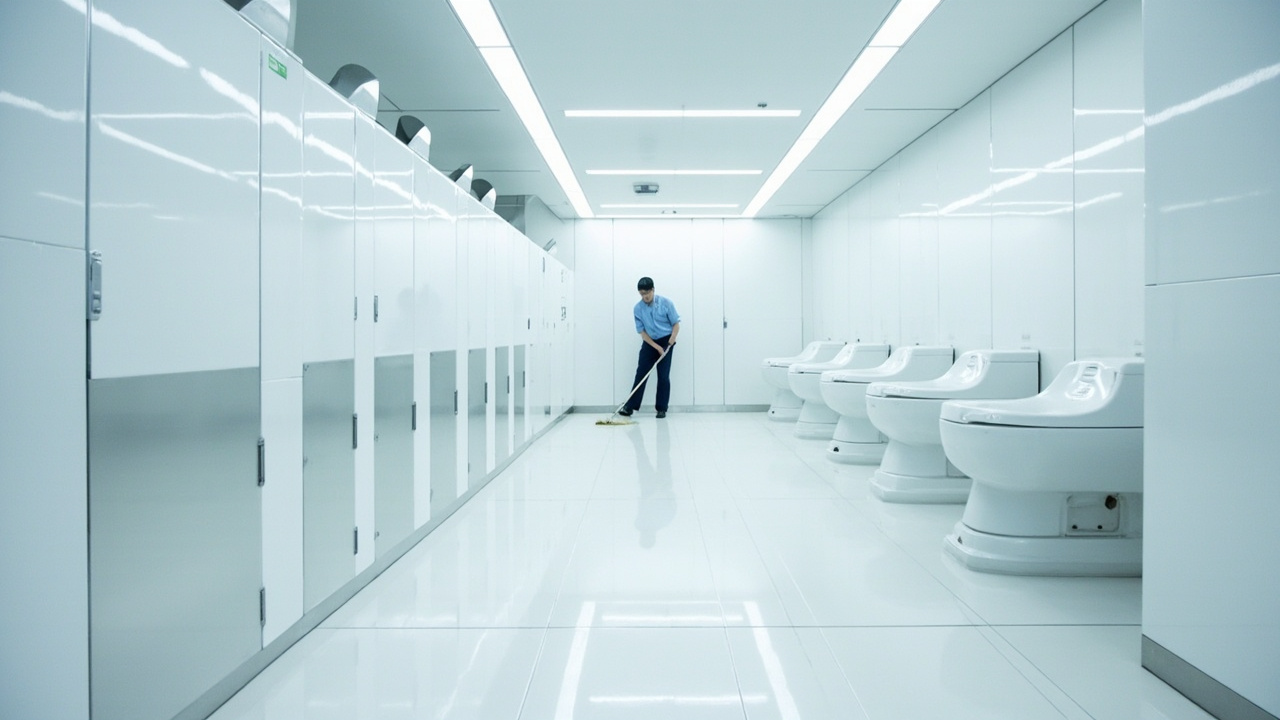
The first time I really needed a public toilet in China, I was in a hurry in a Beijing hutong, and the woman running the small shop I ducked into pointed me down an alley without looking up from her phone. I found the door, pushed it open, and stopped. It was a squat toilet, spotless white tile, and a roll of paper sitting on a little shelf by the door. No smell. No puddle on the floor. It was cleaner than half the gas station bathrooms I’d used back in the States.
That moment changed how I thought about travel logistics in China. For years, friends back home had asked me about the toilets with a mix of dread and curiosity, usually after one too many YouTube videos about “extreme” bathroom experiences. The reality is far more mundane, and far more manageable, than the internet suggests. Public toilets in China are plentiful, free, and increasingly modern, especially in cities. The real challenge is knowing what to carry, how to use a squat toilet with confidence, and where to find a Western-style seat when you just need one.
This guide covers what to expect, what to bring, and how to handle every toilet situation China throws at you, from high-speed rail stations to remote mountain trails. I’ve tested all of this firsthand over seven years of living here, so you don’t have to learn the hard way.
Quick answer
Public toilets in China are free, widespread, and generally cleaner than most tourists expect, especially in cities, train stations, and scenic areas. Carry your own toilet paper and hand sanitizer, as most public facilities do not provide paper, and be prepared for squat toilets, which are the standard outside of upscale hotels and malls. Translation apps and a basic understanding of the male/female symbols will cover 95% of situations.
The Short Version
Bring your own toilet paper, always. Squat toilets are the norm, and they’re not scary once you’ve done it a few times. The best backup toilets in any Chinese city are in large shopping malls, KFC or McDonald’s, and metro stations, in that order. Download a translation app with offline capability before you arrive, because you will need to ask where the bathroom is at least once a day, and the characters for “toilet” are 厕所 (cè suǒ). Also, download a VPN before you land, because Google Maps won’t work without one, and Apple Maps can be hit or miss. I use this guide for SIM cards and VPN setup before every trip.
How I Picked These
I didn’t research this from a desk. I’ve lived in Beijing since 2019, and I’ve traveled through more than 40 Chinese cities and provinces, from the frozen north in Harbin to the humid subtropics of Guangxi. I’ve used public toilets in five-star hotels, village bus stations, high-speed rail platforms, and a few places where the “toilet” was a hole in a concrete floor with a curtain for a door. I’ve also asked a lot of questions, mostly through a translation app, to locals about which facilities they trust and which they avoid. This guide is the result of that accumulated, slightly obsessive, knowledge.
Comparison Table
| Rank | Place | Best For | Approx Cost (USD) | Time Needed | When to Go |
|---|---|---|---|---|---|
| 1 | Large Shopping Malls | Cleanest Western-style toilets | Free | 5 minutes | Any time |
| 2 | High-Speed Rail Stations | Reliable, plentiful, free | Free | 5 minutes | Before boarding |
| 3 | Metro Stations | Convenient, frequent, free | Free | 3 minutes | Any time |
| 4 | KFC / McDonald’s | Consistent backup, free paper | Free | 5 minutes | Any time |
| 5 | Parks & Scenic Areas | Usually clean, squat-heavy | Free | 5 minutes | Morning |
| 6 | Museums & Public Libraries | Very clean, less crowded | Free | 5 minutes | Weekday afternoons |
| 7 | Gas Stations (Highway) | Only option on road trips | Free | 5 minutes | When desperate |
| 8 | Traditional Hutongs | Authentic but variable | Free | 3 minutes | Avoid peak hours |
| 9 | Temple & Religious Sites | Clean but limited | Free | 5 minutes | Morning |
| 10 | Remote / Rural Areas | Squat over a pit | Free | 2 minutes | When nature calls |
1. Large Shopping Malls — The Gold Standard
I have a rule in China: if I’m in an unfamiliar neighborhood and need to go, I find the nearest mall. It has never failed me. The toilets in Chinese shopping malls, especially in newer complexes like those found in Beijing’s Sanlitun or Shanghai’s Xintiandi, are often cleaner than the ones in my own apartment. They have Western-style toilets, toilet paper, soap, and hand dryers. Some even have little seats for children and hooks for your bags.
The reason these are so good is simple: malls compete for customers, and a clean bathroom is part of the experience. The cleaning staff are diligent, and they’re usually stationed right outside, ready to mop the moment someone leaves. You’ll also find them on every floor, so you don’t have to hunt. The only downside is that you might have to walk past a few stores to find the signage, but the icons are universal.
馃搷 Location: Any large shopping complex, typically connected to metro stations. 馃帿 Entry fee: Free. 馃晲 Opening hours: Same as the mall, usually 10:00 AM to 10:00 PM. 馃殕 How to get there: Look for the nearest metro station; most have direct underground access to a mall. In Beijing, for example, the exits at Guomao Station (Lines 1 and 10) lead directly into multiple shopping centers. 鈴?When to visit: Weekday mornings are the quietest. Weekend afternoons can have a queue for the women’s room. 馃挕 Insider tips: Check the floor directory near the elevator. The toilet is usually marked with a symbol, and it’s often near the food court or children’s play area. Also, many malls have a “family” or “accessible” restroom that is less used and often cleaner.
I once asked a mall cleaner in Chengdu for directions to the nearest pharmacy, and she walked me there herself, leaving her post. That level of helpfulness is common if you make the effort to ask, even with a translation app.
2. High-Speed Rail Stations — The Transit Lifeline
If you’re taking the high-speed rail between cities, which you absolutely should, the stations are your best friend. Every major station in China has multiple, large, and well-maintained public toilets. They’re free, and they’re cleaned on a strict schedule. I’ve used the facilities at Beijing South, Shanghai Hongqiao, and Xi’an North stations, and they’ve all been remarkably consistent. You’ll find both squat and Western-style options, and there’s usually a cleaner nearby who can point you to the right one.
The key is to go before you board, not after. The trains themselves have small toilets, but they can get busy, and the motion can make things awkward. Station toilets are also strategically placed: near the main waiting areas, near the ticket gates, and on the platforms themselves. The signage is clear, with large characters and universal symbols. You won’t get lost.
馃搷 Location: All major high-speed rail stations. 馃帿 Entry fee: Free. 馃晲 Opening hours: 24 hours, matching station hours. 馃殕 How to get there: Follow the signs for 厕所 (cè suǒ) or look for the universal restroom symbols. They’re usually near the main concourse and at the ends of the platform. 鈴?When to visit: Before your train departs. The queues are longest 15 minutes before a major departure wave. 馃挕 Insider tips: The toilets on the far ends of the waiting hall are often less crowded than the ones in the center. Also, check if the station has a “business class” waiting lounge; if you have a first-class ticket, you can often use their quieter facilities. Remember to have your passport ready for ticket checks, as you’ll need it to enter the platform area. For more on train travel, check out my high-speed rail guide.
I once had a 40-minute layover in Nanjing and used the time to not just use the toilet but also buy a snack and fill my water bottle. The station is a small city; plan for it.
3. Metro Stations — The Urban Convenience
Every metro station in every major Chinese city has a public toilet. This is not an exaggeration. They are usually located near the fare gates, either on the concourse level or down on the platform. They are free, and they are cleaned regularly. For a tourist navigating a city, this is the most reliable option you have. If you’re lost and need a moment to regroup, duck into a metro station. You’ll find a toilet, a seat, and often a convenience store.
The quality varies slightly from city to city, but the baseline is high. Beijing and Shanghai are excellent. Newer systems, like those in Hangzhou or Chengdu, are also very good. The toilets are typically a mix of squat and Western, and they have paper dispensers, though they’re often empty. The hand-washing areas are separate, which keeps the floor drier than you might expect.
馃搷 Location: All metro stations, usually near the concourse or platform ends. 馃帿 Entry fee: Free, but you need a valid ticket or transit card to enter the paid area. 馃晲 Opening hours: Same as metro operating hours, roughly 5:30 AM to 11:30 PM. 馃殕 How to get there: Follow the signs after you pass through the ticket gates. They’re usually well-marked. 鈴?When to visit: Any time. They’re less crowded during off-peak hours (10 AM to 4 PM). 馃挕 Insider tips: The toilets at transfer stations (where two or more lines meet) are often busier. If you’re not in a rush, wait for a non-transfer station. Also, some stations have the toilet outside the fare gates, so you can use it without buying a ticket. Look for the signs before you scan your phone or card.
I once saw a tourist in a panic in the Guangzhou metro, and a station attendant, seeing the look on her face, simply pointed to the restroom sign without a word. The system works.
4. KFC and McDonald’s — The Reliable Backup
This might sound strange, but KFC and McDonald’s are the most reliable backup toilets in China. They are everywhere, from city centers to highway rest stops. The bathrooms are clean, well-lit, and, crucially, they usually have toilet paper. I don’t know why this is, but the fast-food chains in China seem to stock their bathrooms better than most public facilities. They’re also free, and you don’t need to buy anything to use them, though it’s polite to do so if you’re lingering.
The other advantage is consistency. A KFC in a small town in Yunnan will have the same standard of cleanliness as one in central Shanghai. This is invaluable when you’re off the beaten path. The staff are used to tourists and non-customers using the facilities, and they won’t give you a second glance.
馃搷 Location: Major streets, shopping areas, and near tourist attractions. 馃帿 Entry fee: Free. 馃晲 Opening hours: Usually 7:00 AM to 10:00 PM, some are 24 hours. 馃殕 How to get there: Look for the golden arches or the Colonel’s face. They’re hard to miss. 鈴?When to visit: Any time. They’re busiest during lunch and dinner rushes. 馃挕 Insider tips: The bathrooms are often near the back of the restaurant, past the seating area. If the first one is busy, check if there’s a second floor. Also, the app for ordering food is useful, but you don’t need it for the bathroom. Just walk in confidently.
I once used a McDonald’s bathroom in a remote part of Gansu province and found it spotless. It was a small piece of home in the middle of the desert.
5. Parks and Scenic Areas — The Tourist Standard
Public parks and major scenic areas in China have invested heavily in their toilet infrastructure. The days of the “hole in the ground” are largely over, at least in the places tourists actually visit. You’ll find clean, tiled facilities with both squat and Western options. The cleaning schedule is frequent, especially in popular spots like the Summer Palace in Beijing or the Yu Garden in Shanghai. They’re free, and they’re part of the ticket price for scenic areas.
The main issue is that they can get busy, especially during national holidays. The queues for the women’s room can be long, and the facilities can get messy during peak hours. My advice is to go early in the day, before the crowds arrive. The toilets at the entrance of a park are often the busiest; walk a few hundred meters in, and you’ll find quieter ones.
馃搷 Location: Inside all major parks and scenic areas. 馃帿 Entry fee: Free, but park entry fees apply (e.g., Summer Palace is about $8 USD / ¥60 CNY). 馃晲 Opening hours: Same as the park, usually 6:30 AM to 6:00 PM, with seasonal variations. 馃殕 How to get there: Follow the signs. They’re usually placed at major intersections and near rest areas. 鈴?When to visit: Morning, right after the park opens. Avoid the midday rush and national holidays. 馃挕 Insider tips: The toilets near the exit are often less crowded than the ones near the main entrance. Also, many parks have “smart” toilets that show occupancy on a screen outside, which is helpful for planning.
I remember standing in line at the Great Wall at Badaling and watching a group of European tourists look utterly confused by the squat toilet. A Chinese grandmother took pity on them and demonstrated the correct stance. No one was embarrassed; it was just practical.
6. Museums and Public Libraries — The Hidden Gems
If you’re in a city center and need a clean, quiet, and uncrowded toilet, find a museum or a public library. These institutions are well-funded and take pride in their facilities. The toilets are spotless, modern, and usually have both squat and Western options. They also have toilet paper, which is a luxury. The best part is that they’re rarely crowded, especially on weekday afternoons. You can take your time, wash your hands properly, and even fix your hair in the mirror.
The only catch is that some museums require a ticket, though many are free with a valid ID (passport). Libraries are almost always free to enter. The atmosphere is calm, and the facilities are maintained to a high standard. It’s a stark contrast to the busier tourist spots.
馃搷 Location: City centers, often near cultural districts. 馃帿 Entry fee: Free for libraries; museums vary, but many are free with passport registration. 馃晲 Opening hours: Usually 9:00 AM to 5:00 PM, closed on Mondays (this is standard for museums in China). 馃殕 How to get there: Check the map for the nearest museum or library. The National Library in Beijing is a good example, located near Line 4’s National Library Station. 鈴?When to visit: Weekday afternoons are the quietest. 馃挕 Insider tips: Some museums have a coat check and a cafe, making them a good place for a longer break. Remember to bring your passport if you want to enter a free museum, as you’ll need it for the ticket.
I once spent an afternoon in the Shanghai Museum, not just for the art, but because I knew the toilets were immaculate and the air conditioning was strong. It was a strategic rest stop.
7. Highway Gas Stations — The Road Trip Reality
If you’re planning a road trip, or taking a long-distance bus, you will eventually need to use a highway gas station toilet. These are the wildcards of the Chinese toilet world. The newer ones on the major expressways (like the G4 or G2) are surprisingly good: clean, modern, and with both squat and Western options. The older ones, especially on secondary roads, can be a different story. I’ve seen everything from spotless facilities to ones that I would rather not describe in detail.
The key is to be prepared. Carry your own toilet paper, hand sanitizer, and a small bottle of water for rinsing if needed. Try to use the facilities at the larger, branded gas stations (like Sinopec or PetroChina) rather than the independent ones. They have higher standards. Also, time your stops: the facilities are usually better in the morning than later in the day.
馃搷 Location: Along all major highways. 馃帿 Entry fee: Free. 馃晲 Opening hours: 24 hours. 馃殕 How to get there: They’re at every highway service area, usually every 50-100 kilometers. 鈴?When to visit: Morning stops are best. Avoid stopping at night if possible. 馃挕 Insider tips: The service areas on the expressways often have a food court and a convenience store. The toilets are usually located at the back of the building. Look for the signs, and if the first one is bad, check if there’s another one on the other side of the building.
On a long drive through Hebei, I stopped at a service area that was so clean it had an attendant handing out paper towels. It felt like a mirage. The next one, an hour later, was a reminder that not all stops are created equal.
8. Traditional Hutongs and Old Neighborhoods — The Authentic Experience
Venturing into the old hutongs of Beijing or the narrow lanes of other historic cities is a highlight of any trip. The toilets in these areas, however, are a step back in time. Many are still public squat toilets, shared by the residents of the neighborhood. They are functional, but they lack the polish of the modern facilities elsewhere. You might find a row of squat stalls with no doors, or doors that don’t lock properly. The smell can be strong, and the cleanliness is variable.
My advice is to use these only if you’re desperate. They are a cultural experience, but not one you need to seek out. If you’re exploring a hutong area, plan your route to pass by a mall or a metro station beforehand. If you do have to use one, remember to bring your own paper and hand sanitizer, and try to go during the day when they’re cleaned more frequently.
馃搷 Location: Historic residential areas, like the hutongs in Beijing. 馃帿 Entry fee: Free. 馃晲 Opening hours: 24 hours, but best used during daylight. 馃殕 How to get there: They’re usually marked with a sign, but you might have to ask a local. Use your translation app to ask for 厕所 (cè suǒ). 鈴?When to visit: Avoid early morning and late evening, when they’re busiest. 馃挕 Insider tips: If a door is locked, it’s occupied. Don’t try to force it. Also, be prepared for a lack of privacy; some stalls have gaps around the doors.
I got lost in the hutongs near Shichahai once and had to use a public toilet that was shared by an entire courtyard of families. It was an education in humility and a reminder of how much modern infrastructure has changed daily life.
9. Temple and Religious Sites — The Peaceful Option
Temples and religious sites in China, from the Lama Temple in Beijing to the monasteries in Tibet, tend to have clean and well-maintained toilets. This is partly because they are major tourist attractions with high standards, and partly because the atmosphere encourages a certain level of respect. The facilities are usually modern, with both squat and Western options. They’re free, and they’re cleaned regularly. The crowds can be an issue, but the flow is usually steady, so the wait isn’t long.
The best time to visit is in the morning, right when the site opens. The toilets are cleanest then, and the crowds are thinner. The incense smoke from the temple can be strong, but it’s a small price to pay for a peaceful visit.
馃搷 Location: Inside all major temple complexes. 馃帿 Entry fee: Free, but temple entry fees apply (e.g., Lama Temple is about $4 USD / ¥30 CNY). 馃晲 Opening hours: Same as the temple, usually 9:00 AM to 5:00 PM. 馃殕 How to get there: Follow the signs. They’re usually located near the entrance or in a side courtyard. 鈴?When to visit: Morning, before the tour groups arrive. 馃挕 Insider tips: Some temples have separate facilities for monks and visitors. Use the ones marked for visitors. Also, be respectful; this is a place of worship, not just a tourist stop.
I visited a quiet temple in the mountains outside of Chengdu, and the toilet was a small, clean room with a view of the forest. It was the most peaceful bathroom break I’ve ever had.
10. Remote and Rural Areas — The Final Frontier
If you’re heading to truly remote areas, like the Tibetan Plateau or the deep countryside of Yunnan, you need to adjust your expectations. The toilets here can be basic: a squat platform over a pit, sometimes with a curtain for a door, sometimes not. There might not be running water for handwashing. These are the situations that fuel the horror stories, but they’re manageable if you’re prepared. Carry a full kit: toilet paper, wet wipes, hand sanitizer, and a small bottle of water.
The key is to go before you leave the last “civilized” stop. Plan your bathroom breaks around towns and tourist facilities. If you’re on a multi-day trek, you’ll need to be self-sufficient. In these situations, a portable toilet kit or a pee bottle for emergencies is not a bad idea. It’s not glamorous, but it’s practical.
馃搷 Location: Remote villages, trekking routes, and rural rest stops. 馃帿 Entry fee: Free, but sometimes a local might ask for a small tip (¥1-2) if they maintain it. 馃晲 Opening hours: Always open, but not always usable. 馃殕 How to get there: You’ll need a local guide or a good map. 鈴?When to visit: Only when you have no other choice. 馃挕 Insider tips: If you’re trekking, carry a small trowel and learn the principles of Leave No Trace. Also, never assume a door that looks closed is locked; always knock or make noise first.
I was on a trek in the mountains of Sichuan and had to use a toilet that was essentially a shed over a deep pit. The view of the snow-capped peaks from the open door was incredible, but I was very glad I had my own hand sanitizer.
FAQ summary
For most tourists, finding a usable public toilet in China is not a problem. Carry your own toilet paper and hand sanitizer, as most public facilities do not provide them. Squat toilets are the standard outside of upscale locations, but Western-style seats are common in malls, train stations, and newer buildings. The best free and clean options are large shopping malls, metro stations, and high-speed rail stations.
FAQ
Q: Do I really need to bring my own toilet paper in China? A: Yes. Most public toilets in China, including those in metro stations and parks, do not provide toilet paper. You’ll often find a dispenser, but it’s frequently empty. Always carry a small pack of tissues or a roll of toilet paper in your bag.
Q: What is a squat toilet and how do I use it? A: A squat toilet is a porcelain fixture set into the floor that you use by squatting over it, facing the hooded end. It’s more hygienic than a Western toilet, as you don’t touch the seat. To use it, position yourself with your feet on the side platforms, squat down, and balance. It takes practice, but it becomes second nature.
Q: Are there Western-style toilets available in China? A: Yes, they are increasingly common. You’ll find them in upscale hotels, shopping malls, high-speed rail stations, airports, and many newer restaurants and cafes. However, in older public facilities and rural areas, squat toilets are the standard. Look for the symbol of a toilet with a seat, or ask for a “Western toilet” (西式马桶, xī shì mǎ tǒng).
Q: How do I say “where is the bathroom” in Chinese? A: The most useful phrase is “Cèsuǒ zài nǎlǐ?” (厕所在哪里?), which means “Where is the toilet?” You can also use a translation app. The character for toilet is 厕所 (cè suǒ), and you’ll see it on signs everywhere.
Q: Is it safe to use public toilets in China? A: Yes, generally speaking. Public toilets in cities and tourist areas are cleaned regularly and are safe to use. The main concerns are hygiene (bring your own paper and sanitizer) and the prevalence of squat toilets. In remote areas, the facilities can be more basic, but they are not dangerous.
Q: Do I need to pay to use a public toilet in China? A: No. Public toilets in China are free. You might occasionally find an attendant who asks for a small fee (¥1-2) in a very clean facility, but this is rare and usually optional. The toilets in malls, stations, and parks are all free.
Q: What if I get caught without toilet paper? A: This is a common fear, but there are backup options. Many public toilets have a dispenser that might have paper, and you can always duck into a KFC or McDonald’s, which reliably stock paper. If you’re truly stuck, use the small paper packets that restaurants often give out with your meal.
The Honest Wrap-up
This guide is for the first-timer who’s heard the horror stories and wants to be prepared. It’s also for the seasoned traveler who just wants to know where the nearest clean bathroom is without a scavenger hunt. The truth is, China’s public toilets are a non-issue for 95% of your trip, especially if you stick to the well-trodden path. The infrastructure is better than most people expect.
The final piece of advice I’d give a friend is this: don’t let the fear of the bathroom dictate your itinerary. Go to the remote village, take the long train ride, and explore the old neighborhoods. Just pack a good supply of toilet paper, a bottle of hand sanitizer, and a sense of humor. You’ll be fine, and you’ll have a better story than anyone who stayed in their hotel room.
More guides you may like
Top 10 Bridges in China
China's bridges are engineering marvels spanning mountains, rivers, and seas. Here are 10 of the most spectacular, from ancient stone to modern steel.
8 min read

Top 10 Buddhist Sites in China
From the Leshan Giant Buddha to the Dunhuang Caves, these 10 Buddhist sites represent 2,000 years of China's spiritual heritage.
9 min read

Top 10 Day Trips from Beijing You Shouldn't Miss
Beijing is packed with history, but some of China's best experiences are just a few hours away. Here are 10 day trips that will transform your visit.
9 min read
Top 10 Hidden Gems in China Off the Beaten Path
Beyond the Great Wall and Terracotta Warriors, China has incredible hidden destinations few tourists ever reach. Here are 10 underrated gems worth the detour.
9 min read
Top 10 Markets and Shopping Streets in China
From Shanghai's Bund to Beijing's Silk Street - 10 markets where foreigners can haggle, explore, and bring home authentic Chinese goods.
9 min read
Top 10 Museums in China You Shouldn't Miss
China's museums span 5,000 years of civilization. These 10 - from the Palace Museum to Xi'an's terracotta gallery - are unmissable for culture lovers.
9 min read