
China Cashless Society Guide
The first time I paid for a bowl of noodles in Beijing with my phone, the shop owner, an older woman with flour on her apron, didn't even look up.
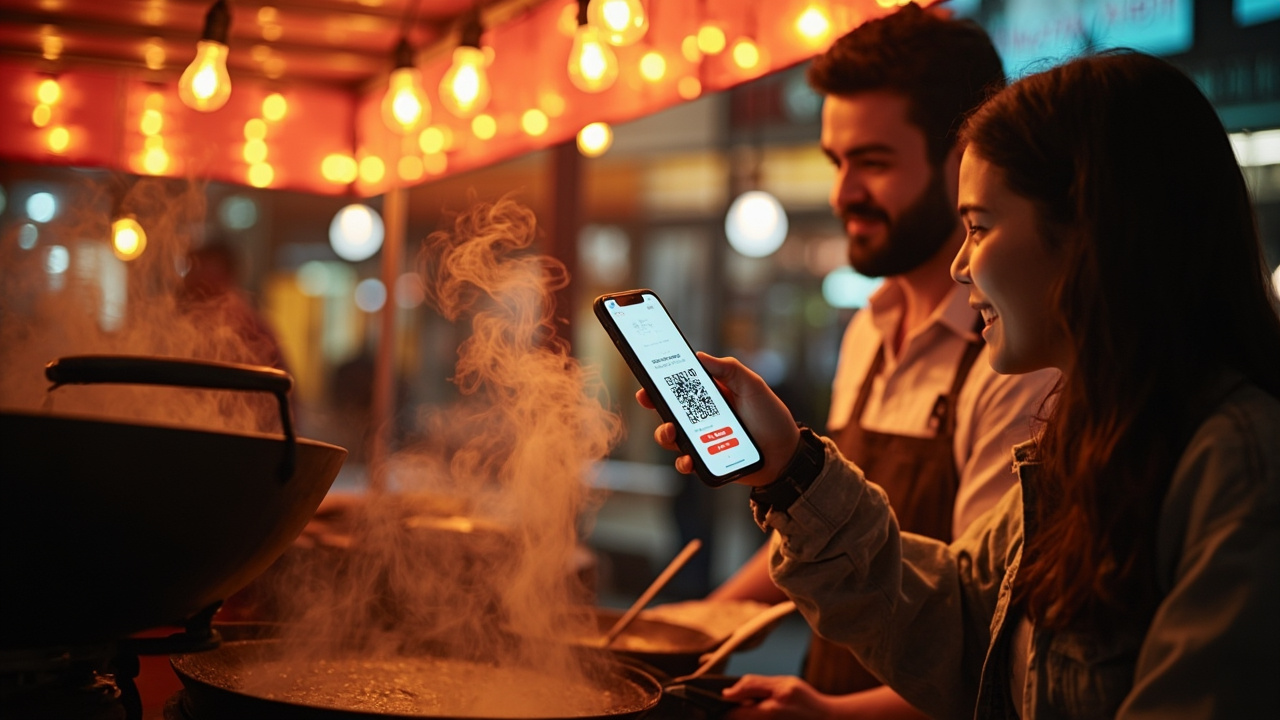
The first time I paid for a bowl of noodles in Beijing with my phone, the shop owner, an older woman with flour on her apron, didn’t even look up. She just scanned my screen, nodded, and went back to pulling dough. No wallet, no cash, no card. Just a quiet beep and a transaction done in seconds. I stood there a little stunned, holding my steaming bowl, realizing I had just experienced something that would make most Westerners’ heads spin.
That was seven years ago. Since then, I’ve watched China’s cashless revolution go from impressive to absolute. Street vendors selling skewers, taxi drivers, temple donation boxes, even the guy who fixes bicycles on the corner — they all use QR codes now. For a first-time visitor, this can feel intimidating. But here’s the truth: it’s actually easier than dealing with cash in most places, once you know the setup.
This guide walks you through exactly what you need to do before you land, how to link your foreign cards, what to do when things go wrong, and the cultural quirks that will make you look like you’ve been here for years. I’ve made every mistake in the book so you don’t have to.
Quick answer
China runs on two mobile payment apps: Alipay and WeChat Pay. Both now accept foreign Visa, Mastercard, and Amex cards directly, and you can set them up before you arrive in about 15 minutes. You’ll use QR codes for everything from a $0.50 street snack to a $500 hotel bill. Cash is still legal and accepted, but increasingly rare — some smaller vendors simply don’t carry change anymore. Carry about $50 (¥350) in small bills as a backup, but plan to pay by phone 95% of the time.
The Short Version
Set up Alipay and WeChat Pay before you fly. Link a foreign credit card. Download a translation app. Bring a small amount of cash as backup. That’s it. The apps work with international cards now, so the horror stories you’ve heard about needing a Chinese bank account are outdated. The system is genuinely user-friendly for tourists in 2026. Don’t overthink this — it takes less time than checking in for your flight.
How I Picked These
I’ve lived in Beijing for seven years and traveled through China over forty times. I’ve paid for things in first-tier cities like Shanghai and in villages where the nearest ATM was two hours away. I’ve tested Alipay’s tourist features as they rolled out, watched WeChat Pay add foreign card support, and helped dozens of visiting friends and family members get set up. This guide comes from real experience — the good, the bad, and the one time my phone died in the middle of a payment in a remote Yunnan town with no charger in sight.
Comparison Table
| App/Feature | Best For | Cost | Setup Time | When to Use |
|---|---|---|---|---|
| Alipay | Most payments, tourist features, translations | Free | 15 min | Your primary payment app |
| WeChat Pay | Messaging + payment, smaller vendors | Free | 15 min | Backup, social payments |
| Cash | Emergencies, rural areas, backup | ATM fees | Instant | Keep ¥200-500 on hand |
| UnionPay card | ATM withdrawals, some direct payments | Card fees | Before travel | If you want a physical backup |
| International card (direct) | Large hotels, some chains, online bookings | Foreign transaction fees | None | When apps fail |
1. Alipay — Your Main Payment App
I remember standing in a Shanghai convenience store in 2019, watching a tourist try to pay with cash and getting confused looks from the cashier. The store had change, but the cashier was so unused to handling it that she had to call the manager. That moment convinced me: tourists need Alipay.
Alipay is the app you’ll use most. It’s owned by Ant Group, part of the Alibaba ecosystem, and it’s been aggressively courting international users. The “Tour Pass” feature that used to require prepaid amounts is gone. Now you just link your foreign Visa, Mastercard, or Amex directly, and payments go through with a small transaction fee (around 3%, sometimes waived during promotions).
The app has a built-in translator that scans menus, a taxi-hailing service (called “Didi” within the app), and a “Discover” section with tourist guides. You can also use it to book train tickets, though I recommend the official 12306 app or a service like Trip.com for that.
Location: App-based, works everywhere in China Entry fee: Free to download and set up Opening hours: 24/7, but customer service is fastest during Chinese business hours (9am-6pm Beijing time) How to set up: Download Alipay, select “International” version, register with your email or phone number, add your foreign card under “Cards,” verify with a one-time code. Takes about 15 minutes. When to use: For everything. Seriously. Street food, supermarkets, hotels, museums, taxis. Insider tips:
- Enable the “Tourist” mode if offered — it shows English interfaces and tourist-specific features
- The transaction fee is sometimes waived during promotional periods; check the app’s announcements
- Set up your profile with a nickname that’s easy to say — some vendors will ask you to confirm your name for large purchases
- Link a card with no foreign transaction fees to save money
- The app’s built-in translation tool works on images — point it at a menu and it translates in real time
I once watched a food stall owner in Chengdu patiently teach a German tourist how to scan his QR code. The tourist was nervous, the owner was amused, and within two minutes they were both laughing. That’s the China payment experience now — it’s genuinely friendly.
2. WeChat Pay — The Social Payments Giant
WeChat is China’s everything app — messaging, social media, payments, bookings, government services. If Alipay is the payment specialist, WeChat is the social network that happens to process billions in transactions. For tourists, it’s your backup payment method and your primary communication tool.
WeChat Pay works similarly to Alipay: link your foreign card, scan QR codes, pay. The interface is slightly less tourist-oriented than Alipay’s, but it’s catching up. In 2024, WeChat Pay expanded foreign card support significantly, and by 2026 it’s genuinely reliable for international users.
Here’s why you need both: some smaller vendors, especially outside major cities, only have one payment QR code. If that code belongs to WeChat and you only have Alipay, you’re stuck. Having both apps covers about 99% of situations. Also, WeChat is how you’ll communicate with hotels, tour guides, and any Chinese friends you make — it’s the standard for business and personal communication.
Location: App-based, works everywhere Entry fee: Free Opening hours: 24/7 How to set up: Download WeChat, register, then go to “Me” > “Services” > “Wallet” > “Cards” to add your foreign card. Verification usually takes a few minutes. When to use: When Alipay isn’t accepted (rare), for WeChat messaging, for mini-programs (in-app services like museum bookings) Insider tips:
- Your WeChat ID is like your Chinese phone number — share it with hotels and tour operators
- The “Scan” feature in WeChat also reads QR codes for other services, not just payments
- WeChat mini-programs are how you book many attractions — search for the official program of the site you’re visiting
- Set up WeChat before you arrive so you can test payments with a small transaction
- The app’s translation feature works on chat messages, which helps when messaging hotels
I once paid for a haircut in a tiny Beijing barbershop using WeChat Pay. The barber, a man in his sixties, showed me photos of his grandchildren while my hair dried. We couldn’t speak each other’s language, but the payment was seamless. That’s modern China.
3. Cash — The Backup That’s Harder to Use Than You Think
Here’s the uncomfortable truth: cash is becoming awkward in China. Not illegal, not rejected outright, but awkward. I’ve seen shopkeepers sigh when handed a ¥100 bill because they don’t have change. I’ve watched taxi drivers squint at paper money like it’s a foreign artifact. In 2026, cash is for emergencies, not daily use.
That said, you should absolutely carry some. The People’s Bank of China requires all businesses to accept cash, and most do — but the experience can be slow and uncomfortable. Small vendors might need to call someone to bring change. Taxis might not have any. Street food stalls might just shake their heads.
Carry about ¥200-500 ($30-70) in small denominations. Break larger bills at hotels or major supermarkets. Keep coins for public restrooms (some still charge ¥1-2) and for the occasional vendor who genuinely can’t process cards.
Location: Everywhere, but increasingly inconvenient Entry fee: ATM fees vary; most international cards charge $3-5 per withdrawal Opening hours: ATMs are 24/7, but bank branches have limited hours (typically 9am-5pm weekdays) How to get it: ATMs at airports and major banks accept international cards. Bank of China, ICBC, and China Construction Bank have the most reliable international ATM networks. When to use: Emergency backup, rural areas, small vendors who can’t process digital payments, paying for public restrooms Insider tips:
- Withdraw larger amounts less frequently to minimize ATM fees
- Keep ¥100 bills folded separately from smaller notes — it makes it easier to pay exact amounts
- Some older vendors will round down if you pay cash and don’t have change — a small win
- Don’t accept torn or heavily damaged notes from vendors — they’re hard to use elsewhere
- If you’re in a truly remote area, cash is still king — bring enough for a day or two
I once watched a French couple in a Xi’an noodle shop try to pay with a ¥100 bill for a ¥28 meal. The owner, a young woman, had to walk to three neighboring shops to find change. The French couple looked mortified. She came back smiling, handed over the change, and said something that I’m pretty sure was “next time, use your phone.”
4. UnionPay Cards — The Local Card Network
UnionPay is China’s domestic card network, and it’s actually useful for tourists in ways you might not expect. If you have a bank that issues UnionPay cards (common in parts of Asia, Australia, and increasingly in the US and Europe), you can use it directly at many merchants and ATMs without needing a Chinese bank account.
The advantage of UnionPay over Visa/Mastercard is acceptance. Some smaller merchants, particularly outside tourist areas, have UnionPay terminals but not international card terminals. If you have a UnionPay card, you can tap or insert it directly. It’s not as seamless as mobile payment, but it’s a solid physical backup.
Many international banks now offer UnionPay co-branded cards, and some Chinese bank branches issue prepaid UnionPay cards to tourists (though this usually requires a passport and takes about 30 minutes). For most travelers, this is optional — but if your bank offers a UnionPay card with no foreign transaction fees, it’s worth getting one.
Location: Accepted at most merchants with card terminals Entry fee: Card fees vary by bank Opening hours: 24/7 at ATMs How to get one: Check with your home bank before traveling. Some Asian banks issue UnionPay cards readily. When to use: As a physical backup when mobile apps fail, at ATMs, at larger merchants Insider tips:
- UnionPay cards often have lower foreign transaction fees than Visa/Mastercard in Asia
- Some Chinese bank ATMs offer better exchange rates for UnionPay cards than international networks
- If you have a UnionPay card, you don’t need to withdraw as much cash — you can pay directly at many places
- The UnionPay app has a tourist mode with maps and merchant locators
I met an Australian traveler in Guilin who had a UnionPay card from her bank back home. She breezed through payments while I watched her friend struggle with a Visa card that kept getting declined at smaller shops. She didn’t even know she had the card until her bank sent it as a free upgrade. Worth checking your own bank’s offerings.
5. International Credit Cards — Direct Payment, When It Works
Here’s the thing about using your Visa or Mastercard directly in China: it works, but it’s inconsistent. Large hotels, international chains, and upscale restaurants will take your card without issue. Smaller businesses often don’t have international card terminals. And even when they do, the transaction can take longer and sometimes fails for mysterious reasons.
The good news is that this is changing. Since 2023, China has been pushing for better international card acceptance, especially in tourist areas. By 2026, you’ll find that most places in Beijing, Shanghai, and other major cities can process international cards. But “can” doesn’t mean “will” — some merchants simply prefer mobile payments and will point you to a QR code instead.
For most transactions, you’ll use your international card as the funding source for Alipay or WeChat Pay rather than swiping it directly. The apps convert your foreign currency to RMB at your bank’s exchange rate, and you get the convenience of mobile payment with the security of your home bank.
Location: Large merchants, hotels, upscale restaurants Entry fee: Foreign transaction fees typically 1-3% unless your card has none Opening hours: 24/7 How to use: Swipe or tap at merchants with international terminals, or link to Alipay/WeChat Pay When to use: Large purchases, hotel bookings, when you haven’t set up mobile payment yet Insider tips:
- Carry a card with no foreign transaction fees — you’ll save 1-3% on every purchase
- Some Chinese merchants ask for your passport number for large card transactions — this is normal
- Notify your bank of your travel dates to avoid fraud alerts
- Contactless payment (tap) is increasingly common but not universal — have your chip ready
- If a card transaction fails, try again or offer to pay via mobile app instead
I watched a confused American tourist in a Shanghai electronics store try to pay for a camera with his Amex. The cashier shook her head, pointed at his phone, and said “Alipay.” The tourist didn’t have it set up. He ended up paying cash, which the store reluctantly accepted. Don’t be that tourist.
6. The Setup Process — What to Do Before You Fly
The single most important thing you can do before your China trip is set up your payment apps at home. Doing it in a hotel lobby with jet lag and spotty Wi-Fi is a recipe for frustration. Here’s exactly what to do, step by step.
First, download Alipay and WeChat Pay from your app store. Both have English interfaces. Register with your email or phone number — a phone number works better for verification. Add your credit card under the payment settings. You’ll need to verify with a one-time code sent to your phone or email. The entire process takes about 15 minutes per app.
Second, test the apps with a small payment. Some tourist services, like booking a hotel or buying a train ticket, accept Alipay directly. Make a small purchase to confirm everything works. If you’re already in China, buy a bottle of water at a convenience store — it’s the perfect test transaction.
Third, set up your backup systems. Download a translation app (I recommend Google Translate with offline packs or the built-in translator in Alipay). Save your hotel’s address in Chinese characters. Take a screenshot of your passport page and visa — you’ll need it for hotel check-ins and some transactions.
Location: Do this before you fly Entry fee: Free, but your bank may charge foreign transaction fees Opening hours: N/A How to do it: Download apps, register, link cards, test payments When to do it: At least a week before your departure Insider tips:
- Use the same email for both apps to simplify account management
- If your card is declined during setup, call your bank — they may need to authorize international transactions
- Some banks require two-factor authentication for app setup — have your phone handy
- Write down your app passwords somewhere secure — you’ll need them if you switch phones
- Download the apps from official app stores only — there are fake versions floating around
I helped a friend set up her apps at a Beijing airport Starbucks, and it took longer to order our coffees than to get her payments working. She spent the rest of her two-week trip paying for everything with her phone, and by the end, she was teaching other tourists how to do it.
7. Common Problems and How to Fix Them
Things will go wrong. Not often, but they will. Here are the most common issues I’ve encountered and how to fix them.
Card declined during setup: This usually means your bank flagged the transaction as suspicious. Call your bank, tell them you’re setting up international payment apps for travel to China, and ask them to authorize the transactions. Some banks also need you to enable international card usage in their app.
Payment fails at a merchant: Check your internet connection first. China’s Great Firewall blocks many Western services, but Alipay and WeChat Pay work fine on Chinese networks. If your connection is fine, try closing and reopening the app. If that doesn’t work, ask the merchant to generate a new QR code — sometimes the old one expires.
App is in Chinese: Both apps detect your phone’s language settings. If you’re seeing Chinese, go to the app’s settings and switch the language to English. In Alipay, it’s under “Settings” > “General” > “Language.” In WeChat, it’s under “Me” > “Settings” > “General” > “Language.”
Transaction fee confusion: Alipay charges about 3% on international card transactions, but this is sometimes waived during promotional periods. WeChat Pay’s fees are similar. Check the app’s announcements for current promotions. If you’re making large purchases, the fees can add up — consider using a UnionPay card or cash for big-ticket items.
Phone dies mid-payment: This is the nightmare scenario. Always carry a power bank. Always. I learned this lesson in rural Yunnan when my phone died after a long day of photography, and I had to walk 20 minutes to find a shop that would accept cash.
Location: Anywhere Entry fee: Varies Opening hours: 24/7 How to fix: See specific solutions above When to expect problems: Usually during setup, occasionally during large transactions, rarely during everyday payments Insider tips:
- Keep your apps updated — Chinese payment apps update frequently with new features and security patches
- If a payment fails, don’t panic — the money is rarely deducted without confirmation
- Screenshot error messages to show hotel staff or app support
- For major issues, both apps have English customer service via chat
- Remember that Chinese customer service hours are Beijing time — early morning in the US is evening in China
I once spent an hour in a Beijing electronics mall trying to pay for a new phone with my international card. Every terminal declined it. Finally, a young salesperson suggested I link the card to Alipay and pay that way. It worked instantly. The system is designed for mobile payment — work with it, not against it.
8. Regional Differences — Big Cities vs. Rural China
Here’s a misconception I need to clear up: China is not a monolith. Payment habits vary dramatically between first-tier cities and rural areas. In Beijing, Shanghai, and Shenzhen, you’ll find fully cashless ecosystems where even beggars have QR codes. In smaller towns and villages, you’ll encounter a mix of mobile payment, cash, and sometimes pure confusion.
In major cities, you can go weeks without touching cash. Every shop, every restaurant, every taxi accepts mobile payment. Street vendors have QR codes printed on small plastic cards that hang around their necks. Even temple donation boxes have QR codes now.
In rural areas, mobile payment is still dominant, but you’ll find more cash usage. Some older vendors might not have smartphones. Markets might have a mix of payment methods. And in truly remote areas, like parts of Tibet or Inner Mongolia, cash is sometimes the only option.
The practical takeaway: set up mobile payment for cities, carry cash for rural areas, and always have both available. Don’t assume that because something worked in Shanghai, it’ll work in a village in Guizhou.
Location: Varies by region Entry fee: N/A Opening hours: N/A How to adapt: Carry both mobile payment and cash, gauge each situation When to use cash: Rural areas, small vendors, emergencies Insider tips:
- In tourist-heavy rural areas (like Yangshuo or Dali), mobile payment is widely accepted — don’t over-carry cash
- In genuinely remote areas, ask your hotel or guesthouse about local payment norms
- Some rural ATMs only accept UnionPay cards — have a backup plan
- If you’re taking a long-distance bus or taxi in rural areas, confirm payment method before you board
- Small towns often have one or two shops that handle mobile payment for the whole community — ask locals
I once bought yak butter tea from a nomadic family on the Tibetan Plateau. The grandmother running the stall had a smartphone with a QR code taped to a wooden board. Her grandson had set it up for her. She’d never used it herself, but she trusted the system. That’s modern China — ancient traditions meeting digital infrastructure.
9. Security and Scams — What to Actually Worry About
Let me put your mind at ease: China’s mobile payment system is remarkably secure. The QR code system means your card details are never shared with merchants. Each transaction requires your fingerprint or face ID. Fraud is rare, and when it happens, the apps’ dispute resolution processes work reasonably well.
That said, there are scams to watch out for. The most common one involves fake QR codes. Someone pastes a fraudulent code over a legitimate merchant’s code, and your payment goes to the scammer instead. This is rare but happens in tourist areas. Always check that the merchant’s name appears correctly on your payment confirmation screen.
Another scam involves taxi drivers who claim their mobile payment isn’t working and demand cash. This is usually a ploy to overcharge. If a taxi driver says their QR code is broken, either find another taxi or insist on using the meter and paying by the official Didi app.
The biggest security risk isn’t scams — it’s losing your phone. Your payment apps, your translation tools, your maps, your hotel bookings — everything lives on your phone. Set up a strong lock screen password, enable remote wipe if possible, and consider a phone strap or lanyard.
Location: Anywhere, but be extra careful in tourist areas Entry fee: N/A Opening hours: N/A How to stay safe: Check merchant names on payment confirmations, use official apps, keep your phone secure When to be careful: At markets, near major attractions, in crowded areas Insider tips:
- Always confirm the amount before entering your fingerprint or face ID
- If a payment seems too high, cancel and ask the merchant to re-scan
- Don’t let strangers “help” you with payments — they might be trying to redirect your transaction
- Keep a screenshot of your passport and visa on your phone as backup identification
- If your phone is stolen, immediately contact your bank and the app’s customer service to freeze your accounts
I once saw a tourist in a Beijing market almost pay ¥500 for a ¥50 item because she didn’t check the amount before confirming. The vendor was honest and corrected her, but not everyone would be. Always check the amount. Always.
10. The Future — What’s Changing in 2026
China’s payment landscape isn’t static. It’s evolving rapidly, and 2026 brings some interesting developments that will make things even easier for tourists.
The most significant change is the continued expansion of international card support. Both Alipay and WeChat Pay have been working to reduce transaction fees and improve the user experience for foreign visitors. By 2026, the 3% fee is increasingly being waived or reduced, especially for smaller transactions.
Another development is the growth of “digital RMB” — China’s central bank digital currency. While it’s not yet widely used by tourists, it’s being tested in more cities and could eventually offer a fee-free alternative to Alipay and WeChat Pay. For now, it’s not something you need to worry about, but it’s worth watching.
The biggest practical change for tourists is the expansion of English-language support. Both major payment apps now offer full English interfaces, English customer service, and tourist-specific features. The days of needing a Chinese-speaking friend to help you set up payments are over.
Location: Nationwide Entry fee: N/A Opening hours: N/A How to stay current: Check the apps’ official announcements, follow travel forums for updates When to expect changes: Ongoing Insider tips:
- If you’re traveling to China regularly, check for new features before each trip
- Follow the official Alipay and WeChat Pay accounts on social media for updates
- Some tourist-focused services (like airport pickup) now accept international cards directly — check before assuming you need mobile payment
- The Chinese government has been actively promoting international card acceptance — expect continued improvements
- Don’t rely on outdated advice from travel forums — payment systems change rapidly
I recently helped a first-time visitor from Brazil set up her payment apps at Beijing airport. She was nervous, expecting a complicated process. Twenty minutes later, she was paying for her airport express ticket with her phone, grinning like she’d conquered a mountain. In a way, she had.
FAQ summary
China’s cashless payment system is fully accessible to international tourists in 2026. Set up Alipay and WeChat Pay before you arrive, link a foreign credit card, and you’ll be able to pay for virtually everything by scanning QR codes. Both apps now support international Visa, Mastercard, and Amex cards with minimal setup friction. Carry about ¥200-500 ($30-70) in cash as a backup for rural areas and emergencies, but plan to use mobile payment for the vast majority of transactions. The system is secure, the apps have English interfaces, and the entire setup process takes about 15 minutes per app.
FAQ
Q: Can I use Alipay and WeChat Pay with my foreign credit card? A: Yes. Both apps now support international Visa, Mastercard, and Amex cards directly. You link your card during setup, and payments are processed in RMB with your bank’s exchange rate. There’s typically a 3% transaction fee, though this is sometimes waived during promotional periods.
Q: Do I need a Chinese bank account to use mobile payment apps? A: No. The old requirement for a Chinese bank account was eliminated for international users. You can register with your foreign phone number and link your foreign credit card. The entire process takes about 15 minutes per app and can be done before you arrive in China.
Q: Is cash still accepted in China? A: Yes, cash is legal and must be accepted by all businesses. However, many smaller vendors don’t carry change and may be slow or reluctant to process cash transactions. Carry about ¥200-500 ($30-70) in small denominations as a backup, but expect to use mobile payment for most purchases.
Q: What happens if my phone dies or gets stolen in China? A: This is the biggest risk of the cashless system. Always carry a power bank for your phone. If your phone is stolen, immediately contact your bank and the payment app’s customer service to freeze your accounts. Keep a screenshot of your passport and visa on a secondary device as backup identification.
Q: Do I need a VPN to use Alipay or WeChat Pay in China? A: No. Both apps work perfectly on Chinese networks without a VPN. However, if you want to access Google Maps, Gmail, WhatsApp, or other Western services while in China, you’ll need a VPN. See our China SIM card and internet guide for details.
Q: Are there any places that only accept cash in China? A: Very few, but they exist. Some rural markets, tiny village shops, and occasional street vendors might only accept cash. Tourist areas in major cities are fully cashless-friendly. If you’re heading to remote areas, carry enough cash for a day or two as insurance.
Q: What’s the difference between Alipay and WeChat Pay? Should I get both? A: Get both. Alipay is more tourist-friendly with better English support and built-in translation features. WeChat Pay is essential for messaging and is used by some smaller vendors who don’t have Alipay. Having both covers about 99% of payment situations. Setup takes about 15 minutes per app.
The Honest Wrap-up
This guide is for anyone visiting China who wants to skip the payment headaches and get straight to the good stuff — the food, the landscapes, the history, the chaos. It’s not for people who refuse to use smartphones or who want to “experience” China without technology. That China doesn’t really exist anymore, and honestly, it’s better this way.
The payment system here is genuinely impressive. It’s fast, secure, and increasingly accessible to international visitors. The fear I see in first-time tourists is almost always unfounded — once you’re set up, you’ll wonder why your home country doesn’t work this way.
One final piece of advice: don’t let the technology distract you from why you came. Yes, the payment apps are cool. Yes, it’s amazing that you can buy a dumpling with a QR code. But the real magic of China is in the places you’ll go and the people you’ll meet. The payment system is just the key that unlocks the door. Walk through it.
Topics
More guides you may like

Top 10 Bridges in China
China's bridges are engineering marvels spanning mountains, rivers, and seas. Here are 10 of the most spectacular, from ancient stone to modern steel.
8 min read

Top 10 Buddhist Sites in China
From the Leshan Giant Buddha to the Dunhuang Caves, these 10 Buddhist sites represent 2,000 years of China's spiritual heritage.
9 min read

Top 10 Day Trips from Beijing You Shouldn't Miss
Beijing is packed with history, but some of China's best experiences are just a few hours away. Here are 10 day trips that will transform your visit.
9 min read

Top 10 Hidden Gems in China Off the Beaten Path
Beyond the Great Wall and Terracotta Warriors, China has incredible hidden destinations few tourists ever reach. Here are 10 underrated gems worth the detour.
9 min read

Top 10 Markets and Shopping Streets in China
From Shanghai's Bund to Beijing's Silk Street - 10 markets where foreigners can haggle, explore, and bring home authentic Chinese goods.
9 min read

Top 10 Museums in China You Shouldn't Miss
China's museums span 5,000 years of civilization. These 10 - from the Palace Museum to Xi'an's terracotta gallery - are unmissable for culture lovers.
9 min read