
Beijing Nightlife Guide 2026
TODO: Extract from article (100-160 chars)
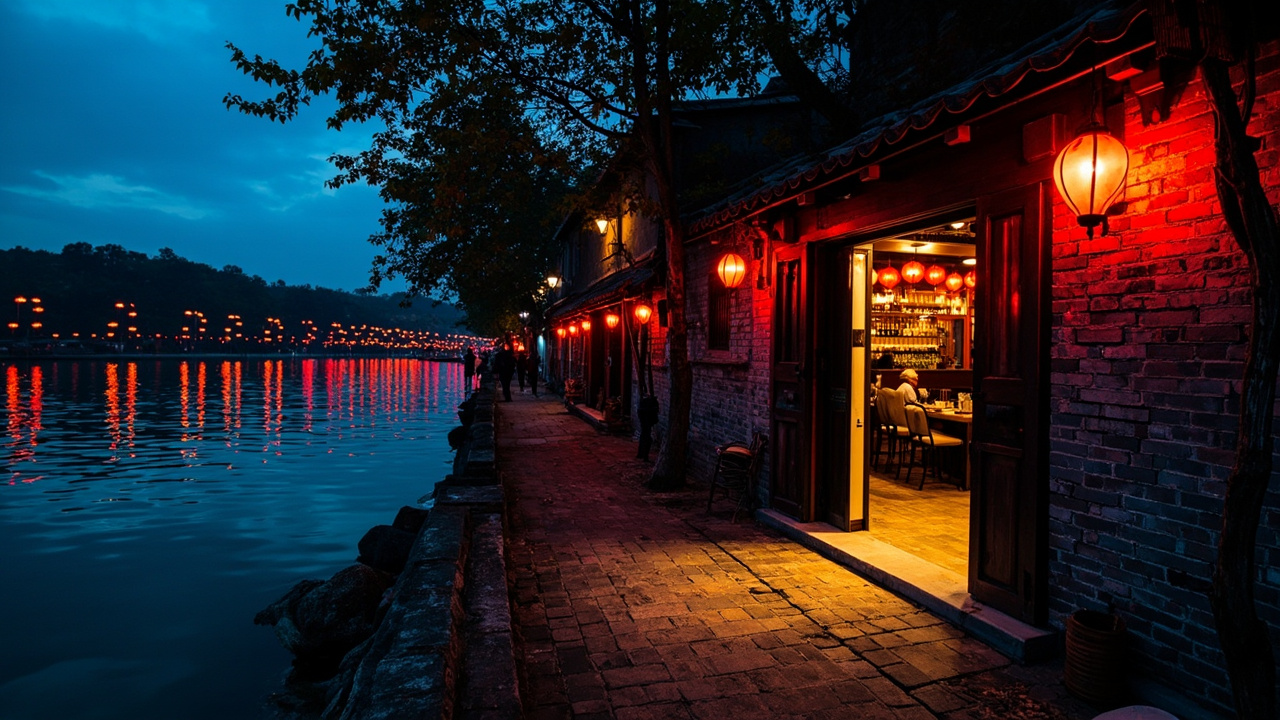
The cab dropped me at the north gate of Houhai at 11:40 PM on a Friday in October. A woman in a sequined dress was arguing with a rickshaw driver about the fare, her voice cutting through the hum of a hundred idling engines. A group of students sang a slightly off-key pop song on the bridge behind her. Somewhere across the frozen-over lake that wasn’t yet frozen, a drumbeat started and stopped, started and stopped, like someone testing a microphone that didn’t need testing.
I’d been in Beijing for two years at that point, and I still didn’t have a standard answer for “what should we do tonight?” The city doesn’t give you one. It gives you a dozen, and they all contradict each other. One night you’re watching a jazz trio in a converted factory in 798. The next you’re squatting on plastic stools eating lamb skewers that cost 30 cents, watching a man grill them over charcoal in a hutong doorway. The next you’re in a basement club that doesn’t have a sign, listening to techno that sounds like a train derailing, surrounded by people who came here from Berlin and Seoul and São Paulo just for this.
This guide is the result of seven years of those nights. I’ve split it into ten places that cover the range of what Beijing nightlife actually is, not what the hotel concierge thinks it is. You’ll get specific directions, honest prices, and the kind of details you only learn by making mistakes. I’ve made plenty. You don’t have to.
Quick answer
Beijing’s nightlife in 2026 runs from 9 PM to 4 AM, costs roughly $15–$60 (¥110–¥430) for a full evening depending on your scene, and is fully accessible to tourists under the current 240-hour visa-free transit policy if you’re eligible. The city is safe at night, the subway stops around 11 PM so budget for taxis or Didi (China’s Uber), and you’ll need Alipay or WeChat Pay set up before you go out because most venues don’t take cash or foreign cards.
The Short Version
If you only have one night in Beijing, skip the tourist bar streets entirely. Go to Houhai for the lake view and a drink at a lakeside bar, then walk into the hutongs behind it and find a small live music venue or a quiet courtyard bar. If you want to dance, head to Dada or Lantern in the Gulou area. If you want to eat at 2 AM, go to Guijie for crayfish. If you want to see something you’ll never see anywhere else, go to a hutong courtyard bar and just sit there. Beijing nightlife rewards wandering more than planning.
How I Picked These
I’ve lived in Beijing since 2019 and I’ve been to every place on this list multiple times, at different hours, in different seasons, with different people. I’ve also been to the places that didn’t make the cut, and I know why they didn’t. Some are overrun with tour groups. Some have gone downhill since their moment passed. Some are genuinely good but too complicated for a first-time visitor to navigate without speaking Chinese. Every place here passed three tests: it’s worth the trip, it’s accessible to a non-Chinese speaker, and it gives you something you can’t get in your home city. I also asked Chinese friends and expats who’ve been here longer than me what they’d add. A few of their suggestions made the list.
Comparison Table
| Rank | Place | Best For | Approx Cost (USD) | Time Needed | When to Go |
|---|---|---|---|---|---|
| 1 | Houhai Lake & Hutongs | First-night wandering, lake views, casual drinks | $10–$30 (¥70–¥215) | 2–4 hours | Sunset to 1 AM, weekdays quieter |
| 2 | Dada Bar | Underground electronic music, dancing | $5–$15 (¥35–¥110) | 3–4 hours | Friday/Saturday from 11 PM |
| 3 | Lantern | House/techno, serious dancers | $5–$15 (¥35–¥110) | 3–5 hours | Weekends from midnight |
| 4 | Guijie (Ghost Street) | Late-night food, crayfish, people-watching | $15–$40 (¥110–¥290) | 1–2 hours | 10 PM to 3 AM |
| 5 | 798 Art District Bars | Art galleries, wine bars, quieter scene | $15–$50 (¥110–¥360) | 2–3 hours | Thursday–Saturday evenings |
| 6 | Modernista | Live jazz, cocktails, historic building | $20–$50 (¥145–¥360) | 2–4 hours | Tuesday–Sunday from 8 PM |
| 7 | Temple Bar | Live rock, indie music, courtyard setting | $10–$30 (¥70–¥215) | 2–3 hours | Friday/Saturday from 9 PM |
| 8 | Sanlitun Bar Street | International crowd, club hopping | $20–$60 (¥145–¥430) | 2–4 hours | Friday/Saturday from 10 PM |
| 9 | Migas Rooftop | Skyline views, upscale cocktails | $30–$80 (¥215–¥575) | 2–3 hours | Sunset to midnight, clear nights |
| 10 | School Bar | Punk, indie rock, raw atmosphere | $5–$15 (¥35–¥110) | 2–3 hours | Friday/Saturday from 9 PM |
Houhai Lake & Hutongs 鈥?the classic first night
The first time I brought visitors to Houhai, I made the mistake of walking them straight down the main bar strip on the east side of the lake. It’s loud, pushy, and every bar has a promoter outside trying to sell you overpriced beer. My friends thought I’d lost my mind. Then I turned them into the hutongs behind the lake, and everything changed.
The lake itself is worth seeing at night, especially in winter when it freezes over and locals skate on it under floodlights. But the real magic is in the narrow alleys that radiate off it, where courtyard houses have been converted into small bars, teahouses, and music venues. Some are barely wider than a doorway. You’ll find one with a jazz trio playing to fifteen people. Another has a cat asleep on the bar and a menu of baijiu cocktails you won’t understand.
Location: Xicheng District, around the lake and the hutongs between it and Gulou East Street.
Entry fee: Free to wander. Drinks run $5–$15 (¥35–¥110) depending on the venue.
Opening hours: The area is active from late afternoon until 2–3 AM. Individual bars vary. In winter, outdoor seating disappears and the lake freezes.
Getting there: Take Subway Line 8 to Shichahai Station, Exit A. Walk south for about 5 minutes and you’ll hit the northwest corner of the lake. Or take Line 6 to Beihai North Station and walk north.
When to visit: Sunset is the best time to arrive, so you see the lake in daylight and then watch it transition. Weekday evenings are noticeably calmer than weekends.
Insider tips: Skip the bars directly on the lakefront, they’re overpriced and mediocre. Walk one or two alleys back and prices drop by half. If you want a boat ride on the lake, they run until about 10 PM in summer, not after. The hutong bars don’t have signs in English, so look for the ones with music coming out and a door that’s slightly ajar.
I once watched a middle-aged Chinese man in a leather jacket sing Frank Sinatra covers to a crowd of eight people in a bar the size of my kitchen. He was terrible. He was also wonderful. Nobody filmed it. Everybody clapped.
Dada Bar 鈥?where Beijing actually dances
Dada doesn’t look like much from the outside. It’s a door in a wall on a street that’s mostly dark at night, with a small sign that says “DADA” in unlit letters. Inside, it’s a concrete room with a decent sound system and a bar at the back. That’s it. No velvet ropes, no bottle service, no dress code. Just music and people.
This is the place Beijing’s electronic music scene actually lives. Local DJs play alongside international guests, and the programming leans toward house, techno, and bass music. The crowd is a mix of Chinese students, expats, and people who came specifically for whoever’s playing. It gets busy around midnight and stays busy until the lights come up at 4 or 5 AM.
Location: 206 Gulou Dong Dajie, Dongcheng District. It’s on the second floor of a building that also houses a restaurant.
Entry fee: Usually $5–$10 (¥35–¥70) at the door. Some nights are free. Bigger international DJs cost more, up to $20 (¥145).
Opening hours: Opens around 9 PM, gets going after 11 PM. Closes around 4–5 AM. Check their WeChat or Instagram for the schedule.
Getting there: Take Subway Line 2 to Gulou Dajie Station, Exit B. Walk east along Gulou East Street for about 8 minutes. The entrance is on the south side of the street.
When to visit: Friday and Saturday are the best nights. Weeknights are often dead unless there’s a specific event.
Insider tips: Bring earplugs, the sound system is loud. There’s no cloakroom, so travel light in winter. Drinks are cheap for Beijing, around $4–$6 (¥30–¥45) for beer and well drinks. The smoking ban is enforced inside, but people smoke on the balcony and near the entrance. If you want to sit down, there are a few couches at the back, but this is a standing-and-dancing venue.
I went to Dada alone on a Tuesday once because a DJ from Berlin I liked was playing. I stood at the bar, ordered a beer, and within twenty minutes a Chinese guy named Chen who’d been living in Berlin for six years started talking to me about the differences between the two scenes. We’re still friends.
Lantern 鈥?for the serious dancers
Lantern is Dada’s older, more serious sibling. It’s been a fixture of Beijing’s underground scene since 2009, and it’s the place you go when you want proper house and techno in a proper club environment. The main room has a Funktion-One sound system that costs more than most people’s cars. The lighting is minimal. The focus is entirely on the music.
The crowd here skews older and more dedicated than Dada. You’ll see people who’ve been coming for a decade alongside younger Chinese who discovered techno through Boiler Room videos. The dance floor fills up late, usually after 1 AM, and the music can run until 6 or 7 AM on weekends.
Location: 79 Heizhima Hutong, Dongcheng District. It’s tucked away in a hutong near the Lama Temple.
Entry fee: $10–$20 (¥70–¥145) depending on the night and the DJ.
Opening hours: Friday and Saturday from 10 PM to late. Some Sunday events. Check their schedule on WeChat.
Getting there: Take Subway Line 2 or 5 to Yonghegong Station, Exit C. Walk south on Yonghegong Street, then turn into Heizhima Hutong. It’s about a 10-minute walk. The entrance is unmarked except for a small lantern logo.
When to visit: Saturday is the biggest night. If you want more space to dance, arrive before midnight.
Insider tips: The smoking area is outside, which is good, but it means you’ll be going in and out in winter. There’s a small room upstairs with sofas if you need a break. The bar accepts Alipay and WeChat Pay but not cash or foreign cards. If you’re not used to dancing for hours, wear shoes you can move in. This is not a venue for standing at the bar watching.
I made the mistake of wearing boots to Lantern once. By 3 AM my feet were screaming. A Chinese woman next to me noticed and laughed, then pointed at her own worn-down sneakers. “First time?” she asked. She’d been coming for eight years.
Guijie (Ghost Street) 鈥?the 2 AM food crawl
Guijie, which translates to Ghost Street, is a stretch of Dongzhimennei Dajie that comes alive when the rest of the city sleeps. The street runs for about a kilometer and is lined with restaurants, most of them open 24 hours. The signature dish is crayfish, served by the kilogram, and you eat them with your hands while wearing plastic gloves that the restaurant provides.
The name comes from the street’s history, when it was a market for funerary goods. Now it’s where Beijing goes when it’s 1 AM and someone says “I’m hungry.” You’ll see groups of friends in business clothes, students in hoodies, families with grandparents, all cracking crayfish shells and drinking cold beer.
Location: Dongzhimennei Dajie, Dongcheng District. The main stretch runs from the Dongzhimen intersection westward for about a kilometer.
Entry fee: Free to walk. A meal runs $15–$40 (¥110–¥290) per person depending on how much you order.
Opening hours: Most restaurants are open 24 hours. The street is busiest from 10 PM to 3 AM.
Getting there: Take Subway Line 2 to Dongzhimen Station, Exit B. Walk west along Dongzhimennei Dajie. The restaurants start within a few minutes.
When to visit: Any night, but the energy peaks on weekends. Summer is the best season because crayfish are in season and the outdoor seating is pleasant.
Insider tips: The most famous restaurant is Hu Xiao Er, but don’t feel obligated to go there. Walk down the street and pick one that looks busy with locals. Order the crayfish (麻辣小龙虾) and the grilled skewers. Don’t bother with the gloves, you’ll get messy anyway. Beer is cheap, around $2–$3 (¥15–¥20) per bottle. If you don’t eat shellfish, most places also do good stir-fried noodles and vegetable dishes.
I brought my parents to Guijie when they visited. My mother, who had never eaten crayfish in her life, ended up eating two kilograms by herself and asking if we could come back the next night. We did.
798 Art District Bars 鈥?the quieter side
Most people visit 798 during the day to see the galleries in the converted military factories. Fewer know that the district has a small but interesting nightlife scene. The galleries close around 6 PM, but several wine bars and cocktail lounges stay open, and the industrial architecture takes on a different character after dark.
This isn’t a place for dancing or loud music. It’s for conversation, good wine, and the feeling of being in a place that was once the heart of China’s contemporary art scene. The crowd is a mix of artists, gallery owners, and people who work in the creative industries.
Location: 798 Art District, Jiuxianqiao Road, Chaoyang District.
Entry fee: Free to enter the district. Drinks run $10–$20 (¥70–¥145) at most bars.
Opening hours: Bars typically open around 6–7 PM and close between midnight and 2 AM. Many are closed on Mondays.
Getting there: Take Subway Line 14 to Jiangtai Station, Exit C. It’s a 15-minute walk or a short taxi ride to the district’s main entrance. A Didi from central Beijing costs about $5–$8 (¥35–¥60).
When to visit: Thursday through Saturday evenings. The district is much quieter on weeknights, which can be nice or dead depending on your preference.
Insider tips: Check which galleries have evening openings, they often have free wine and interesting people. The bar at the UCCA Center for Contemporary Art is a good starting point. Some of the smaller bars are hidden in the side alleys, so wander off the main roads. Taxis can be hard to find after midnight, so book a Didi before you’re ready to leave.
I once ended up at a wine bar in 798 with a painter who’d had a solo show in Venice. We talked about how Beijing had changed since he started coming here in the early 2000s. He said the art was still good but the rent was getting ridiculous. He wasn’t wrong.
Modernista 鈥?jazz in a historic courtyard
Modernista sits in a restored 1920s building that was once a bank. The main room has high ceilings, original brick walls, and a stage at one end. The programming leans toward jazz, swing, and world music, with live bands most nights. The crowd is a mix of Chinese professionals, expats, and tourists who’ve found their way here.
The building itself is part of the appeal. It’s in a hutong near the former Legation Quarter, and you can feel the history in the walls. The cocktails are solid, the service is attentive, and the atmosphere is more refined than most of Beijing’s nightlife without being stuffy.
Location: 44 Baochao Hutong, Dongcheng District.
Entry fee: Cover charge varies, usually $10–$20 (¥70–¥145) on live music nights. Free on some weeknights.
Opening hours: Tuesday to Sunday, from about 7 PM to 2 AM. Live music usually starts around 9 PM.
Getting there: Take Subway Line 5 to Dengshikou Station, Exit A. Walk north for about 10 minutes through the hutongs. It’s easier to find with a map app, the entrance is a small door in a wall.
When to visit: Friday and Saturday have the best programming. If you want a quieter experience, go on a Tuesday or Wednesday when there’s often no cover.
Insider tips: Book a table if you want to sit close to the stage, especially on weekends. The bar area is standing room only. They have a good selection of Chinese spirits if you want to try baijiu in a cocktail. The staff speak English well enough to help you choose. Dress is smart casual, no one’s wearing a suit but you’ll feel out of place in athletic wear.
I brought a friend who’d never heard live jazz before. She spent the whole first set staring at the saxophonist like she was watching a magic trick. “How does he do that with his breath?” she asked me during the break. I didn’t have an answer.
Temple Bar 鈥?rock music in an old temple
Despite the name, Temple Bar isn’t actually in a temple. It’s in a converted factory building near the Confucius Temple, and the name comes from the neighborhood rather than the building itself. What it lacks in literal temple vibes it makes up for in atmosphere. The main room is raw brick and concrete, with a small stage at one end and a bar along the side.
The programming focuses on live rock, indie, and punk, with both local and touring bands. The crowd is younger and more casual than Modernista, and the energy is more DIY. This is where Beijing’s rock scene has been hanging out for years, and it shows.
Location: 3 Zhangwang Hutong Jiudaowan, Dongcheng District. Near the Confucius Temple and the Lama Temple.
Entry fee: Usually $5–$10 (¥35–¥70) for live shows. Free on nights without music.
Opening hours: Most nights from 7 PM to 2 AM. Live music typically starts around 9 PM.
Getting there: Take Subway Line 2 or 5 to Yonghegong Station, Exit C. Walk south past the Lama Temple, then turn into the hutongs. It’s about a 10-minute walk. Look for the building with the painted exterior.
When to visit: Friday and Saturday nights have the best lineups. Check their WeChat for the schedule if you want to see a specific band.
Insider tips: The venue is small, so arrive early if you want a good spot for the show. The bar accepts Alipay and WeChat Pay but not foreign cards. There’s a small outdoor area for smoking and cooling down between bands. If you’re not into loud rock music, this probably isn’t your place, but if you are, you’ll feel at home.
I saw a Chinese punk band here that sang entirely in Mandarin and had the crowd screaming along. I didn’t understand a word, but I understood the feeling. The guitarist caught my eye during a solo and nodded, like he knew I was getting it.
Sanlitun Bar Street 鈥?the international zone
Sanlitun is Beijing’s most famous nightlife district, and it’s the closest thing the city has to a Western-style bar scene. The main area, around Sanlitun Road and the Taikoo Li shopping complex, is packed with bars, clubs, and restaurants that cater to a mix of tourists, expats, and wealthy young Chinese.
I have mixed feelings about Sanlitun. It’s not where I’d send someone looking for an authentic Beijing experience. But it’s where you go if you want options, if you want to hear English spoken, or if you just want to be in the middle of things. The clubs here are bigger and flashier than anywhere else in the city, with bottle service and DJ booths and crowds that spill onto the street.
Location: Sanlitun area, Chaoyang District. The main bar streets are Sanlitun Road and the lanes around Taikoo Li.
Entry fee: Free to walk around. Club entry ranges from free to $20 (¥145) depending on the venue and the night. Drinks are more expensive here, $8–$15 (¥60–¥110) for cocktails.
Opening hours: Bars open in the afternoon, clubs get going around 10 PM and stay open until 4–5 AM.
Getting there: Take Subway Line 10 to Tuanjiehu Station, Exit D. Walk north for about 10 minutes. Or take Line 2 to Dongsi Shitiao Station and walk south.
When to visit: Friday and Saturday are the busiest nights. If you want a more relaxed experience, go on a weeknight when the crowds are thinner and the promoters are less aggressive.
Insider tips: The promoters outside clubs will tell you anything to get you inside. Don’t trust them about cover charges or drink prices. Check the venue’s WeChat or ask at the door. The bars in the lanes behind Taikoo Li are more interesting than the ones on the main street. If you want to avoid the tourist trap feel, head to the smaller bars in the surrounding office buildings.
I went to Sanlitun with a group of visiting friends who wanted to see “the real Beijing nightlife.” I took them to the quieter bars first, then let them loose in Sanlitun for an hour. They had fun, but they agreed the hutongs were better. I felt vindicated.
Migas Rooftop 鈥?views and cocktails
Migas sits on the top floor of a building in the Central Business District, and it has one of the best views in Beijing. From the outdoor terrace, you can see the skyline of the CBD, with the China Zun tower and the CCTV building lit up against the night sky. On a clear day, you can see the mountains to the west.
This is the place for a special occasion, or for when you want to feel like you’re in a different Beijing than the one in the hutongs. The cocktails are well-made, the service is polished, and the crowd is a mix of business travelers, well-off locals, and people celebrating something.
Location: 6/F, China World Summit Wing, 1 Jianguomenwai Avenue, Chaoyang District. It’s on top of the China World Hotel.
Entry fee: No cover charge, but drinks are expensive. Cocktails run $15–$25 (¥110–¥180). There’s often a minimum spend on weekends.
Opening hours: Daily from about 5 PM to 1 AM. The terrace closes earlier in winter when it gets cold.
Getting there: Take Subway Line 1 or 10 to Guomao Station, Exit A. The China World complex is directly above the station. Take the elevator to the top floor.
When to visit: Sunset is the best time, so you can watch the city light up. Clear days are significantly better than hazy ones. Summer evenings are ideal for the terrace.
Insider tips: Dress code is smart casual, no shorts or athletic wear. If you want a table on the terrace, book ahead, especially on weekends. The indoor bar area is less crowded and has the same view through floor-to-ceiling windows. The CBD is dead on weekends, so this place is quieter on Saturdays than you might expect.
I brought my sister here on her first trip to China. She’d spent the day in the hutongs and was feeling overwhelmed. We sat on the terrace with cocktails and watched the city lights come on. “Okay,” she said. “I get it now.”
School Bar 鈥?the last of the old guard
School Bar has been a fixture of Beijing’s underground rock scene since 2007, and it feels like it hasn’t changed much since. The walls are covered in band stickers and graffiti. The stage is barely raised off the floor. The sound system is adequate at best. None of that matters when a good band is playing.
This is where you come to see the next generation of Chinese rock bands before they get big, or to see the old guard who never got big and don’t care. The crowd is young, the beer is cheap, and the atmosphere is genuinely punk in a way that’s increasingly rare in a city that’s been cleaning up its nightlife.
Location: 53 Wudaoying Hutong, Dongcheng District.
Entry fee: Usually $5–$10 (¥35–¥70) for shows.
Opening hours: Most nights from 8 PM to 2 AM. Shows start around 9–10 PM.
Getting there: Take Subway Line 2 or 5 to Yonghegong Station, Exit C. Walk south to Wudaoying Hutong, then walk east. It’s about a 10-minute walk. The entrance is a small door with a sign that says “School.”
When to visit: Friday and Saturday nights have the best lineups. The bar is also open on some weeknights but can be very quiet.
Insider tips: The bar is cashless, so have Alipay or WeChat Pay ready. Beer is cheap, around $3–$4 (¥20–¥30). The venue is small and gets crowded fast, so arrive early for shows. There’s a small courtyard outside where people hang out between bands. If you’re over 35, you might feel old here, but nobody will care.
I came here to see a band called Lonely Leary, who’ve been playing Beijing’s underground circuit for years. The crowd was mostly university students, but there was an older man at the bar who’d clearly been coming since the venue opened. He nodded at me when the band started, like we were in on the same secret.
FAQ summary
Beijing nightlife in 2026 runs from about 9 PM to 4 AM, with most venues accepting Alipay or WeChat Pay but not cash or foreign cards. The subway stops around 11 PM, so budget for taxis or Didi rides home, which cost $5–$15 (¥35–¥110) from most nightlife districts to central hotels. The current 240-hour visa-free transit policy covers many nationalities, making a short Beijing trip feasible without a full tourist visa. Most venues don’t require advance booking except upscale rooftop bars and restaurants, and the city is generally safe at night for solo travelers.
FAQ
Is Beijing safe at night? Yes, Beijing is one of the safest major cities I’ve been to. I’ve walked home alone at 3 AM many times without incident. That said, use common sense: stick to well-lit areas, keep your phone in your pocket on crowded streets, and use official taxis or Didi rather than unlicensed cars.
Do I need to speak Chinese to enjoy Beijing nightlife? No, but it helps. In tourist areas like Sanlitun and Houhai, you’ll find English speakers. In the underground venues like Dada and School Bar, the staff usually speak enough English to serve you, and the crowds are international. I’d recommend downloading a translation app for menus and for communicating with taxi drivers who don’t speak English.
How do I pay for things at night? You’ll need Alipay or WeChat Pay set up on your phone before you go out. Most venues, even small bars, don’t accept cash or foreign credit cards. Set these up with your passport and a foreign card before you arrive in China. See our China travel payment guide for step-by-step instructions.
What time should I go out? Most bars open around 7–8 PM and are quiet until 10 PM. Clubs don’t get busy until after midnight. If you want to see a live band, arrive by 9 PM. If you want to dance, aim for 11 PM or later. The subway stops around 11 PM, so if you want to use it to get home, you’ll need to leave early or budget for a taxi.
How do I get home after the subway stops? Use Didi, which is China’s version of Uber. The app is available in English and accepts Alipay or WeChat Pay. A ride from Gulou or Sanlitun to most central hotels costs $5–$15 (¥35–¥110). Official taxis are also available but harder to flag down late at night. Have your hotel’s name and address written in Chinese to show the driver.
Is there a dress code for clubs? Most underground venues like Dada and Lantern have no dress code at all. Wear what’s comfortable for dancing. Upscale places like Migas Rooftop and some Sanlitun clubs expect smart casual. I’ve never been turned away from a Beijing venue for wearing jeans and a clean shirt.
Can I visit Beijing without a visa in 2026? Many nationalities are eligible for China’s 240-hour visa-free transit policy, which allows stays of up to 10 days if you’re transiting through China to a third country. Citizens of many European countries, the US, Canada, Australia, and others qualify. Check the current rules before you book, as they’ve changed recently. See our visa-free transit guide for the latest details.
The Honest Wrap-up
This list covers the range of Beijing nightlife, but it can’t cover everything. The city changes fast. Venues close, new ones open, and the best nights often happen in places that don’t have a listing anywhere. If you only do one thing from this guide, make it the Houhai hutongs. Walk without a destination, follow the sound of music, and see where you end up.
This guide is for first-timers who want to see what Beijing is actually like after dark, not just the version in the guidebooks. It’s not for people who want a predictable night out with Western-style clubs and familiar music. Beijing can do that too, but it would be a waste of what makes this city special.
One final piece of advice: bring a jacket, even in summer. Beijing nights can be cooler than you expect, and you’ll be spending time outdoors walking between venues. And don’t try to do too much in one night. Pick one or two places and give yourself time to wander. The best moments in Beijing nightlife are the ones you didn’t plan.
More guides you may like
Top 10 Bridges in China
China's bridges are engineering marvels spanning mountains, rivers, and seas. Here are 10 of the most spectacular, from ancient stone to modern steel.
8 min read

Top 10 Buddhist Sites in China
From the Leshan Giant Buddha to the Dunhuang Caves, these 10 Buddhist sites represent 2,000 years of China's spiritual heritage.
9 min read
Top 10 Day Trips from Beijing You Shouldn't Miss
Beijing is packed with history, but some of China's best experiences are just a few hours away. Here are 10 day trips that will transform your visit.
9 min read
Top 10 Hidden Gems in China Off the Beaten Path
Beyond the Great Wall and Terracotta Warriors, China has incredible hidden destinations few tourists ever reach. Here are 10 underrated gems worth the detour.
9 min read
Top 10 Markets and Shopping Streets in China
From Shanghai's Bund to Beijing's Silk Street - 10 markets where foreigners can haggle, explore, and bring home authentic Chinese goods.
9 min read
Top 10 Museums in China You Shouldn't Miss
China's museums span 5,000 years of civilization. These 10 - from the Palace Museum to Xi'an's terracotta gallery - are unmissable for culture lovers.
9 min read