
Things to Do in Shenzhen
TODO: Extract from article (100-160 chars)
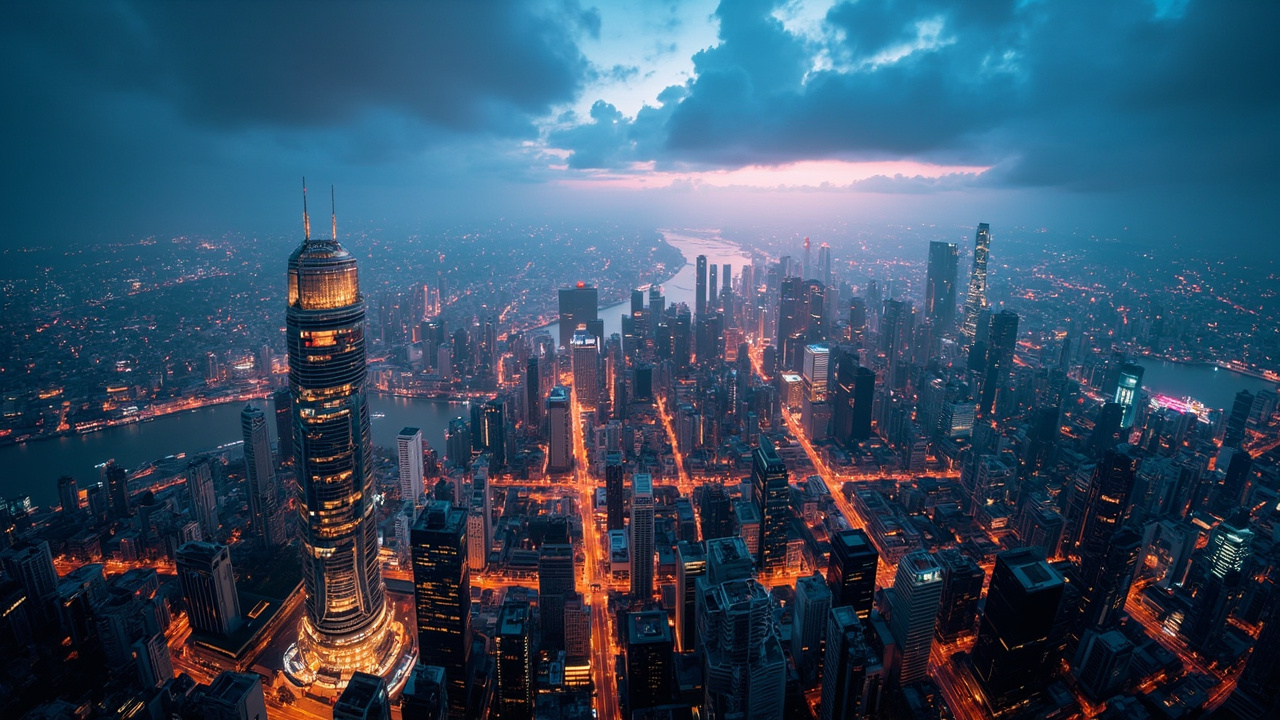
Things to Do in Shenzhen
The first thing I noticed was the silence. I’d stepped off the Metro at OCT-LOFT on a Tuesday morning expecting the usual Chinese city roar, and instead got birdsong, cicadas, and the creak of a gallery door being propped open. A woman in paint-stained overalls was hosing down the courtyard. Nobody was selling me anything. That’s Shenzhen in a nutshell: a city of 17 million people that still surprises you with pockets of quiet, because almost everything here was built in the last 45 years and nobody’s quite decided what it’s supposed to feel like yet.
Shenzhen gets skipped. Tourists fly into Hong Kong, glance across the border, and assume it’s just factories and knockoff electronics. That was true in 1995. It isn’t now. This is where China tests things first: cashless payments, drone delivery, electric buses, bike-share, the whole playbook. It’s also where you find the best Cantonese food outside Guangzhou, a beach you can actually swim at, and the single best museum in the country for understanding how modern China got made.
What you’ll get from this guide: ten places I’ve actually been, ranked by whether they’re worth your limited vacation days, with real prices, real Metro exits, and the stuff I wish someone had told me the first time I came here in 2019 and got hopelessly lost looking for a “creative park” that turned out to be a parking lot.
Quick answer
Shenzhen is visa-free for most American, European, and Southeast Asian passport holders under China’s 240-hour (10-day) transit policy, and it’s easiest to reach from Hong Kong by high-speed rail in 14–25 minutes for about $10–$20 (CNY 70–140). The city’s top experiences are OCT-LOFT and Dafen for art, Window of the World and Splendid China for kitsch, Dameisha and Xiaomeisha beaches for swimming, and the Shenzhen Museum for context — most cost under $15 (CNY 100) and the whole city runs on WeChat Pay and Alipay, so set those up before you land.
The Short Version
If you have 48 hours: do OCT-LOFT in the morning, Shenzhen Museum in the afternoon, Dameisha Beach at sunset, and eat dim sum in Luohu at least twice. Skip Window of the World unless you have kids or a sense of humor about it. Bring a translation app — English is spoken at hotels and tech offices, less so in markets and taxis. Get a Chinese SIM or eSIM before you arrive; Google, Instagram, and WhatsApp are blocked without a VPN.
How I Picked These
I’ve been to Shenzhen six times since 2019, most recently in March 2026. I’ve stayed in Futian, Nanshan, and Luohu, taken the Metro at rush hour, gotten a SIM card at the airport, and once paid $40 for a taxi from Bao’an Airport because I didn’t know the Metro ran until 11pm. I picked these ten by asking the same question every trip: if a friend had one week in Shenzhen, what would I actually drag them to? I cross-checked with a Shenzhen-based translator named Wei, a hostel manager in OCT, and a food blogger who goes by “Little Fish” on Xiaohongshu. I dropped anything that only looks good on Instagram.
Comparison Table
| Rank | Place | Best For | Approx Cost (USD) | Time Needed | When to Go |
|---|---|---|---|---|---|
| 1 | OCT-LOFT | Art, coffee, wandering | Free | 3–4 hrs | Weekday morning |
| 2 | Shenzhen Museum (Futian) | Understanding the city | Free | 2–3 hrs | Weekday, opens 10am |
| 3 | Dafen Oil Painting Village | Art shopping, watching painters | Free (paintings $15–$500) | 2–3 hrs | Weekday afternoon |
| 4 | Dameisha Beach | Swimming, seafood | Free (chairs ~$10) | Half day | May–Oct, weekday |
| 5 | Window of the World | Kitsch, kids, photos | ~$32 (CNY 230) | 4–5 hrs | Weekday, arrive 9am |
| 6 | Splendid China Folk Village | Culture, dance shows | ~$28 (CNY 200) | 3–4 hrs | Weekday afternoon |
| 7 | Lianhuashan Park | Skyline views, walking | Free | 1–2 hrs | Sunset, any day |
| 8 | Huaqiangbei Electronics Market | Gadgets, people-watching | Free to browse | 2 hrs | Weekday |
| 9 | Nantou Ancient Town | Old streets, street food | Free | 2 hrs | Evening |
| 10 | Ping An Finance Centre Observation Deck | Views, cocktails | ~$25 (CNY 180) | 1–2 hrs | Clear evening |
1. OCT-LOFT — Where Shenzhen Pretends It’s Berlin
I got lost here on purpose the first time, which is the correct way to do it. OCT-LOFT is a converted factory complex in Nanshan, and it’s the closest thing China has to a Kreuzberg or a Bushwick — except cleaner, and with better coffee. The buildings are old enamelware and electronics factories from the 1980s, repainted in muted grays and ochres, with bougainvillea spilling over the walls. On a weekday morning it’s mostly designers, gallery staff, and a few retirees doing tai chi in the plaza.
Why it’s special: this is where you see the version of Shenzhen that isn’t a business trip. There are maybe 40 galleries, a handful of genuinely good independent bookshops, and a rotating cast of pop-up exhibitions that change every few months. The photography gallery at the north end (free) had a show in March about Shenzhen’s fishing-village origins that made me sit down for twenty minutes. The whole place is walkable in an afternoon, and there’s no pressure to buy anything.
📍 Location: Nanshan District, OCT-LOFT, off Enping Street 🎫 Entry fee: Free; individual exhibitions sometimes charge $3–$7 (CNY 20–50) 🕒 Opening hours: Complex open 24/7; galleries typically 10am–6pm, closed Mondays 🚇 How to get there: Metro Line 1 to Qiaocheng East (侨城东), Exit A, walk 8 minutes north. Or Line 2 to OCT (侨城北), Exit A, walk 10 minutes. ⏰ When to visit: Weekday mornings. Weekends get crowded with photo shoots. 💡 Insider tips: The best coffee is at the small roaster tucked behind the north gallery — no English menu, just point. Bring cash for the tiny vintage shop near the entrance; they don’t take WeChat. The public bathrooms are clean and free, which matters more than you’d think.
I bought a hand-bound notebook from a woman named Lin who runs a two-table stationery stall. She wouldn’t take my money for the second one — said it was a gift for “the foreigner who came back.”
2. Shenzhen Museum — The Best Two Hours You’ll Spend Understanding China
Most tourists skip city museums. Don’t skip this one. The Shenzhen Museum’s main branch in Futian tells the story of how a fishing village of 30,000 people became a megacity in 40 years, and it does it without the usual propaganda gloss. There’s a room of original 1980s documents from when Deng Xiaoping designated the city a Special Economic Zone. There’s a wall of photos of the first migrant workers who came down from Hunan and Sichuan in 1982. I stood in front of one for a long time — a group of teenagers in cheap jackets, grinning at the camera, standing in what is now downtown.
Why it’s special: you cannot understand modern China without understanding Shenzhen, and this is the clearest explanation available in English. The signage is bilingual, the exhibits are well-lit, and the air conditioning is aggressive in the best way. It’s also free, which is rare for a museum of this quality.
📍 Location: Futian District, 3 Fuzhong Road, next to Civic Center 🎫 Entry fee: Free (bring passport for entry) 🕒 Opening hours: 10am–6pm, closed Mondays; last entry 5:30pm 🚇 How to get there: Metro Line 3 or 4 to Children’s Palace (少年宫), Exit B, walk 3 minutes. Or Line 2/4 to Civic Center (市民中心), Exit B. ⏰ When to visit: Weekday right at 10am. Weekends have school groups. 💡 Insider tips: The permanent “Modern Shenzhen” exhibit on the second floor is the one to prioritize if you’re short on time. There’s a free locker room near the entrance — useful if you’re coming from the airport. The café on the ground floor is overpriced; walk five minutes to the Civic Center basement for cheaper noodles.
I made a mistake here: I assumed “Museum of Shenzhen” and “Shenzhen Museum” were the same thing. They’re not. The one you want is the Futian branch, not the one in Luohu.
3. Dafen Oil Painting Village — Where the World’s Hotel Art Comes From
Dafen is a working village in Longgang where thousands of painters copy famous artworks for export. You’ve seen their work — every Marriott lobby in America has a Dafen Monet. I expected it to be depressing. It wasn’t. It’s fascinating. You walk down narrow alleys lined with open studios, and there’s a guy in his 20s painting a perfect Van Gogh sunflower while listening to a podcast, and next to him a woman doing traditional Chinese landscapes, and next to her a shop selling 200 identical copies of the Mona Lisa for $30 each.
Why it’s special: this is the only place in the world where you can watch the global art market’s supply chain in real time. It’s also a genuinely good place to buy art — you can commission a portrait from a photo for $50–$150 (CNY 350–1,000) and pick it up two days later. Some of the painters are legitimately talented and just doing this for money. Ask to see their personal work.
📍 Location: Longgang District, Dafen Village, Buji Subdistrict 🎫 Entry fee: Free 🕒 Opening hours: Studios roughly 9am–7pm daily; some close Sundays 🚇 How to get there: Metro Line 3 to Dafen (大芬), Exit A1, walk 3 minutes ⏰ When to visit: Weekday afternoon. Weekends are packed with tour buses. 💡 Insider tips: The main street is the tourist trap; the good stuff is one block back. Bring a photo on your phone if you want a commission. Most painters take WeChat Pay but a few prefer cash. Don’t haggle below about 60% of the asking price — it’s rude and they’ll just walk away.
I commissioned a portrait of my parents from a painter named Chen. It cost $80 (CNY 580) and took three days. My mother cried when she opened it.
4. Dameisha Beach — The One That Actually Works
I’ll be honest: I didn’t expect much from a Shenzhen beach. I grew up near the Atlantic and I’m snobby about this. Dameisha surprised me. It’s a real beach — long, sandy, with actual waves and water you can swim in from May through October. It’s not the Maldives. But on a clear weekday morning in June, with the mountains of the Dapeng Peninsula behind you and Hong Kong’s New Territories faintly visible across the water, it’s genuinely lovely.
Why it’s special: it’s the only beach in mainland China within an hour of a major international airport that’s actually pleasant to swim at. The seafood restaurants along the boardwalk are cheap and good. And because it’s technically in Yantian District, it feels like a different city — slower, older, more Cantonese.
📍 Location: Yantian District, Dameisha Beach Park 🎫 Entry fee: Free; beach chairs and umbrellas $8–$15 (CNY 60–110) 🕒 Opening hours: Beach open 24/7; swimming officially 8am–7pm, lifeguards on duty May–Oct 🚇 How to get there: Metro Line 8 to Dameisha (大梅沙), Exit A, walk 5 minutes to the beach ⏰ When to visit: Weekday mornings in June or September. Avoid July–August weekends — it’s wall-to-wall people. 💡 Insider tips: The public showers cost $1 (CNY 8) and are worth it. Lockers are $3 (CNY 20). The restaurants on the north end of the boardwalk are cheaper and better than the ones right at the entrance. Bring your own towel — rentals are gross.
I ate grilled squid from a stall run by a woman who’d been there since 2003. She told me the water’s gotten cleaner every year since 2015. I believe her.
5. Window of the World — Yes, It’s Cheesy. Go Anyway.
I have a complicated relationship with Window of the World. It’s a theme park in Nanshan with 130 scale models of world landmarks — the Eiffel Tower at 1:3 scale, the Taj Mahal, the Pyramids, a mini Niagara Falls. It is objectively ridiculous. It’s also one of the most honest expressions of 1990s Chinese ambition I’ve ever seen: a country that couldn’t afford to send its citizens abroad built a park so they could see the world anyway. My first visit, I rolled my eyes for an hour. Then I sat on a bench and watched a family from Gansu take 40 photos in front of the mini Sydney Opera House, and I got it.
Why it’s special: it’s kitsch, but it’s meaningful kitsch. And honestly, it’s fun. The evening light show is genuinely impressive. Kids love it. Adults who can laugh at themselves love it. Adults who can’t will hate it — skip it if that’s you.
📍 Location: Nanshan District, 9037 Shennan Boulevard 🎫 Entry fee: ~$32 (CNY 230) adults; ~$16 (CNY 115) kids under 1.5m 🕒 Opening hours: 9am–10:30pm daily; last entry 9pm 🚇 How to get there: Metro Line 1 or 2 to Window of the World (世界之窗), Exit J, walk 2 minutes ⏰ When to visit: Weekday, arrive at 9am. Weekends are chaos. Evening light show is at 7:30pm. 💡 Insider tips: Buy tickets on the official WeChat mini-program — cheaper than the gate and skips the line. Bring your own water; inside prices are 3x. The monorail around the park costs extra ($5/CNY 35) and is worth it if your feet are tired.
6. Splendid China Folk Village — The Other Theme Park
Splendid China is next door to Window of the World and gets half the visitors. It’s a 1:15 scale model of famous Chinese landmarks — the Great Wall, the Forbidden City, the Potala Palace — plus a “folk village” section with live performances from different ethnic minority groups. The performances are the reason to come. I watched a Dai water-splashing dance and a Mongolian throat-singing set back to back, and both were legitimately good. The models themselves are less interesting than Window of the World’s, but the cultural shows are better.
Why it’s special: if you’re not going to make it to Yunnan or Inner Mongolia on this trip, this is a decent preview. It’s also less crowded and less expensive than Window of the World.
📍 Location: Nanshan District, 9037 Shennan Boulevard (adjacent to Window of the World) 🎫 Entry fee: ~$28 (CNY 200) adults 🕒 Opening hours: 10am–9pm daily 🚇 How to get there: Metro Line 1 to OCT (华侨城), Exit D, walk 5 minutes ⏰ When to visit: Weekday afternoon, catch the 3pm and 5pm performances 💡 Insider tips: The performance schedule is posted at the entrance — plan around it. The ethnic minority villages in the back are more interesting than the front models. Bring mosquito repellent in summer.
7. Lianhuashan Park — The Best Free View in the City
Lianhuashan is a hill in the middle of Futian with a big open lawn at the top and a statue of Deng Xiaoping striding forward. The view from the summit is the classic Shenzhen postcard: Ping An Finance Centre, the Civic Center, KK100, the whole skyline laid out below you. I go every trip. It takes about 25 minutes to walk up from the south entrance, and it’s shaded most of the way.
Why it’s special: it’s free, it’s central, and it’s the one place in Shenzhen where you can see the whole city at once and understand its shape. Go at sunset. Bring a beer. Sit on the grass with everyone else.
📍 Location: Futian District, Hongli Road 🎫 Entry fee: Free 🕒 Opening hours: 6am–11pm daily 🚇 How to get there: Metro Line 3 or 4 to Children’s Palace (少年宫), Exit F1, walk 5 minutes to south gate ⏰ When to visit: Sunset, any day. Weekends are crowded but the vibe is good. 💡 Insider tips: The south gate is the easiest climb. There’s a convenience store at the top — beer and water, cash or WeChat. The lawn gets packed on weekend evenings with picnics and drone flyers.
8. Huaqiangbei Electronics Market — For People-Watching, Not Shopping
Huaqiangbei is the world’s largest electronics market — a warren of buildings selling every component, phone, and gadget imaginable. The famous “SEG Electronics Market” is the main draw, but honestly, unless you’re sourcing components for a startup, the shopping is a trap. What’s worth it is the people-watching. This is where the global supply chain comes to life. I watched a guy negotiate the price of 10,000 USB-C connectors in Mandarin at a speed I couldn’t follow, then walk away and do it again at the next stall.
Why it’s special: it’s the most concentrated dose of Shenzhen’s economic DNA you can get. It’s also a good place to buy a cheap phone case or charging cable if you forgot yours. Just don’t buy anything expensive — the “brand name” electronics are almost all fake.
📍 Location: Futian District, Huaqiangbei Commercial Area 🎫 Entry fee: Free 🕒 Opening hours: 10am–7pm daily; some stalls close Sundays 🚇 How to get there: Metro Line 2 or 7 to Huaqiangbei (华强北), Exit A, walk 2 minutes ⏰ When to visit: Weekday morning, before the crowds 💡 Insider tips: If you must buy electronics, test everything on the spot. Bring a power bank to test cables. The food court on the top floor of SEG is cheap and surprisingly good. Don’t follow anyone who approaches you on the street offering “good deals” — it’s a scam.
9. Nantou Ancient Town — The Real Old Shenzhen
Nantou is the one place in Shenzhen that predates the Special Economic Zone by centuries. It was a walled town during the Ming Dynasty, and a few fragments of the old wall and a temple still stand. The rest has been renovated into a pedestrian area with street food, small shops, and a couple of decent bars. It’s not “ancient” in the way Xi’an or Pingyao are — most of what you see is 2019 restoration — but it’s atmospheric, and the food is excellent.
Why it’s special: it’s the only place in the city where you can feel the pre-1980 Shenzhen. The temple at the center is genuinely old. The street food is better than anywhere else in the city — try the rice noodle rolls and the grilled oysters.
📍 Location: Nanshan District, Nantou Ancient Town, Shennan Boulevard 🎫 Entry fee: Free 🕒 Opening hours: Streets open 24/7; temple 8am–6pm 🚇 How to get there: Metro Line 1 to Taoyuan (桃园), Exit A, walk 10 minutes ⏰ When to visit: Evening, 6pm–9pm, when the food stalls are all open 💡 Insider tips: The rice noodle roll stall near the south gate is the best in the city — $1.50 (CNY 10) per roll. Cash is more useful here than elsewhere. The bars on the east side are overpriced; walk five minutes west for cheaper ones.
10. Ping An Finance Centre Observation Deck — The View From the Top
The Ping An Finance Centre is the tallest building in Shenzhen and the fourth-tallest in China. The observation deck on the 116th floor (Free Sky, at 562m) opened in 2021 and gives you a 360-degree view of the city, the Pearl River Delta, and on clear days, Hong Kong. It’s expensive. It’s also worth doing once. I went at 6pm on a Tuesday in March, watched the sun set behind the mountains, and stayed until the lights came on across the whole delta.
Why it’s special: it’s the only place where you can see how big Shenzhen actually is. From street level, the city feels fragmented — districts, neighborhoods, pockets. From 562 meters up, it’s one continuous organism stretching from the mountains to the sea.
📍 Location: Futian District, 5033 Yitian Road, Ping An Finance Centre 🎫 Entry fee: ~$25 (CNY 180) adults 🕒 Opening hours: 10am–9pm daily; last entry 8:30pm 🚇 How to get there: Metro Line 1 or 3 to Shopping Park (购物公园), Exit D, walk 5 minutes ⏰ When to visit: Clear evening, 30 minutes before sunset 💡 Insider tips: Buy tickets online in advance — the queue at the gate can be an hour on weekends. The café on the observation deck is overpriced but the view from the tables is worth one drink. Bring a light jacket — it’s cold up there at night.
FAQ summary
Shenzhen is visa-free for most Western and Southeast Asian passport holders under China’s 240-hour transit policy, provided you’re transiting to a third country. The city is easiest to reach from Hong Kong by high-speed rail (14–25 minutes, $10–$20/CNY 70–140). Most top attractions cost under $35 (CNY 250), and the whole city runs on WeChat Pay and Alipay — set those up before you arrive, and get a Chinese eSIM or SIM card at Bao’an Airport since Google, Instagram, and WhatsApp are blocked without a VPN.
FAQ
Q: Do I need a visa to visit Shenzhen? A: Most American, European, and Southeast Asian passport holders can enter Shenzhen visa-free for up to 240 hours (10 days) under China’s transit policy, but only if you’re transiting to a third country (e.g., flying into Shenzhen from Bangkok and out to Tokyo). If you’re entering and exiting to the same country, you’ll need a regular tourist visa. Check the latest rules before booking — the policy has been extended twice since 2024.
Q: How do I get from Hong Kong to Shenzhen? A: The fastest way is the high-speed rail from Hong Kong West Kowloon Station to Futian or Shenzhen North — 14 to 25 minutes, $10–$20 (CNY 70–140). You can also cross at Luohu or Futian checkpoint by MTR plus walking, which takes about an hour total. Book rail tickets on the 12306 app or at the station; bring your passport.
Q: Is Shenzhen expensive? A: Cheaper than Hong Kong, similar to Shanghai, more expensive than Chengdu or Xi’an. A mid-range hotel is $60–$120 (CNY 430–870) per night. Meals range from $3 (CNY 20) for street noodles to $30 (CNY 215) for a nice dinner. Metro rides are $0.30–$1.50 (CNY 2–10). You can do a full day of sightseeing for under $50 (CNY 360) if you skip the observation deck.
Q: Do I need a VPN in Shenzhen? A: Yes, if you want to use Google, Instagram, WhatsApp, Facebook, or most Western news sites. Install a reputable VPN before you arrive — they’re hard to download once you’re inside China. Alternatively, use a Chinese eSIM that routes through Hong Kong. WeChat, Alipay, Baidu Maps, and Didi all work fine without a VPN.
Q: How do I pay for things in Shenzhen? A: WeChat Pay and Alipay, almost exclusively. Set both up before you arrive and link an international credit card — the setup process takes about 15 minutes per app. Cash is accepted but increasingly awkward; many small vendors don’t keep change. See our China payment guide for step-by-step setup.
Q: Is English widely spoken in Shenzhen? A: At hotels, tech offices, and major attractions, yes. In taxis, markets, and small restaurants, no. Download a translation app (Baidu Translate or Google Translate with offline Chinese) before you arrive. Metro signage is bilingual, which helps a lot. Most younger Shenzhen residents speak some English; older residents generally don’t.
Q: What’s the best time of year to visit Shenzhen? A: October through December, and March through April. The weather is mild (60–80°F / 15–27°C), the humidity is manageable, and the beaches are swimmable in October. Avoid July and August — it’s 95°F (35°C) with 90% humidity, and the beaches are packed. Avoid Chinese New Year (late January or February) unless you want to see the city empty and half the restaurants closed.
Q: How many days do I need in Shenzhen? A: Two full days minimum, three if you want to include a beach day. Four if you’re using Shenzhen as a base for day trips to Hong Kong or Guangzhou. Most first-timers try to do it in one day from Hong Kong and end up exhausted and frustrated — the city is bigger than it looks on the map.
The Honest Wrap-up
This list is for travelers who want to understand modern China, not just photograph it. If you’re looking for ancient temples and imperial history, go to Xi’an or Beijing — Shenzhen will disappoint you. If you’re curious about how a country of 1.4 billion people reinvented itself in 40 years, this is the most interesting city in Asia right now.
It’s not for everyone. The food is great but not as great as Guangzhou’s. The museums are good but not as good as Shanghai’s. The nightlife is fun but not as fun as Chengdu’s. What Shenzhen has that nowhere else does is the feeling of a place still being written. You can watch it happen.
One piece of advice before you book: give it three days, not one. Shenzhen rewards patience. The first day you’ll be confused by the scale. The second day you’ll start to like it. The third day you won’t want to leave.
More guides you may like

Top 10 Bridges in China
China's bridges are engineering marvels spanning mountains, rivers, and seas. Here are 10 of the most spectacular, from ancient stone to modern steel.
8 min read

Top 10 Buddhist Sites in China
From the Leshan Giant Buddha to the Dunhuang Caves, these 10 Buddhist sites represent 2,000 years of China's spiritual heritage.
9 min read

Top 10 Day Trips from Beijing You Shouldn't Miss
Beijing is packed with history, but some of China's best experiences are just a few hours away. Here are 10 day trips that will transform your visit.
9 min read

Top 10 Hidden Gems in China Off the Beaten Path
Beyond the Great Wall and Terracotta Warriors, China has incredible hidden destinations few tourists ever reach. Here are 10 underrated gems worth the detour.
9 min read

Top 10 Markets and Shopping Streets in China
From Shanghai's Bund to Beijing's Silk Street - 10 markets where foreigners can haggle, explore, and bring home authentic Chinese goods.
9 min read

Top 10 Museums in China You Shouldn't Miss
China's museums span 5,000 years of civilization. These 10 - from the Palace Museum to Xi'an's terracotta gallery - are unmissable for culture lovers.
9 min read