
China Road Trip Guide
TODO: Extract from article (100-160 chars)
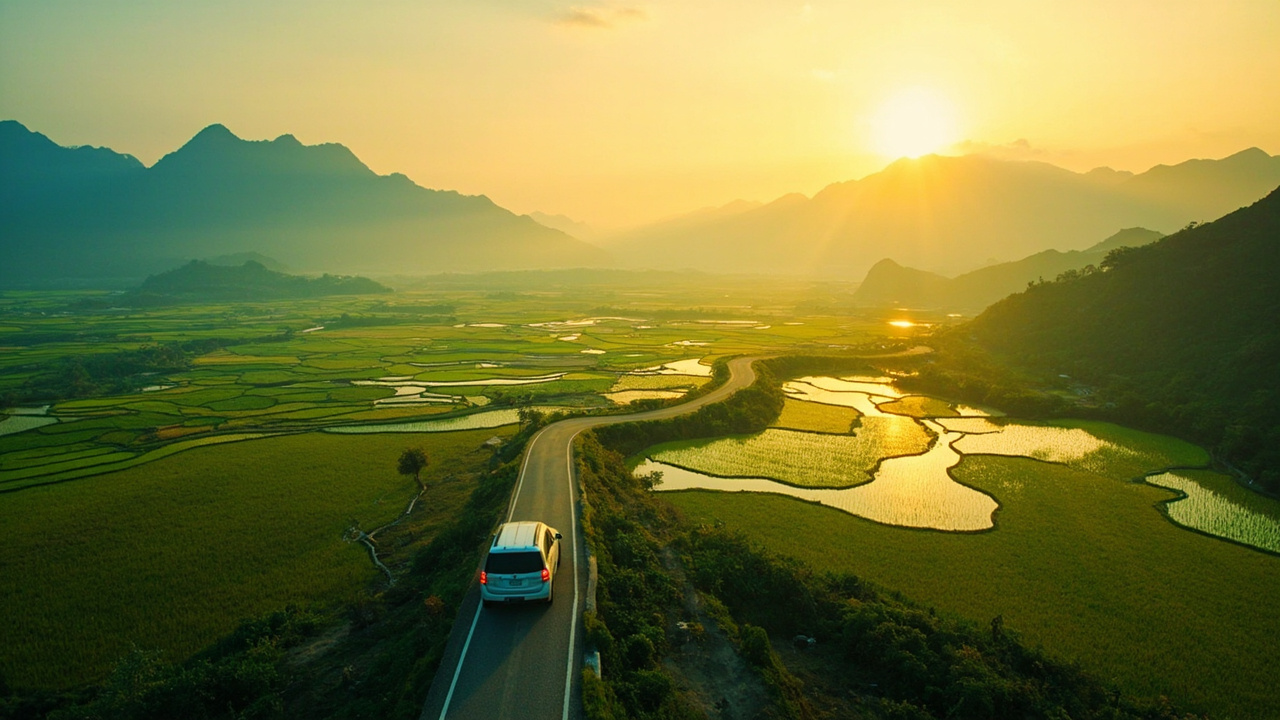
China Road Trip Guide
The gas station attendant in Gansu kept pointing at my rental car’s tires and laughing. I didn’t understand why until he crouched down and mimed a balloon deflating. Two of them were nearly flat. We’d been driving for six hours through the Hexi Corridor, past nothing but gravel and distant snow peaks, and I hadn’t noticed. He filled all four for the equivalent of $1.50, refused my tip, and waved me off with a grin. That’s the thing about road-tripping in China that no blog tells you: the roads are extraordinary, the infrastructure is better than most of Europe, and the kindness of strangers will catch you when you’re not paying attention.
I’ve driven across China four times now, roughly 12,000 kilometers total, from the tropical south to the edge of the Gobi. I’ve rented cars in seven provinces, gotten lost on rural roads with no English signage, and once spent two hours trying to explain “automatic transmission” to a rental agent in Kunming using only hand gestures. This guide is what I wish someone had handed me before my first trip.
You’ll get the honest version: which routes are worth your time, which rental companies won’t rip you off, how to handle the temporary driving permit, and the specific stretches of road where you’ll pull over just to stare. No filler.
Quick answer
Foreign visitors can legally drive in China with a temporary driving permit (临时驾驶许可), issued on the spot at major airports and some city vehicle management offices — you need your home license, a translation, passport, and visa, and it costs about $10–15 (70–110 CNY). The best road trips for first-timers are the Yunnan loop from Kunming (7–10 days), the Sichuan–Tibet G318 highway (only if you’re experienced and hire a local driver), and the Guilin–Yangshuo countryside (3–4 days, easiest entry point). Budget $60–120 per day for a rental car, fuel, and tolls combined.
The Short Version
If you have 90 seconds: rent a car in Kunming or Guilin, not Beijing or Shanghai. City driving in China is a nightmare; rural driving is a joy. Get the temporary permit at the airport, download Amap (高德地图) instead of Google Maps, and set up Alipay or WeChat Pay before you land because almost nobody takes cash. Avoid the Sichuan–Tibet highway unless you’ve driven at altitude before. The Yunnan loop is the single best beginner road trip in the country.
How I Picked These
I’ve driven four major routes across China between 2019 and 2025, plus a dozen shorter trips. I’m not ranking by Instagram appeal. I’m ranking by: can a first-time foreign driver actually do this without a guide, is the road quality decent, are there hotels and gas stations at reasonable intervals, and is the scenery genuinely worth the hassle of the permit and rental process. I talked to rental agents in Kunming, Chengdu, and Guilin. I asked a Tibetan driver named Tashi in Kangding which stretches of G318 kill the most tourists (his answer: the ones with tour buses). And I made plenty of mistakes myself, which you’ll read about below.
Comparison Table
| Rank | Route | Best For | Approx Cost (USD) | Time Needed | When to Go |
|---|---|---|---|---|---|
| 1 | Yunnan Loop (Kunming–Dali–Lijiang–Shangri-La) | First-timers, varied scenery | $700–1,100 | 8–10 days | Mar–May, Sep–Nov |
| 2 | Guilin–Yangshuo–Longji | Short trips, easy logistics | $350–550 | 3–4 days | Apr–Jun, Sep–Oct |
| 3 | Sichuan–Tibet G318 (Chengdu–Kangding–Litang) | Experienced drivers | $1,200–2,000 | 10–14 days | May–Jun, Sep–Oct |
| 4 | Hexi Corridor (Lanzhou–Dunhuang) | Desert, Silk Road history | $800–1,300 | 7–9 days | May–Oct |
| 5 | Fujian Tulou Loop (Xiamen–Yongding) | Culture, architecture | $400–650 | 4–5 days | Oct–Apr |
| 6 | Qinghai Lake Circuit (Xining loop) | High-altitude lakes | $600–900 | 5–6 days | Jun–Sep |
| 7 | Inner Mongolia Grasslands (Hohhot–Xilinhot) | Open space, nomad culture | $500–800 | 5–7 days | Jun–Sep |
| 8 | Guangxi–Guizhou Karst (Nanning–Guiyang) | Off-the-radar scenery | $650–950 | 7–8 days | Apr–Oct |
| 9 | Zhejiang Mountain Roads (Hangzhou–Qiandao Lake) | Weekend escapes | $250–400 | 2–3 days | Mar–May, Oct–Nov |
| 10 | Hainan Island Coastal Loop | Beaches, easy driving | $450–700 | 5–6 days | Nov–Apr |
1. Yunnan Loop — The One I’d Send My Mother On
I picked up a compact SUV in Kunming on a Tuesday morning and by Thursday afternoon I was eating rice noodles at 2,400 meters in Dali, watching clouds roll over Cangshan mountain. The road between those two points is the single best introduction to Chinese road-tripping I can imagine.
Yunnan works because it packs everything into one manageable loop. Tropical jungle near the Burmese border, alpine lakes, Tibetan monasteries, and old towns that haven’t been completely Disneyfied yet. The highways are excellent — the G56 and G5611 are modern four-lane roads with rest stops every 40–60 kilometers. But the real magic is the secondary roads. Take the old road from Dali to Shaxi instead of the highway and you’ll drive through Bai minority villages where grandmothers still wear traditional indigo headscarves.
The altitude is the thing nobody warns you about. Kunming sits at 1,890 meters. Lijiang is 2,400. Shangri-La is 3,200. If you’re coming from sea level, plan a slow ascent. I got a splitting headache my first night in Lijiang because I’d flown in and driven straight up.
📍 Location: Start in Kunming, loop through Dali, Shaxi, Lijiang, and optionally Shangri-La. Roughly 1,400 km total. 🎫 Entry fee: Most old towns are free to enter; individual attractions run $5–15 (35–110 CNY). 🕐 Opening hours: Roads are open 24/7. Old town gates typically close to vehicles 8am–10pm. 🚗 How to actually get there: Fly into Kunming Changshui International Airport. Rental counters are on the B1 level of the terminal. Take the G56 west toward Dali — about 4.5 hours. ⏰ When to visit: March–May or September–November. Avoid Chinese New Year (late January/February) when every hotel is booked. 💡 Insider tips: Download Amap before you leave home — it works offline and is the only navigation app that reliably handles rural Chinese roads. Gas stations (中石化/中石油) are everywhere but many close at 10pm in rural areas. Bring your passport everywhere; you’ll need it to check into hotels and some scenic areas.
The noodle shop owner in Shaxi, a woman named Yang, made me sit down and eat before she’d tell me where the guesthouse was. I wasn’t hungry. I ate anyway.
2. Guilin–Yangshuo — The Easiest Entry Point
If you’ve never driven in China and you want a soft landing, start here. The roads between Guilin and Yangshuo are wide, well-marked, and short enough that you’re never more than 90 minutes from a decent hotel.
The karst landscape is what everyone comes for, and yes, it looks like the paintings. But the real pleasure is driving the back roads between the tourist towns. The G321 is the main highway, but take the county road 097 through Xingping instead and you’ll wind through rice paddies with water buffalo standing in the middle of the lane. I had to stop three times in one afternoon because a farmer was moving his herd.
Yangshuo itself has become a backpacker circus — expect mediocre pizza and loud bars on West Street. Skip it. Stay in Xingping or Fuli instead, where the same scenery costs half as much and the mornings are silent.
📍 Location: Guilin city, then south along the Li River to Yangshuo and Xingping. About 90 km. 🎫 Entry fee: Li River cruise $30–60 (210–420 CNY); most countryside roads free. 🕐 Opening hours: N/A for roads; scenic areas typically 8am–6pm. 🚗 How to actually get there: Fly into Guilin Liangjiang Airport or take the high-speed rail from Guangzhou (2.5 hours). Rental cars available at the airport; take the G321 south. ⏰ When to visit: April–June (green rice paddies) or September–October (harvest). Avoid July–August when it’s brutally hot and crowded. 💡 Insider tips: Electric scooters are the local way to explore — you can rent one for $8/day (55 CNY) without a permit, but you need an international driving permit technically. The Yulong River bamboo raft is better than the Li River cruise and costs a third as much. Bring mosquito repellent.
I paid $18 for a “bamboo raft” that turned out to be a PVC pipe pontoon with a lawnmower engine. Still worth it.
3. Sichuan–Tibet G318 — Only If You Know What You’re Doing
I’m going to be honest: most foreigners should not drive this themselves. The G318 from Chengdu to Lhasa crosses some of the highest drivable passes in the world, and the combination of altitude sickness, unpredictable weather, and Chinese-only road signage makes it genuinely dangerous.
But the first section — Chengdu to Kangding to Litang — is doable if you’re an experienced mountain driver. I did it with a hired local driver named Tashi, who grew up in Kangding and knew every switchback. The road climbs from 500 meters in Chengdu to over 4,000 at Zheduo Pass in under 300 kilometers. You’ll see prayer flags snapping in the wind, yaks wandering onto the asphalt, and Tibetan monasteries clinging to cliffs.
The scenery is the most dramatic I’ve seen anywhere in China. But the drive is exhausting. Plan for 6–8 hours of driving per day and don’t push past 4,300 meters without acclimating for at least a night.
📍 Location: Chengdu → Ya’an → Kangding → Litang. Roughly 650 km. 🎫 Entry fee: N/A for roads; some monasteries charge $3–8 (20–55 CNY). 🕐 Opening hours: N/A. 🚗 How to actually get there: Fly to Chengdu, rent a 4WD (not a sedan — you’ll regret it), take the G318 west. Consider hiring a local driver for $80–120/day. ⏰ When to visit: May–June or September–October. July–August is rainy season with landslides. 💡 Insider tips: Bring altitude sickness medication (acetazolamide) and start taking it 24 hours before you ascend. Many gas stations above 3,000 meters only accept cash or WeChat Pay — no foreign cards. Cell signal drops for hours at a time; download offline maps.
Tashi told me the road kills about 20 tourists a year, mostly from altitude and fatigue. He wasn’t trying to scare me. He was just stating a fact.
4. Hexi Corridor — The Silk Road Without the Tour Buses
The drive from Lanzhou to Dunhuang is 1,100 kilometers of desert, and it might be the most underrated road trip in China. Most tourists fly between the Silk Road cities. Driving it gives you the space between them — the empty stretches where you can pull over and hear nothing but wind.
You’ll pass through Zhangye, with its rainbow-colored Danxia landforms, and Jiayuguan, where the Great Wall ends in the desert. The road is straight for hours at a time. I once drove 80 kilometers without seeing another car.
The heat is brutal in summer. I made the mistake of driving in July and had to stop every two hours to pour water on my neck. Go in May or September.
📍 Location: Lanzhou → Wuwei → Zhangye → Jiayuguan → Dunhuang. About 1,100 km. 🎫 Entry fee: Danxia landform $10 (70 CNY); Mogao Caves $35–50 (240–350 CNY, book ahead). 🕐 Opening hours: Mogao Caves 8am–6pm; most sites closed Mondays. 🚗 How to actually get there: Fly into Lanzhou, rent a car, take the G30 west. The road is excellent the entire way. ⏰ When to visit: May or September–October. Summer is dangerously hot; winter is freezing. 💡 Insider tips: Book Mogao Caves tickets at least two weeks ahead — they sell out. Carry at least 4 liters of water per person per day. The desert nights are cold even in summer.
I ate lamb skewers in a Dunhuang night market at 11pm, surrounded by Uyghur vendors and Chinese tourists taking selfies with camels. It felt like the edge of the world.
5. Fujian Tulou Loop — Architecture That Doesn’t Look Real
The tulou are circular earthen buildings, some housing 400 people, built by the Hakka people between the 12th and 20th centuries. They look like UFOs landed in the rice paddies. Driving between them through southern Fujian is a slow, green, beautiful experience.
The roads are narrow and winding but well-maintained. You’ll pass through tea plantations, bamboo forests, and villages where the only language spoken is Hakka. English is essentially nonexistent here. Bring a translation app and be patient.
📍 Location: Xiamen → Nanjing County → Yongding. About 200 km of back roads. 🎫 Entry fee: $12–15 (80–100 CNY) per cluster; some villages free. 🕐 Opening hours: 8am–5:30pm, daily. 🚗 How to actually get there: Fly into Xiamen, rent a car, take the G15 south then county roads west. Signage is in Chinese and pinyin. ⏰ When to visit: October–April. Summer is humid and mosquito-heavy. 💡 Insider tips: Stay in a tulou guesthouse for one night — it’s the only way to experience the buildings after tour buses leave. Cash is still king in the villages. The tea grown here is excellent and cheap.
An elderly woman in one tulou insisted I sit and drink tea with her for an hour. She didn’t speak a word of Mandarin, only Hakka. We communicated entirely through nods and refills.
6. Qinghai Lake Circuit — High-Altitude Blue
The loop around Qinghai Lake is 360 kilometers of the bluest water you’ll ever see, ringed by grasslands and snow-capped mountains. It’s a pilgrimage route for Tibetan Buddhists and a cycling route for Chinese tourists. Driving it is easy — the road is flat, well-marked, and takes about 6 hours without stops.
The lake sits at 3,200 meters, so altitude is a factor. I got winded just walking to a viewpoint.
📍 Location: Xining → Qinghai Lake → Chaka Salt Lake → back to Xining. 🎫 Entry fee: Lake access $15–20 (100–140 CNY); Chaka Salt Lake $10 (70 CNY). 🕐 Opening hours: 7am–7pm in summer; some areas closed November–March. 🚗 How to actually get there: Fly to Xining, rent a car, take the G109 west. The loop is well-signed. ⏰ When to visit: June–September only. The road is often snowed in the rest of the year. 💡 Insider tips: The lake is sacred to Tibetans — don’t swim or touch the water without asking. Yak butter tea is an acquired taste; try it once. Bring sunscreen — the UV at altitude is brutal.
I watched a Tibetan family prostrate themselves along the roadside for an hour. I didn’t take a photo. Some things aren’t for that.
7. Inner Mongolia Grasslands — Where the Sky Gets Big
Driving north from Hohhot into the Xilingol grasslands feels like driving into a Windows wallpaper. The horizon is flat, the sky is enormous, and the only traffic is the occasional herd of sheep crossing the road.
This is nomad country. You’ll see yurts, horses, and families who still move with the seasons. The roads are good but sparse — gas stations can be 100 kilometers apart.
📍 Location: Hohhot → Xilinhot → East Ujimqin Banner. About 800 km. 🎫 Entry fee: Grassland access varies; some areas free, some $10–20 (70–140 CNY). 🕐 Opening hours: N/A. 🚗 How to actually get there: Fly to Hohhot, rent a car, take the G207 north. ⏰ When to visit: June–September. Winter is -30°C and roads close. 💡 Insider tips: Stay in a yurt camp for at least one night — the stars are unreal. Learn a few Mongolian phrases; it’s appreciated. The mutton here is the best in China.
A herder named Batu invited me into his yurt for milk tea and dried cheese. We couldn’t communicate beyond smiles, but he insisted I take a bag of cheese for the road.
8. Guangxi–Guizhou Karst — The Road Less Driven
This route connects the karst landscapes of Guangxi with the ethnic minority villages of Guizhou, and almost no foreign tourists do it. The roads are slower and rougher than Yunnan’s, but the scenery is just as good and the crowds are nonexistent.
You’ll drive through Miao and Dong villages with wooden drum towers, terraced rice fields, and markets where nobody speaks English. It’s the most culturally immersive drive on this list.
📍 Location: Nanning → Libo → Kaili → Guiyang. About 700 km. 🎫 Entry fee: Most villages free; some scenic areas $8–15 (55–100 CNY). 🕐 Opening hours: Varies. 🚗 How to actually get there: Fly to Nanning, rent a car, take the G75 north then county roads. ⏰ When to visit: April–October. 💡 Insider tips: Learn to say “thank you” in Miao or Dong — it goes a long way. Bring cash. Some guesthouses don’t have hot water.
I got lost for three hours on a mountain road and ended up at a village festival where a Miao woman in silver headdress handed me a bowl of rice wine. I never found out what the festival was for.
9. Zhejiang Mountain Roads — The Weekend Escape
If you’re based in Shanghai or Hangzhou and want a quick road trip, this is it. The roads through Zhejiang’s bamboo forests and tea terraces are smooth, quiet, and gorgeous. Qiandao Lake (Thousand Island Lake) is the anchor — a massive reservoir with over 1,000 islands.
This is the easiest drive on the list. Roads are excellent, English signage is common, and hotels are plentiful.
📍 Location: Hangzhou → Qiandao Lake → back. About 300 km. 🎫 Entry fee: Lake cruises $20–30 (140–210 CNY). 🕐 Opening hours: 8am–5pm. 🚗 How to actually get there: Rent a car in Hangzhou, take the G25 west. About 2 hours. ⏰ When to visit: March–May or October–November. 💡 Insider tips: Longjing tea fields near Hangzhou are worth a detour. Avoid weekends — Chinese tourists flood the area.
I drank tea at a farmhouse overlooking the lake and the farmer’s daughter practiced her English on me. She was 12 and better at it than most adults I’d met.
10. Hainan Island Coastal Loop — China’s Hawaii, Sort Of
Hainan is China’s tropical island province, and the coastal road around it is 600 kilometers of palm trees, beaches, and seafood. It’s the easiest place in China to drive — flat, well-marked, and full of resorts.
It’s also the least “Chinese” experience on this list. Sanya is basically a Chinese version of Miami. But the smaller towns on the east coast are still charming.
📍 Location: Haikou → Wenchang → Sanya → back. About 600 km. 🎫 Entry fee: Most beaches free; some resorts charge day-use fees. 🕐 Opening hours: N/A. 🚗 How to actually get there: Fly to Haikou or Sanya, rent a car, take the G98 loop. ⏰ When to visit: November–April. 💡 Insider tips: Avoid Chinese New Year — prices triple. The seafood in Wenchang is better than Sanya’s. Bring reef-safe sunscreen.
I ate a whole steamed grouper on a plastic table on the beach in Wenchang for $12. The fisherman who caught it sat at the next table.
FAQ summary
Foreign visitors can drive in China with a temporary driving permit issued at major airports and some city vehicle offices, costing about $10–15 (70–110 CNY), requiring your home license, a translation, passport, and visa. The best beginner routes are the Yunnan loop from Kunming (8–10 days, $700–1,100) and the Guilin–Yangshuo countryside (3–4 days, $350–550). You must set up Alipay or WeChat Pay before arrival, download Amap for navigation, and avoid the Sichuan–Tibet G318 unless you’re an experienced mountain driver. Budget $60–120 per day for car, fuel, and tolls combined.
FAQ
Q: Can foreigners legally drive in China? A: Yes, with a temporary driving permit (临时驾驶许可) issued at major airports like Kunming, Chengdu, and Guilin, or at city vehicle management offices. You need your home driver’s license, an official translation (some airports provide this on-site for about $10), your passport, and a valid visa. The permit is valid for the length of your stay, up to 3 months.
Q: How much does it cost to rent a car in China? A: Expect $40–80 per day for a compact SUV, plus a refundable deposit of $300–600. International chains like Hertz and Avis operate in major cities but are pricier; local companies like eHi and CAR Inc. are cheaper but require Chinese-language apps. Add $15–30 per day for fuel and $5–15 for tolls on highways.
Q: Is Google Maps usable in China? A: No. Google Maps is blocked and unreliable even with a VPN. Download Amap (高德地图) or Baidu Maps before you arrive — both work offline and handle rural roads far better. Amap has an English mode but it’s limited; expect to navigate mostly by road numbers and pinyin.
Q: Do I need a VPN for a China road trip? A: Yes, if you want to use Google, WhatsApp, Instagram, or Gmail. Install a reputable VPN before you land — most VPN websites are blocked inside China. Also set up Alipay or WeChat Pay before arrival, since almost no businesses accept foreign credit cards.
Q: What’s the best road trip for a first-time visitor? A: The Yunnan loop from Kunming through Dali, Shaxi, and Lijiang. It has excellent roads, varied scenery, good hotels, and enough English signage to manage without a guide. Plan 8–10 days and budget $700–1,100 total.
Q: Is it safe to drive in China? A: Rural and highway driving is generally safe, with well-maintained roads and frequent rest stops. City driving is chaotic and best avoided. The biggest risks are altitude sickness on western routes, fatigue on long desert stretches, and unpredictable local drivers in rural areas. Always carry water and a charged phone.
Q: Do I need an International Driving Permit? A: China does not recognize the IDP on its own, but some rental companies ask for it alongside your home license. The temporary driving permit is the legal requirement. Bring both to be safe. You can get an IDP from AAA in the US for about $20 before you leave.
The Honest Wrap-up
This guide is for travelers who want to see China beyond the tour buses and high-speed rail stations. It’s not for people who want everything pre-arranged or who panic when nobody speaks English. If that’s you, stick to Beijing and Shanghai and take the train — it’s a wonderful way to travel too.
But if you’re willing to get a little lost, to eat at roadside stalls where the menu is a picture on the wall, to spend an hour watching yaks cross a mountain pass — driving in China will give you something no tour can. My advice: start with Yunnan. Get the permit at Kunming airport. Drive slow. Pull over when something looks interesting. And when a gas station attendant laughs at your tires, let him help.
More guides you may like
Top 10 Bridges in China
China's bridges are engineering marvels spanning mountains, rivers, and seas. Here are 10 of the most spectacular, from ancient stone to modern steel.
8 min read

Top 10 Buddhist Sites in China
From the Leshan Giant Buddha to the Dunhuang Caves, these 10 Buddhist sites represent 2,000 years of China's spiritual heritage.
9 min read

Top 10 Day Trips from Beijing You Shouldn't Miss
Beijing is packed with history, but some of China's best experiences are just a few hours away. Here are 10 day trips that will transform your visit.
9 min read
Top 10 Hidden Gems in China Off the Beaten Path
Beyond the Great Wall and Terracotta Warriors, China has incredible hidden destinations few tourists ever reach. Here are 10 underrated gems worth the detour.
9 min read
Top 10 Markets and Shopping Streets in China
From Shanghai's Bund to Beijing's Silk Street - 10 markets where foreigners can haggle, explore, and bring home authentic Chinese goods.
9 min read

Top 10 Museums in China You Shouldn't Miss
China's museums span 5,000 years of civilization. These 10 - from the Palace Museum to Xi'an's terracotta gallery - are unmissable for culture lovers.
9 min read