
Hidden Gems in Shanghai
TODO: Extract from article (100-160 chars)
Hidden Gems in Shanghai
The first time I found the marriage market in People’s Park, I wasn’t looking for it. I was cutting through on my way to a dumpling place a friend had recommended, and suddenly there were hundreds of umbrellas laid out on the pavement, each one with a laminated sheet of paper clipped to it. Age. Height. Salary. Whether the candidate owned an apartment. Parents stood next to the umbrellas, eyeing passersby like they were evaluating livestock. Nobody was selling anything. Nobody was buying either, at least not yet. It was a Sunday morning, and this was just what Sundays look like here.
That’s the thing about Shanghai. The famous stuff, the Bund and Yu Garden and the skyscrapers in Pudong, delivers exactly what you expect. But the city’s real texture lives one metro stop past where the guidebooks stop paying attention. A wet market that turns into a breakfast alley at 6am. A former slaughterhouse that’s now an art gallery. A 1920s lane house where an old woman still hangs her laundry across a doorway that a French architect once walked through.
This guide is for first-timers who’ve done the big sights and want the other Shanghai. Ten places, none of them secret exactly, but none of them on the standard three-day itinerary either. I’ve been to each of them at least twice, and I’ve made mistakes at most of them so you don’t have to.
Quick answer
Shanghai’s best hidden gems are the 1933 Old Millfun (a former abattoir turned design hub in Hongkou), Columbia Circle (a restored 1920s expat neighborhood in Changning), and the West Bund museum strip along the Huangpu River. Most are free or under $10 (¥70), reachable by metro, and best visited on weekday mornings. If you’re from a visa-free country (France, Germany, Australia, most of Southeast Asia, and 50+ others as of 2026), you can enter China for up to 30 days without a visa — check the current visa-free transit rules before booking.
The Short Version
Skip the Bund at sunset. Go at 6am instead, then walk 20 minutes north to 1933 Old Millfun before the cafés open. Spend one afternoon in the former French Concession getting deliberately lost on Anfu Road and Wukang Road. Eat breakfast at a wet market, not your hotel. Download Alipay before you land — you can’t pay for anything here without it. And leave one day unplanned, because the best thing you’ll find in Shanghai is whatever you stumble into while looking for something else.
How I Picked These
I’ve lived in Beijing for seven years and been to Shanghai maybe fifteen times, usually for a week at a stretch. I don’t trust listicles written from a desk. So I went back through my notes and picked the places I’ve actually returned to — not the ones that photograph well, but the ones I’ve dragged visiting friends to and then watched them go quiet. I also asked three Shanghai locals: a graphic designer in Jing’an, a hostel manager near the railway station, and a taxi driver named Chen who took me to a noodle shop in Hongkou that I’ve now been to four times. Two places on this list came from him. The rest are places I found by getting off at the wrong metro stop and walking.
Comparison Table
| Rank | Place | Best For | Approx Cost (USD) | Time Needed | When to Go |
|---|---|---|---|---|---|
| 1 | 1933 Old Millfun | Architecture, photography | Free | 1–1.5 hrs | Weekday morning |
| 2 | Columbia Circle | Coffee, restored architecture | Free (spend $8–15) | 2 hrs | Weekday afternoon |
| 3 | West Bund Museums | Contemporary art | $0–10 (¥0–70) | Half day | Tue–Fri |
| 4 | People’s Park Marriage Market | Cultural observation | Free | 45 min | Sunday 9am–noon |
| 5 | Zhapu Road Wet Market | Food, local life | $5–10 (¥35–70) | 1 hr | 6–8am |
| 6 | M50 Art District | Galleries, studios | Free | 2 hrs | Weekday |
| 7 | Longhua Temple | Buddhism, quiet | $1.5 (¥10) | 1.5 hrs | Early morning |
| 8 | Duolun Road | Literary history, antiques | Free | 1.5 hrs | Weekend morning |
| 9 | Yangpu Riverside | Industrial ruins, cycling | Free | 2–3 hrs | Late afternoon |
| 10 | Fuxing Park | Locals dancing, people-watching | Free | 1 hr | 7–9am |
1. 1933 Old Millfun — The Slaughterhouse That Became a Design Hub
I walked into 1933 Old Millfun on a Tuesday morning in November and stood in the central atrium for ten minutes without taking a photo. The building is a concrete labyrinth — four stories of interlocking bridges, ramps, and hexagonal cells, originally built in 1933 as an abattoir. The cattle were walked up spiral ramps to the killing floor, and the architecture was designed so that the animals couldn’t see each other. It’s grim history wrapped in genuinely beautiful geometry.
Why it’s special: most people come for the Instagram shots, and yes, the light through the concrete lattice is extraordinary. But what gets me is the scale. You feel small in a way that’s hard to manufacture. The building now houses small design studios, a few cafés, and a rotating exhibition space. Half of it is empty, which is part of the appeal — you can wander corridors with nobody in them.
📍 Location: 611 Liyang Road, Hongkou District, near the North Bund 🎫 Entry fee: Free for the building; some exhibitions charge $3–7 (¥20–50) 🕒 Opening hours: Daily 9am–9pm, though individual studios keep their own hours 🚇 How to get there: Metro Line 10 to Hailun Road Station, Exit 2, then walk 8 minutes north on Liyang Road. The building is unmissable — a grey concrete block with a small sign. ⏰ When to visit: Weekday mornings. Weekends bring tour groups and wedding photographers. 💡 Insider tips: The rooftop is sometimes open — ask at the ground-floor café. Bring cash as backup; a few of the small studios don’t take foreign cards. The nearby North Bund riverside walk is worth 30 extra minutes. There’s no English signage on the history of the building itself, so read up beforehand.
I tried a mediocre flat white at the ground-floor café and paid $5 (¥35) for it. Worth it for the seat.
2. Columbia Circle — The Neighborhood That Time Forgot, Then Remembered
A friend who works in Shanghai real estate told me about Columbia Circle in 2023, back when half of it was still scaffolding. “It’s the old Columbia Country Club,” she said. “They’re restoring it. Go before it gets discovered.” I went the following spring. It was still half-empty, with a single good coffee shop and a lawn nobody was using.
Why it’s special: Columbia Circle is a 1920s American expat enclave that was left largely intact through the 20th century and then carefully restored in the 2020s. The result is a strange, lovely pocket of Shanghai where the architecture is genuinely Western (Spanish tiles, colonnades, a sunken garden) but the atmosphere is entirely Chinese. Old lane houses sit next to a sleek new bookstore. A grandmother walks her dog past a boutique selling $200 ceramics. It’s the closest thing Shanghai has to a living museum of its own cosmopolitan past.
📍 Location: 1262 Yan’an West Road, Changning District 🎫 Entry fee: Free 🕒 Opening hours: Public spaces open 24/7; shops generally 10am–10pm 🚇 How to get there: Metro Line 3 or 4 to Yan’an West Road Station, Exit 2, then walk 5 minutes west. Or Line 10 to Hongqiao Road and walk 12 minutes. ⏰ When to visit: Weekday afternoons. Weekends are busy with local families. 💡 Insider tips: The sunken garden behind the main clubhouse is the quietest spot. The bookstore (Tsutaya) has English titles and good air conditioning. Most signage is bilingual. If you’re hungry, the casual restaurants here are overpriced — walk 10 minutes to the Dingxi Road area instead.
I once spent two hours here reading on a bench and nobody bothered me. That’s rare in Shanghai.
3. West Bund Museums — Shanghai’s Answer to the South Bank
The first time I went to the West Bund, I got off the metro at Longteng Avenue expecting a museum district and found a construction site. That was 2019. I went back in 2025 and it’s now a proper cultural strip: the Long Museum, Yuz Museum, Tank Shanghai (converted oil tanks), and the Power Station of Art, all within a 25-minute walk along the river.
Why it’s special: This is where Shanghai puts its serious contemporary art. The Long Museum alone has two buildings and a collection that ranges from traditional Chinese painting to Ai Weiwei. Tank Shanghai, built inside five decommissioned aviation fuel tanks, is the most architecturally striking. And because it’s not on the tourist trail, you can actually look at the art without fighting a crowd. On a Tuesday afternoon in the Yuz Museum I once had an entire gallery to myself.
📍 Location: Along Longteng Avenue, Xuhui District, on the west bank of the Huangpu 🎫 Entry fee: Varies — Long Museum $14 (¥100), Yuz $8 (¥60), Tank Shanghai $8 (¥60), Power Station of Art free 🕒 Opening hours: Generally Tue–Sun 10am–6pm, closed Mondays. Check each museum. 🚇 How to get there: Metro Line 7 to Longteng Avenue Station, Exit 2, then walk 10 minutes east toward the river. ⏰ When to visit: Tuesday–Friday, opening time. Weekends are packed with local students. 💡 Insider tips: Buy tickets on WeChat mini-programs — most museums don’t sell at the door on busy days. The riverside path connects all the museums and is great for cycling. Set up Alipay or WeChat Pay before you come; several of the smaller cafés here are cashless. English signage is good at the major museums.
I once tried to walk the whole strip in one afternoon and gave up halfway. Pick two museums, not four.
4. People’s Park Marriage Market — Sunday Morning Theater
I mentioned this in the opening, and I’m putting it here because it’s the single most Shanghai thing I’ve ever seen. Every Sunday from roughly 9am to noon, parents and grandparents gather along the paths of People’s Park with umbrellas covered in personal ads for their unmarried adult children. Age, height, salary, apartment ownership, and a photo. Some have QR codes.
Why it’s special: It’s not a tourist attraction. It’s a real social institution, and it’s fascinating precisely because nobody is performing for you. The parents are genuinely trying to find spouses for their kids, most of whom have no idea they’re being advertised. You’ll see negotiations, rejections, and occasionally a match being made. It’s funny, then it’s sad, then it’s funny again.
📍 Location: People’s Park, Huangpu District, along the main north-south path near the west entrance 🎫 Entry fee: Free 🕒 Opening hours: Sundays roughly 9am–noon, weather permitting 🚇 How to get there: Metro Line 1, 2, or 8 to People’s Square Station, Exit 11, then walk into the park and follow the crowd. ⏰ When to visit: Sunday morning, ideally before 10am when it’s still calm. 💡 Insider tips: Don’t photograph the ads directly — it’s considered rude. Ask before taking photos of people. The nearby Shanghai Museum and Urban Planning Exhibition Center are good add-ons. English is not spoken here; have a translation app ready. If you’re a foreigner, expect curious looks and possibly a few questions.
An older woman once asked me, through a translation app, whether I was married. When I said no, she showed me her daughter’s profile. I politely declined.
5. Zhapu Road Wet Market — Breakfast Before the City Wakes Up
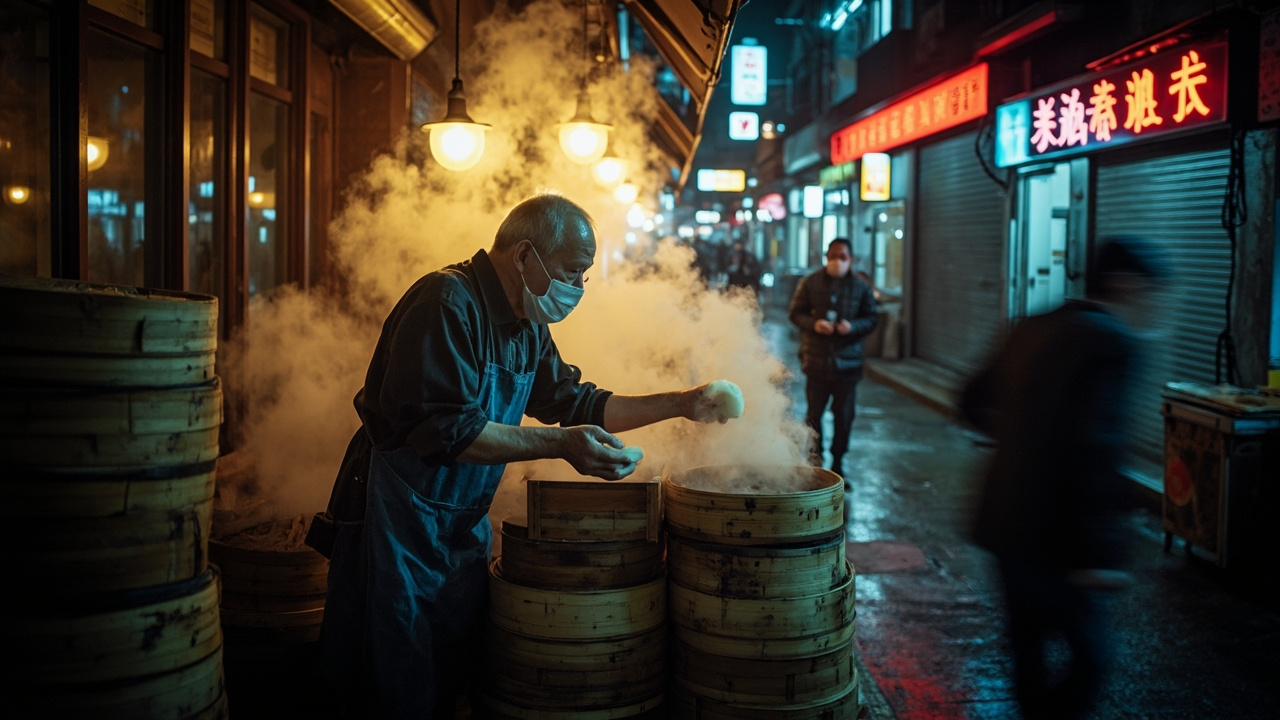
The first time I ate at Zhapu Road market, I got there at 6:30am and ordered something I couldn’t identify by pointing at a steamer basket. It turned out to be a pork bun the size of my fist, and it cost 60 cents (¥4). I ate it standing up, next to a man in a suit who was doing the same thing.
Why it’s special: Shanghai’s wet markets are disappearing fast. Zhapu Road is one of the survivors, and it doubles as a breakfast alley in the early morning. You’ll find scallion pancakes, soy milk, congee, steamed buns, and dumplings, all made in front of you by people who’ve been doing it for decades. It’s also a functioning market — fish, vegetables, live poultry — so it’s not a sanitized experience. Go with an open mind.
📍 Location: Zhapu Road, Hongkou District, near the intersection with Haining Road 🎫 Entry fee: Free 🕒 Opening hours: Market 5am–7pm; breakfast stalls best 6–8am 🚇 How to get there: Metro Line 10 to Sichuan North Road Station, Exit 1, then walk 6 minutes north. ⏰ When to visit: Early morning, any day. Weekends are busier but more atmospheric. 💡 Insider tips: Bring small cash as backup, though most stalls take WeChat Pay. Point at what you want — English is not spoken. Avoid the live poultry section if you’re squeamish. The scallion pancake stall near the north entrance is the best one. Wash your hands afterward.
I once paid $2 (¥15) for a breakfast that kept me full until 2pm. That’s the deal here.
6. M50 Art District — The Original Gallery Cluster
M50 has been around since 2000, when artists started renting cheap space in a former cotton mill on Moganshan Road. It’s not hidden anymore, but it’s still the best place in Shanghai to see contemporary Chinese art in a non-museum setting. About 50 galleries and studios, some excellent, some mediocre, all free to enter.
Why it’s special: Unlike the West Bund, M50 is where you can actually meet artists. Several studios are open to the public, and the owners are often there, working. The work is more experimental and less curated than what you’ll see in the big museums. Some of it is bad. Some of it is extraordinary. That’s the point.
📍 Location: 50 Moganshan Road, Putuo District 🎫 Entry fee: Free 🕒 Opening hours: Daily 10am–6pm; some galleries close Mondays 🚇 How to get there: Metro Line 1 to Shanghai Railway Station, Exit 5, then walk 15 minutes west. Or take a taxi — it’s a slightly awkward walk. ⏰ When to visit: Weekday afternoons. Weekends bring art students and tour groups. 💡 Insider tips: The graffiti wall along the entrance is worth 10 minutes. Many galleries don’t have English labels, but the staff usually speak some. There’s a decent café in the middle of the complex. Combine with a walk along Suzhou Creek afterward.
I bought a small print here for $40 (¥280) in 2022 and it’s still on my wall.
7. Longhua Temple — The Quiet One
Longhua Temple is the oldest and largest Buddhist temple in Shanghai, and it’s almost always empty compared to the tourist-packed Jade Buddha Temple. I went on a rainy Tuesday morning and had the main courtyard to myself. The incense smoke hung in the wet air. A monk was sweeping.
Why it’s special: It’s a working temple, not a museum. The seven-story pagoda outside dates to the 10th century (the current structure is a reconstruction, but the site is ancient). Inside, you’ll find the usual halls — Maitreya, Guanyin, the main Buddha — plus a small vegetarian restaurant that locals swear by. The atmosphere is genuinely contemplative, which is rare in central Shanghai.
📍 Location: 2853 Longhua Road, Xuhui District 🎫 Entry fee: $1.5 (¥10) for the temple; pagoda not open to climb 🕒 Opening hours: Daily 7am–4:30pm 🚇 How to get there: Metro Line 11 or 12 to Longhua Station, Exit 2, then walk 3 minutes. ⏰ When to visit: Early morning, any day. The temple is busiest on the 1st and 15th of the lunar month. 💡 Insider tips: Dress modestly — shoulders and knees covered. Don’t point your feet at Buddha statues. The vegetarian restaurant next door is cheap and excellent; try the “mock meat” dishes. Cash is easier than cards here.
I once sat in the courtyard for an hour and nobody asked me to move.
8. Duolun Road — Where the Writers Lived
Duolun Road in Hongkou was home to Lu Xun, Mao Dun, and other giants of 20th-century Chinese literature in the 1920s and 30s. Today it’s a short pedestrian street with old buildings, small antique shops, and a couple of museums. It’s not glamorous. That’s why I like it.
Why it’s special: This is where modern Chinese literature was written, argued about, and sometimes banned. The Lu Xun Memorial Hall is small but well done, with English explanations. The surrounding streets still have the feel of old Shanghai — low-rise, tree-lined, slightly shabby. You can walk the whole area in 90 minutes and feel like you’ve stepped out of the 21st century.
📍 Location: Duolun Road, Hongkou District, near Sichuan North Road 🎫 Entry fee: Free; Lu Xun Memorial Hall free with ID 🕒 Opening hours: Street always open; museum Tue–Sun 9am–4pm 🚇 How to get there: Metro Line 3 to Dongbaoxing Road Station, Exit 1, then walk 8 minutes. ⏰ When to visit: Weekend mornings, when the antique stalls set up. 💡 Insider tips: Bring your passport for the museum. Most shops don’t speak English. The old bookstores here sell genuine vintage editions if you know what you’re looking for. It’s a 15-minute walk from Zhapu Road market — combine the two.
I bought a 1970s propaganda poster here for $25 (¥175). I have no idea if it’s real.
9. Yangpu Riverside — The Industrial Ruins Walk
The Yangpu Riverside is a 5.5-kilometer stretch of former industrial waterfront that’s been converted into a public park. Old cranes, warehouses, and factory chimneys have been left in place, so you walk past rusting machinery while looking at the Pudong skyline across the water. It’s the most interesting piece of urban design in Shanghai right now.
Why it’s special: Most waterfront parks in China are manicured and generic. This one isn’t. The industrial heritage is preserved, not erased. You can rent a bike and ride the whole length, or walk sections. There are cafés in converted warehouses, a few small museums, and plenty of benches facing the river. It’s where locals go to escape the city without leaving it.
📍 Location: Along Yangshupu Road, Yangpu District, north bank of the Huangpu 🎫 Entry fee: Free 🕒 Opening hours: 24/7; some cafés close at 10pm 🚇 How to get there: Metro Line 4 to Yangshupu Road Station, Exit 2, then walk 5 minutes to the river. ⏰ When to visit: Late afternoon, especially on a clear day. Sunset over Pudong is spectacular. 💡 Insider tips: Rent a shared bike via Alipay or Meituan — it’s $0.15 (¥1) per 15 minutes. Bring water; the cafés are spaced out. The northern section is quieter. Combine with a visit to 1933 Old Millfun, which is 20 minutes south.
I once cycled the whole stretch at dusk and stopped four times just to look at the water.
10. Fuxing Park — The Morning Show
Fuxing Park in the former French Concession is technically a public park, but between 7am and 9am it becomes something else: a dance floor, a tai chi studio, a card game hall, and a social club all at once. Retirees gather to dance, sing, play chess, and argue. It’s the best free entertainment in Shanghai.
Why it’s special: This is not a performance for tourists. It’s just what happens here every morning. You’ll see ballroom dancing, traditional Chinese dance, sword practice, and groups of men playing cards with intense concentration. The park itself is beautiful — laid out by the French in 1909 — but the people are the reason to come.
📍 Location: 516 Fuxing Middle Road, Huangpu District 🎫 Entry fee: Free 🕒 Opening hours: 6am–6pm 🚇 How to get there: Metro Line 13 to Middle Huaihai Road Station, Exit 1, then walk 5 minutes. ⏰ When to visit: 7–9am on any dry day. Sundays are busiest. 💡 Insider tips: Don’t photograph people without asking. If you’re invited to join a dance, you can — it’s friendly. There’s a good coffee kiosk at the north entrance. Combine with a walk down Wukang Road afterward. Bring small change for the old men selling calligraphy.
An old man once tried to teach me tai chi for 20 minutes. I was terrible. He was very patient.
FAQ summary
Shanghai’s best hidden gems are concentrated in Hongkou (1933 Old Millfun, Duolun Road, Zhapu Road market) and the former French Concession (Fuxing Park, Columbia Circle). Most are free or under $10 (¥70), reachable by metro, and best on weekday mornings. You’ll need Alipay or WeChat Pay set up before arrival, and a translation app — English is limited outside major tourist sites. Visa-free entry for 30 days applies to citizens of 50+ countries as of 2026.
FAQ
Q: Do I need a visa to visit Shanghai in 2026? A: If you’re from the US, UK, Canada, Australia, most of the EU, or most Southeast Asian countries, you can enter China visa-free for up to 30 days under the current policy. Check the latest visa-free rules before booking, since the list changes.
Q: How do I pay for things in Shanghai as a foreigner? A: Set up Alipay or WeChat Pay before you arrive — link your foreign credit card in the app. Almost everything in Shanghai is cashless now, including wet markets and small noodle shops. See the full payment guide for tourists.
Q: Do I need a VPN in Shanghai? A: Yes, if you want to use Google, Instagram, WhatsApp, or most Western news sites. Buy and install a VPN before you land — they’re hard to download once you’re in China. Hotel wifi works fine for local apps.
Q: Is English widely spoken at these hidden gems? A: No. Outside major tourist sites, English is limited. Download a translation app (Google Translate works offline, or use Baidu Translate) and learn a few phrases. Pointing at menus and using WeChat’s translation feature works well.
Q: How do I get around Shanghai? A: The metro is the best option — clean, cheap ($0.40–1.50 / ¥3–10 per ride), and signed in English. Buy a Shanghai Public Transport Card at any station, or use Alipay’s metro QR code. Taxis are cheap but drivers rarely speak English; show them the address in Chinese.
Q: What’s the best time of year to visit Shanghai? A: Late March to May and September to November. Summer is hot and humid (35°C+), winter is cold and damp (0–10°C). Avoid the first week of October (National Day holiday) and Chinese New Year — everything is packed.
Q: How many days do I need for these hidden gems? A: Three full days minimum. One for Hongkou (1933 Old Millfun, Duolun Road, Zhapu Road), one for the former French Concession (Fuxing Park, Columbia Circle), and one for the West Bund and Yangpu Riverside.
The Honest Wrap-up
This list is for travelers who’ve already seen the Bund and want to know what else is here. It’s not for people who want a checklist of famous sights, or who are only in Shanghai for 48 hours. If that’s you, do the big stuff first and come back.
For everyone else: pick three places from this list, not ten. Shanghai rewards slowness. Sit in Fuxing Park for an hour. Eat breakfast standing up at Zhapu Road. Get lost on Wukang Road and don’t check your phone. The city will give you something better than anything I could recommend.
One last thing: learn to say “xièxie” (thank you). It opens more doors than you’d expect.
More guides you may like

Top 10 Bridges in China
China's bridges are engineering marvels spanning mountains, rivers, and seas. Here are 10 of the most spectacular, from ancient stone to modern steel.
8 min read

Top 10 Buddhist Sites in China
From the Leshan Giant Buddha to the Dunhuang Caves, these 10 Buddhist sites represent 2,000 years of China's spiritual heritage.
9 min read

Top 10 Day Trips from Beijing You Shouldn't Miss
Beijing is packed with history, but some of China's best experiences are just a few hours away. Here are 10 day trips that will transform your visit.
9 min read

Top 10 Hidden Gems in China Off the Beaten Path
Beyond the Great Wall and Terracotta Warriors, China has incredible hidden destinations few tourists ever reach. Here are 10 underrated gems worth the detour.
9 min read

Top 10 Markets and Shopping Streets in China
From Shanghai's Bund to Beijing's Silk Street - 10 markets where foreigners can haggle, explore, and bring home authentic Chinese goods.
9 min read

Top 10 Museums in China You Shouldn't Miss
China's museums span 5,000 years of civilization. These 10 - from the Palace Museum to Xi'an's terracotta gallery - are unmissable for culture lovers.
9 min read