
Things to Do in Xiamen
The first thing I noticed in Xiamen was the smell. Not the sea, which I expected, but the sweet, slightly burnt smell of roasting chestnuts drifting from a…
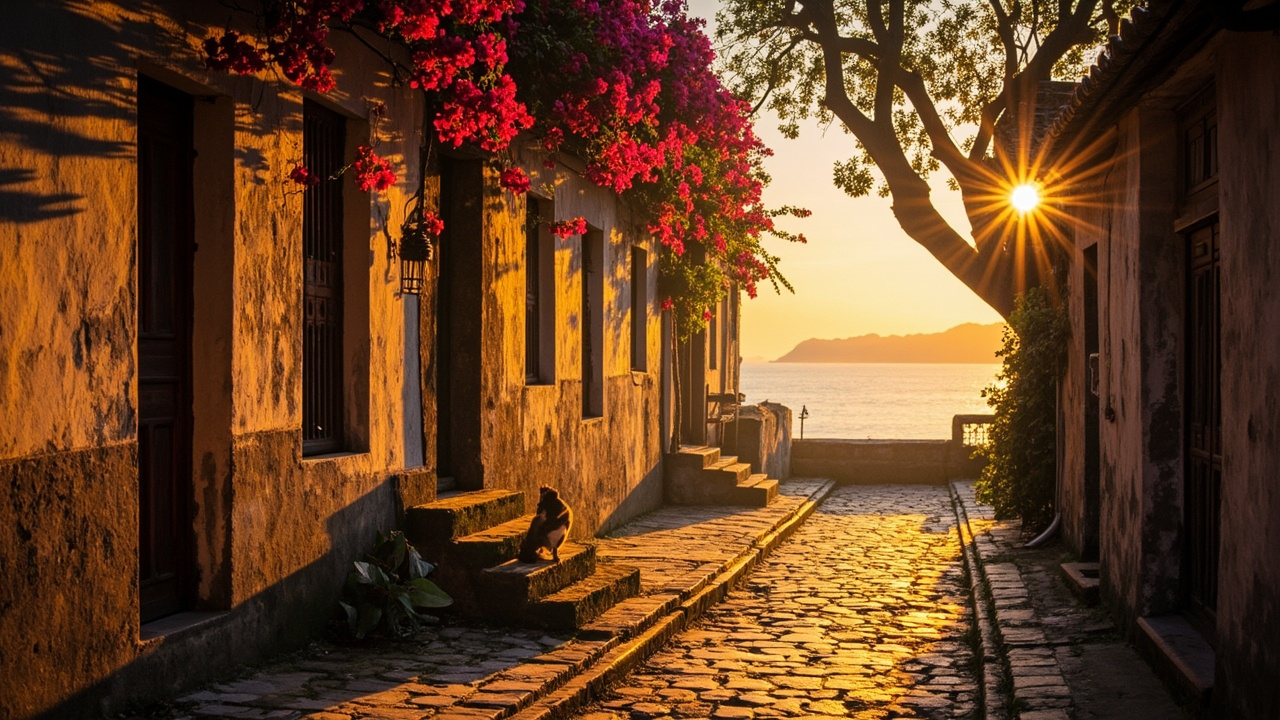
Things to Do in Xiamen
The first thing I noticed in Xiamen was the smell. Not the sea, which I expected, but the sweet, slightly burnt smell of roasting chestnuts drifting from a cart near the ferry terminal, mixing with diesel fumes and salt air. I’d just gotten off a 4-hour high-speed train from Shenzhen and was standing on the sidewalk, trying to figure out which way was north, when a man in a blue windbreaker pointed at my phone and said, “Zhongshan Road, that way.” He was right. I hadn’t asked.
Xiamen doesn’t get the same attention as Shanghai or Beijing, and honestly, that’s part of its appeal. It’s a city of about 5 million people on the southeast coast of Fujian province, facing Taiwan across a narrow strait. The architecture is a strange mix of colonial-era European buildings, traditional Minnan red-brick houses, and the kind of glassy towers you see in every Chinese city now. But the rhythm here is slower. People sit on plastic stools outside their shops at 10 p.m., eating oysters and drinking beer. The streets are clean. The air is better than most Chinese cities. And the food, which I’ll get to, is some of the best I’ve had anywhere in China.
This guide is for first-time visitors to China who’ve never been here before. I’ve been to Xiamen four times over seven years, and I’ve made most of the mistakes you can make. I’ll tell you what’s worth your time, what isn’t, and how to actually get around without losing your mind.
Quick answer
Xiamen is a 2-3 day destination best visited in spring (March-May) or autumn (October-November), when temperatures sit between 60-75°F (15-24°C). Most international visitors can enter China visa-free for up to 240 hours (10 days) if transiting through Xiamen to a third country, or use the standard 30-day visa-free entry if eligible under current 2026 policies. Budget roughly $80-120 per day (580-870 CNY) for mid-range hotels, meals, and transport. The must-do is Gulangyu Island, but go early and avoid weekends.
The Short Version
If you only have 90 seconds: Go to Gulangyu Island on a weekday morning, eat oyster omelets and satay noodles on Zhongshan Road at night, walk the Zengcuoan beach path at sunset, and take a day trip to the Fujian tulou (earth buildings) if you have a third day. Skip the Xiamen University campus tour unless you’re really into architecture. Get Alipay or WeChat Pay working before you arrive, because almost nothing takes cash. The metro is cheap and easy. English is limited outside hotels, so download a translation app.
How I Picked These
I’ve been to Xiamen four times: once in 2019 for a week, twice in 2023, and most recently in early 2026. I’ve stayed in three different neighborhoods, gotten lost on Gulangyu more times than I’d like to admit, and eaten my weight in seafood. I talked to a taxi driver named Chen who grew up on the island, a hostel receptionist who gave me a hand-drawn map of the best breakfast spots, and a woman selling mango shaved ice who laughed at my Mandarin and then gave me extra mango anyway. I also made mistakes: I went to Gulangyu on a Saturday in July once. Never again. This list is based on what I’d actually tell a friend to do, not what a tourism board would want me to say.
Comparison Table
| Rank | Place | Best For | Approx Cost (USD) | Time Needed | When to Go |
|---|---|---|---|---|---|
| 1 | Gulangyu Island | History, architecture, views | $5-15 (35-110 CNY) | 4-6 hours | Weekday morning |
| 2 | Zhongshan Road & Surrounds | Food, nightlife, shopping | Free to walk | 2-3 hours | Evening |
| 3 | Nanputuo Temple | Buddhism, gardens, views | Free | 1.5-2 hours | Early morning |
| 4 | Xiamen University & Beach | Campus stroll, sunsets | Free (reservation) | 2 hours | Late afternoon |
| 5 | Zengcuoan Village | Beach, cafes, local life | Free to walk | 2-3 hours | Sunset |
| 6 | Fujian Tulou Day Trip | UNESCO history, countryside | $40-60 (290-430 CNY) | Full day | Any clear day |
| 7 | Huandao Road Cycling | Coastal views, exercise | $3-8 (20-60 CNY) | 2-4 hours | Morning or late afternoon |
| 8 | Shapowei Art Zone | Galleries, coffee, hipster vibes | Free to walk | 1.5-2 hours | Afternoon |
| 9 | Jimei School Village | Architecture, history | Free | 2-3 hours | Morning |
| 10 | Wanshi Botanical Garden | Nature, peace, giant trees | $4 (30 CNY) | 2-3 hours | Morning |
Gulangyu Island 鈥?The Car-Free Island That’s Worth the Hype (If You Do It Right)
I went to Gulangyu on a Tuesday morning in October, caught the 7:30 a.m. ferry, and had the place almost to myself for two hours. By 10 a.m., the tour groups arrived, and by noon, I was ready to leave. The island is only about 0.7 square miles, but it feels bigger because there are no cars, just narrow alleys, old villas, and more stray cats than I’ve ever seen in one place.
Why it’s special: Gulangyu was a foreign concession in the 19th and early 20th centuries, so you get this weird mix of Victorian, Gothic, and traditional Fujian architecture. It’s also a UNESCO World Heritage Site. The best part is just wandering. I found a garden tucked behind a wall, sat on a stone bench, and watched a cat sleep for 20 minutes. That’s the kind of place it is.
馃搷 Location: Siming District, ferry from Xiamen International Cruise Center or Lundu Ferry Terminal. 馃帿 Entry fee: Ferry round-trip $5-8 (35-55 CNY), plus $15 (100 CNY) for the five main attractions combo ticket. You can skip the combo and just walk. 馃晲 Opening hours: Ferries run 5:30 a.m. to midnight, but the island is best 7-10 a.m. 馃殕 How to get there: Take Metro Line 1 to Lundu Station, Exit 2, walk 10 minutes to the ferry terminal. Buy tickets on WeChat (search “Xiamen Ferry”) or at the kiosk. Bring your passport. 鈴?When to visit: Weekday morning, March-May or October-November. Avoid July-August (hot, crowded) and Chinese holidays. 馃挕 Insider tips: The electric carts on the island are a scam for able-bodied people. Walk. Also, the “Sunlight Rock” viewpoint costs extra and the view isn’t that different from the free spots. And bring cash for the old ladies selling mangoes on sticks. I met a man named Chen who’s lived on the island for 60 years. He told me the best time to see the old villas is right after a rain, when the stone walls darken and the smell of wet jasmine fills the alleys.
Zhongshan Road 鈥?Where to Eat Until You Can’t Anymore
Zhongshan Road is the main pedestrian street in Xiamen, and it’s touristy. I’m not going to pretend it isn’t. But the side alleys off it are where the real food is. I went on a Thursday night in November, followed my nose, and ended up at a tiny stall with no English menu, pointing at what someone else was eating. It was oyster omelet, and it was perfect.
Why it’s special: This is where you eat. Satay noodles, oyster omelets, peanut soup, shaved ice with mango, grilled squid on sticks. The main street has the chains and the souvenir shops, but the alleys have the old family stalls that have been there for decades. It’s also a good place to just watch people.
馃搷 Location: Siming District, near Lundu Ferry Terminal. 馃帿 Entry fee: Free to walk. Food is $1-5 (7-35 CNY) per dish. 馃晲 Opening hours: Stalls open around 10 a.m., peak from 6-10 p.m. 馃殕 How to get there: Metro Line 1 to Zhongshan Park Station, Exit 3, walk 5 minutes. Or just follow the crowds from the ferry terminal. 鈴?When to visit: Evening, any day. Weekends are busier but more fun. 馃挕 Insider tips: The best stalls don’t have English signs. Look for the ones with the longest local lines. Also, don’t eat at the first place you see. Walk a block or two off the main drag. And bring tissues, because most stalls don’t provide napkins. I tried “shacha noodles” for the first time here. It’s a peanut-based soup with noodles, seafood, and pork. I didn’t know what I was ordering. I just pointed. Best mistake I made all trip.
Nanputuo Temple 鈥?The One Place That Felt Genuinely Peaceful
I’m not a religious person, but Nanputuo Temple got to me. I went on a Wednesday morning in March, and there were maybe 20 other people there. The incense smoke hung in the air, the bells rang every few minutes, and the gardens behind the temple were full of turtles and old men playing chess.
Why it’s special: It’s an active Buddhist temple, not a museum. You see monks walking around, people praying, and the whole thing is set against a mountain backdrop. The vegetarian restaurant inside is also genuinely good, which I didn’t expect.
馃搷 Location: Siming District, at the foot of Wulao Mountain. 馃帿 Entry fee: Free. Donations welcome. 馃晲 Opening hours: 5:30 a.m. to 6 p.m. daily. 馃殕 How to get there: Metro Line 1 to Xiamen University Station, Exit 2, walk 10 minutes. Or take bus 1, 21, or 45. 鈴?When to visit: Early morning (before 8 a.m.) for the best light and fewest people. 馃挕 Insider tips: Dress modestly (cover shoulders and knees). Don’t point at monks. The vegetarian restaurant is upstairs and worth the $8 (55 CNY) set meal. And the walk up to the mountain behind the temple is steep but has great views. A monk smiled at me when I bowed awkwardly. I think he was amused. I’ll take it.
Xiamen University & Baicheng Beach 鈥?The Campus That Feels Like a Park
Xiamen University is often called the most beautiful campus in China, and I get it. It’s right on the coast, with palm trees, old buildings, and a beach just outside the gate. But here’s the thing: you need to reserve a spot to get in, and it’s not always easy.
Why it’s special: The campus itself is lovely, but the real draw is the beach right next to it. Baicheng Beach is where locals go to watch the sunset, fly kites, and eat ice cream. It’s not a swimming beach (the water isn’t great), but it’s a great place to sit.
馃搷 Location: Siming District, near Nanputuo Temple. 馃帿 Entry fee: Free, but you need to reserve online (WeChat: “Xiamen University”). 馃晲 Opening hours: Campus is open 12-2 p.m. and 5-6 p.m. on weekdays, all day on weekends. 馃殕 How to get there: Metro Line 1 to Xiamen University Station, Exit 1. 鈴?When to visit: Late afternoon for the beach, weekday for the campus. 馃挕 Insider tips: The reservation system is annoying. Try the “Xiamen University” WeChat account a few days in advance. If you can’t get in, don’t stress. The beach is the best part anyway. And the seafood restaurants behind the beach are cheaper than the ones on Zhongshan Road. I skipped the campus tour and just sat on the beach. A kid flew a kite that looked like a dragon. It crashed into the sea. He laughed. I laughed. Good afternoon.
Zengcuoan Village 鈥?The Beach Neighborhood That’s Actually Relaxing
Zengcuoan is a former fishing village that’s now a mix of hostels, cafes, and seafood restaurants. It’s a bit hipster, a bit touristy, but it’s also where I had one of the best meals of my trip: grilled oysters with garlic, $2 (15 CNY) each.
Why it’s special: It’s right on the beach, but it’s not as crowded as Gulangyu or Zhongshan Road. The vibe is laid-back. You can rent a bike, ride along the coast, and stop for coffee whenever you want. It’s also where a lot of young Chinese travelers stay, so it feels more local than the hotel districts.
馃搷 Location: Siming District, along Huandao Road. 馃帿 Entry fee: Free. 馃晲 Opening hours: Always open, but best from 4-9 p.m. 馃殕 How to get there: Bus 29, 47, or 112 to Zengcuoan Station. Or take a taxi from Zhongshan Road (about $4/30 CNY). 鈴?When to visit: Sunset, any day. Weekends are busier but still manageable. 馃挕 Insider tips: The seafood stalls on the beach are cheaper than the restaurants. Walk to the end of the beach for the quietest spots. And the “art village” part is small, so don’t expect too much. A woman selling mango shaved ice gave me extra mango because I tried to order in Mandarin. I butchered it. She laughed. The mango was worth the embarrassment.
Fujian Tulou Day Trip 鈥?The UNESCO Site That’s Actually Worth the Drive
The tulou are circular earthen buildings built by the Hakka people between the 12th and 20th centuries. They’re about 2-3 hours from Xiamen by bus or car, and they’re genuinely unlike anything else I’ve seen. I went on a Friday in April, joined a small group tour, and spent the day walking through villages that felt frozen in time.
Why it’s special: These are not just old buildings. People still live in them. You can walk into a courtyard, see laundry hanging, smell wood smoke, and watch an old woman shell peanuts. It’s a living museum. The most famous ones are in Yongding and Nanjing counties.
馃搷 Location: Yongding and Nanjing counties, about 90 miles (150 km) from Xiamen. 馃帿 Entry fee: $15-20 (100-140 CNY) for the main clusters. Tours are $40-60 (290-430 CNY) including transport. 馃晲 Opening hours: 8 a.m. to 5:30 p.m. daily. 馃殕 How to get there: Book a day tour through your hotel or a site like Klook. Or take a bus from Xiamen Hubin South Bus Station to Yongding (2.5 hours, $8/55 CNY). 鈴?When to visit: Weekday, spring or autumn. Summer is hot and crowded. 馃挕 Insider tips: The tours are convenient but rushed. If you can, hire a driver for the day ($80-100/580-720 CNY) and go at your own pace. Bring cash for snacks and souvenirs. And wear good shoes, because the paths are uneven. I bought a hand-woven bamboo basket from a woman who didn’t speak a word of English. We communicated through pointing and smiling. I still have it.
Huandao Road Cycling 鈥?The Best Way to See the Coast
Huandao Road is a coastal road that loops around the island. You can rent a bike for a few dollars and ride it for as long as you want. I did it on a Sunday morning in October, and it was one of the best things I did in Xiamen.
Why it’s special: The views are great, the road is mostly flat, and you can stop wherever you want. There are beaches, temples, and seafood stalls along the way. It’s also a good way to see parts of the city that tourists don’t usually visit.
馃搷 Location: The road circles the island. Start at Zengcuoan or Xiamen University. 馃帿 Entry fee: Bike rental is $3-8 (20-60 CNY) for a few hours. 馃晲 Opening hours: Always open, but best in daylight. 馃殕 How to get there: Rent a bike from any of the shops near Zengcuoan or the university. You’ll need your passport and a deposit. 鈴?When to visit: Morning or late afternoon to avoid the heat. 馃挕 Insider tips: The shared bikes (Meituan, Hellobike) are cheaper but harder to unlock without a Chinese phone number. The rental shops are easier for tourists. And bring water, because there aren’t many places to buy it along the way. I got a flat tire about 5 miles in. A man in a small repair shop fixed it for $1 (7 CNY) and refused to take more. He just pointed at my bike and gave me a thumbs up.
Shapowei Art Zone 鈥?The Hipster Neighborhood That’s Actually Good
Shapowei is a former fishing port that’s been converted into a mix of galleries, cafes, and small shops. It’s not huge, but it’s a nice place to spend an afternoon. I went on a Tuesday in November, drank a flat white, and watched a guy paint a mural.
Why it’s special: It’s small and walkable, and the coffee is actually good. There are also some good seafood restaurants tucked away in the alleys. It’s not a must-see, but it’s a nice break from the bigger attractions.
馃搷 Location: Siming District, near Xiamen University. 馃帿 Entry fee: Free. 馃晲 Opening hours: Most shops open 10 a.m. to 10 p.m. 馃殕 How to get there: Metro Line 1 to Zhongshan Park Station, then walk 15 minutes. Or take a taxi. 鈴?When to visit: Afternoon, any day. 馃挕 Insider tips: The coffee is better than the art. The best gallery is the small one on the second floor of the building near the entrance. And the seafood restaurants in the back alleys are cheaper than the ones on the main street. I bought a small painting from a guy who told me he’d been painting the same harbor for 20 years. It cost $15 (100 CNY). I hung it in my kitchen.
Jimei School Village 鈥?The Architecture Detour That’s Worth It
Jimei is a district across the bay from Xiamen Island, and it’s home to a cluster of schools and buildings funded by a philanthropist named Tan Kah Kee in the early 20th century. The architecture is a mix of Chinese and Western styles, and it’s very photogenic.
Why it’s special: It’s not a typical tourist attraction, which is exactly why I liked it. You can walk around the campus, visit the Tan Kah Kee Memorial Hall, and see the weird, beautiful buildings. It’s quiet and feels like a different city.
馃搷 Location: Jimei District, across the Xiamen Bridge. 馃帿 Entry fee: Free. 馃晲 Opening hours: 8 a.m. to 5 p.m. daily. 馃殕 How to get there: Metro Line 1 to Jimei School Village Station, Exit 2. 鈴?When to visit: Morning, any day. 馃挕 Insider tips: The memorial hall is worth 30 minutes. The best views are from the bridge. And the seafood restaurants near the station are cheap and good. I got lost trying to find the memorial hall and ended up in a school courtyard. A teacher pointed me in the right direction and gave me a bottle of water. Small kindnesses.
Wanshi Botanical Garden 鈥?The Place to Slow Down
Wanshi Botanical Garden is on the north side of the island, and it’s huge. I went on a Thursday morning in March and spent three hours just walking. There are giant trees, a bamboo forest, a bonsai garden, and a lake with lotus flowers.
Why it’s special: It’s peaceful. After a few days of crowds and noise, it’s nice to be somewhere quiet. The air smells like wet earth and flowers. And you can easily forget you’re in a city of 5 million people.
馃搷 Location: Siming District, north side of the island. 馃帿 Entry fee: $4 (30 CNY). 馃晲 Opening hours: 6:30 a.m. to 6 p.m. daily. 馃殕 How to get there: Bus 87, 57, or 旅游2线 to Wanshi Botanical Garden Station. 鈴?When to visit: Morning, any day. Spring is best for flowers. 馃挕 Insider tips: The garden is big, so wear comfortable shoes. The bonsai garden is the highlight. And the tea house near the lake is a good place to rest. I sat by the lake for an hour and did nothing. It was the best hour of my trip.
FAQ summary
Most first-time visitors to Xiamen should plan for 2-3 days, focus on Gulangyu Island, Zhongshan Road, and the coastal areas, and use the metro to get around. The visa-free transit policy (240 hours) applies if you’re flying through Xiamen to a third country, but check current rules before booking. You’ll need Alipay or WeChat Pay for almost everything, and a VPN if you want to use Google or Instagram. English is limited outside hotels, so download a translation app. Spring and autumn are the best times to visit.
FAQ
Q: Do I need a visa to visit Xiamen? A: If you’re a citizen of the US, UK, EU, Australia, or most Southeast Asian countries, you can enter China visa-free for up to 30 days under current 2026 policies. If you’re transiting through Xiamen to a third country, the 240-hour visa-free transit policy applies. Check the latest rules before you book.
Q: How do I pay for things in Xiamen? A: Almost everything runs on Alipay or WeChat Pay. Set these up before you arrive and link your international credit card. Cash is accepted at some places, but it’s a hassle. Street stalls and small restaurants may only take mobile payment.
Q: Is English widely spoken in Xiamen? A: Not really. Hotels and major attractions have some English signage, but outside of that, you’ll need a translation app. I use Pleco or Google Translate (download the offline Chinese pack). Learn a few basic phrases like “ni hao” (hello) and “xie xie” (thank you).
Q: What’s the best time to visit Xiamen? A: March-May and October-November. The weather is mild, the crowds are manageable, and the air is clearer. Avoid July-August (hot and humid) and Chinese public holidays (crowded and expensive).
Q: How do I get from Xiamen Airport to the city center? A: Take the Airport Express Bus ($2/15 CNY) or Metro Line 1 from Gaoqi Airport Station. A taxi to Zhongshan Road is about $10-12 (70-85 CNY) and takes 30 minutes. The metro is cheaper and easier.
Q: Do I need a VPN in Xiamen? A: Yes, if you want to use Google, Facebook, Instagram, or WhatsApp. Download and set up a VPN before you arrive, because the VPN websites are blocked in China. I use ExpressVPN, but there are others.
Q: What should I eat in Xiamen? A: Oyster omelets, satay noodles, shacha noodles, peanut soup, grilled squid, and mango shaved ice. The best food is in the alleys off Zhongshan Road and in Zengcuoan. Don’t be afraid to point at what someone else is eating.
The Honest Wrap-up
This list is for people who want to eat well, walk a lot, and don’t mind getting a little lost. It’s not for people who want everything to be in English, or who need a Starbucks on every corner. Xiamen is a city that rewards curiosity. If you’re willing to point at a menu and hope for the best, you’ll have a great time. If you’re not, you might find it frustrating.
One last piece of advice: don’t try to do everything. Pick two or three things a day, and leave room for the unexpected. The best moments I had in Xiamen were the ones I didn’t plan. The cat on Gulangyu. The mango shaved ice. The flat tire. The monk who smiled at me. That’s the stuff you remember.
More guides you may like

Top 10 Bridges in China
China's bridges are engineering marvels spanning mountains, rivers, and seas. Here are 10 of the most spectacular, from ancient stone to modern steel.
8 min read

Top 10 Buddhist Sites in China
From the Leshan Giant Buddha to the Dunhuang Caves, these 10 Buddhist sites represent 2,000 years of China's spiritual heritage.
9 min read

Top 10 Day Trips from Beijing You Shouldn't Miss
Beijing is packed with history, but some of China's best experiences are just a few hours away. Here are 10 day trips that will transform your visit.
9 min read

Top 10 Hidden Gems in China Off the Beaten Path
Beyond the Great Wall and Terracotta Warriors, China has incredible hidden destinations few tourists ever reach. Here are 10 underrated gems worth the detour.
9 min read

Top 10 Markets and Shopping Streets in China
From Shanghai's Bund to Beijing's Silk Street - 10 markets where foreigners can haggle, explore, and bring home authentic Chinese goods.
9 min read

Top 10 Museums in China You Shouldn't Miss
China's museums span 5,000 years of civilization. These 10 - from the Palace Museum to Xi'an's terracotta gallery - are unmissable for culture lovers.
9 min read