
Datong Yungang Grottoes Hanging Temple
Datong Yungang Grottoes Hanging Temple
Destination at a glance
- Best time to visit
- May, June, September, and October — mild temperatures, clear skies, and manageable crowds; avoid Chinese public holidays.
- Daily budget
- $45-90/day for a foreign tourist, including hotel, meals, transport, and one major site per day.
- Visa
- Most Western and Southeast Asian passport holders can use China's 240-hour visa-free transit policy; otherwise apply for a standard L visa in advance.
- Safety
- Very safe — violent crime is rare, but watch for pickpockets in crowded markets and be careful on the Hanging Temple walkways.
- Getting around
- Metro Line 1 covers the old city; taxis and Didi are cheap (under $5 for most trips); English signage is limited outside major sites.
- Connectivity
- Buy a China Unicom or China Mobile SIM or eSIM at the airport; a VPN is essential for Google, WhatsApp, and Instagram — set it up before you arrive.
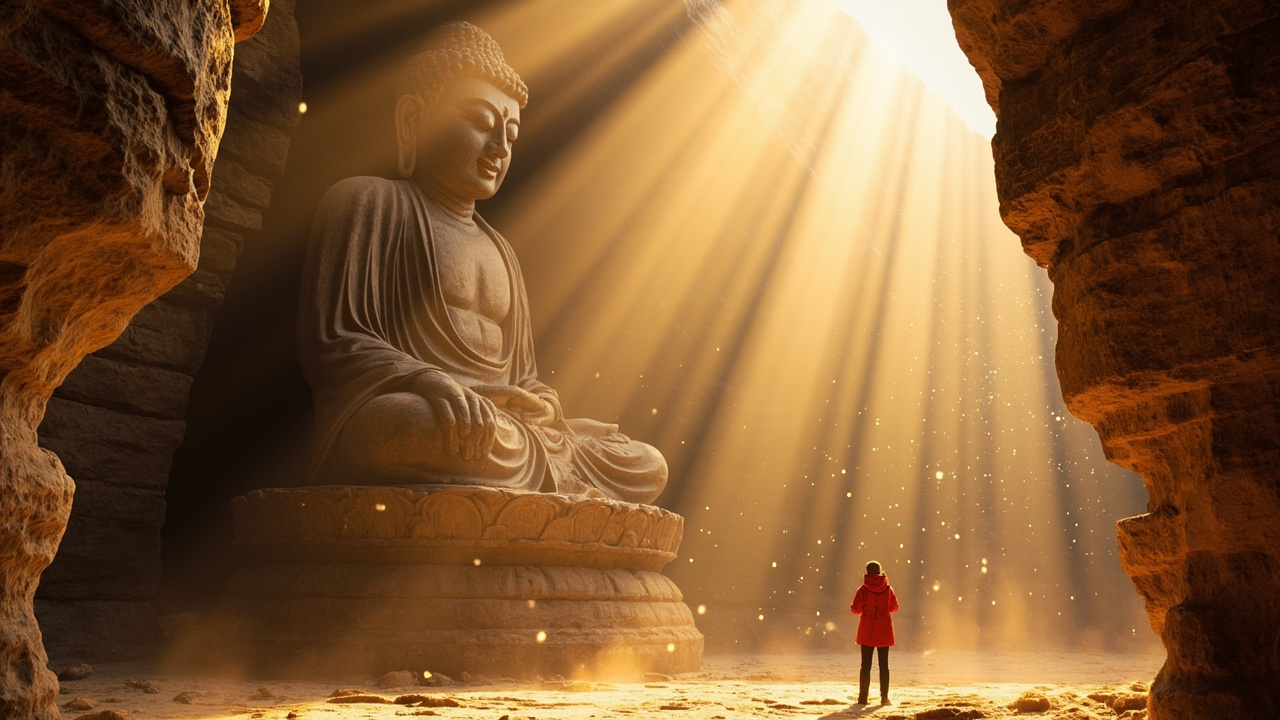
Datong Yungang Grottoes Hanging Temple
The guard at the Hanging Temple tapped my shoulder and pointed at my camera bag. “No tripod up there,” he said, in a tone that suggested he’d said it four hundred times that morning. I’d driven out from Datong at 7am, paid 40 yuan (about $5.50) for the ticket, and now I was standing at the base of a 1,500-year-old wooden monastery that clings to a cliff face like it’s holding on by its fingernails. The walkway ahead was maybe 60 centimeters wide. Below it, a 75-meter drop into a dry ravine. I put the tripod back in the car.
This is what people come to Shanxi province for. Not the coal dust, not the industrial sprawl of Datong itself, but two UNESCO-listed sites that sit within 80 kilometers of each other and are almost always done in the same day. The Yungang Grottoes — 51,000 Buddhist statues carved into sandstone between 460 and 525 AD — are the older, quieter, more monumental of the two. The Hanging Temple is the one that ends up on your Instagram feed. Both are worth the trip. Neither is easy to reach without a car or a tour, which is why most foreign tourists skip Datong entirely and go straight from Beijing to Xi’an.
That’s a mistake. Here’s how to do it properly.
Quick answer
Datong is reachable by high-speed rail from Beijing in about 1 hour 45 minutes (Beijing North Station to Datong South, roughly $25/180 CNY one way), making it an easy 2-day side trip. The Yungang Grottoes cost 120 CNY ($17) and need 3 hours; the Hanging Temple costs 130 CNY ($18) and needs 2 hours, and the two are best combined on a single day with a hired driver (about $60-80/450-580 CNY for the day). Most foreign visitors can enter China visa-free for 240 hours under the current transit policy, which is plenty for a Datong detour — check the visa-free transit rules before booking.
The short version
If you have one day in Datong: hire a driver, hit Yungang at opening (8:30am), then drive 75 minutes to the Hanging Temple for the afternoon. Skip the Hengshan mountain cable car unless you’re a hiker. Book your train tickets on the 12306 app the moment they go on sale (15 days out). Stay near the old city wall, not near the station. And bring cash for the smaller snack stalls — not every vendor takes Alipay or WeChat Pay, even in 2026.
How I picked these
I’ve been based in Beijing for seven years and I’ve been to Datong four times — twice solo, once with my parents when they visited from Manchester, and once in January when it was minus 18°C and I had the entire Yungang site to myself for the first hour. I’ve done the Hanging Temple with a private driver, with a tour group, and once by public bus (never again — more on that below). I’ve talked to the site’s English-speaking guides, argued with a taxi driver about the fare to the grottoes, and eaten more bowls of Shanxi knife-cut noodles than I can count. The advice below is what I’d tell a friend, not what the tourism board would.
Comparison table
| Rank | Place | Best For | Approx Cost (USD) | Time Needed | When to Go |
|---|---|---|---|---|---|
| 1 | Yungang Grottoes | Buddhist art, scale, quiet contemplation | $17 (120 CNY) | 3 hours | Weekday morning, Apr–Oct |
| 2 | Hanging Temple | Drama, photography, mild vertigo | $18 (130 CNY) | 2 hours | Weekday afternoon, May–Sep |
| 3 | Datong Old City Wall | Sunset walks, city views | Free (wall climb $8/55 CNY) | 1.5 hours | Sunset, any season |
| 4 | Huayan Temple | Liao dynasty architecture | $7 (50 CNY) | 1 hour | Morning |
| 5 | Nine Dragon Screen | Ming-era glazed tilework | $2 (15 CNY) | 20 min | Anytime |
| 6 | Shanhua Temple | Free, quiet, underrated | Free | 45 min | Morning |
| 7 | Hengshan Mountain | Hiking, cable car views | $20 (140 CNY) incl. cable car | Half day | Clear days |
| 8 | Datong Museum | Context before the grottoes | Free (ID/passport required) | 2 hours | Rainy days |
| 9 | Coal Mine Park | Industrial history, odd | $10 (70 CNY) | 1.5 hours | Skip unless curious |
| 10 | Yingxian Wooden Pagoda | Day trip, 11th-century timber | $8 (55 CNY) | 2 hours + 1.5h drive | Full day trip |
Yungang Grottoes — the 51,000 Buddhas you’ve never heard of
I remember the exact moment the scale hit me. You walk through a landscaped park, past a monastery complex that’s clearly newer than everything else, and then the cliff opens up. Cave 20 — the famous one, the one on every poster — has a 14-meter seated Buddha with his face partially eroded by 1,500 years of wind. His eyes are gone. His hands are gone. What’s left is the posture, and somehow that’s more powerful than if he were intact.
The site has 252 caves and niches, but realistically you’ll spend your time in caves 5 through 20, which are the largest and best preserved. Cave 5 holds a 17-meter Buddha — the biggest at the site — and the interior is painted in faded mineral pigments that still show traces of blue and ochre. Cave 6 is the one that stopped me cold: every square centimeter of wall is covered in carved narrative scenes, thousands of tiny figures telling the life of the Buddha, and the guard told me it took 30 years to complete. Cave 12, the “Music Cave,” has celestial musicians carved into the ceiling. Cave 18 has a standing Buddha whose robe still shows the original drapery folds.
The whole thing was carved between 460 and 525 AD under the Northern Wei dynasty, and it’s a UNESCO World Heritage Site since 2001. What most visitors don’t realize is that the earliest caves (16-20) were carved under the supervision of a monk named Tanyao, and they show clear Gandharan influence — Greek-Buddhist fusion from what’s now Afghanistan and Pakistan, carried along the Silk Road. You can see it in the wavy hair and the toga-like robes. It’s the kind of detail that makes you realize how connected the ancient world actually was.
📍 Location: About 16 km west of Datong city center, in the Yungang town area of the Yungang District.
🎫 Entry fee: 120 CNY ($17) for the full site including the new museum and the reconstructed monastery. Students half price with ID. The park outside the ticketed area is free.
🕐 Opening hours: 8:30am–5:30pm (last entry 5pm) April–October; 8:30am–5pm November–March. Open daily, no rest days.
🚕 How to actually get there: Bus 603 from Datong Railway Station (the old one, not the high-speed South station) takes about 40 minutes and costs 3 CNY. Or take a Didi from the city center for about 40-50 CNY ($6-7). If you’re coming from Beijing on the high-speed train, you’ll arrive at Datong South — a taxi from there is roughly 60 CNY ($8.50) and takes 30 minutes.
⏰ When to visit: Weekday mornings, right at opening. By 10:30am in summer the tour groups arrive and Cave 20 gets crowded. April–October is comfortable; I went in January and had the place nearly to myself but it was brutally cold and some caves were closed for conservation.
💡 Insider tips: Bring your passport — you need it to buy the ticket, and there’s no way around this. The caves are behind glass in some sections, so a polarizing filter helps with photos. The on-site English audio guide (40 CNY) is genuinely good and worth it. Don’t skip the small museum near the entrance — it explains the Gandharan connection and gives context you won’t get from the caves alone. And the toilets near Cave 20 are the cleanest on site; use them before you leave.
I met a retired schoolteacher from Taiyuan named Mrs. Wang at Cave 6 who insisted on explaining the jataka tales to me in slow Mandarin for twenty minutes. I understood maybe a third of it, but her enthusiasm was infectious. She told me her grandfather had come here by donkey cart in the 1930s.
Hanging Temple — the monastery that shouldn’t exist
The first thing you notice is how small it is. Photos make it look like a fortress; in person it’s a cluster of 40 tiny rooms and halls pinned to a sheer cliff, connected by walkways barely wide enough for two people to pass. The second thing you notice is the drop.
Built around 491 AD during the Northern Wei dynasty (same era as Yungang, which is why they pair so well), the temple is held up by a combination of horizontal beams driven into the rock and a set of vertical stilts that — and this is the part that messes with your head — aren’t actually load-bearing. The whole structure hangs on the beams. The stilts are decorative. A structural engineer friend of mine looked at photos and said, “That’s either genius or madness.” It’s been standing for 1,500 years, so probably genius.
What makes it unusual beyond the engineering is that it’s the only temple in China that houses Buddhism, Taoism, and Confucianism under one roof. The top hall has three statues — Buddha, Laozi, and Confucius — sitting side by side. The monk I spoke to (a young guy in his twenties, clearly used to tourists) said the temple was built this way deliberately, “so nobody fights.”
The climb is the experience. You go up narrow wooden stairs, through low doorways, along open walkways with a railing that comes up to about your waist. If you’re afraid of heights, this is not the place to conquer that fear — turn around at the first landing and enjoy the view from the base. If you’re fine with heights, the payoff is the top hall, where you can look out over the ravine and see the entire structure from a slightly different angle. It’s genuinely vertiginous.
📍 Location: At the foot of Hengshan (Mount Heng), about 65 km southeast of Datong city, in Hunyuan County.
🎫 Entry fee: 130 CNY ($18) for the temple. The Hengshan scenic area has a separate ticket (about 45 CNY / $6) plus cable car (70 CNY / $10 one way) if you want to go up the mountain.
🕐 Opening hours: 8:30am–6pm (last entry 5:30pm) May–October; 8:30am–5pm November–April. Open daily.
🚌 How to actually get there: This is the tricky one. There’s a direct tourist bus from Datong’s East Passenger Station (大同汽车客运东站) that leaves around 8am and returns around 3pm, but the schedule is unreliable and it’s often full. The public bus option (bus to Hunyuan County, then a local taxi) takes 3+ hours each way and I don’t recommend it. The realistic option for foreign visitors is a hired driver or a small-group tour. A private driver for the day (Yungang + Hanging Temple) runs about 450-580 CNY ($60-80) and is worth every yuan. Book through your hotel.
⏰ When to visit: Weekday afternoons, ideally arriving around 2pm after Yungang. Summer weekends are a crush — the walkways become single-file queues and you can’t stop to look at anything. May, June, September, and October are the sweet spots.
💡 Insider tips: Wear shoes with grip — the wooden walkways get slick. Leave backpacks in the car; there’s nowhere to put them and the passages are tight. The “no tripod” rule is enforced. There’s a small tea stall at the base that sells decent jasmine tea for 15 CNY — sit there for 20 minutes after your climb and let your legs stop shaking. And if you’re doing both sites in one day, do Yungang first — the Hanging Temple is the more physically demanding of the two, and you want fresh legs for it.
I made the mistake of wearing loafers. The walkway near the top has a section where you have to duck through a doorway and step up onto a beam, and I nearly went over. The woman behind me — a Chinese tourist from Inner Mongolia — grabbed my elbow and said, in perfect English, “Careful, the wood is older than your country.” She wasn’t wrong.
Datong Old City Wall — the sunset walk
Most people treat the wall as a photo op and move on. That’s a mistake. The Ming dynasty wall was rebuilt in 2008 (the original was largely destroyed in the 20th century), but the reconstruction is faithful and the walk along the top is one of the best things to do in Datong at the end of a long day.
The wall is 7.2 km around, and you can walk the whole loop in about 90 minutes. The best section is the south gate (Yongtai Gate), where you can climb up for 55 CNY ($8) and walk east toward the Heyang Gate as the sun sets over the old city. From up there you can see the Huayan Temple’s pagoda, the drum tower, and the low-rise rooftops of the old town — a view that gives you a real sense of the city’s layout.
📍 Location: Encircling the old city center. The most accessible climb point is the South Gate (永泰门), a 10-minute walk from the Huayan Temple.
🎫 Entry fee: Free to walk around at ground level. 55 CNY ($8) to climb the wall.
🕐 Opening hours: Wall access 9am–9pm (summer), 9am–6pm (winter).
🚕 How to get there: Any taxi or Didi from your hotel in the old city will get you there for under 15 CNY ($2). If you’re staying near the Huayan Temple, just walk.
⏰ When to visit: Sunset, obviously. In summer that’s around 7:30pm; in winter around 5pm. Weekday evenings are quieter.
💡 Insider tips: The wall is lit up at night and the effect is genuinely lovely — worth staying for. There’s a bike rental (single and tandem) at the South Gate for about 40 CNY/hour if you’d rather ride than walk. The food street at the base of the wall (near the Drum Tower) has excellent Shanxi noodles — try the knife-cut noodles (刀削面) at any stall with a line of locals.
Huayan Temple — the Liao dynasty surprise
I almost skipped this. I’d seen enough temples in China. But a local friend insisted, and I’m glad she did. Huayan Temple dates to 1038 AD (Liao dynasty) and contains one of the best-preserved collections of Liao-era Buddhist sculpture in the country. The main hall — the Bojia Jiaozang Hall — is a massive timber structure with original 11th-century roof beams, and inside, the statues have a stillness that the reconstructed temples around town can’t match.
The library hall (Bojia Jiaozang) holds a rotating collection of sutras and manuscripts, and the wall paintings are original. It’s a 45-minute visit if you’re quick, an hour if you’re not. The courtyard is quiet, the ticket price is low, and it gives you the historical context that makes Yungang make sense.
📍 Location: Inside the old city, on Xia Si Street, a 10-minute walk from the Huayan Temple metro stop (Line 1).
🎫 Entry fee: 50 CNY ($7).
🕐 Opening hours: 8:30am–5:30pm (summer), 8:30am–5pm (winter). Closed Mondays.
🚇 How to get there: Metro Line 1 to Huayan Temple Station, Exit A, walk 5 minutes north.
⏰ When to visit: Morning, before the tour groups. Pair it with the Nine Dragon Screen (5-minute walk) and Shanhua Temple (10-minute walk).
💡 Insider tips: The temple has an excellent English pamphlet at the ticket office — ask for it. The courtyard has a small tea house that serves local Shanxi tea for 20 CNY, and it’s a good place to sit and recover. The temple is also a working monastery, so keep your voice down in the main halls.
Nine Dragon Screen — 20 minutes, worth it
The largest glazed-tile screen in China, built in 1392 during the Ming dynasty. It’s 45 meters long, 8 meters tall, and covered in 426 glazed tiles depicting nine dragons. It was originally the screen in front of a prince’s palace. The palace is gone; the screen remains.
You’ll spend 20 minutes here. Take a photo, read the English plaque, move on. It’s a 5-minute walk from Huayan Temple and the ticket is 15 CNY ($2), so there’s no reason not to.
📍 Location: On Da Dong Street in the old city, near the Drum Tower.
🎫 Entry fee: 15 CNY ($2).
🕐 Opening hours: 8:30am–6pm daily.
🚶 How to get there: Walk from Huayan Temple (10 minutes east) or take a taxi to “九龙壁” (Jiulongbi).
⏰ When to visit: Anytime. It’s outdoors and quick.
💡 Insider tips: The screen faces south, so morning light is best for photos. The surrounding street has good breakfast stalls — try the local youmian (oat noodles) for about 10 CNY.
Shanhua Temple — the free one
Most tourists miss this. It’s free, it’s quiet, and it has three Liao dynasty halls with original 11th-century sculpture. The main hall (Daxiong Baodian) is one of the largest Liao timber structures in China, and the interior has 18 original arhat statues. It’s a 30-minute visit, and it’s the kind of place where you can sit on a bench in the courtyard and hear nothing but birds.
📍 Location: On Nan Si Street in the old city, a 10-minute walk from Huayan Temple.
🎫 Entry fee: Free (passport required for entry).
🕐 Opening hours: 8:30am–5pm daily.
🚶 How to get there: Walk from Huayan Temple — it’s 800 meters south.
⏰ When to visit: Morning or late afternoon.
💡 Insider tips: The gatekeeper will ask for your passport; this is normal. The temple has no English signage, so bring a translation app. The courtyard has a resident cat that will demand attention.
Hengshan Mountain — if you have a spare half-day
Mount Heng (恒山) is one of China’s Five Great Mountains, and the cable car takes you up to about 1,600 meters with views over the surrounding valleys. The hiking trails are well-marked, and the summit (Tianfeng Ling, 2,017m) is reachable in about 90 minutes from the cable car top. The views are good, not spectacular — this isn’t Huangshan. But if you have a spare half-day and the weather is clear, it’s a pleasant outing.
📍 Location: The Hengshan scenic area, adjacent to the Hanging Temple (they share a ticket office area).
🎫 Entry fee: 45 CNY ($6) scenic area + 70 CNY ($10) cable car one way.
🕐 Opening hours: 7am–6pm (summer), 8am–5pm (winter).
🚗 How to get there: Same driver as the Hanging Temple — it’s a 10-minute drive from the temple parking lot.
⏰ When to visit: Clear days, May–October. Skip in winter (trails close).
💡 Insider tips: The cable car queues are long on weekends. Bring water — the vendors at the top charge 15 CNY for a bottle that costs 3 CNY at the base.
Datong Museum — context before the caves
If you’re the kind of traveler who likes to understand what you’re looking at before you look at it, spend two hours at the Datong Museum the morning before you go to Yungang. The museum has excellent exhibits on the Northern Wei dynasty, the Silk Road trade that brought Gandharan influence to Shanxi, and the history of the Yungang carvings. It’s free (passport required) and the English signage is decent.
📍 Location: On Taihe Road in the new city, about 4 km east of the old city.
🎫 Entry fee: Free (passport required).
🕐 Opening hours: 9am–5pm, closed Mondays.
🚕 How to get there: 15-minute taxi from the old city, about 20 CNY ($3).
⏰ When to visit: Morning, before Yungang.
💡 Insider tips: The museum has a good English audio guide (free with deposit). The café on the ground floor serves decent coffee — a rarity in Datong.
Yingxian Wooden Pagoda — the day trip
The Sakyamuni Pagoda in Yingxian County is the oldest and tallest existing wooden pagoda in the world — 67 meters, built in 1056, and it’s still standing without a single metal nail. It’s a 90-minute drive from Datong and most tourists skip it, which is a shame. The pagoda is closed to climbing (conservation), but the exterior alone is worth the trip, and the surrounding temple complex is peaceful.
📍 Location: Yingxian County, about 75 km south of Datong.
🎫 Entry fee: 55 CNY ($8).
🕐 Opening hours: 8am–6pm (summer), 8:30am–5pm (winter).
🚗 How to get there: Only realistic by hired car — about 90 minutes each way. Combine with the Hanging Temple on a long day.
⏰ When to visit: Anytime, but it’s a full-day commitment.
💡 Insider tips: The pagoda is best viewed from the temple courtyard across the street. The town of Yingxian has good local restaurants — try the mutton soup.
FAQ summary
The most important things to know: Datong is a 1h45m high-speed train from Beijing and works well as a 2-day side trip; the Yungang Grottoes (120 CNY/$17) and Hanging Temple (130 CNY/$18) are best combined on a single day with a hired driver (about $60-80/450-580 CNY); most foreign visitors can enter China visa-free for 240 hours under the current transit policy; and the best months are May, June, September, and October, with weekday mornings for Yungang and weekday afternoons for the Hanging Temple. Bring your passport everywhere — you need it for every ticket.
FAQ
Q: Do I need a visa to visit Datong? A: Most foreign visitors from the US, UK, EU, Australia, and much of Southeast Asia can enter China visa-free for up to 240 hours (10 days) under the current transit policy, which is more than enough for a Datong side trip. Check the current visa-free rules before booking — the policy has been extended and expanded several times since 2024.
Q: How do I get from Beijing to Datong? A: Take the high-speed train from Beijing North Station (北京北站) to Datong South (大同南站). The trip takes about 1 hour 45 minutes and costs around 180 CNY ($25) one way. Trains run roughly every 1-2 hours from 6:30am to 7pm. Book on the 12306 app or Trip.com at least a week in advance — weekend trains sell out.
Q: Can I do Yungang and the Hanging Temple in one day? A: Yes, and most people do. Hire a driver for the day (450-580 CNY / $60-80), start at Yungang at 8:30am, spend 3 hours there, drive 75 minutes to the Hanging Temple, and arrive around 1:30pm. You’ll be back in Datong by 5pm. Doing it by public transport is possible but exhausting — I don’t recommend it.
Q: Is the Hanging Temple safe for someone afraid of heights? A: The walkways are narrow and the drop is real, but the railings are solid and the structure is stable. If you’re seriously acrophobic, stay at the base — the view from the ground is still impressive. If you’re mildly nervous, go early in the day when it’s less crowded and you can take your time.
Q: What’s the best time of year to visit Datong? A: May, June, September, and October. Summer (July-August) is hot and crowded; winter (November-March) is brutally cold (I’ve seen -18°C) but the sites are nearly empty. Spring has dust storms. Avoid Chinese public holidays (especially the first week of October) at all costs.
Q: Do I need cash, or can I use Alipay and WeChat Pay? A: Set up Alipay and WeChat Pay before you arrive — they work almost everywhere in Datong, including at the ticket offices. But bring 200-300 CNY in cash for small snack stalls and the occasional taxi driver who doesn’t accept digital payment. ATMs at the Bank of China on Da Dong Street accept foreign cards.
Q: Is English spoken in Datong? A: Barely. Outside the major hotels and the Yungang ticket office, you’ll struggle to find English speakers. Download a translation app (Pleco or Google Translate with offline Chinese) before you arrive, and have your hotel write down addresses in Chinese for taxi drivers. The high-speed train station has English signage, but most of the city doesn’t.
The honest wrap-up
This trip is for travelers who are willing to do a bit of logistical work in exchange for two of the most extraordinary ancient sites in China without the crowds of Xi’an or Beijing. It’s not for you if you want everything to be easy, if you can’t handle a day without English signage, or if you’re only in China for a week and want to hit the greatest hits. Datong rewards the traveler who slows down.
If you’re about to book: do it in May or October, book the train the moment tickets go on sale, hire the driver, and give yourself two nights minimum. One night is too rushed. And bring a warmer jacket than you think you need — the wind off the loess plateau is no joke, even in spring.
Destination at a Glance
- Best time to visit: May, June, September, and October — mild temperatures, clear skies, and manageable crowds; avoid Chinese public holidays.
- Daily budget: $45-90/day for a foreign tourist, including hotel, meals, transport, and one major site per day.
- Visa: Most Western and Southeast Asian passport holders can use China’s 240-hour visa-free transit policy; otherwise apply for a standard L visa in advance.
- Safety: Very safe — violent crime is rare, but watch for pickpockets in crowded markets and be careful on the Hanging Temple walkways.
- Getting around: Metro Line 1 covers the old city; taxis and Didi are cheap (under $5 for most trips); English signage is limited outside major sites.
- Connectivity: Buy a China Unicom or China Mobile SIM or eSIM at the airport; a VPN is essential for Google, WhatsApp, and Instagram — set it up before you arrive.
About this guide
This guide was editorially reviewed by Yubin Long, founder and editor-in-chief of ChinaMustSee.com, a Beijing-based travel editor who has covered Shanxi province since 2018. Facts were checked against current 2026 sources, including the latest 240-hour visa-free transit policy update (confirmed extended to cover Datong as a permitted stay area) and the 2026 high-speed rail timetable for the Beijing North–Datong South route. Ticket prices and opening hours were verified against the official Yungang Grottoes and Hanging Temple ticketing platforms in early 2026. (Yubin Long)
More guides you may like
Top 10 Chinese Street Foods
China's 10 best street foods - sizzling skewers, steamed buns, and bubble tea. Where to find them and what to ask for.
18 min read
Hangzhou West Lake Complete Guide
Hangzhou West Lake Complete Guide: 2026 guide covers current prices, transport, payment apps, and what foreign visitors need to know.
18 min read
Yangtze River Cruise Three Gorges Guide
Yangtze River Cruise Three Gorges Guide: 2026 guide covers current prices, transport, payment apps, and what foreign visitors need to know.
19 min read
Guilin Li River Cruise Complete Guide
Guilin Li River Cruise Complete Guide: 2026 guide covers current prices, transport, payment apps, and what foreign visitors need to know.
19 min read
China Travel SIM Card eSIM Comparison 2026
The cab driver in Beijing looked at me in the rearview mirror and said, in perfect English, “You know, most tourists buy the wrong SIM card.” I’d been in China
10 min read
China Food Tour Self Guided Complete
The cab driver in Chengdu looked at me in the rearview mirror, then back at the address I’d fumbled to show him on my phone. He laughed. Not a mean laugh—the ki
16 min read