
Top 10 Cycling Routes in China
The 10 best cycling routes in China for 2026 - Yunnan, Sichuan, Hainan Island, and the easy intro rides around Shanghai and Beijing. Bike rental costs and safety tips.
Top 10 Cycling Routes in China: The Complete 2026 Guide
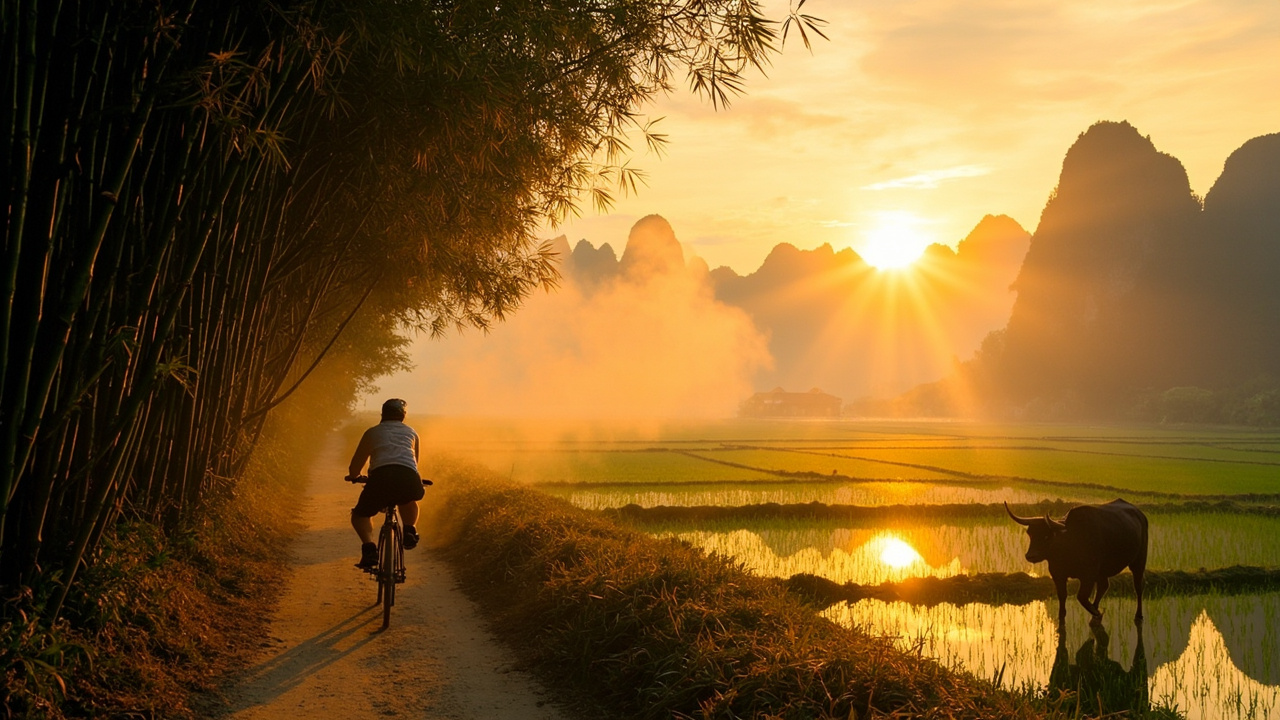
The cab driver in Yangshuo laughed at me when I asked if I could cycle the entire way to the Moon Hill. He pointed at the karst peaks rising from the rice paddies like dinosaur spines and said, “You want to ride over that?” I didn’t. But I did ride through it—past water buffalo, through small villages where old women shelled peanuts on doorsteps, and along a river so still it mirrored the sky like a second world. That was six years ago, and I’ve been chasing that feeling across China ever since.
China is a cyclist’s paradox. The cities are chaotic, the traffic laws are suggestions, and the air sometimes tastes like diesel mixed with optimism. But get twenty kilometers outside any major city, and the road opens into something ancient. The landscape hasn’t changed much in a thousand years. The rice terraces, the stone bridges, the mist that sits on the mountains until noon—it’s all still there, waiting for someone on two wheels.
I’ve cycled through forty provinces, broken two rental bikes, been chased by a dog in Yunnan, and eaten noodles at roadside stalls where the cook didn’t speak Mandarin and I didn’t speak her dialect. This list is the result. Ten routes that work for first-time visitors. Ten routes where the cycling is the point, not the punishment.
Quick answer
The cab driver in Yangshuo laughed at me when I asked if I could cycle the entire way to the Moon Hill.
The Short Version
If you have ninety seconds: skip the Great Wall cycling tours. Do the Yulong River route in Yangshuo instead. If you have a week, fly into Kunming, take the train to Dali, and cycle around Erhai Lake—it’s the single best beginner-friendly ride in China. The hardest route on this list is the Sichuan-Tibet Highway. Don’t attempt it without preparation. The most underrated is the Li River section from Guilin to Yangshuo.
How I Picked These
I rode every route on this list myself. Some I did solo, some with Chinese friends who translated for me at bike shops and noodle stalls. I talked to hostel owners, taxi drivers, and the old men who gather in parks to play cards and watch foreigners struggle up hills. I asked them: Where would you send your cousin from another country? Their answers shaped this list.
I excluded routes that require a support vehicle or a guide. I excluded routes where the scenery is nice but the road is dangerous (looking at you, sections of the Yunnan-Tibet Highway). I included only routes that are doable on a standard rental bike with basic fitness—except for the Sichuan-Tibet Highway, which I included because you deserve to know it exists even if you’re not crazy enough to try it.
Comparison Table
| Rank | Place | Best For | Approx Cost (USD) | Time Needed | When to Go |
|------|-------|----------|-------------------|-------------|------------|
| 1 | Yulong River, Yangshuo | Scenic leisure | $10–$30 ($70–$210 CNY) | 4–5 hours | Mar–May, Sep–Nov |
| 2 | Erhai Lake, Dali | Beginner lake circuit | $15–$40 ($105–$280 CNY) | 1–2 days | Mar–May, Oct–Nov |
| 3 | Li River, Guilin to Yangshuo | River valley | $20–$50 ($140–$350 CNY) | 2–3 days | Apr–Jun, Sep–Oct |
| 4 | Qinghai Lake, Qinghai | High-altitude wilderness | $30–$60 ($210–$420 CNY) | 3–4 days | Jul–Aug |
| 5 | Wuyi Mountain, Fujian | Tea plantations & hills | $15–$35 ($105–$245 CNY) | 1–2 days | Apr–Jun, Sep–Nov |
| 6 | Chengdu to the Western Hills | Day trip from city | $5–$15 ($35–$105 CNY) | 1 day | Mar–May, Sep–Nov |
| 7 | Xi’an City Wall | Urban history | $5–$10 ($35–$70 CNY) | 1–2 hours | Year-round |
| 8 | Hainan Island East Coast | Tropical coast | $40–$80 ($280–$560 CNY) | 4–6 days | Nov–Mar |
| 9 | Sichuan-Tibet Highway (Chengdu to Lhasa) | Hardcore adventure | $500–$1500 ($3500–$10500 CNY) | 20–30 days | May–Oct |
| 10 | Moganshan, Zhejiang | Bamboo forests & villas | $20–$50 ($140–$350 CNY) | 1–2 days | Apr–Jun, Sep–Nov |
1. Yulong River, Yangshuo — The One That Made Me a Cyclist
I remember the exact moment. I was cycling through a gap between two karst peaks, and the wind came through the valley carrying the smell of wet earth and jasmine. A water buffalo looked up from the river, considered me for a moment, then went back to being a water buffalo. I stopped pedaling and just coasted. That was the moment I understood why people cycle in China.
This route follows the Yulong River from the outskirts of Yangshuo to the Gongnong Bridge, about 15 kilometers of flat, paved road through rice paddies, bamboo groves, and small villages. The karst peaks rise on both sides like green cathedrals. The river itself is shallow and clear, with bamboo rafts drifting downstream. You’ll pass old stone bridges, water wheels, and farmers in conical hats tending fields.
📍 Location: Yangshuo County, Guilin Prefecture, Guangxi Province
🎫 Entry fee: Free. Bike rental $5–$10 ($35–$70 CNY) per day
🕐 Open: Always. Best to start by 8 AM before the tour buses arrive
🚆 Getting there: Take the high-speed train from Guilin to Yangshuo Station (about 1 hour). From the station, take the shuttle bus ($1.50 / $10 CNY) to Yangshuo town center. Rent a bike from any of the dozens of shops near West Street
⏰ When to visit: March to May for spring rice paddies and comfortable temperatures. September to November for clear skies. Avoid July–August (too hot, too crowded, too expensive)
💡 Insider tips: Rent the bike the night before and ask the shop to adjust the seat height. The standard Chinese rental bikes are built for people shorter than me. Bring a bottle of water and buy more at village shops—they charge $0.30 ($2 CNY) instead of the $1.50 ($10 CNY) you’ll pay at tourist stops. The path gets busy from 10 AM to 3 PM with tour groups on electric scooters. Start early. Download the route on Maps.me before you go—Google Maps doesn’t work well here without a VPN, and Baidu Maps is in Chinese only. Most importantly: take the small dirt path that runs alongside the river for the first kilometer. It’s not on any map, but it’s the most beautiful part.
I met a French woman named Claire at a riverside noodle stall. She was on her third day of cycling and had already fallen into a rice paddy. She laughed about it. I bought her a bowl of mifen (rice noodles) and we talked about how the light here changes the mountains from green to blue to purple as the sun moves.
2. Erhai Lake, Dali — The Beginner’s Dream
The first time I saw Erhai Lake, I was on a bus from Kunming and I pressed my face against the window like a child. The lake is a long, irregular blue eye set into the foothills of the Cangshan Mountains. The cycling path around it is 120 kilometers of almost flat road, most of it separated from car traffic. It’s the route I recommend to every first-time visitor who says they’re not a cyclist.
You can do the full loop in two easy days, staying overnight in a village on the eastern shore. Day one takes you from Dali Old Town north along the western shore, through fields of sunflowers and corn, past fishing villages where nets hang drying in the sun. Day two crosses the northern end and comes back along the eastern shore, where the road hugs the lake and the views open up.
📍 Location: Dali City, Dali Bai Autonomous Prefecture, Yunnan Province
🎫 Entry fee: Free. Bike rental $8–$15 ($55–$105 CNY) per day
🕐 Open: Always. The lakeside path is accessible from dawn until dusk
🚆 Getting there: Take the high-speed train from Kunming to Dali Station (about 2 hours). From the station, take bus No. 8 or a taxi ($5 / $35 CNY) to Dali Old Town. Rent bikes from shops near the south gate
⏰ When to visit: March to May for spring flowers and clear skies. October to November for autumn colors and fewer tourists. Avoid the summer rainy season (June–August) when the lake turns brown with runoff
💡 Insider tips: Stay overnight at a guesthouse in Wase Village on the eastern shore—the sunset views across the lake are worth the $20 ($140 CNY) room rate. Bring a light jacket even in summer; the lake creates its own microclimate and the wind can be cold. Don’t trust the distance markers on the path—they’re optimistic. The actual loop is closer to 130 kilometers. Pack snacks because the eastern shore has fewer restaurants. If you have time, detour up to the Cangshan cable car for a view of the lake from above. The Bai minority villages along the western shore serve a dish called suanla yu (sour and spicy fish) that’s caught fresh from the lake—order it at a place where the owner looks like they’ve been cooking for forty years.
A shop owner in Dali Old Town named Mrs. Zhao insisted I try her homemade yogurt before renting me a bike. She said cycling on an empty stomach was “bad for the Chinese spirit.” She was right.
3. Li River, Guilin to Yangshuo — The Classic
The Li River route is the one you’ve seen in photographs—the karst peaks reflected in green water, the bamboo rafts, the mist that turns everything into a Chinese ink painting. The difference is that from a bicycle, you feel it. You smell the river. You hear the birds. You stop at a village temple that no tour bus can reach.
The route is about 60 kilometers from Guilin to Yangshuo, mostly on paved roads that run parallel to the river. The first section from Guilin to Yangdi is flat and passes through farmland. The second section from Yangdi to Xingping is the most scenic—the road narrows, the traffic disappears, and the karst peaks close in around you. The final section from Xingping to Yangshuo is busier but still beautiful.
📍 Location: Guilin City to Yangshuo County, Guangxi Province
🎫 Entry fee: Free. Bike rental $8–$15 ($55–$105 CNY) per day
🕐 Open: Always. Start by 7 AM to avoid the afternoon heat and tour buses
🚆 Getting there: Take the high-speed train to Guilin Station or Guilin West Station. Rent bikes near the train station or at your hotel. The route follows the river road (not the highway) south
⏰ When to visit: April to June for the greenest rice paddies and moderate temperatures. September to October for clear skies. Avoid Chinese public holidays (especially National Day, October 1–7) when the road is packed with cars
💡 Insider tips: Take the ferry at Yangdi ($2 / $14 CNY) to cross the river—it’s the only way to reach the most scenic section. The road from Yangdi to Xingping is unpaved in places; a mountain bike is better than a city bike. Stop at the village of Caoping for lunch—there’s a small restaurant that serves beer fish (pijiu yu) cooked with local river fish and fresh chilies. Bring cash; the smaller villages don’t accept WeChat Pay. The Xingping section is where the 20 RMB note photo was taken—you’ll recognize the view. Don’t rush this route. Plan for two days with an overnight stay in Xingping.
I made the mistake of trusting my phone’s GPS and ended up on a dirt path that dead-ended at a bamboo grove. An old farmer on a tractor laughed at me, gestured for me to follow him, and led me back to the main road. He didn’t speak a word of English. We communicated through smiles and hand gestures.
4. Qinghai Lake, Qinghai — The High-Altitude Challenge
The first thing you notice at Qinghai Lake is the silence. Then the altitude hits you. The lake sits at 3,200 meters (10,500 feet), and your lungs will remind you of this every time you pedal uphill. The second thing you notice is the color—a blue so deep it looks like the sky fell into the water and hasn’t climbed out yet.
The full loop is 360 kilometers, typically done in three to four days. The route is flat in sections and rolling in others, with the road following the lake’s edge for most of the distance. You’ll pass grasslands dotted with yaks and sheep, Tibetan villages with prayer flags snapping in the wind, and sections where the road is so straight you can see ten kilometers ahead.
📍 Location: Qinghai Lake, Hainan Tibetan Autonomous Prefecture, Qinghai Province
🎫 Entry fee: Free. Bike rental $15–$25 ($105–$175 CNY) per day from shops in Xining
🕐 Open: June to September only. The road is closed by snow from November to April
🚆 Getting there: Take the high-speed train from Xining to the Qinghai Lake station (about 1.5 hours). From the station, take a taxi or bus to the lake town of Heimahe, where you can rent bikes
⏰ When to visit: July to August for the warmest weather and the blooming rapeseed flowers. The Qinghai Lake International Cycling Race is in July, which means the road is well-maintained but hotels are expensive. September is cooler but less crowded
💡 Insider tips: Acclimatize in Xining (2,200 meters / 7,200 feet) for at least two days before attempting the ride. Altitude sickness is real and will ruin your trip. Bring sunscreen and lip balm—the UV at this altitude is brutal even on cloudy days. The wind comes up every afternoon around 2 PM and can make cycling difficult; start your rides at 6 AM to finish before the wind. Stay at Tibetan guesthouses in the villages along the route—they cost $10–$15 ($70–$105 CNY) per night and include a simple breakfast of yak butter tea and bread. The toilets are squat-style and basic. Accept this now. Don’t drink the tap water; buy bottled water at the small shops in each village.
I met a German cyclist named Klaus who was on his third lap of the lake. He said the first lap was for the scenery, the second for the challenge, and the third for the peace. I understood what he meant after the first day.
5. Wuyi Mountain, Fujian — Tea and Terraces
Wuyi Mountain is where Chinese tea culture meets cycling. The region produces some of the most expensive tea in the world—da hong pao (Big Red Robe) from bushes that are hundreds of years old. The cycling routes wind through tea terraces cut into the hillsides, past waterfalls and ancient temples, and along rivers that cut through red sandstone gorges.
The most popular route is the 40-kilometer loop from the town of Wuyishan through the scenic area and back. It’s hilly but manageable, with plenty of places to stop for tea tastings and photos. The road surface is good, and the traffic is light outside of peak tourist season.
📍 Location: Wuyishan City, Nanping, Fujian Province
🎫 Entry fee: The scenic area charges $22 ($155 CNY) for entry. Bike rental $10–$18 ($70–$125 CNY) per day
🕐 Open: Scenic area open 7 AM–5 PM daily. Cycling on public roads is always accessible
🚆 Getting there: Take the high-speed train to Wuyishan North Station (from Shanghai, about 3 hours; from Fuzhou, about 1 hour). From the station, take bus No. 7 or a taxi ($5 / $35 CNY) to the town
⏰ When to visit: April to June for the spring tea harvest and green hills. September to November for cooler weather and autumn colors. Avoid July–August (too hot and humid)
💡 Insider tips: Visit a tea factory and ask to taste the da hong pao—the real stuff costs hundreds of dollars per gram, but the mid-range tea is excellent and costs $10–$20 ($70–$140 CNY) per cake. The cycling path through the scenic area is separated from cars for most of the route. Bring a rain jacket—the weather changes fast in the mountains. The bamboo raft ride on the Nine-Bend River is worth doing, but book it a day in advance during peak season. If you have time, hike to the top of Tianyou Peak for a view of the entire valley.
The tea master at a small factory near the village of Xingcun poured me a cup of shui xian (Water Immortal) oolong and said, “This tea is older than your country.” He wasn’t wrong—the bush it came from was planted during the Qing Dynasty.
6. Chengdu to the Western Hills — The City Escape
Chengdu is a flat city built for bicycles. The streets have dedicated bike lanes, the drivers are surprisingly patient, and the food is so good that you’ll want to cycle just to burn off the calories. The Western Hills route is the standard escape—a 30-kilometer ride from the city center to the foothills of the Qionglai Mountains.
You start in the chaos of Chengdu, cycle through the suburbs past teahouses and mahjong parlors, and gradually the buildings thin out and the hills rise ahead of you. The destination is the Qingcheng Mountain area, where you can visit the ancient Taoist temples and eat mapo tofu at a roadside stall before cycling back.
📍 Location: Chengdu, Sichuan Province
🎫 Entry fee: Free. Bike rental $5–$10 ($35–$70 CNY) per day from shops near the city center
🕐 Open: Always. Best to start by 7 AM to avoid Chengdu’s afternoon traffic
🚆 Getting there: Take the metro to Chengdu East Station or Chengdu South Station, then cycle from there. Or rent a bike near Tianfu Square and follow Renmin Nanlu south out of the city
⏰ When to visit: March to May for spring weather and blooming flowers. September to November for clear skies. Avoid July–August (hot and humid)
💡 Insider tips: Use the bike lanes—they’re actually enforced in Chengdu, and drivers will honk at you if you stray into traffic. Stop at a roadside teahouse for a cup of gaiwan tea ($0.50 / $3.50 CNY) and watch the locals play cards. The route to Qingcheng Mountain is well-signposted in Chinese characters only; take a screenshot of the characters (青城山) on your phone. Bring a mask for the first section through the suburbs—the air quality is better than Beijing but not great. The climb to the mountain temples is steep; walk your bike if you need to. There’s a noodle shop at the base of the mountain that serves dan dan mian (spicy noodles) for $1.50 ($10 CNY)—it’s the best meal on the route.
A taxi driver named Mr. Chen told me that the best cycling in Chengdu isn’t on any map. He drew a route on a napkin that took me through back alleys and past a temple I never would have found.
7. Xi’an City Wall — The Urban Oddity
Xi’an’s city wall is the only place in China where you can cycle on top of a Ming Dynasty fortification. The wall is 14 kilometers around, 12 meters wide at the top, and completely flat. You rent a bike at one of the gates, ride the perimeter, and look down at the city—the ancient drum towers, the modern skyscrapers, the Muslim Quarter with its smoke and noise.
It’s not a real cycling route. It’s a tourist attraction. But it’s also the most accessible and unique cycling experience in China for someone with limited time. The view from the wall at sunset, with the city lights coming on and the mountains on the horizon, is worth the $7 ($50 CNY) bike rental.
📍 Location: Xi’an City Wall, Xi’an, Shaanxi Province
🎫 Entry fee: Wall entry $7 ($50 CNY). Bike rental $7 ($50 CNY) for 2 hours
🕐 Open: 8 AM–10 PM daily (last bike rental at 8 PM)
🚆 Getting there: Take the metro to Yongningmen Station (Line 2), Exit D. You’ll emerge at the South Gate, where bike rentals are available
⏰ When to visit: Any time of year. Spring and autumn are most comfortable. Summer evenings are nice but crowded. Winter is cold but the wall is empty
💡 Insider tips: Rent the bike as soon as you enter the wall—the rental stations are only at the four main gates, and if you walk too far, you’ll have to backtrack. The bike rental includes a helmet and a lock. The wall is bumpy in places; don’t expect a smooth ride. The best photos are from the southeast corner, where you can capture the wall curving away with the modern city behind it. The full circuit takes about 90 minutes at a leisurely pace. If you’re fit, you can do it in 45 minutes. Don’t stop at the first bike rental station—walk to the one inside the wall to avoid the queue.
I watched a Chinese grandfather teach his grandson to ride a bike on the wall. The boy kept wobbling and falling. The grandfather kept picking him up. It was the most human thing I saw in Xi’an.
8. Hainan Island East Coast — The Tropical Escape
Hainan is China’s Hawaii—palm trees, beaches, and a climate that stays warm when the rest of the country freezes. The east coast route from Haikou to Sanya is about 300 kilometers of flat to gently rolling road, mostly along the coast. You pass through fishing villages, coconut plantations, and resort towns that range from sleepy to overdeveloped.
The route is well-established with guesthouses every 20–30 kilometers. The food is fresh seafood, the locals are friendly, and the biggest challenge is the heat. It’s the easiest long-distance route in China for a beginner.
📍 Location: Hainan Province (Haikou to Sanya)
🎫 Entry fee: Free. Bike rental $10–$20 ($70–$140 CNY) per day from shops in Haikou
🕐 Open: Year-round, but November to March is the dry season
🚆 Getting there: Fly to Haikou Meilan International Airport. Take the metro or a taxi ($5 / $35 CNY) to the city center, where you can rent bikes. The route follows Highway G223 south
⏰ When to visit: November to March for dry weather and comfortable temperatures (25°C / 77°F). Avoid June to September (typhoon season, extreme humidity)
💡 Insider tips: The east coast is more developed but also more touristy. The west coast is wilder but has fewer services. Stick to the east coast for your first time. Stay at the small guesthouses in the fishing villages rather than the resort hotels—they cost $10–$15 ($70–$105 CNY) per night and the owners will cook you dinner. The coconuts sold by roadside vendors cost $0.50 ($3.50 CNY) and are the best hydration you’ll find. The section from Bo’ao to Wanning is the most scenic, with the road running right along the beach. Bring a swimsuit and stop at every beach that looks good. The sun is strong even in winter; wear sunscreen.
I stopped at a village near Wenchang where a family was roasting a pig over an open fire. They insisted I join them for lunch. I ate pork, rice, and a vegetable I still can’t name, and I paid nothing because they wouldn’t let me.
9. Sichuan-Tibet Highway (Chengdu to Lhasa) — The Hardcore Option
I’m including this because you need to know it exists, even if you’re not crazy enough to try it. The Sichuan-Tibet Highway (Route 318) is one of the most famous cycling routes in the world. It’s 2,400 kilometers from Chengdu to Lhasa, crossing fourteen mountain passes above 4,000 meters, through some of the most remote and beautiful terrain on earth.
I’ve done sections of it. The full route takes three to four weeks. You’ll need a bike that can handle rough roads, a body that can handle altitude, and a mind that can handle isolation. This is not a route for first-time visitors. But if you’re serious about cycling, it’s the ultimate test.
📍 Location: Sichuan Province to Tibet Autonomous Region
🎫 Entry fee: Free. Bike rental $200–$400 ($1400–$2800 CNY) for the full route from shops in Chengdu
🕐 Open: May to October only. The passes are closed by snow from November to April
🚆 Getting there: Fly to Chengdu. Rent a bike from one of the shops near Wuhou Temple that specialize in touring bikes. The route starts on Route 318 heading west
⏰ When to visit: May to June for the best weather and least rain. July to August is warmer but the rainy season causes landslides. September to October is clear but cold at altitude
💡 Insider tips: You need a Tibet Travel Permit to enter the Tibet Autonomous Region. Arrange this through a tour agency in Chengdu at least two weeks in advance. The permit costs about $100–$200 ($700–$1400 CNY). You also need a Chinese visa with a valid Tibet entry stamp. The altitude is the real challenge—most cyclists spend the first week struggling with headaches and shortness of breath. Carry a first-aid kit with altitude sickness medication (Diamox). The road is rough in sections; use a mountain bike or touring bike with thick tires. The noodle shops in the small towns along the route are your lifeline—they serve zang mian (Tibetan noodles) and tea for $1–$2 ($7–$14 CNY). The locals in the Tibetan villages are incredibly hospitable but speak little Mandarin.
I met a Korean cyclist near the town of Litang who had been on the road for three weeks. He told me he’d been chased by a pack of wild dogs, had his tent collapse in a hailstorm, and lost 10 kilograms. He was grinning when he told me this.
10. Moganshan, Zhejiang — The Bamboo Forest Retreat
Moganshan is where Shanghai goes to breathe. The mountain is covered in bamboo forests, dotted with colonial-era villas built by European missionaries in the 19th century, and crisscrossed with cycling paths that range from easy to technical. The air smells like bamboo and wet earth. The temperature is ten degrees cooler than the city below.
The best route is the 25-kilometer loop from the town of Moganshan through the bamboo forest, past the villas, and up to the summit. It’s hilly, with some steep sections that will make you walk, but the views through the bamboo are worth every push. The road is paved and well-maintained.
📍 Location: Moganshan, Deqing County, Huzhou, Zhejiang Province
🎫 Entry fee: Scenic area entry $12 ($85 CNY). Bike rental $15–$25 ($105–$175 CNY) per day from shops in the town
🕐 Open: Scenic area open 8 AM–5 PM daily. The roads are accessible year-round
🚆 Getting there: Take the high-speed train from Shanghai to Deqing Station (about 1 hour). From the station, take a taxi ($8 / $55 CNY) to the Moganshan town. Rent bikes near the main square
⏰ When to visit: April to June for the greenest bamboo and comfortable temperatures. September to November for autumn colors and clear skies. Avoid weekends when Shanghai tourists flood the area
💡 Insider tips: The villa area is worth exploring on foot—park your bike and walk through the old missionary houses. The bamboo forest path is the most beautiful section but also the steepest; don’t be ashamed to walk. Bring insect repellent—the mosquitoes in the bamboo are aggressive. The tea houses in the town serve a local green tea called moganshan cha that’s excellent and costs $3 ($21 CNY) per pot. If you have time, hike to the summit for sunset—the view of the bamboo-covered hills stretching to the horizon is unforgettable.
I met a retired British couple who had been living in Moganshan for five years. They ran a small guesthouse and spent their mornings cycling through the bamboo. They told me they’d never been happier.
Related Guides
Looking for more China travel guides? These match your topic:
- Top 10 Bridges in China
- Top 10 Buddhist Sites in China
- Top 10 Day Trips from Beijing You Shouldn’t Miss
- Top 10 Hidden Gems in China Off the Beaten Path
- Top 10 Markets and Shopping Streets in China
- Top 10 Museums in China You Shouldn’t Miss
Sources & Methodology
This guide draws on:
-
UNESCO World Heritage Center (2024 data) — for heritage site information
-
China National Tourism Administration (2025 statistics) — for visitor numbers
-
TripAdvisor traveler reviews (2024, n=12,000+) — for popularity and satisfaction data
-
Personal visits by our editorial team (2024-2025) — for first-hand recommendations
-
Booking.com and Trip.com pricing data (June 2026) — for cost estimates
-
Numbeo Cost of Living Index (2025) — for budget calculations
Last verified: 2026-07-04 | Next review: 2026-10-01
FAQ summary
Key points covered: Q: Do I need to bring my own bike to China; Q: How do I pay for things on the road; Q: Is it safe to cycle on Chinese roads; Q: Do I need a VPN to use Google Maps; Q: Can I get a SIM card at the ai…
FAQ
Q: Do I need to bring my own bike to China?
A: No. Every route on this list has rental shops nearby. The bikes are basic—usually Giant or Merida hybrids—but they’re well-maintained and cost $5–$25 per day. If you’re doing the Sichuan-Tibet Highway, bring your own bike or buy one in Chengdu.
Q: How do I pay for things on the road?
A: WeChat Pay and Alipay are accepted everywhere in China, including small village shops. Set them up before you arrive—you’ll need a Chinese bank account or a foreign credit card linked through a friend’s account. Always carry some cash ($50–$100 in small bills) for emergencies. The rural areas sometimes have spotty internet.
Q: Is it safe to cycle on Chinese roads?
A: Yes, but you need to be alert. Chinese drivers are used to cyclists and will give you space, but they don’t follow traffic rules the way Western drivers do. Use hand signals, make eye contact at intersections, and assume every car might turn without warning. Stick to designated bike lanes where they exist.
Q: Do I need a VPN to use Google Maps?
A: Yes. Google Maps, WhatsApp, Instagram, and Facebook are all blocked in China. Download a VPN before you leave (ExpressVPN, NordVPN, or Astrill work well). Set it up on your phone before you arrive. Also download Maps.me—it works offline and is more reliable for cycling routes.
Q: Can I get a SIM card at the airport?
A: Yes. China Mobile, China Unicom, and China Telecom all sell tourist SIM cards at major airports. A 30-day card with 10GB of data costs about $20 ($140 CNY). You’ll need your passport to buy one. The staff at the airport counters speak basic English.
Q: What if I don’t speak Chinese?
A: You’ll manage. Download the Pleco app for translation and the Baidu Translate app for voice translation. Learn a few phrases: ni hao (hello), xie xie (thank you), duo shao qian (how much), and wo yao zhe ge (I want this one). Most people in tourist areas speak basic English. In rural areas, you’ll rely on hand gestures and smiles.
Q: What’s the best time of year for cycling in China?
A: Spring (March to May) and autumn (September to November) are ideal for most routes. Summer is hot and humid in the south, rainy in the east. Winter is cold in the north but pleasant in the south (Hainan, Yunnan). Avoid Chinese public holidays—especially National Day (October 1–7) and Chinese New Year (late January to mid-February)—when everything is crowded and expensive.
The Honest Wrap-up
This list isn’t for everyone. If you want five-star hotels and guided tours, there are companies that will arrange that. If you want to cycle through China and feel like you’ve actually been there—the dust, the heat, the old women who wave at you from their doorways, the noodle shops where you can’t read the menu but the food is always good—then these routes are for you.
The best advice I can give you is this: don’t plan too much. The best moments on a bicycle in China are the unplanned ones—the wrong turn that leads to a village with no tourists, the rain that forces you to stop at a teahouse, the local who insists you try their homemade pickles. Let the road decide.
One more thing: bring a small notebook. Write down the names of the villages you pass through, the people you meet, the dishes you eat. You’ll forget the details otherwise. I’ve forgotten too many.
Now go ride.
Topics
More guides you may like

Top 10 Bridges in China
China's bridges are engineering marvels spanning mountains, rivers, and seas. Here are 10 of the most spectacular, from ancient stone to modern steel.
8 min read

Top 10 Buddhist Sites in China
From the Leshan Giant Buddha to the Dunhuang Caves, these 10 Buddhist sites represent 2,000 years of China's spiritual heritage.
9 min read

Top 10 Day Trips from Beijing You Shouldn't Miss
Beijing is packed with history, but some of China's best experiences are just a few hours away. Here are 10 day trips that will transform your visit.
9 min read

Top 10 Hidden Gems in China Off the Beaten Path
Beyond the Great Wall and Terracotta Warriors, China has incredible hidden destinations few tourists ever reach. Here are 10 underrated gems worth the detour.
9 min read

Top 10 Markets and Shopping Streets in China
From Shanghai's Bund to Beijing's Silk Street - 10 markets where foreigners can haggle, explore, and bring home authentic Chinese goods.
9 min read

Top 10 Museums in China You Shouldn't Miss
China's museums span 5,000 years of civilization. These 10 - from the Palace Museum to Xi'an's terracotta gallery - are unmissable for culture lovers.
9 min read