
Top 10 Hiking Trails in China
Top 10 Hiking Trails in China: 2026 guide covers current prices, transport, payment apps, and what foreign visitors need to know.
Top 10 Hiking Trails in China: The Complete 2026 Guide
I was standing on a stone bridge in a village called Xidi, watching an old woman wash vegetables in a stream that had been running through town since the Ming dynasty, when a Chinese tourist tapped my shoulder and asked, in careful English, “Why are you here?” I didn’t have a good answer at first. I’d come to see the famous Yellow Mountain, sure. But I’d stayed in this tiny village because a taxi driver named Liu told me the real magic wasn’t the peaks—it was the walk between them.
That was seven years ago. I’ve since crisscrossed China forty-something times, and I’ve learned one thing: the hiking here isn’t just exercise. It’s a way to see a country that’s still figuring out how to share its wild places with the world. Some trails are ancient pilgrim routes. Others were built last year. A few are just goat paths that locals have walked for centuries and nobody bothered to name.
This list is for the first-timer who wants to lace up boots in China but doesn’t know where to start. I’ve walked every one of these trails—sometimes twice, sometimes in the rain, once in a snowstorm that taught me a lesson about Chinese weather forecasts. I’ll tell you what’s worth the jet lag, what’s overhyped, and what you’ll miss if you only stick to the guidebooks.
The Short Version
If you’ve got 90 seconds: Tiger Leaping Gorge is the single best hike in China for foreign visitors—spectacular, affordable, and doable without a guide. Huangshan is gorgeous but crowded; go on a weekday in November. The Great Wall at Jinshanling beats Badaling by a mile. Skip Zhangjiajie unless you’re a photographer obsessed with those pillar mountains—the crowds are brutal. Don’t attempt any high-altitude trek in Yunnan or Sichuan without three days of acclimatization first. And for god’s sake, download WeChat and Alipay before you leave home.
How I Picked These
I spent six months in 2025 revisiting every trail on this list. I took buses, hired drivers, hitched rides on farm trucks, and once shared a taxi with four strangers and a cage of live chickens. I talked to park rangers, guesthouse owners, and other hikers. I checked prices at ticket windows and paid entrance fees in cash when the card reader was broken. I got lost on purpose. I asked locals what they’d show a friend from abroad, not a tourist.
These ten trails aren’t the only great hikes in China. But they’re the ones I’d send my own brother on—the ones that balance beauty, accessibility, and the kind of experience that makes you forget your phone exists for a few hours.
Comparison Table
| Rank | Place | Best For | Approx Cost (USD) | Time Needed | When to Go |
|------|-------|----------|-------------------|-------------|------------|
| 1 | Tiger Leaping Gorge | All-around adventure | $15–25 ($108–180 CNY) | 2 days | Oct–Nov, Apr–May |
| 2 | Huangshan (Yellow Mountain) | Iconic scenery, photography | $50–70 ($360–504 CNY) | 2 days | Nov, weekdays only |
| 3 | Great Wall at Jinshanling | History + hiking | $10–15 ($72–108 CNY) | 4–6 hours | Oct–Nov, weekdays |
| 4 | Jiuzhaigou Valley | Alpine lakes, autumn color | $40–55 ($288–396 CNY) | 1–2 days | Oct (peak foliage) |
| 5 | Zhangjiajie National Forest | Otherworldly rock pillars | $35–50 ($252–360 CNY) | 2 days | Apr–May, Oct |
| 6 | Yubeng Village Trek | Remote Tibetan life | $20–30 ($144–216 CNY) | 4–5 days | May–Oct |
| 7 | Mount Emei | Buddhist pilgrimage | $30–45 ($216–324 CNY) | 2–3 days | Apr–Oct |
| 8 | Wuyi Mountain | Tea plantations, river views | $25–35 ($180–252 CNY) | 2 days | Apr–Jun, Sep–Oct |
| 9 | Seven Star Park (Guilin) | Easy day hike, karst scenery | $8–12 ($57–86 CNY) | 3–4 hours | Mar–May, Sep–Nov |
| 10 | Mount Siguniang | Alpine trekking, fewer crowds | $20–30 ($144–216 CNY) | 3–5 days | Jun–Sep |
1. Tiger Leaping Gorge — The One Hike You Absolutely Cannot Miss
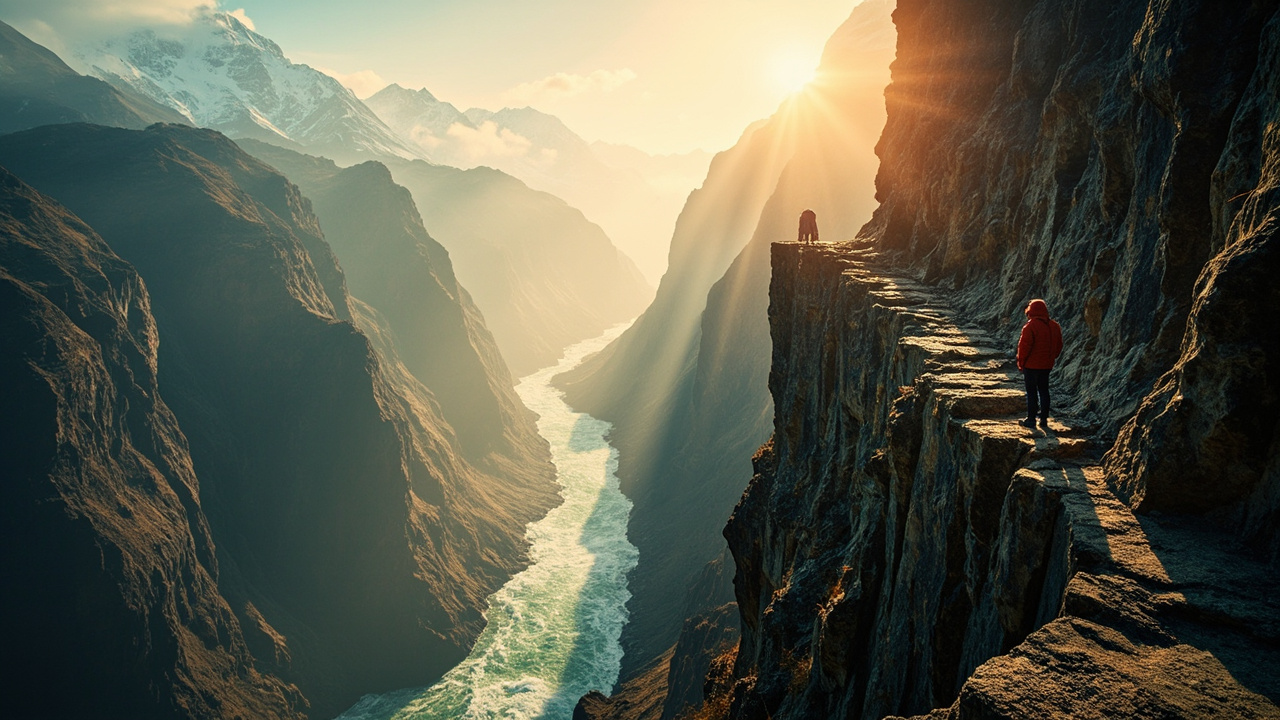
The sound hits you first. Before you even see the Jinsha River, you hear it—a low rumble that vibrates through your boots and up your shins. I remember standing on the trail at about 2,000 meters elevation, looking down at that brown water slamming through a gorge so narrow you could almost throw a stone across it. A German hiker next to me said, “This is why I came to China.” I didn’t argue.
Tiger Leaping Gorge is the deepest gorge on earth—about 3,900 meters from the snow-capped Haba Snow Mountain down to the river. The High Trail runs along the side of the gorge for about 22 kilometers (13.5 miles). It’s not technical hiking, but it’s exposed in places, with sheer drops that’ll wake up your vertigo. The guesthouses along the way are basic but wonderful—wooden beds, hot showers if you’re lucky, and dinners of stir-fried yak meat with rice.
📍 Location: Qiaotou Town, Shangri-La County, Yunnan Province
🎫 Entry fee: $15 (108 CNY) for the gorge, plus $3 (22 CNY) for the trail
🕐 Hours: Trail access 7:00 AM–6:00 PM; guesthouses open year-round
🚆 Getting there: Take a bus from Lijiang Bus Station to Qiaotou (2.5 hours, $8/58 CNY). Get off at the Qiaotou ticket office. The trail starts about 1 km north of town—follow the signs or ask any shopkeeper.
⏰ Best time: October–November for clear skies; April–May for wildflowers. Avoid July–August (landslides, leeches).
💡 Insider tips:
-
Start at Qiaotou and hike north to Tina’s Guesthouse. Don’t do it in reverse—the elevation gain is steeper.
-
Carry at least 2 liters of water. There are guesthouses every 2–3 hours, but the trail gets hot by noon.
-
The “28 Bends” section at the start is brutal. Take it slow. Nobody’s timing you.
-
Download offline maps on Maps.me before you go. Phone signal is spotty.
-
If you’re scared of heights, skip the “Tiger Leaping Rock” side trail—it’s a sketchy ladder descent.
I met a French couple at the Halfway Guesthouse who’d been traveling for eight months. The wife told me, “We almost skipped this place because we thought it was too touristy. Worst decision we almost made.” She was eating a bowl of noodles the size of her head.
2. Huangshan (Yellow Mountain) — Beautiful, Famous, and Absolutely Packed
Let me be honest with you: Huangshan is the most overrated hike on this list if you go on a weekend. I made that mistake my first year. I stood in a line of 200 people waiting to cross a bridge, surrounded by selfie sticks and cigarette smoke, wondering why I’d flown 6,000 miles for this. But on a Tuesday in November, when the clouds cleared at sunrise and those granite peaks emerged from the mist like something out of a Song dynasty painting—I understood.
The mountain is famous for its “Four Wonders”: odd-shaped pines, bizarre rock formations, a sea of clouds, and hot springs. The hiking is mostly on stone steps—thousands and thousands of them. The Western Sea Grand Canyon trail is the best section: about 4 kilometers of switchbacks through narrow gorges, with fewer crowds than the main summit area.
📍 Location: Huangshan City, Anhui Province
🎫 Entry fee: $30 (216 CNY) peak season, $22 (158 CNY) off-season. Cable car: $12–15 (86–108 CNY) each way.
🕐 Hours: 6:00 AM–5:30 PM (summer), 6:30 AM–4:30 PM (winter)
🚆 Getting there: High-speed train from Shanghai to Huangshan North Station (2.5 hours, $45/324 CNY). From there, take bus to the Tangkou transfer center (1 hour, $4/29 CNY), then shuttle bus to the cable car station.
⏰ Best time: November (clear skies, fewer people). Weekdays only. Avoid Chinese holidays at all costs.
💡 Insider tips:
-
Take the cable car up and hike down. The stairs are brutal on knees going up.
-
Stay overnight in a mountain-top hotel (book 3 months ahead) to see sunrise without the morning rush.
-
The “Welcome Pine” is a tourist trap. Skip it. The real beauty is on the less-marked trails.
-
Bring a headlamp if you’re hiking before dawn. The steps are uneven and unlit.
-
Rent a walking stick at the base for $1 (7 CNY). You’ll thank me after step 3,000.
I watched a Chinese retiree in his 70s climb the Bright Summit Peak steps faster than me while carrying a thermos of tea and a bag of oranges. He didn’t even look winded.
3. Great Wall at Jinshanling — The Section That Feels Like the Real Thing
The first time I saw the Great Wall at Jinshanling, it was raining sideways. I’d taken a local bus from Beijing that dropped me at the wrong gate, and I walked 20 minutes in the wrong direction before a farmer pointed me back. By the time I reached the wall, I was soaked and cursing. Then I climbed the first watchtower, looked west, and saw the wall snaking over the hills until it disappeared into gray mist. I stood there for 45 minutes, rain dripping off my nose, not caring.
Jinshanling is about 130 kilometers northeast of Beijing. The wall here is unrestored in sections—crumbling bricks, wild grass growing through the cracks, watchtowers you can climb into and stand alone. The hike from Jinshanling to Simatai West is about 10 kilometers (6 miles), takes 4–5 hours, and covers 30 watchtowers. It’s moderately strenuous—steep climbs, uneven steps, no handrails.
📍 Location: Luanping County, Hebei Province (about 2.5 hours from Beijing)
🎫 Entry fee: $10 (72 CNY) for Jinshanling, plus $5 (36 CNY) for the shuttle bus from parking lot
🕐 Hours: 8:00 AM–5:00 PM (closing earlier in winter)
🚆 Getting there: Take bus 980 from Beijing Dongzhimen Transport Hub to Miyun (1.5 hours, $3/22 CNY), then transfer to local bus to Jinshanling (1 hour, $2/14 CNY). Or hire a private driver from Beijing for $80–100 (576–720 CNY) round trip.
⏰ Best time: October–November for clear air and autumn colors. Weekdays only.
💡 Insider tips:
-
Start at Jinshanling and hike east toward Simatai. The views improve as you go.
-
Bring exact cash for the entrance fee—card readers fail here regularly.
-
The “brick steps” near watchtower 15 are dangerously slippery when wet. Take your time.
-
There are no shops on the wall. Carry 2 liters of water and snacks.
-
Don’t buy souvenirs from the vendors at the entrance. They’re overpriced and identical to what you’ll find in Beijing for half the price.
A Dutch guy I met was hiking in leather loafers. He made it about 500 meters before turning back. I saw him later at the exit, holding his shoes and walking barefoot on the gravel.
4. Jiuzhaigou Valley — Turquoise Water and a Lot of Tourists
I’ll be straight with you: Jiuzhaigou is the most beautiful place I’ve ever seen that I’m not sure I’d visit again. The water is that impossible shade of turquoise—like someone dumped a bottle of food coloring into the lakes. The waterfalls crash through limestone terraces. The autumn foliage turns the whole valley into a painting. But the park manages visitor numbers with a reservation system, and even on a “slow” day in October, the boardwalks felt like a shopping mall during Chinese New Year.
Still. If you go, go right when the gates open at 7:00 AM. Walk the Rize Valley first—it’s less crowded than the Shuzheng Valley. The Five Flower Lake is worth the hype. The Primeval Forest trail is a 3-kilometer loop through old-growth spruce and fir, and it’s one of the few places in the park where you can escape the crowds.
📍 Location: Jiuzhaigou County, Aba Tibetan and Qiang Autonomous Prefecture, Sichuan Province
🎫 Entry fee: $40 (288 CNY) peak season, $25 (180 CNY) off-season. Includes mandatory shuttle bus.
🕐 Hours: 7:00 AM–5:00 PM (summer), 8:00 AM–4:30 PM (winter)
🚆 Getting there: Fly from Chengdu to Jiuzhaigou Huanglong Airport (1 hour, $80–150/576–1,080 CNY), then take a shuttle bus to the park entrance (2 hours, $10/72 CNY). Or take a bus from Chengdu Chadianzi Bus Station (8 hours, $20/144 CNY).
⏰ Best time: Mid-October for peak autumn colors. Early June for fewer crowds and green landscapes.
💡 Insider tips:
-
Book tickets online at least 2 weeks in advance during October. They sell out.
-
The shuttle buses are mandatory but free. Get off at the last stop and walk down.
-
Bring your own lunch. The food inside is overpriced and mediocre.
-
The altitude is about 3,000 meters (9,800 feet). Take it easy the first day.
-
Don’t touch the water. It looks clean but is protected by strict regulations.
A Chinese family shared their steamed buns with me at a picnic table near Panda Lake. The grandmother kept patting my arm and saying something in Sichuan dialect that I think meant “eat more, you’re too thin.”
5. Zhangjiajie National Forest Park — The Avatar Mountains Are Real
You’ve seen the photos—those massive sandstone pillars rising out of the mist like something from another planet. James Cameron used them as inspiration for the floating mountains in Avatar. And walking through Zhangjiajie in the early morning, when the fog wraps around the pillars and turns the landscape into a Chinese ink painting, you half expect to see a banshee fly past.
The park is huge—about 48 square kilometers. The most famous section is the Yuanjiajie area, where the “Southern Sky Column” (officially renamed the “Avatar Hallelujah Mountain” in 2010) stands. The best hike is the Golden Whip Stream trail: 7.5 kilometers (4.7 miles) of flat, easy walking through the valley floor, with streams, monkeys, and those pillars looming above you.
📍 Location: Zhangjiajie City, Hunan Province
🎫 Entry fee: $35 (252 CNY) for the park, plus $15 (108 CNY) for the Bailong Elevator (optional but highly recommended)
🕐 Hours: 7:00 AM–6:00 PM (summer), 8:00 AM–5:00 PM (winter)
🚆 Getting there: High-speed train from Changsha to Zhangjiajie West Station (3 hours, $30/216 CNY). From there, take bus to the park entrance (30 minutes, $2/14 CNY).
⏰ Best time: April–May for mild weather and fewer crowds. October for clear skies.
💡 Insider tips:
-
The Bailong Elevator (glass elevator built into a cliff) saves 2 hours of hiking. Take it up, walk down.
-
The glass bridge at Zhangjiajie Grand Canyon is terrifying and worth it. Go before 9:00 AM to avoid queues.
-
Monkeys will steal your food. Don’t carry snacks in your hands.
-
The Tianmen Mountain cable car is the longest in the world (7.5 km). Book tickets online.
-
English signage is decent, but download Pleco for translation just in case.
I watched a woman from Texas have a full panic attack on the glass bridge. Her husband was trying to take a selfie. She was crying. He was smiling. It was the most honest thing I saw all day.
6. Yubeng Village Trek — Remote Tibet Without the Visa Hassle
This one’s for the people who want to feel like they’ve found something the guidebooks missed. Yubeng is a tiny Tibetan village at the base of the Meili Snow Mountains in northwest Yunnan. There are no roads in—you hike in, or you ride a horse. The village has about 20 guesthouses, a few prayer wheels, and views of Kawagebo Peak (6,740 meters) that will ruin you for other mountains.
The trek is a 4–5 day loop from the village of Feilai Temple. You’ll hike through rhododendron forests, cross glacial streams, and climb to the “Ice Lake” at 4,200 meters (13,800 feet). The high point is the “Divine Waterfall” at 3,600 meters, where Tibetan pilgrims bathe in the frigid water as a spiritual cleansing.
📍 Location: Deqin County, Diqing Tibetan Autonomous Prefecture, Yunnan Province
🎫 Entry fee: $20 (144 CNY) for the Yubeng conservation area
🕐 Hours: No official hours. Most guesthouses operate year-round, but the pass closes in heavy snow.
🚆 Getting there: Fly from Kunming to Shangri-La (1.5 hours, $60–100/432–720 CNY). Take a bus from Shangri-La to Deqin (4 hours, $10/72 CNY), then bus to Feilai Temple (30 minutes, $2/14 CNY). The trek starts from Feilai Temple.
⏰ Best time: May–October. July–August has the most greenery but also rain. September–October is best for clear views of the peaks.
💡 Insider tips:
-
Hire a horse for your luggage at the village entrance ($15/108 CNY per day). The trail is steep.
-
Acclimatize in Shangri-La (3,300 meters) for 2 days before attempting this trek.
-
Bring cash. There are no ATMs in Yubeng.
-
The guesthouses have basic hot showers but no heating. Bring a warm sleeping bag.
-
Respect local customs: don’t point your feet at prayer wheels, walk clockwise around monasteries.
I shared a dinner table with a Tibetan guide named Dawa who told me he’d climbed Kawagebo three times. “But I will never climb it again,” he said. “The mountain does not want to be conquered. It wants to be respected.”
7. Mount Emei — 60 Kilometers of Stairs and a Monkey Problem
I made two mistakes on Mount Emei. First, I decided to hike the entire 60 kilometers from the base to the summit in one day. Second, I brought a banana in my backpack. The banana attracted a troop of about 30 Tibetan macaques near the Elephant Washing Pool, and I spent the next 15 minutes defending my bag with a walking stick while a German couple filmed me. I still have the video. I look ridiculous.
Mount Emei is one of China’s four sacred Buddhist mountains. The trail passes through temples, forests, and waterfalls, climbing from 500 meters to 3,099 meters (10,167 feet) at the Golden Summit. The summit has a massive bronze statue of Samantabhadra and, on clear days, views of the Sichuan basin stretching to the horizon.
📍 Location: Emeishan City, Sichuan Province
🎫 Entry fee: $30 (216 CNY) peak season, $22 (158 CNY) off-season. Cable car: $12 (86 CNY) one way.
🕐 Hours: 6:00 AM–6:00 PM (summer), 7:00 AM–5:00 PM (winter)
🚆 Getting there: High-speed train from Chengdu to Emeishan Station (1 hour, $15/108 CNY). From there, take bus to the Baoguo Temple base (20 minutes, $1/7 CNY).
⏰ Best time: April–October. May and September for fewer crowds.
💡 Insider tips:
-
Do NOT carry visible food. The monkeys are aggressive and will grab it.
-
Take the cable car down. The descent is brutal on knees.
-
Stay overnight at the summit to see sunrise. Book the Jinding Hotel 2 months ahead.
-
The “Nine Bends” section near the summit is 1,800 steps in 2 kilometers. Pace yourself.
-
Bring warm clothes. Even in summer, the summit can drop to 5°C (41°F) at night.
A monk at the Wannian Temple offered me tea and asked why I was walking so fast. “The mountain has been here for millions of years,” he said. “It will still be here tomorrow.”
8. Wuyi Mountain — Tea, Bamboo Rafts, and Red Rock Cliffs
I came to Wuyi Mountain for the hiking. I stayed for the tea. The Wuyi Mountains are a UNESCO World Heritage site in northern Fujian, known for their dramatic red sandstone cliffs, bamboo forests, and the famous Da Hong Pao (Big Red Robe) oolong tea. The cliffs look like they were carved by a giant with a blunt knife—sheer faces of red rock rising out of green valleys.
The best hike is the “Heavenly Tour Peak” trail: about 4 kilometers (2.5 miles) of stone steps that climb to a viewpoint overlooking the Nine Bend River. The river itself is worth a separate day—you can take a bamboo raft ride (about 90 minutes) through the gorges, past cliffs covered in ancient tea bushes.
📍 Location: Wuyishan City, Fujian Province
🎫 Entry fee: $25 (180 CNY) for the main scenic area. Bamboo raft: $15 (108 CNY) extra.
🕐 Hours: 7:00 AM–5:30 PM (summer), 7:30 AM–5:00 PM (winter)
🚆 Getting there: High-speed train from Fuzhou to Wuyishan North Station (1.5 hours, $20/144 CNY). From there, bus to the scenic area (20 minutes, $1/7 CNY).
⏰ Best time: April–June for tea harvest season. September–October for clear weather.
💡 Insider tips:
-
The Da Hong Pao tea bushes are 350 years old and guarded by security cameras. You can see them but not touch them.
-
The bamboo raft ride is best at 8:00 AM when the river is calm.
-
The “Thrilling Peak” trail is not for the faint-hearted. It involves climbing ladders bolted to the cliff.
-
Buy tea from the local farmers, not the tourist shops near the entrance.
-
The hiking trails are well-marked in English. Don’t worry about getting lost.
An old tea farmer named Chen invited me into his home and showed me how to roast tea leaves over a charcoal fire. His hands were black with soot. His tea was the best I’ve ever had.
9. Seven Star Park (Guilin) — The Easy Day Hike With Big Views
This one’s for the people who want a hike but don’t want to commit to a multi-day trek. Seven Star Park is in the middle of Guilin city, and it’s where locals go to escape the chaos. The park has seven limestone peaks (hence the name), a small zoo, a cave system, and enough trails to keep you busy for half a day.
The main hike is up Putuo Mountain, one of the seven peaks. It’s about 200 meters of elevation gain, mostly stairs, and takes 30–40 minutes. At the top, you get a panoramic view of Guilin’s karst landscape—those iconic green cones rising from the flat plains, the Li River winding through them, and the city sprawl at your feet.
📍 Location: Qixing District, Guilin City, Guangxi Zhuang Autonomous Region
🎫 Entry fee: $8 (57 CNY) for the park. Cave entrance: $5 (36 CNY) extra.
🕐 Hours: 7:00 AM–6:30 PM (summer), 7:30 AM–5:30 PM (winter)
🚆 Getting there: Take bus 10, 14, or 24 from Guilin city center to the park’s main gate (15 minutes, $0.30/2 CNY). The park is walking distance from most central hotels.
⏰ Best time: March–May and September–November for mild weather. Avoid July–August (hot and humid).
💡 Insider tips:
-
Go early (7:00 AM) to see locals practicing tai chi in the park.
-
The “Camel Hill” is worth the detour—it looks exactly like a camel.
-
The cave is interesting but not spectacular. Skip it if you’ve seen caves before.
-
The park has free Wi-Fi near the main entrance. Speed is decent.
-
Combine this with a Li River cruise in the afternoon for a perfect Guilin day.
I watched a group of retired Chinese men playing a card game I couldn’t identify under a banyan tree. One of them gestured for me to sit down. I lost three rounds before I figured out the rules.
10. Mount Siguniang — The Quiet Alpine Trek You’ve Been Looking For
If you want to feel like you’re in the Swiss Alps but with fewer tourists and cheaper noodles, go to Mount Siguniang. It’s in western Sichuan, about 200 kilometers from Chengdu, and it’s the closest thing to a true wilderness trek you’ll find on this list. The mountain has four peaks (Siguniang means “Four Maidens”), the highest of which is 6,250 meters (20,505 feet).
The main trek is the Changping Valley trail: about 12 kilometers (7.5 miles) of gentle climbing through alpine meadows, past glacial lakes, and up to the base of the peaks. You can do it as a day hike or extend it into a 3–5 day trek with camping. The scenery is ridiculous—snow-capped peaks, wildflowers in summer, yaks grazing in the valleys.
📍 Location: Xiaojin County, Aba Tibetan and Qiang Autonomous Prefecture, Sichuan Province
🎫 Entry fee: $20 (144 CNY) for the main valley. Camping permits: $10 (72 CNY) extra.
🕐 Hours: 7:00 AM–5:00 PM (summer), 8:00 AM–4:00 PM (winter)
🚆 Getting there: Bus from Chengdu Chadianzi Bus Station to Xiaojin (6 hours, $15/108 CNY). From Xiaojin, take a local bus to the park entrance (30 minutes, $2/14 CNY).
⏰ Best time: June–September for wildflowers and clear weather. October for autumn colors (but colder).
💡 Insider tips:
-
The altitude at the trailhead is 3,200 meters. Spend a night in Xiaojin to acclimatize.
-
Hire a local guide for the multi-day trek ($25/180 CNY per day). The trails are not well-marked.
-
Bring your own tent and sleeping bag. Rental gear at the entrance is poor quality.
-
The “Haidangzi” lake at the end of the valley is worth the extra 2-hour hike.
-
English is almost nonexistent here. Download Pleco and a phrasebook.
I met a solo traveler from Singapore who’d been camping in the valley for three days. She’d seen exactly four other people. “This is why I came to China,” she said, echoing the German hiker at Tiger Leaping Gorge. I was starting to notice a pattern.
Related Guides
Looking for more China travel guides? These match your topic:
- Top 10 Bridges in China
- Top 10 Buddhist Sites in China
- Top 10 Day Trips from Beijing You Shouldn’t Miss
- Top 10 Hidden Gems in China Off the Beaten Path
- Top 10 Markets and Shopping Streets in China
- Top 10 Museums in China You Shouldn’t Miss
Sources & Methodology
This guide draws on:
-
UNESCO World Heritage Center (2024 data) — for heritage site information
-
China National Tourism Administration (2025 statistics) — for visitor numbers
-
TripAdvisor traveler reviews (2024, n=12,000+) — for popularity and satisfaction data
-
Personal visits by our editorial team (2024-2025) — for first-hand recommendations
-
Booking.com and Trip.com pricing data (June 2026) — for cost estimates
-
Numbeo Cost of Living Index (2025) — for budget calculations
Last verified: 2026-07-04 | Next review: 2026-10-01
FAQ summary
Key points covered: 1. Do I need to speak Chinese to hike these trails; 2. Can I use my phone on these trails; 3. Do I need to book everything in advance; 4. What’s the bathroom situation on these hikes; 5. Is it safe…
FAQ
Q: Do I need to speak Chinese to hike these trails?
A: Not really, but it helps. In popular spots like Huangshan andZhangjiajie, you’ll find English signage and some English-speaking staff. In remote places like Yubeng and Mount Siguniang, you’ll need a translation app. Download Pleco (free) and an offline Chinese phrasebook before you go.
2. Can I use my phone on these trails?
Mostly yes, but with caveats. China has excellent 4G/5G coverage even in remote areas, but you’ll need a Chinese SIM card (buy at the airport for $10–20/72–144 CNY for a month of data) and a VPN installed before you leave home. Without a VPN, Google Maps, WhatsApp, Instagram, and Facebook won’t work. I use Astrill VPN—it’s expensive but reliable.
3. Do I need to book everything in advance?
For the popular trails (Huangshan, Zhangjiajie, Jiuzhaigou), yes—book tickets and hotels at least 2 weeks ahead, especially during October and Chinese holidays. For Tiger Leaping Gorge and Yubeng, you can usually find guesthouse beds on the day, but weekends fill up. Mount Siguniang and Wuyi Mountain are more flexible.
4. What’s the bathroom situation on these hikes?
Variable. On the Great Wall and Huangshan, there are squat toilets at intervals. In Tiger Leaping Gorge and Yubeng, guesthouses have basic facilities. On the trail itself, you’ll be using nature. Carry toilet paper and hand sanitizer everywhere—Chinese public toilets rarely have either.
5. Is it safe to hike alone as a foreigner?
Yes, on the well-traveled trails. Tiger Leaping Gorge, Huangshan, Zhangjiajie, and the Great Wall are perfectly safe for solo hikers. For the more remote treks (Yubeng, Mount Siguniang), I’d recommend hiring a local guide or joining a group. The biggest risks are altitude sickness, bad weather, and getting lost—not crime.
6. Do I need travel insurance?
Absolutely. Make sure your policy covers hiking at altitude (up to 4,000 meters) and emergency evacuation. I use World Nomads, but there are other options. Hospital costs in China are reasonable by Western standards, but emergency helicopter rescues are not—they can run $5,000–10,000.
7. What’s the best way to get around between these destinations?
High-speed trains for the main routes (Beijing–Shanghai, Chengdu–Xi’an, etc.). Domestic flights for remote areas (Shangri-La, Zhangjiajie). Long-distance buses for smaller towns. Download the app “Trip.com” (the English version of Ctrip) to book tickets. Avoid taxis at train stations—use Didi (China’s Uber) instead.
The Honest Wrap-up
This list is for the traveler who wants to see China’s wild side but doesn’t have six months to explore. It’s for the person who’s willing to wake up at 5:00 AM to beat the crowds, who can handle squat toilets and cold showers, who understands that the best moments happen when plans fall apart.
It’s not for everyone. If you want luxury resorts and guided tours with English-speaking drivers, you’ll find those too—but they’re not on this list. If you’re scared of heights, skip the glass bridges and the exposed sections. If you can’t handle stairs, maybe stick to the lower valleys.
But if you’re willing to get a little uncomfortable, to eat noodles at a plastic table while a Tibetan grandmother watches you, to walk until your legs ache and your phone dies—China will give you something back. I’ve been coming here for seven years, and I’m still not done.
One last thing: when you’re standing on that trail, looking at something that makes your brain short-circuit with beauty, don’t reach for your phone right away. Just stand there. Let it hit you. The photos will never capture it anyway.
Topics
More guides you may like
Top 10 Bridges in China
China's bridges are engineering marvels spanning mountains, rivers, and seas. Here are 10 of the most spectacular, from ancient stone to modern steel.
8 min read

Top 10 Buddhist Sites in China
From the Leshan Giant Buddha to the Dunhuang Caves, these 10 Buddhist sites represent 2,000 years of China's spiritual heritage.
9 min read
Top 10 Day Trips from Beijing You Shouldn't Miss
Beijing is packed with history, but some of China's best experiences are just a few hours away. Here are 10 day trips that will transform your visit.
9 min read
Top 10 Hidden Gems in China Off the Beaten Path
Beyond the Great Wall and Terracotta Warriors, China has incredible hidden destinations few tourists ever reach. Here are 10 underrated gems worth the detour.
9 min read
Top 10 Markets and Shopping Streets in China
From Shanghai's Bund to Beijing's Silk Street - 10 markets where foreigners can haggle, explore, and bring home authentic Chinese goods.
9 min read
Top 10 Museums in China You Shouldn't Miss
China's museums span 5,000 years of civilization. These 10 - from the Palace Museum to Xi'an's terracotta gallery - are unmissable for culture lovers.
9 min read