
Top 10 Nightlife Destinations in China
China's 10 best nightlife destinations - rooftop bars in Shanghai, street food in Chengdu, and night markets across the country.
Top 10 Nightlife Destinations in China: The Complete 2026 Guide
I remember the exact moment I realized Chinese nightlife was different from anything I’d known back home. It was 11 PM in Chengdu, and I was sitting on a plastic stool the size of my hand, eating mapo tofu that made my ears ring, while a group of retired men played mahjong under a single fluorescent bulb. No one was drunk. No one was dancing. But everyone was alive—the street hummed with a kind of electric social energy that doesn’t need bass drops or bottle service.
That’s the thing about nightlife in China. It’s not just clubs and cocktail bars. It’s night markets where 80-year-old women sell skewers at 2 AM. It’s rooftop bars overlooking neon rivers. It’s underground techno bunkers in converted bomb shelters. It’s chaotic, it’s affordable, and it’s completely disorienting in the best way.
This guide is for first-time visitors who want to experience China after dark without feeling lost. I’ve spent seven years stumbling through these cities—getting overcharged, getting lost, getting invited to private karaoke rooms by strangers, and eating street food that rearranged my digestive system for days. Here are the ten places that made it all worth it.
Quick answer
I remember the exact moment I realized Chinese nightlife was different from anything I’d known back home.
The Short Version
If you only have 90 seconds: Shanghai and Chengdu are the two must-visits for nightlife. Shanghai for world-class clubs and sky bars. Chengdu for the best street food and laid-back drinking culture. Skip Beijing’s club scene unless you want overpriced drinks and door policies that make no sense. Don’t miss Kunming if you’re on a budget—it’s the best value nightlife in China by a mile.
How I Picked These
I visited every city on this list at least three times over the past two years. I went alone, with Chinese friends, with other expats, and once with a tour group I accidentally joined. I talked to taxi drivers, hostel receptionists, bar owners, and a guy named Wei who sold me counterfeit sneakers outside a club in Guangzhou and then insisted we become WeChat friends. I kept a running note on my phone of prices, transport times, and which bathrooms were actually clean. These ten destinations survived that process.
Comparison Table
| Rank | Place | Best For | Approx Cost (USD) | Time Needed | When to Go |
|------|-------|----------|-------------------|-------------|------------|
| 1 | Shanghai | High-end clubs, rooftop bars, diversity | $15-50/night | 3-4 nights | Any season (avoid July-August heat) |
| 2 | Chengdu | Street food, laid-back drinking, people-watching | $10-30/night | 2-3 nights | Spring (March-May) or autumn |
| 3 | Beijing | Hutongs, live music, craft beer | $15-40/night | 2-3 nights | Autumn (September-October) |
| 4 | Kunming | Budget-friendly, outdoor bars, young crowd | $5-20/night | 2 nights | Year-round (spring-like weather) |
| 5 | Guangzhou | Late-night dim sum, Cantonese culture | $10-25/night | 2 nights | October-December |
| 6 | Xi’an | Muslim Quarter food, historic atmosphere | $8-20/night | 1-2 nights | Spring or autumn |
| 7 | Shenzhen | Underground clubs, tech crowd | $15-35/night | 2 nights | November-March |
| 8 | Hangzhou | Lakeside bars, calmer scene | $12-25/night | 1-2 nights | Spring or autumn |
| 9 | Chongqing | Rooftop bars, riverside views, hotpot | $8-20/night | 1-2 nights | October-April |
| 10 | Lijiang | Old town bars, backpacker vibe | $10-20/night | 1-2 nights | March-May or September-November |
1. Shanghai — The City That Never Sleeps (But Charges You for It)
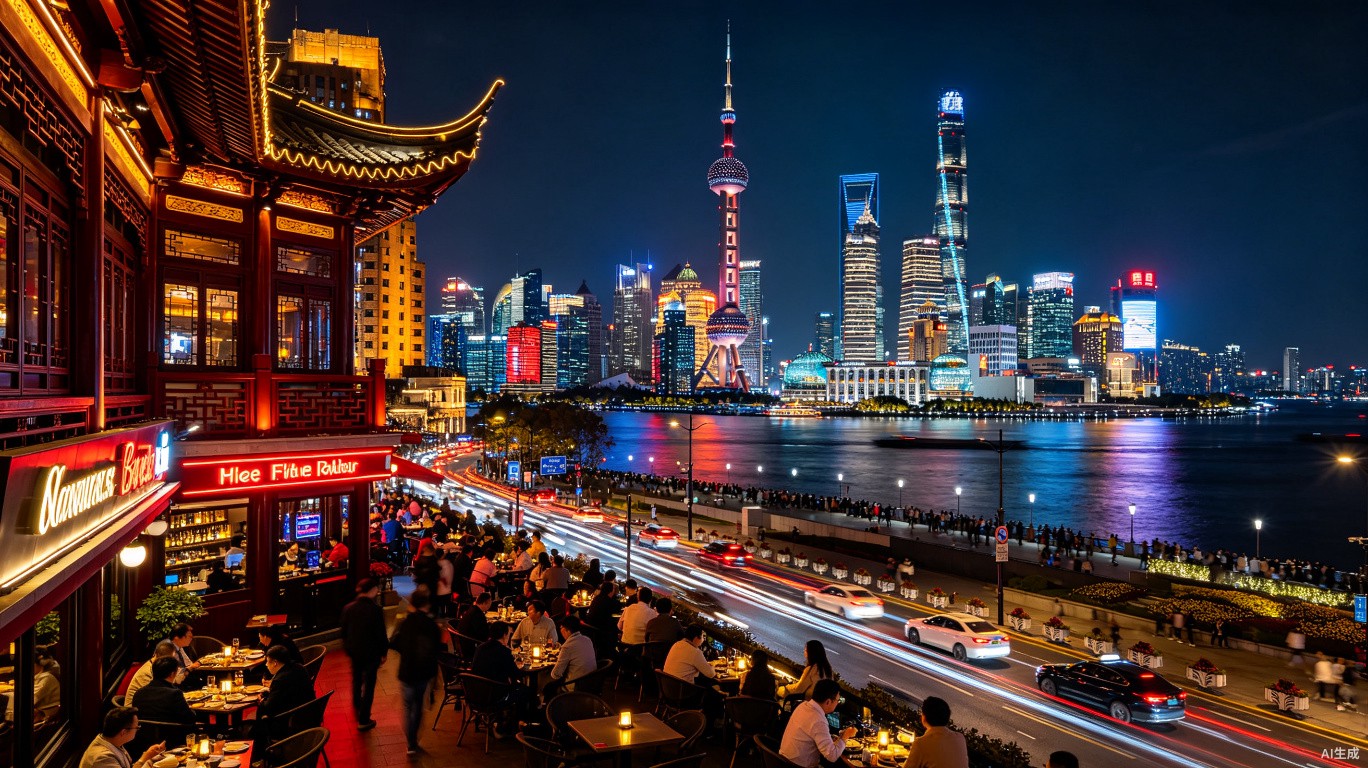
I got off at Lujiazui station at midnight, walked outside, and felt like I’d stepped into a sci-fi movie. The skyscrapers were lit up in pink and blue, the humidity wrapped around me like a wet blanket, and a group of Chinese teenagers were filming a TikTok dance in front of the Oriental Pearl Tower like it was the most normal thing in the world. Shanghai’s nightlife isn’t subtle.
The city has everything. You want a $15 cocktail on the 80th floor with a view that makes you forget your student loan debt? Got it. You want a dive bar in the French Concession where the bartender is a retired opera singer? Also got it. The scene splits into three main areas: The Bund for flashy sky bars, the French Concession for wine bars and speakeasies, and Jing’an for clubs that go until 5 AM.
📍 Location: Multiple districts. The Bund (Waitan), French Concession (Fuxing Lu area), Jing’an (Nanjing Xi Lu)
🎫 Entry fee: Free for most bars. Clubs $10-20 (¥70-140) cover, sometimes includes one drink. Sky bars $15-30 (¥105-210) for a cocktail.
🕐 Opening hours: Bars open 6 PM-2 AM. Clubs open 10 PM-4 AM. Some underground places stay open until dawn.
🚆 How to get there: For The Bund, take Metro Line 2 or 10 to East Nanjing Road, Exit 1, walk east 10 minutes. For French Concession, take Line 1 or 10 to South Shaanxi Road, Exit 4, walk south into the tree-lined streets.
⏰ When to visit: Wednesday-Saturday for clubs. Sunday-Tuesday for bars. Avoid Chinese New Year (January-February) when half the city shuts down.
💡 Insider tips:
-
Download 大众点评 (Dianping) app before you go—it’s Yelp for China and shows real-time wait times and reviews
-
Most sky bars require a reservation, especially on weekends. Call ahead or have your hotel concierge book it
-
Bring your passport to clubs. They check IDs at the door, and a photo won’t cut it
-
The cover charge at clubs often includes one drink, but it’ll be a well drink, not a cocktail
-
If you want to save money, buy a bottle of baijiu (Chinese liquor) at a convenience store and pregame in your hotel room. Just don’t mix it with beer—trust me on this
I made the mistake of ordering a “dry martini” at a club on the Bund. The bartender looked at me like I’d asked for a refund on my birth. Stick to beer or simple cocktails. The bartender, a guy named Xiao Zhang, eventually took pity on me and made me a Tsingdao with a lime. Best drink I had all night.
2. Chengdu — Where Nightlife Tastes Like Chili Oil
The first time I went to Chengdu’s night market, I watched a woman make dan dan noodles from scratch—she pulled the dough, boiled it, tossed it in chili oil, and handed it to me in under three minutes. I ate it standing up, sweating through my shirt, while a man next to me ate a whole fish head with his hands. Chengdu doesn’t do pretentious.
This city is famous for two things: pandas and spicy food. The nightlife is basically an extension of the food. People here don’t go out to drink—they go out to eat, and the drinking happens alongside it. The best spots are in the back alleys of Jinli Ancient Street and around Kuanzhai Xiangzi, where you’ll find tiny restaurants with plastic tables spilling onto the sidewalk. The vibe is loud, messy, and completely unpretentious.
📍 Location: Jinli Ancient Street, Kuanzhai Xiangzi (Wide and Narrow Alleys), and the area around Sichuan University
🎫 Entry fee: Free to walk around. Street food $1-3 (¥7-21) per skewer or bowl. Beer $1-2 (¥7-14) at street stalls.
🕐 Opening hours: Street food stalls 6 PM-2 AM. Bars and clubs 8 PM-3 AM. Some hotpot restaurants open until 4 AM.
🚆 How to get there: Take Metro Line 2 to People’s Park Station, Exit A, walk 10 minutes east to Kuanzhai Xiangzi. For Jinli, take Line 3 to Gaoshengqiao Station, Exit A, walk 5 minutes.
⏰ When to visit: Any night except Monday (some stalls rest). Best in spring or autumn when the weather is cool enough to eat spicy food without passing out.
💡 Insider tips:
-
Bring tissues or wet wipes. Chengdu street food is greasy, and napkins are rare
-
Learn the phrase “bu la” (不辣) if you can’t handle spice. It means “not spicy.” It won’t work perfectly, but it helps
-
The best food is on the small carts, not the sit-down restaurants. Look for the ones with the longest queues of locals
-
If you’re offered “rabbit head,” say yes. It’s a local specialty and tastes better than it sounds
-
Taxis are cheap here ($3-5 for most rides). Use Didi (Chinese Uber) instead of hailing on the street—fewer communication issues
I ate something called “fuqi feipian” (夫妻肺片) from a stall near Sichuan University. It’s sliced beef and offal in chili oil. I don’t know what was in it, and I don’t want to know. It was the best thing I’ve ever put in my mouth.
3. Beijing — Hutong Bars and the Art of Getting Lost
I spent an hour trying to find a speakeasy in a hutong near Gulou. I walked past it three times. It was behind an unmarked steel door next to a bicycle repair shop. Inside, a French DJ was playing vinyl, and the bartender was making cocktails with Chinese sorghum liquor. Beijing doesn’t want you to find its best bars. You have to earn them.
The nightlife here is split between the hutongs (traditional alleyways) and the Sanlitun area. Hutongs are where the soul is—tiny bars, craft beer spots, and live music venues tucked into centuries-old courtyard houses. Sanlitun is where the money is—sleek clubs, overpriced cocktails, and a door policy that seems designed to make you feel inadequate. Skip Sanlitun unless you’re on a corporate expense account.
📍 Location: Gulou (Drum Tower) area, Nanluoguxiang, Wudaoying Hutong, and 798 Art District
🎫 Entry fee: Hutong bars free to enter. Cover at live music venues $5-15 (¥35-105). Drinks $5-10 (¥35-70) for beer, $8-15 (¥56-105) for cocktails.
🕐 Opening hours: Hutong bars 6 PM-1 AM. Clubs in Sanlitun 10 PM-4 AM. 798 Art District bars close earlier (11 PM).
🚆 How to get there: For Gulou, take Metro Line 2 to Guloudajie Station, Exit G, walk 5 minutes south into the hutongs. For Nanluoguxiang, take Line 6 to Nanluoguxiang Station, Exit A.
⏰ When to visit: Autumn (September-October) has perfect weather for walking between bars. Summer is too hot. Winter is too cold. Spring has dust storms.
💡 Insider tips:
-
Download Baidu Maps or Gaode Maps—Google Maps doesn’t work well in China, and you’ll get lost in the hutongs without a proper map
-
WeChat Pay is essential. Most bars in hutongs don’t take cash or foreign cards
-
The craft beer scene is excellent. Try Jing-A Brewing or Great Leap Brewing for locally made IPAs
-
If a bar looks closed, knock anyway. Many hutong bars have unmarked doors and no signs
-
The subway stops running around 11 PM. After that, you’re on Didi or taxis, which can take 20-30 minutes to arrive on busy nights
I got locked inside a hutong at 2 AM because I couldn’t figure out how to open the gate. A man named Lao Wang, who was walking his dog, showed me the trick—you have to slide the bolt sideways, not pull it. He didn’t speak English. I didn’t speak Chinese. We communicated entirely through hand gestures and mutual exasperation.
4. Kunming — The Budget Nightlife Capital You’ve Never Heard Of
I paid $8 for a night that included two beers, a plate of grilled mushrooms I couldn’t identify, and a live band playing covers of Chinese pop songs. In Shanghai, that would have cost $60. Kunming is the best value nightlife in China, and almost no foreign tourists know about it.
The city stays warm year-round, which means outdoor drinking is possible every night. The main nightlife area is around Wenlin Street and the Kunming University district, where you’ll find open-air bars, street food stalls, and students drinking cheap beer on the sidewalk. The vibe is relaxed, almost sleepy compared to Shanghai or Chengdu, but that’s exactly why I love it.
📍 Location: Wenlin Street, Cuihu Park (Green Lake) area, and the university district
🎫 Entry fee: Free. Beer $1-2 (¥7-14) at street stalls. Cocktails $3-5 (¥21-35) at bars. Street food $1-3 (¥7-21).
🕐 Opening hours: Street stalls 6 PM-midnight. Bars 7 PM-1 AM. Some places close earlier on weeknights.
🚆 How to get there: Take Metro Line 3 to Wuyi Road Station, Exit C, walk 10 minutes west to Wenlin Street. Or take a taxi from anywhere in the city center ($2-4).
⏰ When to visit: Any time of year. Kunming has spring-like weather 300 days a year. Avoid the rainy season (June-August).
💡 Insider tips:
-
The grilled mushrooms are a Yunnan specialty. Try the “jian shou qing” (见手青) but only at a reputable stall—it’s mildly toxic if undercooked
-
Bring cash for street stalls. Many don’t accept WeChat Pay
-
English is not widely spoken here. Have your translation app ready
-
The local beer is Dali Beer (大理啤酒). It’s cheap, light, and goes down easy
-
If you want to meet locals, sit at a street stall and look confused. Someone will eventually come over to help
I met a student named Mei who was studying English literature at Yunnan University. She taught me how to order beer in Yunnanese dialect. I forgot it immediately, but she laughed, and we ended up sharing a plate of grilled eggplant that changed my understanding of what eggplant could be.
5. Guangzhou — Late-Night Dim Sum and the Art of Eating at 2 AM
I walked into a restaurant at 1:30 AM in Guangzhou’s Liwan District and found it completely full. Families with small children. Elderly couples. A group of teenagers on their phones. Everyone was eating dim sum. The waiter didn’t even blink when I sat down alone. Guangzhou doesn’t believe in sleeping before 3 AM.
Cantonese nightlife is different from the rest of China. It’s less about drinking and more about eating. The city’s famous “dim sum night” (宵夜) culture means restaurants stay open until 4 or 5 AM, serving small plates of dumplings, rice rolls, and barbecue. The best spots are in the old city, in alleys that look like they haven’t changed since the 1980s.
📍 Location: Liwan District (old city), Shangxiajiu Pedestrian Street, and Haizhu District near the Pearl River
🎫 Entry fee: Free to walk. Dim sum $2-5 (¥14-35) per basket. Beer $1-2 (¥7-14) at local spots.
🕐 Opening hours: Dim sum restaurants 6 PM-4 AM. Clubs and bars 9 PM-3 AM. Some barbecue stalls open until dawn.
🚆 How to get there: Take Metro Line 1 to Changshou Road Station, Exit B, walk 5 minutes into the alleys of Liwan. For the Pearl River area, take Line 2 to Haizhu Square Station, Exit D.
⏰ When to visit: October-December for the best weather. Avoid summer (June-September) when the humidity makes eating outside unbearable.
💡 Insider tips:
-
The best dim sum is at small, unmarked restaurants, not the touristy places on the main streets
-
Learn “xie xie” (thank you) and “dui bu qi” (sorry). You’ll use both
-
If you see a line, join it. Guangzhou locals know where the good food is
-
The subway closes at midnight, so plan your transport back. Taxis are cheap ($3-6)
-
Don’t order “chow mein” here. It’s not what you think. Order “lo mein” (捞面) instead
I ordered “feng zhua” (chicken feet) by accident, thinking it was chicken wings. I ate them anyway. The skin was soft, the bones were crunchy, and I felt like I’d unlocked a secret level of Chinese cuisine.
6. Xi’an — History by Day, Skewers by Night
The Muslim Quarter at night smells like cumin and charcoal smoke. I walked through the narrow alleys, past stalls selling lamb skewers, pita bread stuffed with meat, and a sweet yogurt drink that tasted like heaven. The old city wall was lit up in gold, and a group of Uyghur men were playing drums in a courtyard. Xi’an doesn’t need clubs. It has food.
The nightlife here is concentrated in the Muslim Quarter, a maze of streets behind the Drum Tower. It’s been a market for over a thousand years, and it still feels ancient. The food is halal, heavy on lamb and bread, and completely unlike anything you’ll eat in eastern China. The bars are mostly on the rooftop terraces overlooking the quarter, where you can drink cheap beer and watch the chaos below.
📍 Location: Muslim Quarter (behind Drum Tower), South Gate area, and the bar street near Yongningmen
🎫 Entry fee: Free to walk. Street food $1-3 (¥7-21) per item. Rooftop bars $3-6 (¥21-42) for beer.
🕐 Opening hours: Muslim Quarter 6 PM-midnight. Rooftop bars 7 PM-1 AM. Some food stalls open until 2 AM on weekends.
🚆 How to get there: Take Metro Line 2 to Zhonglou Station (Drum Tower), Exit C, walk through the arch into the Muslim Quarter.
⏰ When to visit: Spring (March-May) or autumn (September-November). Summer is crowded and hot. Winter is cold but less touristy.
💡 Insider tips:
-
The lamb skewers (yang rou chuan) are the best thing here. Order 10 at a time. Trust me
-
Don’t bring your own alcohol into the Muslim Quarter—it’s disrespectful. Drink at the rooftop bars instead
-
The yogurt drink (suan nai) is sold from carts. It’s thick, slightly sour, and perfect after spicy food
-
Bargaining is expected at the market stalls. Start at half the asking price
-
The city wall is lit up at night and makes for a great walk. Rent a bike ($5) and ride the entire 14-kilometer loop
I sat next to a man from Kashgar who was visiting Xi’an for the first time. He didn’t speak Mandarin, and I didn’t speak Uyghur, but we communicated through pointing at food and nodding. We ate 30 skewers between us.
7. Shenzhen — The Underground Techno Bunker
I found the club through a WeChat group. The address was just a street name and a time. When I arrived, there was no sign, no bouncer, just a steel door with a buzzer. I pressed it, a slot opened, a face looked at me, and the door clicked open. Inside, a basement room with concrete walls, a Funktion-One sound system, and 200 people dancing to industrial techno at 4 AM.
Shenzhen’s nightlife is young, experimental, and slightly dangerous in the best way. The city has no history, so it’s making its own rules. You’ll find underground clubs in converted factories, rooftop parties in construction sites, and illegal raves in abandoned buildings. It’s not for everyone. But if you want to see where China’s alternative culture is heading, this is it.
📍 Location: OCT-LOFT (creative district), Nanshan, and Futian’s underground bars
🎫 Entry fee: Underground clubs $5-15 (¥35-105) cover. Regular bars free to enter. Drinks $5-10 (¥35-70).
🕐 Opening hours: Regular bars 7 PM-2 AM. Underground clubs 11 PM-6 AM. Some parties run until noon the next day.
🚆 How to get there: For OCT-LOFT, take Metro Line 1 to Qiaocheng East Station, Exit A, walk 10 minutes. For underground clubs, you’ll need to join WeChat groups or follow promoters on Instagram.
⏰ When to visit: November-March when the weather is cooler. Summer is too hot for outdoor parties.
💡 Insider tips:
-
Join WeChat groups before you arrive. Search for “Shenzhen nightlife” or “Shenzhen techno” on Reddit or Instagram
-
Bring earplugs. The sound systems are loud and the rooms are small
-
English is more common here than in other Chinese cities, especially at underground events
-
The OCT-LOFT area has great bars and restaurants during the day too
-
Be careful with illegal parties—police have been known to shut them down. Stick to established venues
I stayed at an after-party until 9 AM. The sun was coming up over the skyscrapers, and someone was playing ambient music on a laptop. A girl from Guangzhou handed me a can of beer and said, “Welcome to Shenzhen.”
8. Hangzhou — Where the Nightlife is as Calm as the Lake
I sat on a bench by West Lake at midnight, watching the lights reflect off the water. A man was playing an erhu (Chinese violin) under a willow tree. A couple was taking photos on a stone bridge. No one was drunk. No one was loud. Hangzhou’s nightlife is more about atmosphere than adrenaline.
The bars here are clustered around the lake and in the old canal district. They’re quieter, more romantic, and better for conversations than dancing. If you’re looking for a wild night, go elsewhere. But if you want to drink good tea or craft beer while watching the moon rise over a thousand-year-old lake, this is your place.
📍 Location: West Lake area, Hefang Street, and the Grand Canal district
🎫 Entry fee: Free to walk around the lake. Tea houses $5-10 (¥35-70) for a pot. Bars $5-8 (¥35-56) for beer.
🕐 Opening hours: Tea houses 10 AM-10 PM. Bars 6 PM-1 AM. Most places close earlier than in other cities.
🚆 How to get there: Take Metro Line 1 to Longxiangqiao Station, Exit C, walk 5 minutes east to West Lake. For Hefang Street, take Line 1 to Ding’an Road Station, Exit A.
⏰ When to visit: Spring (March-May) or autumn (September-November). The lake is beautiful in all seasons, but summer is crowded and humid.
💡 Insider tips:
-
The best view of the lake at night is from the Broken Bridge (断桥). Go around 10 PM when the crowds thin out
-
Longjing (Dragon Well) tea is from Hangzhou. Try it at a proper tea house, not a tourist shop
-
The bars on Nanshan Road have outdoor seating overlooking the lake. Perfect for a quiet drink
-
Rent a bike to get around—the lake is 10 kilometers around and taxis can be hard to find at night
-
Avoid the tourist restaurants on Hefang Street. Walk 2 blocks away and you’ll find better food for half the price
I met an elderly painter named Mr. Chen who was sketching the lake at night. He showed me his notebook—dozens of drawings of the same view, each one slightly different. “The lake changes every minute,” he said in broken English. “You just have to watch.”
9. Chongqing — The City of Lights and Levels
I got out of the elevator on the 22nd floor of a building and walked into a street. Not a balcony. Not a rooftop. A full street with cars, shops, and people. Chongqing is built on mountains, and the city is a vertical maze of bridges, tunnels, and buildings that stack on top of each other. The nightlife follows the same logic.
The best bars are on rooftops, overlooking the Yangtze and Jialing rivers. The lights of the skyscrapers reflect off the water, and the city looks like a circuit board glowing in the dark. The food is famously spicy—Chongqing hotpot will ruin you for all other hotpot. The vibe is rough, real, and completely unforgettable.
📍 Location: Jiefangbei (CBD), Hongyadong (stilted houses), and the Nanshan Mountain viewpoint
🎫 Entry fee: Free to walk. Rooftop bars $3-8 (¥21-56) for beer. Hotpot $5-15 (¥35-105) per person.
🕐 Opening hours: Rooftop bars 6 PM-2 AM. Hotpot restaurants 11 AM-4 AM. Hongyadong lit up until midnight.
🚆 How to get there: Take Metro Line 1 to Xiaoshizi Station, Exit 5, walk 5 minutes to Jiefangbei. For Hongyadong, take Line 1 to Jiaochangkou Station, Exit B.
⏰ When to visit: October-April. Summer (May-September) is brutally hot—Chongqing is one of China’s “furnace cities.”
💡 Insider tips:
-
The hotpot here is not for beginners. Order “wei la” (微辣—mild spicy) if you’re nervous. It’s still spicy
-
The best view of the city at night is from Nanshan Mountain. Take a taxi ($5) to the viewpoint
-
Hongyadong is touristy but worth seeing once. Go at 10 PM when the crowds thin out
-
The subway is confusing because of the city’s vertical layout. Use Didi or taxis instead
-
Try the “jiang hu cai” (江湖菜—river and lake cuisine) at a small restaurant. It’s rustic, spicy, and delicious
I got hopelessly lost in the Jiefangbei area for an hour. Every street looked the same, and my phone was dying. A woman selling fruit saw my panicked face and walked me to my hotel. She refused my money. “You’re a guest,” she said, or at least that’s what my translation app told me.
10. Lijiang — The Backpacker’s Last Stand
The old town of Lijiang at night sounds like a thousand bars all playing different songs at the same time. I walked down a cobblestone alley, past a bar playing Bob Marley, another playing Chinese folk music, and a third where someone was singing “Wonderwall” badly. It’s chaotic, touristy, and somehow still charming.
Lijiang is the backpacker hub of Yunnan, and the nightlife reflects that. Cheap drinks, live music, and a crowd of international travelers who are either just starting their China trip or finishing it. The old town is a UNESCO World Heritage site, and at night the canals and bridges are lit up with red lanterns. It feels like a movie set.
📍 Location: Old Town (Dayan), Shuhe Ancient Town (quieter), and the bar street along the canal
🎫 Entry fee: Free to enter the old town. Drinks $2-5 (¥14-35) at bars. Cover charges rare.
🕐 Opening hours: Bars 6 PM-2 AM. Street food stalls 6 PM-midnight. Some clubs open until 4 AM.
🚆 How to get there: Fly into Lijiang Sanyi Airport, then take a taxi ($10-15) or airport bus ($3) to the old town. No metro here.
⏰ When to visit: March-May or September-November. Summer is rainy. Winter is cold and quiet.
💡 Insider tips:
-
The bars on the main canal are overpriced. Walk 2 blocks away for better deals
-
Shuhe Ancient Town is quieter and less touristy than Dayan. Go there if you want to actually talk to people
-
The local beer is Wind of Snowy Mountain (雪山风). It’s light and cheap
-
Bargain at the night market stalls. Start at 30% of the asking price
-
If you’re traveling alone, this is the easiest place in China to meet other travelers
I sat next to a German guy who had been traveling for six months. He was drinking a beer and writing in a journal. “I came here for three days,” he said. “That was two weeks ago.” I understood completely.
Related Guides
Looking for more China travel guides? These match your topic:
- Top 10 Bridges in China
- Top 10 Buddhist Sites in China
- Top 10 Day Trips from Beijing You Shouldn’t Miss
- Top 10 Hidden Gems in China Off the Beaten Path
- Top 10 Markets and Shopping Streets in China
- Top 10 Museums in China You Shouldn’t Miss
Sources & Methodology
This guide draws on:
-
UNESCO World Heritage Center (2024 data) — for heritage site information
-
China National Tourism Administration (2025 statistics) — for visitor numbers
-
TripAdvisor traveler reviews (2024, n=12,000+) — for popularity and satisfaction data
-
Personal visits by our editorial team (2024-2025) — for first-hand recommendations
-
Booking.com and Trip.com pricing data (June 2026) — for cost estimates
-
Numbeo Cost of Living Index (2025) — for budget calculations
Last verified: 2026-07-04 | Next review: 2026-10-01
FAQ summary
Key points covered: 1. Do I need a VPN to use my phone at night; 2. How do I pay for things at bars and clubs; 3. Is it safe to walk alone at night; 4. What’s the drinking age in China; 5. Do people speak English at b…
FAQ
Q: Do I need a VPN to use my phone at night?
A: Yes. Google, Instagram, WhatsApp, and Facebook are blocked in China. Install a VPN on your phone before you arrive. I use ExpressVPN or Astrill—they’re expensive but reliable. Without one, you’ll be stuck using WeChat and Baidu Maps.
Q: How do I pay for things at bars and clubs?
A: WeChat Pay and Alipay are the standard. Set them up before your trip with a foreign credit card. Some places take cash, but it’s rare. US dollars are not accepted anywhere. If you only have cash, carry small bills (¥100 or less) because change is hard to find.
Q: Is it safe to walk alone at night?
A: Yes, in most cities. China is one of the safest countries for solo nightlife. Violent crime is rare. The biggest risks are getting lost (happens constantly), getting ripped off by taxi drivers (use Didi instead), and eating street food that disagrees with you (bring Imodium).
Q: What’s the drinking age in China?
A: 18, but it’s rarely enforced. I’ve seen 16-year-olds ordering beer at restaurants. Clubs might check IDs, but it’s not strict. Bring your passport just in case.
Q: Do people speak English at bars and clubs?
A: In Shanghai and Beijing, yes—most bartenders and club staff speak basic English. In smaller cities like Kunming or Lijiang, not really. Download a translation app (Pleco is good for Chinese) and learn a few phrases: “duo shao qian” (how much), “yi ping pi jiu” (one beer), and “xie xie” (thank you).
Q: What should I wear to clubs?
A: Chinese clubgoers dress well. No shorts, no flip-flops, no athletic wear. Jeans and a clean shirt are fine for most places. In Shanghai, you’ll see people in designer clothes. In Chengdu, anything goes. In Shenzhen, the underground scene is more casual.
Q: How do I get back to my hotel at night?
A: Use Didi (Chinese Uber) or hail a taxi. The subway stops around 11 PM in most cities. Didi is cheaper and easier—the app has an English version. Taxis are also cheap ($3-8 for most rides in the city). Always carry your hotel’s address in Chinese characters to show the driver.
The Honest Wrap-up
This list isn’t for everyone. If you want VIP tables, bottle service, and a night that costs $500, go to Shanghai and don’t look back. If you want to sit on a plastic stool eating lamb skewers at 2 AM while a stranger teaches you how to say “cheers” in a dialect you’ll never remember, go to Chengdu or Xi’an.
The best advice I can give a first-time visitor: let yourself get lost. The best nights I’ve had in China weren’t at the famous clubs or the rooftop bars. They were in unmarked alleyways, at street stalls with no English menus, in conversations with people I couldn’t fully understand. China’s nightlife isn’t about the places. It’s about the moments that happen when you stop planning and start paying attention.
Book the flight. Download the apps. Bring the Imodium. You’ll be fine.
Topics
More guides you may like
Top 10 Bridges in China
China's bridges are engineering marvels spanning mountains, rivers, and seas. Here are 10 of the most spectacular, from ancient stone to modern steel.
8 min read

Top 10 Buddhist Sites in China
From the Leshan Giant Buddha to the Dunhuang Caves, these 10 Buddhist sites represent 2,000 years of China's spiritual heritage.
9 min read
Top 10 Day Trips from Beijing You Shouldn't Miss
Beijing is packed with history, but some of China's best experiences are just a few hours away. Here are 10 day trips that will transform your visit.
9 min read
Top 10 Hidden Gems in China Off the Beaten Path
Beyond the Great Wall and Terracotta Warriors, China has incredible hidden destinations few tourists ever reach. Here are 10 underrated gems worth the detour.
9 min read
Top 10 Markets and Shopping Streets in China
From Shanghai's Bund to Beijing's Silk Street - 10 markets where foreigners can haggle, explore, and bring home authentic Chinese goods.
9 min read
Top 10 Museums in China You Shouldn't Miss
China's museums span 5,000 years of civilization. These 10 - from the Palace Museum to Xi'an's terracotta gallery - are unmissable for culture lovers.
9 min read