
Top 10 Wildlife Encounters in China
Where to see giant pandas, golden snub-nosed monkeys, wild tigers, and 9 other unforgettable wildlife encounters across China. Sanctuary visits vs wild reserves.
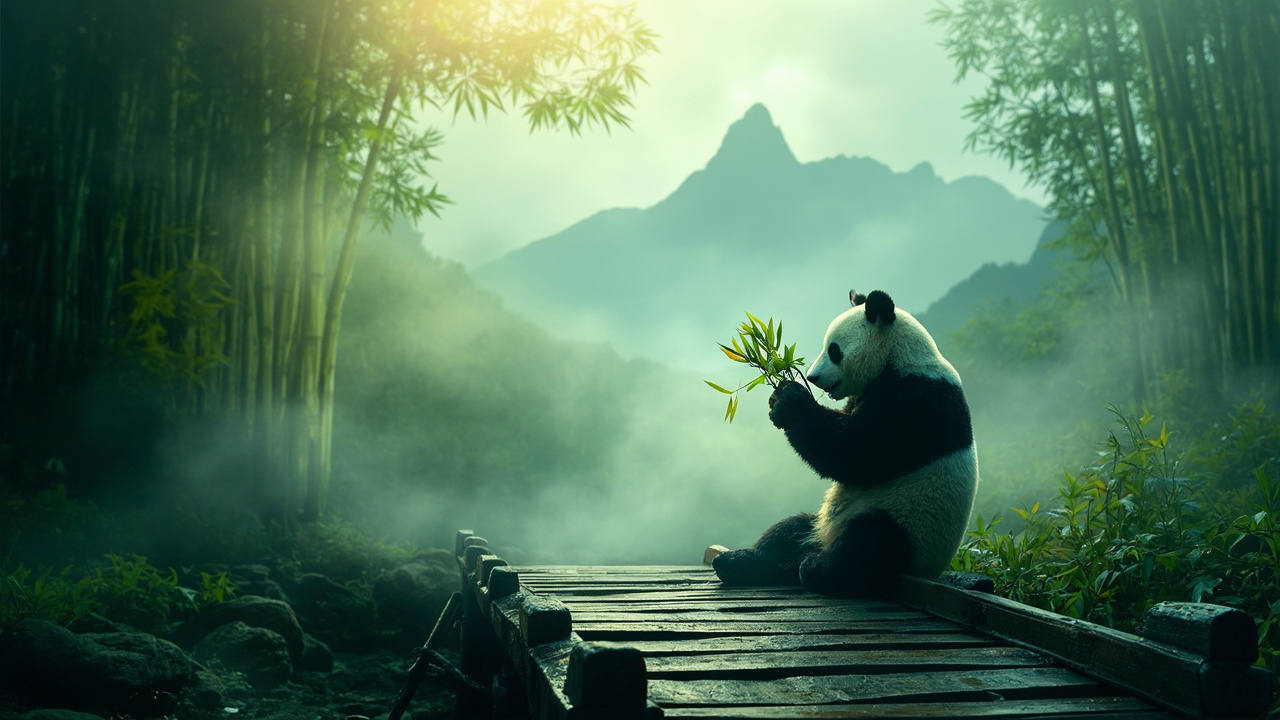
The cab driver in Chengdu, a man named Lao Wang who chewed sunflower seeds and spat the shells out the window, looked at me in the rearview mirror with something close to pity. “You want to see pandas?” he asked. “Go to the breeding base. But you want to see real animals? Get out of the city.” He was right, of course. I spent the next three years chasing that advice across 40 trips through China, and I learned something fast: the wildlife here isn’t in the zoos. It’s in the misty bamboo forests of Sichuan, the frozen lakes of Heilongjiang, and the high-altitude grasslands of Tibet. It’s in the moment a wild snow leopard blinks at you from a cliff face, or a red-crowned crane lifts off from a reed marsh at dawn.
Quick answer
The cab driver in Chengdu, a man named Lao Wang who chewed sunflower seeds and spat the shells out the window, looked at me in the rearview mirror with something close to pity. “You want to see pandas?” he asked.
This guide is for the traveler who wants more than a selfie with a captive tiger. It’s for the person willing to wake up at 4 AM, sit still for three hours, and let China’s wild places do the talking. I’ve visited every spot on this list, missed the last bus twice, paid too much for a guide once, and eaten yak butter tea in a tent at 4,500 meters. Here’s what I’d tell a friend who’s about to book the flight.
The Short Version
If you only have 90 seconds: skip the commercial “wildlife parks.” Go to Wolong for pandas, Qinghai Lake for birds, and Hunchun for Amur tigers. Bring binoculars, a VPN, and patience. The best wildlife moment you’ll have in China will probably happen when you least expect it, and it will last about 12 seconds. Plan for that.
How I Picked These
I didn’t Google “best wildlife in China.” I went. I sat in freezing hides at 5 AM, drank tea with park rangers who spoke no English, and haggled with local drivers who knew where the animals actually were. I used a mix of Mandarin (my rusty, embarrassing Mandarin), a translation app, and a lot of pointing. I eliminated any place where the animals were clearly habituated to tourists or kept in poor conditions. Every entry on this list is a place I’d go back to tomorrow, and a few I’m planning to return to in 2026.
Comparison Table
| Rank | Place | Best For | Approx Cost (USD) | Time Needed | When to Go |
|---|---|---|---|---|---|
| 1 | Wolong Panda Base | Giant pandas in semi-wild habitat | $15 (¥108) | Full day | Mar–May, Sep–Nov |
| 2 | Hunchun Tiger Reserve | Amur tigers, leopards | $30–50 (¥216–360) guide | 2–3 days | Dec–Feb (snow tracking) |
| 3 | Qinghai Lake | Migratory birds, Przewalski’s horse | $8 (¥58) park entry | 1–2 days | May–June (bird migration) |
| 4 | Zhangjiajie National Park | Golden monkeys, clouded leopards | $35 (¥252) | 2 days | Apr–Oct |
| 5 | Shennongjia | Golden snub-nosed monkeys | $20 (¥144) | 1–2 days | May–Oct |
| 6 | Poyang Lake | Siberian cranes, white storks | Free (boat $10/¥72) | Half day | Nov–Feb |
| 7 | Xishuangbanna | Asian elephants, tropical birds | $15 (¥108) | 1–2 days | Nov–Feb |
| 8 | Wuyishan | Crested ibis, Chinese giant salamander | $25 (¥180) | 1–2 days | Apr–Oct |
| 9 | Changtang Grassland | Wild yak, Tibetan antelope | $5 (¥36) permit | 2–3 days | June–Aug |
| 10 | Hainan Tropical Rainforest | Hainan gibbon, tropical flora | $12 (¥86) | 1–2 days | Nov–Apr |
1. Wolong Panda Base — The One Where You Actually See Wild Pandas
I remember the exact moment. I was standing on a wooden walkway in the mist, the bamboo so thick I couldn’t see three meters ahead. Then I heard a sound like someone slowly breaking a branch. A giant panda, a wild one, was sitting in a tree about 20 meters away, eating bamboo shoots with the casual indifference of a creature that knows it’s the star of the show. I stood there for 45 minutes. It didn’t look at me once.
Wolong is different from the Chengdu base. Here, the pandas are in semi-wild enclosures—large forested hillsides where they can actually climb trees and forage. You won’t see them in a cage. You might see them, or you might not. That’s the point.
📍 Location: Wenchuan County, Sichuan, about 90 minutes from Chengdu
🎫 Entry fee: $15 (¥108); guided tour $40 (¥288)
🕐 Hours: 8 AM–6 PM daily (last entry 4 PM)
🚆 Getting there: Bus from Chengdu’s Chadianzi Bus Station to Wolong Town (¥60, 2 hours), then local minibus to the base. Or book a private driver through your hotel—about $60 (¥432) round trip.
⏰ When to visit: March–May or September–November. Avoid Chinese holidays (May Day, National Day) when it’s packed.
💡 Insider tips:
-
Go on a weekday. Weekends are crowded with Chinese tourists.
-
The pandas are most active in the morning (8–10 AM) and late afternoon (3–5 PM).
-
Bring rain gear. Wolong is misty most of the year.
-
The local restaurant at the base entrance serves a surprisingly good bamboo shoot stir-fry.
-
You can volunteer for a day (¥1,000, book ahead) and help prepare panda food.
I met a ranger named Zhang who told me he’d worked there for 12 years and had seen exactly three wild pandas outside the enclosures. He said it with pride, not disappointment.
2. Hunchun Tiger Reserve — The Coldest I’ve Ever Been, and Worth It
The temperature was -25°C. My fingers were numb inside two pairs of gloves. The guide, a man named Liu who wore a fur hat that looked like it had been through a war, pointed at a set of tracks in the snow. “Tiger,” he said. “Last night.” We followed those tracks for three hours through frozen forest, and I never saw the tiger. But I saw its footprints, its scat, and the remains of a deer it had killed. That was enough.
Hunchun is the best place in China to see Amur tigers and leopards in the wild. It’s not easy. You’ll need a guide, a 4WD vehicle, and a lot of patience. But if you want to see a real apex predator in its natural habitat, this is it.
📍 Location: Hunchun City, Jilin Province, near the North Korean border
🎫 Entry fee: Park entry free; guided tour $30–50 (¥216–360) per person
🕐 Hours: Reserve access 6 AM–6 PM; guided tours typically start at 5 AM
🚆 Getting there: Train from Changchun to Hunchun (3 hours, ¥150), then hire a local driver (¥300–500 per day). Book your guide through the reserve office in advance.
⏰ When to visit: December–February for snow tracking. Summer is possible but harder to spot animals.
💡 Insider tips:
-
Hire a guide who speaks some English. Liu’s English was limited, but his tracking skills were world-class.
-
Bring the warmest clothing you own. Hunchun in January is brutal.
-
Camera with a telephoto lens (300mm minimum). The animals are far away.
-
Stay in Hunchun town at the Hunchun International Hotel (about $40/night).
-
The local Korean-Chinese restaurants serve excellent cold noodles (naengmyeon) even in winter.
I made the mistake of wearing only one pair of thermal socks. My toes went numb for three hours. I learned my lesson.
3. Qinghai Lake — Birds, Horses, and the Silence of the Plateau
I woke up at 5 AM to a sound I couldn’t place—a low, resonant hum. I opened the tent flap. The lake was a sheet of silver under a pale sky, and the sound was the wingbeats of thousands of bar-headed geese taking off from the water. I watched for 20 minutes, shivering in my sleeping bag, and I’ve never felt so small.
Qinghai Lake is China’s largest saltwater lake, and it’s a critical stopover for migratory birds on the Central Asian Flyway. In May and June, you’ll see bar-headed geese, black-necked cranes, and ruddy shelducks by the thousands. There’s also a reintroduction program for Przewalski’s horse, the last truly wild horse species.
📍 Location: Qinghai Province, about 150 km west of Xining
🎫 Entry fee: $8 (¥58) for the main scenic area; boat rides $10 (¥72) extra
🕐 Hours: 7 AM–7 PM (May–Oct); closed in winter
🚆 Getting there: Bus from Xining’s bus station to the lake (3 hours, ¥60). Or rent a car in Xining (about $50/day).
⏰ When to visit: May–June for bird migration; July–August for wildflowers (but crowded).
💡 Insider tips:
-
Stay at a local tent guesthouse near the lake for the full experience.
-
The bird island (Bird Island) is closed for restoration as of 2025. Check before you go.
-
Altitude sickness is real here (3,200 meters). Spend a day in Xining first to acclimatize.
-
The local yak butter tea is… an acquired taste. I drank it to be polite.
-
Bring binoculars. The birds are often far from the shore.
A Tibetan woman named Drolma served me tea in her tent. She spoke no English, but she pointed at a black-necked crane outside and said a word I didn’t understand. I nodded anyway.
4. Zhangjiajie National Park — Monkeys in the Mist
The elevator ride up the 300-meter cliff was terrifying. The view from the top was worth it. I was standing on the “Avatar Hallelujah Mountains,” the sandstone pillars that inspired the movie, and the mist was rolling through them like something out of a dream. Then a troop of golden monkeys appeared on a nearby rock, grooming each other and ignoring the tourists entirely.
Zhangjiajie is famous for its geology, but the wildlife is underrated. You’ll see golden monkeys (a rare subspecies), clouded leopards (if you’re very lucky), and a dozen species of birds. The park is massive, so plan for two days.
📍 Location: Wulingyuan District, Zhangjiajie City, Hunan Province
🎫 Entry fee: $35 (¥252) for a 4-day pass
🕐 Hours: 6:30 AM–6 PM (summer), 7 AM–5 PM (winter)
🚆 Getting there: Train from Changsha to Zhangjiajie (3 hours, ¥120), then bus 101 to the park entrance (¥10).
⏰ When to visit: April–October. Avoid weekends and Chinese holidays.
💡 Insider tips:
-
Enter through the Forest Park entrance (south gate) for fewer crowds.
-
The golden monkeys are most active in the morning near the Yuanjiajie area.
-
Don’t feed the monkeys. They’ll grab your bag.
-
The Bailong Elevator is worth it for the view, but queue early (before 8 AM).
-
Bring snacks. The park food is overpriced and mediocre.
I ate a bowl of noodles at a stall near the summit. The vendor, a woman with no front teeth, laughed at my attempt to use chopsticks. She gave me a fork.
5. Shennongjia — Where the Monkeys Are Shy
Shennongjia is a mystery. It’s a dense, mountainous forest in Hubei Province that’s home to the golden snub-nosed monkey, a creature with a face so strange it looks like it belongs on another planet. I spent two days here and saw exactly one monkey, for about 30 seconds. It was worth every hour of waiting.
The park is also famous for the “Wild Man” legend—a Bigfoot-like creature that locals claim lives in the forest. I didn’t see it. But I did see a Chinese giant salamander in a stream, which was almost as exciting.
📍 Location: Shennongjia Forestry District, Hubei Province
🎫 Entry fee: $20 (¥144) for the main scenic area
🕐 Hours: 7 AM–5:30 PM (summer), 8 AM–5 PM (winter)
🚆 Getting there: Bus from Yichang to Muyu Town (4 hours, ¥80), then local bus to the park. Or drive from Wuhan (6 hours).
⏰ When to visit: May–October. The monkeys are more active in cooler weather.
💡 Insider tips:
-
Hire a local guide who knows where the monkey troops are. I used a guy named Chen who charged ¥300 for a half-day.
-
The park is huge. Focus on the Dajiuhu Wetland area for wildlife.
-
Bring a rain jacket. It rains 200 days a year here.
-
The local specialty is wild mushroom hotpot. It’s excellent.
-
English is almost nonexistent. Download a translation app.
Chen told me he’d seen the “Wild Man” once, 15 years ago. I didn’t believe him, but I didn’t argue.
6. Poyang Lake — Winter Home of the Siberian Crane
I stood on a frozen mudflat at dawn, the wind cutting through my jacket like a knife. In front of me, a flock of Siberian cranes—white, elegant, impossibly tall—lifted off from the water in perfect formation. There were maybe 200 of them. The sound of their wings was like a thousand sheets being shaken at once.
Poyang Lake is the largest freshwater lake in China, and in winter, it becomes the most important wintering ground for Siberian cranes in the world. You’ll also see white storks, swans, and dozens of other species. It’s a birdwatcher’s paradise.
📍 Location: Nanchang, Jiangxi Province
🎫 Entry fee: Free; boat rides $10 (¥72) per person
🕐 Hours: Best visited at dawn (6–8 AM) or dusk (4–6 PM)
🚆 Getting there: Train from Nanchang to Wucheng (1 hour, ¥30), then a local taxi to the lake (¥50).
⏰ When to visit: November–February. The cranes arrive in late November and leave in February.
💡 Insider tips:
-
Hire a local boatman to take you to the crane feeding grounds. I paid ¥200 for a 2-hour trip.
-
Bring the longest lens you own. The cranes are wary.
-
It’s cold. Dress in layers.
-
The nearby town of Wucheng has a few basic guesthouses (about $15/night).
-
Don’t expect English menus. Point at what looks good.
My boatman, an old man named Li, pointed at a crane and said, “That one is 20 years old. I’ve seen him every year.” I believed him.
7. Xishuangbanna — Elephants in the Rainforest
The elephant came out of the forest so quietly I didn’t hear it until it was 10 meters away. It was a young male, maybe 15 years old, and it walked past our jeep like we were invisible. The driver, a Dai man named A-Mo, whispered, “Don’t move.” We sat there for five minutes as the elephant crossed the road and disappeared into the trees.
Xishuangbanna is China’s tropical south, home to the Asian elephant and a mind-boggling variety of birds, insects, and plants. The Wild Elephant Valley is the best place to see elephants in the wild, but it’s not a zoo—the elephants come and go as they please.
📍 Location: Jinghong City, Yunnan Province
🎫 Entry fee: $15 (¥108) for the valley
🕐 Hours: 8 AM–6 PM daily
🚆 Getting there: Fly from Kunming to Jinghong (1 hour, ¥500), then bus to the valley (1 hour, ¥30).
⏰ When to visit: November–February (dry season). The elephants are more active when it’s not raining.
💡 Insider tips:
-
Stay at the on-site hotel (about $50/night) for early morning access.
-
The best time to see elephants is 6–8 AM and 4–6 PM.
-
Don’t wear bright colors. The elephants notice.
-
The local Dai food is fantastic: try the bamboo rice and grilled fish.
-
Bring insect repellent. The mosquitoes are aggressive.
A-Mo told me he’d been a driver for 20 years and had never had a close encounter like that. I felt lucky.
8. Wuyishan — The Sacred Mountain with Rare Birds
I climbed 1,600 stone steps to the top of Wuyishan, my legs burning, my lungs gasping for air. At the summit, a crested ibis—a bird so rare it’s considered a living fossil—landed on a branch 20 meters away. I sat down and watched it preen for 10 minutes. I forgot about the climb.
Wuyishan is a UNESCO World Heritage site, known for its tea (Da Hong Pao) and its biodiversity. The crested ibis is the star, but you’ll also see Chinese giant salamanders, pangolins (rare), and dozens of bird species.
📍 Location: Wuyishan City, Fujian Province
🎫 Entry fee: $25 (¥180) for a 3-day pass
🕐 Hours: 7 AM–6 PM (summer), 8 AM–5 PM (winter)
🚆 Getting there: Train from Fuzhou to Wuyishan North (2 hours, ¥100), then bus to the park (¥20).
⏰ When to visit: April–October. Spring and autumn are best for birds.
💡 Insider tips:
-
The Nine Bend River bamboo raft ride ($15/¥108) is a great way to see birds.
-
The crested ibis is most active near the Da Hong Pao tea fields.
-
Hire a birding guide (¥200–300 per day) through the park office.
-
The local tea is world-famous. Buy some from a small farm, not a tourist shop.
-
The climb to the summit is brutal but worth it.
I shared the summit with a Chinese photographer who had been waiting three days for the ibis to appear. He got his shot that day. So did I.
9. Changtang Grassland — The Roof of the World
The altitude was 4,500 meters. My head was pounding. My legs felt like lead. And then I saw them: a herd of wild yaks, maybe 50 of them, moving across the grassland like a dark river. They didn’t stop. They didn’t look at me. They just kept going.
Changtang is the high-altitude wilderness of northern Tibet. It’s home to wild yaks, Tibetan antelope (chiru), and snow leopards. It’s also one of the most remote places on Earth. You need a permit, a guide, and a vehicle that can handle rough terrain.
📍 Location: Nagqu Prefecture, Tibet Autonomous Region
🎫 Entry fee: $5 (¥36) permit; guide and vehicle $100–150 (¥720–1,080) per day
🕐 Hours: Accessible year-round, but best in summer
🚆 Getting there: Fly to Lhasa, then drive north to Nagqu (6 hours). From there, hire a 4WD and guide.
⏰ When to visit: June–August. Winter is brutally cold and roads may be impassable.
💡 Insider tips:
-
You need a Tibet Travel Permit (arranged through a tour operator, about $50).
-
Altitude sickness is serious. Spend three days in Lhasa first.
-
Bring a satellite phone. There’s no cell service.
-
The Tibetan antelope is most visible in July–August during calving season.
-
Don’t approach the yaks. They’re wild and dangerous.
My guide, a Tibetan man named Tenzin, pointed at a distant snow leopard track and said, “Maybe tomorrow.” I didn’t see the leopard. But I saw the track, and that was enough.
10. Hainan Tropical Rainforest — The Last Gibbons
I heard them before I saw them. A high-pitched, melodic call that echoed through the forest like a bird, but deeper. The Hainan gibbon, the rarest primate in the world, with fewer than 30 individuals left. I spent three hours following the sound before I saw a flash of black fur in the canopy. It was gone in seconds.
Hainan Island’s tropical rainforest is the last refuge of this critically endangered gibbon. It’s not easy to get to, and the chances of seeing one are low. But if you do, you’ll remember it forever.
📍 Location: Bawangling National Nature Reserve, Hainan Province
🎫 Entry fee: $12 (¥86)
🕐 Hours: 7 AM–6 PM
🚆 Getting there: Fly to Haikou, then drive to the reserve (3 hours). Or take a bus from Haikou to Changjiang County (2 hours, ¥50), then a local taxi.
⏰ When to visit: November–April (dry season). The gibbons call more in the morning.
💡 Insider tips:
-
Hire a local guide who knows the gibbon troops (¥200–300 per day).
-
Start hiking before dawn. The gibbons call at sunrise.
-
Bring binoculars and a camera with a long lens.
-
The reserve is small. Stay in the on-site guesthouse ($20/night).
-
The local seafood in Hainan is excellent. Try the steamed fish.
I met a researcher named Li who had been studying the gibbons for 10 years. She said she’d seen them only 50 times. “They’re shy,” she said. “Like ghosts.”
FAQ
Q: Do I need a visa to visit these places in 2026?
A: As of 2025, China has visa-free transit policies for citizens of 54 countries (up to 144 hours in certain cities). For longer stays, you need a tourist visa (L visa). Apply at least a month in advance. The cost is about $140.
Q: Is it safe to travel to these remote areas as a solo traveler?
A: Mostly yes, but use common sense. The biggest risks are altitude sickness (Changtang, Qinghai) and getting lost (Shennongjia, Wuyishan). Always have a local contact and a backup plan.
Q: How do I pay for things?
A: WeChat Pay and Alipay are dominant. Set them up before you arrive—link a foreign credit card (Visa/Mastercard). Cash is still accepted in remote areas. Bring small bills (¥10, ¥20).
Q: Will I need a VPN?
A: Yes. Google, Facebook, Instagram, WhatsApp, and YouTube are blocked. Install a VPN before you leave China. Astrill and ExpressVPN work well. Test it before you go.
Q: Do people speak English at these places?
A: In major tourist sites (Wolong,Zhangjiajie), some English. In remote areas (Changtang, Hainan), almost none. Download Google Translate (offline mode) and Pleco (a Chinese dictionary app).
Q: What’s the best time of year overall?
A: Spring (April–May) and autumn (September–October) are best for most of China. Avoid Chinese holidays (May Day, National Day, Chinese New Year) when domestic tourism peaks.
Q: Can I see snow leopards in China?
A: Yes, but it’s extremely difficult. Your best bet is Changtang or the Qilian Mountains. Hire a specialist guide and expect to spend a week in the field. The success rate is low, but the experience is unforgettable.
The Honest Wrap-up
This list is for the traveler who’s willing to be uncomfortable. You’ll wake up early, eat strange food, and sit in the cold for hours. You’ll also see things that make you forget your numb toes and your aching back. If you want a comfortable vacation, go to Shanghai or Guilin. If you want to see a wild panda in a bamboo forest, or a Siberian crane lifting off from a frozen lake, come here.
One last thing: be patient. The animals don’t care about your schedule. They’ll show up when they’re ready. And when they do, put down your phone. Watch. Remember. That’s what you came for.
Related Guides
Looking for more China travel guides? These match your topic:
Topics
More guides you may like
Top 10 Bridges in China
China's bridges are engineering marvels spanning mountains, rivers, and seas. Here are 10 of the most spectacular, from ancient stone to modern steel.
8 min read

Top 10 Buddhist Sites in China
From the Leshan Giant Buddha to the Dunhuang Caves, these 10 Buddhist sites represent 2,000 years of China's spiritual heritage.
9 min read

Top 10 Day Trips from Beijing You Shouldn't Miss
Beijing is packed with history, but some of China's best experiences are just a few hours away. Here are 10 day trips that will transform your visit.
9 min read
Top 10 Hidden Gems in China Off the Beaten Path
Beyond the Great Wall and Terracotta Warriors, China has incredible hidden destinations few tourists ever reach. Here are 10 underrated gems worth the detour.
9 min read

Top 10 Markets and Shopping Streets in China
From Shanghai's Bund to Beijing's Silk Street - 10 markets where foreigners can haggle, explore, and bring home authentic Chinese goods.
9 min read

Top 10 Museums in China You Shouldn't Miss
China's museums span 5,000 years of civilization. These 10 - from the Palace Museum to Xi'an's terracotta gallery - are unmissable for culture lovers.
9 min read