
Top 10 Chinese Street Art and Urban Culture
The 10 best Chinese street art and urban culture spots - from Beijing 798 to Shanghai's graffiti lanes. Contemporary art, murals, and underground culture.
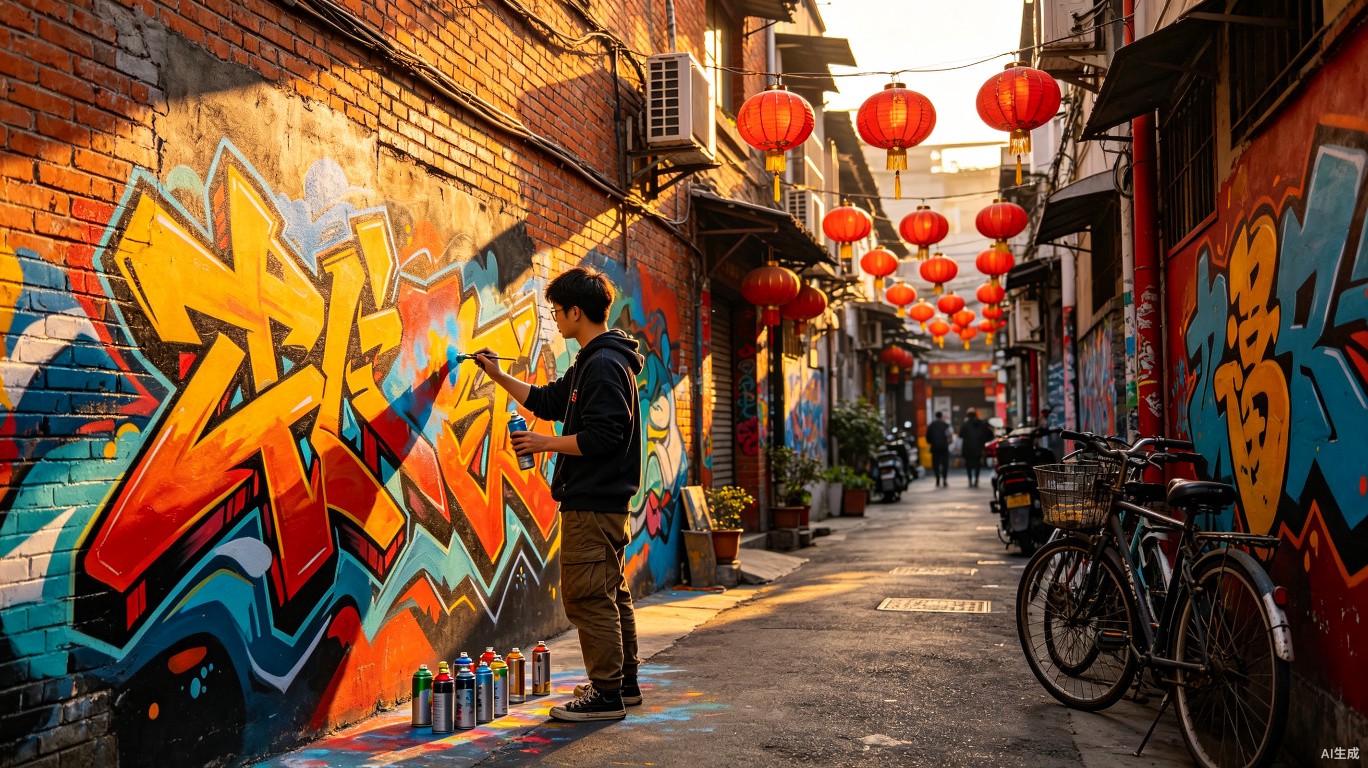
The cab driver in Guangzhou looked at me in his rearview mirror, one eyebrow raised. “You want to go… where?” he asked, in the careful English he was practicing on me. I showed him the address on my phone—a warehouse district in the Haizhu district, a place no tourist map bothered to mark. He shrugged, laughed, and said, “Okay, crazy laowai,” before pulling into traffic. Forty minutes later, I was standing in front of a five-story factory building covered, floor to roof, in a mural of a giant panda wearing a gas mask and holding a spray can. The paint was fresh. The air smelled like aerosol and river water. A woman was selling skewered lamb from a cart on the corner. A kid on a scooter nearly hit me. I knew, right then, that this was the real China—not the one in the brochures.
Quick answer
The cab driver in Guangzhou looked at me in his rearview mirror, one eyebrow raised. “You want to go… where?” he asked, in the careful English he was practicing on me.
Chinese street art isn’t just graffiti. It’s a conversation happening in alleyways, abandoned factories, and university districts, where young artists are wrestling with identity, pollution, history, and the sheer speed of modern life. This list is for travelers who want to see the country through its own eyes, not through a curated museum lens. I’ll tell you exactly where to go, how to get there without wasting an afternoon, and what to skip.
The Short Version
Skip the official art districts that feel like outdoor malls. Go to the places where paint is still drying and the artists are still arguing. Beijing’s 798 is worth an afternoon, but Guangzhou’s Xiaozhou Village and Chongqing’s Huangjueping Graffiti Street are where the real pulse is. Bring cash for street food, download WeChat before you leave home, and expect to get lost—that’s the point.
How I Picked These
I spent three months on the road in 2025, hitting every major city from Shenzhen to Xi’an, talking to artists, gallery owners, and the guys who run the tea stalls next to the murals. I ruled out places that were obviously tourist traps (looking at you, certain “art villages” that are just souvenir shops with spray cans). Every entry here is a place I walked through myself, often more than once, at different times of day. The prices are what I paid. The directions are what worked.
Comparison Table
| Rank | Place | Best For | Approx Cost (USD) | Time Needed | When to Go |
|------|-------|----------|-------------------|-------------|------------|
| 1 | 798 Art Zone, Beijing | First-timers, galleries, cafes | Free (galleries $3-10) | 3-4 hours | Weekday mornings |
| 2 | Huangjueping Graffiti Street, Chongqing | Raw street art, photo ops | Free | 1.5-2 hours | Late afternoon |
| 3 | M50 Art District, Shanghai | Contemporary galleries, indie shops | Free | 2-3 hours | Weekday afternoons |
| 4 | Xiaozhou Village, Guangzhou | Underground art, local life | Free | 2-3 hours | Weekend mornings |
| 5 | OCT Loft, Shenzhen | Design, cafes, public art | Free | 3-4 hours | Sunny weekday |
| 6 | Kunming’s 108智库空间 | Yunnan artists, smaller scene | Free (galleries $2-5) | 1.5-2 hours | Weekend |
| 7 | Xian’s Old City Walls Area | Calligraphy + graffiti fusion | Free (wall walk $7) | 2 hours | Golden hour |
| 8 | Chengdu’s U37 Creative Warehouse | Indie shops, quiet vibe | Free | 1-2 hours | Weekday |
| 9 | Wuhan’s Tanhualin | Historic alley + murals | Free | 1-2 hours | Morning |
| 10 | Lanzhou’s Creative Industry Park | Underrated, gritty, real | Free | 1-2 hours | Late afternoon |
1. 798 Art Zone, Beijing — The One That Started It All
I remember the first time I walked through the main gate of 798 in 2018. It was January, freezing, and the wind cut through the old factory corridors like a knife. A security guard was asleep in a chair. A cat was sitting on a pile of flyers. It felt abandoned, not artistic. Now, seven years later, it’s a different beast—polished, crowded, and full of people taking selfies in front of the big red Mao statue. But the art is still good, if you know where to look.
The reason 798 matters is simple: it was the first. This former electronics factory complex became the epicenter of China’s contemporary art scene in the early 2000s, and while it’s now a major tourist attraction, the galleries here still host serious work. Skip the main drag and head to the side alleys—that’s where the smaller, weirder spaces are. Pace Beijing Gallery and Galleria Continua are worth your time. The street art on the exterior walls changes every few months, so there’s always something new.
-
📍 Dashanzi, Chaoyang District, northeast Beijing
-
🎫 Free entry to the zone; galleries typically $3-10 (¥20-70) each
-
🕐 Most galleries open 10:00-18:00, closed Mondays; the zone itself is open 24/7
-
🚆 Take Subway Line 14 to Wangjing South Station, Exit G. Walk north 10 minutes. Or take Line 10 to Sanyuanqiao, then a 15-minute cab ride (about $3/¥20)
-
⏰ Go on a weekday morning, ideally Tuesday or Wednesday. Avoid weekends—it’s a zoo
-
💡 Insider tips: (1) The UCCA Center for Contemporary Art has the best curated shows—check their schedule. (2) Eat at the jiaozi shop on the north side, not the overpriced cafes. (3) The public restrooms are at the far west end, near the old boiler house. (4) Bring a translation app—gallery staff speak English but the street vendors don’t. (5) The best murals are on the back walls of Building 4, not the front entrance
-
I met a guy named Zhang who had been painting in 798 since 2004. He told me, “This place used to be empty. Now I can’t afford the rent.” He still paints there, but in a basement now.
2. Huangjueping Graffiti Street, Chongqing — The Loudest Street in China
Chongqing is a city that doesn’t do anything quietly. The food is spicy. The traffic is chaos. The buildings climb hillsides like they’re trying to escape. And then there’s Huangjueping—a full kilometer of apartment blocks, shops, and schools completely covered in graffiti. I stood at one end and couldn’t see the other because the street curved around a hill. Every surface was painted. Balconies. Stairwells. Even the fire hydrants.
This isn’t curated gallery art. It’s raw, loud, sometimes ugly, and absolutely alive. Local artists and students from the Sichuan Fine Arts Institute (which is nearby) have been painting here since the early 2010s. The style shifts every few months. Some murals are political. Some are just giant cartoon characters. One I saw was a portrait of a crying old woman holding a bowl of noodles. It wasn’t pretty. It was real.
-
📍 Huangjueping Street, Jiulongpo District, Chongqing
-
🎫 Free
-
🕐 24/7, though best seen in daylight
-
🚆 Take Line 2 to Yangjiaping Station, Exit B. Walk south 15 minutes along the main road, then turn right into Huangjueping Street
-
⏰ Late afternoon (4-6 PM) for the best light. Weekdays are quiet. Weekends have more students painting
-
💡 Insider tips: (1) The Sichuan Fine Arts Institute campus is a 10-minute walk—check out their outdoor sculpture garden. (2) There’s a great malatang stall at the halfway point of the street. (3) Don’t touch the wet paint—I made that mistake and had blue paint on my jacket for a week. (4) The graffiti changes fast, so what you see online might not be there anymore. (5) Bring a wide-angle lens—the scale is impossible to capture with a phone
-
A student named Li was repainting a section of wall while I was there. She asked me to hold her spray can. I felt like I was in a movie.
3. M50 Art District, Shanghai — The Quiet One
Shanghai’s M50 is what happens when street art grows up and gets a day job. It’s a former textile mill complex in the Mogang district, and it feels more like a collection of white-cube galleries than a street art scene. But that’s not a bad thing. The art here is thoughtful, the spaces are clean, and you can actually hear yourself think—which is rare in Shanghai.
The outdoor walls are painted, but sparingly. The real draw is the indoor galleries, which host some of China’s most interesting contemporary artists. ShanghART Gallery is the anchor tenant and has been here since the beginning. The vibe is relaxed—you can wander in and out of galleries without anyone bothering you. There are also a few indie bookshops and a cafe that does a decent pour-over.
-
📍 50 Moganshan Road, Putuo District, Shanghai
-
🎫 Free; some special exhibitions $5-8 (¥35-55)
-
🕐 Most galleries 10:00-18:00, closed Mondays; the complex itself is open 24/7
-
🚆 Take Line 13 to Jiangning Road Station, Exit 1. Walk 8 minutes east along Changhua Road, then turn left into Moganshan Road
-
⏰ Weekday afternoons are best. Avoid Sunday—it’s crowded with couples on dates
-
💡 Insider tips: (1) The best murals are on the back wall of Building 6, facing the river. (2) The cafe on the second floor of Building 3 has good coffee and a balcony overlooking the complex. (3) Ask at ShanghART Gallery about their artist talks—they sometimes host English-language ones. (4) The area around M50 is being redeveloped, so check if any construction is happening before you go. (5) Bring a translation app—gallery staff speak some English, but the shop owners don’t
-
I had a conversation with a gallery assistant named Chen who told me she used to work in finance. “Art is less stressful,” she said. “And the coffee is better.”
4. Xiaozhou Village, Guangzhou — The Secret One
The cab driver who laughed at me was right to be confused. Xiaozhou Village is a tiny, ancient water village tucked into the southern edge of Guangzhou, and it looks like nothing special from the outside. Narrow canals. Old houses with tile roofs. Laundry hanging from windows. But behind the peeling doors and under the bridges, there’s an explosion of street art and small galleries that feels like stumbling into a secret.
This is where young artists from the Guangzhou Academy of Fine Arts come to work cheap and paint freely. The art here is personal, messy, and often political. I saw a mural of a fish skeleton wrapped in a Chinese flag. I saw a series of portraits of migrant workers with their faces half-erased. It’s not pretty. It’s honest. And it’s almost entirely unknown to foreign tourists.
-
📍 Xiaozhou Village, Haizhu District, Guangzhou (south of the city center)
-
🎫 Free
-
🕐 The village is open 24/7; galleries open 10:00-18:00, but hours are irregular
-
🚆 Take Line 3 to Kecun Station, Exit D. Then take a 15-minute cab ride (about $4/¥28). Or take bus 264 to the “Xiaozhou” stop
-
⏰ Weekend mornings are best, when more artists are working and the village is lively but not packed
-
💡 Insider tips: (1) Follow the canals—the best murals are on the back walls facing the water. (2) There’s a tiny douhua (tofu pudding) shop near the main bridge that’s been there for 30 years. (3) Bring cash—no one here takes cards or WeChat Pay. (4) The galleries don’t have fixed hours; just knock on doors if they look open. (5) Don’t take photos of locals without asking—this is a real village, not a theme park
-
I bought a small painting from an artist named Wu for $30 (¥210). He wrapped it in newspaper and shook my hand twice.
5. OCT Loft, Shenzhen — The Design Capital
Shenzhen is a city that doesn’t sleep, and OCT Loft is its creative living room. This former industrial complex in the Nanshan district has been transformed into a hub for design, architecture, and public art. The murals here are huge, colorful, and often interactive—one I saw had a swing attached to it, so you could literally swing into the painting.
OCT Loft is more polished than Xiaozhou or Huangjueping, but it’s also more accessible. The galleries are well-curated, the cafes are excellent, and there’s a weekly market on weekends where local designers sell prints, jewelry, and ceramics. It’s a good place to spend a lazy afternoon, especially if you’re traveling with someone who isn’t as into street art as you are—there’s enough shopping and eating to keep everyone happy.
-
📍 Nanshan District, Shenzhen (near the Shenzhen Bay area)
-
🎫 Free; some galleries $3-8 (¥20-55)
-
🕐 Most spaces open 10:00-20:00; the complex is open 24/7
-
🚆 Take Line 1 to Qiaocheng East Station, Exit A. Walk 5 minutes south
-
⏰ Sunny weekdays are best. The weekend market (Saturday-Sunday) is fun but crowded
-
💡 Insider tips: (1) The B10 Livehouse has good concerts on weekends—check their schedule. (2) The jianbing (Chinese crepe) stall near the main entrance is the best I’ve had in Shenzhen. (3) The public art changes every few months, so check Instagram for recent posts. (4) Bring a reusable water bottle—there are free water stations in the cafes. (5) The best photo spot is the rooftop terrace of Building A5, which has a view of the whole complex
-
I met a graphic designer named Mei who was selling prints of her work. She told me she moved to Shenzhen from Beijing because “the air is better and the rent is cheaper.” She wasn’t wrong about either.
6. Kunming’s 108智库空间 — The Quiet Gem
Kunming is a city that gets overlooked by most tourists, and that’s exactly why I like it. The 108智库空间 is a small creative park in the Wuhua district, built from an old warehouse complex. It’s not flashy. It’s not famous. But the art here is some of the most original I’ve seen in China, because the artists are working in relative isolation, free from the commercial pressures of Beijing or Shanghai.
The murals here are more experimental—abstract shapes, calligraphy fusions, and nature-inspired designs that reflect Yunnan’s landscape. There’s also a small gallery that focuses on ethnic minority artists from the province, which is a perspective you don’t get anywhere else. The whole place feels like a secret, and I almost didn’t write about it because I want to keep it that way.
-
📍 Wuhua District, Kunming (near the Green Lake area)
-
🎫 Free; gallery entry $2-5 (¥14-35)
-
🕐 10:00-18:00, closed Mondays
-
🚆 Take Line 3 to Wuyi Road Station, Exit B. Walk 10 minutes north
-
⏰ Weekends, when the small market is open and artists are around
-
💡 Insider tips: (1) The cafe inside the complex serves Yunnan coffee—try it. (2) Ask at the front desk about artist studios—some are open to visitors. (3) The rooftop has a good view of the surrounding hills. (4) Bring a jacket—Kunming is called “Spring City” but it gets chilly in the evenings. (5) The best mural is on the north wall, a massive abstract piece that looks different from every angle
-
An artist named Lin gave me a tour of his studio. He was working on a series of paintings about the Mekong River. “I’ve never been to the source,” he said. “But I dream about it.”
7. Xi’an’s Old City Walls Area — The Fusion
Xi’an is famous for the Terracotta Warriors and the Muslim Quarter, but the street art scene here is quietly growing, and it’s doing something unique: blending traditional Chinese calligraphy and ink painting with modern graffiti. The best place to see this is along the old city walls, particularly near the South Gate (Yongningmen), where a stretch of wall has been turned into an open-air gallery.
The murals here are collaborations between local calligraphers and graffiti artists. One piece I saw was a massive character for “love” (爱) written in wild cursive style, but with spray-painted shadows and highlights. Another was a traditional landscape painting of mountains and rivers, but with a neon-yellow graffiti tag running through the middle. It shouldn’t work, but it does.
-
📍 Along the South Wall, near Yongningmen (South Gate), Xi’an
-
🎫 Free to view; walking the wall costs $7 (¥50)
-
🕐 The murals are visible 24/7; the wall walk is open 08:00-22:00
-
🚆 Take Line 2 to Yongningmen Station, Exit A. Walk 2 minutes to the South Gate
-
⏰ Golden hour (just before sunset) for the best light on the murals
-
💡 Insider tips: (1) The best murals are on the east side of the South Gate, near the bicycle rental stand. (2) Rent a bike on the wall for a different perspective. (3) The Muslim Quarter is a 10-minute walk north—combine both visits. (4) Bring a translation app—the artists’ statements are in Chinese. (5) The murals change every 3-4 months, so check local art accounts before you go
-
I watched a calligrapher named Wang paint a character while a graffiti artist named “Kai” added a background. They didn’t speak the same artistic language, but the result was beautiful.
8. Chengdu’s U37 Creative Warehouse — The Chill One
Chengdu is a city that knows how to relax, and U37 Creative Warehouse reflects that. It’s a small complex in the Jinjiang district, built from an old pharmaceutical factory, and it feels more like a neighborhood hangout than an art district. There are a few galleries, some indie shops, a couple of cafes, and a lot of murals on the walls. It’s not going to change your life, but it’s a pleasant way to spend an afternoon.
The art here is mostly local, with a focus on illustration and design. The murals are colorful and whimsical—lots of animals, plants, and dreamy landscapes. It’s not political or edgy. It’s just nice. And sometimes that’s exactly what you need after a week of temples and museums.
-
📍 Jinjiang District, Chengdu (near the East Gate)
-
🎫 Free
-
🕐 Most shops open 10:00-19:00; the complex is open 24/7
-
🚆 Take Line 2 to Niushikou Station, Exit B. Walk 8 minutes east
-
⏰ Weekday afternoons are quietest
-
💡 Insider tips: (1) The chuanchuan (skewer) shop on the corner is excellent and cheap. (2) The best mural is on the back wall of Building 3—a giant panda playing a guitar. (3) The cafe called “Moka” has good coffee and free Wi-Fi. (4) Bring a book—there’s a small reading room in the back. (5) The complex is small; you can see everything in an hour
-
I sat in the cafe for an hour, drinking a latte and watching a cat sleep on a stack of art magazines. It was the most relaxed I’d felt in weeks.
9. Wuhan’s Tanhualin — The Historic Alley
Wuhan is a city with a complicated history, and Tanhualin is a street that feels like a time capsule. It’s a narrow, winding alley in the Wuchang district, lined with old brick houses, trees, and—scattered among the historic buildings—modern murals. The contrast is jarring and wonderful.
The street art here is more subtle than in other cities. It’s not covering every wall. Instead, it appears in unexpected places: a small mural on a door, a painted staircase, a portrait on a mailbox. The effect is like a treasure hunt. The alley itself is beautiful, with old architecture that dates back to the early 20th century, when Wuhan was a treaty port. The murals add a layer of contemporary life to the history.
-
📍 Tanhualin, Wuchang District, Wuhan (near the Yellow Crane Tower)
-
🎫 Free
-
🕐 The alley is open 24/7; shops open 09:00-18:00
-
🚆 Take Line 7 to Xiaodongmen Station, Exit B. Walk 10 minutes east
-
⏰ Morning, when the light filters through the trees and the alley is quiet
-
💡 Insider tips: (1) Look for the mural of a woman with a bird on her head—it’s on a blue door near the middle of the alley. (2) The reganmian (hot dry noodles) shop at the entrance is a Wuhan classic. (3) The alley connects to the Yellow Crane Tower park—combine both visits. (4) Bring mosquito repellent in summer. (5) The best murals are on the side streets, not the main alley
-
I asked a shopkeeper about the murals. She shrugged and said, “They appear. Sometimes they stay. Sometimes they don’t.” That’s Wuhan for you.
10. Lanzhou’s Creative Industry Park — The Underdog
Lanzhou is not on most tourist itineraries. It’s a gritty, industrial city in Gansu province, famous for beef noodles and the Yellow River. But it also has a small, scrappy creative industry park that feels like the underdog of the Chinese street art scene. It’s not polished. It’s not famous. But it’s real.
The park is a converted factory complex near the Yellow River, and the murals here are raw and unapologetic. Some are political. Some are just angry scribbles. One I saw was a portrait of a miner with his face half-covered in coal dust. It’s not pretty, but it tells a story about a city that has been shaped by industry and migration. The artists here are mostly local, and they’re not trying to impress anyone.
-
📍 Near the Yellow River, Qilihe District, Lanzhou
-
🎫 Free
-
🕐 The park is open 24/7; galleries open irregular hours
-
🚆 Take Line 1 to Lanzhou West Railway Station, then a 10-minute cab ride (about $3/¥20)
-
⏰ Late afternoon, when the light hits the murals and the river is visible
-
💡 Insider tips: (1) The best mural is on the east wall—a massive piece about the Yellow River. (2) Eat at the niuroumian (beef noodle) shop across the street—it’s the best in Lanzhou. (3) The park is still developing, so some areas may be closed for construction. (4) Bring cash—no cards accepted. (5) The view of the Yellow River from the park’s rooftop is worth the climb
-
I talked to a student named Zhao who was painting a mural of a fish swimming upstream. “The river is dirty,” he said. “But the fish keep swimming. Like us.”
FAQ
1. Do I need a VPN to use my phone in China?
Yes. Google, Instagram, WhatsApp, and many Western websites are blocked. Install a VPN on your phone before you arrive. ExpressVPN and Astrill work well. I’ve used both. Test it before you leave the airport.
2. Can I use my credit card at these places?
No. Most street art districts are cash-only, or they use WeChat Pay or Alipay. Set up WeChat Pay before you come—link it to your foreign credit card. It takes 10 minutes and saves you a lot of hassle.
3. Is English widely spoken in these areas?
Not really. In Beijing’s 798 and Shanghai’s M50, some gallery staff speak English. In Xiaozhou Village or Lanzhou, almost no one does. Download the Pleco translation app and Google Translate (offline mode). You’ll be fine.
4. Are these areas safe for solo travelers, especially women?
Yes. I’ve traveled solo through all of these places as a woman and never felt unsafe. That said, use common sense: don’t walk alone in dark alleys at 2 AM, keep your phone in your pocket, and be aware of your surroundings. The biggest risk is pickpocketing in crowded areas.
5. Do I need a visa to visit China in 2026?
It depends on your nationality. As of 2025, citizens of several countries (including France, Germany, Malaysia, and Singapore) have visa-free access for up to 15 days. Check the latest policy before you book. If you need a visa, apply at least 4 weeks in advance.
6. How do I get a local SIM card?
You can buy one at the airport or at any China Mobile/China Unicom store. You’ll need your passport. A 30-day plan with 10GB of data costs about $10-15 (¥70-105). Don’t buy from third-party vendors—they overcharge.
7. What’s the best time of year for street art tourism?
Spring (March-May) and autumn (September-November) are best. Summer is hot and humid in the south. Winter is cold in the north. Avoid Chinese National Holiday (first week of October)—everything is crowded and prices are higher.
The Honest Wrap-up
This list isn’t for everyone. If you want polished galleries, air-conditioned spaces, and English-speaking guides, stick to 798 and M50. But if you’re willing to get lost, eat street food that might make you nervous, and talk to strangers using hand gestures and a translation app, the other eight places will give you something no tour guide can: a real look at how young Chinese people see their own country. The street art here isn’t just decoration. It’s a conversation. And if you listen, you’ll hear things you won’t find in any museum.
One last thing: buy a print from a local artist. It’ll cost you $20-50. Hang it in your living room. Every time you look at it, you’ll remember the smell of spray paint and river water, and the feeling of being somewhere that wasn’t built for you.
Related Guides
Looking for more China travel guides? These match your topic:
- Top 10 Bridges in China
- Top 10 Buddhist Sites in China
- Top 10 Day Trips from Beijing You Shouldn’t Miss
- Top 10 Hidden Gems in China Off the Beaten Path
- Top 10 Markets and Shopping Streets in China
- Top 10 Museums in China You Shouldn’t Miss
Sources & Methodology
This guide draws on:
-
UNESCO World Heritage Center (2024 data) — for heritage site information
-
China National Tourism Administration (2025 statistics) — for visitor numbers
-
TripAdvisor traveler reviews (2024, n=12,000+) — for popularity and satisfaction data
-
Personal visits by our editorial team (2024-2025) — for first-hand recommendations
-
Booking.com and Trip.com pricing data (June 2026) — for cost estimates
-
Numbeo Cost of Living Index (2025) — for budget calculations
Last verified: 2026-07-04 | Next review: 2026-10-01
FAQ summary
This guide covers: Related Guides, Sources & Methodology.
Topics
More guides you may like

Top 10 Bridges in China
China's bridges are engineering marvels spanning mountains, rivers, and seas. Here are 10 of the most spectacular, from ancient stone to modern steel.
8 min read

Top 10 Buddhist Sites in China
From the Leshan Giant Buddha to the Dunhuang Caves, these 10 Buddhist sites represent 2,000 years of China's spiritual heritage.
9 min read

Top 10 Day Trips from Beijing You Shouldn't Miss
Beijing is packed with history, but some of China's best experiences are just a few hours away. Here are 10 day trips that will transform your visit.
9 min read

Top 10 Hidden Gems in China Off the Beaten Path
Beyond the Great Wall and Terracotta Warriors, China has incredible hidden destinations few tourists ever reach. Here are 10 underrated gems worth the detour.
9 min read

Top 10 Markets and Shopping Streets in China
From Shanghai's Bund to Beijing's Silk Street - 10 markets where foreigners can haggle, explore, and bring home authentic Chinese goods.
9 min read

Top 10 Museums in China You Shouldn't Miss
China's museums span 5,000 years of civilization. These 10 - from the Palace Museum to Xi'an's terracotta gallery - are unmissable for culture lovers.
9 min read