
Top 10 Ethnic Minority Destinations
Top 10 Ethnic Minority Destinations: 2026 guide covers current prices, transport, payment apps, and what foreign visitors need to know.
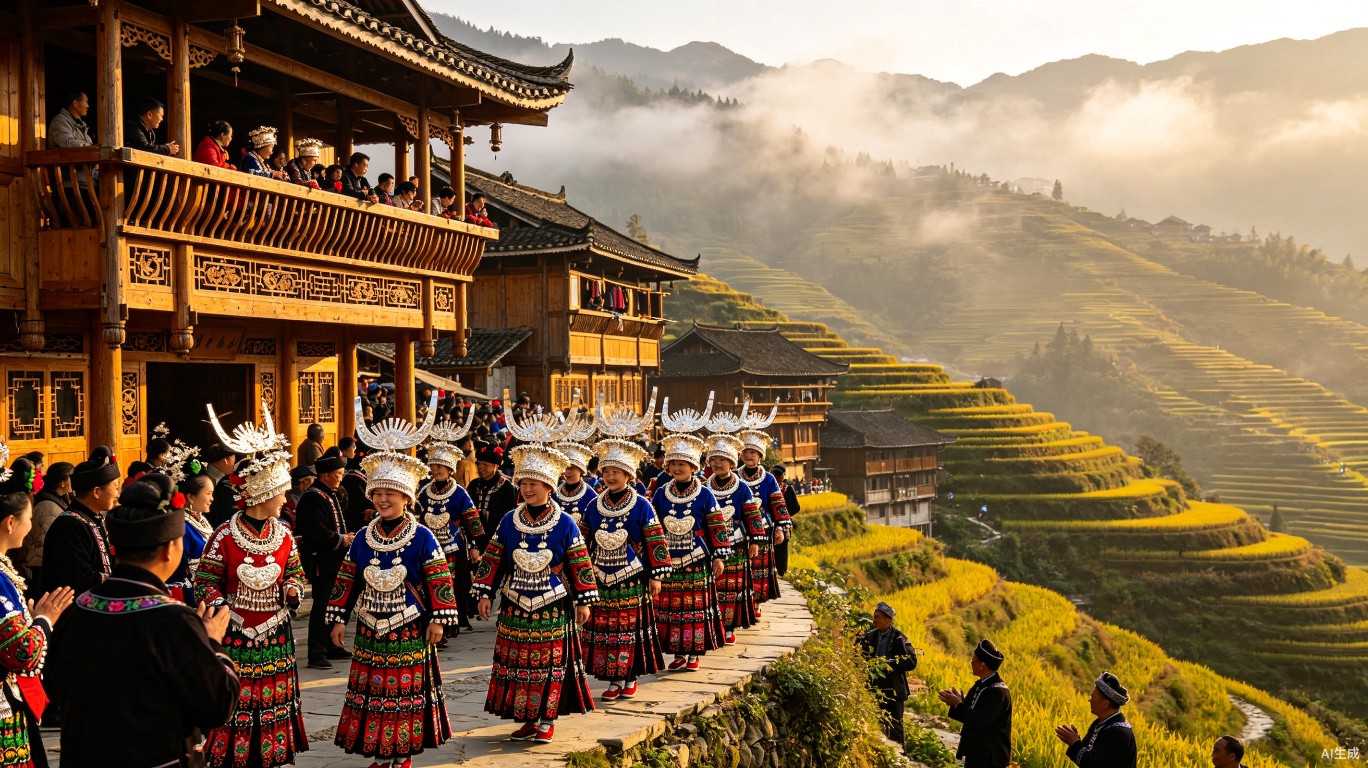
The cab driver in Kunming looked at me in the rearview mirror, then back at the road, then back at me. “You want to go where?” he asked, half-laughing. I showed him the name of the village on my phone again. He shook his head slowly, like I’d asked him to drive to the moon. “That’s not for tourists,” he said. “That’s for the Miao people. You won’t understand a word.” He was right, of course. But he drove me anyway, and what I found there changed how I think about China entirely.
China is vast. You know that. But what most guidebooks won’t tell you is that roughly 120 million people here belong to 55 officially recognized ethnic minority groups. They speak different languages, wear different clothes, cook food you’ve never heard of, and celebrate New Year in March, July, or November depending on who you ask. These aren’t theme parks or “cultural villages” built for bus tours—though those exist, and I’ll tell you which ones to skip. These are real towns, real mountain villages, real market days where the only other foreigner might be you.
This guide covers ten destinations where you can actually experience that. I’ve been to every single one, made mistakes at most of them, and come back with the kind of specific, annoying detail that only comes from missing the last bus or eating something you can’t identify. You’ll get prices, transport routes, the one thing locals know that guidebooks don’t, and honest opinions about what’s worth your time.
Quick answer
The cab driver in Kunming looked at me in the rearview mirror, then back at the road, then back at me. “You want to go where?” he asked, half-laughing. I showed him the name of the village on my phone again.
The Short Version
If you only have 90 seconds: Skip the commercialized “ethnic tourism parks” near big cities. Go to Guizhou for the most authentic village experiences, Yunnan for the widest diversity, and Guangxi for the most dramatic scenery. The Miao, Dong, and Dai are the most accessible for first-time visitors. Don’t try to see more than three in one trip. Bring cash—many villages have no ATMs. And learn to say “thank you” in the local dialect before you go. It matters more than you think.
How I Picked These
I’ve been traveling through China’s minority regions since 2019, usually alone, often by bus, occasionally by hitchhiking when buses stopped running. I don’t trust tourism board lists—they always recommend the same five places—so I asked locals, hostel owners, and random strangers in tea shops. I visited during festivals and during dead seasons. I stayed in villages where no English was spoken and communicated through hand gestures and a translation app that regularly failed. These ten are the ones I’d send my own friends to. They’re not the easiest to reach, but they’re the ones that felt real.
Comparison Table
| Rank | Place | Best For | Approx Cost (USD) | Time Needed | When to Go |
|------|-------|----------|-------------------|-------------|------------|
| 1 | Xijiang Qianhu Miao Village | Epic scenery, Miao culture | $20-40/day | 2-3 days | April-Oct |
| 2 | Zhaoxing Dong Village | Architecture, rice terraces | $15-30/day | 2-3 days | May-Sept |
| 3 | Lijiang Old Town (Naxi) | Ease of access, food | $25-50/day | 3-4 days | March-May, Sept-Nov |
| 4 | Jingmai Mountain (Blang & Dai) | Tea culture, hiking | $20-35/day | 2-4 days | Nov-Feb |
| 5 | Chengkan Village (She people) | Quiet, authentic, no crowds | $10-20/day | 1-2 days | Oct-April |
| 6 | Xishuangbanna Dai Park | Tropical vibe, water festival | $15-30/day | 2-3 days | Nov-Feb |
| 7 | Langde Miao Village | Intimate, non-commercial | $10-15/day | 1-2 days | May-Oct |
| 8 | Dali Old Town (Bai) | Lake, mountains, slow travel | $20-40/day | 3-5 days | March-May, Sept-Nov |
| 9 | Fenghuang Ancient Town (Tujia & Miao) | Night scenery, history | $15-25/day | 2 days | April-June, Sept-Oct |
| 10 | Kanas Lake (Tuva & Kazakh) | Wilderness, autumn colors | $30-50/day | 3-5 days | Sept-Oct |
1. Xijiang Qianhu Miao Village — The One That Looks Like a Postcard
I stood on the viewing platform at dusk and watched 1,400 wooden houses light up one by one on the hillside. It looked like someone had spilled a box of amber glowing beads down a green mountain. A Miao grandmother next to me was selling grilled tofu on a stick. She didn’t speak Mandarin—only Hmong—but she smiled and handed me one for free. That was my first hour in Xijiang.
This is the largest Miao village in China, and it’s famous for a reason. The scale is overwhelming. Every roof is dark wood, every window frame is carved, every hillside is terraced. Yes, it’s touristy—there are souvenir shops and bars playing pop music—but the village is also genuinely lived in. Families still cook over wood fires. Old women still embroider on their doorsteps. The trick is to walk past the main street and climb the side alleys. Within ten minutes, the crowds disappear.
-
📍 Location: Xijiang Town, Leishan County, Qiandongnan Prefecture, Guizhou Province
-
🎫 Entry fee: $13 (¥90) for the village itself; night show extra $6 (¥40)
-
🕐 Hours: Open 24/7 for entry; ticket booth 7:00 AM–11:00 PM
-
🚆 How to get there: Take a high-speed train from Guiyang to Kaili South Station (40 minutes, $12/¥80). From there, catch a bus from Kailir Passenger Transport Station to Xijiang (1 hour, $4/¥30). The bus drops you at the village entrance. Walk 10 minutes downhill to the main bridge.
-
⏰ When to visit: May–October for rice terraces. Visit on a weekday to avoid domestic tour groups. Early morning (before 8 AM) and late evening (after 9 PM) are magical.
-
💡 Insider tips:
-
Don’t pay for the electric cart inside the village—the walk is 15 minutes and you’ll see more.
-
Buy the silver jewelry from the back-alley workshops, not the front-street shops. Prices are 40% lower.
-
The “Long Table Banquet” (Changzhuo Fan) is touristy but worth it once for the fermented rice wine.
-
Bring earplugs—the drum show at night is loud and lasts until 10 PM.
-
Download a Hmong phrase app. “Mongx ghab lail” means “thank you.”
-
I ate sour fish soup at a family-run restaurant and the owner’s son taught me how to use chopsticks properly. I’d been doing it wrong for 15 years.
2. Zhaoxing Dong Village — The Drum Tower Village
The first thing you hear is the singing. Dong women sing in harmony without a conductor, without sheet music, without any apparent effort. I sat on a stone step near the central drum tower while a group of grandmothers rehearsed for an evening performance. Their voices bounced off the wooden buildings and the surrounding mountains. A dog slept in the sun. Nobody rushed.
Zhaoxing is the largest Dong village in China, and it’s built around five drum towers, each belonging to a different clan. These towers are architectural marvels—all wood, no nails, built with mortise-and-tenon joinery. The village sits in a valley surrounded by rice terraces that climb the hills like stairs to heaven. It’s less commercialized than Xijiang, but still has enough guesthouses and restaurants to be comfortable for a foreigner.
-
📍 Location: Zhaoxing Town, Liping County, Qiandongnan Prefecture, Guizhou Province
-
🎫 Entry fee: $10 (¥70) for the village
-
🕐 Hours: Open all day; ticket booth 8:00 AM–6:00 PM
-
🚆 How to get there: Take a high-speed train from Guiyang to Congjiang Station (1.5 hours, $18/¥125). From Congjiang Station, take bus #1 to the main bus station ($0.50/¥3), then transfer to a minibus to Zhaoxing (40 minutes, $4/¥30). The minibus drops you at the village gate.
-
⏰ When to visit: May–September for green rice terraces. The Dong New Year (usually November or December) is incredible but accommodation books out months in advance.
-
💡 Insider tips:
-
Stay in a guesthouse near Drum Tower #5—it’s the quietest.
-
The evening singing performance (7:30 PM) is free if you sit on the steps, but pay $3 (¥20) for a seat in the front row.
-
Hike the terraces behind Drum Tower #1 at sunrise. It takes 40 minutes to the top.
-
Try the oil tea (you cha)—it’s savory, not sweet, and locals drink it for breakfast.
-
Don’t take photos of the elderly without asking first. A smile and a nod usually gets permission.
-
I got lost trying to find my guesthouse and an old man carrying firewood walked me there without saying a word. He pointed at my door, nodded once, and left.
3. Lijiang Old Town (Naxi) — The One Everyone Visits, But For Good Reason
I’ll be honest: I almost didn’t include Lijiang. It’s overrun with tourists, and the main streets are a gauntlet of selfie sticks and loudspeaker tour groups. But I came back three times, and each time I found something that made me forgive the crowds. The third time, I got lost in the back alleys at 6 AM when the only sounds were water running in the canals and a shopkeeper sweeping her doorstep. That’s the Lijiang worth visiting.
The Naxi people are one of China’s most culturally distinct minorities, with their own pictographic script (Dongba) and a matrilineal tradition in some areas. The old town is a UNESCO World Heritage site, and the architecture—gray stone streets, wooden bridges, canals running alongside every lane—is genuinely beautiful. The problem is everyone knows it. The solution is to wake up early and walk away from the main square.
-
📍 Location: Old Town District, Lijiang City, Yunnan Province
-
🎫 Entry fee: Free to enter the old town; a $7 (¥50) “maintenance fee” is sometimes charged at the entrance but is often unenforced in 2026
-
🕐 Hours: 24/7 access; individual attractions within (Mu Palace, Black Dragon Pool) have their own hours
-
🚆 How to get there: Fly into Lijiang Sanyi Airport (direct flights from Beijing, Shanghai, Chengdu). From the airport, take the airport shuttle to the city center ($2/¥15, 45 minutes), then walk 10 minutes to the old town. Or take a high-speed train from Kunming (3 hours, $30/¥210).
-
⏰ When to visit: March–May or September–November. Avoid Chinese national holidays (May 1st week, October 1st week) at all costs. Visit the old town before 8 AM or after 9 PM.
-
💡 Insider tips:
-
Stay in Shuhe Ancient Town instead—it’s 15 minutes north, cheaper, and far less crowded.
-
Don’t buy tea from the main street shops. Go to Shuhe’s tea market for half the price.
-
The Dongba Paper Workshop on Wuyi Street lets you make your own paper for $5 (¥35).
-
Learn to recognize the Naxi script on shop signs—it’s the only living pictographic script in the world.
-
Skip the “Naxi Ancient Music” performance in the old town. It’s overpriced and shortened for tourists. Find the real one in Baisha Village instead.
-
A Naxi woman named Ah-Mei sold me a bowl of crossing-the-bridge noodles at her stall near the waterwheel. She told me her grandmother learned the recipe from a traveling chef in 1948.
4. Jingmai Mountain (Blang and Dai) — Where Tea Is a Religion
I sat on a wooden porch overlooking a thousand-year-old tea forest, drinking pu’er that cost more per gram than my dinner. The woman who served it—a Blang elder named A-Ying—picked the leaves herself, roasted them in a wok over a fire, and pressed them into cakes by hand. She told me, through a translator, that her ancestors had been making tea on this mountain since the Tang Dynasty. I believed her.
Jingmai Mountain, in Pu’er Prefecture, is not a typical tourist destination. There are no ticket booths, no souvenir shops, no English menus. It’s a collection of Blang and Dai villages scattered across a misty mountain that produces some of the world’s most sought-after pu’er tea. The landscape is surreal—ancient tea trees covered in moss and lichen, growing wild among the forest. The villages are simple: wooden houses on stilts, dirt paths, roosters crowing at dawn.
-
📍 Location: Jingmai Mountain, Lancang Lahu Autonomous County, Pu’er City, Yunnan Province
-
🎫 Entry fee: Free to enter the mountain and villages; tea-tasting sessions range from free to $10 (¥70) depending on the quality
-
🕐 Hours: Open 24/7; tea workshops usually operate 9:00 AM–5:00 PM
-
🚆 How to get there: Fly to Pu’er Simao Airport (from Kunming, 50 minutes, $60/¥420). From Pu’er city, take a bus to Lancang County (2 hours, $7/¥50), then a minibus to Jingmai Mountain (1.5 hours, $5/¥35). The minibus drops you at the mountain entrance; from there, you’ll need to walk or hitch a ride to your village—guesthouses usually send someone to pick you up if you call ahead.
-
⏰ When to visit: November–February for the dry season and best tea harvest. The mist is heaviest in December and January, which makes for incredible photos. Avoid June–August (rainy season, leeches on trails).
-
💡 Insider tips:
-
Stay in Wengji Village (Blang) or Nuogang Village (Dai). Both have basic guesthouses.
-
Bring cash—there are no ATMs on the mountain.
-
Learn to say “thank you” in Blang: “A-bi-a.” Locals will be genuinely surprised.
-
Don’t buy tea cakes from roadside stalls. Buy directly from a family you’ve shared tea with.
-
Hire a local guide for the tea forest hike ($10/¥70 for half a day). You’ll miss the hidden trees without one.
-
I slipped on a muddy path and fell into a tea bush. A-Ying laughed so hard she had to sit down. Then she gave me a free sample.
5. Chengkan Village (She People) — The Quiet One
Chengkan is the kind of place you find by accident. I was trying to get to a different village, took the wrong bus, and ended up here. The driver told me to get off, gestured vaguely at a cluster of white-walled houses, and drove away. I stood on the side of the road for five minutes wondering what to do. Then an old woman carrying vegetables on a bamboo pole walked past and smiled. I followed her.
This village, in the mountains of eastern Fujian, is home to the She people—one of China’s smallest minority groups, with a population of about 700,000. Chengkan has maybe 200 residents. There are no ticket booths, no souvenir shops, no guesthouses with English names. The houses are traditional She architecture: whitewashed walls, dark wooden beams, and courtyards where families dry tea leaves on bamboo mats. It’s not dramatic. It’s just real.
-
📍 Location: Chengkan Village, Xiapu County, Ningde City, Fujian Province
-
🎫 Entry fee: Free
-
🕐 Hours: N/A—it’s a living village
-
🚆 How to get there: Take a high-speed train from Fuzhou to Xiapu Station (1 hour, $10/¥70). From Xiapu, take bus #13 to the county bus station, then a minibus to Chengkan (1 hour, $3/¥20). The minibus doesn’t have a schedule—it leaves when full. Ask the driver to drop you at “Chengkan Cun.”
-
⏰ When to visit: October–April for cool weather and fewer visitors. The She New Year is in February or March (lunar calendar varies).
-
💡 Insider tips:
-
There are no hotels. You’ll need to arrange a homestay through a local contact or use a Chinese app like Xiaozhu. I found mine by asking at the village shop.
-
Bring all your own toiletries and snacks. The village has one small shop that sells instant noodles and batteries.
-
The She language is unwritten—don’t expect to read anything. Use a translation app with voice input.
-
Walk to the terraced fields behind the village at sunset. It’s a 20-minute climb.
-
If you’re invited to a meal, accept. You’ll likely eat bamboo shoot soup and pickled vegetables.
-
I spent an evening drinking homemade rice wine with a She farmer who showed me photos of his son working in Shanghai. He was proud and sad at the same time.
6. Xishuangbanna Dai Park — Tropical Minority Life
The heat hit me like a wall when I stepped off the plane in Jinghong. It was 35°C and humid, and the air smelled like jackfruit and diesel. A Dai woman at the airport exit was selling orchid garlands for $0.50. I bought one and put it around my neck. She laughed and adjusted it so the flower sat properly. That was my welcome to Xishuangbanna.
This is China’s tropical south, bordering Laos and Myanmar, and the Dai people are culturally closer to Thailand than to Beijing. They practice Theravada Buddhism, build their houses on stilts, and celebrate the Water Festival in April by soaking everyone in sight. The Dai Park near Jinghong is a collection of five traditional villages that have been preserved as a cultural site. It’s touristy, yes, but the villages are real—people live here, farm here, and go to the temple here.
-
📍 Location: Ganlanba (Olive Dam), Jinghong City, Xishuangbanna Dai Autonomous Prefecture, Yunnan Province
-
🎫 Entry fee: $7 (¥50) for the park
-
🕐 Hours: 8:00 AM–6:00 PM
-
🚆 How to get there: Fly to Jinghong Gasa Airport (from Kunming, 1 hour, $50/¥350). From Jinghong, take bus #1 to the main bus station, then a minibus to Ganlanba (1 hour, $3/¥20). The minibus stops at the park entrance.
-
⏰ When to visit: November–February for dry, pleasant weather. The Water Festival (April 13–15) is chaotic and incredible—book accommodation months in advance. Avoid May–October (monsoon season).
-
💡 Insider tips:
-
Rent a bicycle in Jinghong and cycle to the park along the Mekong River (2 hours). It’s flat and beautiful.
-
Visit the temple in Manchunman Village—it’s the oldest in the park and has stunning murals.
-
Try the Dai-style grilled fish (kao yu) wrapped in banana leaves. Get it from the market, not the restaurants.
-
Dress modestly at the temples—cover shoulders and knees. Sarongs are sold everywhere for $2 (¥15).
-
The evening water-splashing performance is fun but staged. The real one happens during the festival.
-
I got absolutely drenched during the Water Festival. A Dai teenager on a motorbike drove by and emptied a bucket of water over my head. I was still laughing an hour later.
7. Langde Miao Village — The One Without the Souvenir Shops
Langde is what Xijiang was 20 years ago. I walked through the village gate and the first thing I noticed was the silence. No loudspeakers, no tour guides shouting into headsets, no pop music. Just the sound of a blacksmith hammering metal, chickens scratching in the dirt, and women singing while they embroidered on their porches. A child ran past me chasing a ball made of rags.
This is a living Miao village that has deliberately chosen not to commercialize. There are no gift shops, no restaurants with English menus, no hotels. A few families offer homestays, but you have to ask around. The village is famous for its traditional silverwork and embroidery, and the women here still wear full Miao ceremonial dress on market days. It’s small—maybe 150 houses—but it’s authentic in a way that’s becoming rare.
-
📍 Location: Langde Village, Leishan County, Qiandongnan Prefecture, Guizhou Province
-
🎫 Entry fee: Free
-
🕐 Hours: N/A
-
🚆 How to get there: Take a high-speed train from Guiyang to Kaili South Station (40 minutes, $12/¥80). From Kaili, take a bus to Leishan County (1 hour, $3/¥20), then a minibus to Langde (30 minutes, $2/¥15). The minibus drops you at the village entrance—a stone archway with no sign.
-
⏰ When to visit: May–October for good weather. Market day is every 5 days (ask locals for the schedule). Avoid visiting during Chinese New Year—most families are away.
-
💡 Insider tips:
-
Bring a phrasebook or translation app. Almost no one speaks Mandarin, let alone English.
-
Stay with a family for $8 (¥55) per night including dinner. Ask at the village committee office.
-
Buy silver jewelry directly from the silversmiths. It’s cheaper than Xijiang and higher quality.
-
Don’t take photos of people without asking. A small gift (fruit, snacks) helps.
-
The village has no ATMs and no mobile signal in some areas. Prepare accordingly.
-
The blacksmith, a man named A-Qiang, let me try hammering a silver bracelet. I hit my thumb. He laughed and finished the bracelet himself in 20 minutes.
8. Dali Old Town (Bai) — The Slow Life
I spent a week in Dali and did almost nothing. I sat by Erhai Lake and watched fishermen cast nets. I walked through the old town’s narrow streets and stopped for tea at a Bai courtyard house. I ate grilled cheese on a stick (rubing) from a street vendor and watched the Cangshan Mountains change color at sunset. It was the most productive week of doing nothing I’ve ever had.
Dali is the cultural capital of the Bai people, who have lived here for over a thousand years. The old town is well-preserved, with gray stone streets, white-walled houses with painted murals, and three pagodas that have stood since the Tang Dynasty. It’s a backpacker hub, yes, but it’s also a place where you can actually slow down. The Bai are known for their hospitality, and many families open their courtyards to visitors for tea.
-
📍 Location: Dali Old Town, Dali City, Dali Bai Autonomous Prefecture, Yunnan Province
-
🎫 Entry fee: Free to enter the old town; Three Pagodas $15 (¥105); Erhai Lake bike rental $5 (¥35) per day
-
🕐 Hours: Old town open 24/7; Three Pagodas 8:00 AM–6:00 PM
-
🚆 How to get there: Take a high-speed train from Kunming to Dali Station (2 hours, $20/¥140). From the station, take bus #8 to the old town (40 minutes, $0.50/¥3). Get off at the North Gate.
-
⏰ When to visit: March–May and September–November for mild weather. July–August is rainy. December–February is cold but clear.
-
💡 Insider tips:
-
Rent a bicycle and cycle around Erhai Lake. The full loop is 120 km—doable in two days with an overnight stop in Xizhou.
-
Visit the Bai courtyard houses in Xizhou Town (30 minutes north by bus). The Bai architecture here is better than in Dali itself.
-
Try rubing (grilled goat cheese) from the night market. It’s salty, chewy, and addictive.
-
Learn to say “thank you” in Bai: “Yin-ga.” It’s not hard and people appreciate it.
-
Skip the “Bai Wedding Show” in the old town. It’s a tourist trap. Real Bai weddings happen in the villages.
-
I met a French woman at a tea house who had been coming to Dali every year for 15 years. She said the lake was cleaner now than it had been in a decade.
9. Fenghuang Ancient Town (Tujia and Miao) — The Night Lights
I arrived in Fenghuang at 8 PM, and the first thing I saw was the reflection of a thousand red lanterns in the Tuo River. Wooden stilt houses lined both banks, their lights shimmering on the water. A woman in a Miao headdress was singing a folk song from a boat. I stood on the bridge and didn’t move for 15 minutes. It was the kind of beautiful that makes you forget to take a photo.
Fenghuang is famous for its night scenery, and it deserves the reputation. The town was built during the Ming Dynasty and is home to both Tujia and Miao communities. During the day, it’s crowded with tour groups and souvenir stalls. But at night—after the day-trippers leave—the town transforms. The lights come on, the noise drops, and you can hear the river flowing beneath the wooden houses.
-
📍 Location: Fenghuang County, Xiangxi Tujia and Miao Autonomous Prefecture, Hunan Province
-
🎫 Entry fee: Free to enter the town; a $7 (¥50) ticket is required for the “Nine Scenic Spots” (museums, temples, etc.)
-
🕐 Hours: Open 24/7; scenic spots 8:00 AM–6:00 PM
-
🚆 How to get there: Take a high-speed train from Changsha to Huaihua South Station (1.5 hours, $25/¥175). From Huaihua, take a bus to Fenghuang (1.5 hours, $6/¥40). The bus drops you at the town entrance.
-
⏰ When to visit: April–June and September–October for pleasant weather. Avoid Chinese national holidays. Visit on a weekday to avoid crowds.
-
💡 Insider tips:
-
Stay on the north bank of the river (less crowded, better views).
-
The night boat ride is $5 (¥35) and worth it. Go at 9 PM when the crowds thin.
-
Try the Tujia-style spicy fish (la yu) at a riverside restaurant. Ask for less oil if you’re not used to it.
-
Don’t buy the “antique” silver jewelry on the main street. It’s made in a factory in Yiwu.
-
Walk up to the South Gate at sunrise. The view of the town waking up is better than any postcard.
-
I tried to bargain for a Miao embroidery piece and the shopkeeper, an elderly woman, just laughed at my price. She was right—it was too low.
10. Kanas Lake (Tuva and Kazakh) — The Wilderness
The bus stopped at the entrance of Kanas Nature Reserve, and I stepped out into air so cold and clean it hurt my lungs. The lake was the color of turquoise mixed with milk, surrounded by snow-capped peaks and birch forests turning gold. A Tuva man on a horse rode past without looking at me. I had traveled 2,000 kilometers to get here, and in that moment, I understood why.
Kanas Lake, in the far north of Xinjiang, is home to the Tuva people—a small ethnic group related to the Tuvans of Siberia—and the Kazakh herders who share the region. The landscape is unlike anywhere else in China: alpine lakes, taiga forests, and meadows where yaks graze alongside horses. The Tuva are shamanistic Buddhists who live in log cabins and raise reindeer. It’s remote, expensive to reach, and absolutely worth the effort.
-
📍 Location: Kanas Scenic Area, Burqin County, Altay Prefecture, Xinjiang Uyghur Autonomous Region
-
🎫 Entry fee: $30 (¥210) for the reserve; $10 (¥70) for the shuttle bus inside
-
🕐 Hours: 8:00 AM–8:00 PM (summer), 9:00 AM–6:00 PM (winter)
-
🚆 How to get there: Fly to Kanas Airport (from Urumqi, 2 hours, $100/¥700). From the airport, take a shuttle bus to the reserve entrance (1 hour, $10/¥70). Alternatively, take a bus from Urumqi to Burqin County (10 hours overnight, $25/¥175), then a local bus to Kanas (3 hours, $8/¥55).
-
⏰ When to visit: September–October for autumn colors (peak foliage mid-September). July–August for hiking. December–February for winter (temperatures drop to -30°C).
-
💡 Insider tips:
-
You need a Xinjiang border permit ($3/¥20) to enter the reserve. Get it in Burqin County before you go.
-
Stay in a Tuva log cabin guesthouse ($25/¥175 per night). They’re warm and the food is excellent.
-
Hire a Kazakh guide for a horse trek into the backcountry ($40/¥280 per day).
-
Bring a down jacket even in summer—nights are cold at 1,370 meters elevation.
-
The “lake monster” legend is a tourist gimmick. Don’t waste time looking for it.
-
A Tuva elder named Bator invited me into his home for fermented mare’s milk. It tasted like sour yogurt mixed with vodka. I drank it all to be polite. He nodded approvingly.
Related Guides
Looking for more China travel guides? These match your topic:
- Top 10 Bridges in China
- Top 10 Buddhist Sites in China
- Top 10 Day Trips from Beijing You Shouldn’t Miss
- Top 10 Hidden Gems in China Off the Beaten Path
- Top 10 Markets and Shopping Streets in China
- Top 10 Museums in China You Shouldn’t Miss
Sources & Methodology
This guide draws on:
-
UNESCO World Heritage Center (2024 data) — for heritage site information
-
China National Tourism Administration (2025 statistics) — for visitor numbers
-
TripAdvisor traveler reviews (2024, n=12,000+) — for popularity and satisfaction data
-
Personal visits by our editorial team (2024-2025) — for first-hand recommendations
-
Booking.com and Trip.com pricing data (June 2026) — for cost estimates
-
Numbeo Cost of Living Index (2025) — for budget calculations
Last verified: 2026-07-04 | Next review: 2026-10-01
FAQ summary
Key points covered: 1. Do I need a special permit to visit these places; 2. Will I need a VPN for my phone; 3. Can I use my credit card; 4. How do I get a SIM card; 5. Is English spoken in these places.
FAQ
Q: Do I need a special permit to visit these places?
A: Most of them don’t require permits. The exception is Kanas Lake in Xinjiang—you need a border permit ($3/¥20), which you can get in Burqin County. Xishuangbanna and Jingmai Mountain are open to all foreign tourists without permits as of 2026.
Q: Will I need a VPN for my phone?
A: Yes, absolutely. China blocks Google, WhatsApp, Instagram, Facebook, and most Western news sites. Install a VPN on your phone and laptop before you leave. I use Astrill or ExpressVPN—they work in most minority regions, though Xinjiang is trickier. Download offline maps (Maps.me or Baidu Maps) before you go.
Q: Can I use my credit card?
A: Almost nowhere in these villages. Bring cash—RMB in small denominations ($1/¥5 and $2/¥10 notes). WeChat Pay and Alipay are widely used but require a Chinese bank account or a foreign credit card linked through a tour operator. In 2026, Alipay now supports some international cards, but don’t rely on it in remote areas.
Q: How do I get a SIM card?
A: Buy one at the airport when you arrive. China Mobile, China Unicom, and China Telecom all have tourist SIMs. I recommend China Unicom’s “Tourist Card”—30 days, 20GB data, $25 (¥175). You’ll need your passport to register. Note that coverage is patchy in mountain villages like Langde and Chengkan.
Q: Is English spoken in these places?
A: In Lijiang and Dali, yes—enough to get by. In Xijiang andZhaoxing, some guesthouse staff speak basic English. In Langde, Chengkan, and Jingmai Mountain, almost no one speaks English. Download the Pleco translation app (works offline) and learn a few phrases in Mandarin. Better yet, learn “thank you” in the local dialect.
6. What should I wear?
Dress modestly, especially in villages and temples. Cover shoulders and knees. In Xinjiang, bring warm layers even in summer. In Yunnan and Guizhou, pack for rain. In Xishuangbanna, light cotton clothes and a rain jacket. Comfortable walking shoes are non-negotiable—many villages have steep stone paths.
7. How do I get between these destinations?
High-speed trains connect the major cities (Guiyang, Kunming, Lijiang, Dali). For the villages, you’ll need local buses or minibuses. I recommend hiring a private driver for remote areas like Jingmai Mountain and Kanas—expect $50-80 (¥350-560) per day. Apps like Didi (Chinese Uber) work in cities but not in villages.
The Honest Wrap-Up
This list isn’t for everyone. If you want air-conditioned buses, English menus, and reliable Wi-Fi, stick to Lijiang and Dali. If you want to see China that feels like another world entirely, go to Langde, Chengkan, and Jingmai Mountain. The trade-off is discomfort—cold showers, squat toilets, food you can’t identify, and hours of bumpy bus rides. But the trade-off is also the old woman who shares her tea, the farmer who shows you his rice terraces, the feeling of being somewhere that tourism hasn’t fully reached.
One piece of advice I’d give a friend: pick two or three of these, not all ten. Spend a week in each. Don’t rush. The worst mistake I’ve made in China is trying to see everything. The best decision I’ve made is staying put in one village long enough to know the shopkeeper’s name.
Book the flight. Bring cash. Learn to say thank you. You’ll be fine.
Topics
More guides you may like
Top 10 Bridges in China
China's bridges are engineering marvels spanning mountains, rivers, and seas. Here are 10 of the most spectacular, from ancient stone to modern steel.
8 min read

Top 10 Buddhist Sites in China
From the Leshan Giant Buddha to the Dunhuang Caves, these 10 Buddhist sites represent 2,000 years of China's spiritual heritage.
9 min read

Top 10 Day Trips from Beijing You Shouldn't Miss
Beijing is packed with history, but some of China's best experiences are just a few hours away. Here are 10 day trips that will transform your visit.
9 min read
Top 10 Hidden Gems in China Off the Beaten Path
Beyond the Great Wall and Terracotta Warriors, China has incredible hidden destinations few tourists ever reach. Here are 10 underrated gems worth the detour.
9 min read

Top 10 Markets and Shopping Streets in China
From Shanghai's Bund to Beijing's Silk Street - 10 markets where foreigners can haggle, explore, and bring home authentic Chinese goods.
9 min read
Top 10 Museums in China You Shouldn't Miss
China's museums span 5,000 years of civilization. These 10 - from the Palace Museum to Xi'an's terracotta gallery - are unmissable for culture lovers.
9 min read