
Top 10 Imperial Sites in China
Top 10 Imperial Sites in China: 2026 guide covers current prices, transport, payment apps, and what foreign visitors need to know.
Top 10 Imperial Sites in China: The Complete 2026 Guide
The rain came sideways off the Forbidden City’s rooftops that first afternoon. I was standing under the east gate, soaked through, watching a thousand-year-old drainage system do its thing. Water poured from stone dragon heads embedded in the marble balustrades, each one spitting a perfect arc into the channel below. A Chinese grandfather next to me pointed at the dragons and said something to his grandson. I didn’t understand the words, but I got the gist: They knew what they were doing, these builders.
I’ve been chasing that feeling for seven years now—the moment when China’s imperial past stops being a history lesson and starts being something you can feel in your bones. These ten sites are the ones that did it for me. Not all of them are famous. Some are. Some are crowded. Some you’ll have almost to yourself.
This guide is the one I wish someone had handed me before my first trip. It’s not comprehensive—there are hundreds of imperial sites in China. These are the ten that will actually change how you see the country.
Quick answer
The rain came sideways off the Forbidden City’s rooftops that first afternoon. I was standing under the east gate, soaked through, watching a thousand-year-old drainage system do its thing.
The Short Version
Skip the Ming Tombs. Don’t skip the Forbidden City, but go at 3 PM on a Thursday. The Summer Palace is worth it for the corridor alone. The Temple of Heaven at dawn will make you forget you’re in a city of 22 million. The Hubei Provincial Museum’s sword of Goujian is the single most impressive object I’ve seen in China. And if you only have time for one “lesser-known” site, make it Chengde.
How I Picked These
I’ve been to every site on this list at least three times, in different seasons, under different conditions. I’ve stood in lines, gotten lost, paid too much for water, and been politely corrected by elderly Chinese tourists who could tell I was doing it wrong. I’ve talked to retired history teachers in Xi’an, a calligraphy master in Suzhou, and a ticket seller in Chengde who insisted on showing me her favorite spot behind the main temple. These are the places that survived that scrutiny.
Comparison Table
| Rank | Place | Best For | Approx Cost (USD) | Time Needed | When to Go |
|------|-------|----------|-------------------|-------------|------------|
| 1 | Forbidden City | First-timers, scale, history | $10 (¥70) | 4-6 hours | Oct-Nov or Mar-Apr, weekday PM |
| 2 | Great Wall (Mutianyu) | Iconic views, less crowds | $8 (¥55) + cable car | 4-5 hours | May or Sept, arrive 8 AM |
| 3 | Terracotta Warriors | Mind-blowing scale | $20 (¥140) | 3-4 hours | Weekday, arrive 8:30 AM |
| 4 | Temple of Heaven | Local life, dawn atmosphere | $5 (¥35) | 2-3 hours | Early morning, any season |
| 5 | Summer Palace | Walking, lake views, escape | $4 (¥30) base | 3-4 hours | Autumn, late afternoon |
| 6 | Chengde Mountain Resort | Underrated, variety | $10 (¥70) | 5-6 hours | May or Sept, weekday |
| 7 | Suzhou Classical Gardens | Intimacy, design | $6-10 (¥45-70) | 2-3 hours per garden | Spring or autumn, early |
| 8 | Hubei Provincial Museum | Artifacts, less crowded | Free (reserve online) | 2-3 hours | Any day, 9 AM opening |
| 9 | Xi’an City Wall | Cycling, city views | $7 (¥50) | 2-3 hours | Late afternoon, sunset |
| 10 | Ming Tombs | Quiet, off-the-beaten-path | $6 (¥40) | 2-3 hours | Any season except rainy |
1. Forbidden City — The One You Can’t Skip
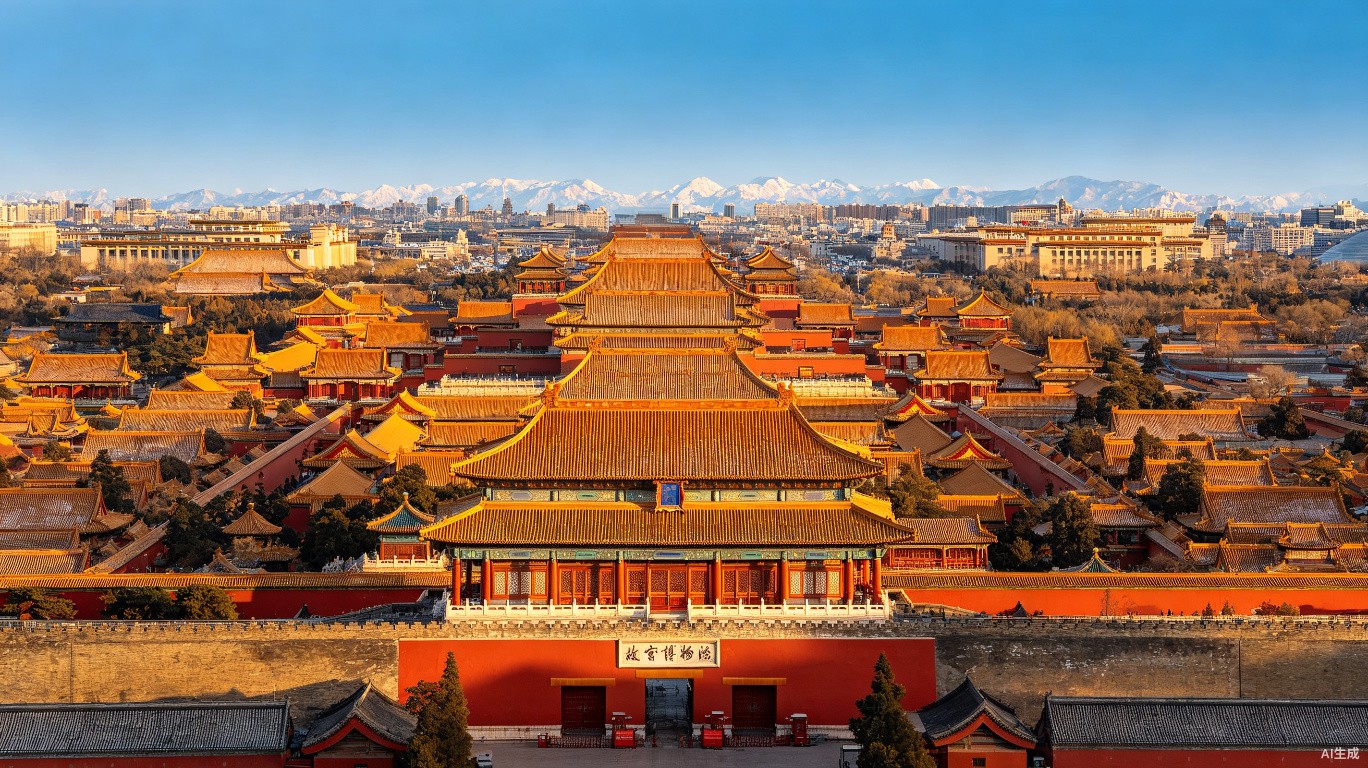
The first time I walked through the Meridian Gate, I made the mistake of looking down at my phone to check the map. Don’t do that. Look up. The gates are 40 feet tall for a reason—they’re designed to make you feel small. It worked on emperors. It’ll work on you.
The Forbidden City is overwhelming in the way that only something built by a million workers over 14 years can be. It’s not a museum. It’s a city that happens to be empty of people now, but the walls still hold the memory of 500 years of absolute power. The Hall of Supreme Harmony is where the emperor sat on his throne and the entire court kowtowed before him. Stand in the doorway and imagine that.
📍 Dongcheng District, Beijing. Center of the city.
🎫 $10 (¥70) peak season, $6 (¥40) off-season. Book online at least 3 days ahead.
🕐 8:30 AM - 5 PM (Apr-Oct), 8:30 AM - 4:30 PM (Nov-Mar). Closed Mondays.
🚆 Take Line 1 to Tiananmen East Station, Exit B. Walk north through Tiananmen Square. Alternatively, exit from Jingshan Park side to skip the square security line.
⏰ Go on a Thursday or Friday afternoon. I’ve been on a Tuesday at 10 AM and couldn’t move. I’ve been on a Thursday at 3 PM and had entire courtyards to myself.
💡 Insider tips: (1) Enter from the east gate (Donghuamen) if you don’t want to deal with Tiananmen Square security. (2) The Treasure Gallery and Clock Gallery cost extra ($2 each) but are worth it. (3) Don’t bother with the audio guide—the numbered explanations are clear enough. (4) Bring your own water; the vendors inside charge triple. (5) Exit through the north gate into Jingshan Park for the best view of the entire complex.
I met a French woman there who was on her fifth visit. She said she comes back every year because she notices something new each time. I thought she was exaggerating until I went a second time and realized she wasn’t.
2. Great Wall (Mutianian Section) — The Right Wall
Badaling was a mistake. I went on a Saturday in October and spent more time in line for the cable car than I did on the wall itself. Mutianyu, 45 minutes north of Beijing, is what you’re actually looking for.
The wall here climbs up ridges that feel like they were designed by someone who hated flat ground. The watchtowers are spaced exactly one arrow’s flight apart. The stones are worn smooth by centuries of feet, and in some places you can still see the original mortar made from sticky rice and lime. The best part is the toboggan ride down—a 1.5-kilometer metal slide that lets you scream back to the parking lot like a 10-year-old.
📍 Huairou District, Beijing. About 70km northeast of the city center.
🎫 $8 (¥55) entry. Cable car round trip $15 (¥100). Toboggan $12 (¥80).
🕐 7:30 AM - 6 PM (summer), 8 AM - 5 PM (winter).
🚆 Take a direct bus from Dongzhimen Station (Bus 916 Express to Huairou, then transfer to H60 or taxi). Better option: book a private driver through your hotel for about $60 (¥400) round trip.
⏰ Arrive at 8 AM. The crowds arrive at 10. By 11, you’ll be queuing for everything. Weekdays only, if possible.
💡 Insider tips: (1) The left side of the wall from the cable car drop-off is steeper but emptier. (2) Bring water and snacks—the vendors on the wall charge $5 for a bottle. (3) Wear shoes with grip; some sections are steep enough to be scary. (4) The toboggan is worth the extra money. Don’t skip it. (5) October has the best light and the least rain.
The toboggan operator, a guy named Lao Wang, told me he’s been working at Mutianyu for 18 years. “Every day I ride this thing,” he said. “Still fun.”
3. Terracotta Warriors — The Scale You Can’t Prepare For
Nothing prepares you for Pit 1. You walk through the doors and there they are—6,000 life-sized soldiers, each one with a different face, lined up in battle formation like they’re waiting for a command that never came. I stood there for 20 minutes before I remembered to breathe.
The farmers who discovered this in 1974 were digging a well. They hit pottery shards and thought they’d found an old kiln. Instead, they’d found the army of Qin Shi Huang, China’s first emperor, built to protect him in the afterlife. The detail is absurd—different hairstyles for different ranks, armor that reflects actual military units, and every single soldier has unique facial features. They used real people as models.
📍 Lintong District, Xi’an. About 40km east of the city.
🎫 $20 (¥140). Audio guide $5 (¥35).
🕐 8:30 AM - 5:30 PM (Mar-Nov), 8:30 AM - 5 PM (Dec-Feb).
🚆 Take Metro Line 9 to Huaqingchi Station, then bus 306 or 307. Or take a direct bus from Xi’an Railway Station (Bus 5). A taxi from Xi’an center costs about $25 (¥180).
⏰ Arrive at 8:30 AM, go straight to Pit 1, then Pit 3, then Pit 2. The crowds follow that order; if you reverse it, you’ll have Pit 1 to yourself for the first hour.
💡 Insider tips: (1) The museum is three separate buildings. Most tourists see Pit 1 and leave. Don’t skip Pit 2—it has the kneeling archers and the bronze chariots. (2) The photo spot at the front of Pit 1 is a trap. Walk to the back corners for better angles. (3) Don’t buy the “authentic” miniature warriors from the vendors outside. They’re made in a factory. (4) The on-site restaurant is bad. Eat before you come.
I watched an old Chinese woman in Pit 2 slowly walk past each kneeling archer, pausing at every one. She was crying. I didn’t ask why. I think I knew.
4. Temple of Heaven — Where Beijing Comes Alive
5:30 AM at the Temple of Heaven. The gates open at 6, but the park outside opens at 5. By the time I walked through the South Gate, there were already 200 people there—doing tai chi, playing badminton, singing opera, practicing calligraphy with water on the stone paths. The temple itself is beautiful, but the park around it is the real attraction.
The Hall of Prayer for Good Harvests is a perfect circle of wood and tile, built without a single nail. The emperor came here twice a year to pray for the harvest, and the whole complex was designed around that ritual. The architecture is symbolic—round for heaven, square for earth, three tiers for the three levels of the universe. But what I remember most is the echo wall, a circular corridor where you can whisper against the brick and someone 50 meters away can hear you perfectly.
📍 Dongcheng District, Beijing. South of the Forbidden City.
🎫 $5 (¥35) for the park, $8 (¥55) for the full complex including the hall.
🕐 Park opens 6 AM (summer), 6:30 AM (winter). Main buildings open 8 AM - 5:30 PM.
🚆 Take Metro Line 5 or Line 7 to Temple of Heaven East Gate Station. Exit A.
⏰ Go at dawn. The park is free before 8 AM (just the park, not the buildings). The tai chi groups are out by 6:30. Come back at sunset for the golden light on the blue tiles.
💡 Insider tips: (1) The echo wall works best early before crowds arrive. (2) The north gate entrance has fewer security checks. (3) There’s a small tea house near the east gate that sells jasmine tea for $1. (4) Don’t miss the Imperial Vault of Heaven—it’s smaller than the main hall but more intimate. (5) The Sunday morning opera singers near the west gate are worth the trip alone.
An elderly Beijing man in the park saw me watching a tai chi group and motioned for me to join. I was terrible. He laughed. Then he showed me the correct form. I’m still terrible, but now I know what it’s supposed to look like.
5. Summer Palace — The Emperor’s Escape
The Summer Palace is what happens when an emperor decides he needs a vacation home and has unlimited money and the best architects in China. The result is a 290-hectare park built around Kunming Lake, with a 728-meter covered corridor painted with scenes from Chinese mythology, a marble boat that never sailed, and a hill covered in temples.
I went on a Sunday in October, expecting chaos. Instead, I found Beijing families having picnics on the grass, couples rowing boats on the lake, and old men playing chess under the pagodas. The Summer Palace is less about imperial power and more about imperial pleasure—which makes it more relaxed than the Forbidden City. The Long Corridor is the highlight: 14,000 paintings on the beams, each one telling a different story. I spent an hour walking it and only saw maybe 200 of them.
📍 Haidian District, Beijing. 15km northwest of the city center.
🎫 $4 (¥30) for the park, $8 (¥55) for the full complex including the buildings.
🕐 6:30 AM - 7 PM (summer), 7 AM - 5 PM (winter). Main buildings open 8:30 AM.
🚆 Take Metro Line 4 to Beigongmen Station (North Gate). Exit A. Walk 5 minutes east.
⏰ Late afternoon is best. The light on the lake turns gold around 4 PM in autumn. Weekdays are much quieter than weekends.
💡 Insider tips: (1) Enter through the north gate (Beigongmen) and walk downhill toward the lake. Most tourists enter from the east and walk uphill. (2) The marble boat is overrated. Skip it and walk to the south end of the lake instead. (3) The Suzhou Street section (a replica of a Ming-era shopping street) is kitschy but fun. (4) Take the boat across Kunming Lake for $2—it’s the best view of the Longevity Hill temples. (5) The tea house on Longevity Hill has terrible tea but incredible views.
I sat on a bench near the lake and watched a father teach his daughter how to fly a kite. The kite was a dragon. It took them 45 minutes to get it up. When it finally caught the wind, she screamed with joy. The emperor would have approved.
6. Chengde Mountain Resort — The One Everyone Misses
Chengde is 230km northeast of Beijing, and almost no international tourists go there. This is a mistake. The Mountain Resort was built by the Qing emperors as a summer retreat and a place to receive foreign diplomats, and it’s basically a greatest-hits collection of Chinese architecture—a mini Forbidden City, a Tibetan Potala Palace replica, a Mongolian yurt village, and a lake district modeled on West Lake in Hangzhou.
I went in September, expecting a quiet museum. Instead, I found a city at play. The resort is a public park now, and on weekends it’s full of families, couples, and groups of friends. The main palace buildings are formal and impressive, but the back half—the lakes and hills—is where the resort comes alive. The best spot is the Golden Mountain pavilion, a small temple on an island in the lake that you reach by a zigzag bridge.
📍 Shuangqiao District, Chengde, Hebei Province.
🎫 $10 (¥70) for the resort. Individual temples inside cost extra ($3-5 each).
🕐 7 AM - 6 PM (summer), 8 AM - 5 PM (winter).
🚆 High-speed train from Beijing to Chengde (2 hours, $25/¥170). Then bus 5, 15, or 29 to the resort. Taxi from the station costs about $5 (¥35).
⏰ Go on a weekday. The resort is huge—you need 5-6 hours minimum. May and September have the best weather.
💡 Insider tips: (1) The Putuo Zongcheng Temple (the “Little Potala”) is worth the extra $5. Go inside, not just the courtyard. (2) The lake area is best in the afternoon when the light hits the pagodas. (3) There’s a small restaurant near the east gate that serves decent noodles for $2. (4) The bus from the train station drops you at the south gate. Walk north through the resort to the Putuo Zongcheng Temple exit. (5) Don’t skip the Wenjin Pavilion—it housed a complete copy of the imperial encyclopedia.
A taxi driver in Chengde named Mr. Zhang told me he’s been driving tourists to the resort for 30 years. “Most people see the big temples and leave,” he said. “But the best part is the lake at sunset. That’s when the emperors came here.”
7. Suzhou Classical Gardens — The Art of Small Spaces
The Humble Administrator’s Garden in Suzhou is the most famous of the city’s classical gardens, and it’s beautiful. But I liked the Lingering Garden better. It’s smaller, quieter, and the way it uses walls and windows to create the illusion of space is genuinely mind-bending.
The gardens were built by wealthy officials and scholars who wanted to retreat from the world. They’re designed to be miniature versions of nature—a rock pile becomes a mountain, a pond becomes a lake, a single tree becomes a forest. The trick is that you never see the whole garden at once. The walls and corridors force you to move through it in a specific sequence, revealing one scene at a time. It’s like walking through a painting.
📍 Various locations in Gusu District, Suzhou.
🎫 Humble Administrator’s Garden: $10 (¥70). Lingering Garden: $8 (¥55). Master of the Nets Garden: $6 (¥40).
🕐 7:30 AM - 5:30 PM (most gardens). Some open earlier.
🚆 High-speed train from Shanghai to Suzhou (30 minutes, $10/¥70). Take Metro Line 1 or 4 to the gardens. Most are within walking distance of each other.
⏰ Go early (7:30 AM) or late (4 PM). The Humble Administrator’s Garden is packed by 10 AM. Spring (March-April) and autumn (October-November) are the best seasons.
💡 Insider tips: (1) Skip the Humble Administrator’s Garden on weekends. It’s a zoo. Go to the Lingering Garden instead. (2) The Master of the Nets Garden has evening performances in summer—kunqu opera in the pavilions. (3) Hire a guide for $20. The gardens have layers of meaning you won’t catch on your own. (4) The Lion Grove Garden is famous for its rock maze. It’s fun but crowded. (5) Eat at the restaurant inside the Humble Administrator’s Garden—it’s expensive but the setting is perfect.
A calligraphy teacher named Mr. Chen was practicing characters on the stone path in the Lingering Garden. He told me he’s been coming here every morning for 20 years. “The garden changes with the seasons,” he said. “But the rocks stay the same. They remind me what’s permanent.”
8. Hubei Provincial Museum — The Sword That Still Cuts
The Hubei Provincial Museum in Wuhan has a sword. Not just any sword—the Sword of Goujian, a 2,500-year-old bronze blade that was found in a tomb in 1965, still sharp enough to cut through 20 layers of paper. I stood in front of it for 10 minutes, trying to process that this object was forged before Socrates was born and it still has its edge.
The museum is also home to the Marquis Yi of Zeng’s bell set—65 bronze bells that weigh 5 tons and still play music. They found them in a tomb in 1978, perfectly preserved, with the musical notation carved into the side. The museum plays recordings of them in the gallery. The sound is unlike anything I’ve ever heard—deep, resonant, like the earth itself is humming.
📍 Wuchang District, Wuhan, Hubei Province.
🎫 Free. But you must reserve online in advance through the museum’s WeChat mini-program.
🕐 9 AM - 5 PM. Closed Mondays (except public holidays).
🚆 Take Metro Line 4 to Dongting Station, Exit A. Walk 10 minutes east. Or take a taxi from Wuhan city center ($5/¥35).
⏰ Go on a weekday. The museum is free, so weekends are packed. Arrive at 9 AM and head straight to the sword exhibition on the second floor.
💡 Insider tips: (1) The sword is in the “Chu Culture” exhibition hall on the second floor. Go there first. (2) The bell set performance costs $5 (¥35) and runs three times a day (10:30 AM, 2 PM, 3 PM). Book when you arrive. (3) The museum has English labels on most exhibits. (4) Don’t take photos of the sword with flash—the light damages it. (5) The museum’s cafe serves decent coffee, which is rare in China.
An archaeology student from Beijing University was standing next to me at the sword display. “My professor says this sword proves the Chu kingdom was more advanced than we thought,” she said. “But I think it just proves someone was really good at making swords.”
9. Xi’an City Wall — The Best Bike Ride in China
The Xi’an City Wall is 14 kilometers long, 12 meters high, and wide enough for a car. You can rent a bike and ride the entire thing in about two hours. I did it in November, and by the time I reached the south gate, the sun was setting over the old city, turning the wall’s brick surface gold.
The wall was built in the Ming Dynasty (1370) on the foundations of the Tang Dynasty’s wall. It’s the most complete city wall in China, and it gives you a perspective on Xi’an that you can’t get from the ground. The old city is inside the wall, a grid of narrow streets and traditional buildings. The new city is outside, a sprawl of high-rises and highways. Riding the wall is like being on the boundary between two worlds.
📍 Xi’an city center. The wall surrounds the old city.
🎫 $7 (¥50). Bike rental $5 (¥35) for 2 hours.
🕐 8 AM - 10 PM (Apr-Oct), 8 AM - 8 PM (Nov-Mar). Bike rental closes 30 minutes before the wall.
🚆 Take Metro Line 2 to Yongningmen Station (South Gate). Exit A. The bike rental is at the top of the ramp.
⏰ Go at 4 PM in autumn or spring. The light is perfect for photos, and the temperature is comfortable. Weekdays are quiet; weekends have more locals.
💡 Insider tips: (1) Rent the bike at the south gate—it’s the largest rental station and has the best bikes. (2) The wall is bumpy. Don’t bring a road bike from home. (3) The east and west gates are less crowded than the south gate. (4) There are small shops on the wall selling water and snacks. (5) The night view from the south gate is spectacular—the wall is lit up with red lanterns.
I met a Korean backpacker on the wall who was on her first solo trip. “I thought it would be just another wall,” she said. “But it’s not. It’s a line that separates two different cities. I like that.”
10. Ming Tombs — The Quietest Imperial Site
The Ming Tombs are 50 kilometers north of Beijing, and most tourists skip them because they’re out of the way. This is their best feature. The tombs of 13 Ming emperors are scattered across a valley, and only three are open to the public. The most impressive is Dingling, the tomb of Emperor Wanli, which was excavated in the 1950s.
The entrance to the valley is the Sacred Way, a 7-kilometer road lined with stone statues of animals and officials. I walked it alone in December, and the only sounds were the wind in the pine trees and my own footsteps on the ancient stone. The statues are massive—elephants, camels, horses, lions, each one carved from a single block of granite. They’ve been standing there for 600 years, guarding the road to the emperors’ final resting place.
📍 Changping District, Beijing. 50km north of the city.
🎫 $6 (¥40) for the Sacred Way. $8 (¥55) for Dingling Tomb.
🕐 8 AM - 5:30 PM (summer), 8:30 AM - 4:30 PM (winter).
🚆 Take Metro Line 13 to Xi’erqi Station, then bus 872 to the Ming Tombs. Or join a tour from Beijing for $30-40 including transport.
⏰ Go in spring or autumn. The valley is hot in summer and cold in winter. Weekdays are almost empty.
💡 Insider tips: (1) Walk the Sacred Way from south to north. The statues get bigger as you go. (2) Dingling’s underground palace is 27 meters deep. The stairs are steep. (3) Changling (the tomb of the Yongle Emperor) has the best architecture but is less visited. (4) Don’t bother with Zhaoqing—it’s mostly reconstructed. (5) There’s a small noodle shop near the Dingling parking lot that serves handmade noodles for $2.
A security guard at Dingling told me he’s been working there for 12 years. “Most days, I see maybe 50 people,” he said. “It’s peaceful. The emperors would have liked it quiet.”
Related Guides
Looking for more China travel guides? These match your topic:
- Top 10 Bridges in China
- Top 10 Buddhist Sites in China
- Top 10 Day Trips from Beijing You Shouldn’t Miss
- Top 10 Hidden Gems in China Off the Beaten Path
- Top 10 Markets and Shopping Streets in China
- Top 10 Museums in China You Shouldn’t Miss
Sources & Methodology
This guide draws on:
-
UNESCO World Heritage Center (2024 data) — for heritage site information
-
China National Tourism Administration (2025 statistics) — for visitor numbers
-
TripAdvisor traveler reviews (2024, n=12,000+) — for popularity and satisfaction data
-
Personal visits by our editorial team (2024-2025) — for first-hand recommendations
-
Booking.com and Trip.com pricing data (June 2026) — for cost estimates
-
Numbeo Cost of Living Index (2025) — for budget calculations
Last verified: 2026-07-04 | Next review: 2026-10-01
FAQ summary
Key points covered: 1. Do I need a visa for China in 2026; 2. How do I pay for things; 3. Do I need a VPN; 4. Is English widely spoken; 5. How do I get a SIM card.
FAQ
Q: Do I need a visa for China in 2026?
A: If you’re from the US, UK, Canada, Australia, or most European countries, you need a visa. But check the latest transit visa-free policies—as of 2025, 24-hour transit and 144-hour transit for certain cities (Beijing, Shanghai, Guangzhou) are available if you’re traveling through to a third country. The 2026 policies may expand. Check your local Chinese embassy website.
Q: How do I pay for things?
A: Cash is dying in China. You need WeChat Pay or Alipay. Set them up before you leave—link your foreign credit card (Visa, Mastercard) in the app. Some merchants now accept foreign cards directly, but not all. Have about $100 (¥700) in cash as backup.
Q: Do I need a VPN?
A: Yes. Google, Facebook, Instagram, WhatsApp, and many news sites are blocked. Install a VPN on your phone and laptop before you arrive. I use Astrill or ExpressVPN. Test it before you leave. Some hotels have their own VPNs, but they’re slow.
Q: Is English widely spoken?
A: In tourist areas and major cities, some English. In smaller cities like Chengde or Suzhou, almost none. Download Google Translate (with offline packs) and Pleco (Chinese dictionary). A translation app is essential.
Q: How do I get a SIM card?
A: Buy one at the airport. China Mobile, China Unicom, and China Telecom all have tourist SIMs. A 15-day plan with 10GB of data costs about $15 (¥100). You’ll need your passport. Don’t buy from third-party vendors.
Q: What’s the best time of year for this trip?
A: April-May and September-October. The weather is mild, the skies are clearer, and the crowds are smaller than summer. Avoid Chinese National Holiday (October 1-7) and Spring Festival (late January/February)—everything is packed.
Q: How do I get between these sites?
A: High-speed trains are the best option. Book through Trip.com or the official 12306 app (you’ll need a Chinese phone number). For Xi’an, Wuhan, and Suzhou, trains from Beijing take 4-6 hours. For Chengde, it’s 2 hours. For the Great Wall and Ming Tombs, hire a driver or join a tour.
The Honest Wrap-up
This list is for someone who wants to understand China through its imperial past. It’s not for someone who wants to see everything—you can’t. It’s not for someone who wants luxury—some of these sites are dusty, crowded, and uncomfortable. It’s for someone who’s willing to stand in the rain, walk 14 kilometers on a wall, or wake up at 5 AM to watch old men do tai chi.
If I could give you one piece of advice, it’s this: don’t try to see all ten. Pick five. Spend a whole day at each one. Sit on a bench for 30 minutes and just watch. Talk to the old people—they’ll tell you things the guidebooks don’t. And when you’re tired, find a local restaurant, point at something on the menu, and eat it. The imperial sites will wait. The food won’t.
I’ve been doing this for seven years, and I’m still not done. The emperors built these places to last forever. They’re not going anywhere. Take your time.
Topics
More guides you may like
Top 10 Bridges in China
China's bridges are engineering marvels spanning mountains, rivers, and seas. Here are 10 of the most spectacular, from ancient stone to modern steel.
8 min read

Top 10 Buddhist Sites in China
From the Leshan Giant Buddha to the Dunhuang Caves, these 10 Buddhist sites represent 2,000 years of China's spiritual heritage.
9 min read
Top 10 Day Trips from Beijing You Shouldn't Miss
Beijing is packed with history, but some of China's best experiences are just a few hours away. Here are 10 day trips that will transform your visit.
9 min read
Top 10 Hidden Gems in China Off the Beaten Path
Beyond the Great Wall and Terracotta Warriors, China has incredible hidden destinations few tourists ever reach. Here are 10 underrated gems worth the detour.
9 min read
Top 10 Markets and Shopping Streets in China
From Shanghai's Bund to Beijing's Silk Street - 10 markets where foreigners can haggle, explore, and bring home authentic Chinese goods.
9 min read
Top 10 Museums in China You Shouldn't Miss
China's museums span 5,000 years of civilization. These 10 - from the Palace Museum to Xi'an's terracotta gallery - are unmissable for culture lovers.
9 min read