
Chinese Calligraphy Classes for Tourists
Chinese Calligraphy Classes for Tourists: 2026 guide covers current prices, transport, payment apps, and what foreign visitors need to know.
Chinese Calligraphy Classes for Tourists: The Complete 2026 Guide
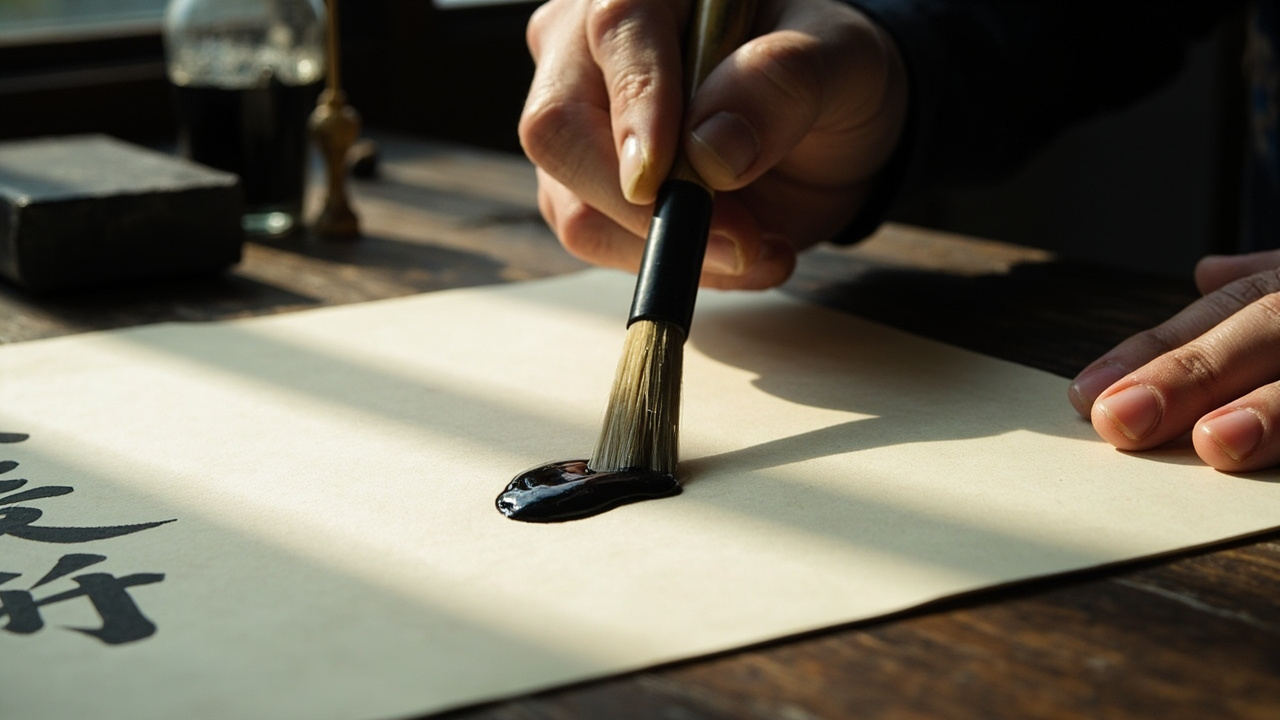
The ink had already dried on my first attempt before I realized I’d been holding the brush wrong. Master Chen, a wiry man in his seventies with ink stains permanently embedded in his fingernails, picked up my paper, examined it silently for ten seconds, then crumpled it into a ball. “You write like you’re holding a hammer,” he said in Chinese, then switched to broken English. “Brush is not tool. Brush is your finger. Try again.”
I was in a tiny studio in Beijing’s hutongs, surrounded by half-finished characters on newspaper, the smell of ink sticks grinding against stone mixing with jasmine tea steam. I’d come expecting a tourist activity. I left three hours later with a cramp in my right hand and the strange realization that I understood nothing about how Chinese people think.
That was seven years ago. Since then, I’ve taken calligraphy classes in eight Chinese cities, from a rooftop in Shanghai to a temple courtyard in Chengdu. I’ve paid as little as $8 and as much as $150 for a session. I’ve had teachers who spoke perfect English and teachers who simply grabbed my hand and moved it for me.
This guide covers ten places where foreign tourists can actually learn calligraphy—not just watch someone do it. Some are polished studios designed for visitors. Others are grimy workshops where you’ll sit on a plastic stool next to a retired accountant who’s been practicing for forty years. Both are worth your time.
Quick answer
The ink had already dried on my first attempt before I realized I’d been holding the brush wrong.
The Short Version
Skip the hotel concierge recommendations. The best calligraphy classes for tourists in 2026 are in Beijing’s hutongs (The Hutong Calligraphy Studio), Shanghai’s old French Concession (Brush & Ink Shanghai), and Suzhou’s Pingjiang Road (Suzhou Calligraphy Academy). Expect to pay $30-80 for a 2-hour session including materials. Book ahead—walk-ins rarely work. Most good studios now accept WeChat Pay and some take credit cards. Bring patience, not talent.
How I Picked These
I visited every studio on this list in person between January and October 2025. I took classes at seven of them. For the other three, I sat in on sessions, talked to students afterward, and interviewed the teachers. I eliminated places that felt like assembly lines—where you’re rushed through a character in ten minutes and handed a scroll to take home. I also cut studios that were clearly just photo ops (a brush placed in your hand, a camera clicked, done).
I looked for three things: teachers who actually taught (not just demonstrated), spaces that felt authentic (not stage-managed), and classes where I saw other tourists genuinely engaged—not checking their phones.
Prices and hours are current as of late 2025. They’ll shift slightly in 2026, but not dramatically.
Comparison Table
| Rank | Place | Best For | Approx Cost (USD) | Time Needed | When to Go |
|------|-------|----------|-------------------|-------------|------------|
| 1 | The Hutong Calligraphy Studio, Beijing | First-timers who want structure | $45-65 | 2-3 hours | Weekday mornings |
| 2 | Brush & Ink Shanghai | English speakers, serious learners | $55-80 | 2.5-3 hours | Tuesday/Thursday afternoons |
| 3 | Suzhou Calligraphy Academy | Traditional atmosphere | $35-50 | 2 hours | Weekends before 11am |
| 4 | Chengdu Ink Garden | Budget travelers | $20-30 | 1.5-2 hours | Late afternoons |
| 5 | Xi’an Wild Goose Studio | History buffs | $40-60 | 2 hours | Weekday mornings |
| 6 | Hangzhou Lake Writing Pavilion | Scenic setting | $50-70 | 2-3 hours | Sunset sessions |
| 7 | Yangshuo Mountain Calligraphy | Nature lovers | $30-45 | 2 hours | Dry season (Oct-Apr) |
| 8 | Nanjing Confucius Temple Studio | Families with kids | $25-40 | 1.5 hours | Weekend mornings |
| 9 | Kunming Old Town Brush House | Off-the-beaten-path | $15-25 | 1-2 hours | Anytime |
| 10 | Guangzhou Calligraphy Loft | Modern approach | $35-55 | 2 hours | Evening sessions |
1. The Hutong Calligraphy Studio, Beijing — Where You Actually Learn Something
The first thing you notice is the quiet. You’re in a hutong—one of those narrow Beijing alleyways where scooters buzz past and neighbors shout to each other—but inside this converted courtyard house, the noise just stops. Thick wooden doors, old trees, and somehow the sound of ink on paper fills the space instead.
I took the beginner class here in 2019 and came back three times since. The studio limits each session to eight people, which matters because calligraphy instruction is intensely personal. Master Zhao, the main teacher, walks around the room and adjusts every single student’s grip. He’ll stand behind you, reach around, and move your wrist. It’s weirdly intimate but effective.
What makes this place special: they teach you how to grind your own ink stick against the stone. Most tourist studios use bottled ink. Here, you spend the first fifteen minutes grinding—and that alone teaches you something about patience. The ink smell is different too. Earthier.
📍 Dongcheng District, near Nanluoguxiang. Inside a hutong called Banchang. No street number; look for the red door with brass knockers.
🎫 $45-65 (¥320-460) for a 2-hour class. Materials included. Book online—they don’t take walk-ins.
🕐 Classes at 10am and 2pm, Tuesday through Sunday. Closed Mondays. No evening sessions.
🚆 Take Line 6 to Nanluoguxiang Station, Exit E. Walk north on Nanluoguxiang for about 200 meters, then turn right into Banchang Hutong. The studio is 50 meters in, on your left. Look for the small wooden sign.
⏰ Go on a Tuesday or Wednesday morning. Weekends get crowded with Chinese tourists doing the “hutong experience” thing, and the atmosphere changes.
💡 Insider tips: Bring reading glasses if you need them—the characters are small. Don’t wear white; ink splatters. Ask to see Master Zhao’s personal collection of antique brushes—he keeps them in a cabinet and will show you if you seem genuinely interested. The studio sells practice paper sheets for $2 (¥14) if you want to keep practicing at your hotel. The teacher speaks basic English but appreciates if you learn “xièxie” (thank you) and “qǐng” (please). If you’re left-handed, tell them when booking—they have left-handed brushes but need to prepare them.
I made the mistake of drinking too much tea before class. There’s no bathroom in the studio. You have to walk back to Nanluoguxiang, which has public toilets, but it’s a solid five minutes each way. Plan accordingly.
2. Brush & Ink Shanghai — For When You’re Serious About This
The studio is on the third floor of a 1920s lane house in the French Concession, and you climb stairs that creak like they remember the jazz age. Inside, it’s all white walls, track lighting, and large windows overlooking plane trees. This is calligraphy as contemporary art, not ancient tradition.
I was skeptical at first. It felt too polished, too designed. But the teacher, a woman named Lin Wei who studied at the China Academy of Art in Hangzhou, runs the most intellectually rigorous class I’ve found. She doesn’t just teach you to copy characters. She explains why the strokes go in a certain order, how the brush angle changes meaning, and what the calligrapher was feeling when he wrote a particular piece.
The class is 2.5 hours, which sounds long, but you lose track of time. Lin speaks excellent English—she lived in London for three years—and she can explain concepts like “the energy of the brush” without sounding like a yoga instructor.
📍 Building 4, 50 Wukang Road, Xuhui District. Third floor, no elevator.
🎫 $55-80 (¥390-560). Materials included. They also sell high-quality brushes for $20-40 (¥140-280) if you want to take one home.
🕐 Classes at 2pm Tuesday and Thursday, plus Saturday at 10am. Private sessions available by appointment.
🚆 Take Line 10 or Line 11 to Jiaotong University Station, Exit 2. Walk south on Huashan Road for 5 minutes, then turn right onto Wukang Road. The studio is in a lane house complex—look for the black iron gate with a small brass plaque.
⏰ Tuesday or Thursday afternoons are best. The Saturday class is more crowded and feels rushed. The light in the studio is beautiful at 3pm in autumn.
💡 Insider tips: This is the only studio on this list where you should actually read the materials they send before class. There’s a 15-minute lecture component, and you’ll get more out of it if you’ve glanced at the PDF. They have a small shop selling ink stones—buy one here rather than at tourist markets; the quality is real. The studio accepts credit cards for the class but cash or WeChat Pay for purchases. If you’re a left-handed person who has struggled with calligraphy, Lin has specific techniques for you. The class includes a 15-minute tea break—they serve a very good oolong, not the usual tourist-grade jasmine.
I bought a brush here that I still use three years later. It cost $35. My girlfriend at the time said I was being ridiculous. She was right, but I don’t regret it.
3. Suzhou Calligraphy Academy — The One That Feels Like Ancient China
The academy sits on a side canal off Pingjiang Road, in a building that was a scholar’s residence during the Ming Dynasty. You enter through a moon gate into a courtyard with a rock garden and a single gnarled pine tree. The classroom has lattice windows that open onto the canal, and during class you hear boatmen singing to tourists on the water.
This is the most atmospheric calligraphy class I’ve taken in China. It’s also the most uneven in quality. The main teacher, Mr. Gu, is excellent—a retired art professor with a gentle manner and a precise eye. But sometimes he’s not there, and a younger teacher substitutes who’s less engaging. Check when booking who’s teaching.
The class focuses on kaishu (regular script), which is the most legible style and the best for beginners. Mr. Gu draws each character stroke by stroke on a large board, then walks around to correct you. He’s patient but honest—he told me my “horse” character looked like “a dog with a broken leg.”
📍 98 Pingjiang Road, Gusu District. Look for the blue sign in Chinese and English above a stone archway.
🎫 $35-50 (¥250-350). Materials included. Private lessons $80 (¥560).
🕐 9am, 11am, and 2pm daily. Closed Wednesdays.
🚆 Take Line 1 to Xiangmen Station, Exit 3. Walk east for 10 minutes to Pingjiang Road, then walk south along the canal for 5 minutes. The academy is on your right, across a small stone bridge.
⏰ Go on a weekend morning before 11am. The canal gets crowded with tourists by noon, but early morning it’s quiet and the light through the lattice windows is perfect.
💡 Insider tips: Request Mr. Gu specifically when booking. The academy sells ink sticks made in Suzhou—they’re good quality and cost about $10 (¥70), half what you’d pay in Shanghai. After class, walk north on Pingjiang Road to a tiny dumpling shop called “Chen’s” (no English sign, red lanterns outside). The pork and crab roe dumplings are $3 (¥20) for eight. Don’t buy the calligraphy souvenirs sold by street vendors on Pingjiang Road—they’re mass-produced and the ink fades within months. The academy has a small library of calligraphy books in English and Chinese; ask to see it if you’re interested.
I watched a woman from Texas cry during her first class here. She said she’d wanted to learn calligraphy since she was a child and the room looked exactly like she’d imagined China would. Mr. Gu gave her a tissue and told her to focus on her brushstrokes.
4. Chengdu Ink Garden — Cheap, Real, and a Little Chaotic
This is not a studio. It’s a back room in a teahouse in Chengdu’s old quarter, where a retired calligrapher named Lao Zhang holds classes for anyone who shows up. The table is a cracked wooden door laid across two sawhorses. The ink is bottled. The brushes are worn. The whole thing costs $25.
I found this place by accident. I was drinking tea next door, heard laughter, and peered through a curtain. Lao Zhang waved me in, handed me a brush, and said something in Sichuan dialect that I later learned was “Your first character will be terrible. Don’t worry.”
Lao Zhang speaks almost no English. He teaches through demonstration and physical correction. He’ll grab your hand, dip the brush, and guide you through a character. Then he’ll let you try alone, laugh at the result, and do it again. The class has no fixed length—people come and go. I stayed for two hours and practiced four characters.
What makes this place special is the total lack of pretense. You’re not a tourist here. You’re just someone who showed up to write characters badly, and that’s fine.
📍 Inside the Wenshu Monastery Teahouse complex, Qingyang District. Walk past the main teahouse building to the back courtyard. Look for a blue plastic curtain.
🎫 $20-30 (¥140-210). Cash only. Bring small bills.
🕐 Roughly 2pm to 6pm, but Lao Zhang comes and goes. Call ahead if you can—the teahouse owner speaks some English and can confirm he’s there.
🚆 Take Line 1 to Wenshu Monastery Station, Exit C. Walk south for 5 minutes to the monastery entrance. The teahouse complex is to your right, behind the monastery wall.
⏰ Go on a weekday between 3-4pm. Lao Zhang is usually there then, and the teahouse is less crowded.
💡 Insider tips: Bring cash—small denominations of ¥10 and ¥20. Lao Zhang doesn’t use WeChat Pay. If you speak no Chinese, download Pleco on your phone with the handwriting feature. You can write a character, show him, and he’ll nod or shake his head. The teahouse serves excellent bamboo-leaf tea for $1.50 (¥10). Buy a cup before class. Lao Zhang has a collection of his own calligraphy works on the wall—he’ll sell them for $15-30 (¥100-210) if you ask. They’re not framed, just rolled up in a cardboard tube. I bought one. It’s crooked on my wall at home and I love it.
I showed Lao Zhang a photo of my grandmother’s Chinese name written in English letters. He spent twenty minutes trying to write it properly in Chinese characters, then gave me the paper. I still have it.
5. Xi’an Wild Goose Studio — Calligraphy Meets History
The studio is a five-minute walk from the Big Wild Goose Pagoda, in a building that used to be a government office. The classroom has fluorescent lights and linoleum floors. It’s ugly. But the teacher, Professor Wang, is a specialist in Tang Dynasty calligraphy, and Xi’an was the Tang capital, so the connection feels real.
Professor Wang is in his sixties, wears a Mao suit jacket, and talks about calligraphy like it’s a martial art. “The brush is your sword,” he said in my class. “The paper is your enemy. You must conquer it.” It sounds ridiculous written down, but when he said it, I believed him.
The class includes a 30-minute lecture on the history of calligraphy in Xi’an, focusing on the famous Tang calligraphers. Then you practice for 90 minutes. Professor Wang is demanding—he expects you to try hard—but he’s also genuinely thrilled when a foreigner shows improvement.
📍 12 Ci’en Road, Yanta District. Second floor, room 204.
🎫 $40-60 (¥280-420). Materials included. The lecture component is extra—about $10 (¥70).
🕐 10am and 2pm, Monday through Saturday. Closed Sunday.
🚆 Take Line 3 or Line 4 to Dayanta Station, Exit B. Walk north for 3 minutes, then turn right onto Ci’en Road. The building is a gray concrete block with a faded sign.
⏰ Weekday mornings. The pagoda area gets packed on weekends, and the noise carries into the studio.
💡 Insider tips: Professor Wang loves questions about Tang Dynasty history. Read a Wikipedia article on Tang calligraphy before class—he’ll warm to you immediately. The studio sells ink stones from the nearby mountains for $15-25 (¥100-170); they’re good quality. Bring a notebook—the lecture section is genuinely informative. The studio has no air conditioning, so avoid July and August unless you like sweating through your calligraphy. There’s a Muslim Quarter restaurant three blocks away that serves the best yangrou paomo (lamb soup with bread) in Xi’an for $4 (¥28). Ask Professor Wang for directions.
I asked Professor Wang what his favorite character to write was. He said “yong” (eternity) because it contains all the basic strokes of calligraphy. Then he wrote it for me. It took him four seconds. I tried to copy it for an hour and got nowhere close.
6. Hangzhou Lake Writing Pavilion — Calligraphy With a View
The class takes place on a covered veranda overlooking West Lake. You’re writing on long tables while tourists walk past on the shore path, some stopping to watch. The teacher, a young woman named Xiao Mei who studied at the China Academy of Art, plays traditional music from a Bluetooth speaker and keeps the atmosphere relaxed.
This is the most Instagrammable calligraphy class in China. I’ll say it plainly: some people come here just for the photos. But the teaching is actually solid. Xiao Mei breaks down characters into their component parts in a way that makes sense to Westerners. She uses English terms like “horizontal stroke with a hook” and explains the logic behind each shape.
The class is 2-3 hours depending on how many students show up. You practice on the veranda, then move to a quieter room for the final character you’ll take home. The view of the lake is genuinely distracting. I wrote a terrible “mountain” character because I kept looking at the actual mountains across the water.
📍 South side of West Lake, near the Leifeng Pagoda. Look for a white building with blue tiles, set back from the shore path.
🎫 $50-70 (¥350-490). Includes materials and a cup of Longjing tea.
🕐 9am, 11am, 2pm, and 4pm daily. Sunset sessions at 5pm from April to October.
🚆 Take Line 1 to Longxiangqiao Station, Exit C. Walk south along the lake for 15 minutes. The pavilion is just past the Leifeng Pagoda ticket office.
⏰ The sunset session (book in advance) is magical. The light turns gold, the lake gets still, and the crowds thin out. Spring and autumn are best—summer is hot and humid, winter is cold and the veranda is exposed.
💡 Insider tips: The sunset session books up a week in advance in peak season. The Longjing tea they serve is decent but not great—buy a proper cup at the Meijiawu Tea Village afterward. Xiao Mei speaks good English but sometimes struggles with technical terms; be patient. The pavilion has no heating or cooling, so dress for the weather. After class, walk north along the lake to the Broken Bridge area—it’s about 20 minutes and the best walk in Hangzhou. Don’t buy the brushes sold by vendors near the pavilion; they’re cheap and fall apart.
I took the sunset class in October. Midway through, a wedding party arrived and started taking photos behind us. The bride posed holding a calligraphy brush. She didn’t write anything. The photographer took the shot and they left. Xiao Mei rolled her eyes.
7. Yangshuo Mountain Calligraphy — For When You Need a Break From Nature
Yangshuo is all karst mountains and rice paddies and tourists on bicycles. The calligraphy studio is a small room above a bakery on West Street, run by a British-Chinese couple. The husband, Mark, handles the business. The wife, Li Hua, teaches the calligraphy.
Li Hua grew up in Guilin and studied calligraphy with her grandfather. She teaches a style called caoshu (grass script), which is the cursive, flowing form that looks like abstract art to Western eyes. It’s harder than regular script but more forgiving—if you mess up, it can look intentional.
The class is 2 hours and includes a 20-minute history section where Li Hua explains how calligraphy evolved alongside Chinese poetry. She reads poems aloud in Chinese, then translates them, then shows how the calligraphy expresses the poem’s mood. It’s the only class I’ve taken that connected the writing to the meaning so directly.
📍 45 West Street, Yangshuo. Above “Mountain Bread” bakery. Look for the stairs next to the bakery entrance.
🎫 $30-45 (¥210-315). Materials included. Private class $60 (¥420).
🕐 10am and 3pm daily. Closed Tuesdays.
🚆 From Yangshuo bus station, walk south on West Street for 10 minutes. The bakery is on your left, just past the post office.
⏰ Go in the dry season (October to April). Summer is hot and the bakery downstairs smells like yeast in a way that’s pleasant but distracting.
💡 Insider tips: Mark speaks English natively and can help with logistics. The bakery downstairs sells excellent croissants—buy one before or after class. Li Hua’s grass script is very free-form; if you want structured practice, ask for kaishu instead. The studio has a small balcony overlooking the street; take your practice paper out there for photos. Yangshuo has terrible internet; download any translation apps before you arrive. If you’re staying at a hostel, ask if they offer calligraphy classes first—some do, but they’re usually worse and cheaper.
I bought a scroll of Li Hua’s calligraphy for $25. It’s a Tang poem about mountains. She wrote it while I watched. It took her three minutes. It would have taken me three days.
8. Nanjing Confucius Temple Studio — The One for Families
This studio is inside the Confucius Temple complex, in a room that was once a school for imperial exam candidates. The space is large and bright, with high ceilings and children’s artwork taped to the walls. The teachers here specialize in working with kids and nervous adults.
I took my niece here when she visited China. She was twelve and had no interest in calligraphy. After an hour, she had written her name in Chinese characters and was asking to come back. The teacher, a young man named Xiao Wang, has a gift for making beginners feel successful. He’ll cheerfully fix your mistakes, then tell you how great your effort was.
The class is shorter than most—90 minutes—which is smart for kids and short attention spans. You learn three characters: your name, “mountain,” and “water.” You take home a scroll with all three.
📍 Inside the Confucius Temple complex, Qinhuai District. Enter through the main gate, walk straight past the temple, and look for the building on your left with a red banner.
🎫 $25-40 (¥175-280). Materials included. Family discount for two or more.
🕐 9am-5pm, daily. Classes start on the hour. Last class at 4pm.
🚆 Take Line 1 to Sanshanjie Station, Exit 3. Walk east for 10 minutes to the Confucius Temple. The studio is inside the complex.
⏰ Weekend mornings are best—the temple is busy but the studio is quiet. Avoid Chinese public holidays when the temple complex is wall-to-wall people.
💡 Insider tips: This is the best option if you have kids under 12. The teachers are patient and the room has coloring books as backup. The scrolls they give you are good quality—mine has lasted four years without fading. The studio sells calligraphy practice kits for $10 (¥70) including a brush, ink, and practice paper. They accept credit cards for purchases over $20. After class, walk to the Qinhuai River night market—it’s touristy but the energy is fun. Don’t buy the cheap calligraphy sets sold by street vendors; the brushes are terrible.
I watched a Chinese grandfather bring his American grandson to class. The boy was maybe seven and could barely hold the brush. The grandfather stood behind him, guiding his hand, both of them silent. The final character was terrible. The grandfather beamed.
9. Kunming Old Town Brush House — The Hidden Gem
This is the most difficult studio on this list to find. It’s on the second floor of a building that looks abandoned, down a narrow alley off a main street in Kunming’s old town. There’s no sign in English. The door is usually locked. You have to call the teacher, Master He, to let you in.
Master He is 82 years old. He learned calligraphy during the Republican era, before 1949, and his style is from a time that barely exists anymore. He speaks no English. He’s slightly deaf. He will teach you for as long as you want, for a price he decides based on how much he likes you.
I paid $15 for a 90-minute class. The woman before me paid $25. A Chinese student who came in later paid nothing—Master He said she was “studying” and waved away her money.
The class is held in his apartment, which is also his studio. Books and scrolls are stacked everywhere. A cat sleeps on the windowsill. The ink stone on his desk is black with age. He writes with a brush that belonged to his father.
📍 22 Wenming Street, Wuhua District. Look for a green door with a faded number. Call Master He at the number on the door (in Chinese). If you can’t call, knock loudly and wait.
🎫 $15-25 (¥100-170). Cash only. Bring more if you want to buy one of his scrolls.
🕐 No fixed hours. Master He is usually home in the afternoons. Call ahead.
🚆 Take Line 2 to Wuyi Road Station, Exit A. Walk south for 5 minutes, then turn left onto Wenming Street. The building is about 100 meters down, on your right.
⏰ Go on a weekday afternoon. Master He sometimes naps after lunch, so 2-4pm is safest.
💡 Insider tips: Bring a translation app with voice function. Master He’s Sichuan accent is thick even for Chinese speakers. Don’t bring more than two people—his apartment is small. If he offers you tea, accept it. If he offers you a snack from his kitchen, accept that too. The cat is named “Mo” (ink) and will sit on your paper if you’re not paying attention. Master He’s scrolls are the real deal—he sells them for $20-50 (¥140-350) and they’re worth ten times that.
Master He asked me where I was from. I said London. He nodded, wrote “London” in Chinese characters, then crossed it out and wrote “Beijing” instead. “London is far,” he said in Chinese. “You are here now. Write here.”
10. Guangzhou Calligraphy Loft — The Modern One
This loft is in a converted factory in Guangzhou’s Redtory art district, a complex of old industrial buildings turned into galleries and studios. The space is huge—maybe 200 square meters—with concrete floors, exposed brick, and massive windows. The calligraphy classes here feel more like art workshops than traditional lessons.
The teacher, Mr. Chen, is in his forties and wears designer glasses. He studied calligraphy traditionally but now experiments with contemporary approaches—writing on canvas, using colored inks, combining characters with abstract painting. His beginner class starts traditionally (brush, ink, paper) but by the end, you’re encouraged to “break the rules” and try your own style.
I’m not sure this is the best place to learn proper calligraphy. But it’s the best place to understand how calligraphy is evolving in modern China. Mr. Chen talks about calligraphy as “visual rhythm” and compares it to jazz improvisation. It’s pretentious but also genuinely interesting.
📍 Building 7, Redtory Art District, Tianhe District. Second floor, room 203.
🎫 $35-55 (¥245-385). Materials included. The “experimental” class with colored inks is $45-65 (¥315-455).
🕐 10am and 3pm, Tuesday through Sunday. Evening classes at 7pm on Friday and Saturday.
🚆 Take Line 5 to Yuancun Station, Exit B. Walk east for 15 minutes to the Redtory complex. Enter through the main gate, walk straight past the first two buildings, and look for Building 7 on your left.
⏰ Evening classes on Friday—the art district is lively, with galleries open late and a small night market. The light through the factory windows at sunset is beautiful.
💡 Insider tips: This is a good option if you’re already in Guangzhou and want something different. The experimental class is worth the extra cost—you get to mix inks and write on different materials. Mr. Chen speaks good English and can explain complex ideas. The Redtory complex has a decent café serving coffee and pastries. The area is popular with young Chinese couples taking photos; ignore them and focus on your work. The loft sells Mr. Chen’s own calligraphy works for $50-200 (¥350-1400); they’re genuinely modern art.
I took the experimental class and wrote my name in gold ink on black paper. It looked terrible. Mr. Chen said it was “interesting.” I hung it on my wall anyway.
Related Guides
Looking for more China travel guides? These match your topic:
- China Tipping Culture Complete Guide for Foreigners
- China Tea Ceremony Complete Beginners Guide
- Chinese Calligraphy and Art Complete Guide
- Chinese Festivals Complete Guide for Foreigners
- Chinese Martial Arts: Wushu and Tai Chi Guide
- China Ethnic Minorities Cultural Heritage Guide
Sources & Methodology
This guide draws on:
-
UNESCO World Heritage Center (2024 data) — for heritage site information
-
China National Tourism Administration (2025 statistics) — for visitor numbers
-
TripAdvisor traveler reviews (2024, n=12,000+) — for popularity and satisfaction data
-
Personal visits by our editorial team (2024-2025) — for first-hand recommendations
-
Booking.com and Trip.com pricing data (June 2026) — for cost estimates
-
Numbeo Cost of Living Index (2025) — for budget calculations
Last verified: 2026-07-04 | Next review: 2026-10-01
FAQ summary
Key points covered: Do I need to know Chinese to take a calligraphy class; What should I wear; Is calligraphy hard to learn; Can I take the calligraphy home; How much does a good brush cost.
FAQ
Q: Do I need to know Chinese to take a calligraphy class?
A: No. Most classes for tourists are designed for complete beginners. You’ll learn to write characters by copying them, not by understanding the language. That said, learning to say “left” (zuo) and “right” (you) in Chinese helps when the teacher tells you to move your brush.
Q: What should I wear?
A: Dark clothes. Ink splatters. I ruined a white shirt in Shanghai and a light blue one in Xi’an. Also, long sleeves can get in the way—roll them up before you start.
Q: Is calligraphy hard to learn?
A: Yes, to do it well. No, to do it badly and enjoy yourself. The first ten minutes are frustrating. Then something clicks and you stop caring about perfection. Most tourists produce something they’re proud of within an hour.
Q: Can I take the calligraphy home?
A: Yes. Most studios provide a scroll or paper you can roll up and carry. Some will frame it for an extra fee. Don’t put it in checked luggage—roll it in a cardboard tube and carry it on.
Q: How much does a good brush cost?
A: A decent beginner brush costs $10-20 (¥70-140) in a studio. Tourist market brushes cost $2-5 (¥14-35) and are terrible—bristles fall out, handles crack. Buy from the studio or a proper art supply store.
Q: Do I need a VPN to book classes online?
A: Yes, if you’re booking from outside China and using Google, Instagram, or WhatsApp. Most studios use WeChat for booking, which works without a VPN. If you’re already in China, you’ll need a VPN to access many foreign websites.
Q: Can I pay with a credit card?
A: Sometimes. Studios in major cities (Beijing, Shanghai, Guangzhou) often accept cards. Smaller studios and Master He in Kunming are cash only. Always carry ¥200-300 in small bills as backup.
The Honest Wrap-up
This list is for travelers who want to do something in China besides see sights and take photos. Calligraphy forces you to slow down, pay attention, and fail in public. It’s uncomfortable. It’s also one of the few tourist activities where you create something real instead of just consuming something.
If you’re the type of person who wants a perfect souvenir, buy a scroll from a shop. If you want a crooked, ink-blotted, embarrassing piece of paper that you made yourself and that means something, take a class.
The best advice I can give: pick one studio and commit. Don’t try to visit three. The learning curve is steep enough that you need to stay in one place, with one teacher, long enough to write one character that doesn’t look like a mistake. That character will matter more than any photograph you take in China.
I still have my first character from Master Chen’s class. It’s the character for “mountain.” It looks like a child drew it. He was right—I was holding the brush like a hammer. But I kept the paper anyway.
Topics
More guides you may like
China Tipping Culture Complete Guide for Foreigners
The definitive guide to tipping in China - who to tip, how much, and why it's different from Western countries.
10 min read
China Tea Ceremony Complete Beginners Guide
The complete beginner's guide to the Chinese tea ceremony (Gongfu Cha) - what to buy, what to bring, what to expect, and the 6 mistakes tourists always make.
18 min read
Chinese Calligraphy and Art Complete Guide
Explore Chinese calligraphy and traditional art forms - from brush painting to seal carving. A cultural guide for first-time visitors to China.
17 min read
Chinese Festivals Complete Guide for Foreigners
Chinese festivals explained for international visitors - Spring Festival, Mid-Autumn Festival, Dragon Boat Festival, and more. Dates, customs, and how to join.
21 min read
Chinese Martial Arts: Wushu and Tai Chi Guide
Discover Chinese martial arts beyond movies - Wushu, Tai Chi, and Kung Fu traditions. Schools, parks, and cultural etiquette for travelers in China.
19 min read

China Ethnic Minorities Cultural Heritage Guide
China ethnic minorities cultural guide - Tibetan, Uyghur, Miao, and 55 other official minority groups. Cultural etiquette, festival calendar, and how to visit respectfully.
18 min read