
Top 10 Things to Do in Beijing
Top 10 Things to Do in Beijing: 2026 guide covers current prices, transport, payment apps, and what foreign visitors need to know.
The cab driver laughed at me when I asked to be dropped off at the front gate of the Forbidden City. “Front gate?” he said, half-turning in his seat, one hand still on the wheel as we idled in a snarl of scooters and buses near Tiananmen. “No front gate. You walk. Everybody walk.” He was right, of course. The meridian gate, that colossal red-and-gold spine of imperial power, is approached by a long, deliberate march across a cobblestone square that feels less like a tourist entrance and more like a final judgment. I remember the wind that day, carrying the smell of roasted chestnuts and diesel exhaust, and the sheer weight of walking toward something that had stood there for six centuries, waiting for me to shut up and pay attention.
Beijing is not a polite city. It doesn’t ease you in. It hits you with scale—the Forbidden City’s 980 buildings, the Great Wall’s endless gray dragon sleeping on mountain ridges, the sheer number of people moving through subway corridors that feel like ant tunnels. I’ve lived here seven years, and I still get lost, still pay too much for tea sometimes, still have moments where I stand in a hutong alley and think, I have no idea what century this is. But that’s the point. This list isn’t a checklist. It’s a set of doors. Walk through any of them, and the city will do the rest.
Here’s what you’ll get: ten places I’ve visited dozens of times, with real directions, real costs, and the kind of advice you only get from someone who’s made the mistakes for you. No fluff. No “embrace the spirit of exploration.” Just what to do, when to do it, and how to survive the crowds.
Quick answer
The cab driver laughed at me when I asked to be dropped off at the front gate of the Forbidden City.
The Short Version
If you have 90 seconds: hit the Great Wall at Mutianyu (go weekday, arrive by 8 AM), walk the Forbidden City’s central axis (skip the side halls unless you have three hours), eat Peking duck at Da Dong or Sijimin (not Quanjude), get lost in a hutong around Shichahai, and end your day at Temple of Heaven’s park at dusk when the locals are practicing tai chi and dancing. Skip the Summer Palace if you’re short on time. Don’t skip the Lama Temple. And for god’s sake, download Alipay before you land.
How I Picked These
I didn’t google “top attractions Beijing” and copy-paste. I walked. I rode the subway to the wrong exit and backtracked. I sat in parks and watched. I talked to a retired teacher named Mr. Chen who feeds stray cats near the Drum Tower, a hostel receptionist from Xi’an who told me which hutong bars are actually worth the overpriced cocktails, and a taxi driver named Liu who spent 20 minutes explaining why the Summer Palace is “for old people with nothing better to do.” (I disagree with Liu, but I respect his conviction.) Every entry here is a place I’ve been to at least five times, in different seasons, at different hours. The prices are approximate for 2026. The opinions are mine.
Comparison Table
| Rank | Place | Best For | Approx Cost (USD) | Time Needed | When to Go |
|------|-------|----------|-------------------|-------------|------------|
| 1 | Great Wall (Mutianyu) | Epic views, hiking, fewer crowds | $10–15 entry + $15 cable car ($70–210 CNY total) | 4–6 hours | Weekday, spring or autumn, arrive by 8 AM |
| 2 | Forbidden City | Imperial history, architecture, scale | $10 ($70 CNY) | 3–5 hours | Weekday, winter (fewer crowds), or spring |
| 3 | Temple of Heaven | Park life, architecture, local culture | $5 ($35 CNY) for park, $8 ($56 CNY) for main hall | 2–3 hours | Early morning or late afternoon, any season |
| 4 | Summer Palace | Lakeside walks, royal gardens, escape from city | $5 ($35 CNY) for park, $10 ($70 CNY) full access | 3–4 hours | Spring or autumn, weekday |
| 5 | Hutongs (Shichahai area) | Walking, street food, photography, local life | Free (food/drinks extra) | 2–4 hours | Late afternoon to evening |
| 6 | Lama Temple | Tibetan Buddhist temple, peaceful, incense | $4 ($28 CNY) | 1–2 hours | Morning, weekday |
| 7 | National Museum of China | Chinese history, artifacts, free entry | Free (special exhibits $5–10) | 2–3 hours | Weekday, morning |
| 8 | 798 Art District | Contemporary art, galleries, cafes, photo spots | Free (galleries $3–8) | 2–4 hours | Afternoon, weekday (quieter) |
| 9 | Jingshan Park | City views, sunset, photography | $1 ($7 CNY) | 30–60 minutes | Late afternoon for sunset |
| 10 | Beijing Zoo & Panda House | Pandas, family-friendly | $3 ($20 CNY) + $2 for panda house ($14 CNY) | 2–3 hours | Morning, weekday |
1. Great Wall at Mutianyu — The One Where You Actually Enjoy It
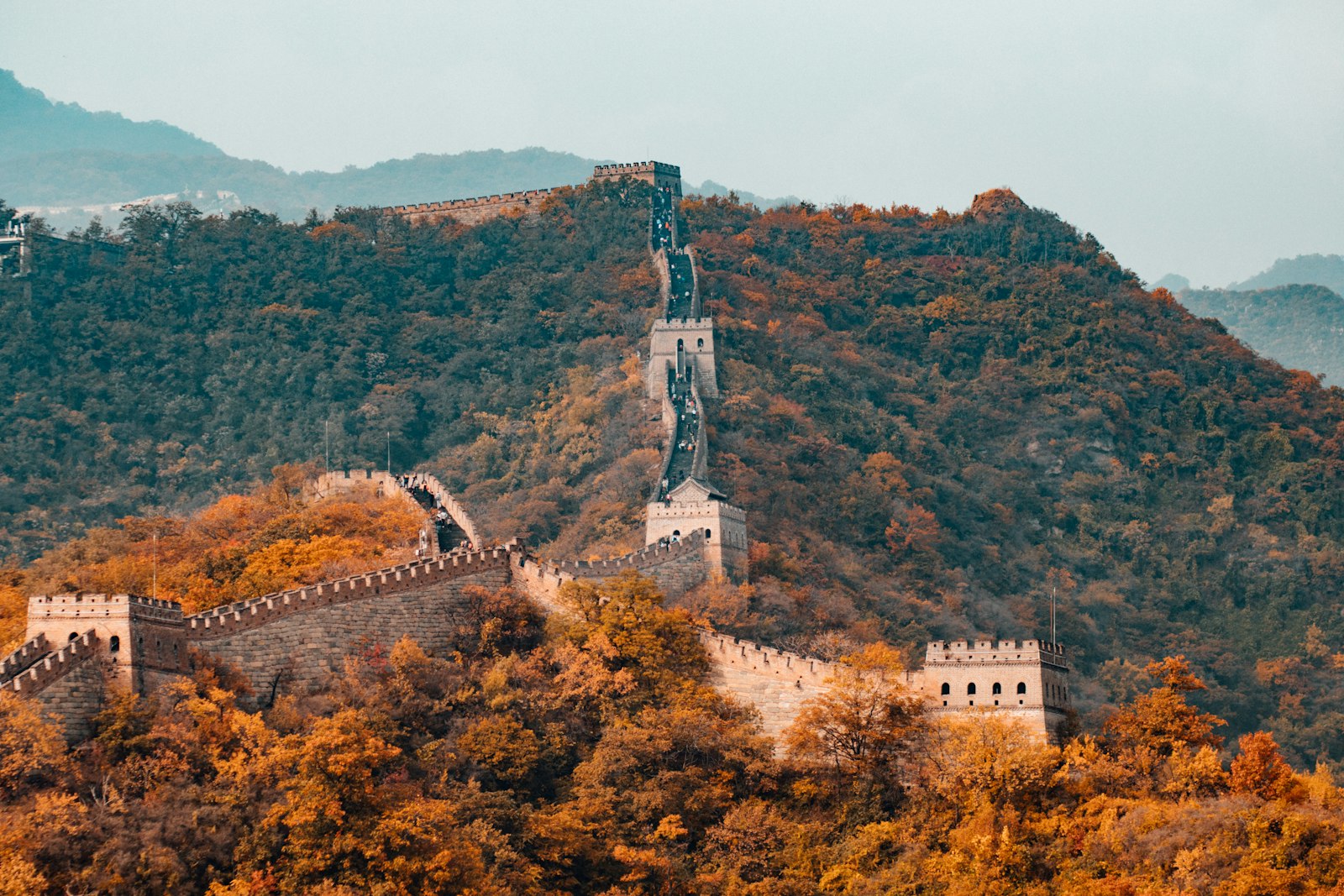
I’ve been to the Great Wall seven times. The first was Badaling, and I spent most of it shuffling behind a tour group from Guangdong, breathing someone’s garlic breath while a loudspeaker explained the Ming Dynasty. The second was Mutianyu, and I remember standing on a watchtower at 9 AM with maybe twenty other people, watching fog roll through the valleys like slow milk. I sat on a stone step and ate a hard-boiled egg I’d bought from a woman at the base. It was the best egg of my life.
Mutianyu is the right choice for first-timers. It’s less crowded than Badaling, better restored than Jinshanling, and the cable car saves your knees for the actual walking. The wall here stretches 2.3 kilometers with 22 watchtowers, and the gradient is manageable—steep in places, but not punishing. You can go up by cable car, walk west along the wall for about an hour, then take a toboggan slide down. Yes, a toboggan. It’s ridiculous and wonderful.
-
📍 Location: Huairou District, about 70 km north of central Beijing
-
🎫 Entry fee: $6 ($42 CNY) for the wall, $15 ($100 CNY) round-trip cable car, $12 ($80 CNY) for the toboggan slide
-
🕐 Hours: 7:30 AM–5:30 PM (summer), 8 AM–5 PM (winter)
-
🚆 How to get there: Take subway Line 2 to Dongzhimen Station, Exit B. Then bus 916 Express to Huairou (1 hour, $1.50). From there, take a local minibus or taxi (30 minutes, $8). Or book a private driver through your hotel ($40–60 round trip).
-
⏰ When to visit: Weekday, spring (April–May) or autumn (September–October). Arrive by 8 AM to beat the tour buses.
-
💡 Insider tips:
-
Bring cash. The vendors at the base don’t always take cards, and phone signal can be spotty.
-
Wear hiking shoes, not sneakers. The stone steps are uneven and worn smooth by millions of feet.
-
The toilet at the base is fine. The toilets on the wall are… an adventure. Go before you go up.
-
Buy water at the base, not on the wall (it’s twice the price up there).
-
If you’re fit, skip the cable car and hike up from the village for a more authentic experience.
-
-
One mistake I made: I went on a Saturday in October. The cable car line was 45 minutes. Don’t do that.
2. Forbidden City — The Big One, But Do It Right
The first time I walked through the Meridian Gate, I felt like I was entering a dream I’d had as a kid. The scale is disorienting. You walk through one courtyard, then another, then another, each one slightly smaller, each one leading to a hall with a name like “Hall of Supreme Harmony” that sounds like it was written by a fantasy novelist with a thesaurus. The buildings are identical in design but different in purpose—throne rooms, living quarters, libraries, temples. It’s a city within a city, and it takes hours to even scratch the surface.
Most tourists make two mistakes: they go in the middle of the day, and they try to see everything. Don’t. Go early (8:30 AM opening), walk the central axis from south to north (that’s the main sequence of halls), then peel off to the western palaces (Empress Dowager Cixi’s residence, the Hall of Mental Cultivation). Skip the eastern palaces unless you have a specific interest in ceramics. The crowds thin out after 3 PM, so if you can, stay late.
-
📍 Location: Dongcheng District, north of Tiananmen Square
-
🎫 Entry fee: $10 ($70 CNY) for peak season (April–October), $6 ($40 CNY) for off-peak. Book online at least 7 days in advance.
-
🕐 Hours: 8:30 AM–5 PM (summer, last entry 4 PM), 8:30 AM–4:30 PM (winter, last entry 3:30 PM). Closed Mondays.
-
🚆 How to get there: Take subway Line 1 to Tiananmen East or Tiananmen West. Exit A or B. Walk north through the security checkpoint (bring your passport).
-
⏰ When to visit: Weekday, winter (December–February) for fewer crowds, or spring for pleasant weather. Avoid Chinese holidays (October 1–7, May 1–5).
-
💡 Insider tips:
-
Bring your passport. You need it for the ticket and the security check.
-
Audio guides are $3 ($20 CNY) and worth every yuan. They’re available in English.
-
The toilets are located in the side courtyards, not on the central axis. Plan accordingly.
-
There’s a Starbucks inside. I’m not proud of it, but sometimes you need a latte.
-
The exit leads to Jingshan Park (see entry #9). Go there for the view.
-
-
A specific person: I met a retired history teacher named Mr. Wang near the Hall of Preserving Harmony. He pointed at a bronze lion and said, “That lion has seen more emperors than I have seen tourists. And I have seen many tourists.”
3. Temple of Heaven — Where the City Breathes
I go to Temple of Heaven not for the temple itself (though it’s beautiful) but for the park. On a Sunday morning, the place is alive. Old men with calligraphy brushes dipped in water write poetry on the stone paths. Women in matching tracksuits practice sword dancing. A group of retirees sing folk songs from the 1950s under a pagoda. A man balances a wooden bird on a stick and swings it in circles, the bird whistling as it spins. It’s the most Beijing thing you’ll ever see.
The temple itself—the Hall of Prayer for Good Harvests—is a triple-roofed masterpiece of Ming architecture, built without a single nail. The emperor used to come here twice a year to pray for a good harvest, which makes it one of the few places in Beijing where religion and politics were explicitly the same thing. The acoustics of the Echo Wall are real, though you’ll have to compete with about fifty other tourists trying it at the same time.
-
📍 Location: Dongcheng District, southwest of the Forbidden City
-
🎫 Entry fee: $5 ($35 CNY) for the park, $8 ($56 CNY) for the main hall complex
-
🕐 Hours: 6 AM–9 PM (park), 8 AM–5:30 PM (hall complex). The park opens earlier, so you can walk around before the halls open.
-
🚆 How to get there: Take subway Line 5 to Tiantandongmen Station, Exit A. Walk south 5 minutes.
-
⏰ When to visit: Early morning (6–8 AM) for park life, or late afternoon (4–5 PM) for golden hour light on the hall.
-
💡 Insider tips:
-
The park is free if you enter before 8 AM (only the hall complex requires a ticket). Go early, walk the park, then buy your hall ticket.
-
The Echo Wall is north of the Hall of Prayer. Cup your ear to the wall and whisper—the sound carries.
-
The “Heavenly Kitchen” near the south gate has decent dumplings for $2 ($14 CNY).
-
Bring a small folding stool if you want to sit and watch the locals. You’ll stay longer than you expect.
-
-
A specific food I tried: A vendor near the east gate sold tanghulu—candied hawthorn berries on a stick. The sugar cracked when I bit into it. Sweet and sour and perfect.
4. Summer Palace — The Emperor’s Weekend House
Liu the taxi driver was wrong. The Summer Palace is not for old people. It’s for anyone who needs a break from the city’s relentless energy. I went on a Tuesday in May, and the lake was glassy, the willow trees were trailing their branches in the water, and a group of university students were practicing erhu (a two-stringed fiddle) under a pavilion. I sat on a bench for an hour and watched a dragon boat drift across Kunming Lake. It was the most peaceful hour I’ve had in Beijing.
The palace was built in the 18th century as a summer retreat for the Qing emperors, and it shows. The Long Corridor (a covered walkway painted with 14,000 scenes from Chinese mythology) stretches 728 meters. The marble boat at the north end is a strange, slightly gaudy addition from the Empress Dowager Cixi, but it makes for a good photo. The hill behind the lake (Longevity Hill) offers a decent view of the city skyline.
-
📍 Location: Haidian District, about 15 km northwest of central Beijing
-
🎫 Entry fee: $5 ($35 CNY) for the park, $10 ($70 CNY) for full access (includes the hill and the marble boat)
-
🕐 Hours: 6:30 AM–6 PM (summer), 7 AM–5 PM (winter). The park opens earlier than the buildings.
-
🚆 How to get there: Take subway Line 4 to Beigongmen Station, Exit D. Walk south 10 minutes to the east gate.
-
⏰ When to visit: Spring (April–May) or autumn (September–October), weekday. Avoid weekends and holidays.
-
💡 Insider tips:
-
Enter through the east gate, walk the Long Corridor to the north, then take the ferry ($2, 10 minutes) across the lake to the south gate. It saves walking.
-
The Suzhou Street area (a replica of a Ming-era shopping street) is tacky but fun for a quick look.
-
There’s a small tea house near the marble boat. The jasmine tea is overpriced ($4), but the view is worth it.
-
Bring mosquito repellent in summer. The lake attracts them.
-
-
A specific mistake I made: I went on a Sunday in July. The queue for the ferry was 40 minutes. I walked instead. It took an hour. My feet hurt for days.
5. Hutongs — The City’s Real Heart
The hutongs (narrow alleys formed by traditional courtyard houses) are where Beijing lives. Not the tourist version, but the real one: old men playing chess on a folding table, laundry hanging from bamboo poles, a bicycle repair shop that’s been in the same spot for 40 years, the smell of frying oil and garlic from an open kitchen window. I got lost in the hutongs around Shichahai for three hours one afternoon. I found a tiny temple dedicated to a local god, a woman selling homemade jianbing (savory crepes) from a cart, and a cat that followed me for two blocks before deciding I wasn’t worth the effort.
The best area for walking is the network between the Drum Tower and Shichahai Lake. Start at the Drum Tower, walk south through Nanluoguxiang (the most famous, also the most touristy), then peel off into the side alleys—Dongmianhua Hutong, Mao’er Hutong, Banchang Hutong. These are quieter, with fewer souvenir shops and more actual life.
-
📍 Location: Dongcheng District, around the Drum Tower and Shichahai Lake
-
🎫 Entry fee: Free
-
🕐 Hours: Anytime, but best in late afternoon (4–7 PM) when the light is good and the locals are out
-
🚆 How to get there: Take subway Line 6 to Nanluoguxiang Station, Exit E. Walk north 5 minutes. Or Line 2 to Guloudajie Station, Exit G, walk south 10 minutes.
-
⏰ When to visit: Late afternoon to evening. Weekday for fewer crowds.
-
💡 Insider tips:
-
Nanluoguxiang is fun for an hour, but the real magic is in the side alleys. Go east or west of the main street.
-
The Drum Tower has a drum performance at 4 PM. It’s loud. Bring earplugs if you’re sensitive.
-
The hutong toilets are public and… basic. Use the ones in cafes or hotels.
-
If you see a hutong with a red door and stone lions, it’s probably a private home. Don’t peek. (Actually, peek. But be discreet.)
-
-
A specific person: A woman named Auntie Zhang let me into her courtyard house near Shichahai. She showed me her persimmon tree and said, “This tree is older than my husband. And that’s saying something.”
6. Lama Temple — The Quiet One
The Lama Temple is a pocket of calm in a city that doesn’t do calm. I went on a Tuesday morning in November, and the incense smoke was so thick it blurred the edges of the buildings. The air smelled of sandalwood and old wood. Monks in maroon robes walked through the courtyards, their footsteps soft on the stone. I sat on a bench near the main hall and watched a young woman light three sticks of incense, bow three times, and whisper something to a statue of the Buddha. I don’t know what she said. I hope it worked.
This is the largest and most important Tibetan Buddhist temple outside Tibet. The main hall houses a 26-meter-tall statue of the Maitreya Buddha carved from a single sandalwood tree. It’s overwhelming. The rest of the complex is a series of halls, each dedicated to a different Buddha or bodhisattva, connected by covered walkways. The architecture is Qing dynasty, with yellow glazed tiles that were reserved for imperial buildings.
-
📍 Location: Dongcheng District, northeast of the Forbidden City
-
🎫 Entry fee: $4 ($28 CNY)
-
🕐 Hours: 9 AM–4:30 PM (summer), 9 AM–4 PM (winter). Last entry 30 minutes before closing.
-
🚆 How to get there: Take subway Line 2 or Line 5 to Yonghegong Station, Exit C. The temple entrance is right there.
-
⏰ When to visit: Morning, weekday. Avoid the first and fifteenth of the lunar month (more worshippers).
-
💡 Insider tips:
-
You get three free sticks of incense with your ticket. Light them at the first hall, not the main one.
-
Dress modestly. Shoulders and knees covered. The monks won’t say anything, but you’ll feel awkward.
-
Photography is allowed in the courtyards but not inside the halls. Respect the signs.
-
The gift shop sells decent prayer flags and incense. Prices are reasonable.
-
-
A specific observation: I watched a monk use his phone to take a photo of a tourist taking a photo of him. The circle was complete.
7. National Museum of China — Free and Fascinating
The National Museum is free, which means it’s also crowded, but it’s worth the shuffle. I went on a rainy Wednesday in June, and I spent two hours in the “Ancient China” exhibition on the ground floor. The artifacts are staggering: a 2,000-year-old jade burial suit, bronze vessels from the Shang dynasty, a terracotta warrior (one of the originals, not a replica). The museum tells the story of China from the Stone Age to the Qing dynasty, and it does it well, with English labels on most exhibits.
The building itself is massive—one of the largest museums in the world by floor area. The main hall has a ceiling painted with a massive red star and a mural of the Great Wall. It’s a bit Soviet, a bit glorious. The upper floors have rotating exhibitions on modern Chinese art, silk, and porcelain.
-
📍 Location: Dongcheng District, east of Tiananmen Square
-
🎫 Entry fee: Free (special exhibitions $5–10)
-
🕐 Hours: 9 AM–5 PM, last entry 4 PM. Closed Mondays.
-
🚆 How to get there: Take subway Line 1 to Tiananmen East Station, Exit C. Walk east 5 minutes.
-
⏰ When to visit: Weekday, morning. Arrive by 9 AM to avoid the queue.
-
💡 Insider tips:
-
Book your free ticket online at least 2 days in advance. Walk-ins are sometimes accepted but not guaranteed.
-
Bring your passport. You need it for entry.
-
The “Ancient China” exhibition is the highlight. Give it at least 90 minutes.
-
The cafe on the second floor is overpriced ($5 for a sandwich). Eat before you go.
-
-
A specific mistake I made: I tried to visit on a Monday. It was closed. I stood outside and felt very stupid.
8. 798 Art District — The Hipster Heart of Beijing
I have mixed feelings about 798. On one hand, it’s a former factory complex turned into a contemporary art zone, with galleries, cafes, and murals that make for great Instagram photos. On the other hand, it’s become so popular that the galleries now compete with souvenir shops selling “Chairman Mao” keychains and overpriced lattes. But on a weekday afternoon, when the crowds thin out, it’s still one of the most interesting places in Beijing.
The galleries range from excellent (Ullens Center for Contemporary Art, Pace Gallery) to pretentious (a room with a single lightbulb and a sign that says “The Sound of Silence”). The street art is the real draw—murals by Chinese and international artists cover the walls of the factory buildings. I spent an hour photographing a giant mural of a panda wearing a gas mask. It was both funny and sad.
-
📍 Location: Chaoyang District, northeast of central Beijing
-
🎫 Entry fee: Free (galleries $3–8)
-
🕐 Hours: 10 AM–6 PM (most galleries), closed Mondays
-
🚆 How to get there: Take subway Line 14 to Wangjing South Station, Exit B. Walk north 15 minutes. Or take a taxi ($5 from central Beijing).
-
⏰ When to visit: Weekday afternoon (2–5 PM) for fewer crowds and good light.
-
💡 Insider tips:
-
The UCCA (Ullens Center) is the best gallery. Check their website for current exhibitions.
-
The cafes are overpriced but have good coffee. Try the one at At Cafe.
-
Wear comfortable shoes. The district is large, and you’ll walk a lot.
-
The street art changes frequently. If you see something you like, photograph it immediately.
-
-
A specific observation: I overheard a Chinese teenager say to her friend, “This is so avant-garde. I don’t get it. I love it.”
9. Jingshan Park — The Best View in Beijing
Jingshan Park is a small hill directly north of the Forbidden City, and it offers the best view of the city skyline. I went at sunset on a clear day in October, and I watched the Forbidden City’s golden roofs turn amber, then orange, then purple as the sun dropped behind the mountains. The air was cold and clean. A group of photographers stood on the platform, their tripods clicking like crickets. I didn’t take a photo. I just stood there and let the view sink in.
The hill itself is artificial—it was built from the earth excavated to create the Forbidden City’s moat. The pavilion at the top (Wanchun Pavilion) is the highest point in central Beijing. From there, you can see the Forbidden City to the south, the Drum Tower to the north, and the modern skyscrapers of the CBD to the east. It’s a 15-minute climb, and it’s worth every step.
-
📍 Location: Dongcheng District, directly north of the Forbidden City
-
🎫 Entry fee: $1 ($7 CNY)
-
🕐 Hours: 6:30 AM–8 PM (summer), 6:30 AM–7 PM (winter)
-
🚆 How to get there: Take subway Line 8 to Shichahai Station, Exit A. Walk south 10 minutes. Or walk north from the Forbidden City’s north gate (5 minutes).
-
⏰ When to visit: Sunset (check local time). Weekday for fewer crowds.
-
💡 Insider tips:
-
Arrive 30 minutes before sunset to secure a spot at the railing.
-
The north side of the hill has fewer people and a good view of the Drum Tower.
-
Bring a jacket. The wind at the top can be strong.
-
The park closes 30 minutes after sunset, so you’ll be gently ushered out.
-
-
A specific memory: I watched a Chinese couple take a selfie with the Forbidden City behind them. The woman’s scarf whipped across her face. She laughed. He took the photo anyway.
10. Beijing Zoo & Panda House — The One for the Pandas
Look, I know the Beijing Zoo isn’t the most sophisticated attraction in the city. The enclosures are small, the crowds are loud, and the animal welfare standards are… not Western. But the pandas are worth it. I went on a Tuesday morning in March, and I stood in front of the panda enclosure for 20 minutes, watching a giant panda named Meng Lan eat bamboo. He sat with his back against a rock, methodically stripping the leaves off a stalk, chewing with a look of profound contentment. I felt jealous.
The panda house has about 10 pandas, including cubs if you’re lucky. The rest of the zoo is standard—lions, tigers, elephants, monkeys—but the pandas are the main event. The zoo is also home to a small aquarium (extra $2), which is fine but not worth a detour.
-
📍 Location: Xicheng District, west of central Beijing
-
🎫 Entry fee: $3 ($20 CNY) for the zoo, $2 ($14 CNY) extra for the panda house
-
🕐 Hours: 7:30 AM–6 PM (summer), 8 AM–5 PM (winter). Panda house opens at 8 AM.
-
🚆 How to get there: Take subway Line 4 to Beijing Zoo Station, Exit A. The entrance is right there.
-
⏰ When to visit: Morning, weekday. The pandas are most active in the morning (they nap in the afternoon).
-
💡 Insider tips:
-
Go straight to the panda house first. It gets crowded by 10 AM.
-
The pandas are fed at 9 AM and 2 PM. Those are the best times to see them moving.
-
The zoo has a good food court with Chinese fast food. The dumplings are acceptable.
-
Bring earplugs if you’re sensitive to noise. The school groups are loud.
-
-
A specific observation: A little boy pointed at a panda and said to his mother, “Is that a real bear?” The mother said, “Yes.” The boy said, “It looks like a stuffed toy.” The mother said, “That’s what they want you to think.”
Related Guides
Looking for more China travel guides? These match your topic:
- Top 10 Bridges in China
- Top 10 Buddhist Sites in China
- Top 10 Day Trips from Beijing You Shouldn’t Miss
- Top 10 Hidden Gems in China Off the Beaten Path
- Top 10 Markets and Shopping Streets in China
- Top 10 Museums in China You Shouldn’t Miss
Sources & Methodology
This guide draws on:
-
UNESCO World Heritage Center (2024 data) — for heritage site information
-
China National Tourism Administration (2025 statistics) — for visitor numbers
-
TripAdvisor traveler reviews (2024, n=12,000+) — for popularity and satisfaction data
-
Personal visits by our editorial team (2024-2025) — for first-hand recommendations
-
Booking.com and Trip.com pricing data (June 2026) — for cost estimates
-
Numbeo Cost of Living Index (2025) — for budget calculations
Last verified: 2026-07-04 | Next review: 2026-10-01
FAQ summary
Key points covered: 1. Do I need a visa to visit Beijing in 2026; 2. How do I pay for things; 3. Do I need a VPN; 4. Is English widely spoken; 5. How do I get a SIM card.
FAQ
Q: Do I need a visa to visit Beijing in 2026?
A: It depends on your nationality. As of 2026, citizens of 54 countries (including the US, UK, Canada, Australia, and most EU nations) can enter China visa-free for up to 15 days if they’re traveling for tourism, business, or transit. Check the latest policy on the Chinese embassy website before you book. If you’re staying longer, you’ll need a tourist visa (L visa), which costs about $140 and takes 4–7 business days to process.
Q: How do I pay for things?
A: Cash is still accepted, but it’s becoming rare. Most places (restaurants, shops, subway ticket machines) expect Alipay or WeChat Pay. Set these up before you leave—link your international credit card (Visa/Mastercard) to Alipay. It’s easier than it sounds. Carry about $50 (350 CNY) in cash for small vendors and taxis.
Q: Do I need a VPN?
A: Yes. Google, Facebook, Instagram, WhatsApp, and many news sites are blocked. Download a VPN (ExpressVPN, NordVPN, or Astrill) before you leave China. Install it and test it. It will save you a lot of frustration. Some hotels offer built-in VPNs, but they’re slow.
Q: Is English widely spoken?
A: In tourist areas (Forbidden City, Great Wall, hotels), yes. In hutongs, local restaurants, and smaller shops, not really. Download a translation app (Google Translate works with a VPN, or use Baidu Translate). Learn a few phrases: xièxiè (thank you), duōshao qián (how much), wǒ bù dǒng (I don’t understand).
Q: How do I get a SIM card?
A: Buy a SIM card at the airport (Beijing Capital or Daxing). China Mobile, China Unicom, and China Telecom all have tourist plans. A 7-day plan with 10GB of data costs about $10–15. Bring your passport. You need it for registration.
Q: Is Beijing safe for solo travelers?
A: Yes. Beijing is one of the safest large cities I’ve ever been to. Violent crime is almost nonexistent. Petty theft (pickpocketing) is rare but happens in crowded areas like the Forbidden City and subway stations. Keep your phone in your front pocket and your bag zipped. You’ll be fine.
Q: What’s the best time of year to visit?
A: Spring (April–May) and autumn (September–October) are ideal. The weather is mild, the air is relatively clean, and the colors are beautiful. Summer (June–August) is hot, humid, and crowded. Winter (November–February) is cold (below freezing) but has fewer tourists and lower prices. Avoid Chinese holidays (October 1–7, May 1–5, and Chinese New Year) when the city is overwhelmed.
The Honest Wrap-up
This list is for the first-timer who wants to see the big stuff without feeling like a tourist. It’s also for the traveler who’s willing to get lost, eat street food, and talk to strangers. If you want a sanitized, air-conditioned, guided-tour experience, this isn’t it. If you want to stand on a hill at sunset and watch a city of 22 million people breathe, this is exactly it.
One final piece of advice: don’t try to do everything. Pick three or four things from this list, give each one a full morning or afternoon, and leave the rest for next time. Beijing isn’t going anywhere. But you might be tired.
And when you’re standing on the Great Wall, or sitting in a hutong with a bowl of noodles, or watching the pandas eat bamboo, remember: you’re not just seeing China. You’re seeing a place that has been waiting for you to show up. Don’t rush it.
Topics
More guides you may like

Top 10 Bridges in China
China's bridges are engineering marvels spanning mountains, rivers, and seas. Here are 10 of the most spectacular, from ancient stone to modern steel.
8 min read

Top 10 Buddhist Sites in China
From the Leshan Giant Buddha to the Dunhuang Caves, these 10 Buddhist sites represent 2,000 years of China's spiritual heritage.
9 min read

Top 10 Day Trips from Beijing You Shouldn't Miss
Beijing is packed with history, but some of China's best experiences are just a few hours away. Here are 10 day trips that will transform your visit.
9 min read

Top 10 Hidden Gems in China Off the Beaten Path
Beyond the Great Wall and Terracotta Warriors, China has incredible hidden destinations few tourists ever reach. Here are 10 underrated gems worth the detour.
9 min read

Top 10 Markets and Shopping Streets in China
From Shanghai's Bund to Beijing's Silk Street - 10 markets where foreigners can haggle, explore, and bring home authentic Chinese goods.
9 min read

Top 10 Museums in China You Shouldn't Miss
China's museums span 5,000 years of civilization. These 10 - from the Palace Museum to Xi'an's terracotta gallery - are unmissable for culture lovers.
9 min read