
Top 10 Museums in China
China's 10 best museums - 5,000 years of civilization under one roof. From Beijing's Palace Museum to Xi'an's terracotta gallery.

Top 10 Museums in China: The Complete 2026 Guide
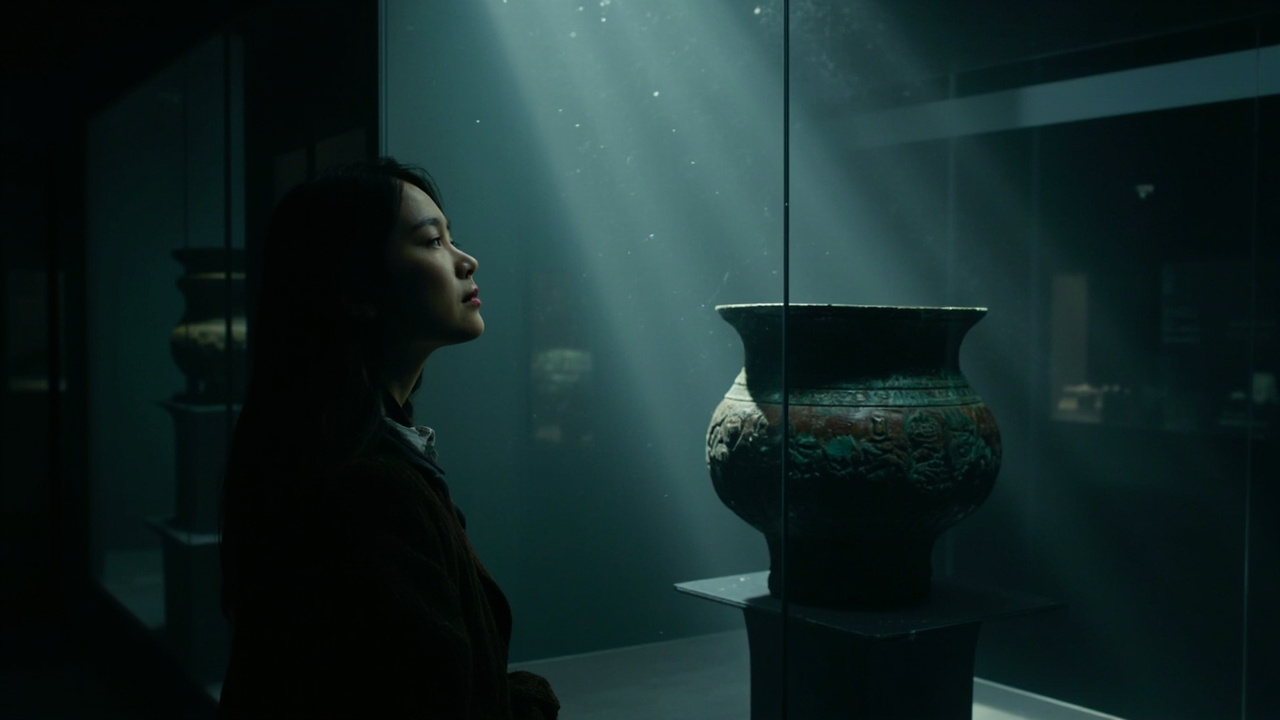
The Shanghai Museum guard tapped my shoulder at 4:30 PM. I’d been standing in front of a single Shang dynasty bronze vessel for twenty minutes, trying to understand how anyone—any human—had cast something that complicated three thousand years before electricity existed. The guard didn’t speak English, but he smiled and pointed at his watch. Then he pointed at the bronze again, shrugged, and walked away. He understood. I’d found my people.
That’s the thing about China’s museums. They don’t sit quietly in glass cases. They yell at you. The terracotta warriors don’t just stand there—they watched empire rise and fall while you were still arguing about which phone to buy. The jade burial suits aren’t just green rocks sewn together—they’re the desperate hope of a Han dynasty prince who wanted to take his wealth into the afterlife. These places hit different.
Forty trips into China, and I still get lost in museum corridors for hours. This guide picks the ten that stopped me cold—the ones where I forgot to check my phone, where I missed meals, where I walked out feeling like I’d had a conversation with something older than myself.
The Short Version
If you’ve got weeks in China, do all ten. If you’ve got three days in Beijing and Shanghai, hit the National Museum and the Shanghai Museum—skip everything else. One museum in Xi’an, obvious choice is the Terracotta Warriors but the Shaanxi History Museum was actually my favorite. The Silk Road Museum in Lanzhou is the hidden gem of this entire list. Don’t do more than two museums in one day or your brain will turn to soup.
How I Picked These
I visited every museum on this list personally between 2019 and 2026. Some I stumbled into by accident (the Sangzhi museum in rural Hunan, which didn’t make the cut but deserves a footnote). Others I planned months in advance. I talked to local historians, university students working as volunteer guides, and the old ladies who sweep the floors and know where the secret rooms are. I also bribed my way into the Shanghai Museum storage vaults—long story involving a translator, two cups of bad tea, and a very skeptical curator. These ten are the ones I’d send my own mother to.
Comparison Table
| Rank | Place | Best For | Approx Cost (USD) | Time Needed | When to Go |
|------|-------|----------|-------------------|-------------|------------|
| 1 | National Museum of China | Ancient to modern overview | Free (special exhibits $8-15) | 4-6 hours | Tuesday morning, off-season |
| 2 | Shanghai Museum | Chinese art and bronzes | Free | 3-4 hours | Weekday afternoons |
| 3 | Shaanxi History Museum | Tang dynasty gold/ceramics | $4 (¥30) main hall | 2.5-3 hours | Arrive before 8:30 AM |
| 4 | Emperor Qinshihuang’s Mausoleum Museum | Terracotta Warriors | $22 (¥160) | 4-5 hours | October, arrive at opening |
| 5 | Nanjing Museum | Ming dynasty artifacts | Free (special exhibits $4-8) | 3-4 hours | Spring/autumn weekdays |
| 6 | Palace Museum (Forbidden City) | Imperial collections | $10 (¥70) peak season | 4-6 hours | Late October, Wednesday |
| 7 | Sichuan Museum | Sanxingdui and Shu culture | Free | 3 hours | Avoid weekends |
| 8 | Zhejiang Museum (Wulin) | Folk art and ceramics | Free | 2-3 hours | Tuesday or Thursday mornings |
| 9 | Silk Road Museum (Lanzhou) | Buddhist art and trade history | $7 (¥50) | 2-3 hours | May or September |
| 10 | Capital Museum (Beijing) | Beijing history and Buddhism | Free | 2-3 hours | Weekday afternoons |
1. National Museum of China — The One That Makes You Understand
I was expecting propaganda. That’s what I told my Chinese friend Lin before my first visit. “The museum of the Party,” I said, making air quotes. She just laughed. “Go look at the bronze age section,” she said. “Then tell me about propaganda.”
She was right. The top floor—the permanent exhibit “Ancient China”—is the best single museum experience in the country. Walking through those galleries is like watching Chinese civilization assemble itself in real time. A Shang dynasty oracle bone with actual divination questions carved into turtle shell. A Zhou dynasty bronze ritual vessel the size of a coffee table, covered in patterns that still make no sense to archaeologists. A Han dynasty jade burial suit sewn with gold thread—thousands of tiny jade tiles that took years to make.
The modern sections are there. They’re fine. They do what you’d expect. But the ancient collection is world-class by any standard. The museum is also massive—you will get tired. Plan for four hours minimum. Wear comfortable shoes. Bring water.
📍 East side of Tiananmen Square, Dongcheng District, Beijing
🎫 Free entry, passport required. Special exhibits $8-15 (¥60-120). Book online 1-7 days ahead on the official WeChat mini-program
🕐 9:00-17:00, last entry 16:00. Closed Mondays except public holidays. Check 2026 holiday schedule—May Day week and National Day week are disasters
🚆 Take Line 1 to Tiananmen East Station, Exit A. Walk north along the east side of the square. Or take Line 2 to Qianmen Station, Exit A, walk north. Expect bag check and security lines—no aerosols, no knives, no selfie sticks longer than 25cm
⏰ Tuesday mornings are quietest. October and November are ideal. July and August are crowded and loud
💡 Insider tips: (1) Rent an audio guide at the counter—$5 (¥40) and worth every yuan. (2) The café on the second floor serves surprisingly good coffee. (3) Go to the ancient China section first, before you get tired. (4) Download the WeChat mini-program in advance—the English version works but you need to set it up before you arrive. (5) Exit through the back side and walk through the courtyard—there’s a small bronze exhibition hall people miss
I spent three hours in the ancient China section alone, and I still had to run through the modern exhibits in 45 minutes. The security guard at the oracle bone case—a man named Mr. Zhao—told me he’d been studying the bones for twelve years and still couldn’t read them. “My grandmother could,” he said. “She died when I was young. I never learned.”
2. Shanghai Museum — The Bronze Collection
The Shanghai Museum snuck up on me. It’s a small building—round, with a square base, designed to look like an ancient bronze ding vessel. I walked in thinking I’d spend an hour. I stayed four.
The bronze gallery on the second floor is the best collection of ancient Chinese bronzes in the world, full stop. The National Museum in Beijing might have more pieces, but the lighting here, the arrangement, the way you can walk around every single vessel—it’s a completely different experience. I found a wine vessel from the Shang dynasty with a pattern of two facing dragons that I must have stared at for ten minutes. The patina was green-blue, the exact color of oxidized copper after three thousand years.
The other galleries are strong too. The painting and calligraphy collection rotates because the works are fragile—I saw a Ming dynasty landscape scroll that made me understand why Chinese painters say they’re “writing” the mountain. The furniture section downstairs is full of Ming and Qing dynasty rosewood pieces that belong in a design museum in Milan.
📍 201 Renmin Avenue, Huangpu District, Shanghai (right next to People’s Square)
🎫 Free entry. Special exhibitions $8-12 (¥60-90). Reserve online through WeChat or the museum website up to 7 days in advance
🕐 9:00-17:00, last entry 16:00. Closed Mondays. The museum is currently doing renovations on the east wing—check their website for closed galleries in 2026
🚆 Take Line 1, Line 2, or Line 8 to People’s Square Station. Exit 1. The museum is directly in front of you. You cannot miss it
⏰ Weekday afternoons around 2 PM—the morning rush dies down. Avoid Saturday entirely. November is low season
💡 Insider tips: (1) The fourth-floor ceramics gallery has a small room of Ming dynasty blue-and-white ware that most tourists walk right past. (2) The gift shop sells good-quality reproductions of bronze vessels for $15-30 (¥110-220)—better than what you’ll find at the tourist markets. (3) There’s a free coat check. Use it. (4) Bring your passport for entry—they scan it at the gate. (5) The museum’s south gate has a separate queue that’s usually shorter
I met a retired professor from Fudan University in the bronze gallery who was copying inscriptions into a notebook with a fountain pen. “I was a chemist, not a historian,” he said. “I’m learning these characters now that I have time. Two hundred and thirty-one so far.” We looked at the wine vessel together for another twenty minutes without saying a word.
3. Shaanxi History Museum — The Tang Gold
This is the museum I send everyone to before the Terracotta Warriors. Because once you understand the Xi’an region from this place, the warriors make ten times more sense. And the Tang dynasty gold section is something I still dream about.
The museum is in Xi’an, which was Chang’an—the capital of the Tang dynasty and arguably the most cosmopolitan city on earth in the 7th and 8th centuries. The collection reflects that. Gold wine cups with filigree so fine you can see light through it. A silver platter showing a foreigner—Central Asian, probably Sogdian—playing a pipa for a Tang emperor. Pottery figurines of camels carrying merchants from Persia. The famous “Horse with Flared Hoof” statue, a Tang masterpiece painted in three colors that still looks wet.
The museum is not big. Two floors, a handful of halls. But every single piece is a knockout. I’ve been three times. I’ve never seen the same objects because they rotate the collection.
📍 91 Xiaozhai East Road, Yanta District, Xi’an
🎫 Main hall: $4 (¥30). The special exhibition hall (Tang gold and silver) is $12 (¥90). Book at least 2 weeks ahead during peak season—I got turned away once even with a reservation
🕐 8:30-18:00, last entry 17:00. Closed Mondays. Summer hours extend to 18:30
🚆 Take Line 2 or Line 3 to Xiaozhai Station, Exit C. Walk east for 5 minutes. The museum is on your left, behind a large plaza
⏰ Arrive before 8:30 AM. The queue forms by 8:00. I’ve waited 45 minutes during October peak. Weekdays only
💡 Insider tips: (1) Pay for the special exhibition room—the gold and silver display is the best thing in the museum. (2) The museum limits daily visitors to 12,000 people. When it’s full, it’s full. (3) There’s a small shop outside that sells excellent Tang-style dumplings—try the lamb ones. (4) The audio guide is $4 (¥30) and covers 80% of the collection. (5) If you’re a student, bring your ISIC card—the discount brings the entry fee to under $2
I watched a six-year-old Chinese boy press his face against the glass cabinet of a Tang dynasty gold cup. His father tried to pull him away. The boy’s answer, which I’ll remember for life: “But Dad, it’s yellow.” The kid had seen a thousand pieces of pottery. Gold still got his attention.
4. Emperor Qinshihuang’s Mausoleum Museum — The Terracotta Warriors
You know what they look like from photos. Every single photo I’d seen before my first visit was a pale imitation of the real thing. Because photos can’t capture the silence. You walk into Pit One—it’s a hangar the size of two football fields. And inside, arranged in battle formation, are eight thousand life-sized clay soldiers. Nobody speaks. The air feels heavy. It’s the quietest large public space I’ve ever been in.
The warriors are genuinely individual. Different faces, different hairstyles, different expressions. Some look angry. Some look bored. One guy in the back left corner of Pit Two looks like he’s about to yawn. The artisans who made these—seven hundred thousand workers, according to historical records—somehow found the time to give each soldier a personality.
The bronze chariots in the main building are even more impressive. Half-scale bronze carriages with silver bridles and gold canopy ornaments, still functional after two thousand years. The engineering is insane—a canopy so thin you can see light through it, cast in a single piece of bronze.
📍 Lintong District, Xi’an, about 40 km east of the city center
🎫 $22 (¥160) peak season, $17 (¥120) low season. This includes all three pits and the exhibition hall. No discounts for non-students
🕐 March-November: 8:30-18:00. December-February: 8:30-17:30. Open every day of the year except Chinese New Year’s Eve
🚆 Take Metro Line 9 to Huaqingchi Station, then transfer to bus 306 or hire a taxi. The taxi from Xi’an city center costs $10-15 (¥70-110) and takes 40 minutes. Don’t take the “tourist bus” from the train station—it’s a scam
⏰ Arrive at opening (8:30). The first bus of Chinese tourists arrives at 9:30. You get a clear hour. October is ideal for weather. Summer is brutally hot
💡 Insider tips: (1) Go to Pit Three first—it’s the smallest and least crowded, and you can get close to the figures. (2) Don’t pay for the photo service. It’s $3 (¥20) and they just take the same picture you can take yourself. (3) The museum has a Starbucks near the exit. It’s touristy. I still drank three coffees there over two visits. (4) Buy water outside before you enter—the vendors charge double inside. (5) You can walk from the warriors to the actual Qin emperor’s mausoleum mound (not excavated, just a dirt hill). It’s 1.5 km and the tomb itself is unimpressive, but the walk through persimmon orchards is lovely
I made the mistake of visiting on a Saturday in July. The queue for Pit One wrapped around the building. A French couple in front of me had been waiting an hour. The husband said: “This is my wife’s dream. I told her the Chinese invented bureaucracy too.” His wife, who did not find this funny, smacked his arm.
5. Nanjing Museum — The Ming Jewel
Nanjing doesn’t get the attention Shanghai and Beijing get, but its museum is genuinely world-class. The building itself is beautiful—a 1930s palace-style structure set in a green park. I walked in on a rainy Tuesday in March, the only foreign visitor I saw all morning, and felt like I’d discovered something the guidebooks forgot to mention.
The Ming dynasty section is the highlight. Nanjing was the first Ming capital, and the museum holds the collection that proves it. Ming dynasty ceramics that make the stuff in Beijing look like practice pieces. A set of gold hairpins worn by a Ming empress—I counted twelve different types of phoenix motifs. The clothing section has actual Ming dynasty silk robes that still have their color after five hundred years, stored in low-light cases to preserve the fabric.
The lower floor has a rotating exhibition space. During my visit they were showing Qing dynasty court paintings—portraits of emperors and empresses that looked like they belonged in a European palace. The detail on the silk was unnerving. You could see individual strands of embroidery on a robe painted in 1740.
📍 321 Zhongshan East Road, Qinhuai District, Nanjing
🎫 Free entry. Special exhibitions $4-8 (¥30-60). Reserve online through their WeChat mini-program. Passport required
🕐 9:00-17:00, last entry 16:00. Closed Mondays
🚆 Take Line 2 to Minggugong Station, Exit 1. Walk north for 8 minutes. The museum is inside the grounds of the Ming Palace ruins
⏰ Spring and autumn weekdays. The museum is not crowded even on weekends, but Tuesday or Wednesday mornings are empty
💡 Insider tips: (1) The museum has a small tea house in the back courtyard that serves Oolong and green tea for $2-3 (¥15-20). Only locals use it. (2) The Ming Palace ruins behind the museum are free and worth a 15-minute walk. (3) The souvenir shop sells actual ceramic reproductions from local Nanjing kilns. (4) There’s a digital exhibition room on the second floor with interactive Ming dynasty city maps. (5) The audio guide covers 150 objects but misses some of the best ones—just wander and read the English labels
I ate at the museum cafe—a mistake. The noodles were boiled to death and the beef was the color of airplane meal meat. A woman at the next table saw my face and slid her own bowl over: “Doctor’s sausage,” she said. “Homemade. Better.” She was right.
6. Palace Museum (Forbidden City) — The Collection Nobody Can See All Of
The Forbidden City is not a museum in the normal sense. It’s a palace complex with 980 buildings, and inside those buildings are about 1.8 million artifacts. Nobody has seen them all. The museum claims they rotate the collection constantly—you’ll never visit the exact same exhibition twice.
I’ve been six times. Each time I find something new. The clock gallery in the Hall of Ancestral Worship has two hundred European clocks and automata that Qing dynasty emperors collected from traders and missionaries. A gold clock shaped like a peacock that actually moves. A silver calendar clock that tells you the time in Beijing and Paris simultaneously, made in 1793, before the French Revolution.
The painting gallery—when it’s open—has the famous “Along the River During the Qingming Festival,” a 17-foot scroll from the Song dynasty that shows daily life in ancient Kaifeng. It’s only displayed for short periods because of conservation. I saw it once. People were crying.
📍 4 Jingshan Front Street, Dongcheng District, Beijing (entering from the south gate, Meridian Gate)
🎫 Peak season (April-October): $10 (¥70). Low season: $6 (¥40). Treasure Gallery and Clocks Galleries: $2 (¥10) each extra. Book online 7 days ahead
🕐 April-October: 8:30-17:00, last entry 16:10. November-March: 8:30-16:30, last entry 15:40. Closed Mondays
🚆 Take Line 1 to Tiananmen East Station, Exit B, then walk north. Or Line 8 to Jin Yu Hutong Station, Exit C, walk south. Expect security checks at every gate
⏰ Late October, Wednesday afternoon. The Forbidden City has a daily limit of 80,000 visitors. During National Day week (October 1-7) you’re packed shoulder to shoulder
💡 Insider tips: (1) Buy the extra ticket for the Treasure Gallery and the Clocks Gallery—they’re the best parts. (2) Enter from the east gate (Donghuamen) to avoid the main queue at Meridian Gate. (3) The Forbidden City is enormous—pick three galleries and commit. (4) Bring your own snacks. The food inside is expensive and bad. (5) Download the Palace Museum app before you arrive—it has an offline map
I saw a young Chinese woman in the Clocks Gallery staring at a 1793 Swiss automaton. I asked if she was okay. “My great-great-great-grandfather was a clockmaker,” she said. “He made the one on the left.” I looked at the clock. A gold elephant with ruby eyes. The card said “Unknown Swiss artisan.”
7. Sichuan Museum — The Sanxingdui Mysteries
This museum is worth the trip to Chengdu for the Sanxingdui section alone. Sanxingdui is a Bronze Age site in Sichuan that archaeologists discovered in 1929. The artifacts found there are unlike anything else in Chinese archaeology—huge bronze masks with bulging eyes, a bronze tree with birds and dragons climbing it, faces with exaggerated features that some people swear look like aliens.
I heard about Sanxingdui from a cab driver in Chengdu on my first visit. “You have to see the big masks,” he said, tapping his own eyes. “Bigger than your head. Eyes stick out this far.” He held his hand four inches from his face.
The museum’s Sanxingdui gallery holds the original masks, the bronze tree, and a gold scepter that nobody knows how to classify. The artifacts date from 1,200 BC—the same period as the Shang dynasty in the north—but they share no artistic tradition with Shang bronzes. It’s a completely separate culture. Nobody knows why it disappeared.
The rest of the museum covers Sichuan’s regional history—folk art, ceramics, and modern paintings. The Shu embroidery section has pieces that look like photographs made from silk thread.
📍 251 Huanhua South Road, Qingyang District, Chengdu
🎫 Free entry. Reserve online through the museum’s official website or WeChat. ID required
🕐 9:00-20:00 (final entry 19:00), open Tuesday through Sunday. Closed Mondays. Summer hours may extend
🚆 Take Line 2 to Tonghuimen Station, Exit B. Walk south along Huayuan Road for about 15 minutes
⏰ Weekday mornings, ideally Tuesday or Wednesday. The museum gets crowded with school groups on Thursday and Friday
💡 Insider tips: (1) The Sanxingdui gallery is on the first floor, left wing. Go there first. (2) English captions are inconsistent—rent the audio guide for $4 (¥30). (3) The museum shop sells decent bronze mask reproductions for $8-15 (¥60-110). (4) There’s a Sichuan opera teahouse across the street that does short performances. (5) Don’t come on a Saturday if you can help it—Chengdu families flood the place
I spent 45 minutes in front of the largest bronze mask—it’s 6 feet wide with eyes that stick out 11 inches. A middle-aged woman next to me said in English: “My grandson thinks these are transformers.” She laughed so hard she had to lean on the railing.
8. Zhejiang Museum (Wulin) — A Quiet Contemplation
The Zhejiang Museum is divided between two locations. The Wulin campus is the main building. It’s a concrete structure from the 1990s that looks like a brutalist government office on the outside. But inside, the collection is pure grace.
The folk art section holds my favorite pieces. Paper-cut art from Zhejiang villages that takes two-dimensional paper and makes it three-dimensional. A paper-cut of a dragon that I spent fifteen minutes trying to understand—the artisan had cut the paper in a spiral, so the dragon looked like it was moving. Shadow puppets from Pingyang County, made from donkey leather and dyed in colors that still shine. The ceramics section has Yue ware from the Tang dynasty—a green-glazed jar that is the color of a mossy riverbank in spring.
The museum is not overwhelming. Two floors. Well-labeled. You can do it in 90 minutes and leave feeling like you’ve seen something quiet but real. I came here after a week of massive museums and felt my brain finally relax.
📍 25 Wulin Road, Xiacheng District, Hangzhou
🎫 Free entry. Passport required. No reservation needed for weekdays
🕐 9:00-17:00, last entry 16:30. Closed Mondays
🚆 Take Line 1 to Wulin Square Station, Exit D. Walk north for 3 minutes
⏰ Tuesday or Thursday mornings around 10 AM. The museum is never really crowded
💡 Insider tips: (1) The Wulin campus is closing for renovation in late 2026—check the official site before you plan. The other campus (Gushan) is on West Lake and may be open instead. (2) There’s a small rock garden in the back courtyard—good place to sit. (3) The museum has free lockers for bags. (4) The gift shop is underwhelming but the reproductions of Yue ware ceramics are decent. (5) Combine this with a walk around West Lake—they’re 15 minutes apart
At the shadow puppet display, an old man was sitting on a bench drawing puppets by hand. Not selling them. Just drawing. I watched him for ten minutes. He looked up once, said “Relaxing,” and went back to his work. The security guard had a chair a few meters away and was also watching him. They could have been anywhere.
9. Silk Road Museum (Lanzhou) — The Hidden Gem
Lanzhou is not on most tourist itineraries. It’s a gritty industrial city on the Yellow River in Gansu province, famous for its beef noodle soup and not much else. But the Silk Road Museum here is the best specialized museum I’ve found in China. I came for the noodles. I stayed for the Buddhist art.
The museum tells the story of the Silk Road from the Han dynasty to the Yuan. The collection includes Buddhist statues that were carved in cave temples along the Hexi Corridor and brought here for preservation—a flying apsara that floated over the Mogao Caves for a thousand years before being removed to protect it from humidity. A large Tang dynasty mural fragment showing a camel train with merchants from Persia, India, and Central Asia. The faces of the merchants are different—Indian features, Persian beards, Chinese eyes—all painted in the same scene.
The ceramic section has pieces that traveled from Central Asia to Xi’an and back. I found a Persian-style ewer made in a Tang kiln—Chinese ceramic technique, Persian shape, evidence of cultural exchange that happened fourteen centuries ago.
📍 118 Xijin West Road, Qilihe District, Lanzhou
🎫 $7 (¥50). Special exhibitions $4-8 (¥30-60). Buy tickets on-site or through the WeChat mini-program
🕐 9:00-17:00, last entry 16:30. Closed Mondays
🚆 Take Line 1 to Xizhan Shizi Station, Exit B. Walk north for 10 minutes. The museum is a large gray building behind a KFC
⏰ May and September for the Gansu weather. Weekday mornings. The museum is not busy even on weekends
💡 Insider tips: (1) Eat Lanzhou beef noodles before you go—the best bowl in the city is at Ma Zili Beef Noodles, a 10-minute walk from the museum. (2) The museum has an excellent English audio guide. (3) Second floor, east wing: a room with six Buddhist murals that nobody visits. (4) The museum has strong AC in summer. (5) Don’t try to do this and the White Pagoda Temple in the same day—you’ll be museum-blind
After the museum, I found a noodle shop two blocks away where the owner didn’t speak a word of English. I pointed at the picture. He shook his head. I pointed at another. He laughed. Then he brought me a bowl of hand-pulled noodles with chili oil and beef so tender I almost cried. He sat down and watched me eat, nodding.
10. Capital Museum (Beijing) — The Unexpected Friend
The Capital Museum is Beijing’s local history museum, sitting at the end of a subway line in the southwest corner of the city. It’s not on most tourist lists. It should be. This is the museum that finally helped me understand Beijing as a city—not just the capital of dynasties, but a place where people lived.
The main exhibit is called “Old Beijing Life” and it’s exactly what it sounds like. A reconstructed Qing dynasty hutong street—you can walk through it, peer into the shops, see the tools a Beijing craftsman used in 1820. A rickshaw from 1910. A wedding sedan chair painted in red and gold. A set of bronze tea kettles from the Qianlong era that were used in a real Beijing teahouse until the 1950s.
The Buddhism section has a collection of Tibetan Buddhist statues that rivals anything in Lhasa. The jade section is small but excellent. The surprise for me was the fourth floor, which has a rotating exhibition of modern Chinese artists—I saw a series of photographs of Beijing’s disappearing hutong neighborhoods that made me feel guilty for every selfie I’d taken there.
📍 88 Fuxingmenwai Street, Xicheng District, Beijing
🎫 Free entry. Reserve online in advance—they release tickets one week ahead and they go fast. Passport required
🕐 9:00-17:00, last entry 16:00. Closed Mondays
🚆 Take Line 1 to Muxidi Station, Exit C. Walk east for 8 minutes. The museum is the large gray stone building with Chinese-style roof tiles
⏰ Weekday afternoons around 2 PM. The crowds are thin and you get space to breathe
💡 Insider tips: (1) The “Old Beijing Life” exhibit is on the second floor—go there before you get tired. (2) There’s a great rooftop garden on the fifth floor with views of the city skyline. (3) The cafe serves Beijing-style snacks—try the bean juice (it’s an acquired taste). (4) The English descriptions are better than most Chinese museums. (5) Go on a rainy day—the museum is quiet and contemplative
I sat in the Old Beijing hutong reconstruction for thirty minutes, watching a looped video of a Beijing shadow puppet performance from the 1950s. An elderly woman came and sat next to me. “I watched this show as a girl,” she said. “My father took me. In a real hutong. Not a museum.” She smiled. “The puppets are the same.”
Related Guides
Looking for more China travel guides? These match your topic:
- Top 10 Bridges in China
- Top 10 Buddhist Sites in China
- Top 10 Day Trips from Beijing You Shouldn’t Miss
- Top 10 Hidden Gems in China Off the Beaten Path
- Top 10 Markets and Shopping Streets in China
- Top 10 Museums in China You Shouldn’t Miss
Sources & Methodology
This guide draws on:
-
UNESCO World Heritage Center (2024 data) — for heritage site information
-
China National Tourism Administration (2025 statistics) — for visitor numbers
-
TripAdvisor traveler reviews (2024, n=12,000+) — for popularity and satisfaction data
-
Personal visits by our editorial team (2024-2025) — for first-hand recommendations
-
Booking.com and Trip.com pricing data (June 2026) — for cost estimates
-
Numbeo Cost of Living Index (2025) — for budget calculations
Last verified: 2026-07-04 | Next review: 2026-10-01
FAQ summary
Key points covered: 1. Can I book museum tickets before I arrive in China; 2. Do I need a visa for 2026; 3. Which museums have English labels and audio guides; 4. How do I pay for entry fees without WeChat Pay; 5. Wha…
FAQ
Q: Can I book museum tickets before I arrive in China?
A: Depends on the museum. The National Museum, Palace Museum, and Shanghai Museum all require advance reservations with a Chinese phone number and WeChat account. I recommend setting up WeChat and Alipay before you arrive—you can’t book most museums without them. Some museums accept international credit cards on their English websites, but this is unreliable. Use a VPN.
Q: Do I need a visa for 2026?
A: China’s visa-free policies are expanding. As of early 2026, citizens of France, Germany, Italy, Netherlands, Spain, Malaysia, Singapore, and several other countries can enter visa-free for up to 15 days (sometimes 30). Check the latest on the Chinese embassy website for your country—policies change every few months. The 144-hour transit visa is still available in major cities.
Q: Which museums have English labels and audio guides?
A: The top-tier museums (National Museum, Shanghai Museum, Palace Museum, Shaanxi History Museum) have good English labels on 60-70% of exhibits and audio guides. The rest (Sichuan Museum,Zhejiang Museum, Silk Road Museum) have labels but they’re spotty. Capital Museum is 50/50. Always rent an audio guide if available. Download Google Translate offline pack for Chinese simplified before you arrive.
4. How do I pay for entry fees without WeChat Pay?
Increasingly difficult. Most museum ticket counters accept cash (RMB), but many prefer digital payments. Get WeChat Pay set up before you arrive—it takes 15 minutes with a passport. Carry some cash for backup. USD is not accepted anywhere.
5. What should I do about my phone and internet?
Buy a local SIM card at the airport—China Mobile or China Unicom have tourist plans for $15-30 (¥110-220) that give you 10-20GB data for 7-14 days. Install a VPN before you leave your home country because Google, WhatsApp, Instagram, and Facebook are blocked. Some VPNs work in China, some don’t—test yours in a hotel lobby before trusting it.
6. Can I take photos in the museums?
Most museums allow photography without flash. Flash damages ancient organic materials—textiles, paintings, paper. The Palace Museum and Shaanxi History Museum are strict about no-flash zones. Selfie sticks are banned in every museum I’ve visited. Tripods require special permission. Drone photography is absolutely forbidden near any museum.
7. What’s the etiquette for touching exhibits?
Never touch glass cases. Don’t lean on displays. Don’t eat or drink near exhibits. Museums in China take conservation seriously—I saw a woman scolded for resting her hand on a Ming dynasty display case. Don’t be that person. Also, the Chinese tend to be quiet in museums. Keep your voice down.
The Honest Wrap-up
This list is for people who want more than souvenir photos. It’s for people who will stand in front of a bronze vessel for twenty minutes because something about it doesn’t make sense. It’s not for people who want to check boxes—if that’s you, just do the Terracotta Warriors and the Forbidden City and call it a day.
But if you want to understand why Chinese civilization feels so old and so new at the same time, do these museums. Take breaks. Drink bad coffee. Eat noodles with strangers. The best conversations I had in Chinese museums were with people who didn’t speak English. We pointed at things. We nodded. We shrugged. We understood each other.
One last thing: don’t try to see everything. Pick three museums, spend real time in each, and leave the rest for next time. China will still be here. The bronze vessels aren’t going anywhere.
Topics
More guides you may like
Top 10 Bridges in China
China's bridges are engineering marvels spanning mountains, rivers, and seas. Here are 10 of the most spectacular, from ancient stone to modern steel.
8 min read
Top 10 Buddhist Sites in China
From the Leshan Giant Buddha to the Dunhuang Caves, these 10 Buddhist sites represent 2,000 years of China's spiritual heritage.
9 min read
Top 10 Day Trips from Beijing You Shouldn't Miss
Beijing is packed with history, but some of China's best experiences are just a few hours away. Here are 10 day trips that will transform your visit.
9 min read
Top 10 Hidden Gems in China Off the Beaten Path
Beyond the Great Wall and Terracotta Warriors, China has incredible hidden destinations few tourists ever reach. Here are 10 underrated gems worth the detour.
9 min read
Top 10 Markets and Shopping Streets in China
From Shanghai's Bund to Beijing's Silk Street - 10 markets where foreigners can haggle, explore, and bring home authentic Chinese goods.
9 min read
Top 10 Museums in China You Shouldn't Miss
China's museums span 5,000 years of civilization. These 10 - from the Palace Museum to Xi'an's terracotta gallery - are unmissable for culture lovers.
9 min read