
China Cave Exploring: The Complete 2026 Guide
The rain was coming down sideways off the karst peaks, and I was soaked through to my underwear. I had been in Guizhou for three days.
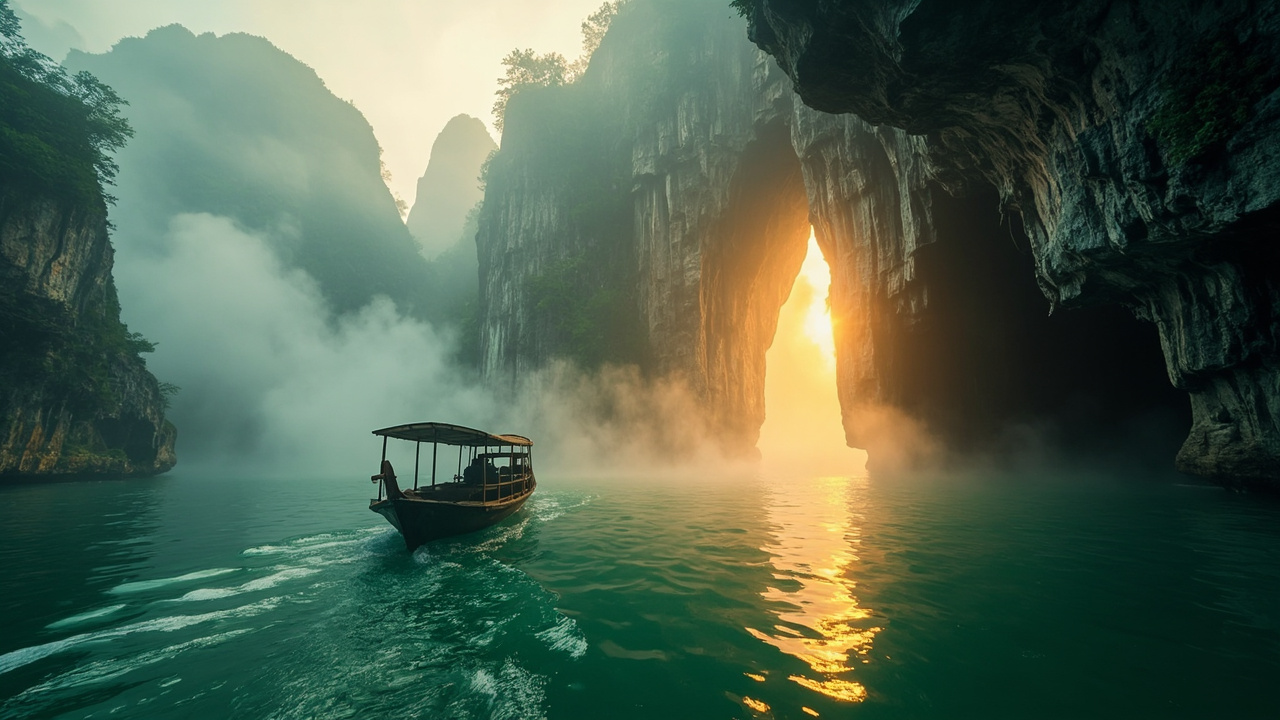
The rain was coming down sideways off the karst peaks, and I was soaked through to my underwear. I had been in Guizhou for three days, and my guidebook had promised me a “gentle underground river cruise.” What it hadn’t mentioned was that the entrance to the cave was a 40-minute hike up a muddy goat path, and that the “cruise” involved a bamboo raft poled by a toothless man named Uncle Chen who kept laughing at my attempts to stay dry.
That was the moment I realized China’s caves aren’t theme parks. They’re raw, wet, occasionally terrifying, and absolutely worth every miserable, muddy step.
China has more than half of the world’s known karst landscape. That’s not a marketing statistic, that’s geology. The limestone bedrock of the south has been dissolving for millions of years, creating a labyrinth of underground rivers, cathedral-sized chambers, and formations that look like they were designed by someone on a very specific kind of mushroom. Most first-time visitors go to Beijing, Xi’an, and Shanghai, see the Great Wall and the Terracotta Warriors, and leave without ever going underground. That’s a mistake.
This guide covers ten caves I’ve actually visited across China, with specific directions, real prices, and the kind of insider details you only get from standing in the dark with water dripping on your head. I’ll tell you which ones are worth the trek, which ones you can skip, and exactly how to get to each one without a tour bus full of matching hats.
Quick answer
China’s best cave exploring destinations are the Reed Flute Cave in Guilin, the Longmen Grottoes in Luoyang, and the Zhijin Cave in Guizhou, with entry fees ranging from $10 to $30 (CNY 70-220). Most caves are accessible year-round, but April to October offers the best balance of dry weather and manageable crowds. Check China’s current visa-free policies before booking, as several European and Southeast Asian countries qualify for 15-30 day visa-free entry as of 2026.
The Short Version
If you only have 90 seconds, here’s the deal. The Reed Flute Cave near Guilin is the easiest and most impressive for a first-timer, and you can combine it with a Li River cruise. The Longmen Grottoes in Luoyang aren’t a cave in the traditional sense, but they’re the most culturally significant underground (and cliff-side) site in the country, and you’d be an idiot to skip them. The Zhijin Cave in Guizhou is the most spectacular natural cave I’ve seen anywhere on Earth, but it’s a logistical pain to reach. Skip the tourist-trap caves near Yangshuo, and don’t bother with any cave that offers a “lunch buffet” as part of the ticket price.
How I Picked These
I’ve been living in Beijing since 2019, and I’ve made 40-odd trips around the country, most of them with a headlamp and a change of dry socks in my bag. I’ve crawled through squeeze passages in Yunnan that required me to take my backpack off and push it ahead of me. I’ve floated through flooded chambers in Guangxi where the only sound was water dripping and my own heartbeat. I’ve argued with ticket booth attendants who insisted I needed a guide, and I’ve been proven wrong when the guide turned out to be a retired geology teacher who knew every stalagmite by name.
For this list, I focused on caves that are actually accessible to international tourists without specialized caving gear or a Chinese-speaking companion. I’ve excluded the truly technical caves, the ones that require ropes and wetsuits and a death wish. I’ve also excluded the ones that have been so heavily commercialized with colored lighting and elevator shafts that they feel more like a casino than a geological wonder. What’s left is a list of ten places where you’ll genuinely feel like you’re discovering something, even if a million people have been there before you.
Comparison Table
| Rank | Place | Best For | Approx Cost (USD) | Time Needed | When to Go |
|---|---|---|---|---|---|
| 1 | Reed Flute Cave, Guilin | First-timers, easy access | $11 (CNY 80) | 2-3 hours | Year-round, avoid Chinese holidays |
| 2 | Longmen Grottoes, Luoyang | Buddhist art, history | $13 (CNY 90) | 3-4 hours | March-May or Sept-Nov |
| 3 | Zhijin Cave, Guizhou | Most spectacular formations | $17 (CNY 120) | 4-5 hours | April-October |
| 4 | Longmen Cave, Guizhou | Underground river, boat ride | $14 (CNY 100) | 3 hours | May-September |
| 5 | Shuanglong Cave, Jinhua | Historical significance | $12 (CNY 85) | 2-3 hours | April-October |
| 6 | Furong Cave, Chongqing | Massive chambers | $15 (CNY 110) | 3 hours | March-November |
| 7 | Yulong Cave, Guilin | Photography | $13 (CNY 95) | 2-3 hours | Year-round |
| 8 | Tenglong Cave, Hubei | Largest cave in China | $16 (CNY 115) | 4 hours | April-October |
| 9 | Xianren Cave, Jiangxi | Off-the-beaten-path | $10 (CNY 70) | 2 hours | May-September |
| 10 | Snow Cave, Guizhou | Unique formations | $12 (CNY 85) | 2-3 hours | Year-round |
Reed Flute Cave, Guilin —The One You Actually Have Time For
I remember standing in the Reed Flute Cave and watching a group of Chinese tourists take photos of a stalagmite that looked vaguely like a dragon. They were using the flash on their phones, which meant the photos would come out terrible, but they didn’t care. Neither did I. The place is that good.
The cave gets its name from the reeds that grow outside, which locals used to make flutes. Inside, it’s a 240-meter-long limestone wonderland with formations that have been given names like “Crystal Palace” and “Pine Forest in Snow.” The colored lighting is aggressive, I’ll admit, but it works. The cave was discovered during the Tang Dynasty, and there are ink inscriptions on the walls from visitors who came a thousand years ago. That’s not something you get at your average tourist cave.
- Location: Northwest of Guilin city center, about 5 km from the train station
- Entry fee: $11 (CNY 80)
- Opening hours: 8:00 AM to 5:30 PM daily, no rest days
- Getting there: Take bus 3 or 58 from Guilin Railway Station, get off at Yingtang Road stop, walk 10 minutes to the entrance. Or take a taxi for about $5 (CNY 35). The cave entrance is well-signposted in both Chinese and English.
- When to visit: Go early, before 9:00 AM, to beat the tour groups. Weekdays are much quieter than weekends.
- Insider tips: Bring a light jacket, it’s cool and damp inside. The path is well-maintained but slippery in places, wear shoes with grip. Don’t bother with the souvenir photos they try to sell you at the exit. The cave is part of the Guilin scenic area, so you can combine it with a visit to the nearby Seven Star Park.
- I met a retired calligraphy teacher from Changsha who was on his 12th visit to the cave. He told me he comes back every year because the lighting changes the mood of the formations, and he’s never seen the same cave twice.
Longmen Grottoes, Luoyang —Not a Cave, But You’d Be an Idiot to Skip It
Technically, the Longmen Grottoes aren’t a cave. They’re a series of niches and caverns carved into a limestone cliff face along the Yi River. But they’ve been called “caves” for 1,400 years, and they’re the single most impressive underground-adjacent site in China. The largest Buddha, Vairocana, is 17 meters tall and was carved in the 7th century during the Tang Dynasty. Standing at its feet, looking up at a face that has been watching the river flow for 1,300 years, is one of those moments that makes you feel very small and very lucky.
The site has over 100,000 Buddhist statues spread across 2,345 caves and niches. Many of them have been damaged, heads stolen by foreign collectors in the early 20th century, but the sheer scale is overwhelming. You’ll walk along a stone path that hugs the cliff face, peering into dark recesses where ancient monks once meditated.
- Location: 13 km south of Luoyang city center, Henan Province
- Entry fee: $13 (CNY 90)
- Opening hours: 8:00 AM to 6:00 PM (April-October), 8:00 AM to 5:00 PM (November-March)
- Getting there: Take bus 81 or 53 from Luoyang Railway Station to Longmen stop. Or take the metro Line 2 to Longmen Station, Exit A, then walk 15 minutes. The site is split into two sections, east and west, connected by a bridge over the river.
- When to visit: Go in the late afternoon when the light hits the cliff face and the crowds have thinned. The site closes at 6:00 PM, so aim for 3:00 PM.
- Insider tips: The west side has the main attractions, but the east side has the best views of the whole site. Cross the bridge and look back. There’s a small museum at the entrance with English signage. Don’t pay extra for the electric cart, the walk is flat and pleasant. The steps are steep in places, so wear proper shoes.
- I watched a young Chinese couple take a selfie with the big Buddha, and the woman was crying. I thought she was overwhelmed by the beauty of it, but then I heard her say, “My phone battery is at 2% and I can’t find my power bank.” Priorities.
Zhijin Cave, Guizhou —The One Worth the Logistics Nightmare
Getting to Zhijin Cave requires a flight to Guiyang, a 2-hour bus ride, and a willingness to accept that you might not make it back to the city the same day. I almost didn’t go. I’m glad I did.
The cave is enormous, with a total length of over 12 kilometers, though only about 3.5 kilometers are open to visitors. The main chamber is 150 meters high, which is roughly the height of a 40-story building. The formations are unlike anything I’ve seen elsewhere, with “stone flowers” that look like frozen coral and curtains of flowstone that glow amber under the lights. The cave is so large it has its own weather system, and you can see clouds forming near the ceiling.
- Location: Zhijin County, Bijie City, Guizhou Province
- Entry fee: $17 (CNY 120), includes a guided tour
- Opening hours: 8:30 AM to 5:00 PM daily
- Getting there: From Guiyang, take a bus from Jinyang Bus Station to Zhijin County (about 2 hours, $8/CNY 55). From the county, take a taxi to the cave entrance (about 20 minutes, $5/CNY 35). The last bus back to Guiyang leaves at 5:30 PM, so plan accordingly.
- When to visit: April to October for the best weather. The cave maintains a constant temperature of about 16°C (61°F) year-round, so it’s a good escape from summer heat.
- Insider tips: The guided tour is mandatory, but the guides are knowledgeable and some speak basic English. Bring a light jacket, it’s genuinely cold inside. The path is about 3.5 kilometers, and it takes 3-4 hours, so wear comfortable shoes. There’s a small restaurant at the entrance that serves decent local food, try the sour fish soup.
- My guide was a young woman named Xiao Li who had grown up in the village near the cave. She told me her grandfather had been one of the first people to explore the deeper chambers in the 1980s, using ropes and oil lamps. She said he still refuses to go inside because “the cave has changed too much.”
Longmen Cave, Guizhou —The Underground River Ride
This is the cave that almost killed my phone. I was on a small boat, drifting through a dark chamber, when the boatman pointed at a formation on the ceiling and I leaned back to look, nearly dropping my phone into the black water. The boatman laughed and said something in Chinese that I’m pretty sure was “tourists.”
Longmen Cave is famous for its underground river, which you navigate by boat for the first section before continuing on foot. The water is so clear you can see the bottom, and the reflections of the stalactites on the surface create a mirror effect that’s genuinely disorienting. The cave was used as a hideout during the Taiping Rebellion in the 1850s, and there are still remnants of stone walls and cooking areas deep inside.
- Location: 15 km from Anshun city, Guizhou Province
- Entry fee: $14 (CNY 100), includes boat ride
- Opening hours: 8:00 AM to 5:30 PM daily
- Getting there: From Anshun, take bus 4 to the Longmen scenic area (about 30 minutes, $1/CNY 7). The bus stops at the entrance to the scenic area, and it’s a 10-minute walk to the cave mouth.
- When to visit: May to September, when the water levels are high enough for the boat ride. In the dry season, the boat section is sometimes closed.
- Insider tips: The boat ride is short, about 20 minutes, but it’s the best part. Sit at the front of the boat for the best views. The walking section after the boat is steep in places, with narrow staircases. There are no lockers, so keep your valuables in a waterproof bag. The water is cold, and you will get splashed.
- The boatman was an old man who had been working at the cave for 30 years. He told me he knew every formation by name, and he pointed out one that looked like a “sleeping cat” that I still can’t see to this day.
Shuanglong Cave, Jinhua —The One With the History Lesson
Shuanglong Cave, or “Double Dragon Cave,” has been a tourist attraction for over 1,000 years. That’s not an exaggeration. The cave is mentioned in texts from the Tang Dynasty, and it was a favorite retreat for poets and scholars who came to write about the beauty of the underground world. The cave gets its name from two stalactites that hang from the ceiling like dragon heads, and the locals have been telling stories about these dragons for centuries.
The cave is relatively small compared to the giants on this list, but what it lacks in size it makes up for in atmosphere. The entrance is a narrow opening at the base of a hill, and you descend into the cave via a series of stone steps that are worn smooth from centuries of foot traffic. Inside, there’s a small underground lake that reflects the formations above, and the acoustics are so good that the cave has been used for concerts.
- Location: Jinhua city, Zhejiang Province, about 15 km from the city center
- Entry fee: $12 (CNY 85)
- Opening hours: 8:00 AM to 5:00 PM daily
- Getting there: From Jinhua Railway Station, take bus 28 or 37 to the Shuanglong Scenic Area (about 40 minutes, $1/CNY 7). The bus drops you at the base of the hill, and it’s a 15-minute walk to the cave entrance.
- When to visit: April to October. The cave is popular with domestic tourists on weekends, so go on a weekday if possible.
- Insider tips: The cave is part of a larger scenic area that includes several other caves and a temple. If you have time, combine Shuanglong with the nearby Binghu Cave. The steps into the cave are steep and slippery, hold onto the handrails. There’s a small museum near the entrance with exhibits about the cave’s history.
- I met a group of university students from Shanghai who were on a field trip for their geology class. They were taking notes and measuring the formations, and one of them told me that the cave was “the best classroom” she’d ever had.
Furong Cave, Chongqing —The One With the Big Rooms
Furong Cave, or “Hibiscus Cave,” is all about scale. The main chamber is 70 meters high and 100 meters wide, and it’s filled with formations that look like they were designed by a mad architect. There are “stone waterfalls” that cascade down the walls, columns that rise from floor to ceiling, and pools of water that reflect the colored lighting in a way that makes the whole place feel like a cathedral built by aliens.
The cave is located near the town of Wulong, which is famous for its karst landscape and has been designated a UNESCO World Heritage Site. The surrounding area is worth exploring on its own, with natural bridges and sinkholes that are just as impressive as the cave itself.
- Location: Wulong District, Chongqing Municipality
- Entry fee: $15 (CNY 110)
- Opening hours: 8:30 AM to 5:00 PM daily
- Getting there: From Chongqing city, take a high-speed train to Wulong Station (about 1 hour, $15/CNY 100). From the station, take bus 4 to the Furong Cave scenic area (about 30 minutes, $1/CNY 7). The cave entrance is a short walk from the bus stop.
- When to visit: March to November. The cave is cooler than the outside, so it’s a good escape from Chongqing’s brutal summer heat.
- Insider tips: The cave has a cable car that takes you from the ticket office to the cave entrance, but it’s a short walk if you’d rather save the money. The path inside the cave is well-maintained, but there are a lot of stairs. The lighting is particularly good for photography, but you’ll need a tripod for the dark sections.
- I tried a local specialty called “Wulong tofu” at a restaurant near the cave, and it was unlike any tofu I’ve had before, silky and slightly sweet, served with a spicy sauce that cleared my sinuses for the rest of the day.
Yulong Cave, Guilin —The Photographer’s Choice
Yulong Cave, or “Jade Dragon Cave,” is the cave you visit when you want to take photos that will make your friends think you hired a professional photographer. The cave is smaller and less crowded than the Reed Flute Cave, but the formations are more delicate and the lighting is more subtle. There’s a section called the “Underground Palace” that has a series of crystal-clear pools that reflect the stalactites above, creating a mirror effect that’s genuinely stunning.
The cave is located about 20 km from Guilin, near the town of Yangshuo, which is famous for its karst peaks and rice paddies. You can combine a visit to the cave with a bike ride through the countryside, which is one of the best ways to see the area.
- Location: Yangshuo County, Guilin, Guangxi Province
- Entry fee: $13 (CNY 95)
- Opening hours: 8:00 AM to 5:30 PM daily
- Getting there: From Yangshuo, take a bus from the main bus station to the Yulong Bridge area (about 30 minutes, $1/CNY 7). The cave is a 15-minute walk from the bus stop. Or rent a bike and cycle there, it’s a pleasant ride through the countryside.
- When to visit: Year-round. The cave is less crowded than the Reed Flute Cave, so you’ll have more space to set up your tripod.
- Insider tips: Bring a wide-angle lens if you have one, the chambers are large and you’ll want to capture the scale. The pools are the best photo spots, but the reflections are easily disturbed by other visitors, so go early. There’s a small tea house near the entrance that serves local tea, and the owner is happy to chat if you speak a little Chinese.
- I spent an hour in the “Underground Palace” section, waiting for the tour groups to pass so I could get a clean shot of the reflections. A German photographer I met there told me he’d been coming to this cave for five years, and he still hadn’t gotten the perfect photo.
Tenglong Cave, Hubei —The One That’s Actually the Biggest
Tenglong Cave, or “Soaring Dragon Cave,” is officially the largest cave in China, with a total length of over 50 kilometers. Only about 4 kilometers are open to visitors, but that’s more than enough to get a sense of the scale. The cave is so large that it has its own river, which you cross by boat, and there are sections where the ceiling is so high that the lights barely reach it.
The cave is located near the town of Lichuan, in the mountains of western Hubei Province. The surrounding area is remote and sparsely populated, which means you’ll have the cave mostly to yourself if you go on a weekday. The downside is that the logistics are more complicated, and you’ll need to plan your transport carefully.
- Location: Lichuan city, Enshi Prefecture, Hubei Province
- Entry fee: $16 (CNY 115)
- Opening hours: 8:30 AM to 5:00 PM daily
- Getting there: From Enshi, take a high-speed train to Lichuan Station (about 1 hour, $10/CNY 70). From the station, take a taxi to the cave entrance (about 20 minutes, $5/CNY 35). The last train back to Enshi leaves at 6:00 PM, so plan your visit accordingly.
- When to visit: April to October. The cave is cool and damp, so it’s a good escape from the summer heat.
- Insider tips: The boat ride across the underground river is the highlight, but it’s short, so don’t blink. The path inside the cave is steep in places, with narrow staircases, so wear proper shoes. There’s a small restaurant at the entrance that serves local mountain dishes, try the stir-fried wild mushrooms.
- I got lost trying to find the cave entrance and ended up at a small village where an old woman insisted on feeding me lunch before pointing me in the right direction. She didn’t speak a word of English, but we managed to communicate through a combination of gestures and a translation app.
Xianren Cave, Jiangxi —The One Off the Beaten Path
Xianren Cave, or “Immortal Cave,” is the kind of place you find by accident and then can’t stop telling people about. It’s located in a rural area of Jiangxi Province, far from the main tourist routes, and it’s the kind of cave that feels like it hasn’t changed in a thousand years. The entrance is a small opening in a limestone cliff, and you have to duck to get inside. Once you’re in, the cave opens up into a series of chambers filled with formations that are covered in a thin layer of moss, giving them a greenish tint that you don’t see in the more commercialized caves.
The cave gets its name from a local legend about an immortal who is said to have lived here. There’s a small shrine at the back of the cave, and locals still come to burn incense and pray. It’s a genuinely spiritual place, even if you don’t believe in the legend.
- Location: Wuyuan County, Jiangxi Province
- Entry fee: $10 (CNY 70)
- Opening hours: 8:00 AM to 5:00 PM daily
- Getting there: From Wuyuan, take a local bus to the village of Likeng (about 30 minutes, $1/CNY 7). From the village, it’s a 20-minute walk to the cave entrance. The path is not well-marked, so ask a local for directions.
- When to visit: May to September. The cave is damp, and the moss on the formations is at its best during the rainy season.
- Insider tips: The cave is not lit, so you’ll need to bring a flashlight or use your phone. The floor is uneven and slippery, so wear shoes with good grip. There’s no ticket booth at the entrance, you pay a local villager who lives nearby. The shrine at the back of the cave is still in use, so be respectful.
- I met an old man who was burning incense at the shrine. He told me he came to the cave every week to pray for his son, who had moved to Shanghai and rarely came home. He asked me if I had a son, and when I said no, he nodded and said, “Then you don’t understand.”
Snow Cave, Guizhou —The One With the Weird Formations
Snow Cave, or “Xue Dong,” is named for its white, snow-like formations, which are actually a type of calcite that forms under very specific conditions. The cave is relatively small, but the formations are unlike anything I’ve seen elsewhere. There are “snowflakes” that sparkle under the lights, “snowmen” that look like they were sculpted by a child, and “snowfields” that stretch across the cave floor like a winter landscape.
The cave is located near the town of Libo, which is famous for its karst forest and has been designated a UNESCO World Heritage Site. The surrounding area is beautiful, with emerald green rivers and dense forest, and it’s worth spending a few days exploring.
- Location: Libo County, Qiannan Prefecture, Guizhou Province
- Entry fee: $12 (CNY 85)
- Opening hours: 8:00 AM to 5:30 PM daily
- Getting there: From Guiyang, take a high-speed train to Libo Station (about 2 hours, $20/CNY 140). From the station, take a taxi to the cave entrance (about 30 minutes, $8/CNY 55).
- When to visit: Year-round. The cave maintains a constant temperature, and the white formations are visible regardless of the season.
- Insider tips: The cave is small, so you can see it all in about an hour. The lighting is subtle, which is a nice change from the aggressive colored lights in other caves. There’s a boardwalk through the cave, so you don’t need to worry about getting your shoes wet. The nearby town of Libo has a great night market with local snacks.
- I tried a local snack called “sour and spicy rice noodles” at the night market in Libo, and it was the perfect end to a day of cave exploring, tangy, spicy, and deeply satisfying.
FAQ summary
For first-time international visitors, the Reed Flute Cave near Guilin offers the best combination of accessibility, beauty, and convenience, with entry at $11 (CNY 80) and easy bus access from the city center. The Longmen Grottoes in Luoyang are the most culturally significant cave-related site, with over 100,000 Buddhist statues carved into limestone cliffs, and are best visited in spring or autumn. Most caves maintain a constant temperature around 15-17°C (59-63°F), so bring a light jacket regardless of the season, and note that WeChat Pay and Alipay are widely accepted at ticket booths, though some rural caves still prefer cash.
FAQ
Q: Do I need a tour guide to visit these caves? A: No, but some caves like Zhijin Cave require a guide as part of the ticket price. For most caves, you can explore independently, but having a translation app like Google Translate or Pleco is essential, as English signage is limited outside major cities.
Q: Are the caves safe for foreign tourists? A: Yes, the caves on this list are all developed with paths, handrails, and lighting. The main risks are slippery surfaces and low ceilings, so wear sturdy shoes and watch your head. Don’t wander off the marked paths, as some caves have deep pits and underground rivers.
Q: What should I bring to a cave in China? A: A light jacket, comfortable shoes with good grip, a flashlight or headlamp (some caves are dimly lit), and a waterproof bag for your phone and camera. Most caves are damp, and you will get splashed or dripped on.
Q: Can I pay with a credit card at the caves? A: Not reliably. Most ticket booths accept WeChat Pay and Alipay, which you should set up before your trip, but some rural caves only accept cash. Always carry some cash as a backup, especially if you’re visiting caves outside major cities.
Q: Do I need a VPN to use the internet in China? A: Yes, if you want to access Google, Facebook, Instagram, or WhatsApp, you’ll need a VPN installed before you arrive. Many international SIM cards don’t work in China, so consider getting a local SIM card or an eSIM from a provider like Holafly.
Q: Are the caves crowded? A: The popular caves like Reed Flute Cave and Longmen Grottoes can be very crowded on weekends and Chinese holidays. Go on a weekday, arrive early, and you’ll have a much better experience. The remote caves like Xianren Cave and Snow Cave are rarely crowded.
Q: What’s the best season for cave exploring in China? A: April to October is the best time, as the weather is warmer and the caves are more accessible. However, the caves themselves maintain a constant temperature year-round, so you can visit any time. Avoid Chinese public holidays like National Day (October 1-7) and Spring Festival, when everything is packed.
The Honest Wrap-up
This list is for travelers who want to see something beyond the Great Wall and the Terracotta Warriors, who are willing to get their shoes muddy and their hair wet, and who understand that the best experiences in China often require a little effort. It’s not for people who want to be bused from one attraction to another with matching hats and a flag held aloft.
If you only have time for one cave, make it the Reed Flute Cave. If you have time for two, add the Longmen Grottoes. And if you have a week to spare, go to Guizhou and let the karst landscape swallow you whole.
One last piece of advice: bring a spare pair of socks. You’ll thank me later.
Topics
More guides you may like
Top 10 Bridges in China
China's bridges are engineering marvels spanning mountains, rivers, and seas. Here are 10 of the most spectacular, from ancient stone to modern steel.
8 min read

Top 10 Buddhist Sites in China
From the Leshan Giant Buddha to the Dunhuang Caves, these 10 Buddhist sites represent 2,000 years of China's spiritual heritage.
9 min read
Top 10 Day Trips from Beijing You Shouldn't Miss
Beijing is packed with history, but some of China's best experiences are just a few hours away. Here are 10 day trips that will transform your visit.
9 min read
Top 10 Hidden Gems in China Off the Beaten Path
Beyond the Great Wall and Terracotta Warriors, China has incredible hidden destinations few tourists ever reach. Here are 10 underrated gems worth the detour.
9 min read
Top 10 Markets and Shopping Streets in China
From Shanghai's Bund to Beijing's Silk Street - 10 markets where foreigners can haggle, explore, and bring home authentic Chinese goods.
9 min read
Top 10 Museums in China You Shouldn't Miss
China's museums span 5,000 years of civilization. These 10 - from the Palace Museum to Xi'an's terracotta gallery - are unmissable for culture lovers.
9 min read