
Dalian Coastal City Guide: The Complete 2026 Guide
The train from Beijing took five and a half hours, and I remember stepping onto the platform at Dalian North Station and immediately noticing the air.
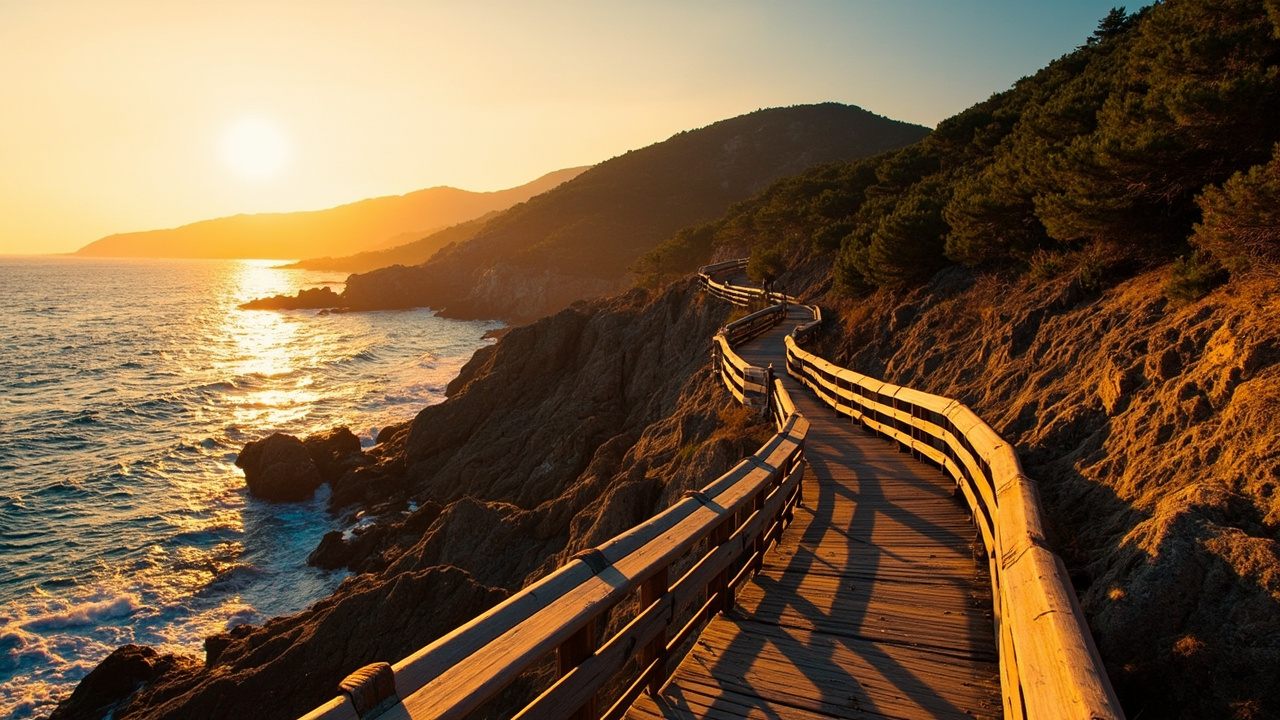
The train from Beijing took five and a half hours, and I remember stepping onto the platform at Dalian North Station and immediately noticing the air. It was different. Cleaner, saltier, with a breeze that actually moved instead of just hanging there. I’d spent the previous week in Beijing where the summer air sits on you like a wet blanket. Dalian felt like someone had opened a window.
I walked out of the station and a taxi driver named Mr. Chen, who spoke exactly six words of English (“Hello”, “OK”, “no problem”, and three I never figured out), drove me along Binhai Road with the windows down. To my left, the Yellow Sea glittered. To my right, hills covered in pine trees and apartment blocks painted in pastel colors. I remember thinking: this doesn’t look like the China I know. It looked like a Mediterranean city that got misplaced.
Dalian sits at the southern tip of the Liaodong Peninsula, a port city that Russia and Japan both occupied in the early 20th century, and that history is written all over its architecture. Russian-style squares. Japanese-era lanes. Wide European boulevards that feel nothing like the narrow hutongs of Beijing. For a first-time visitor to China, Dalian is the gentlest possible introduction: it’s a beach city, a seafood city, a walking city, and it’s far less overwhelming than Shanghai or Beijing.
This guide covers the ten places I’d send a friend on their first trip. I’ve included exact costs, metro lines, exit numbers, and the kind of small details that only come from getting lost a few times.
Quick answer
Dalian is a coastal city in northeast China that most international tourists skip, but it’s one of the best first stops in the country: it’s walkable, has real beaches, and feels far less chaotic than Beijing or Shanghai. A 4-5 day trip costs roughly $400-600 USD (2,900-4,400 CNY) per person including hotels, food, and transport. China’s 240-hour visa-free transit policy (valid through 2026) covers most nationalities, and Dalian’s metro system connects the airport to the city center in about 50 minutes.
The Short Version
If you only have 90 seconds, here’s the deal. Dalian is the most underrated city in China for first-time visitors. It has beaches, Russian architecture, some of the best seafood in the country, and a fraction of the crowds you’ll find elsewhere. Skip the overpriced Tiger Beach Ocean Park. Don’t bother with the Discovery Kingdom theme park. Instead, walk Binhai Road, eat at a random seafood restaurant in a residential neighborhood, and take the old tram line for 1 CNY (14 cents). Three to four days is enough. May, June, September, and October are the best months. July and August are crowded with domestic tourists and the beaches get packed.
How I Picked These
I’ve been to Dalian four times over the past seven years, most recently in September 2025. I’ve walked Binhai Road end to end, gotten sunburned on beaches I wouldn’t recommend, eaten my way through more seafood restaurants than I can count, and once spent two hours trying to find a specific Russian church that turned out to be closed for renovation. I talked to taxi drivers, hotel staff, a retired fisherman named Uncle Wang who now runs a small shop near Xinghai Square, and a barista in a coffee shop who gave me better sightseeing advice than any guidebook. The places below are the ones I’d actually go back to, not the ones that look good on Instagram.
Comparison Table
| Rank | Place | Best For | Approx Cost (USD) | Time Needed | When to Go |
|---|---|---|---|---|---|
| 1 | Binhai Road | Scenic walking/cycling | Free | Half to full day | May-Jun, Sep-Oct |
| 2 | Xinghai Square | Evening atmosphere | Free | 2-3 hours | Evening, any season |
| 3 | Russian Street | Architecture, photos | Free | 1-2 hours | Morning light |
| 4 | Bangchui Island | Beach, swimming | $4 (30 CNY) | Half day | Jul-Aug for swimming |
| 5 | Fujiazhuang Beach | Local beach culture | Free | 2-3 hours | Summer, weekday |
| 6 | Dalian Forest Zoo | Families, pandas | $14 (100 CNY) | 4-5 hours | Morning, weekday |
| 7 | Zhongshan Square | History, architecture | Free | 1-2 hours | Any time |
| 8 | Jinshitan Scenic Area | Geology, hiking | $14 (100 CNY) | Full day | Spring or autumn |
| 9 | Laodong Park | Local life, cheap thrills | $1.50 (10 CNY) | 2 hours | Late afternoon |
| 10 | Donggang Music Fountain | Evening show | Free | 1-2 hours | Night, May-Oct |
1. Binhai Road —The Walk That Made Me Love This City
I started walking at 7am from the east end near Bangchui Island and didn’t stop until my feet gave out around noon. The road hugs the coastline for about 30 kilometers, winding past cliffs, hidden coves, and pine forests that drop straight into the sea. There’s a dedicated pedestrian and cycling path for most of the route, which is rare in China. I passed joggers, old men fishing off rocks, and a group of retirees doing tai chi on a platform overlooking the water.
The road itself is the attraction. You don’t need to plan stops. Just walk. The views change every few hundred meters: a rocky beach, a lighthouse, a stretch where the road tunnels through a hillside. In September the light was golden and the air smelled like pine and salt. I stopped at a small stall run by a woman named Auntie Zhang who sold grilled corn on the cob for 5 CNY (70 cents). She didn’t speak English, but she gestured for me to sit on a plastic stool and pointed at the sea like she was showing me something she’d never gotten tired of.
Location: Runs along the southern coast from Xinghai Bay in the west to Donghai Park in the east.
Entry fee: Free. Some side attractions like Bangchui Island charge separate fees.
Opening hours: Always open. The road never closes.
How to get there: Take Metro Line 2 to Conference Center Station (会议中心站), Exit D, walk south for 10 minutes to reach the eastern end. Or take a taxi from the city center for about 20 CNY ($3).
When to visit: May-June and September-October. Avoid July-August when it’s crowded and humid. Start early, before 8am, to beat the heat and the tour groups.
Insider tips:
- Rent a bike from one of the many rental points along the road. About 15 CNY ($2) per hour.
- Bring water. There are fewer shops than you’d expect.
- The western section near Xinghai Bay is more developed. The eastern section is wilder and more scenic.
- If you walk the whole thing, you’ll need 6-8 hours. Most people do a section.
- Download a translation app. Almost no one speaks English out here.
I met a retired teacher named Mr. Zhao who was painting the coastline with watercolors. He’d been coming to the same spot every morning for eleven years. He showed me his sketchbook without being asked, and I understood why he kept coming back.
2. Xinghai Square —Bigger Than You Think, Better at Night
Xinghai Square is supposedly the largest city square in Asia, and I don’t doubt it. It’s enormous, a vast paved expanse that feels like a cross between a European plaza and a landing strip. During the day it’s mostly empty and a bit soulless. At night, it transforms. The buildings around the square light up, the fountain show starts, and thousands of locals come out to walk, skateboard, and fly kites.
The square sits right on the bay, so you get sea breezes even in summer. There’s a massive white sculpture in the center that’s supposed to represent a star, though I couldn’t figure out how. The real highlight is the fountain show, which runs nightly from May to October. It’s not the best fountain show I’ve seen in China (that title goes to Xi’an), but it’s good enough to hold your attention for twenty minutes.
Location: Xinghai Bay area, southwestern part of the city.
Entry fee: Free.
Opening hours: Always open. Fountain show runs 7:30-8:00pm and 8:30-9:00pm from May to October.
How to get there: Take Metro Line 1 to Xinghai Square Station (星海广场站), Exit A. Walk east for 5 minutes and you’re there.
When to visit: Evening, after 7pm. The square is dead during the day.
Insider tips:
- The seafood restaurants around the square are overpriced and mediocre. Walk 10 minutes inland for better options.
- Kites are sold by street vendors for about 20 CNY ($3). Flying one at night is oddly fun.
- The beach below the square is rocky and not great for swimming.
- On weekends, the square hosts impromptu concerts and dance groups. Join in if you’re brave.
I once spent an evening here with a group of college students who were practicing a choreographed dance routine. They pulled me in to join. I was terrible. They were very polite about it.
3. Russian Street —A Block of History That Feels Like a Movie Set
Russian Street is a single pedestrian street in the old Russian quarter, and it’s the most photogenic spot in Dalian. The buildings date from the Russian occupation period (1898-1905), with ornate facades painted in ochre, mint green, and faded pink. It’s touristy, yes, but it’s also genuinely beautiful. I went early on a weekday morning and had the street almost to myself, which made it feel even more like a film set.
The street is short, maybe 500 meters, and you can walk it in fifteen minutes. But you’ll want to linger. There are small museums, souvenir shops selling Russian nesting dolls and amber jewelry, and a few cafes. The architecture is the main draw. Look up, not at the shop windows. The details are in the cornices, the window frames, the wrought-iron balconies.
Location: Xigang District, near the Dalian Railway Station. The street runs between Shengli Bridge and the Russian-style building at the north end.
Entry fee: Free.
Opening hours: Shops open around 9am and close by 7pm. The street itself is always accessible.
How to get there: Take Metro Line 3 to Dalian Railway Station (大连站), Exit B. Walk north for 5 minutes. Or just walk from the station, it’s 10 minutes on foot.
When to visit: Morning, before 10am, for good light and few crowds.
Insider tips:
- The souvenir shops sell the same stuff. Don’t buy the first thing you see. Prices drop the further you walk.
- The Russian restaurant at the north end is decent but pricey. The borscht is authentic.
- There’s a small museum about Dalian’s Russian history. It’s 20 CNY ($3) and takes 30 minutes.
- The street is much more atmospheric in winter when there’s snow, but it’s also colder than you’d expect.
I bought a hand-painted lacquer box from a shop owner who told me, through a translation app, that her grandfather had come from Russia in the 1950s and never left. She spoke Russian, Chinese, and a little English. Her shop smelled like wood polish and old paper.
4. Bangchui Island —The Beach That’s Actually Worth Paying For
Most of Dalian’s beaches are free, but they’re also rocky and crowded. Bangchui Island charges admission and, as a result, is cleaner and more pleasant. The island is connected to the mainland by a narrow causeway, and the beach on the south side has fine sand, which is rare in this part of China. The water is clear, and in July and August it’s warm enough for swimming.
I went in September, when the summer crowds had thinned out. The water was too cold for swimming, but I walked along the beach, climbed the small hill to the lighthouse, and watched fishing boats bob in the bay. There’s a boardwalk that circles the island, and it takes about an hour to walk the full loop. The views back toward the Dalian skyline are excellent.
Location: Southeast coast, about 15 minutes by taxi from the city center.
Entry fee: 30 CNY ($4) for adults. Free for children under 1.2 meters.
Opening hours: 8am to 6pm daily. The beach itself is accessible until sunset.
How to get there: Take a taxi from the city center, about 30 CNY ($4). Or take bus 712 from Qingniwaqiao and get off at the Bangchui Island stop.
When to visit: July-August for swimming. May-June and September-October for walking without crowds. Weekdays are much quieter than weekends.
Insider tips:
- Bring your own food and water. The restaurants on the island are expensive and not great.
- The lighthouse at the top of the hill is the best photo spot on the island.
- Rent a beach umbrella and chair for 50 CNY ($7) in summer.
- The water shoes are worth buying. The sand is fine, but the entry into the water has some rocks.
I made the mistake of not bringing water and ended up paying 15 CNY ($2) for a bottle of water at the island’s only shop. The shopkeeper, a woman named Sister Chen, laughed at me and handed me a free cup of tea instead.
5. Fujiazhuang Beach —Where Locals Actually Go
Fujiazhuang is not the prettiest beach in Dalian, but it’s the most authentic. This is where local families come on summer weekends. They bring folding chairs, coolers of beer, and massive spreads of food. The beach is a crescent of dark sand backed by apartment buildings, and the water is calm and shallow, which makes it good for kids.
I went on a Tuesday in July, and it was still busy. Old men played cards under umbrellas. Women in wide-brimmed hats waded in the shallows. Children chased each other with plastic shovels. The atmosphere was pure summer, the kind of scene you’d find on any beach in the world, but with Chinese characteristics: someone was grilling corn on a portable stove, and a vendor was selling watermelon slices from a cooler.
Location: Southeast coast, between Binhai Road and the sea. About 20 minutes from the city center.
Entry fee: Free.
Opening hours: Always open. Lifeguards are on duty from 9am to 6pm in summer.
How to get there: Take bus 2 from Qingniwaqiao to the Fujiazhuang stop. Or take a taxi, about 25 CNY ($3.50).
When to visit: Summer, any day. Weekdays are better if you want space. The beach is at its best in the late afternoon when the light turns golden.
Insider tips:
- The water is shallow for a long way out, which is great for wading but means the swimming isn’t exciting.
- Vendors sell cold beer, watermelon, and grilled seafood along the beach. Prices are reasonable.
- The showers at the back of the beach cost 5 CNY (70 cents).
- Don’t leave valuables unattended. It’s safe, but it’s also a public beach.
I shared a table with a family who insisted I try their homemade pickled vegetables and grilled squid. The grandmother, who was at least 80, kept refilling my cup with baijiu. I couldn’t refuse. I learned later that refusing is considered rude.
6. Dalian Forest Zoo —Pandas, and a Cable Car Worth the Ticket
I’m not usually a zoo person, but Dalian Forest Zoo surprised me. The pandas are the main draw, and they’re genuinely impressive. There are several of them, including a baby panda that was climbing trees and rolling around like a furry potato. The zoo is spread across two areas connected by a cable car, and the cable car ride over the treetops with the sea in the background is worth the admission alone.
The zoo is big, so plan for at least four hours. The animals are well cared for, which is not always the case in Chinese zoos. There are also giraffes, elephants, tigers, and a walk-in bird enclosure where the birds will land on your head if you’re not careful. The feeding times are worth catching, especially the pandas at 10am and 2pm.
Location: Southern part of the city, near the coast. The main entrance is on Binhai Road.
Entry fee: 100 CNY ($14) for adults. Children under 1.3 meters are free.
Opening hours: 8:30am to 5pm daily. Last admission at 4pm. The pandas are most active in the morning.
How to get there: Take bus 5 from Qingniwaqiao to the zoo stop. Or take a taxi, about 30 CNY ($4). The cable car connects the two sections, so you don’t need to walk back.
When to visit: Morning, on a weekday. The zoo gets crowded on weekends, especially during school holidays.
Insider tips:
- The cable car is included in the ticket. Don’t skip it.
- Bring snacks. The food inside is overpriced and mediocre.
- The panda house is air-conditioned, which is a relief in summer.
- The zoo is on a hill, and there are a lot of stairs. Wear comfortable shoes.
I watched a toddler have a meltdown because she didn’t want to leave the panda enclosure. Her parents eventually bribed her with ice cream. I felt the same way.
7. Zhongshan Square —A Circle of History in the City Center
Zhongshan Square is a traffic circle with a park in the middle, surrounded by early 20th-century buildings that reflect Dalian’s colonial past. The architecture is a mix of Russian, Japanese, and European styles, and the square is one of the few places in China where you can see this kind of architectural diversity in one spot. The buildings house banks, hotels, and government offices, and some are still in use.
The square is best appreciated slowly. Walk around the perimeter and look at the facades. The Dalian Hotel, on the east side, is a beautiful example of Japanese colonial architecture. The former city hall, on the west side, is now a bank. In the evening, the square fills with locals dancing, rollerblading, and walking their dogs. It’s a pleasant, low-key spot.
Location: City center, at the intersection of Zhongshan Road and Renmin Road.
Entry fee: Free.
Opening hours: Always open.
How to get there: Take Metro Line 2 to Zhongshan Square Station (中山广场站), Exit B. You’ll emerge right at the square.
When to visit: Any time. Evening is liveliest. Early morning is best for photos without people.
Insider tips:
- The square is a traffic circle with multiple lanes of traffic. Use the underground pedestrian crossings to get to the center.
- The Dalian Hotel has a lobby cafe that’s open to the public. It’s a good place for a coffee break.
- The buildings are lit up at night, which makes for good photos.
- There’s a small park in the center of the square with benches. It’s a good spot for people-watching.
I sat on a bench here one evening and watched a group of older women doing ballroom dancing to music from a portable speaker. One of them, a woman in a red dress, was clearly the instructor. She corrected the others’ footwork with gentle patience. I watched for half an hour.
8. Jinshitan Scenic Area —Geology, Hiking, and a Beach That Glitters
Jinshitan, which means “Golden Pebble Beach,” is about 50 kilometers northeast of the city center. It’s a large coastal scenic area with unusual rock formations, hiking trails, and a beach that’s covered in smooth, colorful pebbles rather than sand. The rocks are the main attraction. Millions of years of erosion have created strange shapes, including one that looks like a giant dinosaur and another that resembles a turtle.
The area is big, so plan for a full day. There’s a boardwalk that runs along the coast, and several hiking trails that go up into the hills. The geology museum is worth a stop if you’re interested in that sort of thing. The beach itself is not great for swimming, but it’s beautiful to walk along, especially in the late afternoon when the pebbles catch the light.
Location: Jinshitan National Tourist Resort, about 50 km northeast of Dalian.
Entry fee: 100 CNY ($14) for the main scenic area. The geology museum is an additional 60 CNY ($8).
Opening hours: 8am to 5pm daily. Last admission at 4pm.
How to get there: Take Metro Line 3 to Jinshitan Station (金石滩站), Exit A. From there, it’s a 10-minute walk to the main entrance. The metro ride takes about an hour from the city center.
When to visit: Spring and autumn are best. Summer is hot and crowded. Winter is cold but the rocks look dramatic against the gray sea.
Insider tips:
- The pebbles are smooth and beautiful, but you’re not supposed to take them. The signs say so, and the locals will scold you.
- The hiking trails are not well-marked. Download a map or use a GPS app.
- There are several restaurants near the entrance, but they’re tourist-priced. Bring a picnic if you want to save money.
- The last metro back to the city is around 9pm, but check the schedule. You don’t want to get stuck out here.
I got lost on the hiking trails and ended up at a viewpoint I wasn’t supposed to find. A security guard found me and, instead of scolding me, pointed out the best angle for a photo. He then walked me back to the main path.
9. Laodong Park —Where Dalian Comes to Play
Laodong Park is not a tourist attraction. It’s a local park in the western part of the city, and it’s where Dalian residents come to relax. There’s a small lake with paddle boats, a children’s playground, and a network of walking paths through the trees. On weekends, the park is full of families having picnics, couples taking wedding photos, and old men playing Chinese chess.
I went on a Sunday afternoon and spent two hours just wandering. I watched a group of teenagers playing badminton without a net. I saw a man practicing calligraphy with water on the pavement, writing characters that evaporated within minutes. I ate a popsicle from a vendor and sat on a bench watching ducks paddle across the lake. It was the most relaxing afternoon I spent in Dalian.
Location: Xigang District, about 15 minutes from the city center.
Entry fee: 10 CNY ($1.50) for adults. Free for children and seniors.
Opening hours: 6am to 9pm daily.
How to get there: Take bus 4 or 12 to the Laodong Park stop. Or take a taxi, about 20 CNY ($3).
When to visit: Late afternoon, when the light is soft and the park is at its most lively. Weekends are busier but more entertaining.
Insider tips:
- The paddle boats cost 30 CNY ($4) for 30 minutes. Worth it for the views of the lake.
- The calligraphy man is usually there in the mornings. He’s happy to chat if you can manage the language.
- The park has several small food stalls selling snacks like grilled sausages and cotton candy.
- Bring a book. There are plenty of quiet spots to sit and read.
I watched an elderly couple dance a slow waltz to music from a small radio. They were the only ones dancing, and they didn’t seem to care. They moved like they’d been dancing together for fifty years, which they probably had.
10. Donggang Music Fountain —The Free Show That Ends the Night Right
Donggang is a waterfront development area with a large plaza, a marina, and a music fountain that puts on a show every evening from May to October. It’s not the most famous fountain in China, but it’s one of the best, with water jets that shoot 80 meters into the air and a light show synchronized to music. The show lasts about 30 minutes, and it’s completely free.
The area around the fountain is also worth exploring. There’s a long promenade along the water, several restaurants and bars, and a Ferris wheel that offers good views of the city. The atmosphere in the evening is relaxed and festive. Families, couples, and groups of friends all come out to enjoy the cool sea breeze and the spectacle.
Location: Donggang area, northeastern part of the city, near the international cruise terminal.
Entry fee: Free.
Opening hours: The fountain shows run nightly from May to October. Shows are at 7:30pm and 8:30pm, each lasting about 30 minutes.
How to get there: Take Metro Line 2 to Conference Center Station (会议中心站), Exit A. Walk east for 10 minutes to reach the fountain.
When to visit: Evening, after 7pm. The first show is usually less crowded than the second.
Insider tips:
- Arrive 15 minutes early to get a good spot near the railing.
- The Ferris wheel costs 50 CNY ($7) and takes about 15 minutes for a full rotation.
- The restaurants along the promenade are decent but pricey. The food court in the nearby shopping mall is cheaper.
- The fountain is spectacular from the Ferris wheel. Consider doing that for the second show.
I watched the show with a group of local teenagers who were filming it on their phones. One of them, a boy named Li Wei, asked me in broken English where I was from. When I said “America,” he gave me a thumbs up and said, “Welcome to Dalian.” It was the most sincere welcome I got in China.
FAQ summary
Dalian is a coastal city in northeast China that’s ideal for first-time visitors due to its walkability, beaches, and colonial architecture. The best time to visit is May-June or September-October, when temperatures are mild and crowds are thin. Most international visitors can enter China visa-free under the 240-hour transit policy, which is valid through 2026. The metro system connects the airport and major attractions, and WeChat Pay or Alipay are essential since most places don’t accept cash or foreign credit cards. Expect to spend $400-600 USD (2,900-4,400 CNY) for a 4-5 day trip.
FAQ
Q: Do I need a visa to visit Dalian as an American or European tourist? A: Most nationalities can enter China visa-free for up to 240 hours (10 days) under the transit policy, which is valid through 2026. You need a confirmed onward ticket to a third country. Check with the Chinese embassy for your specific nationality.
Q: Is it safe to drink the tap water in Dalian? A: No. Drink bottled water, which costs about 2-3 CNY (30-40 cents) per bottle. Boiled water is available in hotels and many restaurants. The tap water is safe for brushing teeth but not for drinking.
Q: Do people in Dalian speak English? A: Not much. Younger people and hotel staff may speak some English, but most locals don’t. Download a translation app like Google Translate or Pleco, and have your hotel’s name and address written in Chinese to show taxi drivers.
Q: How do I pay for things in Dalian? A: WeChat Pay and Alipay are the standard. Set them up before you arrive and link a foreign credit card. Cash is accepted but increasingly rare. Most places don’t accept foreign credit cards directly.
Q: Do I need a VPN for my phone in China? A: Yes. Google, WhatsApp, Instagram, and many other Western apps are blocked. Install a VPN before you arrive. A local SIM card with data is cheap, around 50-100 CNY ($7-14) for a week.
Q: What’s the best way to get from Dalian Airport to the city center? A: Take Metro Line 2 from Dalian Zhoushuizi International Airport Station to the city center. It takes about 50 minutes and costs 4-6 CNY (60-90 cents). Taxis are about 40-50 CNY ($6-7) and take 30-40 minutes.
Q: Is Dalian safe for solo female travelers? A: Yes. Dalian is one of the safest cities in China. Violent crime is extremely rare. The main concerns are pickpocketing in crowded areas and overcharging at tourist spots. Use common sense and you’ll be fine.
The Honest Wrap-up
Dalian is not the most spectacular city in China. It doesn’t have the Great Wall or the Terracotta Warriors or the skyline of Shanghai. What it has is something rarer: it’s a city you can actually relax in. You can walk along the coast without being jostled by crowds. You can eat seafood without worrying about getting ripped off. You can sit in a park and watch ordinary life unfold without feeling like you’re missing something.
This list is for first-time visitors who want a gentle introduction to China, for travelers who are tired of big-city chaos, and for anyone who loves the sea. It’s not for you if you want nightlife, shopping malls, or world-class museums. Dalian is a low-key city, and that’s its charm.
One final piece of advice: learn to say “xie xie” (thank you) and “bu yao” (I don’t want it). The first will get you smiles. The second will save you money. And when you’re standing on Binhai Road, watching the sun set over the Yellow Sea, you’ll understand why I keep coming back.
Topics
More guides you may like
Top 10 Bridges in China
China's bridges are engineering marvels spanning mountains, rivers, and seas. Here are 10 of the most spectacular, from ancient stone to modern steel.
8 min read

Top 10 Buddhist Sites in China
From the Leshan Giant Buddha to the Dunhuang Caves, these 10 Buddhist sites represent 2,000 years of China's spiritual heritage.
9 min read

Top 10 Day Trips from Beijing You Shouldn't Miss
Beijing is packed with history, but some of China's best experiences are just a few hours away. Here are 10 day trips that will transform your visit.
9 min read

Top 10 Hidden Gems in China Off the Beaten Path
Beyond the Great Wall and Terracotta Warriors, China has incredible hidden destinations few tourists ever reach. Here are 10 underrated gems worth the detour.
9 min read

Top 10 Markets and Shopping Streets in China
From Shanghai's Bund to Beijing's Silk Street - 10 markets where foreigners can haggle, explore, and bring home authentic Chinese goods.
9 min read
Top 10 Museums in China You Shouldn't Miss
China's museums span 5,000 years of civilization. These 10 - from the Palace Museum to Xi'an's terracotta gallery - are unmissable for culture lovers.
9 min read