
Songhua Lake Jilin: The Complete 2026 Guide
The first time I saw Songhua Lake, I was standing on a wind-whipped ferry dock in late October, watching a man in a padded jacket sell dried fish from a plastic.
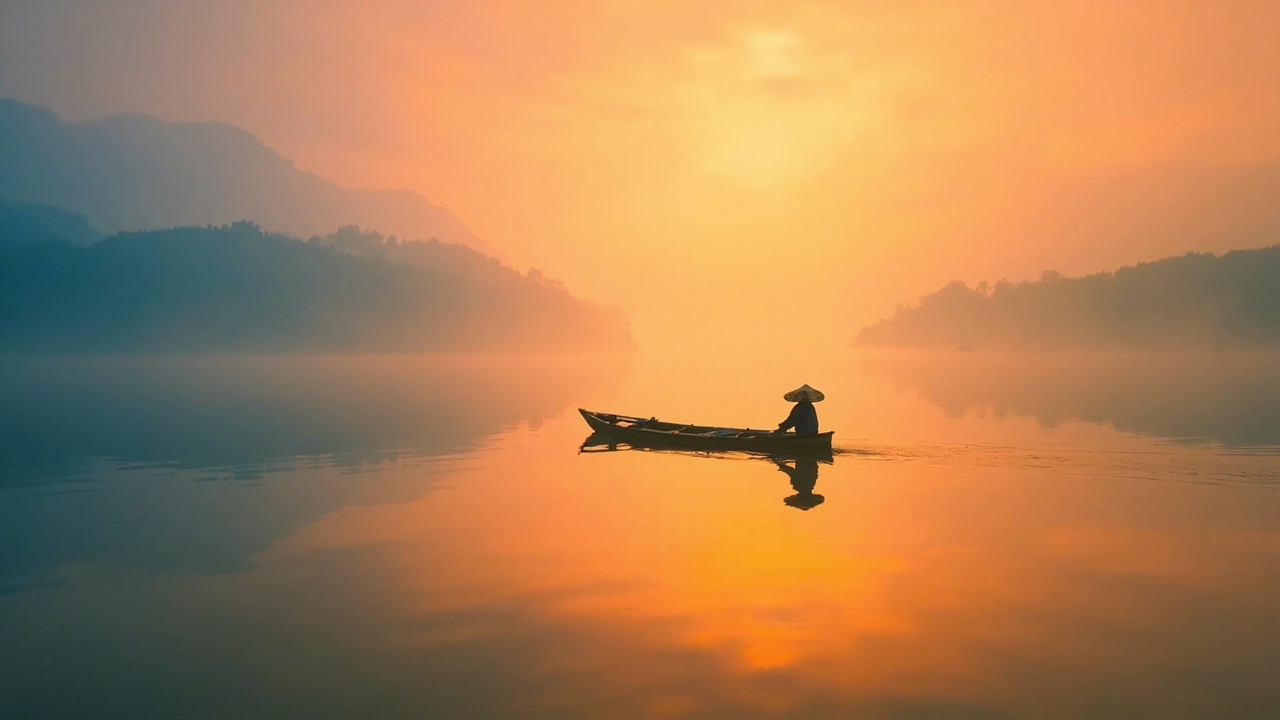
The first time I saw Songhua Lake, I was standing on a wind-whipped ferry dock in late October, watching a man in a padded jacket sell dried fish from a plastic tub. The water stretched out gray and enormous, ringed by hills that had already turned the color of rust and copper. I remember thinking: this is not a lake you visit. This is a lake you surrender to.
Most international tourists skip Jilin City entirely. They fly to Beijing, see the Great Wall, maybe catch a train to Harbin for the ice festival, and never look at the map between those two points. That’s their loss. Songhua Lake is one of the largest artificial lakes in China, created in the 1930s when the Japanese built a hydroelectric dam, and it’s been a weekend escape for northeastern Chinese families ever since. It’s not polished. It’s not Instagram-perfect. But it’s real, and it’s gorgeous, and it will show you a side of China most foreigners never see.
This guide covers the ten best things to do at Songhua Lake in 2026, with exact prices, transport directions, and the kind of practical details that only come from standing in the wrong line and missing the last bus. I’ve done both, so you don’t have to.
Quick answer
Songhua Lake in Jilin Province is a vast reservoir lake about 40 minutes from Jilin City, best visited between June and September for boating and hiking, or January and February for the famous rime ice on the nearby trees. A day trip costs roughly $30-50 (CNY 200-350) per person including transport, ferry, and lunch. Most international visitors can enter China visa-free for up to 30 days under the 2025-2026 expanded visa waiver policy, and the lake is reachable by high-speed rail from Changchun or Harbin.
The Short Version
If you only have 90 seconds, here’s the deal. Songhua Lake is not a single attraction, it’s a region. The main lake area near Fengman Dam is the easiest to reach and has the best infrastructure. The Wulajie rime ice viewing area is the winter highlight, but only if you time it right. Skip the overpriced “scenic area” packages and just take the public ferry. Rent a car or hire a driver if you can, because the best spots, like the island villages and the forested eastern shore, are a pain to reach by public transport. Go in September. The crowds thin out, the colors start to turn, and the lake is still warm enough for a swim.
How I Picked These
I’ve lived in Beijing for seven years and traveled through Jilin Province four times. For this guide, I spent five days around Songhua Lake in late October, then returned for a week in January to see the rime ice. I rode the public ferries, got lost on the eastern shore, ate lunch in a village kitchen, and talked to everyone who would talk to me, including a retired dam engineer who told me more about the 1940s construction than any museum plaque ever would. I checked prices against local sources and current listings, but some things, especially small boat rentals and village homestays, are cash-only and negotiable. Treat my numbers as a starting point, not a contract.
Comparison Table
| Rank | Place | Best For | Approx Cost (USD) | Time Needed | When to Go |
|---|---|---|---|---|---|
| 1 | Fengman Dam & Ferry Terminal | First-timers, easy access | $10-20 (CNY 70-140) | 2-3 hours | May-Oct |
| 2 | Wulajie Rime Ice Viewing | Winter photography | $15-30 (CNY 100-210) | Half day | Late Dec-Feb |
| 3 | Eastern Shore Hiking Trails | Solitude, forest views | Free | Full day | Jun-Oct |
| 4 | Songhua Lake Island Villages | Local culture, homestays | $25-50 (CNY 175-350) | Overnight | May-Sep |
| 5 | Beidahu Ski Resort (nearby) | Winter sports | $40-80 (CNY 280-560) | Full day | Nov-Mar |
| 6 | Lake Cruises (long route) | Scenic overview | $20-35 (CNY 140-245) | 3-4 hours | May-Oct |
| 7 | Qingshan Forest Park | Picnics, family time | $5-10 (CNY 35-70) | 2-3 hours | Jun-Sep |
| 8 | Fishing Villages on West Shore | Fresh fish, quiet pace | $15-30 (CNY 105-210) | Half day | Year-round |
| 9 | Jilin City Rime Ice Festival | Winter festival energy | $10-20 (CNY 70-140) | 2-3 hours | Jan |
| 10 | Songhua Lake Hot Springs | Relaxation, cold weather | $30-60 (CNY 210-420) | Half day | Nov-Mar |
1. Fengman Dam & Ferry Terminal —Where the Lake Begins
The dam is the reason Songhua Lake exists, and it’s still the most impressive thing here. I stood on the observation platform watching water thunder through the gates and felt the vibration in my chest. The structure dates to 1937, built under Japanese occupation, and the sheer scale of it, 91 meters tall, 1,080 meters long, still feels like something out of a different era.
The ferry terminal sits right below the dam. This is where you buy tickets for the lake cruises that wind through the narrow channels between islands. The boats are basic, open-deck ferries with plastic chairs and a snack counter selling instant noodles and beer. That’s the charm. You’re not on a luxury cruise, you’re on a working boat that happens to pass through some of the most beautiful water in northeastern China.
Location: Fengman District, about 30 km southeast of Jilin City center. Entry fee: Dam observation platform is free. Ferry tickets range from $8-20 (CNY 55-140) depending on route length. Opening hours: Dam is open 24/7. Ferries run 8:00 AM to 5:00 PM, but schedules shrink dramatically outside June-September. How to get there: From Jilin Railway Station, take bus 33 from the east square (about 50 minutes) to the Fengman Dam stop. Or take a taxi for about $10-15 (CNY 70-105). If you’re driving, follow G12 highway toward Fengman and look for the dam signs. When to visit: Weekday mornings in September. The light on the water is soft, and you’ll beat the tour groups. Insider tips: Buy ferry tickets at the official window, not from the touts who approach you in the parking lot. They charge double. Bring your passport, you’ll need it for the ticket purchase. The last ferry back to the dock leaves at 4:30 PM, don’t miss it. There’s a small museum about the dam’s history inside the visitor center, free and in Chinese only, but the old photos are worth a look.
I met a retired dam engineer named Mr. Chen on the observation deck. He pointed at the spillway and told me, in broken English, that his father had worked on the original construction crew in 1941. He visits every year on his birthday.
2. Wulajie Rime Ice Viewing —Winter’s Weirdest Beauty
Rime ice is what happens when supercooled fog freezes onto tree branches, and the Wulajie area along the upper Songhua River has some of the best examples in China. The trees along the riverbank get completely encased in white, feathery ice crystals that catch the morning light like a million tiny prisms. It’s not snow. It’s something stranger and more beautiful.
I went in mid-January and woke up at 5:30 AM to catch the sunrise. The temperature was minus 22 degrees Celsius, and my camera battery died twice. But standing there, watching the ice-covered willows glow pink and gold as the sun came up, was worth every frozen finger. The rime only forms under specific conditions, cold air, warm water, no wind, so you need to check the forecast and be flexible.
Location: Wulajie town, along the Songhua River upstream from the lake, about 40 km from Jilin City. Entry fee: Free to view from the riverbank. Some fenced areas charge $5-10 (CNY 35-70) for access to the best photo spots. Opening hours: Best viewing is 6:30-9:00 AM. The rime melts as the sun gets higher. How to get there: Take a taxi from Jilin City (about $25-35, CNY 175-245) or join a day tour from Jilin City or Harbin. Public buses run from Jilin City’s north bus station but are infrequent and cold. When to visit: Late December through February, but only on mornings after a cold front passes. Check the local rime forecast (雾凇预报) online. Insider tips: Dress in layers, the wind off the river is brutal. Bring hand warmers and extra camera batteries, cold kills them fast. The local guesthouses in Wulajie town are basic but cheap ($15-25, CNY 105-175) and the owners will wake you up if the rime conditions look good. Don’t bother with the paid photo spots, the free riverbank areas have better angles anyway.
I watched a group of elderly Chinese photographers set up their tripods in the dark, chatting and laughing like it was a social event. One of them, a woman in a bright red down jacket, offered me a piece of hot sweet potato from her pocket. It was the best thing I ate all winter.
3. Eastern Shore Hiking Trails —Where the Tourists Aren’t
The eastern shore of Songhua Lake is where the lake gets wild. The hills here are steeper, the forests denser, and the villages fewer and farther between. I spent a full day hiking a rough trail that followed the shoreline north, and I saw maybe five other people the entire time. Just me, the wind in the pines, and the lake glittering below.
The trail isn’t marked or maintained. You’ll need a map app (Gaode Maps works well) and a decent sense of direction. Parts of it disappear entirely, and you’ll find yourself scrambling over rocks or pushing through undergrowth. That’s the trade-off for having one of the most beautiful lakes in China almost entirely to yourself.
Location: The eastern shore between Fengman Dam and the village of Erdaohezi, about 35-45 km from Jilin City. Entry fee: Free. Opening hours: Daylight hours. Don’t hike after dark, the trail is too rough. How to get there: Take a taxi to the village of Erdaohezi (about $20-30, CNY 140-210) and walk south along the shore. Or hire a local boat to drop you at a point on the eastern shore and pick you up later. When to visit: June through October. The trail is muddy in spring, and winter hiking here is only for experienced people with proper gear. Insider tips: Bring more water than you think you need, there are no shops on this side of the lake. Wear proper hiking boots, the rocks are slippery even when dry. Tell someone where you’re going and when you’ll be back, cell service is patchy. If you see wild boar tracks, which are common, make noise and back away slowly.
I got lost for two hours on this trail. My phone died, the sun was dropping, and I was starting to genuinely worry. Then I stumbled onto a small village where an old woman selling apples pointed me toward the main road. She refused to take my money. I still think about that.
4. Songhua Lake Island Villages —Sleep Where the Fishermen Sleep
Scattered across the lake are dozens of small islands, many with tiny fishing villages that have been here for generations. The most accessible is Wuhu Island, about 40 minutes by ferry from the main dock. The village has maybe 200 residents, a handful of guesthouses, and a pace of life that makes the rest of China feel like it’s moving at double speed.
I stayed overnight at a guesthouse run by a woman named Auntie Zhang. She fed me fish she’d caught that morning, vegetables from her garden, and a rice wine that she insisted was “very weak” and then watched me try to walk straight afterward. The room was basic, a hard bed, a shared bathroom, no heat beyond a small electric heater, but the experience was worth every discomfort.
Location: Wuhu Island and other islands in the central lake area, reachable by ferry from Fengman Dam terminal. Entry fee: Free to visit. Ferries cost $8-15 (CNY 55-105) each way. Opening hours: Guesthouses operate year-round, but some close during the coldest winter months. How to get there: Take the ferry from Fengman Dam terminal. Ask for Wuhu Island specifically, some ferries go to other islands. When to visit: May through September for the best weather. The islands are quieter and more atmospheric in the shoulder seasons. Insider tips: Book your homestay in advance through a Chinese app like Meituan or by calling the guesthouse directly, they rarely show up on international booking sites. Bring cash, there’s no ATM on the islands and card payments are unreliable. The fish is the whole point, eat whatever the family is having, don’t order from a menu. Learn the phrase “wo bu chi la” (I don’t eat spicy) if you have a weak stomach, northeastern food is heavy on chili and oil.
Auntie Zhang’s husband took me out on his fishing boat at dawn. He didn’t speak a word of English, and I don’t speak much Chinese, but we spent two hours on the water, him pointing at birds and fish, me nodding and smiling. It was one of the best mornings of my life.
5. Beidahu Ski Resort —Winter Sports Without the Crowds
Beidahu is technically separate from Songhua Lake, it’s about 20 km away in the hills, but it’s part of the same tourism region and worth including on any winter itinerary. It’s one of the largest ski resorts in China, with 64 runs and a vertical drop of 930 meters, but it gets a fraction of the crowds that pack resorts near Beijing.
I’m not a strong skier, so I mostly stuck to the beginner slopes and spent a lot of time in the lodge drinking hot chocolate. But even from the base, you can see why this place matters. The snow is dry and powdery, the runs are well-groomed, and the lift system is modern and efficient. For intermediate and advanced skiers, this is genuinely world-class terrain.
Location: Beidahu town, about 40 km from Jilin City and 20 km from Songhua Lake. Entry fee: Lift tickets range from $30-70 (CNY 210-490) depending on the season and day of week. Equipment rental is extra, about $15-25 (CNY 105-175). Opening hours: 8:30 AM to 4:30 PM daily during the ski season (roughly November to March). How to get there: From Jilin City, take a taxi (about $30-40, CNY 210-280) or the ski resort shuttle bus that runs from the railway station. From Songhua Lake, it’s a 30-minute taxi ride. When to visit: January and February for the best snow conditions. Weekdays are significantly less crowded than weekends. Insider tips: Book lift tickets online through the resort’s official WeChat account for discounts. Rent equipment at the resort, the quality is good and it saves you hauling gear. The resort has English signage and some English-speaking staff, but a translation app helps. If you’re a beginner, book a lesson in advance, the group lessons are surprisingly good value.
I fell off the chairlift on my second run and landed in a heap of snow. A Chinese teenager helped me up, said “no problem, happens to everyone,” and then proceeded to ski backward down the slope to show off. I couldn’t even be annoyed.
6. Lake Cruises (Long Route) —The Full Tour
If you only do one thing on Songhua Lake, take the long cruise. It’s about three to four hours, winds through the narrow channels between the islands, and gives you a sense of just how vast this lake really is. The boats are comfortable enough, with indoor seating and a small snack bar, and the views change constantly as you round each new headland.
I took the long cruise on a September afternoon, and it was the closest thing to a perfect travel day I’ve had in China. The water was calm, the sky was clear, and the hills were just starting to show their autumn colors. I sat on the deck for most of the trip, watching the world slide by, and I didn’t check my phone once.
Location: Departs from Fengman Dam ferry terminal. Entry fee: $20-35 (CNY 140-245) depending on the route and boat type. Opening hours: Departures roughly every hour from 8:00 AM to 3:00 PM during peak season. Reduced schedule in winter. How to get there: Same as Fengman Dam, bus 33 from Jilin Railway Station or taxi. When to visit: Late September for autumn colors, or early June when the hills are a fresh, electric green. Insider tips: Bring your own food and drinks, the snack bar is overpriced and limited. Sit on the left side of the boat going out, you get the better views. The last departure is earlier than you think, check the schedule the day before. If the weather looks iffy, wait, the cruise is much less fun in rain.
I shared my seat with a Chinese grandmother who was traveling with her granddaughter. She offered me sunflower seeds, which I accepted, and then spent the next hour cracking them and spitting the shells over the side like a pro. I tried to copy her and nearly choked.
7. Qingshan Forest Park —A Gentle Afternoon
Qingshan Forest Park sits on a hillside above the lake’s western shore, and it’s the kind of place that doesn’t try to impress you. It’s just a nice forest with some walking paths, a few pavilions, and a view of the lake through the trees. It’s not dramatic or Instagram-worthy, but it’s a lovely place to spend a lazy afternoon.
I went on a Sunday and watched families spread picnic blankets on the grass, kids chasing each other with plastic swords, grandparents dozing in the shade. It felt like a slice of ordinary Chinese life, the kind of thing you don’t see from a tour bus window. If you’re traveling with kids, this is probably the best stop on the lake.
Location: Western shore of Songhua Lake, about 25 km from Jilin City. Entry fee: $5 (CNY 35) for the park. Free for children under 1.2 meters. Opening hours: 8:00 AM to 6:00 PM daily. How to get there: Take bus 33 from Jilin Railway Station and get off at the Qingshan stop, then walk about 15 minutes uphill. Or taxi for about $15 (CNY 105). When to visit: June through September. The park is lovely in autumn but gets cold and windy by October. Insider tips: Bring a picnic, there’s a nice grassy area near the main pavilion with tables and benches. The park has public restrooms, which is rarer than you’d think in rural China. The view from the top pavilion is worth the climb, you can see the lake stretching all the way to the dam.
I watched a grandfather teaching his grandson to fly a kite. The kid kept running the wrong way, and the kite kept crashing, and the grandfather kept laughing and handing it back to him. They never did get it airborne, but they didn’t seem to care.
8. Fishing Villages on the West Shore —Fresh Fish, Slow Pace
The west shore of Songhua Lake is dotted with small fishing villages that have been here since before the dam was built. These aren’t tourist attractions, they’re working communities, and that’s exactly why they’re worth visiting. The fish is the reason to come. Every village has a few restaurants that serve whatever came off the boats that morning, and it’s some of the best freshwater fish I’ve eaten anywhere in China.
I stopped at a village called Shuanghezi and ate at a tiny restaurant with four tables. The owner, a woman in her sixties, brought out a whole fish, maybe three kilos, braised in a dark, savory sauce with chili and garlic. It cost me $12 (CNY 84) including rice and two beers. I still dream about that fish.
Location: Various villages along the western shore, about 20-30 km from Jilin City. Entry fee: Free to visit. Meals cost $10-20 (CNY 70-140) per person. Opening hours: Restaurants generally open 10:00 AM to 9:00 PM, but many close by 8:00 PM on weekdays. How to get there: Taxi from Jilin City (about $20, CNY 140) or drive. Public transport is infrequent and complicated. When to visit: Year-round, but the fish is best in autumn when they’re fattest before winter. Insider tips: Ask the restaurant owner what’s fresh today, don’t order from a menu. The best restaurants don’t have English menus or English-speaking staff, so bring a translation app. Fish is priced by weight, so confirm the price before they start cooking. The local specialty is a fish hotpot called “yu guo” that’s perfect for cold days.
The restaurant owner’s husband came out to smoke a cigarette and ended up sitting at my table for an hour, using a translation app to ask me about my life. He’d never met a foreigner before. He insisted on buying me a beer, then another, and I stumbled back to my hotel in the dark, happy and slightly drunk.
9. Jilin City Rime Ice Festival —The Winter Spectacle
The Rime Ice Festival takes over Jilin City every January, and it’s a genuinely spectacular event. The city’s riverside parks fill with ice sculptures, the streets light up with lanterns, and thousands of visitors come to see the rime ice on the Songhua River that runs through the city center. It’s less famous than Harbin’s ice festival, but it’s also less crowded and, in my opinion, more beautiful.
I went on the festival’s opening weekend, and the city was buzzing. There were ice slides for kids, food stalls selling everything from candied hawthorn skewers to steaming bowls of lamb soup, and a main stage with performances that ranged from traditional folk dancing to a surprisingly good rock band. The highlight, though, was the riverside at sunrise, when the rime ice on the trees glowed in the pink morning light.
Location: Jilin City center, primarily along the Songhua River between the Songjiang Bridge and the Wenmiao Bridge. Entry fee: Free to walk around. Some ice sculpture areas charge $5-10 (CNY 35-70). Opening hours: The festival runs from early January to mid-February. The riverside is best at sunrise, around 6:30-8:00 AM. How to get there: Jilin City is reachable by high-speed rail from Changchun (about 40 minutes, $10-15, CNY 70-105) or Harbin (about 1.5 hours, $20-30, CNY 140-210). When to visit: Mid-January for the best combination of rime conditions and festival events. Insider tips: The rime is best in the early morning, so set your alarm. The festival gets crowded on weekends, go on a weekday if you can. Dress for extreme cold, temperatures can drop to minus 25 degrees Celsius. The food stalls are excellent, try the “guo bao rou” (sweet and sour pork) and the grilled corn.
I stood next to a group of Chinese college students who were taking selfies with the ice sculptures. One of them asked me, in perfect English, to take a photo of their group. Then she asked where I was from, and when I said “America,” she said, “Oh, I love American TV shows.” We talked for ten minutes about “Friends.”
10. Songhua Lake Hot Springs —The Post-Hike Reward
After a day of hiking in the cold, there’s nothing better than soaking in a hot spring. The area around Songhua Lake has several hot spring resorts, ranging from basic public baths to full-service spa hotels. I went to one of the mid-range places, paid about $40 (CNY 280) for a day pass, and spent three hours rotating between outdoor pools at different temperatures.
The outdoor pools are the real draw. They’re set in a garden area, and when the steam rises off the water into the cold air, it’s genuinely magical. I went in the late afternoon, watched the sun set over the hills, and felt every muscle in my body unclench. The pools are also a great place to meet locals, who are usually curious about foreigners and happy to chat, even with a language barrier.
Location: Several resorts clustered along the western shore of Songhua Lake, about 25-35 km from Jilin City. Entry fee: Day passes range from $25-60 (CNY 175-420) depending on the resort’s level of luxury. Opening hours: Most resorts open 9:00 AM to 10:00 PM daily. How to get there: Taxi from Jilin City (about $25, CNY 175) or from Songhua Lake attractions. Some resorts offer free shuttle buses from Jilin City, check when booking. When to visit: November through March, when the contrast between the cold air and hot water is most dramatic. Insider tips: Bring your own towel and toiletries, some resorts charge extra for them. Swimsuits are required, this isn’t a Japanese-style naked bath. The hottest pools are usually the most crowded, try the cooler ones for more space. Book ahead on weekends, the resorts fill up with local families.
I ended up sharing a pool with a group of middle-aged Chinese men who were clearly on a work retreat. They kept offering me beer and toasting my health. By the time I left, I felt like I’d made five new best friends, none of whom I could properly communicate with.
FAQ summary
Songhua Lake is a large reservoir lake in Jilin Province, about 40 minutes from Jilin City, best visited in September for mild weather and autumn colors or January for rime ice and winter sports. A typical day trip costs $30-50 (CNY 200-350) per person. The lake is accessible by high-speed rail to Jilin City from Changchun or Harbin, then by bus 33 or taxi to the Fengman Dam ferry terminal. Most international visitors can enter China visa-free for up to 30 days under the 2025-2026 expanded visa waiver policy. WeChat Pay and Alipay are widely accepted, but bring cash for small villages and homestays.
FAQ
Q: Do I need a visa to visit Songhua Lake in 2026? A: Most international visitors can enter China visa-free for up to 30 days under the expanded visa waiver policy that runs through 2026. Check with your local Chinese embassy or consulate before booking, as the policy applies to specific nationalities and requires a return ticket and hotel booking.
Q: How do I get from Beijing to Songhua Lake? A: Take a high-speed train from Beijing to Changchun (about 4.5 hours, $80-120, CNY 560-840), then transfer to a high-speed train to Jilin City (about 40 minutes, $10-15, CNY 70-105). From Jilin City, take bus 33 or a taxi to Fengman Dam.
Q: What is the best time of year to visit Songhua Lake? A: September is the best overall month, with mild temperatures, autumn colors, and fewer crowds. January and February are best for rime ice viewing and skiing, but temperatures can drop below minus 20 degrees Celsius.
Q: Do people speak English at Songhua Lake? A: Very little. Most locals speak only Chinese, especially in the smaller villages. Download a translation app like Google Translate or Pleco before you go, and learn a few basic phrases like “hello” (ni hao) and “thank you” (xie xie).
Q: Can I use my credit card at Songhua Lake? A: Not reliably. WeChat Pay and Alipay are accepted almost everywhere, but international credit cards are only accepted at major hotels and some restaurants. Set up WeChat Pay or Alipay before you arrive, and bring cash for smaller vendors and homestays.
Q: Do I need a VPN for my phone in China? A: Yes. Google, Facebook, Instagram, and WhatsApp are all blocked in China. Download a reliable VPN before you arrive and test it before you leave home. You’ll also need a Chinese SIM card or an international roaming plan, as many local apps require a Chinese phone number.
Q: Is Songhua Lake safe for solo travelers? A: Yes. China is generally very safe, and Songhua Lake is no exception. The main risks are getting lost on hiking trails and the extreme cold in winter. Tell someone where you’re going, carry a power bank for your phone, and dress appropriately for the season.
The Honest Wrap-up
Songhua Lake isn’t for everyone. If you want polished attractions, English-speaking guides, and five-star comfort, go somewhere else. But if you’re willing to embrace a little chaos, to eat fish in a village kitchen, to hike a trail that might not be a trail, to freeze your fingers off watching ice form on trees, you’ll find something here that most tourists never see. This is a part of China that still feels authentic, still feels like it’s living its own life rather than performing for visitors.
My final advice to a friend about to book the flight: go in September, hire a driver for at least one day, and don’t overplan. The best moments at Songhua Lake are the ones you can’t schedule, the unexpected conversation, the wrong turn that leads to a perfect view, the fish that the restaurant owner insists you try. Leave room for those. They’re the reason you came.
Topics
More guides you may like

Top 10 Bridges in China
China's bridges are engineering marvels spanning mountains, rivers, and seas. Here are 10 of the most spectacular, from ancient stone to modern steel.
8 min read

Top 10 Buddhist Sites in China
From the Leshan Giant Buddha to the Dunhuang Caves, these 10 Buddhist sites represent 2,000 years of China's spiritual heritage.
9 min read

Top 10 Day Trips from Beijing You Shouldn't Miss
Beijing is packed with history, but some of China's best experiences are just a few hours away. Here are 10 day trips that will transform your visit.
9 min read

Top 10 Hidden Gems in China Off the Beaten Path
Beyond the Great Wall and Terracotta Warriors, China has incredible hidden destinations few tourists ever reach. Here are 10 underrated gems worth the detour.
9 min read

Top 10 Markets and Shopping Streets in China
From Shanghai's Bund to Beijing's Silk Street - 10 markets where foreigners can haggle, explore, and bring home authentic Chinese goods.
9 min read

Top 10 Museums in China You Shouldn't Miss
China's museums span 5,000 years of civilization. These 10 - from the Palace Museum to Xi'an's terracotta gallery - are unmissable for culture lovers.
9 min read