
Wudang Mountain Tai Chi Birthplace: The Complete 2026 Guide
The cab driver from the Wudangshan town center looked at me in the rearview mirror and laughed. Not a mean laugh, but the kind you get when you ask for somethin.
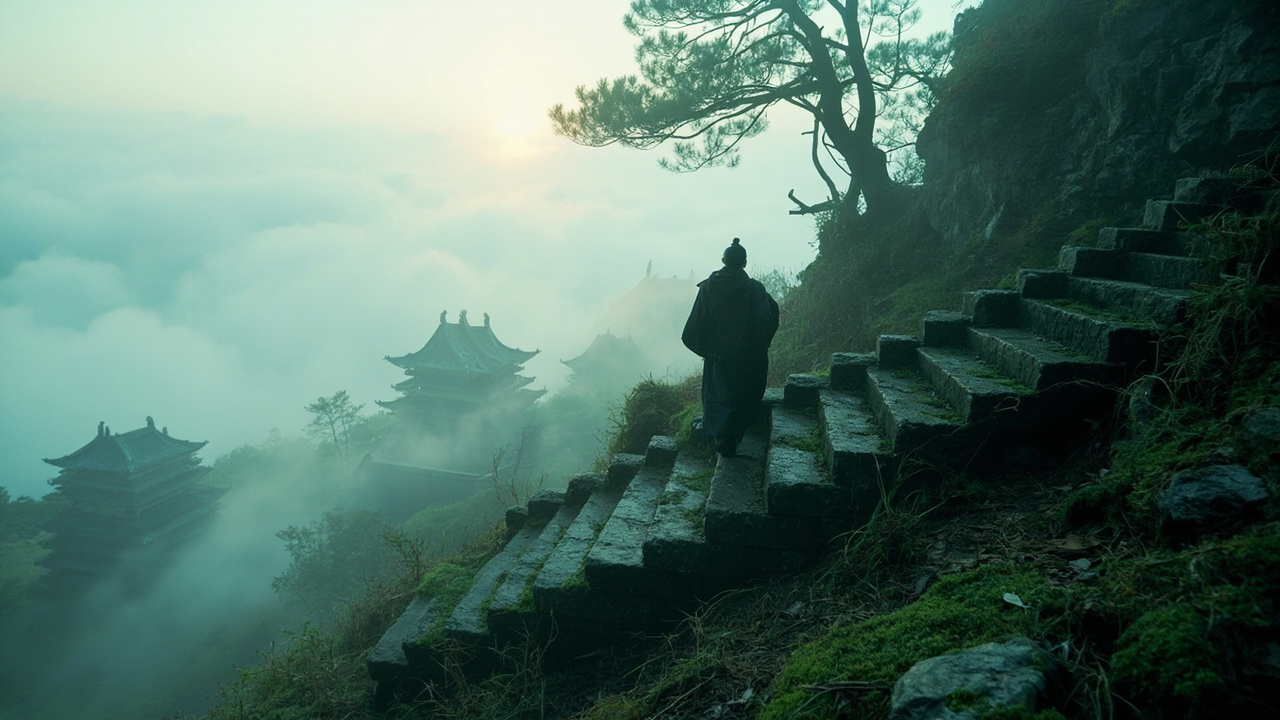
The cab driver from the Wudangshan town center looked at me in the rearview mirror and laughed. Not a mean laugh, but the kind you get when you ask for something slightly absurd. I had just told him I wanted to walk up the mountain instead of taking the cable car. He said something in rapid Mandarin that I caught maybe half of, something about my legs and the word “sorry.” Then he shrugged, pointed at the distant peak shrouded in low cloud, and drove off. I stood there with my backpack, a bottle of water, and about 9,000 stone steps between me and the Golden Hall. It took me five hours. It was one of the best decisions I’ve made in China.
Wudang Mountain is where Tai Chi was supposedly born, where a 14th-century monk named Zhang Sanfeng watched a crane fight a snake and had a revelation about softness overcoming hardness. The story is probably legend, but the mountains themselves are not. They are real, steep, and covered in temples that have been clinging to cliffsides for centuries. This guide is for first-time visitors to China who want to see the birthplace of Tai Chi without getting lost, overpaying, or ending up on the wrong side of the mountain at sunset.
You’ll get exact prices, specific train stations, which cable car to take (and which to skip), and the honest truth about what’s worth your time and what’s just a photo op. I’ve been to Wudang three times now, and I’ve made every mistake you can make here so you don’t have to.
Quick answer
Wudang Mountain is a 2-3 day trip from Wuhan, reachable by high-speed train to Wudangshan Station (about 2 hours). The mountain complex is a UNESCO World Heritage Site with 33 temples scattered across 400 square kilometers. Entry costs around $24 (175 RMB) for the mountain pass plus $16 (115 RMB) for the scenic bus, and the best time to visit is April-May or September-October when the weather is dry and the temples aren’t buried in fog. Foreign visitors can enter China visa-free for up to 10 days if transiting through major cities like Beijing, Shanghai, or Wuhan.
The Short Version
Wudang is not a single temple. It’s a mountain range with a network of Taoist buildings, and you need at least two days to do it properly. Day one: take the cable car up, see the Golden Hall, walk down the stone path through the South Palace. Day two: visit the Purple Cloud Temple (where the Tai Chi monks train), the太子坡 complex, and the Taoist martial arts schools in the valley. Skip the “Wudang Tai Chi Show” in town. It’s a tourist trap. Find a real kung fu school and watch an actual morning practice instead.
How I Picked These
I’ve traveled through Hubei province four times since 2019, and I’ve spent a total of nine days on Wudang Mountain itself. I’ve walked the entire stone stairway from bottom to top, taken the cable car when my knees gave out, and sat through enough foggy afternoons in temple courtyards to know which buildings are worth the climb. I talked to the monks at the Purple Cloud Temple, the ticket inspectors at the scenic bus stops, and a tea seller near the South Palace who told me more about mountain history than any guidebook. These picks are based on what I actually saw, what I paid, and what I’d do again.
Comparison Table
| Rank | Place | Best For | Approx Cost (USD) | Time Needed | When to Go |
|---|---|---|---|---|---|
| 1 | Golden Hall (Jinding) | The summit views, the real pilgrimage | Included in $24 (175 RMB) pass | 2-3 hours | Morning, clear days |
| 2 | South Palace (Nanyan) | Cliff temples, the dragon head carving | Included in pass | 2 hours | Mid-morning |
| 3 | Purple Cloud Temple (Zixiao) | Active Taoist life, Tai Chi practice | Included in pass | 1.5-2 hours | Early morning |
| 4 | Tai Chi Lake | Easy walk, reflection shots | Free | 30-45 minutes | Late afternoon |
| 5 | 太子坡 (Prince’s Slope) | Architecture, the famous curved wall | Included in pass | 1-1.5 hours | Any time |
| 6 | Wudang Tai Chi Academy | Watching real kung fu training | Free to watch | 1 hour | 6-7 AM |
| 7 | 逍遥谷 (Xiaoyao Valley) | Hiking, monkeys, quiet trails | Included in pass | 2-3 hours | Morning |
| 8 | 磨针井 (Grinding Needle Well) | The legend spot, quick stop | Included in pass | 30 minutes | Any time |
| 9 | 龙头香 (Dragon Head Incense) | The scariest temple in China | Included in pass | 30 minutes | Clear weather only |
| 10 | Wudangshan Town | Food, night market, local life | $5-10 (35-70 RMB) for food | 1 evening | Evening |
Golden Hall (Jinding) - The Summit That Makes You Earn It
The first time I reached the Golden Hall, it was raining sideways and I couldn’t see more than ten meters. The second time, on a clear October morning, I watched the clouds roll out of the valley below like a tide going out. The hall itself is a bronze structure that’s been sitting on the summit since 1416, and it’s the whole reason most people come. The building is small. You’ll walk around it in two minutes. But the setting, on a peak that’s 1,612 meters above sea level, is what makes it worth the effort.
The climb up the Ming Dynasty stone stairway is brutal. It’s roughly 9,000 steps from the valley floor, and sections of it are steep enough that you’ll be using your hands. The cable car gets you most of the way, but you still have to climb about 600 steps from the upper station to the summit. That last stretch is the real test.
- Location: The summit of Tianzhu Peak, the highest point on Wudang Mountain
- Entry fee: Included in the mountain pass ($24 / 175 RMB)
- Opening hours: 7:30 AM - 5:30 PM (winter closing is 5:00 PM)
- How to get there: Take the scenic bus from the main gate to the cable car station (Jinding Suodao), then the cable car up ($14 / 100 RMB one way). Or walk from the South Palace if you’re feeling strong.
- When to visit: Go as early as possible. The cable car line gets long by 9 AM, and the summit is often in cloud by noon.
- Insider tips: The best photos are from the east side of the hall, not the front. Bring a light jacket even in summer, the summit is windy. Don’t buy the “sacred incense” from the vendors at the top, it’s overpriced. The real locals bring their own.
- I met a retired schoolteacher from Xi’an who had climbed the mountain every year for 15 years. She told me the secret was to stop at every single rest pavilion, not to push through. She was right.
South Palace (Nanyan) - Where the Temples Hang Off Cliffs
The South Palace complex is built into a cliff face that drops hundreds of meters straight down. The most famous spot here is the Dragon Head Incense burner, a stone carving that juts out over the void. In the old days, pilgrims would crawl out onto it to light incense. Many of them fell. The practice was banned in the 1980s, which is probably for the best. You can still walk out to the edge and look down, and it’s genuinely terrifying.
The complex itself is a maze of halls, courtyards, and stone stairways that climb the cliff. The main hall, the Hall of the Heavenly Emperor, has some of the best-preserved Taoist murals I’ve seen anywhere in China. The fog rolls through here constantly, and when it does, the whole place feels like it’s floating.
- Location: On the southern slope of the mountain, about 20 minutes by scenic bus from the main gate
- Entry fee: Included in the mountain pass
- Opening hours: 7:30 AM - 5:30 PM
- How to get there: Take the scenic bus from the main gate to the Nanyan stop. The bus runs every 15-20 minutes.
- When to visit: Mid-morning, after the morning fog has lifted but before the tour groups arrive around 11 AM.
- Insider tips: The best view of the cliff temples is from the path that goes down toward the Flying Bridge, not from the main courtyard. The tea house near the entrance has surprisingly good local green tea. Don’t touch the stone railings on the cliff path, they’re loose in places.
- I watched a group of Chinese tourists take turns pretending to almost fall off the cliff edge for photos. The temple caretaker just shook his head and kept sweeping.
Purple Cloud Temple (Zixiao) - The Heart of Living Taoism
This is the temple where the current abbot of Wudang lives, and it’s the most active religious site on the mountain. Unlike the Golden Hall, which is mostly tourists, this place has real monks doing real practice. If you come early in the morning, around 6 AM, you can watch the monks doing their Tai Chi and Qigong practice in the main courtyard. Nobody will stop you, but nobody will talk to you either. Just stand quietly and watch.
The temple itself is a massive complex that was rebuilt in the 15th century and has survived remarkably intact. The main hall houses a collection of Taoist artifacts, including a bronze statue of Zhang Sanfeng, the legendary founder of Tai Chi. The statue is small and unassuming, which somehow makes it more powerful.
- Location: About 15 minutes by scenic bus from the main gate, then a 10-minute walk uphill
- Entry fee: Included in the mountain pass
- Opening hours: 7:30 AM - 5:30 PM (the morning practice is 6-7 AM, before the temple officially opens, but you can enter the courtyard)
- How to get there: Take the scenic bus to the Zixiao stop. Follow the stone path uphill through the pine forest.
- When to visit: 6 AM for the practice, or late afternoon when the tour groups have left.
- Insider tips: The side halls are more interesting than the main hall. Check out the small museum in the eastern courtyard. If you see a monk in a grey robe, that’s a real Taoist. If you see one in a yellow robe, that’s a performer for the tourist show.
- A young monk from Sichuan told me he’d been at the temple for six years and had never been to the Golden Hall. “It’s for tourists,” he said. “I can see it from here.”
Tai Chi Lake - The Easy Win
After a day of climbing stone steps, your legs will hate you. This lake is the reward. It’s a small reservoir at the base of the mountain, with a stone bridge crossing the narrowest part and the peaks reflected in the water. On a calm day, the reflection is perfect. The path around the lake is flat and easy, which makes it a good option for anyone who can’t handle the stairs.
The lake is also where the famous “Tai Chi Lake” photos come from, the ones with the mist and the fisherman in the boat. That fisherman is a paid performer. He does his rounds every morning at 7 AM and again at sunset. If you want the shot, be there early.
- Location: At the base of the mountain, near the main scenic bus station
- Entry fee: Free
- Opening hours: Always open
- How to get there: Walk from the main gate, or take the scenic bus one stop to the Tai Chi Lake stop.
- When to visit: Sunset, when the light hits the western peaks.
- Insider tips: The best reflection shot is from the far end of the bridge, not the middle. The fisherman performer will wave at you if you wave first. Don’t feed the ducks, they’re aggressive.
- I sat on a bench here for an hour watching a Chinese couple take wedding photos. The bride’s dress was white, the mountains were green, and the mist was doing exactly what it was supposed to do.
太子坡 (Prince’s Slope) - The Architecture You Can’t Miss
This complex is famous for one thing: a curved red wall that runs for over 70 meters along the side of a hill. It’s called the “Nine-Bend Yellow River Wall,” and it’s one of the most photographed spots on the mountain. The wall is beautiful, but the complex behind it is even better. It was built in the 15th century for a prince who came to study Taoism, and it has a series of courtyards that climb the hillside in a way that feels like a maze.
The main hall here has a collection of ancient Taoist texts, and there’s a small museum that explains the history of the complex. Most tour groups rush through in 20 minutes. Take your time. The upper courtyards are usually empty and have some of the best views of the valley.
- Location: About halfway up the mountain, accessible by scenic bus
- Entry fee: Included in the mountain pass
- Opening hours: 7:30 AM - 5:30 PM
- How to get there: Take the scenic bus to the Taizipo stop. The entrance is a short walk from the bus stop.
- When to visit: Any time, but early morning is best for photos of the wall without people in them.
- Insider tips: The wall is best photographed from the lower end, looking up. The stairs behind the main hall lead to a small pavilion that most people miss. The museum has English translations on most exhibits, which is rare on this mountain.
- A guide was telling her group that the prince who lived here was actually a failed emperor who was sent to study Taoism as a punishment. I have no idea if that’s true, but it’s a better story than the official version.
Wudang Tai Chi Academy - Where You Watch Real Training
There are dozens of martial arts schools in the valley below the mountain, and most of them are happy to let you watch morning practice. The Wudang Tai Chi Academy is one of the more established ones, with a mix of Chinese and international students. The morning practice starts around 6 AM and goes until 8 AM, and it’s genuinely impressive to watch. These are not performers. These are people who have been doing this for years.
The school also offers short courses for foreigners, from a single day to several months. If you want to actually learn Tai Chi at the birthplace, this is the place. The teachers speak some English, and the facilities are basic but clean.
- Location: In the valley below the mountain, about 10 minutes by taxi from the main gate
- Entry fee: Free to watch the morning practice. Courses start at around $30 (210 RMB) per day.
- Opening hours: Practice is 6-8 AM, classes run throughout the day
- How to get there: Take a taxi from Wudangshan town or the main gate. It’s about 10 minutes.
- When to visit: Morning, for the practice. The afternoon classes are mostly for enrolled students.
- Insider tips: If you want to join a class, book at least a week in advance. The school gets busy in summer. Don’t wear jeans to practice, you’ll regret it. The teachers are patient but they expect you to try.
- I watched a middle-aged German man attempt a basic Tai Chi stance for 20 minutes while a Chinese teacher corrected him with a bamboo stick. The German was sweating. The teacher was not.
逍遥谷 (Xiaoyao Valley) - The Quiet Hike
Most tourists skip this valley because it’s not on the main temple circuit. That’s their loss. The valley has a walking trail that follows a stream through the forest, with a few small temples and pavilions along the way. There are monkeys here, wild ones, and they will absolutely steal your food if you’re not careful. One of them took a bag of oranges from a Chinese tourist while I was watching. The tourist chased it. The monkey won.
The trail is about 5 kilometers round trip and takes 2-3 hours at a relaxed pace. It’s the closest thing to a wilderness experience on Wudang, and on a weekday you might have the whole valley to yourself.
- Location: On the eastern side of the mountain, accessible by scenic bus
- Entry fee: Included in the mountain pass
- Opening hours: 8 AM - 5 PM
- How to get there: Take the scenic bus to the Xiaoyao Valley stop. The trailhead is right at the bus stop.
- When to visit: Morning, when the monkeys are active and the trail is empty.
- Insider tips: Keep your food in your backpack, not in your hands. The monkeys know what a plastic bag sounds like. The trail gets slippery after rain, wear proper shoes. There’s a small temple at the end of the valley that most people don’t reach.
- The monkey that stole the oranges sat on a rock and ate all three of them while the tourist yelled at it in Mandarin. The monkey looked very pleased with itself.
磨针井 (Grinding Needle Well) - The Legend Spot
This is a small pavilion with a well in the middle, and it’s the site of one of the most important legends in Taoism. The story goes that a young man studying Taoism on the mountain got discouraged and decided to quit. On his way down, he met an old woman grinding an iron rod on a stone. When he asked what she was doing, she said she was making a needle. He realized that if she could grind an iron rod into a needle, he could keep studying. He went back up the mountain and eventually became a master.
The pavilion is small and you’ll be done in 15 minutes, but it’s worth a stop because it’s the origin story of the whole mountain’s philosophy. The stone where the old woman supposedly ground the rod is still there, with a groove worn into it.
- Location: Near the main gate, about 5 minutes by scenic bus
- Entry fee: Included in the mountain pass
- Opening hours: 7:30 AM - 5:30 PM
- How to get there: Take the scenic bus one stop from the main gate.
- When to visit: Any time, it’s a quick stop.
- Insider tips: The well water is supposedly sacred. People drink it. I wouldn’t. The gift shop here has better quality souvenirs than the ones at the summit.
- A tour guide was telling her group the legend in Mandarin, and she was so into it that she was acting out the grinding motion. Her group was not impressed. I was.
龙头香 (Dragon Head Incense) - The Scariest Temple in China
This is not a temple you can enter. It’s a stone dragon head that extends about 3 meters out from a cliff face, with a small incense burner at the tip. In the old days, pilgrims would crawl out on the dragon’s back to light incense. The drop below is about 300 meters. Many people died. The practice was banned in the 1980s, and now there’s a fence preventing anyone from going out.
You can still see the dragon head clearly from the viewing platform, and it’s genuinely one of the most terrifying things I’ve seen in China. The stone is worn smooth from centuries of hands and knees. There’s a sign in Chinese that explains the history, but no English translation.
- Location: Near the South Palace, about 10 minutes walk from the main complex
- Entry fee: Included in the mountain pass
- Opening hours: 7:30 AM - 5:30 PM
- How to get there: From the South Palace, follow the path downhill toward the cliff edge.
- When to visit: Only on clear days. In fog, you can’t see the drop and it loses all impact.
- Insider tips: The best view is from the lower platform, looking up at the dragon head. Don’t try to climb the fence, the security guard will yell at you. There’s a small stone tablet near the fence that explains the history in Chinese.
- I stood here for 10 minutes trying to imagine what it would feel like to crawl out on that stone, knowing that people had died doing exactly that. I couldn’t do it. I’m glad I didn’t have to.
Wudangshan Town - The Real Life Below the Mountain
The town at the base of the mountain is where you’ll stay, eat, and probably spend your evenings. It’s not a beautiful town. It’s a functional tourist town with hotels, restaurants, and souvenir shops. But it has a certain energy, especially in the evening when the tour groups leave and the kung fu students come out. You’ll see them in the streets, wearing their practice uniforms, walking with that particular grace that comes from years of training.
The food here is better than you’d expect. The local specialty is a type of tofu that’s made with mountain spring water, and it’s genuinely excellent. There’s also a night market near the bus station that sells snacks, souvenirs, and the worst “authentic Tai Chi swords” you’ll ever see. Don’t buy one. They’re aluminum and they’ll bend if you look at them wrong.
- Location: The town at the base of the mountain, about 2 km from the main gate
- Entry fee: Free
- Opening hours: The town is always open. Most restaurants close by 10 PM.
- How to get there: Take the high-speed train to Wudangshan Station, then a taxi or bus to the town (about 15 minutes).
- When to visit: Evening, for the night market and the street food.
- Insider tips: The restaurant called “Old Taoist Kitchen” (老道厨房) near the main street has the best tofu on the mountain. The hotel near the bus station is cheaper than the ones closer to the gate, and it’s a 5-minute walk. The kung fu students at the night market will sometimes do demonstrations if you ask nicely.
- I ate at the Old Taoist Kitchen three times in two days. The owner, a woman in her 60s who’s been running the place for 20 years, finally asked me if I was okay. I told her I was fine, I just really liked her tofu.
FAQ summary
Wudang Mountain is best visited in April-May or September-October, with a budget of roughly $100-150 (700-1050 RMB) per day including accommodation, food, and transport. The mountain pass costs $24 (175 RMB) and the scenic bus is an additional $16 (115 RMB), while the cable car is $14 (100 RMB) one way. Foreign visitors can reach Wudang via high-speed train from Wuhan (2 hours) and should plan for at least 2 days to see the main sights. The Golden Hall, South Palace, and Purple Cloud Temple are the three must-see locations, and the best times to visit are early morning before the tour groups arrive.
FAQ
Q: Do I need a visa to visit Wudang Mountain in 2026? A: If you’re transiting through major Chinese cities like Beijing, Shanghai, or Wuhan, you may be eligible for the 10-day visa-free transit policy. Otherwise, you’ll need a standard tourist visa (L visa), which costs around $140 (1000 RMB) and takes 4-5 working days to process.
Q: How do I get from Wuhan to Wudang Mountain? A: Take the high-speed train from Wuhan Station to Wudangshan Station. The journey takes about 2 hours and costs $25-35 (180-250 RMB) for a second-class seat. From Wudangshan Station, take a taxi or local bus to the mountain gate, about 15 minutes away.
Q: Is it worth taking the cable car or should I walk? A: The cable car costs $14 (100 RMB) one way and saves you about 3 hours of climbing. If you’re fit and want the full experience, walk up the Ming Dynasty stairway from the South Palace. If you’re short on time or have knee problems, take the cable car. There’s no shame in it.
Q: Can I see the Tai Chi practice at Wudang Mountain? A: Yes. The monks at the Purple Cloud Temple practice every morning around 6 AM, and the martial arts schools in the valley have open morning sessions. The tourist “Tai Chi show” in town is a performance, not real practice. Go to the temple or the schools instead.
Q: Is English widely spoken at Wudang Mountain? A: No. English is limited to the main ticket office and a few hotels. Download a translation app like Pleco or Google Translate before you go. Most signs are in Chinese only, and the scenic bus announcements are in Mandarin.
Q: Do I need cash or will cards work at Wudang Mountain? A: WeChat Pay and Alipay are accepted almost everywhere, but you’ll need a Chinese bank card or a foreign card linked to these apps to use them. Bring some cash as backup, around $50 (350 RMB) in small bills. International credit cards work at the major hotels but not at most restaurants or shops.
Q: How many days should I spend at Wudang Mountain? A: Two days is the minimum. Day one for the summit and the South Palace, day two for the Purple Cloud Temple, the valley, and the town. If you want to take a Tai Chi course, add 2-3 more days.
The Honest Wrap-up
Wudang Mountain is not an easy trip. The stairs are brutal, the fog can ruin your views, and the town at the base is not charming. But if you come with the right expectations, it’s one of the most rewarding places in China. This list is for people who want to feel the history, not just photograph it. It’s for people who are willing to wake up at 5:30 AM to watch monks practice in the mist, who will climb 600 steps for a view that might be clouded over, who understand that the journey is the point.
If you want luxury resorts and easy sightseeing, go to Hangzhou instead. If you want to stand where Tai Chi was born and feel something old and real, come here. Bring good shoes, a light jacket, and patience. The mountain will give you what you need, but only if you’re willing to work for it.
Topics
More guides you may like

Top 10 Bridges in China
China's bridges are engineering marvels spanning mountains, rivers, and seas. Here are 10 of the most spectacular, from ancient stone to modern steel.
8 min read

Top 10 Buddhist Sites in China
From the Leshan Giant Buddha to the Dunhuang Caves, these 10 Buddhist sites represent 2,000 years of China's spiritual heritage.
9 min read
Top 10 Day Trips from Beijing You Shouldn't Miss
Beijing is packed with history, but some of China's best experiences are just a few hours away. Here are 10 day trips that will transform your visit.
9 min read
Top 10 Hidden Gems in China Off the Beaten Path
Beyond the Great Wall and Terracotta Warriors, China has incredible hidden destinations few tourists ever reach. Here are 10 underrated gems worth the detour.
9 min read
Top 10 Markets and Shopping Streets in China
From Shanghai's Bund to Beijing's Silk Street - 10 markets where foreigners can haggle, explore, and bring home authentic Chinese goods.
9 min read
Top 10 Museums in China You Shouldn't Miss
China's museums span 5,000 years of civilization. These 10 - from the Palace Museum to Xi'an's terracotta gallery - are unmissable for culture lovers.
9 min read