
Karakul Lake Mirror Pamir: The Complete 2026 Guide
The bus pulled off the Karakoram Highway and stopped at a cluster of yurts, and I stepped out into air so thin and cold it felt like someone had pressed a glass.
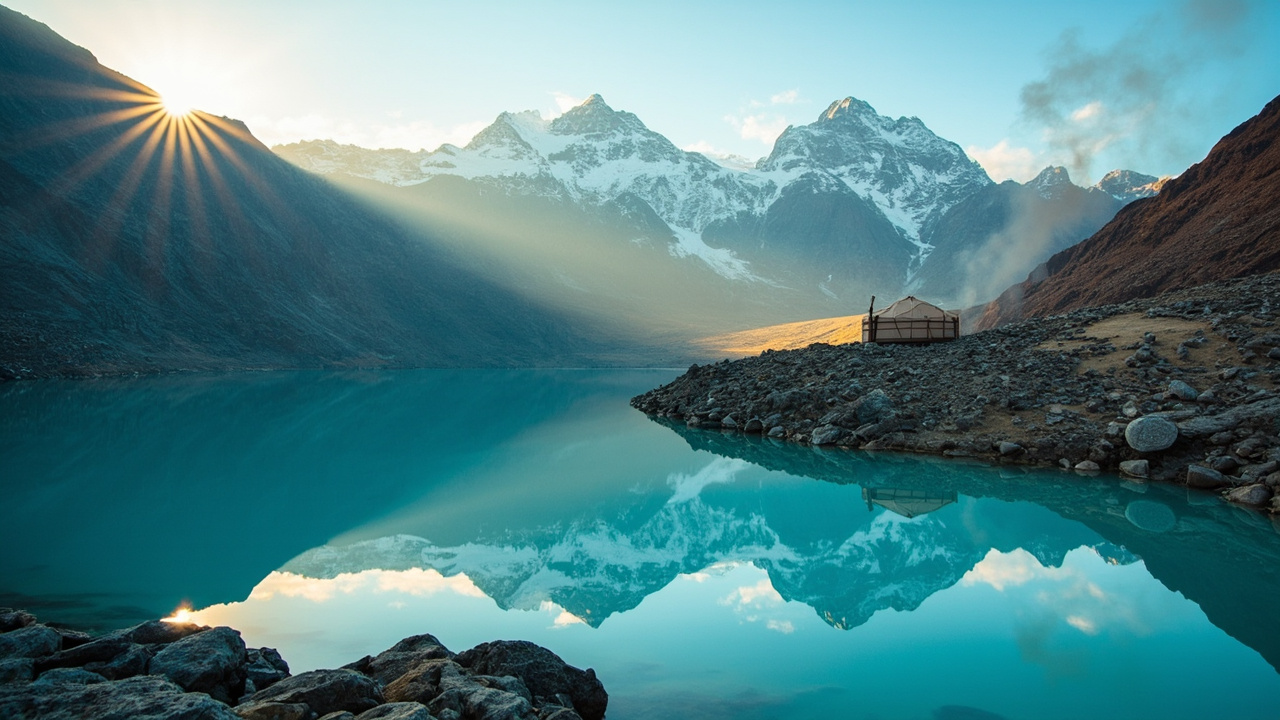
The bus pulled off the Karakoram Highway and stopped at a cluster of yurts, and I stepped out into air so thin and cold it felt like someone had pressed a glass of ice water against my face. The lake stretched out in front of me, impossibly still, and the snow-capped peaks of Kongur Tagh and Muztagh Ata rose behind it like a wall at the end of the world. I stood there for a long time without saying anything, and the only sound was the wind moving across the water and a yak bell clanking somewhere out of sight.
Karakul Lake sits at 3,600 meters (11,800 feet) in the Pamir Plateau, in China’s far western Xinjiang region. It’s not a place you stumble upon by accident - it takes two days of driving from Kashgar, a permit, and a willingness to sleep in a yurt at altitude. But it’s also one of the most dramatic landscapes I’ve seen anywhere in China, and I’ve crossed this country more than forty times. The lake is a mirror, literally - on calm days the mountains duplicate themselves perfectly on the water’s surface, and the color shifts from deep blue to green to silver depending on the light.
This guide covers everything you need to know for a 2026 trip: the new visa-free policies that make this easier than ever, how to arrange transport from Kashgar, what to pack for the altitude, and the honest truth about what it’s like to spend a night here. I’ve done this trip twice, once in summer and once in autumn, and I’ll tell you what I wish I’d known the first time.
Quick answer
Karakul Lake is a high-altitude alpine lake on the Karakoram Highway in Xinjiang, China, about 200 kilometers (124 miles) south of Kashgar, reachable by a 4-5 hour drive. As of 2026, most Western tourists can visit China visa-free for up to 30 days, and a trip here costs roughly $200-350 USD (1,400-2,500 CNY) per person including transport, permits, and a yurt stay. The best time to visit is June through September, and you’ll need to arrange a private driver or join a tour in Kashgar since there’s no public bus to the lake.
The Short Version
If you only have 90 seconds, here’s the deal. Karakul Lake is stunning but remote, and the journey is half the experience. You need a permit (your driver or tour agency handles this), you need to be okay with basic yurt accommodation, and you need to prepare for altitude sickness. The views are worth it - the lake reflecting Muztagh Ata is something you’ll remember for decades. Go in July or August when the weather is most stable, book a two-day trip from Kashgar, and don’t skip the sunrise. It’s not a luxury destination, and that’s exactly why it’s special.
How I Picked These
I’ve been to Karakul Lake twice - once in August 2019 and again in September 2023. The first trip was a rushed two-day tour from Kashgar with a driver named Abdu who’d been running this route for fifteen years. The second time, I stayed three nights, hiked along the western shore, and spent hours talking to the Kyrgyz families who run the yurt camps. I’ve also driven the Karakoram Highway from Kashgar to the Pakistan border crossing at Tashkurgan, and I’ve interviewed other travelers about their experiences. The information here comes from those trips, conversations with local guides, and checking current 2026 policies against what I know from my own visits.
Comparison Table
| Rank | Place | Best For | Approx Cost (USD) | Time Needed | When to Go |
|---|---|---|---|---|---|
| 1 | Karakul Lake Shore | The classic mirror reflection | Free (part of tour) | 2-3 hours | June-September |
| 2 | Muztagh Ata Base Camp | Hiking and glacier views | $50-80 (350-560 CNY) | Half day | July-August |
| 3 | Yurt Camp Sunrise | Photography and solitude | Included in stay | 1 hour | Any clear morning |
| 4 | Subash Village | Kyrgyz culture and homestays | $20-40 (140-280 CNY) | 2-3 hours | June-September |
| 5 | Kongur Tagh Viewpoint | Mountain panoramas | Free | 30 minutes | Clear days |
| 6 | Tashkurgan Town | Tajik culture and Stone Fort | $15-25 (105-175 CNY) | Half day | May-October |
| 7 | Karakul Lake Western Shore | Hiking and wild camping | Free | 4-6 hours | July-August |
| 8 | Pamir Plateau Grasslands | Summer wildflowers and yaks | Free | 1-2 hours | June-August |
| 9 | Khunjerab Pass | Pakistan border and high plateau | $30-50 (210-350 CNY) | Full day | May-October |
| 10 | Kashgar Old City | Pre-trip culture and logistics | Free (Old City) | 1-2 days | Year-round |
Karakul Lake Shore - The Mirror That Made This Place Famous
The first time I walked down to the water’s edge, I stopped counting the number of photos I took because it felt pointless - no camera was going to capture the way the lake held the mountains in its surface. On a windless morning, the reflection of Muztagh Ata is so perfect you can’t tell where the mountain ends and the water begins. I sat on a rock for an hour just watching the light change.
The lake is about 33 kilometers (20 miles) in circumference, and the shore is mostly gravel and short grass. The water itself is brackish - it’s a salt lake, fed by glaciers - so don’t expect to swim. What makes it special is the silence. There are no motorboats, no tour groups shouting, no music. Just the wind, the water, and occasionally a Kyrgyz herder on horseback.
Location: On the Karakoram Highway (G314), about 200 km (124 mi) south of Kashgar, in Akto County, Kizilsu Kyrgyz Autonomous Prefecture.
Entry fee: Free to walk along the shore. Some sections near the yurt camps may charge a small fee of about $3-5 (20-35 CNY) for parking or access.
Opening hours: Always open. The lake is outdoors, and there’s no gate.
How to get there: From Kashgar, take the G314 south. Your driver will pass through Opal village, then climb through the Pamir foothills. The lake appears suddenly after a final pass. There’s no public bus - you need a private car or tour. From Tashkurgan town, it’s about 90 minutes north.
When to visit: Early morning (6-8 AM) for the calmest water and best reflections. Midday winds create ripples that ruin the mirror effect.
Insider tips: Bring a wide-angle lens. The lake is so big and the mountains so tall that a standard lens makes everything look small. Also, the best reflection spot is on the western shore, not the main tourist area near the highway. Walk 20 minutes along the shore to escape the crowds.
I met a French photographer here who’d been coming back for eight years. He told me he’d never seen the same color twice, and after three days, I understood what he meant.
Muztagh Aha Base Camp - Getting Closer to the Ice
Muztagh Ata (“Father of Ice Mountains”) is the second-highest peak in the Pamirs at 7,546 meters (24,757 feet), and its base camp is one of the most accessible high-altitude trekking destinations in China. I drove partway up the dirt road toward the base camp and watched climbers setting out with their gear, looking like tiny colored dots against the enormous white wall of the mountain.
The base camp sits at about 4,400 meters (14,400 feet), and the road up is rough - you’ll need a driver who knows the route. The reward is a view of the glacier and the mountain that you simply cannot get from the lake shore. It’s also where you’ll see the famous “Karakul Lake from above” photos that make everyone want to come here.
Location: About 30 km (19 mi) southwest of Karakul Lake, up a dirt road off the G314.
Entry fee: No official fee, but you’ll need to hire a local driver with a suitable vehicle, roughly $50-80 (350-560 CNY) for the round trip from the lake.
Opening hours: Daylight hours only. The road is not lit and gets dangerous after dark.
How to get there: From Karakul Lake, drive south on G314 for about 15 km, then turn right onto the dirt road toward the mountain. The road is rough and requires a 4x4 or a driver who knows the route.
When to visit: July and August, when the snow has melted enough to make the road passable. Earlier in the season, it may be blocked.
Insider tips: Acclimatize at the lake for at least one night before going higher. The altitude difference of 800 meters (2,600 feet) is significant. Also, bring your own food - there’s nothing at base camp except a few climbers’ tents.
I made the mistake of going straight from Kashgar to base camp on my first trip. I spent the afternoon with a headache and learned a lesson about altitude that I won’t forget.
Yurt Camp Sunrise - The Hour That Makes It All Worthwhile
I’m not a morning person, but at Karakul Lake, I forced myself out of my sleeping bag at 5:30 AM, and it was the best decision I made on that entire trip. The sky went from black to deep blue to pink, and then the sun hit the summit of Muztagh Ata and turned it gold. The lake was so still it looked like glass, and the mountains were doubled in the water.
The yurt camps are run by Kyrgyz families, and they’re clustered along the eastern shore near the highway. You’ll be sleeping in a traditional felt yurt with a coal stove in the middle, and the family will bring you tea and bread in the morning. It’s basic - there’s no running water in most camps, and the toilet is a hole in the ground outside - but the experience is unforgettable.
Location: Eastern shore of Karakul Lake, directly off the G314 highway.
Entry fee: Included in your yurt stay, typically $20-40 (140-280 CNY) per person per night.
Opening hours: The lake is always accessible, but the yurt camps operate from May through October.
How to get there: Your driver will drop you at any of the camps along the highway. There are about a dozen camps, and they all look similar from the road.
When to visit: Any clear morning from June to September. Check the weather the night before - if the stars are visible, you’ll get a good sunrise.
Insider tips: Bring a headlamp and warm clothes. The temperature at sunrise can be near freezing even in August. Also, ask the family to wake you - they know the best time for the sunrise and will knock on your yurt.
The family that ran my camp had a daughter named Aygul who was learning English in school. She practiced with me over dinner, and her mother taught me how to make proper Kyrgyz tea with milk and salt.
Subash Village - Kyrgyz Life Beyond the Lake
Most tourists stop at the lake, take their photos, and leave. But if you drive another 10 kilometers (6 miles) south, you’ll reach Subash, a small Kyrgyz village that feels like it’s been here for centuries. I wandered through the village one afternoon and was invited into a family’s home for lunch - fresh bread, yak meat, and tea served by a grandmother who smiled at me the whole time.
The village is a collection of mud-brick and stone houses scattered across the valley, with yaks and sheep grazing everywhere. It’s not a tourist attraction in the traditional sense - there’s no ticket booth or gift shop - but it’s a window into how people actually live on the Pamir Plateau. The Kyrgyz people here are herders, and their lives follow the seasons and the movement of their animals.
Location: About 10 km (6 mi) south of Karakul Lake on the G314, in Akto County.
Entry fee: Free to wander. If you’re invited into a home, it’s customary to bring a small gift - tea, sugar, or fruit.
Opening hours: Always open, but the village is most active in the morning and evening when people are tending animals.
How to get there: Drive south from Karakul Lake on the G314 for about 10 minutes. The village is visible from the road.
When to visit: June through September, when the weather is warm and the herders are in their summer pastures.
Insider tips: Learn a few words of Kyrgyz before you go. “Salam” (hello) and “Rahmat” (thank you) will get you far. Also, don’t take photos of people without asking - some families are shy, and it’s polite to ask first.
I had lunch with a family who had nine children, and the youngest, a boy named Timur, spent the entire meal staring at me with wide eyes. His mother laughed and said he’d never seen a foreigner before.
Kongur Tagh Viewpoint - The Other Giant
Everyone talks about Muztagh Ata, but Kongur Tagh, at 7,649 meters (25,095 feet), is actually the highest peak in the Pamirs. It’s less photogenic because it’s less symmetrical, but it’s a massive, brooding presence that dominates the northern sky. There’s a viewpoint about 15 kilometers (9 miles) north of Karakul Lake where you can see the mountain in all its glory, and it’s worth the short detour.
I stopped at this viewpoint on my way back to Kashgar, and I was the only person there. The mountain was so big it didn’t look real - it looked like a painting that had been stretched too wide. The wind was howling, and I stood there for ten minutes before getting back in the car, feeling small in a way that’s hard to describe.
Location: On the G314, about 15 km (9 mi) north of Karakul Lake, before the road climbs over the pass.
Entry fee: Free.
Opening hours: Always open.
How to get there: Drive north on the G314 from Karakul Lake. The viewpoint is a pull-off on the right side of the road, just before the road starts climbing steeply.
When to visit: Clear days only. The mountain is often hidden by clouds, especially in the afternoon.
Insider tips: The best light for photographing Kongur Tagh is in the late afternoon, when the sun hits the western face. Also, this is a good spot to see marmots - they’re everywhere in the summer.
I watched a marmot stand on its hind legs and whistle at me, then disappear into its burrow. It was the only wildlife I saw that day, and it made me laugh.
Tashkurgan Town - The Gateway to the Roof of the World
Tashkurgan is the last town before the Pakistan border, and it’s worth a stop even if you’re not crossing into Pakistan. The town sits at 3,100 meters (10,200 feet) and is home to the Tajik people, who are ethnically distinct from the Uyghurs of Kashgar. The Stone Fort, a ruined citadel that dates back over 2,000 years, sits on a hill in the middle of town and is one of the most atmospheric ruins I’ve seen in China.
I spent an afternoon wandering the fort’s crumbling walls and watching the sun set over the Pamir mountains. The fort was once a key stop on the Silk Road, and you can still see the remains of the old city walls stretching out from the hill. The town itself is small and quiet, with a few restaurants serving Tajik food and a lively Sunday market.
Location: Tashkurgan Tajik Autonomous County, about 80 km (50 mi) south of Karakul Lake on the G314.
Entry fee: The Stone Fort costs about $8-10 (55-70 CNY). The town itself is free.
Opening hours: The fort is open from 9 AM to 7 PM in summer, and closes earlier in winter.
How to get there: Drive south from Karakul Lake on the G314 for about 90 minutes. The road follows a wide valley with stunning views of the mountains on both sides.
When to visit: May through October. Winters are brutally cold, and the town can feel deserted.
Insider tips: Try the Tajik bread - it’s thicker and heartier than Uyghur naan, and it’s baked in a clay oven. Also, the Sunday market is the best place to see the local Tajik culture up close, with traders coming in from the surrounding villages.
I ate a bowl of laghman noodles at a tiny restaurant near the fort, and the owner, a Tajik man named Karim, told me his family had been in Tashkurgan for six generations.
Karakul Lake Western Shore - Where the Tourists Don’t Go
The western shore of Karakul Lake is a different world from the eastern shore. There are no yurt camps, no tour buses, no souvenir stalls - just empty shoreline, rolling grasslands, and the mountains rising steeply from the water. I hiked along this shore for five hours and saw exactly one other person: a Kyrgyz herder on horseback moving his yaks to new pasture.
The hiking is easy - the terrain is flat or gently rolling - and the views of the lake and mountains are even better than from the eastern shore because you’re looking across the water at the full panorama. There’s a dirt track that follows the shore, and you can walk as far as you want and turn back. The solitude is the main attraction here.
Location: Western shore of Karakul Lake, accessible via a dirt track that branches off the G314 at the southern end of the lake.
Entry fee: Free.
Opening hours: Always open, but the dirt track can be muddy after rain.
How to get there: Drive to the southern end of the lake, where a dirt track heads west along the shore. Park at the trailhead and walk.
When to visit: July and August, when the grass is green and the weather is warmest.
Insider tips: Bring plenty of water - there’s no source on the western shore. Also, watch for yak droppings and step carefully. The herders’ dogs can be territorial, so give them a wide berth.
I sat on a rock on the western shore for an hour, watching a pair of eagles circle overhead. It was the quietest hour I’ve spent in China.
Pamir Plateau Grasslands - Summer Wildflowers and Yaks
In summer, the grasslands around Karakul Lake explode with wildflowers - purple, yellow, and white blooms that carpet the valleys between the lake and the mountains. The yaks graze among the flowers, and the whole scene looks like something from a Swiss postcard, except the mountains are twice as tall and the air is half as thick.
The best grassland areas are along the road between Karakul Lake and Subash Village, and in the valleys that branch off the main highway. I stopped several times to walk through the flowers, and each time I found myself surrounded by yaks that barely acknowledged my presence. They’re used to humans, and they’ll let you get surprisingly close.
Location: Along the G314 between Karakul Lake and Subash Village, and in the side valleys off the highway.
Entry fee: Free.
Opening hours: Always open.
How to get there: Drive slowly along the G314 between Karakul Lake and Subash and pull over wherever you see a good spot. The side valleys are accessible on foot.
When to visit: Late June through August, when the flowers are in full bloom.
Insider tips: The yaks look docile, but they’re wild animals - keep your distance and never get between a mother and her calf. Also, the flowers are fragile, so stick to the paths.
I watched a young yak chase a butterfly through the flowers, and for a moment, it looked almost playful. Then it noticed me watching and trotted off, its bell clanking.
Khunjerab Pass - The Border at the Top of the World
Khunjerab Pass, at 4,733 meters (15,528 feet), is the highest paved border crossing in the world, connecting China and Pakistan. It’s about a three-hour drive south from Karakul Lake, and the road climbs through some of the most dramatic scenery I’ve seen anywhere. The pass itself is a desolate, windswept place, with a simple border post and a sign marking the boundary between the two countries.
You can’t cross into Pakistan without a visa and a lot of paperwork, but you can visit the Chinese side of the pass and stand at the border marker. The views from the top are extraordinary - you can see the Karakoram range stretching into Pakistan, and on clear days, you can see K2, the second-highest mountain in the world, far in the distance.
Location: On the China-Pakistan border, about 130 km (81 mi) south of Karakul Lake on the G314.
Entry fee: Free to visit the Chinese side. You’ll need to show your passport and permit at the border post.
Opening hours: The border post is open from 10 AM to 6 PM in summer, but the pass itself is always accessible.
How to get there: Drive south from Karakul Lake on the G314 for about three hours. The road is good, but it climbs steeply in places.
When to visit: May through October. The pass is closed in winter due to snow.
Insider tips: The altitude at the pass is no joke - you’ll feel it even if you’re acclimatized. Take it slow, drink water, and don’t stay longer than an hour. Also, the border guards are friendly but serious - have your documents ready.
I stood at the border marker and looked south into Pakistan, and a Pakistani border guard waved at me from his post. We couldn’t talk, but we both smiled.
Kashgar Old City - The Starting Point for Everything
You can’t get to Karakul Lake without going through Kashgar, and the old city is worth a day or two of your time before you head to the mountains. The old city is a maze of narrow alleys, mud-brick houses, and bustling markets, and it’s one of the most atmospheric places in China. I spent two days here before my first trip to the lake, and I still feel like I barely scratched the surface.
The old city has been heavily renovated in recent years, and some parts feel a bit touristy, but the core is still authentic. The Sunday livestock market is a must-see, and the Id Kah Mosque is the largest in China. The food is also incredible - I ate the best lamb kebabs of my life here.
Location: The old city is in the center of Kashgar, about 200 km (124 mi) north of Karakul Lake.
Entry fee: Free to wander the old city. The Id Kah Mosque costs about $3-5 (20-35 CNY).
Opening hours: The old city is always open. The mosque is open from 10 AM to 8 PM, but closed during prayer times.
How to get there: Kashgar has an airport with flights from Urumqi and other major Chinese cities. From the airport, take a taxi to the old city (about $5-8 / 35-55 CNY).
When to visit: Year-round, but spring and autumn are the most comfortable.
Insider tips: The Sunday livestock market is the real deal - get there early, around 9 AM, before the crowds. Also, the Uyghur tea houses in the old city are great places to relax and people-watch.
I sat in a tea house in the old city for two hours, drinking Uyghur tea and watching old men play dominoes. The owner, a man named Yusuf, told me he’d been running the tea house for thirty years.
FAQ summary
Karakul Lake is accessible from Kashgar via a 4-5 hour drive on the Karakoram Highway, and as of 2026, most Western tourists can visit China visa-free for up to 30 days. A two-day trip costs approximately $200-350 USD (1,400-2,500 CNY) per person, including transport, permits, and yurt accommodation. The best time to visit is June through September, and travelers should prepare for high altitude (3,600 meters / 11,800 feet) by acclimatizing for at least one night before arriving.
FAQ
Q: Do I need a special permit to visit Karakul Lake? A: Yes, you need a border permit (bianfang zheng) to travel beyond Kashgar toward the Pakistan border. Your driver or tour agency can arrange this for you in Kashgar, usually within a few hours. The permit costs about $10-15 (70-105 CNY) and is valid for the duration of your trip.
Q: Can I visit Karakul Lake without a tour? A: You can, but you’ll need to hire a private driver in Kashgar, which costs about $100-150 (700-1,050 CNY) for a two-day round trip. There’s no public bus to the lake. Your driver will handle the permit and can recommend a yurt camp.
Q: How cold does it get at night at Karakul Lake? A: Even in summer, nighttime temperatures can drop to near freezing (0-5 degrees Celsius / 32-41 degrees Fahrenheit). In winter, temperatures can fall to -20 degrees Celsius (-4 degrees Fahrenheit). Bring warm layers and a good sleeping bag if you’re staying in a yurt.
Q: Will I get altitude sickness at Karakul Lake? A: It’s possible - the lake sits at 3,600 meters (11,800 feet), which is high enough to cause symptoms in some people. Spend a night in Kashgar (1,300 meters / 4,300 feet) first, drink plenty of water, and avoid alcohol. If you feel severe symptoms, descend immediately.
Q: Is there cell phone service and internet at Karakul Lake? A: Yes, there’s 4G cell service at the lake, but it can be spotty. Internet access works through the Chinese firewall, so you’ll need a VPN to access Google, Facebook, or WhatsApp. Buy a Chinese SIM card in Kashgar or use an eSIM.
Q: Can I pay with a credit card at Karakul Lake? A: No, the yurt camps and local shops only accept cash or mobile payments like WeChat Pay and Alipay. Bring enough cash in CNY to cover your stay and any purchases. You can withdraw cash from ATMs in Kashgar before you leave.
Q: Is it safe to travel to Karakul Lake as a foreigner? A: Yes, the area is safe for tourists, and the local Kyrgyz and Tajik people are welcoming. The main risks are altitude sickness and the remote location, so make sure your driver is reliable and you have a way to contact help if needed.
The Honest Wrap-up
Karakul Lake is not for everyone. If you want luxury accommodation, fine dining, and easy logistics, this is not the place for you. But if you’re willing to trade comfort for one of the most spectacular landscapes in China, it’s absolutely worth the effort. The journey from Kashgar is long, the nights are cold, and the altitude can be tough, but standing on the shore of that lake, watching the mountains double themselves in the water, is an experience I still think about years later.
My advice to a friend: go in July or August, book a two-day trip with a recommended driver, and give yourself at least one full day at the lake. Don’t try to rush it. And whatever you do, wake up for the sunrise at least once. You’ll thank me.
Topics
More guides you may like

Top 10 Bridges in China
China's bridges are engineering marvels spanning mountains, rivers, and seas. Here are 10 of the most spectacular, from ancient stone to modern steel.
8 min read

Top 10 Buddhist Sites in China
From the Leshan Giant Buddha to the Dunhuang Caves, these 10 Buddhist sites represent 2,000 years of China's spiritual heritage.
9 min read

Top 10 Day Trips from Beijing You Shouldn't Miss
Beijing is packed with history, but some of China's best experiences are just a few hours away. Here are 10 day trips that will transform your visit.
9 min read

Top 10 Hidden Gems in China Off the Beaten Path
Beyond the Great Wall and Terracotta Warriors, China has incredible hidden destinations few tourists ever reach. Here are 10 underrated gems worth the detour.
9 min read

Top 10 Markets and Shopping Streets in China
From Shanghai's Bund to Beijing's Silk Street - 10 markets where foreigners can haggle, explore, and bring home authentic Chinese goods.
9 min read

Top 10 Museums in China You Shouldn't Miss
China's museums span 5,000 years of civilization. These 10 - from the Palace Museum to Xi'an's terracotta gallery - are unmissable for culture lovers.
9 min read