
Labrang Monastery Xiahe Tibet: The Complete 2026 Guide
The bus from Lanzhou took six hours, and for the last two of them I just pressed my forehead against the cold window.
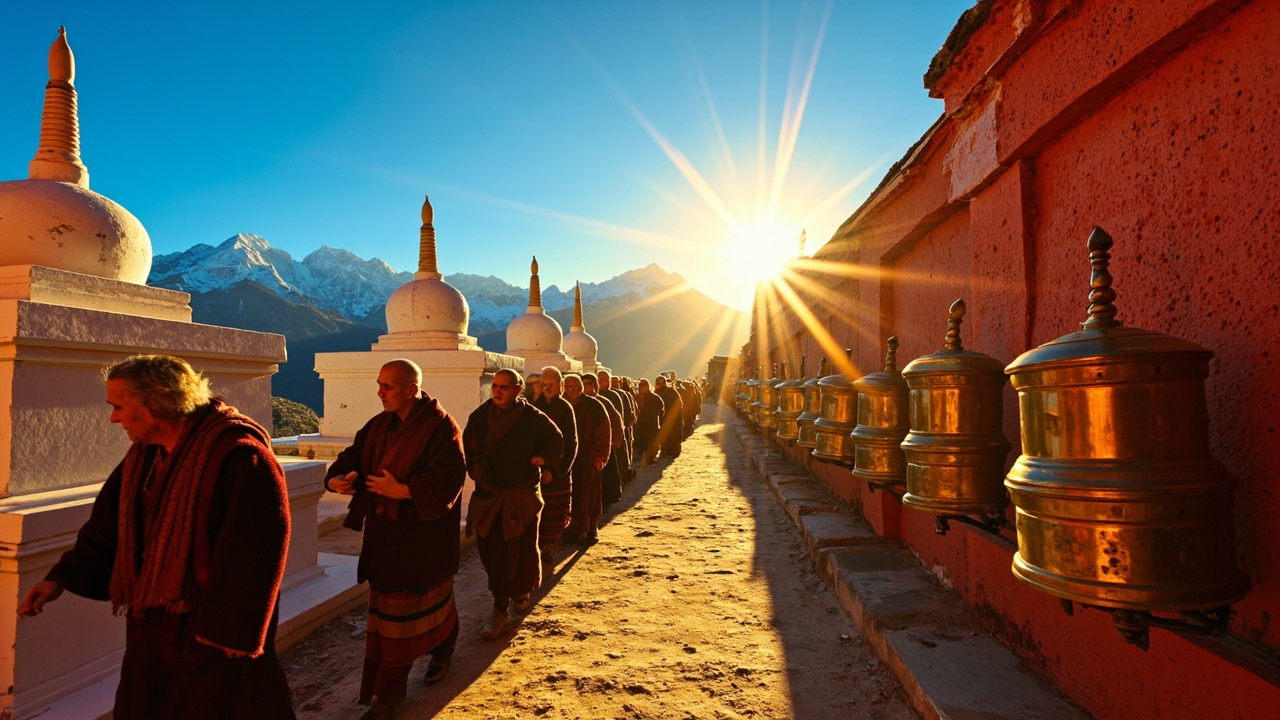
The bus from Lanzhou took six hours, and for the last two of them I just pressed my forehead against the cold window, watching the grasslands open up like a slow exhale. Tibetan prayer flags snapped in the wind at roadside passes. Yaks stared at us with the unbothered confidence of animals who own the place. When we finally rolled into Xiahe, the sky had gone that particular shade of high-altitude blue that makes everything below it look sharper, cleaner, more real.
I’d come for Labrang Monastery, one of the six great monasteries of the Gelug school of Tibetan Buddhism, and the largest Tibetan Buddhist monastery outside the Tibet Autonomous Region itself. But I didn’t expect the town to feel so alive, so un-touristy despite the steady stream of pilgrims and backpackers. Monks in maroon robes crisscrossed the streets on electric scooters. Elderly Tibetan women spun prayer wheels with leathery hands worn smooth by decades of devotion. The smell of butter lamps and burning juniper drifted from temple courtyards.
This guide covers everything you need to know before you go: how to get there, what it costs, where to stay, what to see, and the mistakes I made so you don’t have to.
Quick answer
Labrang Monastery in Xiahe, Gansu Province, is China’s most accessible major Tibetan Buddhist monastery, located about 4 hours from Lanzhou by bus or car. Entry costs approximately $6 (CNY 40) for the main temple circuit, with the surrounding town and many outdoor areas free to explore. The best time to visit is May through October, when temperatures are mild and the grasslands are green. No special permit is needed for foreign visitors, and the 2026 visa-free transit policies for many nationalities make it easier than ever to combine with a broader China trip.
The Short Version
If you only have 90 seconds, here’s the deal: Labrang is worth the journey, full stop. It’s not polished or Instagram-perfect, and that’s exactly why you should go. The monastery is a living, breathing institution with over 1,000 monks in residence, not a museum. Give yourself at least two days, one for the monastery circuit and one to wander the town, walk the kora path, and watch the pilgrims. Skip the group tours, learn to use a translation app, and bring cash because the ticket office and many local shops don’t take cards.
How I Picked These
I’ve traveled through Gansu and Qinghai provinces four times over the past seven years, and I’ve spent a combined two weeks in Xiahe itself across three separate visits. I walked the kora path at dawn, sat through a debate session at the Buddhist college, ate more bowls of thukpa than I can count, and made friends with a monk named Tenzin who runs a small tea house near the west gate. I’ve also made every mistake in the book, from showing up on a Monday when the main temples were closed to trying to pay with a card at a noodle shop that only took WeChat Pay. This guide is the result of all of that, plus conversations with hostel owners, taxi drivers, and pilgrims who’ve been coming here for decades.
Comparison Table
| Rank | Place | Best For | Approx Cost (USD) | Time Needed | When to Go |
|---|---|---|---|---|---|
| 1 | Main Prayer Hall Circuit | First-time visitors, architecture | $6 (CNY 40) | 2-3 hours | Morning, any day |
| 2 | Kora Path | Pilgrims, photographers, sunset | Free | 1-2 hours | Dawn or dusk |
| 3 | Buddhist Debate Sessions | Cultural immersion, unique experience | Free | 30-60 min | Mon-Sat, 4-6 PM |
| 4 | Gyaltsen Temple | Serenity, fewer crowds | Included in main ticket | 30-45 min | Mid-morning |
| 5 | Monastery Library | History buffs, scholars | Included | 30 min | Check hours |
| 6 | Serteng Temple | Art, thangka paintings | Included | 30 min | Morning light |
| 7 | Xiahe Town Market | Local life, souvenirs, food | Free | 1-2 hours | Morning |
| 8 | Sangke Grassland | Nature, horseback riding | Free (rides ~$15/CNY 100) | Half day | June-August |
| 9 | White Pagoda & Surrounding Village | Photography, quiet walks | Free | 1 hour | Golden hour |
| 10 | Ganjia Grassland | Off-the-beaten-path, vast landscapes | Free | Full day | July-September |
Main Prayer Hall Circuit —the beating heart of Labrang
The first time I walked into the Main Prayer Hall, I nearly tripped over a row of monks’ boots lined up neatly by the door. Inside, the air was thick with the smell of butter lamps and old wood, and the light came through high windows in dusty shafts that made everything feel sacred, even the parts I didn’t understand. A thousand cushions sat in precise rows, waiting for the next assembly.
This is the most important building in the monastery complex, and the one you absolutely cannot miss. The hall dates back to 1710, when the monastery was founded, and it’s been rebuilt and expanded several times since. The murals on the walls are centuries old in places, and the giant statue of Tsongkhapa, the founder of the Gelug school, dominates the far end of the hall.
Location: Central area of the monastery complex, Xiahe Town, Gannan Tibetan Autonomous Prefecture.
Entry fee: $6 (CNY 40) for the full temple circuit ticket. Some smaller temples are free.
Opening hours: 8:00 AM to 5:30 PM daily. Note that the main hall closes for lunch from 12:00 to 2:00 PM.
How to get there: From Xiahe bus station, walk west on Renmin Street for about 10 minutes. You’ll see the monastery’s white pagodas ahead of you. The ticket office is on the south side of the complex.
When to visit: Go early, right at 8:00 AM opening. The morning light through the high windows is something else, and you’ll beat the tour groups that start arriving around 10.
Insider tips: Bring a pair of thin socks to slip on when you enter the hall, since you’ll need to remove your shoes. Don’t take photos inside the main hall, it’s strictly forbidden and guards will yell at you. The ticket includes entry to most of the smaller temples, so hold onto it. If you want to see the monks’ assembly, try to time your visit for early morning or late afternoon when they gather for prayers.
I once watched a young monk fall asleep during prayers, his head slowly drooping until his neighbor nudged him awake. He looked around sheepishly, then caught my eye and grinned. Even monks get tired.
Kora Path —walk where the pilgrims walk
The kora path is a 3-kilometer circuit that loops around the entire monastery complex, marked by a continuous line of prayer wheels. On my first visit, I joined the stream of pilgrims at 6:30 AM, and for an hour I walked in silence, spinning every wheel I passed, following the slow rhythm of the crowd. Elderly women with prayer beads moved faster than I did. A father carried his toddler on his shoulders, the kid reaching out to spin the wheels with both hands.
This is the most authentic experience in Xiahe, and it costs nothing. The path takes you past the white pagodas, along the back of the monastery where you can see monks’ living quarters, and up to a small hill with views over the whole valley. You’ll see pilgrims prostrating full-length on the ground, their hands covered in wooden boards to protect their palms.
Location: The path encircles the entire monastery complex. You can join it at any point.
Entry fee: Free.
Opening hours: Always open. Pilgrims walk it from before dawn until after dark.
How to get there: From the main ticket office, walk east along the south wall of the complex until you reach the first prayer wheel. Follow the wheels.
When to visit: Dawn is magical, when the light is soft and the crowds are mostly local pilgrims. Sunset from the hill at the north end is also spectacular.
Insider tips: Walk clockwise, always. That’s the direction of the kora, and going the other way will get you confused looks. Don’t spin the prayer wheels too fast or skip any, the locals notice. If you want to take photos of pilgrims, ask first with a smile and a nod, most will wave you off but some will pose happily. The hill at the north end is the best spot for a panorama, and it’s where the locals go to watch the sunset.
I met an old woman on the kora path who stopped to adjust my jacket collar, muttering something in Tibetan that I later learned was probably “you’re not dressed warm enough.” She was right.
Buddhist Debate Sessions —the most fascinating thing you’ll see
I stumbled onto the debate sessions by accident, following the sound of rhythmic clapping and raised voices. In a dusty courtyard behind the Buddhist college, groups of monks in their maroon robes were arguing with each other, slapping their right hands into their left palms with sharp cracks, stepping forward and back in a kind of choreographed intellectual dance. One monk would make a point, the other would counter, and the clapping would punctuate every assertion.
This is the Gelug school’s famous debate tradition, where monks sharpen their understanding of Buddhist philosophy through structured argument. It’s loud, energetic, and completely captivating to watch, even if you don’t understand a word of Tibetan. The debates happen most afternoons, and the monks are used to spectators, though they’ll ignore you completely.
Location: The debate courtyard is behind the Buddhist college, on the northwest side of the complex.
Entry fee: Free.
Opening hours: Generally 4:00 PM to 6:00 PM, Monday through Saturday. It’s less formal than the temples, so times can vary.
How to get there: Walk through the main complex toward the northwest, following the signs for the Buddhist college. The courtyard is behind the main building.
When to visit: Go around 4:30 PM, when the debates are in full swing. The energy peaks in the first hour.
Insider tips: Sit quietly at the edge of the courtyard and just watch. Don’t try to join or interrupt. The monks wear distinctive yellow hats during debates, which marks them as Gelug school. If you’re lucky, a senior monk might explain what’s happening, but don’t count on it. Bring water, it gets hot in the courtyard in summer.
A young monk once caught me trying to understand the debate structure and mimed the hand-clapping motion, then laughed and shrugged as if to say “I don’t fully get it either, and I’ve been doing this for years.”
Gyaltsen Temple —the quiet one
Most visitors rush through the main halls and miss Gyaltsen Temple entirely, which is a shame because it’s the most peaceful spot in the entire complex. The temple is smaller, darker, and older-feeling, with a single large prayer hall that smells of aged wood and incense. The murals here are faded in places, but that only adds to their beauty.
I sat in the courtyard for half an hour one afternoon, watching a monk slowly sweep the stone floor with a broom made of twigs. He didn’t look up once. The silence was so complete I could hear the swish of every stroke.
Location: On the eastern side of the monastery complex, past the main prayer halls.
Entry fee: Included in the main ticket ($6 / CNY 40).
Opening hours: Same as the main complex, 8:00 AM to 5:30 PM, with a lunch break.
How to get there: From the Main Prayer Hall, walk east along the main path. You’ll see the temple’s distinctive golden roof ahead.
When to visit: Mid-morning, after the main crowds have moved on. You might have the place to yourself.
Insider tips: The side chapel contains a large statue of the protector deity that’s worth a look. The courtyard is a great spot for a quiet break, bring a snack and just sit. If a monk is sweeping, don’t offer to help, it’s part of their practice, not a chore.
Monastery Library —where centuries of knowledge live
The library at Labrang holds over 60,000 Buddhist texts, including some that are hundreds of years old and written on palm leaves. It’s not the most visually impressive building in the complex, but for anyone interested in history or religion, it’s a highlight. The collection includes works on philosophy, medicine, astronomy, and logic, and the librarians are monks who’ve spent decades studying these texts.
Location: In the western section of the monastery complex, near the Buddhist college.
Entry fee: Included in the main ticket.
Opening hours: Irregular. Sometimes open, sometimes not. Ask at the ticket office or check with a monk.
How to get there: Follow the main path west from the prayer halls. The library building has a distinctive green roof.
When to visit: Try late morning, when the monks are more likely to be around.
Insider tips: Don’t touch the texts, even if they look accessible. The oldest ones are irreplaceable. The librarians are happy to talk about the collection if you’re respectful and interested. Photography is strictly forbidden inside.
Serteng Temple —art that stops you in your tracks
Serteng Temple is known for its thangka paintings, the intricate Buddhist scroll paintings that are some of the finest in the region. The main hall is lined with them, each one a riot of color and detail that rewards close inspection. I spent a full hour in here on my second visit, tracing the gold leaf with my eyes, trying to understand how human hands could create something so precise.
Location: South of the main prayer halls, near the ticket office.
Entry fee: Included in the main ticket.
Opening hours: 8:00 AM to 5:30 PM.
How to get there: From the ticket office, walk north into the complex. Serteng is the first major temple on your left.
When to visit: Morning, when the light is best for seeing the paintings’ colors.
Insider tips: The thangkas on the upper floor are the oldest and most valuable. Look for the one depicting the Wheel of Life, it’s a masterpiece. Don’t use flash photography, it damages the pigments.
Xiahe Town Market —where the town actually lives
The market in Xiahe is not a tourist attraction, it’s where locals buy their vegetables, meat, and household goods. It’s chaotic, noisy, and absolutely wonderful. Stalls sell everything from yak butter to knockoff Nikes, and the food section has more varieties of dried cheese and meat than you knew existed.
Location: On the south side of town, a five-minute walk from the monastery ticket office.
Entry fee: Free.
Opening hours: 7:00 AM to 7:00 PM, busiest in the morning.
How to get there: Walk south from the monastery along Renmin Street, then turn left at the first major intersection. Follow the smell of spices.
When to visit: Go in the morning, before the heat of the day and before the stalls start packing up.
Insider tips: Try the yak butter tea at one of the small stalls, it’s an acquired taste but worth it. Dried yak cheese is a good souvenir, it keeps forever and costs almost nothing. Bargaining is expected, but don’t be aggressive about it, the prices are already low. Bring small bills, vendors rarely have change for large notes.
I bought a string of prayer beads from an old woman who insisted on giving me a discount because I was “a good boy.” I was 38 at the time.
Sangke Grassland —the grassland that makes you believe in poetry
Sangke Grassland is a 20-minute drive from Xiahe, and it’s the classic Tibetan plateau landscape you’ve seen in photos: rolling green hills, yaks scattered like punctuation marks, and a sky so big it makes you feel small in the best way. There’s a small village here, a few guesthouses, and a handful of locals offering horseback rides.
Location: About 10 kilometers southwest of Xiahe town.
Entry fee: Free to enter. Horseback rides cost about $15 (CNY 100) for an hour.
Opening hours: Always open.
How to get there: Take a taxi from Xiahe town, about $5 (CNY 30) one way. Or rent a bike and make the ride yourself, it’s mostly flat.
When to visit: June through August, when the grass is green and the wildflowers are out. Go early to beat the tour groups.
Insider tips: The horseback rides are led by local families, and the horses are well-trained. Negotiate the price before you get on. Bring a jacket, the wind on the grassland is cold even in summer. If you’re lucky, you’ll see marmots, the fat ground squirrels that whistle at you from their burrows.
White Pagoda & Surrounding Village —the view worth the climb
Just north of the monastery complex, a white stupa sits on a small hill overlooking the town. It’s not marked on any map, and most tourists miss it entirely. The climb takes about 15 minutes, and the reward is a panoramic view of the entire monastery, the town, and the valley beyond. On a clear day, you can see the snow-capped mountains to the south.
Location: North of the monastery, on the hill behind the main complex.
Entry fee: Free.
Opening hours: Always open.
How to get there: Walk north from the monastery’s north gate, following the dirt path that leads up the hill. You’ll see the white pagoda from below.
When to visit: Golden hour, about an hour before sunset. The light on the monastery’s golden roofs is something you’ll remember.
Insider tips: The path is steep and rocky, wear proper shoes. The village at the base of the hill has a few small shops selling snacks and water. This is a great spot for sunrise too, if you’re willing to get up early enough.
Ganjia Grassland —the one locals go to instead
Every local I met in Xiahe told me the same thing: Sangke is for tourists, Ganjia is for us. Ganjia Grassland is further out, about an hour’s drive, and it’s wilder, emptier, and more beautiful. The road there passes through small villages and over mountain passes, and the grassland itself stretches to the horizon in every direction.
Location: About 40 kilometers southwest of Xiahe.
Entry fee: Free.
Opening hours: Always open.
How to get there: Hire a taxi for the day, about $40 (CNY 280). Or take the local bus that runs between Xiahe and Ganjia village, though it’s infrequent.
When to visit: July and August, when the grass is at its greenest. The rest of the year, it’s brown and windswept.
Insider tips: The road to Ganjia passes through a few small Tibetan villages where you can stop and stretch your legs. Bring a picnic, there are no restaurants out here. The altitude is higher than Xiahe, around 3,500 meters, so take it easy if you’re not acclimatized.
FAQ summary
Labrang Monastery is the largest Tibetan Buddhist monastery outside Tibet, located in Xiahe town in Gansu Province, approximately 4 hours from Lanzhou. The main temple circuit costs $6 (CNY 40), with many outdoor areas free to visit, and the monastery is open daily from 8:00 AM to 5:30 PM. No special permits are needed for foreign visitors, and the best time to visit is May through October. The kora path, debate sessions, and surrounding grasslands are all free and accessible without a ticket.
FAQ
Q: Do I need a special permit to visit Labrang Monastery in Xiahe? A: No. Unlike the Tibet Autonomous Region, Gannan Prefecture where Xiahe is located does not require a permit for foreign visitors. You just need a valid Chinese visa or visa-free entry eligibility, and you can travel independently.
Q: How do I get from Lanzhou to Xiahe? A: The most common route is a direct bus from Lanzhou’s South Bus Station, which takes about 4-5 hours and costs around $8 (CNY 55). There’s also a train from Lanzhou to Xiahe station, but it’s slower and less convenient. Taxis from Lanzhou cost around $80 (CNY 550) one way.
Q: Is Labrang Monastery open every day? A: Yes, the monastery complex is open daily from 8:00 AM to 5:30 PM. However, some smaller temples and the library have irregular hours, and the main prayer hall closes for lunch from 12:00 to 2:00 PM. The kora path is always open.
Q: What should I wear when visiting the monastery? A: Dress modestly, covering shoulders and knees. You’ll need to remove your shoes before entering the main prayer halls, so wear socks. In summer, the sun is intense at this altitude, so bring a hat and sunscreen. In winter, temperatures can drop well below freezing.
Q: Can I take photos inside the monastery? A: Photography is generally allowed in the courtyards and outdoor areas, but strictly forbidden inside the temples and prayer halls. Guards will tell you to stop if you try. The debate sessions are fine to photograph from a distance.
Q: Is it safe to travel to Xiahe as a solo foreign visitor? A: Yes, Xiahe is very safe and welcoming to foreign visitors. The town is small and walkable, and the local Tibetan community is used to tourists. Just carry your passport with you, as police occasionally check IDs, and be respectful of religious customs.
Q: Do I need to book accommodation in advance? A: In summer, yes. Xiahe has a limited number of guesthouses and hotels, and they fill up quickly during the peak season from June to August. Book at least a week in advance. In winter, you can usually find a room on arrival.
The Honest Wrap-up
Labrang Monastery isn’t the easiest place to get to, and it’s not the most polished tourist destination in China. The town is dusty, the accommodation is basic, and the food is repetitive if you don’t like noodles. But it’s also one of the most authentic places I’ve been in this country, a place where you can watch monks debate philosophy in the afternoon and share tea with pilgrims at sunset, a place that feels genuinely alive rather than staged for visitors.
If you’re the kind of traveler who needs comfort and convenience, this might not be for you. But if you want to see a side of China that most tourists never do, and you’re willing to trade a few Western amenities for an experience you’ll never forget, book the bus ticket. And when you get there, walk the kora path at dawn. You’ll understand why I keep coming back.
Topics
More guides you may like
Top 10 Bridges in China
China's bridges are engineering marvels spanning mountains, rivers, and seas. Here are 10 of the most spectacular, from ancient stone to modern steel.
8 min read

Top 10 Buddhist Sites in China
From the Leshan Giant Buddha to the Dunhuang Caves, these 10 Buddhist sites represent 2,000 years of China's spiritual heritage.
9 min read
Top 10 Day Trips from Beijing You Shouldn't Miss
Beijing is packed with history, but some of China's best experiences are just a few hours away. Here are 10 day trips that will transform your visit.
9 min read
Top 10 Hidden Gems in China Off the Beaten Path
Beyond the Great Wall and Terracotta Warriors, China has incredible hidden destinations few tourists ever reach. Here are 10 underrated gems worth the detour.
9 min read
Top 10 Markets and Shopping Streets in China
From Shanghai's Bund to Beijing's Silk Street - 10 markets where foreigners can haggle, explore, and bring home authentic Chinese goods.
9 min read
Top 10 Museums in China You Shouldn't Miss
China's museums span 5,000 years of civilization. These 10 - from the Palace Museum to Xi'an's terracotta gallery - are unmissable for culture lovers.
9 min read