
Wuyi Mountain Fujian: The Complete 2026 Guide
The rain came sideways off the mountains, and I was standing in a bamboo grove with no idea which path led back to the ferry.
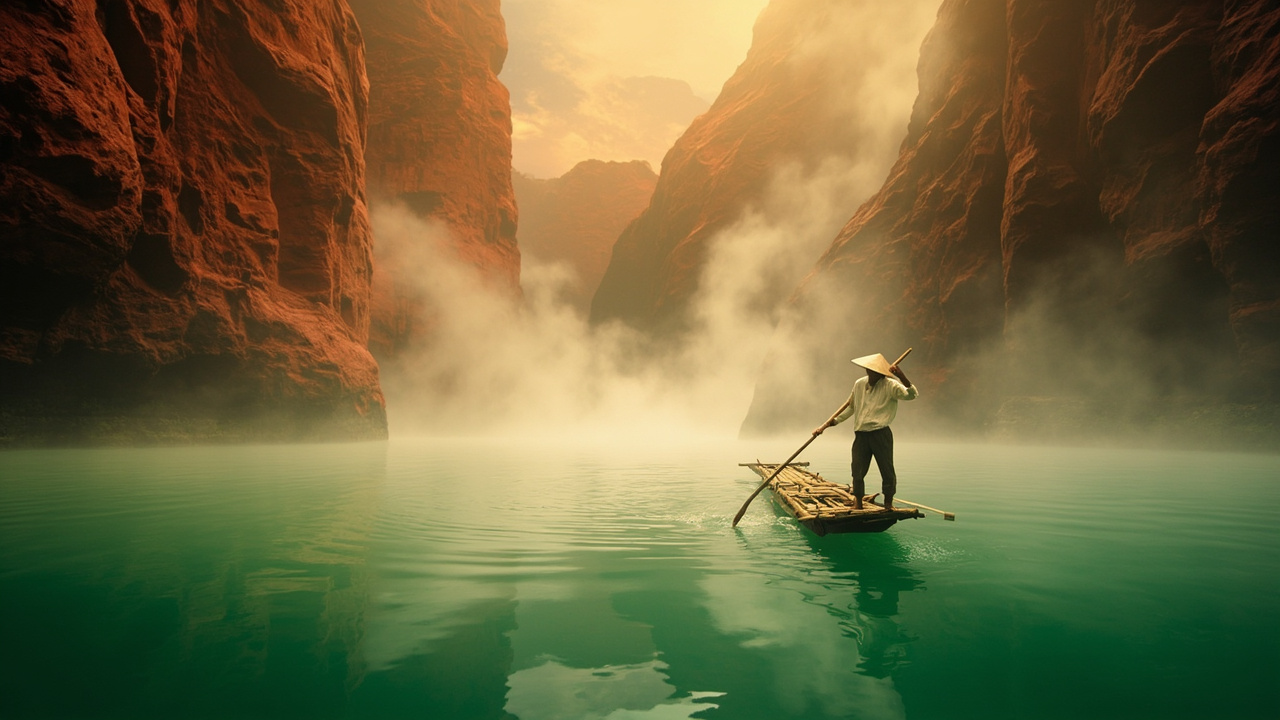
The rain came sideways off the mountains, and I was standing in a bamboo grove with no idea which path led back to the ferry. I’d been in Wuyi Mountain for maybe four hours, and already I’d taken the wrong turn at the fork, slipped on a mossy stone, and somehow ended up in the most beautiful place I’d accidentally found in years. The tea terraces below me were the color of wet jade, and somewhere down in the valley a temple bell was ringing through the mist. That’s Wuyi Mountain for you. It doesn’t announce itself. It just shows up and rearranges your expectations.
Wuyi Mountain (武夷山, Wǔyí Shān) sits in the northwest corner of Fujian Province, about a 3-hour bullet train ride from Fuzhou or a 4-hour ride from Xiamen. It’s a UNESCO World Heritage site, which sounds bureaucratic until you’re actually there, floating down the Nine Bend River (九曲溪) between cliffs that look like they were painted by someone with a grudge against straight lines. It’s also the birthplace of oolong tea, specifically Da Hong Pao (大红袍), the most famous and expensive tea in China. The “Big Red Robe” bushes are still growing on a cliff face, guarded by people who take their job very seriously.
This guide covers the ten things I’d actually recommend after spending a week in the area, plus the practical details that most travel blogs get wrong or skip entirely. I’ll tell you what’s worth your money, what’s a tourist trap, and how to get around without losing your mind. I’ve been to China 40-something times, and Wuyi Mountain is one of the few places I keep coming back to.
Quick answer
Wuyi Mountain is a UNESCO-listed scenic area in Fujian Province, China, famous for its dramatic river gorge, cliff-top temples, and as the origin of Da Hong Pao oolong tea. Most visitors spend 2-3 days here, with the main highlights being the Nine Bend River bamboo raft ride (about $15 USD / 110 CNY) and the Heavenly Tour Peak hike (free with the general admission ticket of about $22 USD / 160 CNY). The best time to visit is April-May or September-October for mild weather and clear skies. China’s 240-hour visa-free transit policy (as of 2026) covers many nationalities, but check your specific country’s eligibility before booking.
The Short Version
If you only have 90 seconds, here’s the deal. Wuyi Mountain is not a “must-see” in the way the Great Wall or the Terracotta Warriors are, but it’s a genuine gem if you want nature, tea, and fewer crowds. The bamboo raft ride on the Nine Bend River is the single best thing you can do here, and it’s cheap. The hiking is excellent but steep in places, so bring proper shoes. The tea is world-class, and you should absolutely buy some from a local farmer rather than the tourist shops. Skip the “Impression Dahongpao” show unless you really love outdoor theater. Budget 2-3 days, not more. And for the love of god, check the weather before you go, because rain can shut down the rafting.
How I Picked These
I’ve been to Wuyi Mountain four times over the past seven years, most recently in October 2025. I’ve done the standard tourist circuit, but I’ve also spent time wandering the back trails, drinking tea with farmers in Xingcun Village, and getting hopelessly lost in the bamboo groves. I talked to raft guides, hotel owners, and a very patient woman at the ticket office who explained the difference between the three ticket zones about five times. I also made plenty of mistakes, which I’ll share so you don’t have to. Everything in this guide is based on what I actually did, saw, and paid, with prices cross-checked against 2026 rates where I could verify them.
Comparison Table
| Rank | Place | Best For | Approx Cost (USD) | Time Needed | When to Go |
|---|---|---|---|---|---|
| 1 | Nine Bend River Raft | The iconic experience | $15 (110 CNY) | 90 minutes | Apr-May, Sep-Oct |
| 2 | Heavenly Tour Peak | Best views | Included in ticket | 3-4 hours | Morning, clear days |
| 3 | Da Hong Pao Scenic Area | Tea history | Included in ticket | 2-3 hours | Any season |
| 4 | Wuyi Palace | Architecture & history | Included in ticket | 1-2 hours | Weekdays |
| 5 | Water Curtain Cave | Unique geology | Included in ticket | 1-2 hours | After rain |
| 6 | One Line Sky | Narrow canyon hike | Included in ticket | 1 hour | Midday, avoid weekends |
| 7 | Xingcun Village | Tea culture immersion | Free (tea tasting extra) | Half day | Morning |
| 8 | Tianyou Peak | Sunrise hike | Included in ticket | 2-3 hours | Pre-dawn |
| 9 | Impression Dahongpao Show | Evening entertainment | $50-100 (360-720 CNY) | 70 minutes | Night, Apr-Oct |
| 10 | Wuyi Mountain Museum | Context & history | Free | 1 hour | Any |
1. Nine Bend River Bamboo Raft —The Ride That Made Me Forget My Phone
The first time I did the raft ride, I was so busy trying to take photos that I almost missed the point. The second time, I put my phone away and just watched. The river bends nine times through the gorge, and each bend reveals something new: a cliff face that looks like a giant’s face, a cave that locals say was once a monk’s retreat, a patch of tea bushes growing impossibly on a vertical slope. The raft itself is made of bamboo, and your guide uses a long pole to navigate the shallows. It’s not a wild ride, but it’s one of the most peaceful hours and a half you’ll have in China.
The rafts seat about 8 people, and you’ll be paired with strangers unless you book a private raft (which costs more, about $45 USD / 320 CNY, and is worth it if you want to actually talk to the guide). The guides are famously chatty, but they’re also known for hinting that a tip will improve their commentary. It’s not required, but if you give 20-30 CNY per person, they’ll tell you stories about the cliffs that you won’t find in any guidebook.
- Location: Nine Bend River, Wuyi Mountain Scenic Area, Wuyishan City, Fujian Province
- Entry fee: $15 USD (110 CNY) for the raft ride, plus the general scenic area ticket of $22 USD (160 CNY) if you’re visiting other parts
- Opening hours: 7:00 AM to 4:30 PM, with the last rafts leaving around 3:30 PM. The ride runs year-round, but it’s canceled during heavy rain or flooding
- How to get there: Take the scenic area shuttle bus from the main entrance to the Wuyi Palace stop, then walk 5 minutes to the raft boarding area. The shuttle is included in your ticket
- When to visit: Morning is best, before the crowds and the heat. Weekdays are significantly quieter than weekends
- Insider tips: Bring a waterproof bag for your phone and camera. The ride is 90 minutes, and you will get splashed. Wear shoes you don’t mind getting wet. Book your raft ticket in advance during peak season, especially for the 7:00 AM departure, which is the most photogenic
- I once sat next to a retired couple from Shanghai who had done the raft ride every year for a decade. They told me the river changes with every season, and they weren’t wrong.
2. Heavenly Tour Peak —The Hike That Rewards the Grumpy
I’m not a morning person, and I was in a bad mood when I started the climb up Heavenly Tour Peak (天游峰). The path is essentially a staircase carved into the cliff face, and it’s steep. Like, “why did I eat that second baozi” steep. But about 20 minutes in, the fog started to lift, and I could see the Nine Bend River snaking through the valley below, the water the color of green tea. By the time I reached the top, I was grinning like an idiot. The view is that good.
The peak is the highest point in the scenic area, and on a clear day you can see for miles in every direction. The climb takes about 45 minutes to an hour, depending on your fitness level, and the descent is on the other side of the peak, which makes it a loop rather than an out-and-back. The trail is well-maintained, but it’s not for anyone with mobility issues or a fear of heights. There are railings, but they don’t help much when you’re looking straight down.
- Location: Heavenly Tour Peak, Wuyi Mountain Scenic Area
- Entry fee: Included in the general scenic area ticket ($22 USD / 160 CNY)
- Opening hours: 6:30 AM to 5:30 PM, with the last entry at 4:30 PM
- How to get there: Take the shuttle bus to the Tianyou Peak stop, then follow the signs. The trailhead is about a 10-minute walk from the shuttle stop
- When to visit: Early morning, before the tour groups arrive. By 10 AM, the narrow sections of the trail can get congested
- Insider tips: Bring water, there are no shops on the trail. The descent path is longer but easier, and it passes through a bamboo forest that’s worth the extra time. If you’re there on a clear day, you might see the “sea of clouds” effect, where the valley fills with fog and the peaks poke through like islands
- I made the mistake of doing this hike after a heavy lunch. Don’t do that.
3. Da Hong Pao Scenic Area —Where the Legendary Tea Grows
The Da Hong Pao (大红袍) scenic area is technically part of the main Wuyi Mountain ticket, but it deserves its own mention because it’s the heart of the region’s tea culture. The star attraction is a set of six ancient tea bushes growing on a cliff face, said to be over 350 years old. These bushes produce the original Da Hong Pao, and the story goes that a Ming Dynasty emperor gifted the “big red robe” to the bushes to thank them for curing his mother’s illness. The tea from these bushes has sold for astronomical prices at auction, and the bushes are now so protected that they’re insured for millions of dollars.
The walk to the bushes is about 20 minutes along a paved path that follows a stream through a narrow gorge. It’s flat and easy, which makes it a nice contrast to the Heavenly Tour Peak climb. Along the way, you’ll pass tea terraces and small pavilions where you can sit and watch the water. At the end, there’s a small viewing platform where you can see the bushes, though you can’t get close to them. The gift shop nearby sells Da Hong Pao tea, but the quality is mediocre and the prices are inflated. Buy your tea in Xingcun Village instead.
- Location: Da Hong Pao Scenic Area, Wuyi Mountain Scenic Area
- Entry fee: Included in the general scenic area ticket
- Opening hours: 7:00 AM to 5:30 PM
- How to get there: Take the shuttle bus to the Dahongpao stop. The trailhead is right at the bus stop
- When to visit: Any time, but the light is best in the late afternoon when the sun hits the cliff face
- Insider tips: There’s a small tea house near the viewing platform where you can try Da Hong Pao for free, though they’ll expect you to buy something. The path continues past the bushes for another hour if you want a longer walk, but most people turn around. If you’re interested in tea, hire a local guide to explain the different varieties and the processing methods
- I met a tea farmer here who told me that the “real” Da Hong Pao hasn’t been sold commercially in decades. Everything you buy is a descendant of the original bushes.
4. Wuyi Palace —The Quiet History Lesson
Most people skip Wuyi Palace (武夷宫), and I almost did too. It’s not dramatic or photogenic in the way the natural scenery is, but it’s the oldest building in the area and it tells the story of how Wuyi Mountain became important in the first place. The palace was originally built during the Tang Dynasty as a place for emperors to perform rituals to the mountain gods, and it’s been rebuilt and restored multiple times over the centuries. The current structure dates mostly from the Qing Dynasty, but the site itself is over 1,000 years old.
The palace complex is small, and you can see it in about an hour. The main hall has a collection of artifacts from the area, including pottery, bronze vessels, and a few stone carvings. There’s also a small museum on the second floor that covers the history of the tea trade in Wuyi Mountain. It’s not the most exciting museum in China, but it’s free (included in the scenic area ticket) and it’s a good way to understand the context of everything else you’re seeing.
- Location: Wuyi Palace, Wuyi Mountain Scenic Area
- Entry fee: Included in the general scenic area ticket
- Opening hours: 8:00 AM to 5:00 PM
- How to get there: Take the shuttle bus to the Wuyi Palace stop. It’s also a 15-minute walk from the main entrance
- When to visit: Weekdays, when the tour groups are elsewhere. The palace is quiet and contemplative, which is ruined by crowds
- Insider tips: The palace is right next to the raft boarding area, so it’s easy to combine with the Nine Bend River ride. There’s a small garden behind the main hall that’s a good spot for a picnic. The museum has English labels, which is rare in this area
- I spent an hour here reading every display and learned more about the region’s history than I did in any other stop.
5. Water Curtain Cave —The Place That Only Works After Rain
Water Curtain Cave (水帘洞) is a cave, but it’s not the kind of cave you’re probably imagining. It’s a massive overhang in a cliff face, with a waterfall that pours over the edge and creates a curtain of water in front of the cave entrance. There’s a small temple inside, and the whole effect is like something out of a wuxia movie. The catch is that the waterfall only flows properly after rain. If you visit during a dry spell, you’ll see a trickle and a lot of disappointed tourists.
The walk to the cave is about 30 minutes from the shuttle stop, along a path that passes through tea fields and a small village. It’s a pleasant walk, but it’s mostly uphill, so pace yourself. The cave itself is cool and damp, which is a relief on a hot day. There’s a small platform where you can stand behind the waterfall and look out through the water, which is a strange and wonderful feeling.
- Location: Water Curtain Cave, Wuyi Mountain Scenic Area
- Entry fee: Included in the general scenic area ticket
- Opening hours: 7:00 AM to 5:30 PM
- How to get there: Take the shuttle bus to the Shuiliandong stop, then walk 30 minutes uphill
- When to visit: After a rainy day, when the waterfall is at its fullest. Check the weather forecast before you go
- Insider tips: The path to the cave passes through a small village where locals sell tea and snacks. The tea is better than the stuff at the Da Hong Pao gift shop, and cheaper too. Wear shoes with good grip, the stone steps can be slippery when wet. If you have time, continue past the cave for another 20 minutes to a viewpoint that overlooks the entire valley
- I visited on a dry day and was underwhelmed. A local woman at the temple told me to come back after the rain. I did, and it was a completely different place.
6. One Line Sky —The Narrowest Walk You’ll Ever Do
One Line Sky (一线天) is exactly what it sounds like: a narrow canyon where the walls are so close together that you can see only a sliver of sky above you. The canyon is about 100 meters long, and at its narrowest point, it’s only about 30 centimeters wide. That’s not a typo. You will have to turn sideways to get through some sections, and if you’re claustrophobic, this is not the place for you. I’m not claustrophobic, but even I felt a flutter of panic when I looked up and saw the walls closing in.
The walk through the canyon takes about 15 minutes, but it feels longer. The floor is uneven and wet, and there are bats living in the upper reaches of the canyon, which adds a certain atmosphere. On the other side, the canyon opens up into a small clearing with a temple and a few benches. It’s a fun, quirky experience, and it’s one of the few places in Wuyi Mountain that’s genuinely different from the rest of the scenery.
- Location: One Line Sky, Wuyi Mountain Scenic Area
- Entry fee: Included in the general scenic area ticket
- Opening hours: 7:00 AM to 5:30 PM
- How to get there: Take the shuttle bus to the Yixiantian stop. The entrance is right at the bus stop
- When to visit: Midday, when the light is brightest and you can actually see the sky above you. Avoid weekends, when the canyon gets backed up with tour groups
- Insider tips: Bring a headlamp or use your phone flashlight, it gets dark in the middle sections. The floor is slippery, so take your time. If you’re tall or broad-shouldered, you might have to squeeze through some sections, but it’s doable. There’s a shorter, less narrow path that bypasses the tightest section if you need an escape route
- I watched a group of Chinese tourists take a selfie inside the canyon, and the flash illuminated the bats above them. They screamed, I laughed, and then I got out of there.
7. Xingcun Village —Where the Tea Actually Lives
Xingcun Village (星村镇) is not on most tourist itineraries, and that’s exactly why you should go. It’s a small village about 15 minutes from the main scenic area, and it’s the heart of Wuyi Mountain’s tea industry. Every family in the village is involved in tea in some way, whether they’re growing it, processing it, or selling it. The streets are lined with tea shops, and if you stop at any of them, you’ll be invited in for a tasting. This is not a hard sell, it’s just how things work here.
The tea in Xingcun is significantly better and cheaper than what you’ll find in the tourist shops. A decent bag of Da Hong Pao will set you back about $15-30 USD (100-220 CNY), depending on the quality. The shop owners are happy to explain the differences between the various oolongs, and many of them speak at least basic English. I bought a bag of Rou Gui (肉桂, “cinnamon”) tea from a woman named Chen, and it was the best tea I’ve ever had. She wrote her WeChat number on the bag and told me to message her when I ran out.
- Location: Xingcun Village, Wuyishan City, Fujian Province
- Entry fee: Free
- Opening hours: Shops are generally open from 9 AM to 6 PM, but tea tastings can happen at any time
- How to get there: Take a taxi from Wuyishan city center (about $5 USD / 35 CNY) or take bus 6 from the main scenic area entrance. The bus takes about 20 minutes
- When to visit: Morning, when the tea processing is happening and the village smells amazing. The roasting of the tea leaves is a sensory experience you won’t forget
- Insider tips: Don’t be shy about asking for a tasting, it’s expected. If you buy tea, ask for it to be vacuum-sealed for travel. The village also has a small market where you can buy fresh local produce. If you’re interested in the tea-making process, ask to see the roasting room, most shops have one in the back
- I spent three hours in this village and left with two bags of tea, a new friend, and a much better understanding of why this region is famous.
8. Tianyou Peak Sunrise Hike —The Early Bird Special
I mentioned Heavenly Tour Peak earlier, but the sunrise version deserves its own entry because it’s a completely different experience. The park technically opens at 6:30 AM, but if you’re staying at a hotel near the entrance, you can be at the trailhead by 6:00 AM and catch the sunrise from the top. The climb takes about 45 minutes in the dark, which is an adventure in itself. Bring a headlamp or use your phone, and be careful on the steep sections.
The payoff is worth it. Watching the sun come up over the Nine Bend River, with the mist rising off the water and the cliffs turning from gray to gold, is one of the most beautiful things I’ve seen in China. There were maybe 20 other people at the top, which is nothing compared to the crowds that show up by 9 AM. The descent is easier in the daylight, and you’ll have the rest of the day to explore the rest of the scenic area.
- Location: Heavenly Tour Peak, Wuyi Mountain Scenic Area
- Entry fee: Included in the general scenic area ticket
- Opening hours: The park opens at 6:30 AM, but the trailhead is accessible earlier if you’re staying nearby
- How to get there: Stay at a hotel near the main entrance, then walk or take the first shuttle bus to the Tianyou Peak stop
- When to visit: Clear mornings from October to April, when the sunrise is later and the weather is more predictable
- Insider tips: Check the sunrise time before you go, it varies by season. Bring a jacket, it’s cold at the top before the sun comes up. The shuttle buses don’t run before 7 AM, so you’ll need to walk from the entrance to the trailhead, which takes about 20 minutes. If you’re not staying nearby, take a taxi to the main entrance and walk from there
- I did this hike with a group of Chinese students who were on a school trip. They sang songs on the way up, and I’ve never felt more alive.
9. Impression Dahongpao Show —The Splurge You Might Regret
The Impression Dahongpao (印象大红袍) show is a large-scale outdoor performance directed by Zhang Yimou, the same guy who did the Beijing Olympics opening ceremony. It’s set on a stage built into the mountainside, with the cliffs as a backdrop and a rotating audience that moves through different scenes. The show tells the story of the Da Hong Pao tea, with lots of dancing, singing, and dramatic lighting. It’s impressive in a technical sense, and the scale is genuinely awe-inspiring.
But here’s the honest take: it’s expensive, it’s touristy, and it’s not really about Wuyi Mountain. The show is designed for mass audiences, and it feels like it. The dialogue is in Chinese (there are English subtitles on a screen, but they’re hard to read from the back), and the story is thin. If you’ve seen other Zhang Yimou “Impression” shows, you’ve seen this one. If you haven’t, it might be worth it for the spectacle alone. Just know that you’re paying for a show, not for an authentic cultural experience.
- Location: Impression Dahongpao Theater, near the main entrance of Wuyi Mountain Scenic Area
- Entry fee: $50-100 USD (360-720 CNY), depending on seat category
- Opening hours: Shows run nightly from April to October, with start times around 7:30 PM. The show is about 70 minutes
- How to get there: It’s a 10-minute walk from the main entrance, or take a taxi from the city center (about $3 USD / 20 CNY)
- When to visit: Any night, but book tickets in advance during peak season. The show runs in light rain, but it’s canceled during heavy storms
- Insider tips: The cheapest seats are fine, the view is good from everywhere. Bring a rain jacket, the seating is open-air. Arrive 20 minutes early to get through the security check. If you’re on a budget, skip this and spend the money on tea instead
- I went with a friend who loved it and a friend who hated it. I was somewhere in between.
10. Wuyi Mountain Museum —The Free Context You Didn’t Know You Needed
The Wuyi Mountain Museum (武夷山博物馆) is a small, free museum located near the main entrance of the scenic area. It’s easy to miss, and most tourists do, but it’s worth an hour of your time if you want to understand what you’re looking at. The museum covers the natural history of the region, including the geology that created the cliffs and the biodiversity that makes the area so special. There’s also a section on the cultural history, from the ancient Minyue Kingdom to the development of the tea trade.
The exhibits are mostly in Chinese, but there are English labels on the main displays. The museum is not going to win any awards for design, but it’s informative and it’s free. I’d recommend doing this on your first day, before you explore the scenic area, so you have some context for what you’re seeing. It’s also a good place to escape the heat or rain for a bit.
- Location: Wuyi Mountain Museum, near the main entrance of Wuyi Mountain Scenic Area
- Entry fee: Free
- Opening hours: 8:30 AM to 5:00 PM, closed on Mondays
- How to get there: Walk from the main entrance, it’s about a 5-minute walk
- When to visit: First day of your trip, before you explore the scenic area
- Insider tips: The museum has a small gift shop with books about the region, some of which are in English. The staff are friendly and happy to answer questions, though their English is limited. If you’re interested in the geology, ask about the “Danxia” landform, which is what creates the red cliffs
- I came here on my second visit, after I’d already seen most of the scenic area, and I wished I’d come earlier.
FAQ summary
Wuyi Mountain in Fujian Province, China, is a UNESCO World Heritage site known for its dramatic river gorge, tea culture, and hiking trails. The general admission ticket costs about $22 USD (160 CNY) and covers most attractions, with the bamboo raft ride on the Nine Bend River costing an additional $15 USD (110 CNY). The best time to visit is April-May or September-October, and the area is accessible by high-speed rail from major Chinese cities. Most visitors spend 2-3 days here, and the scenic area is well-equipped for international tourists, though English signage is limited and a translation app is recommended.
FAQ
Q: Do I need a visa to visit Wuyi Mountain as a tourist? A: China’s 240-hour visa-free transit policy (as of 2026) allows many nationalities to enter without a visa if they’re transiting through China to a third country. Check your specific country’s eligibility, and if you’re not eligible, apply for a tourist visa (L visa) at your nearest Chinese embassy or consulate. The visa-free policy covers major cities like Beijing, Shanghai, and Xiamen, but you’ll need to verify if Wuyi Mountain is within the allowed travel area.
Q: How do I get to Wuyi Mountain from major Chinese cities? A: The Wuyishan North Station (武夷山北站) is served by high-speed trains from Fuzhou (about 1.5 hours), Xiamen (about 3 hours), and Shanghai (about 4 hours). From the station, take a taxi or bus to the scenic area, which is about 30 minutes away. There’s also a smaller Wuyishan East Station that serves some regional trains.
Q: Is English widely spoken in Wuyi Mountain? A: No, English is not widely spoken in Wuyi Mountain. The staff at hotels and major attractions will have basic English, but most locals speak only Chinese. Download a translation app like Google Translate or Pleco before you go, and have it ready for menus, signs, and conversations. The scenic area has some English signage, but it’s limited.
Q: Can I use WeChat Pay or Alipay as a foreign tourist? A: Yes, both WeChat Pay and Alipay accept international credit cards as of 2026, but you’ll need to set up the apps and link your card before you travel. Some smaller vendors in Wuyi Mountain only accept cash or Chinese mobile payments, so it’s a good idea to carry some cash (about $50 USD / 350 CNY) as a backup. ATMs are available in the city center but not in the scenic area.
Q: Do I need a VPN for my phone in China? A: Yes, if you want to access Google, Facebook, Instagram, or WhatsApp, you’ll need a VPN. China blocks these services, and the Great Firewall is active in Wuyi Mountain just like everywhere else. Download a reliable VPN before you arrive, and make sure it works before you leave the airport. You’ll also need a Chinese SIM card or an international roaming plan, as foreign SIM cards may not work with local networks.
Q: What should I pack for Wuyi Mountain? A: Comfortable hiking shoes are essential, as the trails are steep and uneven. Bring a rain jacket, especially from April to June, as rain is common. A headlamp or flashlight is useful for the One Line Sky canyon and the sunrise hike. Sunscreen and insect repellent are also recommended. The weather can vary significantly between day and night, so bring layers.
Q: Is Wuyi Mountain crowded? A: It can be, especially during Chinese national holidays (early May, early October) and on weekends. The scenic area is large, so even on busy days, you can find quiet spots if you’re willing to walk a bit further. The bamboo raft ride is the most crowded attraction, so book your ticket in advance and go early. Weekdays are significantly quieter than weekends.
The Honest Wrap-up
Wuyi Mountain is not for everyone. If you’re looking for the iconic China experience, the Great Wall, the Forbidden City, the Terracotta Warriors, you’ll find those elsewhere. But if you want to see a part of China that feels genuinely different, where the landscape is dramatic and the pace is slower, this is the place. It’s a destination for hikers, tea lovers, and anyone who’s tired of the tourist crowds and wants to feel like they’ve discovered something on their own.
The best advice I can give you is to slow down. Don’t try to see everything in one day. Spend a morning on the river, an afternoon on the trails, and an evening drinking tea in Xingcun Village. Talk to the locals, even if it’s just through a translation app. Get lost in the bamboo groves. And when you’re standing at the top of Heavenly Tour Peak, watching the mist roll through the valley, put your phone away and just be there. That’s the Wuyi Mountain you came for.
Topics
More guides you may like

Top 10 Bridges in China
China's bridges are engineering marvels spanning mountains, rivers, and seas. Here are 10 of the most spectacular, from ancient stone to modern steel.
8 min read

Top 10 Buddhist Sites in China
From the Leshan Giant Buddha to the Dunhuang Caves, these 10 Buddhist sites represent 2,000 years of China's spiritual heritage.
9 min read

Top 10 Day Trips from Beijing You Shouldn't Miss
Beijing is packed with history, but some of China's best experiences are just a few hours away. Here are 10 day trips that will transform your visit.
9 min read

Top 10 Hidden Gems in China Off the Beaten Path
Beyond the Great Wall and Terracotta Warriors, China has incredible hidden destinations few tourists ever reach. Here are 10 underrated gems worth the detour.
9 min read

Top 10 Markets and Shopping Streets in China
From Shanghai's Bund to Beijing's Silk Street - 10 markets where foreigners can haggle, explore, and bring home authentic Chinese goods.
9 min read

Top 10 Museums in China You Shouldn't Miss
China's museums span 5,000 years of civilization. These 10 - from the Palace Museum to Xi'an's terracotta gallery - are unmissable for culture lovers.
9 min read