
Basha Miao Village: The Complete 2026 Guide
The bus dropped me at the side of a road that didn't look like it led anywhere special. A few concrete houses, some chickens.
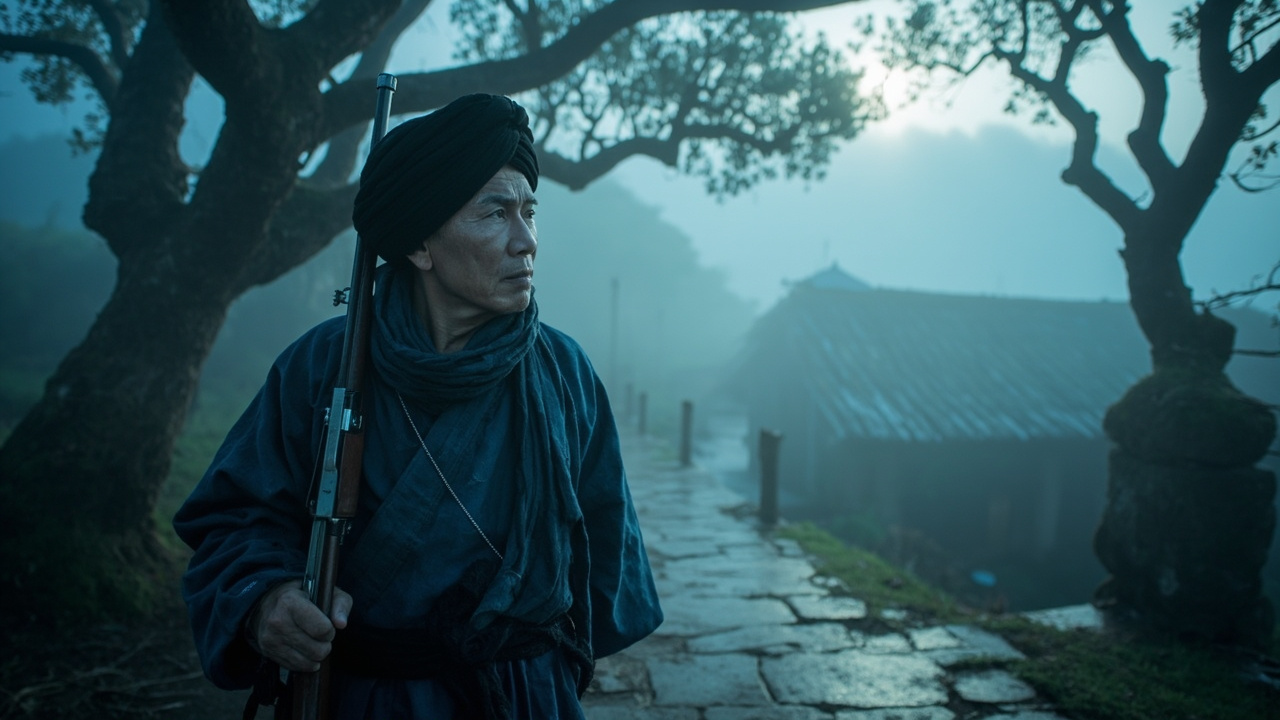
The bus dropped me at the side of a road that didn’t look like it led anywhere special. A few concrete houses, some chickens, a woman selling oranges from a plastic basin. I checked my phone, then looked at the driver, who just pointed up a dirt path into the trees. That was it. No ticket booth, no sign in English, no crowd. I walked uphill for about ten minutes, sweating through my shirt, until I heard the sound of a reed flute cutting through the forest noise. Then I saw the first man in the black turban, carrying a rifle older than my grandfather, and I realized the path hadn’t been leading nowhere. It had been leading to Basha.
Basha Miao Village, about 7 kilometers from Congjiang County in southeast Guizhou, is often described as the last gun-toting tribe in China. That’s true, but it undersells the place. The gun culture is real - the Miao men here carry ancient muzzle-loading rifles for ceremonies and festivals - but what stays with you is the quiet, the forest, and a community that has decided, deliberately, to keep living the way their ancestors did. It’s not a theme park. It’s a real village, and the people are real, and they’ve gotten very good at welcoming visitors without letting tourism hollow them out.
This guide will tell you exactly how to get there, what it costs, when to go, and what to actually do with your time. I’ve been twice - once in 2019, once in 2024 - and I’ve made the mistakes so you don’t have to.
Quick answer
Basha Miao Village is a 20-30 minute drive from Congjiang County in Guizhou Province, with a 20 CNY ($3) entry fee and daily gun ceremony performances at 9:00, 11:00, and 15:00. It’s included in China’s 240-hour visa-free transit policy for many nationalities, making it accessible on a stopover. The best time to visit is late morning on a weekday, when the ceremony crowds are thinnest.
The Short Version
Basha is worth the detour if you’re already in Guizhou, but I wouldn’t fly across China just for it. It’s a small village - you can see everything in two hours - and the famous gun ceremony is genuinely impressive, not a tourist trap. The real magic is walking the forest paths, watching the women do needlework, and sitting quietly while the men smoke their pipes. Go on a weekday. Bring small bills for the local vendors. And don’t miss the hair-cutting ritual, which is stranger and more beautiful than any of the gun stuff.
How I Picked These
I’ve been to Basha twice. The first time was a rushed afternoon stop on a longer Guizhou trip, and I left feeling like I’d seen a performance but not a place. The second time, I stayed overnight in Congjiang and took the morning bus back, which meant I arrived before the tour groups and got to watch the village wake up. I talked with a man named Wang who showed me how to load his rifle (he did not let me fire it, which was probably wise), and a woman named Yang who sold me a hand-woven bracelet and then spent twenty minutes trying to teach me the local greeting. The details below come from those visits, plus conversations with my driver, a Congjiang local named Liu who has been shuttling tourists to Basha for over a decade.
Comparison Table
| Rank | Place | Best For | Approx Cost (USD) | Time Needed | When to Go |
|---|---|---|---|---|---|
| 1 | Basha Miao Village | Authentic Miao culture, gun ceremony | $3 entry + transport | 2-3 hours | Weekday mornings |
| 2 | Zhaoxing Dong Village | Larger village, nightlife, rice terraces | $5 entry + transport | 1-2 days | Any day |
| 3 | Chengyang Wind & Rain Bridge | Architecture, peaceful walks | $4 entry | Half day | Weekday |
| 4 | Longji Rice Terraces | Hiking, dramatic landscapes | $10 entry + transport | 1-2 days | April-October |
| 5 | Kaili & Leishan | Miao silverwork, local markets | $2-5 | 1 day | Sunday market |
| 6 | Xijiang Qianhu Miao Village | Biggest Miao village, night views | $15 entry | 1 day | Avoid holidays |
| 7 | Rongjiang | Ancient villages, fewer tourists | $2-5 | Half day | Weekday |
| 8 | Liping | Historic sites, quieter | $3-5 | Half day | Any day |
| 9 | Sandu Shui Village | Shui minority culture | $3 | Half day | Weekday |
| 10 | Danzhai Wanda Village | Rebuilt village, crafts | $10 | Half day | Any day |
1. Basha Miao Village - The Gun Ceremony Is Real, and So Is the Village
The first time I heard the gunshot, I jumped. It echoed off the hills and sent birds scattering from the trees, and the man next to me - a tourist from Guangzhou - laughed at my reaction. The second time, I was ready for it, and I watched the old man in the black turban load his rifle with practiced hands, tamping down the powder, checking the flint, taking aim at the sky. The crack was sharp, almost clean, and then he turned and grinned at the crowd like a kid who’d just pulled off a prank.
The gun ceremony is the main event, and it happens three times a day at the village’s central square. The men fire their rifles in sequence, then perform a dance with the guns held high, and then the women join in with their own circle dance. It’s genuinely impressive, and it doesn’t feel staged the way some “ethnic performances” in China do. These men have been carrying these rifles their whole lives. The guns are part of their identity, not a prop.
But the ceremony is only half of it. After the performance, the crowd disperses, and the village goes back to being a village. Old women sit on their doorsteps doing needlework. Men smoke long bamboo pipes and watch the tourists wander by. Children chase each other through the narrow lanes. If you walk up the hill behind the square, you’ll find the forest where the men hold their coming-of-age ceremonies - a boy becomes a man here by having his hair shaved into the distinctive Basha style, leaving only a small bun on top.
Location: Basha Miao Village, Congjiang County, Qiandongnan Prefecture, Guizhou Province Entry fee: 20 CNY ($3) for the village. The gun ceremony is included. Opening hours: The village is open daily, roughly 8:00-18:00. Ceremonies at 9:00, 11:00, and 15:00. Getting there: From Congjiang County, take a local bus from the main station (about 20 minutes, 5 CNY / $0.70) or a taxi/private car (about 50-80 CNY / $7-11). The bus drops you at the village entrance; the taxi can take you all the way to the ticket gate. When to visit: Weekday mornings. The 9:00 ceremony is the least crowded. Avoid Chinese national holidays when the village gets swamped. Insider tips: Bring small bills for the vendors selling hand-woven items and local snacks. The women will quote a price, but a gentle smile and a counter-offer of about 70% is expected. Don’t touch the rifles without asking. And if you’re offered a chance to try the local rice wine, take it - it’s sweet and surprisingly smooth.
I met an old man named Wang who let me hold his rifle (unloaded, obviously) and showed me how the firing mechanism worked. He didn’t speak a word of Mandarin, but we communicated through gestures and grins, and that was enough.
2. Zhaoxing Dong Village - The Big One, and It’s Worth It
Zhaoxing is the largest Dong village in China, and it feels like it. Five drum towers rise above the wooden houses, each one built for a different clan, and the river that runs through the center is crossed by a series of covered bridges that are perfect for sitting and watching the world go by. The first time I came here, I planned to stay for an afternoon. I stayed for two days.
The village is big enough that you can get lost in it, which is exactly what you should do. The main street is touristy - souvenir shops, restaurants with English menus, guesthouses with rooftop bars - but the side alleys are where the real life happens. Old women wash clothes in the river. Men play chess under the drum towers. Kids kick a ball around the square. And in the evening, the nightly song performance in the central theater is genuinely moving, a chorus of Dong women singing in harmony that fills the wooden hall.
The rice terraces above the village are worth the climb. It’s about 30 minutes up a steep path, but the view at the top - the village spread out below, the terraces curving around the hillsides, the drum towers poking up through the mist - is one of the best in Guizhou.
Location: Zhaoxing Dong Village, Liping County, Qiandongnan Prefecture, Guizhou Province Entry fee: 35 CNY ($5) for the village. The song performance is extra (about 30 CNY / $4). Opening hours: The village is open 24/7. The song performance starts at 20:00 and lasts about an hour. Getting there: From Congjiang, there are direct buses to Zhaoxing (about 1.5 hours, 25 CNY / $3.50). From Kaili, take a bus to Liping, then transfer. The bus station is a 10-minute walk from the village entrance. When to visit: Any day, but avoid Chinese holidays. The village gets packed during National Day and Spring Festival. Insider tips: Stay overnight - the village is magical after the day-trippers leave. The guesthouses on the east side of the river have the best views of the drum towers. Try the local specialty, “oil tea” (you cha), a savory tea with popped rice and peanuts that’s an acquired taste but worth trying. And if you’re there on a Sunday, the morning market in the square is a great place to buy hand-woven textiles.
I ate dinner at a small restaurant run by a woman named Wu, who served me a fish stew that I still think about. She didn’t speak English, and my Mandarin is terrible, but we communicated through pointing and laughing, and she insisted on giving me a free bowl of rice wine at the end.
3. Chengyang Wind & Rain Bridge - Worth the Detour
The Wind and Rain Bridge at Chengyang is the most famous of its kind in China, and for good reason. It’s a covered wooden bridge spanning the river, with five pavilions and a roof that curves up at the corners like a bird about to take flight. The first time I saw it, I stood on the bank for a full five minutes just staring. It’s that beautiful.
But the bridge is just the centerpiece of a larger Dong village complex that’s worth exploring. The village of Chengyang is spread out along the river, with several drum towers, more covered bridges, and a working waterwheel that still grinds grain. The paths between the villages are lined with rice paddies, and in the summer, the frogs make such a racket at night that you can hear them from your guesthouse room.
The best time to visit is late afternoon, when the light turns golden and the bridge casts long shadows across the water. The tour groups have mostly left by then, and you can sit in one of the pavilions and watch the villagers go about their evening routines.
Location: Chengyang Dong Village, Sanjiang County, Guangxi Province (about 30 km from the Guizhou border) Entry fee: 30 CNY ($4) for the village complex. Opening hours: Open daily, 8:00-18:00. The bridge itself is accessible at all times, but the ticket booth closes in the evening. Getting there: From Sanjiang County, take a local bus to Chengyang (about 40 minutes, 10 CNY / $1.40). From Zhaoxing, it’s a 2-hour drive through the mountains - hire a car or take a shared van. When to visit: Late afternoon on a weekday. The light is best, and the crowds are thinnest. Insider tips: Walk across the bridge to the far side and follow the path along the river - there’s a second, smaller bridge that most tourists miss. The local specialty is “sour fish” (suan yu), fermented fish that’s an acquired taste. And if you’re staying overnight, ask your guesthouse to arrange a performance by the local song troupe - it’s more intimate than the big shows in Zhaoxing.
I met an old man named Chen who was carving wooden masks on his doorstep. He’d been doing it for 40 years, he told me through my translation app, and he showed me a mask he’d made for a festival dance. It was fierce and beautiful, and he let me take a photo but wouldn’t sell it.
4. Longji Rice Terraces - Bring Your Hiking Boots
The Longji Rice Terraces, also known as the Dragon’s Backbone, are a two-hour drive from Guilin and a world away from the city’s karst peaks. The terraces climb the mountainside in sweeping curves, carved by generations of Zhuang and Yao farmers, and when the rice is young and green in June, the whole valley looks like a giant staircase to the sky.
I made the mistake of visiting in August, when the rice was tall and golden but the heat was brutal. The hike from the parking lot to the viewpoint at the top took me an hour, and I was drenched in sweat by the time I got there. But the view - the terraces falling away in every direction, the village rooftops scattered below, the mountains fading into blue haze - made it worth every drop.
The terraces are split into two main areas: Ping’an and Dazhai. Ping’an is more developed, with more guesthouses and restaurants, while Dazhai is quieter and more spread out. If you have time, stay overnight in one of the villages and catch the sunrise from the top viewpoint. It’s an early start, but the light on the terraces is something you’ll remember for years.
Location: Longji Rice Terraces, Longsheng County, Guangxi Province (about 2 hours from Guilin) Entry fee: 80 CNY ($11) for the terrace area. This covers both Ping’an and Dazhai. Opening hours: Open 24/7, but the ticket booth is staffed roughly 7:00-19:00. Getting there: From Guilin, take a bus from the main station to Longsheng County (about 2 hours, 50 CNY / $7), then transfer to a local bus to the terraces (about 1 hour, 20 CNY / $3). Alternatively, hire a car from Guilin for about 400 CNY ($55) round trip. When to visit: April-May for the flooded terraces (the “mirror” effect), June-August for green rice, September-October for golden rice. Insider tips: The hike between Ping’an and Dazhai takes about 4-5 hours and is stunning, but it’s steep - bring proper shoes and plenty of water. The local Yao women will offer to carry your bags for a fee; it’s worth it if you have a lot of gear. And don’t miss the “Longji” specialty, bamboo rice - sticky rice cooked inside bamboo tubes over an open fire.
I got hopelessly lost on the trail between the two villages and ended up in a small hamlet where an old woman fed me watermelon and refused to let me pay. She didn’t speak a word of Mandarin, but she could tell I was lost, and she pointed me in the right direction with a smile.
5. Kaili & Leishan - The Silver Capital
Kaili is the capital of the Qiandongnan Miao and Dong Autonomous Prefecture, and it’s not much to look at - a sprawling, modern Chinese city with wide roads and shopping malls. But it’s the gateway to the surrounding Miao villages, and it’s home to one of the best markets in Guizhou.
The Sunday market is the main draw. The streets around the central square fill with vendors selling everything from fresh vegetables to hand-woven textiles to the famous Miao silver jewelry. The silverwork is the star - intricate necklaces, bracelets, and headdresses that the Miao women wear for festivals and weddings. The pieces are made by hand, and the prices are surprisingly reasonable compared to the tourist shops in the big cities.
Leishan County, about an hour south of Kaili, is the heart of Miao silverwork. The town of Xijiang is the most famous Miao village in China, but it’s also the most commercialized - think Disneyland version of a Miao village. If you want the real thing, head to the smaller villages around Leishan, like Langde or Shanglangde, where the silver workshops are still run by families who’ve been doing it for generations.
Location: Kaili and Leishan, Qiandongnan Prefecture, Guizhou Province Entry fee: Free for the market. Xijiang is 100 CNY ($14) for entry. Opening hours: The Sunday market runs roughly 8:00-14:00. Xijiang is open 24/7. Getting there: From Guiyang, take a high-speed train to Kaili (about 1 hour, 80 CNY / $11). From Kaili, buses to Leishan leave from the main station (about 1 hour, 20 CNY / $3). When to visit: Sunday morning for the market. Avoid Xijiang on Chinese holidays. Insider tips: At the market, the silver is sold by weight - about 20-30 CNY ($3-4) per gram. Ask for the “pure silver” (chun yin) pieces, which are marked. The smaller villages around Leishan are more authentic than Xijiang, but they’re harder to reach - hire a driver for the day. And don’t miss the sour fish soup (suan tang yu), a Guizhou specialty that’s spicy, sour, and addictive.
I bought a silver bracelet from a woman in Langde who told me, through my translation app, that she’d learned the craft from her grandmother. She showed me the tools she used, the tiny hammers and molds, and she let me try my hand at stamping a pattern. I made a mess of it, but she laughed and gave me the bracelet anyway.
6. Xijiang Qianhu Miao Village - The Big One, With Caveats
Xijiang is the largest Miao village in China, with over a thousand households spread across two hillsides. It’s impressive in scale - the wooden houses climb the slopes in tight clusters, and at night, the lights come on and the whole village glows like a constellation. The view from the observation deck at the top is genuinely spectacular.
But here’s the thing: Xijiang is a tourist product. The village was largely rebuilt after a fire in 2008, and it’s been developed specifically for visitors. There are souvenir shops on every corner, restaurants with English menus, and a nightly performance that’s more Las Vegas than Miao. The locals are friendly enough, but they’re also running a business.
That said, it’s worth a visit if you’re in the area. The scale is impressive, the night view is unforgettable, and the morning light on the wooden houses is beautiful. Just go in with realistic expectations. This isn’t an authentic Miao village - it’s a Miao-themed resort. And that’s okay, as long as you know that going in.
Location: Xijiang Qianhu Miao Village, Leishan County, Qiandongnan Prefecture, Guizhou Province Entry fee: 100 CNY ($14) for the village. The night show is extra (about 60 CNY / $8). Opening hours: Open 24/7. The observation deck is accessible at all hours. Getting there: From Kaili, take a bus to Xijiang (about 1 hour, 25 CNY / $3.50). The bus drops you at the entrance, and a shuttle takes you into the village. When to visit: Weekdays are quieter. The village is packed on weekends and Chinese holidays. Insider tips: Stay overnight - the village is much more pleasant after the day-trippers leave. The guesthouses on the north hill have the best views. Skip the night show and find a quiet spot on the observation deck instead. And don’t bother with the “traditional” restaurants on the main street - the food is better and cheaper in the side alleys.
I had a bowl of rice noodles at a tiny shop in the back alleys, and the owner, a woman named Li, told me she’d been running the shop for 15 years. She remembered when the village was just a village, before the developers came. She wasn’t nostalgic about it - the tourists had brought her business, she said - but there was something in her voice that made me think she missed the old days.
7. Rongjiang - The Quiet One
Rongjiang is a small county town about two hours south of Kaili, and it’s the kind of place that doesn’t show up in most guidebooks. I went there because my driver, Liu, had a cousin who lived there, and he wanted to drop off some tea. I’m glad he did.
The town itself is unremarkable - a typical Chinese county seat with wide streets and apartment blocks. But the surrounding countryside is dotted with small Miao and Dong villages that see almost no tourists. I spent an afternoon walking through one of them, a place called Zaima, where the villagers were harvesting rice and the only other visitor was a stray dog.
The highlight was the local market, which happens every five days. Farmers come in from the surrounding hills with their produce, and the streets fill with stalls selling everything from live chickens to handmade tools. It’s chaotic, colorful, and completely authentic - the kind of place where you’re the only foreigner for miles, and the locals are more curious than wary.
Location: Rongjiang County, Qiandongnan Prefecture, Guizhou Province Entry fee: Free for the villages. The market is free to wander. Opening hours: The market runs roughly 8:00-16:00 on market days (every 5 days, check locally). Getting there: From Kaili, take a bus to Rongjiang (about 2 hours, 40 CNY / $5.50). From Rongjiang, local buses go to the surrounding villages. When to visit: Market days are the most interesting. Check with your guesthouse or hotel for the exact schedule. Insider tips: The village of Zaima has a beautiful drum tower that’s rarely photographed. The locals are friendly but shy - a smile and a nod goes a long way. Bring small bills for the market. And if you’re offered a chance to try the local rice wine, be careful - it’s stronger than it tastes.
I met a farmer named Pan who was selling rice wine at the market. He poured me a small cup, watched me drink it, and then laughed when I coughed. He said something to his friend, and they both laughed harder. I never found out what he said, but I like to think it was something kind.
8. Liping - History and Quiet Streets
Liping is a county town that most tourists skip, which is a shame. It’s home to the Liping Dong Village, a cluster of traditional wooden houses that’s been preserved as a living museum, and it’s the birthplace of the Red Army’s Zunyi Conference, which makes it a stop on some political tourism routes. But the real draw is the quiet.
The old town is a maze of narrow streets lined with wooden houses, many of them still occupied by locals. There’s a drum tower in the center, a covered bridge over the river, and a small temple that’s worth a visit. The whole place has a sleepy, timeless feel - the kind of town where you can sit on a bridge and watch the water for an hour without seeing another tourist.
The best thing about Liping is that it’s not trying to be anything. There’s no entrance gate, no souvenir shops, no English menus. It’s just a town where people live, and you’re welcome to wander through. If you’re looking for a break from the tourist trail, this is it.
Location: Liping County, Qiandongnan Prefecture, Guizhou Province Entry fee: Free for the old town. Opening hours: Open 24/7. Getting there: From Kaili, take a bus to Liping (about 3 hours, 60 CNY / $8). From Zhaoxing, it’s about 1.5 hours by bus. When to visit: Any day. The town is quiet all week. Insider tips: The best view of the old town is from the bridge at the south end. The local specialty is “Liping rice noodles” (Liping mifen), which are thinner and chewier than the ones in Kaili. And if you’re interested in the Red Army history, the Zunyi Conference site is a short walk from the old town.
I sat on the bridge for an hour, watching an old man fish with a bamboo pole. He caught three small fish, and when he saw me watching, he held one up and grinned. I gave him a thumbs up, and he went back to fishing.
9. Sandu Shui Village - The Minority Within the Minority
The Shui people are one of China’s smallest ethnic minorities, with a population of about 400,000, and they’re concentrated in Sandu County, about two hours south of Kaili. I went there on a whim, after a local told me that the Shui had their own written language, their own calendar, and their own unique festivals. I was curious.
The village I visited, called Banzhan, is a small cluster of wooden houses surrounded by rice paddies. The Shui are known for their horsetail embroidery, a technique that uses actual horsehair wrapped in silk thread to create intricate patterns. It’s a dying art - only a few dozen women still practice it - and seeing it up close was a privilege.
The village itself is quiet and unassuming. There’s no ticket booth, no tourist infrastructure, no English signage. The locals are friendly but reserved, and they’re not used to visitors. If you go, be respectful, ask before taking photos, and don’t expect any amenities. This is the real thing.
Location: Banzhan Village, Sandu County, Qiannan Prefecture, Guizhou Province Entry fee: Free, but a small donation to the village cooperative is appreciated. Opening hours: Open 24/7. Getting there: From Kaili, take a bus to Sandu County (about 2.5 hours, 50 CNY / $7), then hire a local driver to take you to Banzhan (about 30 minutes, 50 CNY / $7). When to visit: Weekdays. The village is empty on weekends. Insider tips: The horsetail embroidery is the main attraction - ask to see the women’s work, but don’t touch it without permission. The Shui have their own calendar, and their New Year celebration (usually in September) is a spectacular affair. If you’re lucky enough to be there for it, you’ll see the women in full traditional dress, dancing and singing.
I met a woman named Wei who was working on a horsetail embroidery piece. She showed me the process, patiently explaining how she wrapped the horsehair in silk thread. It took her a week to make a piece the size of my palm. She sold it to me for 200 CNY ($28), and I felt like I was stealing it.
10. Danzhai Wanda Village - The Rebuilt One
Danzhai Wanda Village is a bit of an oddity. It’s a “traditional” Miao village that was built from scratch in 2017, funded by the Wanda Group as part of a poverty alleviation project. The houses are new, the streets are clean, and the whole place has the feel of a movie set. But it’s also home to hundreds of Miao families who moved here from the surrounding mountains, and they’ve brought their traditions with them.
The village is organized around a central square, with workshops for traditional crafts - silverwork, batik, paper-making, and embroidery. You can watch the artisans at work, and you can buy their products at fair prices. There’s also a small museum that explains the history of the Miao people, and a nightly performance that’s more polished than the ones in the older villages.
I was skeptical when I arrived, but I left impressed. The village is a strange hybrid - part theme park, part social experiment, part real community - but it works. The people here are proud of their crafts, and they’re happy to share them with visitors. It’s not the most authentic experience in Guizhou, but it’s one of the most accessible.
Location: Danzhai Wanda Village, Danzhai County, Qiandongnan Prefecture, Guizhou Province Entry fee: 70 CNY ($10) for the village. Opening hours: Open daily, 8:00-18:00. The night show starts at 19:30. Getting there: From Kaili, take a bus to Danzhai (about 1.5 hours, 30 CNY / $4), then a local bus to the village (about 15 minutes, 5 CNY / $0.70). When to visit: Weekday afternoons. The village is quiet, and the artisans are more willing to chat. Insider tips: The batik workshop is the best - you can try your hand at making your own piece. The silverwork here is cheaper than in Kaili, but the quality is just as good. And the museum, while small, is worth a visit for the history of the Miao people.
I spent an hour at the batik workshop, trying to draw a pattern with the wax tool. Mine looked like a child’s drawing next to the artisan’s, but she was patient, and she let me keep my attempt. It’s on my wall now, a reminder that some things are better when they’re imperfect.
FAQ summary
Basha Miao Village is a small, authentic Miao community in Guizhou Province, accessible from Congjiang County with a 20 CNY ($3) entry fee and daily gun ceremonies at 9:00, 11:00, and 15:00. The best time to visit is on weekday mornings, and the village is included in China’s 240-hour visa-free transit policy for many nationalities. Visitors should bring small bills for local vendors, expect limited English, and plan for 2-3 hours at the village itself.
FAQ
Q: How do I get to Basha Miao Village from Congjiang? A: Take a local bus from Congjiang’s main station (about 20 minutes, 5 CNY / $0.70) or hire a taxi (about 50-80 CNY / $7-11). The bus drops you at the village entrance, while a taxi can take you to the ticket gate.
Q: Is Basha Miao Village included in China’s visa-free transit policy? A: Yes, for most nationalities eligible for the 240-hour visa-free transit policy. Guizhou Province is included in the eligible regions, so you can visit Basha on a stopover without a visa, provided you meet the requirements (valid onward ticket, staying within the time limit).
Q: What is the best time of day to visit Basha Miao Village? A: Go for the 9:00 gun ceremony on a weekday morning. The crowds are thinnest, the light is soft, and you’ll have time to explore the village before the tour groups arrive.
Q: How much time do I need at Basha Miao Village? A: Plan for 2-3 hours. The gun ceremony takes about 30 minutes, and the rest of the time you can wander the village, watch the artisans, and walk the forest paths. If you want to see the hair-cutting ritual, add another hour.
Q: Do I need to book tickets in advance for Basha Miao Village? A: No, you can buy tickets at the gate. The village rarely sells out, except on Chinese national holidays. Just bring cash - the ticket booth doesn’t always accept mobile payments.
Q: Is English spoken at Basha Miao Village? A: Very little. The villagers speak Miao and Mandarin, and the older residents often speak neither. Bring a translation app like Google Translate or Pleco, and be prepared to communicate through gestures and smiles.
Q: What should I bring to Basha Miao Village? A: Small bills in cash (the vendors don’t always have change for large notes), comfortable walking shoes, water, and a hat for sun protection. If you’re visiting in summer, bring insect repellent - the forest paths have mosquitoes.
The Honest Wrap-up
Basha Miao Village is a special place, but it’s not for everyone. If you’re looking for a polished, comfortable, English-friendly experience, you’ll be happier at Xijiang or Zhaoxing. But if you’re willing to deal with a little discomfort - the bumpy bus ride, the language barrier, the lack of amenities - you’ll be rewarded with something rare: a glimpse of a culture that’s still alive, still practicing its traditions, still carrying its guns.
My advice to a friend about to book the flight: go. Go to Guizhou, go to Basha, and go with an open mind. Don’t expect to be entertained - expect to be welcomed. And if you get the chance, sit with the old men by the drum tower, share a cup of rice wine, and let them tell you, through gestures and laughter, what it means to be Miao.
Topics
More guides you may like

Top 10 Bridges in China
China's bridges are engineering marvels spanning mountains, rivers, and seas. Here are 10 of the most spectacular, from ancient stone to modern steel.
8 min read

Top 10 Buddhist Sites in China
From the Leshan Giant Buddha to the Dunhuang Caves, these 10 Buddhist sites represent 2,000 years of China's spiritual heritage.
9 min read

Top 10 Day Trips from Beijing You Shouldn't Miss
Beijing is packed with history, but some of China's best experiences are just a few hours away. Here are 10 day trips that will transform your visit.
9 min read

Top 10 Hidden Gems in China Off the Beaten Path
Beyond the Great Wall and Terracotta Warriors, China has incredible hidden destinations few tourists ever reach. Here are 10 underrated gems worth the detour.
9 min read

Top 10 Markets and Shopping Streets in China
From Shanghai's Bund to Beijing's Silk Street - 10 markets where foreigners can haggle, explore, and bring home authentic Chinese goods.
9 min read

Top 10 Museums in China You Shouldn't Miss
China's museums span 5,000 years of civilization. These 10 - from the Palace Museum to Xi'an's terracotta gallery - are unmissable for culture lovers.
9 min read