
Chinese Noodles Regional Guide: The Complete 2026 Guide
The cab driver in Xi'an looked at me in the rearview mirror and asked, in the universal language of hand gestures and broken English.
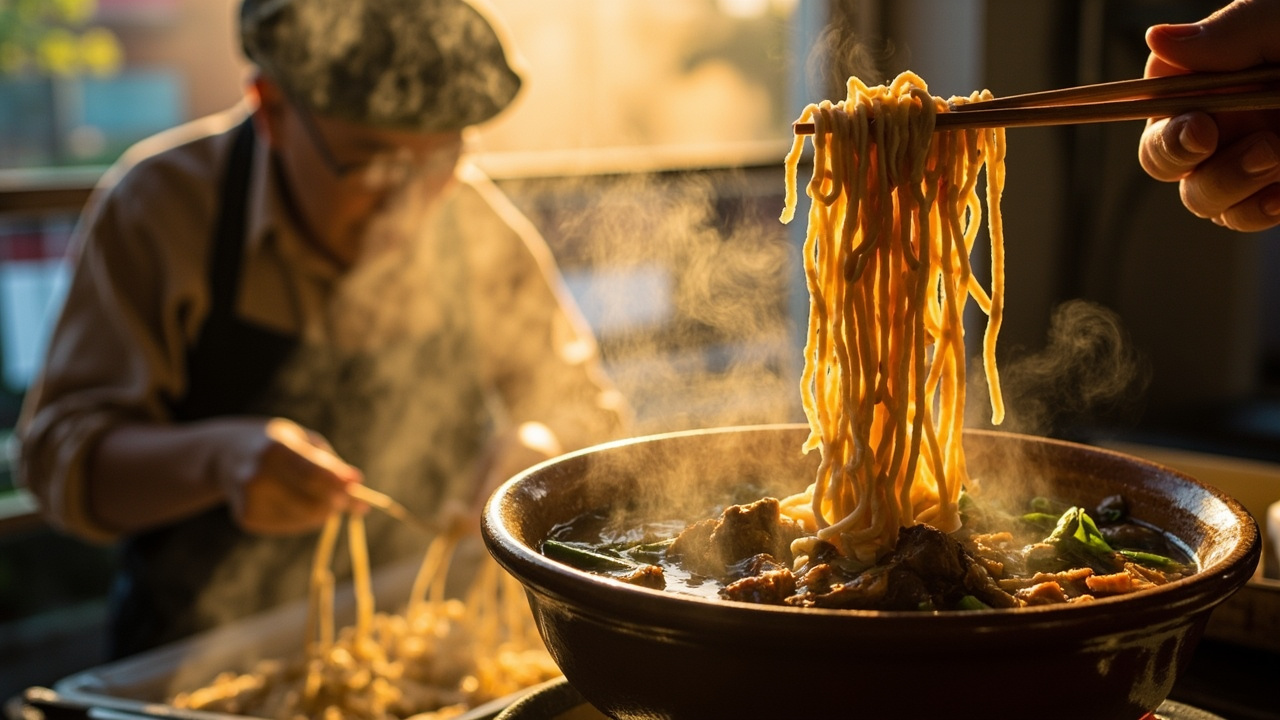
The cab driver in Xi’an looked at me in the rearview mirror and asked, in the universal language of hand gestures and broken English, if I wanted “the tourist noodles or the real noodles.” I’d been in China for three weeks by then, and I thought I knew the answer. I pointed at a random shop on the map. He laughed, shook his head, and drove me to a hole-in-the-wall place where the owner’s grandmother was hand-pulling noodles in the window like she’d been doing it for sixty years. Because she had been.
That’s the thing about Chinese noodles. Every region has its own version, and every version has a local who will insist theirs is the only one worth eating. They’re not wrong. From the hand-pulled lamian of the northwest to the dan dan noodles of Sichuan to the wonton noodles of Guangdong, this country runs on wheat, buckwheat, and rice flour. This guide covers the ten regional noodle styles you’ll actually encounter on a first trip, where to find them, what they cost, and how to order without looking like a complete tourist.
You’ll get specific prices in USD and yuan, metro directions that actually work, and the kind of insider details that take most travelers years to figure out. I’ve eaten my way through 27 provinces over seven years. This is the guide I wish I’d had on day one.
Quick answer
China’s regional noodle styles range from hand-pulled lamian in the northwest to dan dan noodles in Sichuan and wonton noodles in the south. Most bowls cost $2-6 (15-45 CNY), and you can find excellent versions in any major city, though the origin cities are best. If you’re visiting on the 15-day visa-free policy (available to citizens of 54 countries through 2026), you have time to try at least four or five regional styles without rushing.
The Short Version
If you only have 90 seconds: skip the hotel restaurant and eat where the locals queue. The big four you’ll see everywhere are Beijing zhajiangmian, Lanzhou lamian, Sichuan dan dan noodles, and Cantonese wonton noodles. Each costs about $3-5 (20-35 CNY) and takes 10 minutes to eat. Learn to say “bu la” (not spicy) if you can’t handle heat, and always carry tissues because most noodle shops don’t have napkins. Download Pleco before you go, and set up Alipay because some small shops don’t take cash anymore.
How I Picked These
I’ve lived in Beijing since 2019 and have made 40-plus trips around the country, often with the express purpose of eating noodles. I’ve eaten at Michelin-starred noodle counters in Hong Kong and at plastic-stool joints in Lanzhou where the cook wiped his hands on his apron between pulls. I talked to noodle shop owners, taxi drivers, and grandmothers who insisted I try their family’s recipe. I cross-checked my picks with local food writers and my Chinese friends who grew up in each region. This list isn’t exhaustive, and I’ve left out plenty of worthy styles. But these ten are the ones that matter for a first-time visitor, the ones you’ll remember years later.
Comparison Table
| Rank | Place | Best For | Approx Cost (USD) | Time Needed | When to Go |
|---|---|---|---|---|---|
| 1 | Lanzhou Lamian (Beijing & Lanzhou) | First-timers, beef noodle lovers | $3-5 (20-35 CNY) | 30-45 min | Year-round, mornings best |
| 2 | Sichuan Dan Dan Noodles (Chengdu) | Spice seekers, peanut sauce fans | $2-4 (15-30 CNY) | 20-30 min | Year-round, evenings |
| 3 | Beijing Zhajiangmian | Classic northern comfort | $3-5 (20-35 CNY) | 30-40 min | Year-round, lunch |
| 4 | Cantonese Wonton Noodles (Guangzhou/HK) | Seafood lovers, delicate flavors | $4-7 (30-50 CNY) | 30-45 min | Year-round, late night |
| 5 | Xi’an Biang Biang Noodles | Carb lovers, bold flavors | $2-4 (15-30 CNY) | 20-30 min | Spring & autumn |
| 6 | Shanxi Dao Xiao Mian | Knife-cut noodle fans | $2-4 (15-30 CNY) | 20-30 min | Year-round |
| 7 | Wuhan Hot Dry Noodles | Breakfast people, sesame lovers | $1-3 (8-20 CNY) | 15-20 min | Year-round, before 10am |
| 8 | Yunnan Crossing-the-Bridge Noodles | Soup lovers, adventurous eaters | $5-10 (35-70 CNY) | 45-60 min | Year-round |
| 9 | Shanghai Scallion Oil Noodles | Simple flavors, quick meals | $2-4 (15-30 CNY) | 15-20 min | Year-round |
| 10 | Uyghur Laghman (Kashgar) | Lamb lovers, off-the-beaten-path | $3-5 (20-35 CNY) | 30-40 min | May-October |
Lanzhou Lamian - The Beef Noodle That Started It All
The first time I had Lanzhou lamian, I was in a fluorescent-lit shop in Beijing at 7am, jet-lagged and skeptical. The broth was clear, the beef was shaved thin, and the noodles had been hand-pulled to order in front of me. I added chili oil and vinegar, slurped, and understood why this style has conquered the country. There are over 40,000 Lanzhou lamian shops in China. Most are decent. A few are transcendent.
What makes this style special is the hand-pulling. The dough is stretched and folded repeatedly until it becomes hundreds of thin noodles, all in about thirty seconds. The broth is beef-based, simmered for hours with a secret spice blend that every shop guards jealously. The standard bowl comes with beef, radish, cilantro, and chili oil on top. You can specify noodle thickness, from “capillary” thin to “belt” wide. I recommend the medium-thin.
Location: You’ll find the best versions in Lanzhou itself, but the chain Ma Zi Lu (马子禄) in Beijing is a solid introduction. For the real thing, go to Lanzhou’s Zhangye Road area.
Entry fee: Free, obviously. A bowl costs $3-5 (20-35 CNY).
Opening hours: Most shops open by 6:30am and close by 9pm. The broth is best in the morning when it’s freshest.
How to get there: In Beijing, take Line 4 to Xisi Station, Exit A, and walk 5 minutes north on Xisi North Street. Look for the yellow sign with a red horse. In Lanzhou, take Bus 1 from the train station to Zhangye Road.
When to visit: Go for breakfast or early lunch. The broth loses complexity by late afternoon.
Insider tips:
- Say “xi mian” (thin noodles) or “kuan mian” (wide noodles) to specify thickness
- Add a spoonful of chili oil even if you don’t like spice - it’s more aromatic than hot
- The radish is pickled, not raw, and it’s the best part
- Watch the noodle puller for 30 seconds before you order - it’s free entertainment
- Ask for “jia mian” (extra noodles) if you’re hungry - it’s usually free
I once watched a noodle puller in Lanzhou make noodles for 45 minutes straight without breaking a sweat. He was 67 years old and had been doing it since he was 14. He told me, through a translator app, that his hands knew the dough better than his brain did.
Sichuan Dan Dan Noodles - The Spicy, Peanutty Classic
Chengdu smells like Sichuan pepper. It’s in the air, in the sweat of the people, in the steam rising from every food stall. Dan dan noodles are the city’s most famous export, and they’re nothing like the gloopy versions you get in Western Chinese restaurants. The real thing is a small bowl of noodles tossed in a sauce made from chili oil, Sichuan pepper, preserved vegetables, and a generous spoonful of peanut butter or sesame paste. It’s spicy, numbing, savory, and slightly sweet all at once.
The name comes from the bamboo pole (dan dan) that street vendors used to carry their woks and ingredients. The best versions are still served in tiny shops where the owner has been making the same sauce for decades. You’ll eat fast, wipe your mouth, and immediately want another bowl.
Location: In Chengdu, head to the area around Kuanzhai Alley for tourist-friendly versions, or go to the quieter streets near Wenshu Monastery for the real deal. The famous Chen Mapo Tofu restaurant also serves a solid dan dan noodle.
Entry fee: Free. A bowl costs $2-4 (15-30 CNY).
Opening hours: Most shops open 10am-9pm. Some close in the afternoon between 2-4pm.
How to get there: Take Chengdu Metro Line 1 to Wenshu Monastery Station, Exit B, and walk south on Wenshu Yuan Street. You’ll see noodle shops within 5 minutes.
When to visit: Go for a late lunch around 2pm when the crowds have thinned. The sauce is made fresh in the morning and is still good in the afternoon.
Insider tips:
- Order “wei la” (mild spice) if you’re not used to Sichuan pepper - the numbing sensation is strange at first
- The preserved vegetables (ya cai) are the secret ingredient - they add a fermented umami you can’t get anywhere else
- Don’t stir the noodles too much - you want some bites with more sauce than others
- Drink soy milk with your noodles - it cuts the spice better than water
- If you see a shop with a long line at 2pm, get in it - that’s where the locals go
I made the mistake of ordering “da la” (extra spicy) on my first visit to Chengdu. I spent the next hour drinking soy milk and sweating through my shirt. The shop owner laughed at me, kindly, and brought me a bowl of plain rice to cool my mouth. I’ve ordered “wei la” ever since.
Beijing Zhajiangmian - The Northern Comfort Bowl
Beijing’s signature noodle dish is a study in contrasts. Thick wheat noodles are topped with a dark, salty sauce made from fermented soybean paste and minced pork, then buried under a pile of fresh vegetables: cucumber, radish, bean sprouts, and soybeans. You mix everything together, add vinegar and garlic, and eat. It’s messy, hearty, and deeply satisfying on a cold day.
The dish has a complicated history. Some say it originated with Shandong immigrants to Beijing in the Qing dynasty. Others claim it’s a working-class invention from the 1950s. Either way, every Beijing family has their own recipe, and every Beijing grandmother will tell you hers is the best. The key is the sauce, which needs to be fried slowly until it darkens and thickens.
Location: The most famous spot is the chain Hai Wan Ju, which has been serving zhajiangmian since 1954. The original is on Xisi North Street. For a more local experience, try the small shops in the hutongs around Gulou.
Entry fee: Free. A bowl costs $3-5 (20-35 CNY).
Opening hours: Most shops open 10am-9pm. Lunch is the busiest time.
How to get there: For Hai Wan Ju, take Beijing Metro Line 4 to Xisi Station, Exit A, and walk 3 minutes north. The restaurant is on the east side of the street with a big yellow sign.
When to visit: Go for lunch on a weekday. Weekends are packed with tourists who’ve read the same guidebook you have.
Insider tips:
- The vegetables are meant to be eaten mixed in, not as a side - pile everything on top
- Add a splash of vinegar before you mix - it brightens the heavy sauce
- Ask for “ban mian” (mixed noodles) if you want the waiter to do the mixing for you
- The garlic is raw, so be prepared for garlic breath - everyone in Beijing has it after lunch
- Order a bowl of noodle soup (mian tang) on the side - it’s the traditional way to finish
I once ate at Hai Wan Ju with a Beijing friend who told me her grandfather had been going there since the 1960s. She said the sauce recipe hasn’t changed in sixty years, and she could tell if they’d cut corners just by looking at the color. I couldn’t tell the difference, but I nodded anyway.
Cantonese Wonton Noodles - The Delicate South
Guangzhou is where Chinese food gets refined. The wonton noodles here are a perfect example: thin, springy egg noodles in a clear shrimp broth, topped with plump wontons filled with shrimp and pork. The broth is the star, simmered for hours with dried shrimp, fish, and pork bones until it’s impossibly clear and deeply savory. The noodles are cooked for exactly 30 seconds so they stay firm. The wontons are meant to be eaten first, then the noodles, then the soup.
The best versions are in Hong Kong, where the dish has been perfected over a century. But Guangzhou, just across the border, has its own excellent shops. The key is finding a place that makes their noodles fresh daily. If the noodles are yellow and slightly shiny, they’re fresh. If they’re pale and dull, skip them.
Location: In Guangzhou, head to the Shangxiajiu Pedestrian Street area for a cluster of famous noodle shops. In Hong Kong, try Mak’s Noodle on Wellington Street in Central.
Entry fee: Free. A bowl costs $4-7 (30-50 CNY) in Guangzhou, $6-10 (45-75 CNY) in Hong Kong.
Opening hours: Most shops open 11am-10pm. Some close late, around midnight.
How to get there: In Guangzhou, take Metro Line 1 to Changshou Lu Station, Exit A, and walk 5 minutes to Shangxiajiu. In Hong Kong, take the MTR to Central Station, Exit D2, and walk 3 minutes to Wellington Street.
When to visit: Go for a late-night snack after 10pm. The shops are quieter and the broth has been simmering all day.
Insider tips:
- Order “xi mian” (thin noodles) - the standard is already thin, but you can get it thinner
- The wontons are meant to be eaten with a spoon, not chopsticks - the broth in the spoon is part of the experience
- Add a small amount of red vinegar to the soup - it’s traditional and brightens the flavor
- If you see “shrimp roe noodles” on the menu, order it - it’s a premium version with roe mixed into the noodles
- The noodles are meant to be slightly al dente - if they’re soft, the shop isn’t doing it right
I ate at Mak’s Noodle in Hong Kong at 11pm on a Tuesday, and the shop was still half full. The man next to me was eating his noodles with the precision of a surgeon, dipping each wonton in vinegar before placing it in his mouth. He finished in exactly four minutes and left without saying a word.
Xi’an Biang Biang Noodles - The Belt-Wide Carb Bomb
The character for “biang” is the most complex in the Chinese language, with 58 strokes. It exists only for this noodle, which says everything you need to know about how seriously Xi’an takes its food. Biang biang noodles are wide, thick, and chewy, hand-pulled until they’re about the width of a belt. They’re served with a simple sauce of chili oil, garlic, and vinegar, sometimes with a few pieces of braised pork on top.
The name is onomatopoeic, mimicking the sound the dough makes when it’s slapped against the counter. You’ll hear it before you see it. The noodles are satisfyingly chewy, and the sauce is simple but addictive. This is food for people who believe that carbs are a food group and that more is always better.
Location: In Xi’an, the best area is the Muslim Quarter, specifically Beiyuanmen Street. The famous shop is called “Biang Biang Mian” and has a huge sign with the character on it.
Entry fee: Free. A bowl costs $2-4 (15-30 CNY).
Opening hours: Most shops open 10am-10pm. The Muslim Quarter gets busy after 6pm.
How to get there: Take Xi’an Metro Line 2 to Zhonglou Station, Exit C, and walk 5 minutes north to the Muslim Quarter. The noodle shops are on the main pedestrian street.
When to visit: Go in the late afternoon, around 4-5pm, before the dinner crowds hit.
Insider tips:
- The noodles are meant to be eaten with your hands - tear off a piece and dip it in the sauce
- Add extra vinegar - the acidity cuts through the chili oil
- The chili oil in Xi’an is more fragrant than spicy - don’t be afraid of it
- Order “you po” (oil-poured) style if you want the classic version where hot oil is poured over the chili flakes at the table
- The Muslim Quarter is halal, so don’t bring pork or alcohol into the shops
I watched a noodle maker in Xi’an slap a piece of dough against the counter so hard that the sound echoed down the street. He did it five times, each slap louder than the last, and then tossed the finished noodle into a boiling pot without looking. The whole process took less than a minute. I ate my bowl in silence, humbled.
Shanxi Dao Xiao Mian - The Knife-Cut Noodle
Shanxi province is noodle country. The people here eat noodles for breakfast, lunch, and dinner, and they’ve developed more noodle-making techniques than anywhere else in China. The most famous is dao xiao mian, where the cook holds a block of dough in one hand and shaves thin slices off with a curved knife. The noodles fall directly into the boiling water, each one slightly different in shape and thickness.
The result is a noodle that’s chewy on the edges and tender in the middle, perfect for soaking up the sauce. The classic preparation is with a tomato and egg sauce, though you’ll also find versions with pork, lamb, or just vinegar and chili. Shanxi people put vinegar on everything, and they’re right to.
Location: In Taiyuan, the capital of Shanxi, head to the area around Liuxiang Pedestrian Street. For a more authentic experience, go to Pingyao Ancient City, where you’ll find dozens of small noodle shops.
Entry fee: Free. A bowl costs $2-4 (15-30 CNY).
Opening hours: Most shops open 10am-9pm. Lunch is the busiest time.
How to get there: In Taiyuan, take Bus 1 from the train station to Liuxiang. In Pingyao, walk into the ancient city and follow the main street until you see a shop with a knife and dough in the window.
When to visit: Go for lunch on a weekday. The knife-cutters are more likely to put on a show when it’s busy.
Insider tips:
- Watch the knife-cutter for a few minutes before ordering - it’s a performance
- The noodles are meant to be eaten with vinegar - Shanxi vinegar is the best in China
- Order “guo you rou” (fried pork) on top if you want a heartier meal
- The tomato-egg sauce is the classic, but the lamb version is worth trying if you’re adventurous
- If you’re in Pingyao, eat at a shop inside the ancient city walls - the atmosphere is worth the slightly higher prices
The knife-cutter in Pingyao was a woman in her 50s who had been doing the same motion for 30 years. She never looked at the dough, never paused, just shaved noodles into the pot while chatting with the other customers. I asked her how she learned. She said her mother taught her when she was 12, and she’d been doing it ever since.
Wuhan Hot Dry Noodles - The Breakfast of Champions
Wuhan is a city that runs on breakfast. The streets are packed with people eating from paper bowls while walking to work, and the most popular breakfast is re gan mian, or hot dry noodles. These are thin, alkaline noodles tossed in a sesame paste sauce, topped with pickled vegetables, chili oil, and scallions. They’re called “dry” because there’s no soup, just enough sauce to coat each strand.
The noodles are cooked, drained, and then tossed with the sauce while still hot. The sesame paste is the key, giving the noodles a rich, nutty flavor that’s completely different from the broth-based noodles of the north. It’s a quick, cheap, satisfying breakfast that will ruin you for all other morning foods.
Location: In Wuhan, the best area is Hubu Alley, a famous breakfast street near the Yellow Crane Tower. But the locals will tell you the best shops are in residential neighborhoods, not tourist spots.
Entry fee: Free. A bowl costs $1-3 (8-20 CNY).
Opening hours: Most shops open 5am and close by 11am. This is strictly a breakfast food.
How to get there: Take Wuhan Metro Line 4 to Zhongjiacun Station, Exit B, and walk 10 minutes to Hubu Alley. Or just follow your nose - the smell of sesame paste is unmistakable.
When to visit: Go between 7-9am, when the shops are at their busiest and the noodles are freshest.
Insider tips:
- The noodles are meant to be eaten fast - they get sticky as they cool
- Ask for “jia mian” (extra noodles) if you’re hungry - it’s usually free
- The pickled vegetables are essential - don’t skip them
- Add a soft-boiled egg on top if you want a more filling breakfast
- The locals eat this while walking - don’t feel weird about eating on the move
I showed up at a noodle shop in Wuhan at 8am and found a line of 20 people, all eating from paper bowls while standing. The owner was tossing noodles with one hand and taking money with the other. I ordered, got my bowl, and ate it standing on the sidewalk like everyone else. It was the best breakfast I had in China.
Yunnan Crossing-the-Bridge Noodles - The Soup Ritual
Yunnan’s famous noodle dish comes with a story. A scholar studying on a small island would cross a bridge every day to get his meals. His wife would bring him noodles, but they were always cold by the time he ate them. So she came up with a solution: she brought a bowl of boiling broth, a plate of raw ingredients, and a bowl of noodles, and he assembled everything at the table. The layer of oil on top of the broth kept it hot for hours.
Today, the dish is served the same way. You get a large bowl of boiling broth, a plate of raw meat, vegetables, and mushrooms, and a bowl of rice noodles. You add the ingredients in a specific order: raw meat first, then vegetables, then noodles. The broth is hot enough to cook everything in about a minute. It’s a ritual, and it’s delicious.
Location: In Kunming, the capital of Yunnan, the most famous shop is Jian Xin Yuan on Nanping Street. For a more local experience, try the small shops near the Green Lake Park.
Entry fee: Free. A bowl costs $5-10 (35-70 CNY), which is more expensive than other noodles because of the ingredients.
Opening hours: Most shops open 10am-9pm. Lunch is the busiest time.
How to get there: Take Kunming Metro Line 3 to Wuyi Road Station, Exit B, and walk 5 minutes to Nanping Street.
When to visit: Go for lunch on a weekday. The broth is freshest in the morning, but the shops are quieter in the afternoon.
Insider tips:
- Add the ingredients in the right order: meat first, then vegetables, then noodles - the broth needs to cook the meat before the noodles cool it down
- Don’t touch the bowl - it’s boiling hot and the oil on top keeps it that way
- The mushrooms are the best part - Yunnan has the best mushrooms in China
- If you see “guo qiao mi xian” on the menu, that’s this dish - the name literally means “crossing the bridge noodles”
- The broth is meant to be drunk at the end, after everything else is gone
The first time I had crossing-the-bridge noodles, I burned my tongue because I didn’t realize how hot the broth stayed. The waiter saw me wincing and brought me a bowl of cold water. He said, in English, “Tourists always do that.” I’ve never made the same mistake twice.
Shanghai Scallion Oil Noodles - The Simple Perfection
Shanghai’s contribution to the noodle canon is deceptively simple. Scallion oil noodles are exactly what they sound like: noodles tossed in oil that’s been infused with fried scallions, plus a splash of soy sauce and sugar. That’s it. No broth, no meat, no vegetables. Just noodles, oil, and the deep, savory flavor of caramelized scallions.
The dish is a test of technique. The scallions need to be fried slowly until they’re dark brown and crispy, but not burnt. The oil needs to be hot enough to extract the flavor but not so hot that it becomes bitter. The result is a bowl of noodles that tastes like nothing else you’ve ever had - savory, slightly sweet, and deeply satisfying.
Location: In Shanghai, the best versions are in the old neighborhoods around the French Concession. Look for small shops with plastic stools outside - those are the local favorites.
Entry fee: Free. A bowl costs $2-4 (15-30 CNY).
Opening hours: Most shops open 10am-9pm. This is a lunch or dinner dish, not breakfast.
How to get there: Take Shanghai Metro Line 10 to Xintiandi Station, Exit 3, and walk 5 minutes into the French Concession. You’ll find noodle shops on the side streets.
When to visit: Go for a late lunch around 2pm, when the lunch crowd has thinned out.
Insider tips:
- The scallions are the star - eat them, don’t push them aside
- Add a spoonful of chili oil if you want some heat - it’s not traditional, but it’s good
- Order “cong you ban mian” (scallion oil mixed noodles) and add a fried egg on top
- The sugar in the sauce is essential - don’t ask them to remove it
- If you see a shop with a picture of scallion noodles in the window, go in - they’re proud of their version
I ate scallion oil noodles at a tiny shop in the French Concession that had four tables and a menu written on a whiteboard. The owner was a woman in her 60s who made every bowl herself. She told me, through a translator app, that she’d been making the same dish for 40 years and had never changed the recipe. I believe her.
Uyghur Laghman - The Silk Road Noodle
Kashgar is the westernmost city in China, closer to Pakistan than to Beijing. The food here is Uyghur, not Chinese, and it reflects centuries of Silk Road trade. Laghman is the Uyghur version of noodles: thick, hand-pulled strands served with a stir-fried sauce of lamb, peppers, tomatoes, and onions. It’s hearty, savory, and completely different from anything else on this list.
The noodles are thicker and chewier than Chinese noodles, and the sauce is more like a stir-fry than a soup. The lamb is the star, and it’s some of the best lamb you’ll ever eat. Uyghur cuisine uses cumin and chili liberally, giving the dish a Middle Eastern flavor that makes sense when you remember that Kashgar was a major stop on the Silk Road.
Location: In Kashgar, the best area is the old town, specifically the streets around the Id Kah Mosque. You’ll find dozens of small restaurants serving laghman.
Entry fee: Free. A bowl costs $3-5 (20-35 CNY).
Opening hours: Most restaurants open 11am-10pm. Lunch is the busiest time.
How to get there: Fly into Kashgar Airport, then take a taxi to the old town - it’s about 20 minutes and costs $2-3 (15-20 CNY). The old town is walkable once you’re there.
When to visit: Go between May and October, when the weather is pleasant. Winter in Kashgar is brutally cold.
Insider tips:
- The lamb is the best part - don’t skip it even if you’re not usually a lamb person
- Add a spoonful of the chili oil on the table - it’s more fragrant than spicy
- The noodles are meant to be eaten with a fork if you’re struggling with chopsticks - the Uyghur community uses forks sometimes
- Drink the tea that comes with your meal - it’s Uyghur black tea with milk and salt, and it’s perfect for washing down the noodles
- The old town is a maze - get lost on purpose and you’ll find the best food
I ate laghman at a restaurant in Kashgar’s old town that had no menu and no English sign. The owner, a Uyghur man in his 40s, saw me looking confused and just brought me a bowl. I ate it, nodded, and he brought me another. We communicated through gestures and smiles. It was one of the best meals of my life.
FAQ summary
Chinese noodle styles vary dramatically by region, from hand-pulled lamian in the northwest to sesame-paste hot dry noodles in Wuhan to wonton noodles in the south. Most bowls cost between $2-6 (15-45 CNY), and the best versions are found in small local shops rather than tourist restaurants. For first-time visitors, the easiest way to try multiple styles is to focus on one or two cities and eat at busy local shops, using translation apps and learning basic phrases like “bu la” (not spicy) and “jia mian” (extra noodles).
FAQ
Q: Do I need to be able to use chopsticks to eat noodles in China? A: Yes, but you’ll learn fast. Noodle shops don’t have forks, and asking for one will get you strange looks. Practice before you go, and don’t be afraid to use a spoon to help guide the noodles. The locals will appreciate the effort.
Q: How do I pay for noodles in China? A: Almost all shops accept Alipay or WeChat Pay, which you can set up with a foreign credit card before you arrive. Some small shops don’t take cash anymore, so having mobile payment set up is essential. Carry some cash as backup, but expect to use your phone for most transactions.
Q: Are Chinese noodles spicy? A: It depends on the region. Sichuan and Hunan noodles are famously spicy, while Beijing and Shanghai noodles are mild. If you’re sensitive to spice, say “bu la” (not spicy) when ordering. If you want extra spice, say “jia la” (add spice). You can also add chili oil yourself at the table.
Q: What’s the best time of day to eat noodles? A: Breakfast for Wuhan hot dry noodles, lunch for most other styles, and late night for Cantonese wonton noodles. The broth is freshest in the morning, and the shops are quieter in the afternoon. Avoid the dinner rush between 6-8pm.
Q: Do I need a VPN to use translation apps in China? A: Yes. Google Translate and Google Maps don’t work without a VPN. Download a VPN before you arrive, and also download the Pleco app, which works offline. Alipay has a built-in translation feature that’s helpful for menus.
Q: Is it safe to eat at small noodle shops? A: Generally yes, especially if the shop is busy. The turnover is high, so the food is fresh. Look for shops where the locals are eating - that’s the best sign. If the shop is empty, move on.
Q: Can I find vegetarian noodle options in China? A: Yes, but you’ll need to be specific. Many noodle dishes contain meat or meat broth, even if it’s not obvious. Say “wo chi su” (I eat vegetarian) and ask if the broth is meat-based. Sichuan dan dan noodles can be made vegetarian, and Shanghai scallion oil noodles are often vegetarian by default.
The Honest Wrap-up
This guide is for travelers who want to eat like locals, not like tourists. If you’re happy with the noodles at your hotel buffet, you don’t need this list. But if you want to understand why the Chinese are obsessed with noodles, why they’ll queue for 20 minutes for a $3 bowl, and why every region insists theirs is the best, then this is your starting point.
My advice: pick two or three cities, not ten. Spend a week in each. Eat at the same noodle shop twice, so they recognize you. Learn a few phrases in Mandarin. And always, always watch the noodle maker. The skill is the story.
The cab driver in Xi’an was right. The tourist noodles are fine. But the real noodles, the ones that require a 30-second walk down an alley and a conversation with a grandmother who doesn’t speak English - those are the ones you’ll remember.
Topics
More guides you may like

Top 10 Bridges in China
China's bridges are engineering marvels spanning mountains, rivers, and seas. Here are 10 of the most spectacular, from ancient stone to modern steel.
8 min read

Top 10 Buddhist Sites in China
From the Leshan Giant Buddha to the Dunhuang Caves, these 10 Buddhist sites represent 2,000 years of China's spiritual heritage.
9 min read

Top 10 Day Trips from Beijing You Shouldn't Miss
Beijing is packed with history, but some of China's best experiences are just a few hours away. Here are 10 day trips that will transform your visit.
9 min read

Top 10 Hidden Gems in China Off the Beaten Path
Beyond the Great Wall and Terracotta Warriors, China has incredible hidden destinations few tourists ever reach. Here are 10 underrated gems worth the detour.
9 min read

Top 10 Markets and Shopping Streets in China
From Shanghai's Bund to Beijing's Silk Street - 10 markets where foreigners can haggle, explore, and bring home authentic Chinese goods.
9 min read

Top 10 Museums in China You Shouldn't Miss
China's museums span 5,000 years of civilization. These 10 - from the Palace Museum to Xi'an's terracotta gallery - are unmissable for culture lovers.
9 min read