
Guge Kingdom Ruins Tibet: The Complete 2026 Guide
The dust got into everything. I mean everything - my camera, my ears, the creases of my notebook. I was standing on a ridge in far western Tibet.
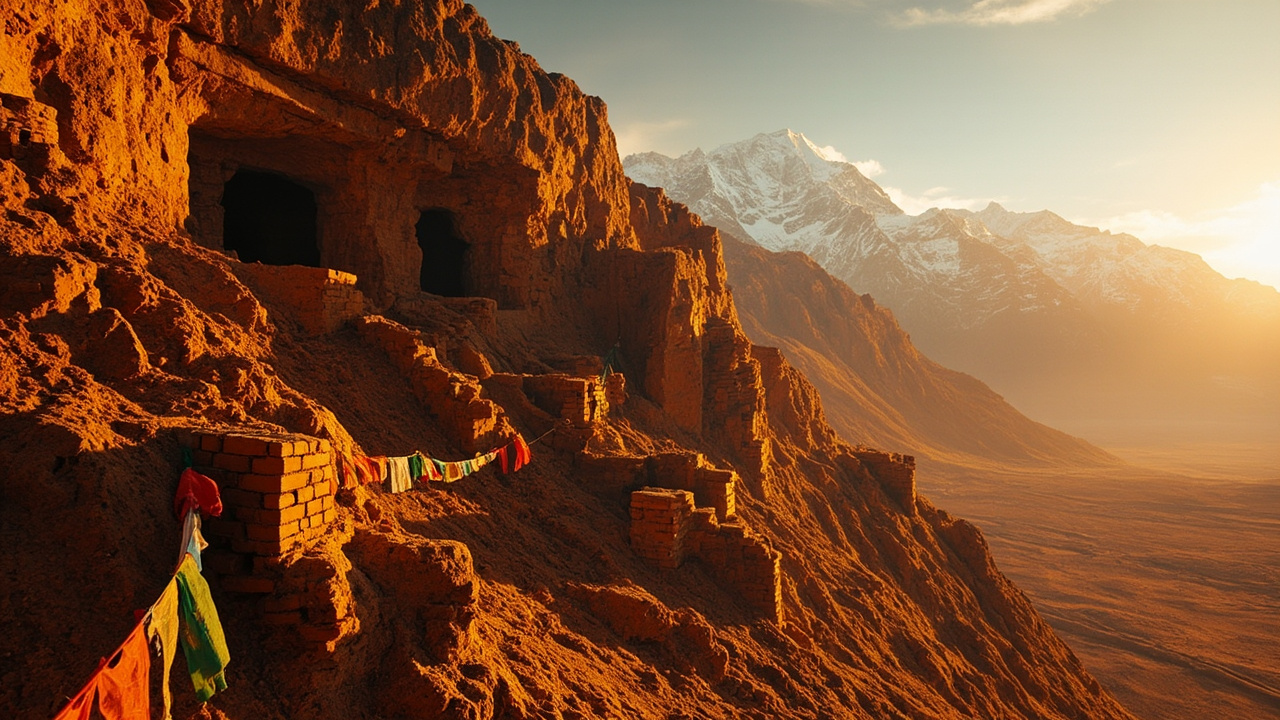
The dust got into everything. I mean everything - my camera, my ears, the creases of my notebook. I was standing on a ridge in far western Tibet, and the wind was peeling layers of ochre earth off the hillside, throwing them at the ruins of a kingdom that had vanished four centuries ago. Below me, the clay walls of Tsaparang dissolved into the landscape like they were never there at all. That’s the thing about the Guge Kingdom ruins - they don’t feel like a tourist site. They feel like a secret the desert is still keeping.
I’d spent three days getting here from Lhasa - a flight to Ngari, then a bone-rattling drive across the plateau. I’d read every guidebook before I came, and none of them prepared me for the scale. This wasn’t a single fort. It was an entire civilization carved into a mountainside, a city of caves and temples and collapsed palaces that once ruled the upper Indus Valley. The Guge Kingdom lasted from the 10th to the 17th century, when it fell to a neighboring kingdom and simply… vanished. No grand battle narrative. No dramatic exile. Just abandonment.
This guide covers both major Guge sites - Tsaparang and Tholing - plus everything you need to know about getting there, staying there, and not losing your mind at 12,000 feet. I’ll give you real prices, real logistics, and the honest truth about whether this trip is worth the effort. Spoiler: it is, but only if you’re prepared.
Quick answer
The Guge Kingdom ruins are two remote archaeological sites in far western Tibet - Tsaparang (the main fortress ruins) and Tholing (the monastery complex) - requiring a Tibet Travel Permit, an Alien Travel Permit, and a Chinese visa (though 54 countries currently enjoy visa-free entry to China through 2026). Budget at least $1,200-$1,800 (CNY 8,500-13,000) for a 7-10 day round trip from Lhasa, and plan for late May through September, when the weather is most stable. The sites are only accessible with a licensed guide and driver, which you must arrange before arriving in Tibet.
The Short Version
If you have 90 seconds: the Guge ruins are extraordinary but punishing. You’ll fly to Ngari (Ali) from Lhasa, then drive 2-3 hours to the ruins. You need three permits (Tibet Travel Permit, Alien Travel Permit, military area permit), a licensed guide, and a tolerance for altitude above 12,000 feet. The murals in Tholing Monastery are among the best-preserved Buddhist art in Asia. Budget a week minimum. Don’t attempt this as a day trip from anywhere - it’s not possible. And bring cash, because there’s no ATM in Zanda County.
How I Picked These
I’ve been to Tibet four times, and I spent ten days in the Ngari region in 2025, including three nights in Zanda County. I walked every accessible cave at Tsaparang, sat through a puja at Tholing Monastery, and drank butter tea with a monk who’d been there for 22 years. I also talked to the guides who run the Lhasa-to-Ngari circuit - they know which sites are worth the detour and which are just photo stops. My picks reflect what I actually saw, not what the brochures claim. I paid my own way, which means I can tell you honestly that the guesthouse food is bad and the beds are hard, but the stars at night are the best I’ve seen anywhere on earth.
Comparison Table
| Rank | Place | Best For | Approx Cost (USD) | Time Needed | When to Go |
|---|---|---|---|---|---|
| 1 | Tsaparang Fortress | The main Guge ruins, cave city, panoramic views | $30 (CNY 215) entry | 3-4 hours | May-Sep |
| 2 | Tholing Monastery | Priceless murals, living monastery, history | $25 (CNY 180) entry | 2-3 hours | May-Sep |
| 3 | Zanda County Town | Base camp, logistics, local life | Free (lodging $30-50/night) | 1-2 nights | May-Sep |
| 4 | Ngari (Ali) Airport | Gateway, arrival/departure | Flight from Lhasa $350-500 | 1 hour flight | Year-round |
| 5 | Tirthapuri Hot Springs | Rest stop, hot springs, pilgrimage site | $10 (CNY 70) | 2 hours | May-Sep |
| 6 | Mount Kailash (viewpoint) | Sacred mountain views, photo ops | Free (part of tour) | 1 hour | May-Sep |
| 7 | Pangong Tso (side trip) | Lake views, high altitude scenery | Free (part of tour) | 1 day | Jun-Sep |
| 8 | Lhasa (start point) | Acclimatization, Potala Palace, culture | $60 (CNY 430) Potala entry | 2-3 days | Year-round |
| 9 | Shigatse (transit) | Tashilhunpo Monastery, overnight stop | $15 (CNY 110) entry | 1 day | Year-round |
| 10 | Saga (transit) | Gateway town, last supplies before Ngari | Free | 1 night | May-Sep |
Tsaparang Fortress - The City That Time Forgot
I remember climbing the switchback path to the top of Tsaparang and stopping halfway to catch my breath - not just from the altitude, but from the sheer silence. The wind was the only sound. No birds. No traffic. Just the low hum of emptiness that sits over places where thousands of people once lived.
Tsaparang was the capital of the Guge Kingdom, carved into a pyramid-shaped hill that rises 300 meters above the Sutlej River valley. The site covers roughly 180,000 square meters, with over 300 caves, temples, and residential quarters. The royal palace sits at the top, and you can still see the red and white walls that once marked the king’s residence. The most famous structure is the Red Temple (Lhakhang Marpo), which contains murals that survived the centuries remarkably intact.
- Location: Zanda County, Ngari Prefecture, about 18 km west of Zanda town
- Entry fee: $30 (CNY 215), includes guide
- Opening hours: 9:00 AM - 6:00 PM, daily from May to October; closed in winter
- Getting there: From Zanda town, it’s a 30-minute drive. Your tour vehicle will handle this - there’s no public transport.
- When to visit: Morning, before the wind picks up. The light on the fortress walls is best between 8-10 AM.
- Insider tips: Bring a flashlight - the interior of the temples is pitch black. Wear sturdy shoes with grip; the paths are loose gravel. Don’t touch the murals - the oils from your hands cause permanent damage. The climb to the top takes about 45 minutes, so pace yourself. And carry water - there’s no shop at the site.
- A specific moment: My guide, a Tibetan man named Tenzin, pointed to a cave near the base and said, “That’s where the last king hid.” I never found out if it was true, but I liked that he told me anyway.
Tholing Monastery - The Art That Survived
Tholing Monastery sits on the edge of Zanda town, and from the outside it looks almost unremarkable - a cluster of whitewashed buildings against the brown hills. Then you step inside the assembly hall, and the murals hit you like a wave. These are not the faded, half-destroyed paintings you see elsewhere in Tibet. These are vivid, detailed, and shockingly well-preserved.
Tholing was founded in 996 AD by Yeshe-Ö, a Guge king who sent 21 young monks to Kashmir to study Buddhism. Only two returned, but they brought back texts and artistic traditions that shaped Tibetan Buddhism for centuries. The murals here show clear Kashmiri influence - the faces are more naturalistic, the colors more varied, and the compositions more dynamic than typical Tibetan art. The monastery is still active, and you’ll hear chanting if you visit during prayer times.
- Location: Zanda town, Ngari Prefecture, on the west bank of the Langqen Zangbo River
- Entry fee: $25 (CNY 180), includes guide
- Opening hours: 9:00 AM - 6:00 PM, daily; closed during winter months (Nov-Apr)
- Getting there: A 10-minute walk from the center of Zanda town. Your guesthouse can point you in the right direction.
- When to visit: Late afternoon, when the light through the windows illuminates the murals. The monks finish their prayers around 4 PM and are happy to chat.
- Insider tips: Ask to see the Dukhang (assembly hall) - it’s the main attraction. The monks will sometimes open the side chapels if you ask politely. Photography is not allowed inside the temples, but you can photograph the exterior freely. Bring small bills for donations - the monks appreciate it. And if you’re lucky, the abbot will show you the 15th-century thangka collection.
- A specific moment: A monk named Ngawang showed me a mural of Padmasambhava and said, “My grandfather painted this.” I later learned he was joking, but his English was good enough to make the joke land.
Zanda County Town - The Base Camp
Zanda is not a pretty town. It’s a dusty collection of concrete buildings, guesthouses, and restaurants that exists for one reason: to serve travelers heading to the Guge ruins. But it grows on you. The guesthouse owners are friendly, the food is basic but filling, and the views of the surrounding mountains at sunset are genuinely beautiful.
The town sits at 3,700 meters (12,100 feet), so you’ll feel the altitude. The streets are mostly unpaved, and the main drag has a few shops selling snacks, water, and basic supplies. There’s no ATM, so bring all the cash you need from Lhasa or Shigatse. The guesthouses range from basic (shared bathrooms, no heat) to comfortable (private rooms, electric blankets). I stayed at the Zanda Guesthouse, which was clean and had hot water in the evenings.
- Location: Zanda County seat, Ngari Prefecture
- Entry fee: Free (lodging $30-50 per night)
- Opening hours: N/A - it’s a town, not a site
- Getting there: Your tour will include Zanda as the base for the Guge ruins. It’s a 3-hour drive from Ngari (Ali) Airport.
- When to visit: Any time during the May-September season. The town is quiet in winter.
- Insider tips: Stock up on snacks and water in Lhasa before you come - options are limited here. The guesthouse restaurants serve Tibetan and Chinese food; the momos (dumplings) are the safest bet. Ask your guide to arrange a visit to the local market in the morning. And bring a power bank - electricity can be intermittent.
- A specific moment: I ate dinner at a small restaurant run by a woman named Drolma, who insisted I try her yak butter tea. It was salty, rich, and I loved it. She laughed at my face when I took the first sip.
Ngari (Ali) Airport - The Gateway
Ngari Gunsa Airport is one of the highest airports in the world at 4,274 meters (14,022 feet). The flight from Lhasa takes about an hour and a half, and the approach is spectacular - you fly over the Himalayas, and on a clear day you can see Mount Kailash from the window. The airport itself is small and functional, with a single runway and a modest terminal.
The catch: flights are weather-dependent. The airport closes frequently in winter and can be delayed in summer due to afternoon winds. I had a two-day delay on my way out. The airport has a small cafe and basic facilities, but don’t expect much. Your guide will meet you at the arrivals area with a sign.
- Location: 50 km from Zanda town, about 1.5 hours by road
- Entry fee: N/A (flight costs $350-500 one way from Lhasa)
- Opening hours: Flights operate during daylight hours only
- Getting there: Your tour operator will arrange the flight and pickup. There’s no public transport from the airport.
- When to visit: Morning flights are more reliable. Book the earliest flight available.
- Insider tips: Book flights at least a month in advance - there are only a few flights per week. Confirm your return flight the day before you leave. Bring a book for potential delays. And don’t plan any tight connections - give yourself a buffer day in Lhasa on either end.
- A specific moment: I watched a group of pilgrims at the airport, dressed in traditional chubas, waiting for a flight to Lhasa. One of them offered me a piece of dried yak meat. It was tough, but I ate it anyway.
Tirthapuri Hot Springs - The Rest Stop
Tirthapuri is a small pilgrimage site about 60 km from Zanda, known for its hot springs and a cave where the 11th-century saint Milarepa is said to have meditated. It’s not a major tourist destination, but it’s a welcome break on the long drive between sites. The hot springs are in a rocky canyon, and the water is genuinely hot - locals say it has healing properties.
The site has a small temple and a few stupas, and you’ll likely see Tibetan pilgrims performing kora (circumambulation) around the sacred sites. The hot springs themselves are open-air pools, and you can soak your feet or take a dip if you’re brave enough to strip down in the cold mountain air. I soaked my feet for an hour and felt the day’s driving fatigue melt away.
- Location: 60 km southwest of Zanda, off the main road to Tsaparang
- Entry fee: $10 (CNY 70)
- Opening hours: Daylight hours, daily
- Getting there: Your tour vehicle can stop here en route to or from Tsaparang. It’s a 1-hour detour.
- When to visit: Midday, when the sun is warmest.
- Insider tips: Bring a towel and a change of clothes if you plan to soak. The changing facilities are basic - a curtain and a bench. The water is very hot, so test it before you get in. And respect the pilgrims - this is a sacred site, not just a tourist attraction.
- A specific moment: A pilgrim from Kham offered me a handful of tsampa (roasted barley flour) mixed with butter tea. I ate it awkwardly, and she laughed. Then she showed me the proper way to mix it into a ball.
Mount Kailash Viewpoint - The Photo Stop
You can’t actually climb Mount Kailash without a separate permit and a multi-day trek, but the viewpoint on the road between Saga and Zanda offers a stunning glimpse of the sacred mountain. Kailash is 6,638 meters (21,778 feet) and is considered sacred to four religions: Hinduism, Buddhism, Jainism, and Bon. The mountain is never climbed - it’s considered too sacred to step foot on.
The viewpoint is a simple pull-off on the side of the road, with a small stupa and prayer flags. On a clear day, you can see the distinctive pyramid-shaped peak of Kailash, often with a plume of cloud streaming off its summit. It’s a 10-minute stop, but it’s worth it for the photos and the sense of being in one of the most sacred places on earth.
- Location: On the road between Saga and Zanda, approximately 30 km from the turnoff to Kailash
- Entry fee: Free (part of your tour)
- Opening hours: N/A - it’s a roadside viewpoint
- Getting there: Your tour driver will stop here if you ask. It’s a natural break point on the long drive.
- When to visit: Early morning or late afternoon, when the light is best on the mountain.
- Insider tips: Ask your driver to stop - they might not do it automatically. Bring a telephoto lens if you want a close-up shot. And be patient - the mountain is often shrouded in clouds, but it clears periodically.
- A specific moment: I stood at the viewpoint with a group of Indian pilgrims who had traveled for days to see the mountain. One of them, an elderly man, wept when the clouds parted. I didn’t know what to say, so I just stood there with him.
Pangong Tso Lake - The Side Trip
Pangong Tso is a high-altitude lake that straddles the border between Tibet and India. It’s famous for its changing colors - the water shifts from deep blue to turquoise to green depending on the light and time of day. The lake is 134 km long, but only about 40% of it is in Tibet; the rest is in Indian-controlled Ladakh.
The Tibetan side of the lake is less developed than the Indian side, which means fewer crowds and more raw beauty. The drive from Zanda takes about 5-6 hours, so it’s a full-day trip. The lake sits at 4,250 meters (13,940 feet), so the altitude is a factor. But the views are worth it - the lake is surrounded by barren mountains, and the colors are unreal.
- Location: 200 km northeast of Zanda, near the India-China border
- Entry fee: Free (part of your tour)
- Opening hours: Daylight hours, daily
- Getting there: Your tour operator can arrange a day trip. The drive takes 5-6 hours each way, so start early.
- When to visit: Midday, when the sun is high and the colors are most vivid.
- Insider tips: Bring a windbreaker - the wind off the lake is brutal. The border area requires an additional permit, which your guide will arrange. Don’t swim in the lake - it’s sacred and also freezing. And bring binoculars to spot the migratory birds that stop here in summer.
- A specific moment: I sat on the shore for an hour, watching the water change color as clouds moved across the sun. A local herder walked by with his yaks and nodded at me. We didn’t speak, but the moment felt complete.
Lhasa - The Start Point
You’ll begin your Guge journey in Lhasa, Tibet’s capital, and you should spend at least two days here to acclimatize to the altitude (3,650 meters / 11,975 feet). Lhasa is a fascinating city - the Potala Palace dominates the skyline, and the Barkhor Street circuit around the Jokhang Temple is a sensory overload of incense, prayer wheels, and pilgrims.
The Potala Palace is the former residence of the Dalai Lamas and is now a museum. It’s a steep climb to the top, but the views over Lhasa are worth it. The Jokhang Temple is the most sacred temple in Tibetan Buddhism, and the Barkhor kora circuit is the best place to see Tibetan life up close. Lhasa also has good restaurants, coffee shops, and a few bars that cater to travelers.
- Location: Central Tibet, 3,650 meters elevation
- Entry fee: $60 (CNY 430) for Potala Palace; $20 (CNY 140) for Jokhang Temple
- Opening hours: Potala: 9:00 AM - 4:00 PM, closed Mondays; Jokhang: 8:00 AM - 6:00 PM, daily
- Getting there: Fly into Lhasa Gonggar Airport, then take a 1-hour airport shuttle ($5 USD / CNY 35) to the city center.
- When to visit: Year-round, but May-October has the best weather.
- Insider tips: Book Potala Palace tickets at least a day in advance - they sell out. The climb to the top of Potala takes about an hour, so pace yourself. The Barkhor market is great for souvenirs, but bargain hard - start at 50% of the asking price. And try the sweet tea at the teahouses around Barkhor - it’s a local favorite.
- A specific moment: I watched a young monk take a selfie in front of the Potala Palace, his robes flapping in the wind. It was a reminder that even the most ancient traditions adapt to the modern world.
Shigatse - The Transit Stop
Shigatse is Tibet’s second-largest city and a natural overnight stop on the drive from Lhasa to Ngari. The main attraction is Tashilhunpo Monastery, the traditional seat of the Panchen Lama and one of the largest functioning monasteries in Tibet. The monastery is home to a massive statue of Maitreya Buddha - 26 meters tall and covered in gold.
The city itself is more functional than beautiful, but it has a few good restaurants and guesthouses. The drive from Lhasa to Shigatse takes about 5-6 hours, and the road follows the Yarlung Tsangpo River through some spectacular valley scenery. Shigatse is also the last major city before you head into the remote western regions.
- Location: 280 km west of Lhasa, 3,840 meters elevation
- Entry fee: $15 (CNY 110) for Tashilhunpo Monastery
- Opening hours: 9:00 AM - 5:00 PM, daily
- Getting there: From Lhasa, take the Friendship Highway west. Your tour will include this as an overnight stop.
- When to visit: Year-round, but the monastery is busiest during festivals.
- Insider tips: The monastery’s kora circuit takes about an hour and offers great views of the city. The market near the monastery sells excellent Tibetan carpets. And the restaurant at the Shigatse Hotel serves good Tibetan food - try the yak stew.
- A specific moment: I got lost in the monastery’s maze of chapels and stumbled into a room where monks were debating Buddhist philosophy. They gestured for me to sit, and I watched for 20 minutes, understanding nothing but feeling everything.
Saga - The Last Stop Before the Wild
Saga is a small town that serves as the last supply point before you head into the remote Ngari region. It’s not a tourist destination - it’s a functional town with a few guesthouses, restaurants, and shops selling basic supplies. But it’s an important stop on the Guge circuit, and it’s where you’ll spend a night before the long drive to Zanda.
The town sits at 4,640 meters (15,220 feet), so the altitude is serious. The guesthouses are basic, and the food is simple - mostly noodles, rice, and the occasional vegetable dish. But the people are friendly, and the views of the surrounding mountains are stunning, especially at sunrise.
- Location: 450 km west of Shigatse, on the road to Ngari
- Entry fee: Free (lodging $20-40 per night)
- Opening hours: N/A
- Getting there: Your tour will include Saga as an overnight stop on the drive from Shigatse to Zanda.
- When to visit: May-September, when the roads are passable.
- Insider tips: Stock up on snacks and water here - the next stop is Zanda, and options are limited. The guesthouse hot water is unreliable, so shower early in the evening. And bring warm clothes - the temperature drops below freezing at night even in summer.
- A specific moment: I sat in a small restaurant eating noodle soup while a group of truck drivers watched a Chinese soap opera on a small TV. One of them offered me a cigarette, and when I declined, he laughed and said, “Smart man.”
FAQ summary
The Guge Kingdom ruins in western Tibet consist of two main sites - Tsaparang Fortress and Tholing Monastery - both located in Zanda County, Ngari Prefecture. Access requires a Chinese visa (54 countries are visa-free through 2026), a Tibet Travel Permit, an Alien Travel Permit, and a military area permit, all arranged through a licensed tour operator. The trip costs approximately $1,200-$1,800 (CNY 8,500-13,000) for a 7-10 day itinerary from Lhasa, including flights, guide, driver, and lodging. The best time to visit is late May through September, when the weather is stable and the sites are open. Tsaparang charges $30 (CNY 215) entry, while Tholing charges $25 (CNY 180). Both sites close during winter months (November-April). Travelers should budget for altitude sickness, limited amenities in Zanda, and no ATM access in the region.
FAQ
Q: Do I need a visa to visit the Guge Kingdom ruins? A: Yes, you need a Chinese visa, but 54 countries currently have visa-free access to China through 2026. You also need a Tibet Travel Permit and an Alien Travel Permit, which your tour operator will arrange for you.
Q: How much does a trip to the Guge Kingdom ruins cost? A: A 7-10 day trip from Lhasa costs approximately $1,200-$1,800 (CNY 8,500-13,000) per person, including flights, guide, driver, lodging, and entry fees. This does not include international flights to China.
Q: What is the best time to visit the Guge Kingdom ruins? A: Late May through September is the best time, when the weather is stable and the sites are open. Winter (November-April) is extremely cold, and the sites are closed.
Q: How do I get to the Guge Kingdom ruins? A: Fly from Lhasa to Ngari (Ali) Airport, then drive 1.5 hours to Zanda County. The ruins are 18 km from Zanda town. You must have a licensed guide and driver - there is no public transport.
Q: Is the altitude a problem at the Guge Kingdom ruins? A: Yes. Zanda sits at 3,700 meters (12,100 feet), and the surrounding area is higher. Spend 2-3 days in Lhasa to acclimatize, drink plenty of water, and consider taking Diamox (acetazolamide) if you’re prone to altitude sickness.
Q: Can I use credit cards or ATM at the Guge Kingdom ruins? A: No. There is no ATM in Zanda County, and most places only accept cash. Bring all the cash you need from Lhasa or Shigatse. WeChat Pay and Alipay are accepted in some places, but cash is more reliable.
Q: Do I need a VPN for my phone in Tibet? A: Yes. Many Western apps and websites (Google, WhatsApp, Facebook, Instagram) are blocked in China. Install a reliable VPN before you arrive. You’ll also need a Chinese SIM card or an international roaming plan, as Wi-Fi is limited in Zanda.
The Honest Wrap-up
The Guge Kingdom ruins are not for everyone. They’re remote, expensive, and physically demanding. The altitude will kick your ass, the guesthouse beds are hard, and the food is repetitive. But if you’re the kind of traveler who wants to stand in a place where history is so thick you can taste it, this is worth every penny.
I’ve been to Angkor Wat, Machu Picchu, and Petra. Tsaparang is different. There’s no gift shop, no tour bus circus, no Instagram crowd. Just you, the wind, and the ghosts of a kingdom that vanished without explanation. The murals in Tholing are world-class, and the silence at Tsaparang is something you’ll carry with you for years.
Who is this trip for? Experienced travelers who’ve already done the main China circuit and want something deeper. Who is it not for? First-timers who haven’t seen the Great Wall or the Terracotta Warriors yet. Do those first. Then come here.
One final piece of advice: book through a reputable tour operator, give yourself a buffer day on either end for flight delays, and pack a good flashlight. You’ll thank me when you’re inside the Red Temple.
Topics
More guides you may like

Top 10 Bridges in China
China's bridges are engineering marvels spanning mountains, rivers, and seas. Here are 10 of the most spectacular, from ancient stone to modern steel.
8 min read

Top 10 Buddhist Sites in China
From the Leshan Giant Buddha to the Dunhuang Caves, these 10 Buddhist sites represent 2,000 years of China's spiritual heritage.
9 min read

Top 10 Day Trips from Beijing You Shouldn't Miss
Beijing is packed with history, but some of China's best experiences are just a few hours away. Here are 10 day trips that will transform your visit.
9 min read

Top 10 Hidden Gems in China Off the Beaten Path
Beyond the Great Wall and Terracotta Warriors, China has incredible hidden destinations few tourists ever reach. Here are 10 underrated gems worth the detour.
9 min read

Top 10 Markets and Shopping Streets in China
From Shanghai's Bund to Beijing's Silk Street - 10 markets where foreigners can haggle, explore, and bring home authentic Chinese goods.
9 min read

Top 10 Museums in China You Shouldn't Miss
China's museums span 5,000 years of civilization. These 10 - from the Palace Museum to Xi'an's terracotta gallery - are unmissable for culture lovers.
9 min read