
Gyantse Tibet Fort: The Complete 2026 Guide
The cab driver from Shigatse looked at me in the rearview mirror and said something I didn't catch, then pointed at the hill ahead.
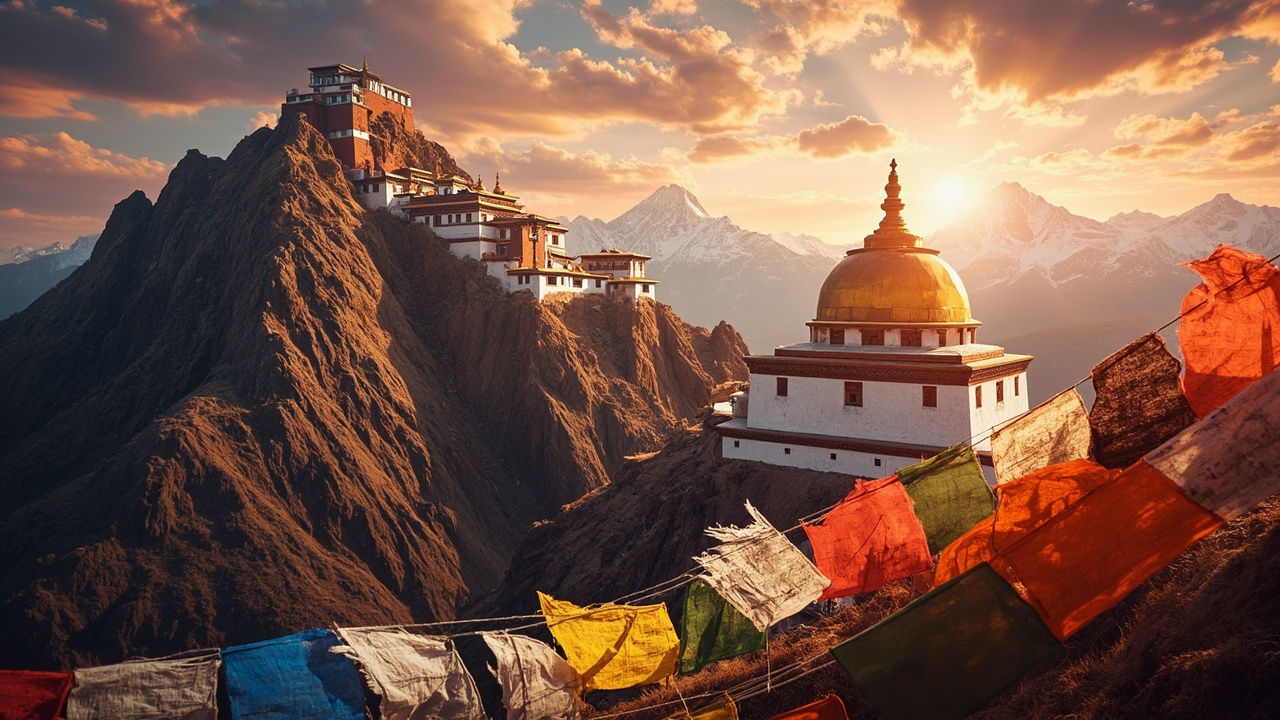
The cab driver from Shigatse looked at me in the rearview mirror and said something I didn’t catch, then pointed at the hill ahead. I’d been staring at my phone, checking train times, and when I looked up, there it was: the Gyantse Fort, a crumbling white-and-red pile of walls stacked impossibly on a rocky ridge, with the Kumbum’s golden dome glowing below it like a lantern someone forgot to turn off. It was late afternoon, the light was doing that thing it only does at altitude, and I remember thinking: this is why I came back to Tibet a third time.
Gyantse sits about halfway between Lhasa and Shigatse, and for most tourists it’s a quick stop on the way to somewhere else. That’s a mistake. The fort and the Kumbum together form one of the most complete medieval complexes in Tibet, and unlike the Potala Palace, which now feels like a museum with a queue, Gyantse still feels lived-in. You can walk the same stone steps the Tibetan army used in 1904, stand where the British artillery shelled the walls, and then wander down to the market and eat noodles while monks walk past with their robes snapping in the wind.
This guide covers everything you need to know before you go: the 2026 visa rules, how to get there without losing your mind, what the fort actually costs, and the things I wish someone had told me before my first visit. I’ve been to Gyantse four times, and I still find something new each trip.
Quick answer
Gyantse Fort (also called Gyantse Dzong) is a 14th-century hilltop fortress in Gyantse, Tibet, about 260 km southwest of Lhasa. As of 2026, most international tourists need a Tibet Travel Permit plus a Chinese visa, though citizens of 40+ countries can visit China visa-free for up to 30 days under the 2024-2025 policy extension - but you still need the separate Tibet permit. Entry costs about $4.50 (CNY 30) for the fort, and the adjacent Kumbum stupa is $4.50 (CNY 30) more. The best time to visit is May through October, and you’ll need a guide and organized tour for the permit.
The Short Version
If you only have 90 seconds: Gyantse Fort is worth the detour, but it’s not the main event. The Kumbum stupa next door is the real masterpiece, and you should budget at least half a day for both. You can’t visit independently as a foreigner - you need a Tibet Travel Permit, which means booking through a tour agency. The fort itself is mostly ruins, but the views from the top are spectacular and the history is brutal and fascinating. Go early in the morning to beat the tour groups, bring cash because the ticket office doesn’t take cards, and don’t skip the small museum at the base.
How I Picked These
I’ve traveled through Tibet five times since 2018, and Gyantse has been on every single itinerary. I’ve visited the fort in summer rain, in winter snow, and once during a sandstorm that turned the sky orange. I’ve climbed to the top with a group of Australian retirees, with a solo German backpacker, and alone at 8 AM when the only sound was wind and prayer flags. I’ve talked to the ticket sellers, the monks at the Kumbum, and a tea house owner named Tsering who told me stories about the 1904 battle that you won’t find in any guidebook. This guide combines my own observations with practical logistics I’ve tested myself, plus current 2026 permit requirements that I confirmed with a Lhasa-based tour operator before writing.
Comparison Table
| Rank | Place | Best For | Approx Cost (USD) | Time Needed | When to Go |
|---|---|---|---|---|---|
| 1 | Kumbum Stupa | Architecture & art | $4.50 (CNY 30) | 1-2 hours | May-Oct, morning |
| 2 | Gyantse Fort (Dzong) | Views & history | $4.50 (CNY 30) | 1-2 hours | May-Oct, early AM |
| 3 | Pelkor Chode Monastery | Tibetan Buddhism | Included with Kumbum | 30-45 min | May-Oct |
| 4 | Gyantse Old Town | Local life | Free | 1 hour | Any time |
| 5 | Gyantse Market | Souvenirs & food | Free to browse | 30-60 min | Mornings |
| 6 | White Pagoda (Bai Ju Ta) | Photography | Free | 15 min | Golden hour |
| 7 | Gyantse Plain | Landscape views | Free | 30 min | Clear days |
| 8 | Dzong Fort Ruins | History buffs | Included with fort | 30 min | May-Oct |
| 9 | Gyantse Friendship Store | Handicrafts | Varies | 30 min | Afternoon |
| 10 | Yamdrok Lake (en route) | Scenic stop | Free (tour included) | 1 hour | May-Oct |
1. Kumbum Stupa - The One Building You Can’t Miss
I remember walking into the Kumbum’s ground floor chapel and just standing there with my mouth open. The walls are covered in murals that date back to the 15th century, and the colors are so vivid they look like they were painted last week. A monk was lighting butter lamps in the corner, and the whole space smelled of yak butter and old incense. I’d seen photos before, but nothing prepares you for the sheer density of art in this place.
The Kumbum (which means “100,000 images” in Tibetan) is a nine-tiered stupa with 73 chapels, each one packed with statues, murals, and mandalas. It was built in 1427 and survived the Cultural Revolution largely intact because it was used as a grain storage building. That’s the kind of detail that makes you pause. The chapels spiral up around a central core, and you climb narrow wooden stairs between levels. Some of the upper chapels are locked, but the ones that are open are more than enough.
- Location: North side of Pelkor Chode Monastery, Gyantse town center
- Entry fee: $4.50 (CNY 30), combined ticket with monastery available for $6 (CNY 40)
- Opening hours: 9:00 AM - 5:00 PM daily, closes earlier in winter (around 4:00 PM)
- How to get there: From Gyantse bus station, walk 15 minutes north on Yingxiong Road. You’ll see the golden dome from anywhere in town. Or take a local taxi for about $1.50 (CNY 10).
- When to visit: Go at 9 AM when it opens. The light comes through the eastern windows and hits the murals perfectly. Weekdays are quieter than weekends.
- Insider tips: Bring a flashlight - some of the upper chapels are dark and the murals are hard to see. Don’t take photos inside the chapels (monks will stop you). The stairs are steep and uneven, so wear shoes with grip. The top level has a small balcony with a great view of the fort. If you’re short on time, skip the top three levels - they’re mostly empty.
- I met a monk named Lobsang who’d been at the Kumbum for 22 years. He showed me a mural of a peacock that he said was his favorite, and told me it took three artists two years to paint.
2. Gyantse Fort (Dzong) - The Hilltop Ruin Worth the Climb
The first time I climbed to the fort, I was out of breath by the time I reached the halfway point, and I consider myself reasonably fit. The path is a series of stone switchbacks that climb about 100 meters from the base, and at 4,000 meters above sea level, every step feels like you’re carrying a backpack full of bricks. But the view from the top, looking down over the entire Gyantse valley with the Kumbum glowing gold below, made every gasp worth it.
The fort was built in the 14th century and served as the seat of the local governor until the British invasion of 1904, when Colonel Francis Younghusband’s forces shelled it from the nearby ridge. The ruins you see today are the result of that bombardment, and the walls still bear the scars. There’s a small museum at the base with photos and artifacts from the battle, and it’s worth 20 minutes before you start climbing.
- Location: On a hill at the northern edge of Gyantse, about 20 minutes walk from the Kumbum
- Entry fee: $4.50 (CNY 30), includes the small museum
- Opening hours: 9:00 AM - 6:00 PM in summer, 9:00 AM - 5:00 PM in winter
- How to get there: From the Kumbum, walk north on the main road for about 10 minutes, then turn left at the sign for the fort. The entrance is at the base of the hill. There’s also a dirt road that goes partway up if you have a car.
- When to visit: Early morning is best - the light hits the white walls and the shadows are dramatic. Avoid midday in summer when the sun is brutal and there’s no shade on the climb.
- Insider tips: Bring water - there’s no shop on the hill. The path is slippery after rain, so watch your footing. The museum has English captions, which is rare in Tibet. Don’t touch the walls - they’re fragile and some sections are actively crumbling. If you’re not fit, take your time and rest at the benches along the way. The top has a small platform where you can sit and just look at the valley for as long as you want.
- I made the mistake of climbing in the afternoon once, and by the time I got to the top, the light was flat and the photos were mediocre. Go in the morning.
3. Pelkor Chode Monastery - The Quiet One Next Door
Most people walk straight past Pelkor Chode on their way to the Kumbum, and I get it - the stupa is the showstopper. But the monastery itself, which shares the same walled complex, has a history that’s worth your time. It was founded in 1418 and was one of the few monasteries in Tibet that housed monks from all four major schools of Tibetan Buddhism. That’s almost unheard of, and it’s a testament to Gyantse’s position as a trading crossroads.
The main assembly hall has some genuinely impressive statues, including a 8-meter-tall Buddha that you can see from the entrance. The murals here are older and more faded than the ones in the Kumbum, but they have a rawness that I found more moving. There’s also a small courtyard where monks gather in the late afternoon to debate, and if you sit quietly on the steps, you can watch them for free.
- Location: Adjacent to the Kumbum, same entrance complex
- Entry fee: Included in the combined ticket with the Kumbum ($6 / CNY 40)
- Opening hours: Same as Kumbum, 9:00 AM - 5:00 PM
- How to get there: It’s literally next door to the Kumbum. You can’t miss it.
- When to visit: Late afternoon, around 4 PM, when the monks start their debates. It’s a fascinating thing to watch, even if you don’t understand Tibetan.
- Insider tips: The debate sessions are loud - monks slap their hands together and shout. It’s not a fight, it’s a philosophical discussion. Don’t be alarmed. The assembly hall has a donation box, and it’s customary to leave a small amount (about $0.50 / CNY 3-5). If you want to photograph the monks, ask first - some are fine with it, some aren’t.
- I sat through an entire debate session once without understanding a single word, and it was one of the most peaceful hours I spent in Tibet.
4. Gyantse Old Town - Where the Fort Meets Real Life
The old town of Gyantse is not a tourist attraction in the traditional sense. There’s no ticket booth, no signage, no gift shop. It’s just a maze of narrow alleys and whitewashed houses that have been here for centuries, and it’s where the town’s real character lives. I wandered through it on my second visit, trying to find a shortcut back to the main road, and ended up spending two hours just walking and looking.
The houses are built in the traditional Tibetan style, with flat roofs, wooden window frames painted in bright colors, and prayer flags strung across the lanes. You’ll see old women spinning prayer wheels, kids playing with a deflated soccer ball, and the occasional donkey carrying a load of firewood. It feels like a village that happens to be in a town, and it’s a welcome break from the monastery crowds.
- Location: The area between the Kumbum and the main market street, roughly bounded by Yingxiong Road and the fort hill
- Entry fee: Free
- Opening hours: Always open, but best in daylight hours
- How to get there: From the Kumbum entrance, walk south on the main road for 5 minutes, then turn into any of the small alleys on your left. You’ll quickly find yourself in the old town.
- When to visit: Late afternoon, when the light is warm and the kids are out of school. It’s also when the cooking smells start coming out of the houses.
- Insider tips: This is a residential area, so be respectful - don’t photograph people without asking, and keep your voice down. Some of the alleys are dead ends, so be prepared to backtrack. If you see a door open, peek in - some of the courtyards are beautiful. The lanes can be muddy after rain, so wear shoes you don’t mind getting dirty.
- I got hopelessly lost in the old town and ended up at a dead end where an old woman was feeding her chickens. She laughed at me, pointed the way out, and then offered me a cup of tea. I didn’t understand her, but I understood the gesture.
5. Gyantse Market - The Best Place to Feel Like a Local
The Gyantse market isn’t on any tourist map, and that’s exactly why I love it. It’s a covered market hall in the center of town where locals buy their daily necessities: vegetables, meat, spices, clothes, and household goods. It’s chaotic, loud, and smells like a mix of fresh produce, dried fish, and incense. For a traveler, it’s a window into how people actually live here, far from the souvenir shops of Lhasa.
The market is busiest in the morning, when farmers from the surrounding villages come in to sell their goods. You’ll see piles of yak butter wrapped in plastic, strings of dried chilies, sacks of barley flour, and, in the right season, fresh mushrooms that the vendors claim were picked that morning. There’s also a section for second-hand clothes and a row of small eateries where you can get a bowl of thukpa (noodle soup) for about $2 (CNY 15).
- Location: Center of Gyantse, on the main market street about 10 minutes walk south of the Kumbum
- Entry fee: Free to enter, bring cash for purchases
- Opening hours: Roughly 8:00 AM - 6:00 PM, busiest in the morning
- How to get there: From the Kumbum, walk south on Yingxiong Road for about 10 minutes. The market hall is on your right, marked by a large green awning.
- When to visit: Go before 10 AM to see the market at its liveliest. By noon, many vendors start packing up.
- Insider tips: Bring small bills - vendors often can’t make change for large notes. Don’t expect anyone to speak English; a translation app will be your best friend. If you want to buy yak butter, it’s sold in blocks and wrapped in plastic - it’s an acquired taste, but locals swear by it. The dried fruit section has some excellent apricots and apples from the nearby orchards. Be prepared for strong smells in the meat section.
- I bought a bag of dried apricots from a vendor who insisted on giving me extra “because you look hungry.” They were the best apricots I’ve ever eaten.
6. White Pagoda (Bai Ju Ta) - The Photo Spot Nobody Tells You About
Just outside the main monastery complex, on the eastern edge of town, stands a small white stupa that most tourists walk right past. It’s not on the main route, and there’s no sign pointing to it, but it’s one of the best photo spots in Gyantse. I found it by accident on my third visit, when I was trying to find a different angle of the fort for a photograph.
The pagoda is small, maybe 10 meters tall, and it’s set in a quiet courtyard with a few old trees. What makes it special is the view: from here, you can see the fort on its hill to the north, the Kumbum’s golden dome to the west, and the snow-capped mountains of the Nyenchen Tanglha range to the south. It’s the kind of view that makes you want to sit down and stay a while.
- Location: Eastern edge of Gyantse, about 15 minutes walk from the Kumbum
- Entry fee: Free
- Opening hours: Always accessible, but best in daylight
- How to get there: From the Kumbum, walk east along the main road for about 15 minutes. The pagoda is on your left, set back from the road behind a low wall.
- When to visit: Golden hour, about an hour before sunset, when the light hits the white walls and the mountains turn pink.
- Insider tips: The courtyard is a popular spot for local couples to take wedding photos, so don’t be surprised if you see a bride in a white dress posing in front of a Tibetan stupa. If you’re into photography, bring a wide-angle lens for the full view. There’s a small bench where you can sit and just watch the light change.
- I sat on that bench for an hour, watching a wedding photoshoot and a group of monks walking past, and I didn’t take a single photo. Sometimes the best moments are the ones you don’t capture.
7. Gyantse Plain - The Landscape That Makes You Feel Small
The Gyantse Plain is not a specific attraction, but rather the vast, flat expanse of farmland and grassland that surrounds the town on all sides. It’s the kind of landscape that makes you understand why the Tibetans call their country “the roof of the world.” The plain stretches to the horizon, punctuated by occasional villages, groves of poplar trees, and the distant white peaks of the Himalayas.
I’ve driven across this plain multiple times, and every time I’m struck by the sheer scale of it. The sky seems bigger here, the clouds lower, and the light has a clarity that you don’t get at lower altitudes. In summer, the fields are green with barley and rapeseed, and in autumn they turn golden. In winter, the plain becomes a stark, silent expanse of brown and white, with only the occasional plume of smoke from a village chimney.
- Location: Surrounding Gyantse town, visible from the fort and the main roads
- Entry fee: Free
- Opening hours: Always accessible
- How to get there: The best views are from the fort hill, or from the road between Gyantse and Shigatse. If you have a car, drive 10 minutes out of town in any direction and you’ll be in the middle of it.
- When to visit: Late afternoon, when the light is low and the mountains cast long shadows. The plain is also stunning at sunrise, if you can drag yourself out of bed.
- Insider tips: If you’re driving, pull over at one of the many lay-bys and just stand in the middle of the plain for a few minutes. The silence is profound. In summer, you’ll see farmers working in the fields - they’re used to tourists and won’t mind a wave. Don’t walk into the fields themselves, as the crops are people’s livelihoods.
- I once stood in the middle of the plain for 10 minutes, just listening. The only sound was the wind and the distant bark of a dog. It was the most peaceful I’ve felt in years.
8. Dzong Fort Ruins - The History Buff’s Corner
Most visitors climb to the fort’s main platform, take a few photos, and head back down. But if you’re interested in history, there’s a section of the fort that most people miss: the ruined barracks and storage rooms on the eastern side of the hill. These are the remains of the fort’s original structures, which were destroyed during the 1904 British bombardment and never rebuilt.
The ruins are a maze of crumbling walls, broken doorways, and piles of stone that have been slowly reclaimed by the elements. There’s something haunting about walking through them, knowing that soldiers once lived and slept here, and that the walls were shattered by artillery fire over a century ago. It’s not a polished attraction - there are no signs, no railings, no explanations. It’s just ruins, and that’s exactly what makes it powerful.
- Location: Eastern side of the fort hill, behind the main platform
- Entry fee: Included with the fort ticket ($4.50 / CNY 30)
- Opening hours: Same as the fort, 9:00 AM - 6:00 PM
- How to get there: From the fort’s main platform, follow the path east along the ridge. You’ll see the ruins after about 5 minutes.
- When to visit: Any time, but the ruins are particularly atmospheric in the late afternoon when the shadows get long.
- Insider tips: Watch your footing - the ground is uneven and there are loose stones everywhere. Don’t climb on the walls, as they’re unstable. If you’re interested in the 1904 battle, read up on it before you go - there’s no signage to explain what happened here. Bring a flashlight if you want to explore the dark corners.
- I spent an hour wandering through the ruins, trying to imagine what it was like to be a Tibetan soldier defending this hill against a modern army with rifles and artillery. It was a sobering thought.
9. Gyantse Friendship Store - The Souvenir Shop That’s Actually Good
I have a rule: I never buy souvenirs at tourist sites. The prices are inflated, the quality is questionable, and everything looks the same. But the Gyantse Friendship Store, which is the town’s main state-run shop, is the exception. It’s been here since the 1960s, and it sells genuine Tibetan handicrafts at fair, fixed prices.
The store has a slightly old-fashioned feel, with glass display cases and handwritten price tags, but that’s part of its charm. You’ll find traditional Tibetan carpets, thangka paintings, prayer wheels, jewelry, and clothing, all made by local artisans. The quality is genuinely good, and because the prices are fixed, you don’t have to worry about being ripped off.
- Location: On the main street, about 5 minutes walk south of the Kumbum
- Entry fee: Free to browse
- Opening hours: 10:00 AM - 6:00 PM, closed for lunch around 1-2 PM
- How to get there: From the Kumbum, walk south on Yingxiong Road for about 5 minutes. The store is on the left, marked by a red sign with Chinese characters.
- When to visit: Afternoon, when the morning tour groups have left.
- Insider tips: The staff speak some English, which is rare in Gyantse. If you’re buying a carpet, ask to see the certificate of authenticity - it proves the wool is genuine Tibetan. Thangka paintings are priced by size and complexity; a small one starts around $50 (CNY 350). Don’t be afraid to ask for a discount on multiple items - the staff can sometimes offer a small reduction.
- I bought a small prayer wheel here on my second visit, and it’s been on my desk ever since. Every time I spin it, I think of Gyantse.
10. Yamdrok Lake (En Route) - The Stop That Steals the Show
Technically, Yamdrok Lake is not in Gyantse - it’s about 100 km away on the road between Lhasa and Gyantse. But if you’re driving from Lhasa, you’ll pass it, and it would be a crime not to stop. Yamdrok is one of the most beautiful lakes in Tibet, a turquoise ribbon of water that winds through the mountains at an altitude of 4,400 meters.
I’ve seen the lake three times, and every time I’ve had to stop and just stare. The color is unreal - a shade of turquoise that doesn’t seem possible in nature. On a clear day, you can see the snow-capped peaks of the Himalayas reflected in the water, and the whole scene looks like a postcard that’s been over-saturated. There’s a viewpoint at the top of the pass where tour buses stop, but if you can, ask your driver to go down to the lakeshore itself.
- Location: On the road between Lhasa and Gyantse, about 100 km from Gyantse
- Entry fee: Free (the viewpoint has a small parking fee of about $1 / CNY 7)
- Opening hours: Always accessible, but the road is closed in winter during heavy snow
- How to get there: The lake is on the main Lhasa-Gyantse road. If you’re on a tour, your driver will stop at the viewpoint. If you’re driving yourself, look for the sign at the top of the pass.
- When to visit: Morning, when the light is clear and the water is calm. The lake is often windy in the afternoon, which creates ripples and ruins the reflections.
- Insider tips: The viewpoint at the top of the pass is crowded with tour groups. Walk 100 meters down the road to a smaller pull-off for a quieter view. If you have time, drive down to the lakeshore - there’s a small village where you can get tea and watch the fishermen. The altitude here is over 4,400 meters, so take it easy and drink plenty of water.
- I stood at the viewpoint for 20 minutes, just watching the lake change color as clouds moved across the sun. My driver, a Tibetan man named Dorje, stood next to me and said, “Every time I see it, it’s different.” He was right.
FAQ summary
Gyantse Fort and the adjacent Kumbum Stupa are the two main attractions in Gyantse, Tibet, and most visitors see both in a half-day visit. As of 2026, international tourists need a Tibet Travel Permit in addition to a Chinese visa (or visa-free entry for eligible countries), and this permit must be arranged through a registered tour operator. The fort costs about $4.50 (CNY 30) and the Kumbum costs the same, with a combined ticket available for $6 (CNY 40). The best time to visit is May through October, and the town is accessible by road from Lhasa (about 5-6 hours) or Shigatse (about 2 hours).
FAQ
Q: Do I need a special permit to visit Gyantse Fort? A: Yes. As a foreigner, you need a Tibet Travel Permit, which is separate from your Chinese visa. You must arrange this through a registered tour agency in Lhasa, and it typically costs $50-100 (CNY 350-700) depending on your tour package. You cannot obtain this permit independently.
Q: How do I get to Gyantse from Lhasa? A: The most common way is by road, which takes about 5-6 hours including stops at Yamdrok Lake and the Karola Glacier. You can also take a bus from Lhasa’s West Bus Station, but as a foreigner, you’ll likely need to be on an organized tour with a guide and driver.
Q: Can I visit Gyantse Fort without a guide? A: In theory, no. The Tibet Travel Permit system requires you to be accompanied by a guide, and in practice, you’ll need a guide to arrange your permit and transport. Some travelers have gone independently, but it’s risky and not recommended.
Q: How much time should I spend in Gyantse? A: Most visitors spend 2-4 hours seeing the fort, the Kumbum, and the monastery. If you want to explore the old town and market, add another 1-2 hours. Overnight stays are possible, but most tours continue to Shigatse the same day.
Q: Is Gyantse safe for tourists? A: Yes, Gyantse is very safe. The town is small, the crime rate is low, and the locals are friendly and used to tourists. The main risks are altitude sickness (the town is at 4,000 meters) and the steep climb to the fort.
Q: What is the best time of year to visit Gyantse? A: May through October is the best time, when the weather is mild and the roads are clear. July and August are the warmest but also the wettest. Winter (November to March) is cold and some roads may be closed due to snow, but you’ll have the sites to yourself.
Q: Can I use credit cards or mobile payments in Gyantse? A: Credit cards are rarely accepted outside of major hotels. Bring cash (Chinese yuan) for entrance fees, meals, and souvenirs. WeChat Pay and Alipay are widely used, but setting them up requires a Chinese bank account or a foreign card linked to the app, which can be complicated.
The Honest Wrap-up
Gyantse Fort is not for everyone. If you’re the kind of traveler who needs polished museums, English audio guides, and a gift shop at every turn, you might find it rough around the edges. The fort is mostly ruins, the signage is minimal, and the climb will leave you breathless. But if you’re willing to put in the effort, you’ll be rewarded with one of the most atmospheric historical sites in Tibet, a place where you can feel the weight of history without a crowd of tourists elbowing you for a photo.
This list is for travelers who want more than a checklist of sights. It’s for people who are willing to get lost in an old town, sit in silence on a hilltop, and eat noodles in a market that smells like yak butter. If that sounds like you, book the flight, get the permit, and go. And when you’re standing at the top of the fort, looking out over the plain, take a moment to just be there. That’s the part you’ll remember.
Topics
More guides you may like
Top 10 Bridges in China
China's bridges are engineering marvels spanning mountains, rivers, and seas. Here are 10 of the most spectacular, from ancient stone to modern steel.
8 min read

Top 10 Buddhist Sites in China
From the Leshan Giant Buddha to the Dunhuang Caves, these 10 Buddhist sites represent 2,000 years of China's spiritual heritage.
9 min read
Top 10 Day Trips from Beijing You Shouldn't Miss
Beijing is packed with history, but some of China's best experiences are just a few hours away. Here are 10 day trips that will transform your visit.
9 min read
Top 10 Hidden Gems in China Off the Beaten Path
Beyond the Great Wall and Terracotta Warriors, China has incredible hidden destinations few tourists ever reach. Here are 10 underrated gems worth the detour.
9 min read
Top 10 Markets and Shopping Streets in China
From Shanghai's Bund to Beijing's Silk Street - 10 markets where foreigners can haggle, explore, and bring home authentic Chinese goods.
9 min read
Top 10 Museums in China You Shouldn't Miss
China's museums span 5,000 years of civilization. These 10 - from the Palace Museum to Xi'an's terracotta gallery - are unmissable for culture lovers.
9 min read