
Turpan Grape Valley: The Complete 2026 Guide
The cab driver, a Uyghur man named Tursun who spoke exactly four words of English ("hello," "okay," "money," "good").
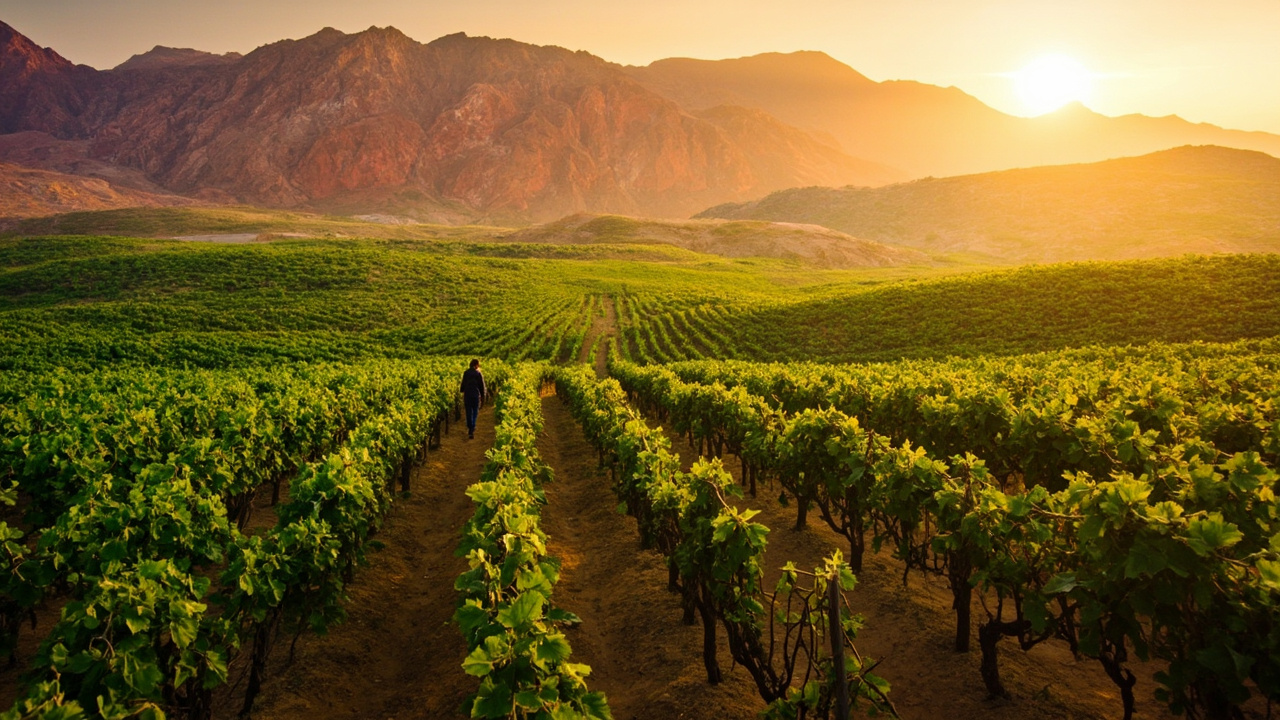
The cab driver, a Uyghur man named Tursun who spoke exactly four words of English (“hello,” “okay,” “money,” “good”), looked at me in the rearview mirror and laughed when I asked him to take me to the Grape Valley. He pointed at the empty backseat, then at himself, then at the road ahead. I didn’t understand until he drove past the main tourist gate, pulled over on a dusty side road, and gestured for me to follow him on foot through a gap in a mud-brick wall. Twenty minutes later I was standing in a canopy of ancient grapevines so thick the sun only reached the ground in small golden coins. That’s the thing about Turpan’s Grape Valley - the official entrance is fine, but the real experience is what happens when you let go of the map.
This guide covers the Grape Valley and its surrounding region - the vineyards, the ruins, the desert, the Uyghur villages - with the kind of specific detail I wish someone had given me before my first trip. You’ll get exact prices, real transport directions, and the honest truth about what’s worth your time and what’s a tourist trap.
Quick answer
Turpan’s Grape Valley (葡萄沟, Pútáo Gōu) is a 10-kilometer-long oasis canyon about 10 kilometers northeast of Turpan city center in Xinjiang, China. Entry costs roughly $15 (¥105) for the main scenic area, and the best time to visit is late August through September during the grape harvest. As of 2026, most Western passport holders can visit Xinjiang without a special permit, but you must register your accommodation with local police within 24 hours of arrival - your hotel will do this automatically.
The Short Version
If you only have 90 seconds: go to the Grape Valley for the sheer spectacle of it, but don’t expect a quiet vineyard experience - it’s a Chinese tourist attraction first, a working agricultural area second. The real magic happens in the surrounding Turpan region: the ancient ruins of Jiaohe, the Karez irrigation system, and the Flaming Mountains. Budget two full days for the area, go in September, and hire a driver for a full day - it’s cheaper than you think and saves you from the confusing local bus system.
How I Picked These
I’ve been to Turpan four times since 2019, most recently in September 2025. I’ve walked the Grape Valley’s main path during peak season (crowded but spectacular) and returned in November when the vines were bare and the place felt like a ghost town. I’ve haggled with grape vendors in the Uyghur bazaar, gotten hopelessly lost in the back alleys of Turpan’s old town, and spent an entire afternoon sitting in a vineyard shade with a retired schoolteacher who explained the region’s irrigation history over endless cups of tea. Every price and detail in this guide comes from my own notebooks, cross-checked with local tourism offices and hotel staff. Where I’m unsure about something, I say so.
Comparison Table
| Rank | Place | Best For | Approx Cost (USD) | Time Needed | When to Go |
|---|---|---|---|---|---|
| 1 | Grape Valley (main area) | First-timers, families, grape lovers | $15 entry (¥105) | 3-4 hours | Late Aug-Sep |
| 2 | Jiaohe Ancient City | History buffs, photographers | $10 (¥70) | 2-3 hours | Apr-Oct |
| 3 | Karez Irrigation System | Curious minds, engineering fans | $6 (¥40) | 1-2 hours | Year-round |
| 4 | Flaming Mountains | Scenic drives, photos | Free (roadside) | 1-2 hours | Oct-Nov or Apr-May |
| 5 | Tuyoq Village | Culture seekers, slow travelers | $8 (¥55) | Half day | May-Jun or Sep-Oct |
| 6 | Turpan Old Town Bazaar | Foodies, souvenir hunters | Free | 1-2 hours | Mornings |
| 7 | Bezeklik Thousand Buddha Caves | Art lovers, history buffs | $15 (¥100) | 2 hours | Apr-Oct |
| 8 | Aydingkol Lake | Offbeat travelers | $5 (¥35) | Half day | Oct-Mar |
| 9 | Turpan Museum | Rainy days, quick overview | Free | 1 hour | Year-round |
| 10 | Emin Minaret | Architecture fans | $4 (¥30) | 45 minutes | Year-round |
1. Grape Valley (Main Area) - The Tourist Version Is Still Worth It
I stood at the entrance gate on a Saturday in September and watched a tour group of about forty Chinese retirees take a group photo in front of the giant grape sculpture. A woman in the group caught me watching and motioned for me to join them. I did. The photo is terrible - I’m squinting into the sun and someone’s elbow is in my face - but it’s one of my favorites from that trip.
The main Grape Valley scenic area is a 10-kilometer stretch of canyon that’s been developed into a series of connected attractions: a grape museum, a folk culture village, a tasting pavilion, and miles of shaded walkways under vines that are over a hundred years old. The grapes themselves hang in thick clusters above your head, and in September you can buy fresh bunches from vendors for about $1 (¥7) per kilo. The sheer abundance is the point - you’ve never seen this many grapes in one place.
The downside is the crowds and the commercialism. There are camel rides, souvenir stalls selling identical “handmade” items, and a stage show that’s more Las Vegas than Xinjiang. Skip the show, skip the camel, and spend your time walking the quieter northern sections of the valley where the tour groups don’t go.
- Location: About 10 km northeast of Turpan city center, in the foothills of the Flaming Mountains
- Entry fee: $15 (¥105) for the main scenic area; some side paths are free
- Opening hours: 8:00-20:00 daily (April-October), 9:00-18:00 (November-March)
- How to get there: From Turpan city center, take a taxi (about $5/¥35) or bus #5 from the main bus station. The bus drops you at the main gate, and the return bus leaves every 30 minutes.
- When to visit: Late August to September for the harvest. Go on a weekday morning to beat the tour groups.
- Insider tips:
- Buy grapes from the vendors inside the valley, not at the entrance - they’re cheaper and better
- The northern section (past the folk village) is where locals actually live and work; walk there for a quieter experience
- Bring a hat and sunscreen - even in September, the sun is intense at this altitude
- The tasting pavilion charges extra ($3/¥20) for unlimited samples, but the free samples at the vendor stalls are just as good
- Don’t drink the tap water, even if it looks clear - stick to bottled water
I met a grape farmer named Abdukerim who let me taste his personal stash of raisins, which were nothing like the ones you buy in stores - they were soft, almost creamy, with a honey flavor that made me understand why this valley has been famous for a thousand years.
2. Jiaohe Ancient City - A Ghost Town Carved From Earth
The wind was the first thing I noticed at Jiaohe. It doesn’t just blow here - it moans, pushing through the narrow streets of this abandoned city with a sound that’s equal parts eerie and beautiful. I walked alone down a main avenue that was once busy with merchants and soldiers, and the only other living things I saw were a few lizards sunning themselves on crumbling walls.
Jiaohe was a major city on the Silk Road, built entirely from rammed earth on a plateau between two rivers. It was abandoned in the 14th century after Mongol invasions, and because of the desert climate, much of it survives remarkably intact. You can walk through the remains of temples, government buildings, and residential compounds, and the layout of the city is still clearly readable - main streets, alleyways, even the foundations of a Buddhist monastery.
This is one of the most atmospheric places I’ve been in China, and it’s criminally underrated compared to the more famous ruins elsewhere in the country. The lack of restoration work means you’re seeing something close to what the last residents left behind. The downside is that there’s very little shade, and the walking paths are uneven - wear sturdy shoes and bring more water than you think you need.
- Location: About 10 km west of Turpan city center, on the Yarnaz River
- Entry fee: $10 (¥70)
- Opening hours: 9:00-18:00 daily (April-October), 9:00-17:00 (November-March)
- How to get there: Taxi from Turpan (about $8/¥55 one way). There’s no public bus, so negotiate a round-trip fare with the driver and have them wait - there’s nothing else nearby.
- When to visit: April-May or September-October for comfortable temperatures. Go early (9-10 AM) to beat both the heat and the tour buses.
- Insider tips:
- The site is much bigger than it looks from the entrance - budget at least 2-3 hours
- There’s a small museum at the entrance with artifacts from the site; it’s included in the ticket price
- The best photos are from the eastern edge of the plateau, looking back over the ruins
- If you’re there at sunset, you might have the place almost to yourself
- The wind can be brutal - a bandana or buff is worth its weight in gold here
I spent an hour sitting in what was once a temple courtyard, and a Chinese tourist from Shanghai who was also traveling alone sat down next to me. We didn’t speak the same language, but we shared a bottle of water and a mutual appreciation for the silence. Sometimes that’s enough.
3. Karez Irrigation System - The Underground Rivers That Made It All Possible
The entrance to the Karez museum looks like a small park, and I almost walked past it. Good thing I didn’t - this underground irrigation system is the reason Turpan exists at all. Without it, this would just be another patch of desert. Instead, it’s a lush oasis that’s been producing grapes, melons, and cotton for over two thousand years.
The karez system is a network of underground channels that tap into groundwater in the mountains and gravity-feed it to the farmland below. There are over 1,000 karez wells in the Turpan region, totaling thousands of kilometers of tunnels. The museum lets you descend into a section of an actual karez channel, where you can see the water flowing and understand the engineering genius of a system that requires no pumps or external power.
The museum itself is small and a bit dated, but the experience of standing in a cool underground channel while the desert bakes above you is genuinely memorable. There’s also a small vineyard on site where you can taste local varieties.
- Location: About 2 km from Turpan city center, on the road to the Flaming Mountains
- Entry fee: $6 (¥40)
- Opening hours: 8:30-19:30 (April-October), 9:30-18:30 (November-March)
- How to get there: A 15-minute walk from the city center, or a quick taxi ride ($2/¥15). Look for the large sign on the main road heading east.
- When to visit: Any time of year - the underground channels stay cool even in summer. Mornings are less crowded.
- Insider tips:
- The underground section is slippery - wear shoes with good grip
- There’s a viewing platform on the roof of the museum building that gives you a good overview of the oasis
- The gift shop sells surprisingly good dried apricots - better than the ones in the bazaar
- If you’re interested in the engineering, hire a guide at the entrance (about $5/¥35 for a 30-minute explanation)
- The site is small - combine it with the Flaming Mountains and Emin Minaret for a half-day trip
A retired irrigation engineer from Shanghai was visiting the same day, and he spent twenty minutes explaining to me (through a translation app) how the karez system is maintained. His passion for the subject was infectious, and I left with a much deeper appreciation for what I was looking at.
4. Flaming Mountains - The Red Ridge That Burns
The Flaming Mountains are less a destination and more a spectacle you can’t avoid. This range of red sandstone ridges runs along the northern edge of the Turpan Basin, and on a clear day, the heat shimmer makes the rocks look like they’re actually on fire. The name comes from the Journey to the West, where the Monkey King had to borrow a magical fan to cool down the mountain’s flames.
You don’t need to pay to see the Flaming Mountains - the best views are from the road between Turpan and the Grape Valley. But there is a paid scenic area (about $8/¥55) with a boardwalk that takes you up into the ridges, and it’s worth it if you want to feel the heat up close. The temperature here regularly exceeds 40°C (104°F) in summer, which is part of the experience.
The most striking thing about the Flaming Mountains is the color. The rock is a deep, almost blood-red, and in the late afternoon light, it glows like embers. I’ve seen a lot of desert landscapes in my travels, and this one is genuinely unique.
- Location: Along the northern edge of the Turpan Basin, visible from the road to the Grape Valley
- Entry fee: Free for roadside views; $8 (¥55) for the boardwalk scenic area
- Opening hours: The scenic area is open 9:00-19:00 daily
- How to get there: Any taxi heading to the Grape Valley passes right by the mountains. Ask the driver to stop at the scenic area entrance.
- When to visit: October-November or April-May for bearable temperatures. Sunset is the best time for photos.
- Insider tips:
- The “Flaming Mountain thermometer” (a giant thermometer at the scenic area) is a fun photo op but nothing more
- Don’t attempt to hike into the mountains without a guide - the heat is genuinely dangerous
- The roadside views are just as good as the paid ones - save your money for the boardwalk if you want to walk among the ridges
- Bring a wet bandana or cooling towel - the dry heat is intense
- Combine this with the Karez museum and Emin Minaret for a half-day loop
My taxi driver pulled over at a spot where the mountains looked particularly dramatic and insisted on taking my photo. He then showed me a photo of himself standing in the same spot with a camel, which I suspect he shows to every tourist. I bought him a bottle of water and we both laughed.
5. Tuyoq Village - The Hidden Oasis That Time Forgot
I found Tuyoq by accident. I was driving back from the Bezeklik caves and saw a small sign pointing to a village I’d never heard of. The road wound through a narrow canyon, and then suddenly I was in a lush green valley with mud-brick houses, grape trellises, and a stream running through the middle. It was like stumbling into a secret garden.
Tuyoq is a Uyghur village that’s been inhabited for over 2,000 years, and it’s one of the few places in the region where you can see traditional life still happening. The village is built into the canyon walls, with houses stacked on top of each other and narrow stairways connecting different levels. There’s a small mosque, a Buddhist grotto complex, and an ancient mulberry tree that’s said to be 1,000 years old.
The best way to experience Tuyoq is to just wander. There’s no main path, no signage, no curated experience - just a living village where you’re a guest. The locals are used to visitors but not jaded by them, and I had several conversations (through a translation app) with residents who were genuinely curious about where I was from.
- Location: About 35 km northeast of Turpan, in the Flaming Mountains foothills
- Entry fee: $8 (¥55)
- Opening hours: 9:00-18:00 daily
- How to get there: Taxi from Turpan (about $20/¥140 one way). There’s no public transport, so arrange a round-trip with a driver.
- When to visit: May-June or September-October for pleasant temperatures. Weekdays are much quieter than weekends.
- Insider tips:
- The village is a maze - don’t worry about getting lost, you’ll eventually find your way out
- The grottoes are up a steep path on the north side of the village - worth the climb
- Locals sell fresh grapes and raisins from their homes - the quality is excellent
- Bring small bills - some homes don’t have change for large notes
- Respect people’s privacy - don’t photograph residents without asking first
An elderly woman invited me into her courtyard and insisted I try her homemade yogurt. It was thick, tangy, and unlike anything I’ve had before. She refused to let me pay, and instead asked me to take a photo of her with her grandchildren. I printed it and mailed it to her when I got back to Beijing. I hope she got it.
6. Turpan Old Town Bazaar - Where the City Actually Lives
The bazaar in Turpan’s old town is not a tourist attraction. It’s a working market where locals buy their vegetables, meat, and household goods. That’s exactly why you should go. The tourist markets in the Grape Valley are sanitized versions of this - the real thing is messier, louder, and infinitely more interesting.
The bazaar is a covered market with rows of stalls selling everything from fresh produce to electronics to traditional Uyghur clothing. The food section is the highlight - you’ll find naan bread fresh from the tandoor, skewers of lamb, hand-pulled noodles, and more varieties of dried fruit than you knew existed. Prices are a fraction of what you’d pay at tourist spots.
I spent a morning here just wandering and eating. I had a bowl of laghman (hand-pulled noodles with meat and vegetables) that cost about $2 (¥15) and was one of the best meals I had in all of Xinjiang. The vendors are friendly and used to foreigners, though English is limited - a translation app is essential.
- Location: In the old town, west of the main square in Turpan city center
- Entry fee: Free
- Opening hours: 7:00-20:00 daily, with the busiest hours in the morning
- How to get there: Walk from the city center - it’s about 15 minutes from the main square. Or take a taxi ($1/¥8).
- When to visit: Morning, when the produce is freshest and the crowds are liveliest
- Insider tips:
- Eat at the stalls that have the longest queues - locals know what’s good
- The dried fruit here is significantly cheaper than in the Grape Valley - stock up
- Bring your own shopping bag - plastic bags are charged extra
- The naan bread from the tandoor stalls is still warm in the morning - buy it and eat it immediately
- Don’t be afraid to haggle, but keep it good-natured - a smile goes a long way
I watched a vendor hand-pull noodles with a speed and precision that seemed almost impossible. He noticed me watching and motioned for me to come closer, then handed me a piece of dough to try. I made a mess of it. He laughed, took the dough back, and within thirty seconds had turned it into perfect noodles. I ate them with a sheepish grin.
7. Bezeklik Thousand Buddha Caves - A Bittersweet Masterpiece
The Bezeklik caves are a collection of Buddhist grottoes carved into the cliffs of the Flaming Mountains, dating from the 5th to 14th centuries. The murals that survive are stunning - vivid depictions of Buddhas, bodhisattvas, and donors in rich colors that have somehow survived centuries of desert conditions.
But there’s a sadness here that’s hard to shake. Many of the caves were damaged by iconoclasm, and in the early 20th century, foreign explorers (including the infamous Aurel Stein) cut out large sections of murals and shipped them to museums in Europe and Japan. What remains is a fraction of what was once there, and the empty spaces where murals used to be are a stark reminder of what was lost.
The caves are less visited than the other sites in the region, which means you’ll likely have the place mostly to yourself. The setting is dramatic - the caves are built into a cliff face overlooking a dry riverbed, with the Flaming Mountains rising behind. The walk up to the caves is steep but short, and the views from the top are worth the effort.
- Location: About 45 km northeast of Turpan, in the Flaming Mountains
- Entry fee: $15 (¥100)
- Opening hours: 9:00-18:00 daily (April-October), 9:00-17:00 (November-March)
- How to get there: Taxi from Turpan (about $25/¥175 one way). The road passes through the Flaming Mountains and is scenic in itself.
- When to visit: April-May or September-October. Go early to avoid the heat and have the caves to yourself.
- Insider tips:
- Photography is not allowed inside the caves - respect this rule
- The most famous mural, the “Pranidhi” scene, is in Cave 20 - don’t miss it
- The walk from the parking lot to the caves is steep - wear good shoes
- There’s a small museum at the entrance with replicas of murals that were removed
- Combine with Tuyoq Village for a full day trip - they’re in the same direction
I stood in one of the caves for a long time, looking at a mural of a Bodhisattva whose face had been scratched out centuries ago. A Chinese visitor next to me said something in Mandarin that I didn’t understand, but the tone was clear - a shared sense of loss. We nodded at each other and moved on.
8. Aydingkol Lake - The Lowest Point in China
Aydingkol Lake is a salt lake in the Turpan Depression, which at 154 meters below sea level is the lowest point in China and the second-lowest on Earth after the Dead Sea. The lake itself is mostly dried up now - a shimmering white expanse of salt flats that stretches to the horizon. It’s a strange, otherworldly landscape that feels more like another planet than another country.
The drive to Aydingkol takes you through increasingly barren terrain, and the last section is a rough dirt road that requires a high-clearance vehicle. The lake itself is less a destination and more a place to stand and contemplate - there’s not much to do except walk on the salt flats and take in the silence.
But that silence is the point. Standing at the lowest point in China, surrounded by nothing but salt and sky, is a humbling experience. The air is so dry that your lips crack within minutes, and the heat in summer is oppressive. Go in the cooler months and bring plenty of water.
- Location: About 40 km south of Turpan, in the Turpan Depression
- Entry fee: $5 (¥35)
- Opening hours: 9:00-18:00 daily
- How to get there: Taxi from Turpan (about $30/¥210 one way). The road is rough - make sure your driver has a suitable vehicle.
- When to visit: October-March for bearable temperatures. Sunset is spectacular.
- Insider tips:
- The salt flats are blinding in the sun - wear sunglasses
- There are no facilities at the lake - bring water and snacks
- The “lake” is mostly dry - don’t expect to see water
- The drive passes through interesting desert landscapes - ask your driver to stop for photos
- This is a half-day trip at most - combine with the Turpan Museum for a full day
My driver, a young Uyghur man named Erkin, had never been to the lake himself. We stood on the salt flats together, both silent, and he told me (through a translation app) that his grandfather used to tell stories about when the lake had water. He seemed sad about it. I didn’t know what to say.
9. Turpan Museum - The Best Free Thing in the City
The Turpan Museum is small, dated, and completely free. It’s also one of the most fascinating museums I’ve visited in China. The highlight is the collection of mummies - naturally preserved bodies from the Bronze Age that were discovered in the Taklamakan Desert. These aren’t Egyptian-style mummies with wrappings and coffins; they’re simply bodies that were buried in the desert and dried out by the extreme aridity. Some are over 3,000 years old, and they’re remarkably well-preserved - you can see their hair, their clothing, even their facial expressions.
The museum also has exhibits on the Silk Road, the karez irrigation system, and the region’s history from prehistoric times through the Islamic period. The displays are in Chinese and Uyghur, with some English labels - enough to get the gist, but a translation app helps for the details.
The mummies are the main draw, and they’re not for everyone - they’re displayed in glass cases, fully visible, and some visitors find them unsettling. But if you’re interested in history, this is an unmissable stop.
- Location: In Turpan city center, on Gaochang Road
- Entry fee: Free
- Opening hours: 9:30-18:30 daily (closed Mondays)
- How to get there: Walk from most hotels in the city center - it’s a 10-15 minute walk from the main square.
- When to visit: Any time, but it’s a good option for a hot afternoon or a rainy day
- Insider tips:
- Photography is not allowed in the mummy room - respect this
- The museum is small - budget 1-1.5 hours
- There’s a gift shop with decent books about the region’s history
- The mummies are the main attraction - go straight to the second floor
- Combine with the Aydingkol Lake trip for a full day
I spent a long time looking at the mummy of a woman who was buried with a small clay pot. The label said she was about 40 years old when she died, over 3,000 years ago. I wondered what her life had been like, and then I realized I was feeling something I’d never felt in a museum before - genuine connection with a person who lived millennia ago.
10. Emin Minaret - A Quiet Masterpiece
The Emin Minaret is the largest minaret in China, a 44-meter tower of brick and mortar that rises from a small park on the edge of Turpan. It was built in 1777 in honor of a local ruler who supported the Qing dynasty, and its design is a beautiful fusion of Uyghur and Chinese architectural styles - the tower is round and tapering, with intricate brick patterns, while the adjoining mosque has Chinese-style roofs.
The minaret is beautiful, but the real pleasure is the setting. The park around it is green and peaceful, a welcome contrast to the desert that surrounds the city. There’s a small garden with grape trellises, and on a quiet afternoon, you might have the place almost to yourself.
The interior of the minaret is not open to the public, but you can walk around the base and admire the brickwork up close. The mosque next door is still in use, and if you’re respectful, you can peek inside.
- Location: About 2 km east of Turpan city center
- Entry fee: $4 (¥30)
- Opening hours: 9:00-19:00 daily (April-October), 9:00-18:00 (November-March)
- How to get there: A 20-minute walk from the city center, or a quick taxi ride ($2/¥15)
- When to visit: Any time of year. Late afternoon is best for photos when the light is warm.
- Insider tips:
- The minaret is most photogenic from the south side, where you can get the full tower in frame
- The park is a popular spot for local families - don’t be surprised if you’re asked to take photos
- There’s a small tea house near the entrance - good for a break
- The minaret is less impressive from the outside than from the inside - but the interior is closed, so manage your expectations
- Combine with the Karez museum for a half-day trip
I sat on a bench in the park, eating a pomegranate I’d bought from a street vendor, and watched a group of Uyghur children playing soccer with a deflated ball. One of them kicked the ball my way, and I kicked it back. He grinned and gave me a thumbs up. It was a small moment, but it’s one of my clearest memories of Turpan.
FAQ summary
The Grape Valley is Turpan’s signature attraction, costing about $15 (¥105) for entry, best visited in September during the grape harvest. The surrounding region offers deeper experiences - Jiaohe Ancient City ($10/¥70), the Karez irrigation system ($6/¥40), and the free roadside views of the Flaming Mountains. Most Western passport holders can visit Xinjiang without a special permit as of 2026, but you must register with local police within 24 hours of arrival (your hotel handles this automatically), and it’s wise to check current travel advisories before booking. English is limited outside major hotels, so download a translation app and set up Alipay or WeChat Pay before you arrive.
FAQ
Q: Do I need a special permit to visit Turpan and Xinjiang as a foreigner? A: As of 2026, most Western passport holders can visit Xinjiang without a special permit. You must register your accommodation with local police within 24 hours of arrival, which your hotel will do automatically. Check current travel advisories from your home country before booking.
Q: How many days should I spend in Turpan? A: Two full days is the right amount - one for the Grape Valley and Flaming Mountains, one for Jiaohe, the Karez system, and the old town. If you want to visit Tuyoq Village and the Bezeklik caves, add a third day.
Q: Is it safe to travel to Turpan as a foreigner? A: Yes, Turpan is safe for tourists. The city has a visible police presence, and locals are welcoming to visitors. Standard precautions apply - keep your passport with you, avoid political discussions, and be respectful of local customs.
Q: What’s the best time of year to visit the Grape Valley? A: Late August through September is the best time, when the grapes are being harvested and the valley is at its most vibrant. April-May and October are also good for comfortable temperatures, though the vines won’t have their full foliage.
Q: How do I pay for things in Turpan? A: Cash is still king in Turpan, especially at markets and small shops. Alipay and WeChat Pay work at larger establishments, but you’ll need a Chinese bank card or a foreign card linked to these apps. Carry enough cash for daily expenses - ATMs are available but can be unreliable.
Q: Do I need to speak Chinese to get around Turpan? A: English is limited in Turpan, especially outside major hotels. A translation app (like Google Translate or Pleco) is essential. Learn a few basic phrases in Mandarin and Uyghur - locals appreciate the effort.
Q: Is the Grape Valley worth visiting if I’m not interested in grapes? A: The Grape Valley is worth a visit for the sheer spectacle of the canyon and the glimpse it gives into oasis agriculture. But if you’re not interested in grapes, you might find the main area overly commercial - consider spending more time at Jiaohe and Tuyoq instead.
The Honest Wrap-up
This list is for travelers who want to understand Turpan beyond the postcard images - who are willing to get lost in a village, eat noodles at a plastic table, and stand in the wind at an ancient ruin. It’s not for anyone who wants a polished, curated experience with English signage and clean restrooms. Turpan is rough around the edges, and that’s exactly why it’s worth the trip.
The Grape Valley is the headline act, but the real story of Turpan is in the resilience of its people - the farmers who coax life from the desert, the engineers who built underground rivers, the vendors who still make noodles by hand. Come for the grapes, but stay for the place itself.
If you’re about to book the flight, here’s my advice: go in September, hire a driver for at least one full day, and leave room in your schedule for the unexpected. The best moments in Turpan are the ones you can’t plan for - the invitation into a stranger’s courtyard, the shared silence at a 3,000-year-old ruin, the taste of a grape so fresh it’s still warm from the sun.
Topics
More guides you may like

Top 10 Bridges in China
China's bridges are engineering marvels spanning mountains, rivers, and seas. Here are 10 of the most spectacular, from ancient stone to modern steel.
8 min read

Top 10 Buddhist Sites in China
From the Leshan Giant Buddha to the Dunhuang Caves, these 10 Buddhist sites represent 2,000 years of China's spiritual heritage.
9 min read
Top 10 Day Trips from Beijing You Shouldn't Miss
Beijing is packed with history, but some of China's best experiences are just a few hours away. Here are 10 day trips that will transform your visit.
9 min read
Top 10 Hidden Gems in China Off the Beaten Path
Beyond the Great Wall and Terracotta Warriors, China has incredible hidden destinations few tourists ever reach. Here are 10 underrated gems worth the detour.
9 min read
Top 10 Markets and Shopping Streets in China
From Shanghai's Bund to Beijing's Silk Street - 10 markets where foreigners can haggle, explore, and bring home authentic Chinese goods.
9 min read
Top 10 Museums in China You Shouldn't Miss
China's museums span 5,000 years of civilization. These 10 - from the Palace Museum to Xi'an's terracotta gallery - are unmissable for culture lovers.
9 min read