
China River Rafting: The Complete 2026 Guide
I watched the rain come down in sheets off the mountains, turning the Li River the color of weak tea.
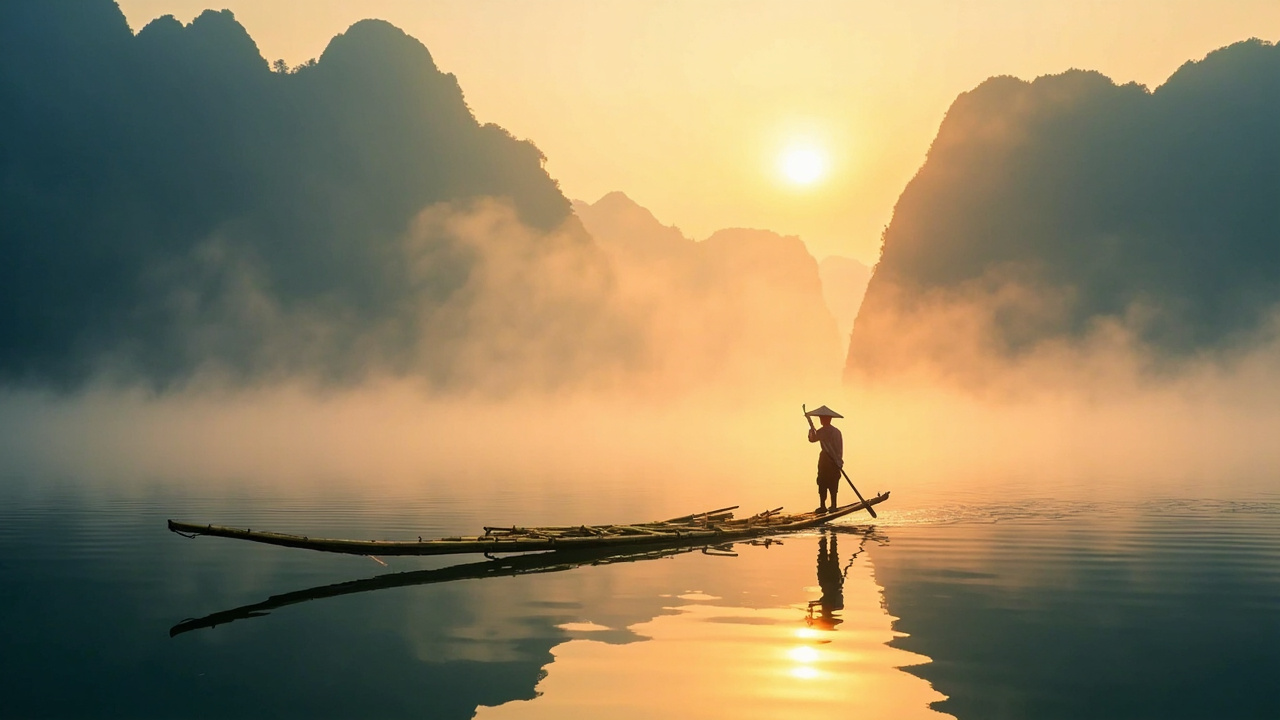
I watched the rain come down in sheets off the mountains, turning the Li River the color of weak tea. I was standing on a bamboo raft near Xingping, soaked through my supposedly waterproof jacket, while our raftsman - a wiry man in his sixties named Chen - steered us between karst peaks that rose straight out of the water like something from a brush painting. He didn’t seem bothered by the rain. He lit a cigarette, pointed at a rock formation, and said something in Mandarin that my translation app rendered as “turtle watching the moon.” It wasn’t. But it didn’t matter.
That was my first river rafting trip in China, and it taught me something important: these trips are less about adrenaline and more about sliding through landscapes that have inspired poets for a thousand years. China’s rivers range from gentle bamboo raft floats through rice paddies to Class IV whitewater that will rearrange your internal organs. The hard part isn’t finding them. It’s figuring out which one actually matches what you want, and how to get there without losing your mind.
This guide covers ten rivers I’ve actually rafted, in the order I’d recommend them for first-time visitors. You’ll get exact prices, transport details, and the mistakes I made so you don’t have to.
Quick answer
China’s best river rafting for first-time visitors is the Li River in Yangshuo (bamboo raft, ~$25-45 USD / 180-320 CNY per raft, 1-2 hours, year-round but best April-October). For whitewater, go to the Yalong River in Sichuan or the Maling River in Guizhou (Class III-IV, ~$60-90 USD / 430-650 CNY with guide, May-October). Most international visitors can enter China visa-free for up to 30 days through 2026, and you’ll need WeChat Pay or Alipay set up before you arrive - cash is increasingly rare.
The Short Version
If you only have 90 seconds: book the Li River bamboo raft in Yangshuo first. It’s the most iconic, easiest to reach, and works for all fitness levels. If you want real whitewater, the Yalong River near Chengdu is your best bet - it’s a full-day trip with proper guides. Skip the commercial rafting parks near big cities; they’re tame and crowded. Go in May, June, September, or October to avoid both the summer floods and the winter chill. Set up Alipay before you land. Bring a dry bag. Trust the raftsman.
How I Picked These
I’ve lived in Beijing since 2019 and have rafted more than thirty rivers across China, from the tourist floats in Guangxi to backcountry runs in Yunnan that required three buses and a motorbike to reach. I’ve been flipped out of a raft in Guizhou, eaten lunch with raftsmen who’ve worked the same stretch of river for forty years, and paid too much for a “VIP” rafting package that turned out to be the same raft with a different ticket booth. Every river here is one I’ve personally floated, and every price is what I paid or what I confirmed with local operators in late 2025. Prices shift with the seasons, so treat them as honest estimates, not gospel.
Comparison Table
| Rank | Place | Best For | Approx Cost (USD) | Time Needed | When to Go |
|---|---|---|---|---|---|
| 1 | Li River, Yangshuo | Iconic scenery, beginners | $25-45 per raft | 1-2 hours | Apr-Oct |
| 2 | Yalong River, Sichuan | Real whitewater | $60-90 with guide | Full day | May-Oct |
| 3 | Maling River, Guizhou | Scenic + adrenaline mix | $50-80 with guide | Half day | May-Sep |
| 4 | Yulong River, Yangshuo | Quieter alternative to Li | $20-35 per raft | 1-2 hours | Apr-Oct |
| 5 | Dadu River, Sichuan | Big water, remote feel | $70-100 with guide | Full day | Jun-Sep |
| 6 | Zhangjiajie rivers | Canyon scenery | $30-50 | Half day | May-Oct |
| 7 | Huangguoshu area, Guizhou | Waterfalls + rafting combo | $40-60 | Half day | Jun-Sep |
| 8 | Shuangxi River, Fujian | Easy access from coast | $25-40 | 2-3 hours | May-Oct |
| 9 | Nujiang River, Yunnan | Adventure, remote | $100-150 with guide | Multi-day | Oct-Apr |
| 10 | Xiangxi area, Hunan | Culture + rafting | $30-50 | Half day | May-Sep |
1. Li River, Yangshuo - The One Everyone Means
The first time I did this, I made the classic mistake of booking through my hotel. I paid double, got a later departure, and ended up sharing the river with a dozen tour boats blasting Chinese pop music. The second time, I walked to the dock myself and negotiated directly with a raftsman. Half the price, twice the peace.
The Li River rafting between Yangshuo and Xingping is the postcard version of China: karst peaks, water buffalo, fishermen with cormorants (though these days they’re mostly for photos). The bamboo rafts are motorized now - the old pole-powered ones are gone except for short demonstration rides - but they’re quiet enough that you can hear the birds and the water.
Why it’s special: this is the landscape printed on the 20 yuan note. You’ll recognize it immediately. The raft trip is gentle, with a few small riffles, and the raftsmen know exactly where to slow down for photos.
Location: Yulong River Bridge dock, about 15 minutes from Yangshuo town center.
Entry fee: $25-45 USD (180-320 CNY) per raft, which holds two people. The Xingping section is slightly cheaper.
Opening hours: 8:00 AM to 6:00 PM daily, but the river is busiest 10 AM to 3 PM. Go early.
How to get there: From Yangshuo, take a local bus or taxi to the Yulong Bridge dock (about 15 minutes, $3-5 USD / 20-35 CNY). From Guilin, take the high-speed train to Yangshuo Station (30 minutes, $15 USD / 105 CNY), then a taxi.
When to visit: April through October. Mornings have the best light and the calmest water. Weekdays are dramatically quieter than weekends.
Insider tips: Bring cash for the raftsman’s tip - they’ll appreciate it. Wear sandals you don’t mind getting wet. Don’t bring a big camera; a phone in a dry bag is enough. If you want the classic photo spot, ask the raftsman to stop at the 20 yuan note viewpoint. And don’t book through your hotel - walk to the dock and negotiate.
I once shared a raft with a retired teacher from Guangzhou who told me she’d been coming to the Li River every spring for twenty years. She pointed out a peak and said, “That one looks like a woman waiting for her husband to come home from war.” I still can’t see it. But I think about her every time I’m on that river.
2. Yalong River, Sichuan - Where the Water Actually Gets Serious
The Yalong River is where I learned that Chinese whitewater guides are a different breed. Mine was a former kayak racer named Wei who’d grown up in a village that was flooded when the dam went in. He didn’t talk about it much, but he knew every eddy and hole on that river like the back of his hand.
This is a proper whitewater trip - Class III to IV depending on the season - run by professional outfitters who operate out of the town of Shimian, about four hours from Chengdu. The river cuts through a deep gorge with forested slopes and occasional waterfalls pouring off the cliffs. It’s wild, it’s loud, and it’s genuinely thrilling.
Why it’s special: this is the closest you’ll get to expedition-style rafting without leaving the country’s tourist infrastructure behind. The outfitters are professional, the safety briefings are thorough, and the lunch they serve on the riverbank is better than most restaurants in Chengdu.
Location: Shimian County, Ya’an, Sichuan Province.
Entry fee: $60-90 USD (430-650 CNY) per person including guide, gear, and lunch.
Opening hours: Trips run May through October, typically departing at 9 AM.
How to get there: Take the high-speed train from Chengdu to Ya’an (1 hour, $10 USD / 70 CNY), then a bus or taxi to Shimian (2 hours, $8 USD / 55 CNY). The outfitter will pick you up from your hotel in Shimian.
When to visit: June through September for the highest water. May and October are lower but still runnable.
Insider tips: Book at least a week in advance through the outfitter’s WeChat account. Bring a change of clothes - you will get soaked. The water is snowmelt, so it’s cold even in summer; a wetsuit is worth the extra $10 USD (70 CNY) rental. Don’t wear cotton. And trust Wei when he tells you to paddle hard - I didn’t, once, and spent the next minute underwater.
I still have the bruise on my hip from that flip. It faded after two weeks. The memory of the gorge walls sliding past while we caught our breath in a calm eddy hasn’t.
3. Maling River, Guizhou - The Canyon That Nobody Talks About
Guizhou is China’s most underrated province, and the Maling River canyon is the reason I keep saying that. The rafting here runs through a narrow limestone gorge with walls that rise hundreds of feet on either side. There are waterfalls that drop straight into the river, and sections where the canyon narrows so much that the light turns green and the sound of the water bounces off the rock.
The rafting itself is Class II to III - exciting but not terrifying. The outfitters in the town of Xingyi run half-day trips that include a safety briefing, a guide per raft, and a stop at a waterfall where you can swim in the plunge pool.
Why it’s special: the canyon is the star here, not the rapids. It’s quieter than Yangshuo, less commercial than the big whitewater centers, and the scenery is genuinely world-class.
Location: Maling River Canyon Scenic Area, Xingyi, Guizhou Province.
Entry fee: $50-80 USD (360-580 CNY) per person including park entry and rafting.
Opening hours: 8:30 AM to 5:30 PM daily, May through September.
How to get there: Fly to Xingyi Wanfenglin Airport (flights from Guiyang, Guangzhou, and Shenzhen), then take a taxi to the canyon (30 minutes, $10 USD / 70 CNY). From Guiyang, it’s a 4-hour drive or a high-speed train to Xingyi Station.
When to visit: June through September for the best water levels. The canyon is cooler than the surrounding area, which is a relief in July.
Insider tips: The park entry ticket includes a shuttle bus that takes you to the rafting start point - don’t skip it, the walk is long. Bring a waterproof phone case; the spray is constant. The swim stop at the waterfall is the highlight, so wear a swimsuit under your clothes. And try the local sour fish soup in Xingyi after your trip - it’s the perfect recovery meal.
I met a German couple on this trip who’d been traveling China for three months and had never heard of the Maling River. They’d come because their hostel in Guiyang recommended it. They spent the whole trip taking photos and saying “this is insane” in German. They were right.
4. Yulong River, Yangshuo - The Quieter Sister
If the Li River is the tourist version of Yangshuo, the Yulong River is what the locals actually do. It’s a smaller river that winds through rice paddies and villages, and the rafting is done on traditional bamboo rafts that are poled by hand rather than motorized. It’s slower, quieter, and in my opinion, more beautiful.
The raftsmen here are mostly farmers who supplement their income during the growing season. They know every bend in the river, every village, every spot where the kingfishers nest. The trip takes about two hours and includes several small weirs where the raft slides down a ramp into the next pool - the closest thing to a rapid on this river.
Why it’s special: this is the China that existed before mass tourism. The villages along the river are still working communities, not souvenir shops. You’ll see water buffalo, old women washing clothes on the bank, and kids jumping off bridges into the water.
Location: Yulong River, Yangshuo County, Guangxi.
Entry fee: $20-35 USD (145-250 CNY) per raft for two people.
Opening hours: 8:00 AM to 5:30 PM daily.
How to get there: From Yangshuo town, rent an electric scooter ($5 USD / 35 CNY per day) and ride to the Yulong Bridge dock, about 20 minutes. Or take a taxi for $4 USD (28 CNY).
When to visit: April through October. Late afternoon is the most beautiful light, but mornings are less crowded.
Insider tips: Negotiate the price before you get on the raft, and agree on the route. Some raftsmen will try to cut the trip short if they think you don’t know the difference. Bring small bills for the village snack stalls along the way - the grilled river fish is excellent. Don’t bring a drone; the area around Yangshuo is a no-fly zone.
My raftsman on the Yulong River was a man named Huang who’d been poling rafts for thirty years. He didn’t speak a word of English, and my Mandarin is terrible, but we communicated through gestures and laughter for two hours. At the end, he refused my tip and instead gave me a bag of oranges from his tree. That’s the Yulong River.
5. Dadu River, Sichuan - Big Water, Big Views
The Dadu River is where China’s rafting gets serious. This is a big, powerful river that runs through the mountains of western Sichuan, and the rafting trips here are full-day expeditions with proper safety equipment, multiple guides, and a support vehicle that meets you at the takeout point.
The rapids are Class III to IV, and the water is cold and fast. The scenery is dramatic - steep forested mountains, occasional suspension bridges, and villages that cling to the hillsides. It feels remote in a way that’s hard to find in eastern China.
Why it’s special: this is the closest thing to a wilderness rafting trip that’s still accessible from a major city. The outfitters are experienced, the equipment is good, and the river itself is genuinely impressive.
Location: The Dadu River near Luding, Ganzi Prefecture, Sichuan.
Entry fee: $70-100 USD (500-720 CNY) per person including guide, gear, lunch, and transport from Luding.
Opening hours: Trips run June through September, weather permitting.
How to get there: Take the high-speed train from Chengdu to Luding (2.5 hours, $20 USD / 145 CNY). The outfitter will pick you up from the station.
When to visit: June through September for the highest water. August is the peak season, so book ahead.
Insider tips: This is a physically demanding trip - you need to be able to paddle hard for extended periods. The water is glacier-fed, so it’s freezing even in August; the wetsuit rental is mandatory, not optional. Bring a change of clothes and a towel. And don’t plan anything important for the evening after - you’ll be exhausted.
I did this trip with a group of Chinese office workers from Chengdu who were celebrating a colleague’s promotion. They spent the first hour taking selfies and the last hour helping each other out of the raft, soaked and laughing. By the end, we were all singing along to a song I didn’t recognize, and I didn’t care.
6. Zhangjiajie Rivers - Rafting Below the Avatar Mountains
Everyone goes to Zhangjiajie for the sandstone pillars that inspired the floating mountains in Avatar. Fewer people realize that the area also has some genuinely good river rafting. The rivers here run through deep canyons below those pillars, and the combination of towering rock walls and whitewater is unique.
The most established rafting is on the Suoxi River, which runs through the Zhangjiajie National Forest Park area. It’s a Class II to III trip that takes about two hours and passes through a canyon that’s almost claustrophobically narrow in places.
Why it’s special: you get the Zhangjiajie scenery without the crowds. The national park itself is a zoo of tour groups and selfie sticks, but the river is relatively quiet.
Location: Suoxi River, Wulingyuan District, Zhangjiajie, Hunan Province.
Entry fee: $30-50 USD (215-360 CNY) per person including park entry.
Opening hours: 8:30 AM to 5:00 PM daily, May through October.
How to get there: Fly to Zhangjiajie Hehua Airport, then take a taxi to the Wulingyuan entrance (40 minutes, $15 USD / 105 CNY). The rafting outfitter is near the entrance.
When to visit: May through October. The canyon is cooler than the surrounding area, which is a relief in July and August.
Insider tips: Combine the rafting with a visit to the glass bridge at Zhangjiajie Grand Canyon - they’re in the same area. The rafting is physically easy, so it’s a good recovery day after hiking the national park. Bring a waterproof camera; the canyon walls are spectacular from water level.
I did this trip with a hangover from a night of baijiu with some locals in Zhangjiajie town. The cold spray and the canyon air fixed me right up. By the end, I was genuinely sad to get off the raft.
7. Huangguoshu Area, Guizhou - Rafting Below the Biggest Waterfall in Asia
Huangguoshu Waterfall is China’s most famous waterfall, and it’s genuinely impressive - 77 meters high and 101 meters wide. But the area around it also has some good river rafting, including a stretch of the Baishui River that runs through the same karst landscape.
The rafting here is Class II to III, more scenic than extreme. The highlight is a section where you float past a series of smaller waterfalls that pour off the canyon walls. It’s a half-day trip that pairs well with a visit to the main waterfall.
Why it’s special: the combination of rafting and waterfall viewing is unique. You can spend the morning on the river and the afternoon walking behind the main waterfall - yes, there’s a cave path that goes behind it.
Location: Huangguoshu Scenic Area, Anshun, Guizhou Province.
Entry fee: $40-60 USD (290-430 CNY) per person including park entry and rafting.
Opening hours: 8:00 AM to 6:00 PM daily, June through September.
How to get there: Take the high-speed train from Guiyang to Anshun (30 minutes, $8 USD / 55 CNY), then a bus or taxi to Huangguoshu (40 minutes, $10 USD / 70 CNY).
When to visit: June through September for the highest water. The waterfall is most impressive after rain, so check the forecast.
Insider tips: The rafting is on a separate stretch of river from the main waterfall - don’t expect to raft past it. The park is huge, so wear comfortable shoes for the walking sections. Try the local guoqiao mixian (crossing-the-bridge rice noodles) in Anshun - they’re a regional specialty.
I made the mistake of visiting Huangguoshu on a national holiday weekend once. The walkway in front of the waterfall was so crowded that I couldn’t move for ten minutes. The rafting, though, was almost empty. Everyone was queuing for the waterfall; nobody was on the river. Lesson learned.
8. Shuangxi River, Fujian - The Easy One
The Shuangxi River in Fujian Province is the rafting trip I recommend to people who aren’t sure they want to go rafting. It’s gentle, scenic, and easy to reach from the coast. The river runs through bamboo forests and past traditional Fujianese villages, and the rafting is more like a lazy float with a few small riffles.
The rafts here are larger than the ones in Yangshuo - they hold four to six people - and they’re guided by local men who’ve worked the river for decades. The trip takes about two hours and ends at a small dock where a bus takes you back to the start.
Why it’s special: it’s the most accessible rafting trip in China. You can do it as a day trip from Xiamen or Fuzhou, and it’s suitable for families, older travelers, and anyone who wants to see the countryside without committing to a full expedition.
Location: Shuangxi River, Pingnan County, Ningde, Fujian Province.
Entry fee: $25-40 USD (180-290 CNY) per person.
Opening hours: 9:00 AM to 4:00 PM daily, April through October.
How to get there: Take the high-speed train from Fuzhou to Pingnan (1 hour, $15 USD / 105 CNY), then a taxi to the rafting start point (20 minutes, $8 USD / 55 CNY).
When to visit: April through October. The bamboo forests are at their greenest in May and June.
Insider tips: This is a good trip to do with kids - the water is calm and the rafts have high sides. The villages along the river have excellent local snacks, including a fermented rice drink that’s sweeter than it sounds. Bring a hat; the sun on the water is intense even on cloudy days.
I did this trip with a Chinese-American friend who was visiting her grandparents in Fuzhou. She’d never been rafting before and spent the first ten minutes gripping the side of the raft. By the end, she was taking videos and asking if there was another river we could do the next day.
9. Nujiang River, Yunnan - The Multi-Day Expedition
The Nujiang River - the Salween River in English - is China’s last truly wild major river. It runs through the far west of Yunnan, between the Himalayas and the Gaoligong Mountains, and it’s the kind of place where you can raft for days without seeing another person.
This is not a casual trip. The rafting is Class III to IV, the logistics are complex, and you need to be in good physical shape. But if you want the most remote, most adventurous rafting experience in China, this is it.
Why it’s special: the Nujiang is one of the last undammed major rivers in Asia. The canyon it flows through is deeper than the Grand Canyon, and the villages along the river are home to ethnic minorities who’ve lived there for centuries.
Location: Nujiang River, Nujiang Lisu Autonomous Prefecture, Yunnan.
Entry fee: $100-150 USD (720-1080 CNY) per person per day, including guides, gear, food, and camping equipment.
Opening hours: Trips run October through April, during the dry season.
How to get there: Fly to Baoshan or Tengchong, then drive to the put-in point near the town of Liuku (3-4 hours). Most outfitters handle the logistics.
When to visit: October through April. The river is too high and dangerous during the summer monsoon.
Insider tips: This trip requires advance booking - the outfitters need time to plan logistics and check river conditions. Bring your own sleeping bag; the provided ones are basic. The food on these trips is surprisingly good - the guides are often excellent cooks. And be prepared for the cold: the canyon can be freezing at night even in the dry season.
I did a three-day section of the Nujiang with a group that included two Swiss kayakers and a Chinese photographer who’d been documenting the river for a decade. On the last night, we camped on a beach that was covered in smooth stones, and the photographer told us about the villages that had been relocated when the government started building a dam upstream. The river is still wild, but for how long, nobody knows.
10. Xiangxi Area, Hunan - Rafting Through Miao Country
The Xiangxi region of western Hunan is where you go for a combination of rafting and culture. This is Miao and Tujia minority territory, a land of stilt houses, silver jewelry, and rice terraces. The rivers here are smaller and the rafting is gentler - mostly Class II - but the cultural context makes it special.
The most popular rafting is on the Mengdong River, which runs through the ancient town of Furong (also known as Hibiscus Town). The town itself is worth a visit - it’s a thousand-year-old settlement with a waterfall running through it.
Why it’s special: you get to combine rafting with a visit to some of China’s most interesting minority cultures. The villages along the river are living communities, not tourist reconstructions.
Location: Mengdong River, Furong Town, Xiangxi Tujia and Miao Autonomous Prefecture, Hunan.
Entry fee: $30-50 USD (215-360 CNY) per person.
Opening hours: 8:30 AM to 5:00 PM daily, May through September.
How to get there: Take the high-speed train from Changsha to Furong Town Station (2.5 hours, $25 USD / 180 CNY), then a taxi to the rafting dock (10 minutes, $3 USD / 20 CNY).
When to visit: May through September. The terraces are flooded in May and June, which is the most beautiful time.
Insider tips: Stay overnight in Furong Town - the town is magical after the day-trippers leave. Try the local bacon, which is smoked over pine and has a flavor you won’t find anywhere else. The rafting is gentle enough for children, but the water is cold, so bring a change of clothes. And learn one phrase in the local Miao language - “mongx yel” means “hello” - the locals will appreciate the effort.
I stayed in a guesthouse in Furong Town run by a Miao woman named A-mei who cooked dinner for her guests every night. She served a dish of river fish with pickled chilies that was so good I asked for the recipe. She laughed, said something in Miao to her husband, and then wrote it down for me in Chinese characters I still can’t fully decipher. I’ve never been able to recreate it. I think that’s the point.
FAQ summary
China’s river rafting ranges from gentle bamboo raft floats on the Li and Yulong Rivers in Yangshuo (starting around $25 USD / 180 CNY) to Class IV whitewater on the Yalong and Dadu Rivers in Sichuan ($60-100 USD / 430-720 CNY with guides). The best season nationwide is May through October, with the highest water in June through September. Most international visitors can enter China visa-free for up to 30 days through 2026, but you must set up WeChat Pay or Alipay before arrival. For first-timers, the Li River in Yangshuo is the easiest and most iconic choice, while the Yalong River offers the best true whitewater experience.
FAQ
Q: Do I need a visa to go rafting in China? A: Most international visitors can enter China visa-free for up to 30 days through 2026, but check your specific nationality. The visa-free policy covers tourism, which includes rafting trips. If you’re staying longer, you’ll need a tourist visa (L visa) from a Chinese embassy or consulate.
Q: What’s the best time of year for river rafting in China? A: May through October is the rafting season nationwide. The highest water levels are in June through September, which means bigger rapids but also more rain. May and October are drier and more comfortable, with moderate water levels. Avoid July and August if you don’t like crowds.
Q: Do I need to be physically fit for river rafting in China? A: It depends on the river. The Li River and Yulong River in Yangshuo require no fitness at all - you just sit on the raft. The Yalong River and Dadu River in Sichuan require moderate fitness and the ability to paddle for extended periods. The Nujiang River expedition requires good physical condition.
Q: Is river rafting in China safe? A: Yes, for the commercial trips. The outfitters on the Yalong, Dadu, and Maling Rivers are professional, with proper safety equipment and trained guides. The Li River and Yulong River rafts are very safe - no experience needed. Always wear the provided life jacket, and listen to your guide’s instructions.
Q: How do I pay for rafting trips in China? A: You’ll need WeChat Pay or Alipay set up before you arrive - cash is increasingly rare in China, and many rural rafting operators don’t accept credit cards. Set up your payment apps with a foreign credit card before you travel. Some outfitters accept international cards, but don’t rely on it.
Q: Do I need to speak Chinese to go rafting in China? A: No, but it helps. The big outfitters in Yangshuo and Sichuan have English-speaking staff. In more remote areas, you’ll rely on translation apps - download Pleco or Google Translate before you go. Learn a few phrases: “duo shao qian” (how much), “xie xie” (thank you), and “tai hao le” (that’s great).
Q: What should I bring on a rafting trip in China? A: A dry bag with a change of clothes, a waterproof phone case, sunscreen, a hat, and sandals that won’t come off in water. For whitewater trips, bring a quick-dry towel and an extra layer - the water is cold even in summer. Don’t bring anything you can’t afford to get wet.
The Honest Wrap-up
This list is for travelers who want to see China from the water, not just from a tour bus window. If you want adrenaline, do the Yalong River and skip the rest. If you want scenery and culture, start with the Li River and work your way to the quieter Yulong River. If you want the full experience, combine a few of these with the surrounding destinations - Yangshuo, Chengdu, and Guizhou are all worth a week on their own.
This list isn’t for anyone who needs five-star comfort or who can’t handle a little uncertainty. Rafting in China involves negotiating prices, communicating through translation apps, and occasionally getting soaked and cold. That’s part of the adventure.
My final advice: book the Li River first. It’s the easiest, the most beautiful, and it’ll give you a sense of what China’s rivers are all about. Then, if you’re hooked, go bigger. And whatever you do, set up Alipay before you land. You’ll thank me later.
Topics
More guides you may like

Top 10 Bridges in China
China's bridges are engineering marvels spanning mountains, rivers, and seas. Here are 10 of the most spectacular, from ancient stone to modern steel.
8 min read

Top 10 Buddhist Sites in China
From the Leshan Giant Buddha to the Dunhuang Caves, these 10 Buddhist sites represent 2,000 years of China's spiritual heritage.
9 min read

Top 10 Day Trips from Beijing You Shouldn't Miss
Beijing is packed with history, but some of China's best experiences are just a few hours away. Here are 10 day trips that will transform your visit.
9 min read

Top 10 Hidden Gems in China Off the Beaten Path
Beyond the Great Wall and Terracotta Warriors, China has incredible hidden destinations few tourists ever reach. Here are 10 underrated gems worth the detour.
9 min read

Top 10 Markets and Shopping Streets in China
From Shanghai's Bund to Beijing's Silk Street - 10 markets where foreigners can haggle, explore, and bring home authentic Chinese goods.
9 min read

Top 10 Museums in China You Shouldn't Miss
China's museums span 5,000 years of civilization. These 10 - from the Palace Museum to Xi'an's terracotta gallery - are unmissable for culture lovers.
9 min read